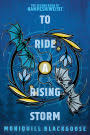
I read this courtesy NetGalley and the publisher, Del Rey. I’m really sorry: it’s not out until January 2026.
There’s a social media joke that does the rounds occasionally, where an author is asked to explain their work in the most boring way possible. So: small fellow goes on long journey, loses family heirloom (LotR). If Moniquill Blackgoose played this game, she’d say something like “young woman goes to boarding house, makes some friends and enemies.”
It’s silly because of course there’s more to it than that. Superficially, that’s what this book – and the first in the series, To Shape A Dragon’s Breath – is about: a girl bonds with a dragon and must therefore go to a dragoneer boarding school to learn what it means to be a dragoneer. So far, so somewhat recognisable. But the world is an alternate one where Vikings took over in what we would call Britain; the story is set in what we would call North America, but it’s very different in a lot of ways. Like, for instance, the presence of dragons, and the fact that amongst other things their breath can be “shaped” in order to do some intriguing (al)chemical things. So Anequs has to go learn about all of that. But she’s not Anglish, or from another European background; she’s a “nackie” – one of the Indigenous folk of the area – and, in one of the very familiar turns Blackgoose employs, she and her people have in no way been embraced by the colonisers.
All of this is what happens in the first book. As with many boarding school books, this second one is in the second year of school – Anequs is 16, her dragon Kasaqua is big enough to ride but not fly, and society is starting to come to turns with two nackie dragoneers. The book is concerned with both personal and political issues – although Anequs, as with many in a position like hers, would recognise “the personal is political” as being a lived reality. So Anequs must navigate friendships that don’t always make sense and people who don’t rate her abilities and Anglish expectations of how she will comport herself, and what is respectable. At the same time, there is a growing group of people in wider society who are unhappy with how their state is being governed (ie too leniently for their tastes), and Anequs becomes something of a symbol they can oppose.
As with the first book, this one is easy to read: the pacing is perfect, the conversations are believable, the characters are engaging. There are parts where I was very angry about what was being said and done, and I’m not going to lie: it feels like a particularly apropos moment for this novel to be coming out. Highly recommended.

 Randomly Yours, Alex