Yet She Lives, by Lisa Hannett
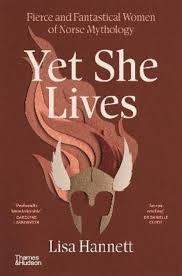
As we all know, the women of mythology tend to be poorly served – both in their original source material, and in subsequent historical examination. (Perhaps I exaggerate… but really? Not that much.)
In this excellent book, Lisa Hannett looks at the women of Norse mythology. She does so in a way that is very particular to her expertise – as an historian and a writer of speculative fiction: she retells the stories of the women and also puts the myths into their historical context – both the context of what life was like for women when the myths were probably initially told and then written down (which are not at all the same time), and how the original audience likely received the stories. This level of historical explanation has the potential to come off rather dry, but Hannett presents it in an engaging, readable style: there are references to pop culture, and her own travels to Iceland and Scandinavia; she uses precise language but in such a way that it never becomes jargon. She puts herself into the book – this isn’t some clinical academic pretending that her own experiences have no impact on the way she approaches her material. And she also looks at the enduring legacy of many of the characters – from the Marvel Cinematic Universe to Wagner’s Ring Cycle, via other iterations of Freyja, the Norns, and Valkryies. Hannett covers a lot in just over 250 pages.
There were some characters in here I had not previously come across, and others I had not experienced at this level of detail. I certainly hadn’t fully appreciated the role of the Norns, nor of Freyja as the goddess of sex, love, and death. Obviously not all female characters in Norse mythology can be covered in such a book as this. Instead, Hannett has chosen specific characters – some are those she clearly is particularly intrigued by, others chosen for what they reveal about particular aspects of Norse society. All together, they provide a sometimes challenging, always intriguing insight into the myths and their audiences.
This is a companion book to Hannett’s Viking Women, which looked at the (maybe, mostly) historical women of the Viking sagas. It is also, unsurprisingly, brilliant. You should definitely read both of them.
Bean there, Done that: The Martian (2015)

I adore this film. Unlike most of the other Bean films, I can’t count how many times I’ve seen it. In fact, I saw it twice at the cinema, and there’s not many films that I can say that about.
Side note: I read the Andy Weir novel because I loved the film so much, and all I can say is that whoever read that novel and had the vision for the film to be as good as it is was a genius. The book is bad.
- I adore the opening of this film. I love the set up – of Mars, of the astronauts and their relationships, and the fact that Watney is left behind almost immediately.
- I could commentate the entire film, but that would be boring and not the point of this post.
- (Chiwetel Ejiofor!)
- (The use of the video diary format is inspired.)
- And Sean Bean arrives! In a meeting where they’re discussing what on (Mars) Watney is doing with the rover. Hello, Flight Director Mitch.
- It’s a very boring business suit. What is WITH that vest.
- And a boring corporate haircut.
- And he’s already in conflict with the boss, because he wants to tell the Ares crew and the boss doesn’t.
- (Benedict Wong!)
- (I adore Benedict Wong.)
- Bean doesn’t often get to genuinely laugh in the films I’ve seen. His giggling reaction to Watney’s profanity is adorable.
- Never before have I basically wept for potatoes.
- That brown corduroy jacket, Bean, my goodness. I have no words.
- It’s Bean that questions whether they should cancel the inspections on the probe…
- and then of course he gets to be the Flight Director when the resupply probe launches.
- and is second to find out about “shimmy.”
- (Donald Glover!)
- I remain firmly convinced that Sean Bean was cast in this movie solely because of the “Council of Elrond” bit, and because he’s the one to explain to the poor media person what the phrase means.
- No one will ever convince me otherwise.
- Ever.
- I find it interesting to see the clash between the NASA Director and the Flight Director – Daniels and Bean – about whether the Ares crew should be told about the possibility of going back to get Watney.
- Bean is playing a disgruntled corporate dude, rather than a villain, which is a rather different role for him.
- Bean’s disingenuous “it wasn’t meeee” is (deliberately) completely unbelievable.
- That ARGYLE VEST is wild.
- This may be Bean’s least fashionably-dressed role ever.
- I love the whole Bean/Wong/Ejiofor scene about turning the MAV into a convertible for Watney’s ascent. Gives us one of the great lines of the movies (“I am excited about the opportunities that affords.”)
- (Beck going hand over hand around the outside of the Hermes with no tether is honestly the bit that makes me feel most anxious in the entire film.)
Verdict: a man stuck in a corporate world where he feels very torn between loyalties and ultimately goes with his gut feeling. Probably makes the right decisions for Watney, definitely the wrong decisions for his career. But hey, at least he doesn’t die, and gets to go play golf afterwards instead.
Movies: 6. Beans dead: 4.
Wolf’s Path, Joyce Chng
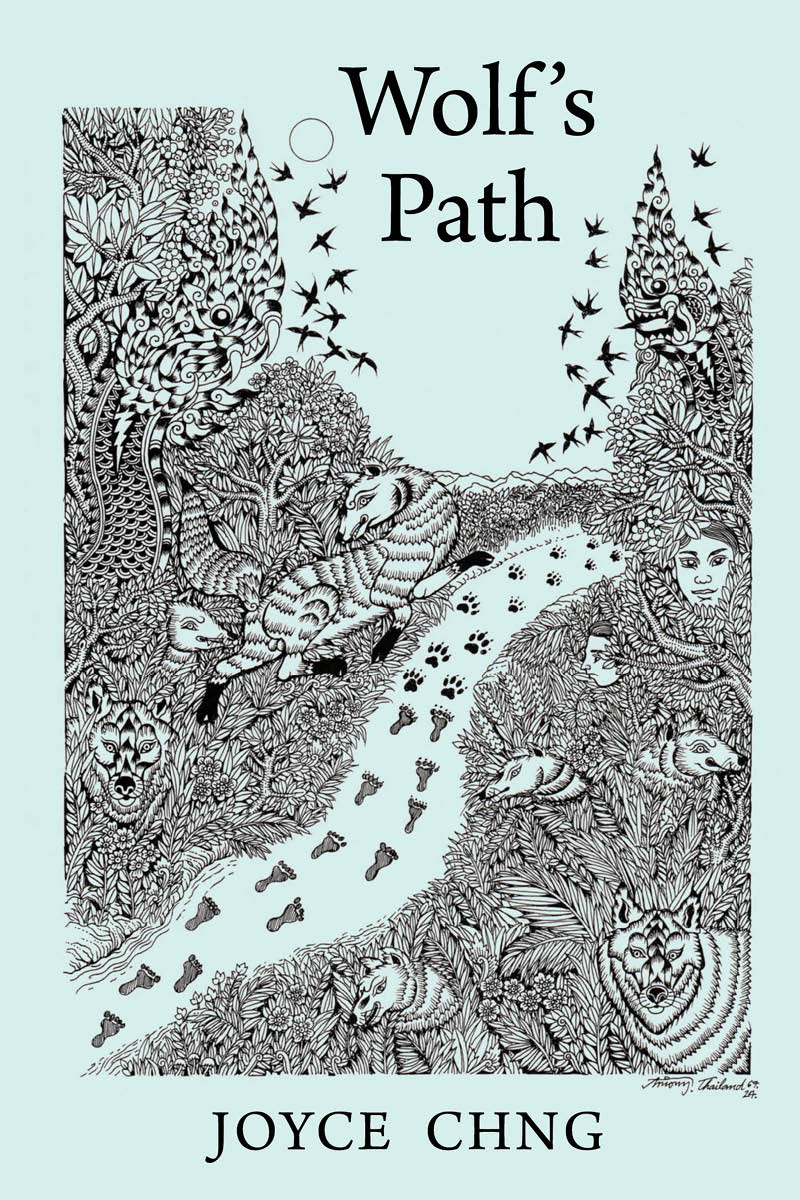
Read courtesy of NetGalley and the publisher, Atthis Arts. It will be out in March.
A collection to mark Chng’s turning 50 this year, this is a collection that embraces the changing nature of the writer over their career: from their earliest published work, through to very recent pieces. Arranged roughly chronologically, the reader gets a sense of how Chng has changed over time – I think the later work is a bit more polished than the earlier pieces, although those early ones are certainly still worth reading. You also get to see some of the consistent themes that Chng keeps coming back to. In particular, questions of what life can and might be like during war pop up several times; and explorations of gender, ethnicity, and identity broadly defined are a consistent presence. And Chng’s experience as a Singaporean is also fundamental to their stories, with many of the stories taking place in either a real or imagined Southeast Asia.
It’s brilliant that Atthis Arts is publishing this retrospective collection. Too often white men get collected early in their careers and everyone else just… doesn’t. Chng’s voice is an example of one that should be highlighted and celebrated.
Macbeth: McKellen and Dench

Via YouTube: The Royal Shakespeare Company in Trevor Nunn’s Production of. A 1979 filming of an RSC production. (First post in this series.)
The weird sisters:
- First appearance:
- Witches are together while simultaneously Duncan is – praying?
- Maiden/mother/crone, basically. Maiden is played “simple-minded”.
- The witches disappear – I wonder how it was done on stage?
- Second appearance:
- Putting ingredients together by candlelight before Macbeth arrives.
- They take off Macbeth’s shirt and make him drink a potion; then wave puppet-things above his head to tell him about Macduff and Birnham Wood, etc.
Macbeth:
- First appearance: slicked-back hair, blood on face, excellent greatcoat.
- Speaks directly to the camera, rather than vaguely musing.
- Haughty and dismissive of Lady Macbeth immediately after his coronation/ before speaking to the murderers.
- No Banquo at the feast – just Macbeth hallucinating. McKellen plays him very manic in this scene – frothing at the mouth, hair wild.
- Hair still a bit wild when he goes to the witches.
Lady Macbeth:
- First appearance: cap covering hair; simple diamond stud earrings; plain black dress with long sleeves.
- Macbeth is clearly in love (and in lust) with her.
- Already starting to be worried while the murder is happening – starts at the owl. Rallies when Macbeth comes out with the knives, although is distressed by Macbeth’s ranting.
- Loses emotional control at the end of the feast/Banquo’s ghost scene.
“Unsex me here”:
- Spoken directly to the camera.
- Speaks quietly. almost whispering, crouching down – then briefly up, crying out, as if something has happened to her.
- Finishes with arms out-stretched, and a light shines on her face – as Macbeth arrives. At which point they smooch.
“Is this a dagger”:
- No dagger seen by audience.
- Speaks very quietly, and with a lot of fear at the start. As the speech goes on, he is convincing himself to do the deed.
- Murder is not shown.
“Out, damned spot”:
- Brilliantly acted. Weeping; carrying and looking at a candle.
- Heartbreaking wail.
“Tomorrow and tomorrow and tomorrow”:
- Not really that affecting, sadly.
- Sitting down, half clothed in armour; speaks to the camera.
Violence:
- Murder of Banquo is the first violence shown, and even then it’s just the indication of knives being used; Banquo not shown until the end, with blood on his face.
- Killing of Macduff’s family also relatively demure.
- Brief fight scene between Macbeth and Macduff, but nothing dramatic.
Setting:
- On stage: basically no furniture at all bar a few chairs. Very few props, even – a few candles, daggers, the shared cup at the feast, some paper. The puppets.
- Entirely dark background: faces stand out starkly. It’s almost black and white.
- Costuming: modern; very plain. Duncan in a white robe; Malcolm in a turtleneck white sweater; basically all other men in suits, mostly black. No one changes clothes throughout the play.
- Lady Macduff also in complete white.
Dialogue:
- Spoken clearly – as you would expect from an RSC production.
Other things:
- Starts with all actors sitting around in a circle, watching one another.
- Lots of very tight shots of faces – almost never see people full-length. People stand very close together.
- Duncan is frail, and looks saintly.
- It’s very distracting seeing well-known famous when they’re a lot younger. One thane (and the Porter?!) is played by Emperor Palpatine; Malcolm is played by Lord John Marbury (West Wing); Macduff is played by Robert Muldoon (Jurassic Park).
- The Porter has a neck kerchief, braces, no shirt, and the front of his trousers open; also a tattered flat cap. Winks at the camera at his most outrageous puns.
Object Lessons: Wine, by Meg Bernhard
I read this courtesy of the publisher, Bloomsbury, and NetGalley. It’s out in June.
I know that I say almost every one of these is both personal and academic, but this one is the MOST personal of all the Object Lessons I’ve read so far. In fact, it’s mostly personal: there’s a bit about the current experience of owning and managing vineyards, and making wine, in both Spain and the USA… but this is predominantly the story of the author, and her intersection with wine. Of growing up with basically no alcohol in the house, starting to drink in college, binging alcohol and experiencing many negative consequences of doing so. Then, travelling to Spain to work on vineyards, and learning about the processes necessary to make wine: the intense work necessary to maintain the vines, the work of fermenting and bottling, and so on.
Bernhard’s reflections on her vineyard experiences are poignant – the stressful nature of such agriculture in the current climate crisis, the necessary connection to the environment that must be understood to get the most out of the vines, and what such physical labour can mean for someone completely unaccustomed to it. It’s a good reminder that so much of what people in highly industrialised countries take for granted does still rely on intense, human, manual labour.
WINE does not attempt to be a history of the beverage, nor an anthropological exploration of its place in modern America; it’s not a deep dive into the business, nor a paean to the joys of drinking. It’s one person’s meditation, on how she has experienced it in her life. It’s quite lovely.
Doll, by Maria Teresa Hart

I read this thanks to NetGalley; it’s out in November.
Is this book responsible for me having the only two lines that I know of “Barbie and the Rockers” stuck in my head for days? Why yes it is. And no, I haven’t forgiven the author for that yet.
I did have a few Barbies as a child; I was deprived of a Cabbage Patch kid; and I had a bridal doll, inherited from my mother, with whom I never played – she was really for looking at rather than anything else. I was probably more interested in playing with the My Little Ponies, I think – hair long enough to do interesting plaits with – but I don’t remember that well. I guess I played a bit with them? But dolls held little really fascination for me. This book, though, is truly fascinating – it’s a worthy addition to the Object Lessons set.
Hart does a lot in a few short pages. She explores the history of dolls as objects – their uses and their manufacture; she discusses their roles in reinforcing gender norms for girls and women, as well as exploring the realities of how little girls do actually play with their Barbies (is it a surprise these days to anyone to learn that Barbies tend to have a great deal of sex?). She looks at the racial aspects – the first black Barbie was a sidekick, and it took ages for non-white Barbies to have any sort of equal billing, and they’re usually still solitary examples of a skin colour rather than being the whole range of things like white-skinned Barbie is allowed to be.
Did I know that Sleepover Barbie came with miniature scales and a teeny book called “How to Lose Weight”, which recommends only “Don’t eat”? Heck no I didn’t. This is the stuff of nightmares… and makes me wonder if I was doing sleepovers all wrong (or, more likely, all right).
I also didn’t know about BINA48, “modelled after the real human being Bina Aspen, a Black woman who was married to Martine Rothblatt, a prominent CEO in there biotech industry. BINA48 was created using Aspen’s memories” p26) and this is ALSO the stuff of nightmares, in my opinion. Hart goes into a discussion of avatars as part of the doll-world, which is intriguing, as well as androids.
Another spectacular part of this series. So much packed into such a small package, and yet so immensely readable as well.
Still a bit cranky about the Barbie song though.
Persiana Everyday, Sabrina Ghayour
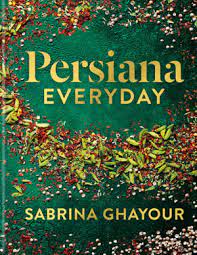
I received this from the publisher, Hachette, at no cost. It’s out now; $39.99.
Soooo I received this a while ago, and haven’t got around to reviewing it because I think “I’ll make just one more thing and THEN I’ll review it” – like reviewing it means I’ll never cook from it again, or something. I was very excited to receive this as a review copy; I own every other Sabrina book, so I was always going to get it… this is just a lovely bonus 😀
I have loved Sabrina’s recipes since Persiana. I would be pretty happy just cooking from her set every week, to be honest. I had been a bit worried that this would feel like a rehash of Persiana (because of the name), or her second-last book Simply… but really I shouldn’t have worried. There’s a glorious new set of recipes, often making use of her Persian roots but not always – she’s a cook with a wide range of interests, and she’s got a spectacular sense of taste/flavour combinations. She’s also not that interested in showy cooking; something I loved from her Instagram in 2020 was a set of cooking vids using pantry staples that really were mostly staples – at least for someone who likes cooking and so has a few herbs and spices. Plus, she’s not too fussed about whether you follow a recipe with micrometre precision – swap things, etc etc. And finally, another glorious aspect of this entire book is that every recipe includes “go well with…” and then gives another 2-3 recipes from the book, and page numbers.
I love this book a lot. Chapters include Small Plates; Salads for All Seasons; Poultry and Meat; Fish and Seafood; Vegetable Love; Carbs of All Kinds; and Something Sweet.
Things I have made:
- Halloumi fatteh, which reminded me how much I adore tahini+yoghurt on meat;
- Meatball and mushroom stroganoff, which is a genius way of making stroganoff although REALLY, BRITS? YOU EAT STROGANOFF ON HOT CHIPS??
- Kofta, orzo, and tomato traybake – oh, put the pasta IN WITH the sauce and bake it?? GENIUS;
- Lamb, date and chilli stew – straight to the “every winter” recipe pile;
- Fragrant roasted [fish] – I used swordfish, because I don’t even know if you can get haddock here;
- Pan-fried spiced prawns;
- Sweet potato, sage and feta tart, which only didn’t work as well as I think it should because we don’t seem to have the same size ready-made puff pastry as they do in England;
- Spicy nutty cauliflower – basically satay cauli, which is brilliant;
- Sticky spiced harissa and lime roasted carrots, with feta and barberries, and really you don’t need anything other than that name, right?
- Za’atar, leek, potato and Gruyere frittata;
- Yoghurt, marjoram and pul biber flatbread – which is now my favourite yoghurt flatbread, although I’ve usually used oregano instead of marjoram;
- Rhubarb, rose and pistachio trifle pots, which are AMAZING;
- Chewy pistachio bites – now I know what to do whenever I have an egg white sitting around;
- and, last but in NO way least, tahini and chocolate marmar [marble] cake.
… did I mention it comes with a ribbon? This book is just glorious.
A Spectre, Haunting

This book was sent to me by the publisher, Head of Zeus (via Bloomsbury), at no cost. It’s out now; $29.99.
It’s a joke some people make to say that I’m basically a Communist. I’m not; I’m not dedicated enough. I am happy to wear ‘vaguely socialist’; there are a lot of things within the ideals of socialism – and, yes, communism, depending on how you talk about it – that I absolutely subscribe to. And yes, of course I know that the whole concept of communism is now utterly tied up with the various 20th century versions that claimed to putting it into practise. I am a history teacher.
Mieville, too, is open about his context. In the introduction he explains that he’s trying to present the historical aspects in such a way that a reader of any political persuasion will be able to read it (without frothing in a rage is, I think, the subtext). He is clear that the final chapter is much more subjective but again hopes that people will be able to engage thoughtfully. I deeply appreciate that he’s not pretending to be neutral, which is something that would be impossible (and that anyone who knows his background wouldn’t believe anyway).
All of that is context around the fact that I think this book is incredible and anyone who wants to make any claims for or against communism in the 21st century absolutely needs to read it.
First, it contains the entire text of the Communist Manifesto. I’ve read bits and pieces but I don’t think I’ve ever sat down and read the whole thing from cover to cover (it’s an honours thesis in length! Only 12,000 words!). And every paragraph is numbered and every time Mieville refers to something from the Manifesto, it’s right there for you to refer to. I present: integrity. Bits that shook me: reading about workers being alienated from the products of their labour while watching Severance; also that the bourgeoisie / capitalism “has resolved personal worth into exchange value” and nothing else.
Second, I am deeply appreciative of Mieville giving the historical context not just of Marx and Engels, and not just of Communism (not completely comprehensive, which Mieville acknowledges) but also the context of manifestos as a genre. That’s pretty great and something I’ve not seen before. He also examines various criticisms of the Manifesto, from different times and perspectives, and discusses their validity or not. Mieville is in no way suggesting that the Manifesto is perfect, and accepts some of the problems quite readily; those he doesn’t, I think he deals with thoughtfully.
Finally, the bit that may well have some people frothing at the mouth and that particularly struck me is the chapter in which Mieville examines the utility of the Manifesto for the 21st century. And the important thing here is that Mieville comes across as angry. Really quite angry about the piles and multitudes of inequality and despair and awfulness in the world today. I can’t adequately give an overview of this chapter, because he has several points and I haven’t entirely decided whether I agree with all of them. But what I am is convinced that this rushed (although still missing its deadline), somewhat incomplete, more than 150 year old document still has something to offer – even if it’s largely as a starting point, and it’s definitely not perfect.
Escape from Puroland
I received this book as an ARC through NetGalley.

This novella is noted by Goodreads as number 7.5 in the Laundry Files series – it fills in a gap, basically, about one of the chief characters. For reference, I have read a few Laundry Files stories: I enjoy them a lot, but not quite enough to obsessively chase every single book down. I did enjoy this one a lot, which means that you could probably come to this with maybe even no knowledge of the rest of the books – as long as you’re happy enough not knowing some of the background (like who Mo is). I think there’s enough explanation about things like computers creating magical energy, and therefore background magical radiation increasing as computational power increases, that a reader who’s prepared to roll with it can do just that.
So, the story: Bob Howard is sent to Japan to help them deal with incursions of entities from other dimensions. These can take the shape of various things depending on mythology and so on in the surrounding area… and when Howard is given a hotel room that’s Hello, Kitty themed, alarm bells should have started ringing…
The Laundry Files are what I would consider very pop-literature. This is in no way a statement on quality! What I mean is that they’re fast-paced (very fast-paced, in this instance); there’s a lot of banter; there’s a lot of pop-culture references, some of which I admit I didn’t get but the general gist was obvious. This story just barges along and drags you along in its wake. And it’s a whole lot of fun. In fact, it’s made me start eyeing off the rest of the series…
The Corfu Trilogy
I read My Family and Other Animals in year 10 English. I adored it and went on to read more of Gerald Durrell’s memoirs, of being a naturalist and collecting animals for various zoological places. I realised that of course this collecting of animals is slightly problematic, but he really does write well.
I watched the tv adaptation of the Durrells in Corfu a few years ago; and for some reason I was reminded of it again recently. Given current circumstances I thought something comforting would be the go. And then I discovered that for barely any more $$ I could get the entire Corfu trilogy – which I didn’t realise existed – rather than only My Family. So, of course, I did.
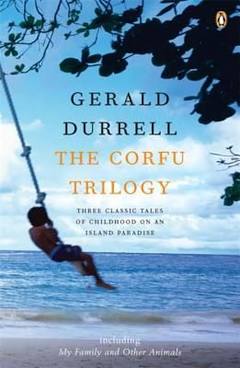
It’s one of those cases where the Suck Fairy hasn’t entirely ruined what you used to love… but there are definitely elements that were, um, problematic.
Firstly, the positives: while Durrell’s writing does occasionally veer dangerously close to purple, I still adore the evocative descriptions and once again was overcome with the desire to run away to Corfu and live in a rambling villa. Durrell makes Corfu of the 1930s sound like a child’s paradise, with long lazy days of botanical and zoological collecting. And Mum gets to spend all day gardening and cooking and knitting – except when bloody Larry has invited friends over. I enjoyed reading about Gerry’s adventures and he definitely has a turn of phrase when it comes to describing animals. I’ve always thought of magpies as Maggenpies.
However. There are definitely caveats for recommending anyone read this today. Firstly, there’s the condescending nature of Gerry and his family to the ‘peasants’ of Corfu. I guess Gerry is a kid and so he can be forgiven for the fact that he takes advantage of the kind-hearted nature of his neighbours who always want to feed him; but it does get painful. There’s also the odd bit of racism – unpleasant comparisons between races, for instance, and generalisations based on nationality or race. I suspect part of the reason there’s not more is that Gerry is generally disinterested in people, unless they can teach him about natural history or help him acquire animals. So that is something to keep in mind if you considered reading these stories.
Finally, I continue to find it hilarious that the louche and irritating older brother Larry who barely gets anything written because he’s talking about it rather than doing it, became Lawrence Durrell, famous author. And even more hilarious that his Dark Labyrinth is a novel I truly love.

 Randomly Yours, Alex