The Strange History of Samuel Pepys’s Diary
Many moons ago, I did an undergrad subject that I thought was part of the English department but was actually in Cultural Studies. It was about how “classics” get to be part of the canon – about how much there is to the construction of the canon, and that it’s not just organic. So we looked at the various versions of Hamlet, and Pound’s editing of “The Wasteland”, and James Joyce’s work at making Ulysses seem like a classic before it was even published. All of which was in my mind as I read this amazing, fantastic book.
I read this book courtesy of NetGalley and the publisher, Cambridge University Press. It’s out at the end of June, 2025.
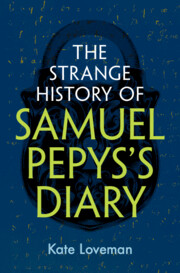
What Loveman is doing is not just assessing and explaining the Diary, but also putting it in its historical context across the 350 years of its existence. How and why Pepys originally wrote it – and the fact that it is almost certainly not JUST a diary recording his uncensored thoughts, but consciously constructed. And then, even more interesting for me, the life of the Diary after Pepys’ death.
The Restoration is not my favourite period, so I haven’t studied the Diary much, if at all – and being Australian, I wasn’t subjected to excerpts at school. So I had no idea that most of it is in shorthand, nor that for the last three centuries very few people have been able to actually read the Diary: what scholars have worked from is a transcription – a translation, even, given that transcribers don’t always know what was intended. And then there’s the fact that until the 1970s, there was NO unexpurgated version of the Diary published. Early editors cut out bits that were perceived as too raunchy, as well as bits that were perceived as too boring (also often, apparently, bits involving women…). So again, what people have “known” about Samuel Pepys has been constructed by choices, consciously or unconsciously made. The way Loveman sets out this publication history is completely absorbing in a way I hadn’t really expected.
This book is deeply historical: it’s thoroughly researched, involving I can’t imagine how much time in archives. It is simultaneously wonderfully engaging, clearly written, and inclusive of fascinating tidbits – a newspaper column written like Pepys during the First World War, making daily observations! And a biting section about the work of editors’ and transcribers’ wives, “With thanks to…”, for the enormous amount of unpaid work they have put in over the decades.
This is a book that appeal not just to folks who know something about Pepys and his diary, but to anyone with an interest in how history is constructed. Splendid.
The Baker’s Book
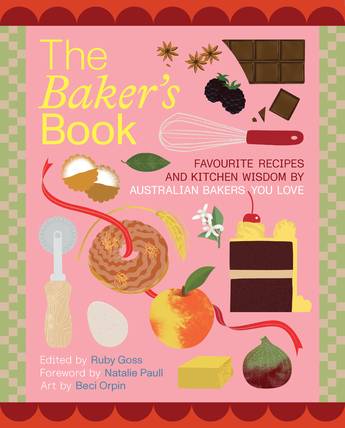
I received this book from the publisher, Murdoch Books, at no cost. It’s out now; RRP$45.
I am remiss in reviewing this book! My excuses are a) being away for a couple of weeks, and b) finding opportunities to bake things when there’s not many people around.
I am not particularly an aficionado of the Australian baking scene. In fact, I think there might be only one place mentioned in here that I know (more on that later). Thus I do not know whether this is a representative, or interesting, or eclectic set of bakers. I can guess that they are, based on recipes, but I don’t know for sure. What I can judge, though, are those recipes, and I can say: it’s a fascinating selection. There are easy things and quite hard things; ingredients I’ve never used, and equipment I won’t bother owning, and takes on old favourites. There are savoury recipes but mostly sweet, and recipes for different occasions. There are also personal reflections from the bakers: about their personal journeys, or perceptions of baking, and often how those things relate to life in general. It’s a really nicely constructed book, both in contents and in physical appearance.
Recipes I have made:
Continue reading →Bean there, Done that: The Martian (2015)

I adore this film. Unlike most of the other Bean films, I can’t count how many times I’ve seen it. In fact, I saw it twice at the cinema, and there’s not many films that I can say that about.
Side note: I read the Andy Weir novel because I loved the film so much, and all I can say is that whoever read that novel and had the vision for the film to be as good as it is was a genius. The book is bad.
- I adore the opening of this film. I love the set up – of Mars, of the astronauts and their relationships, and the fact that Watney is left behind almost immediately.
- I could commentate the entire film, but that would be boring and not the point of this post.
- (Chiwetel Ejiofor!)
- (The use of the video diary format is inspired.)
- And Sean Bean arrives! In a meeting where they’re discussing what on (Mars) Watney is doing with the rover. Hello, Flight Director Mitch.
- It’s a very boring business suit. What is WITH that vest.
- And a boring corporate haircut.
- And he’s already in conflict with the boss, because he wants to tell the Ares crew and the boss doesn’t.
- (Benedict Wong!)
- (I adore Benedict Wong.)
- Bean doesn’t often get to genuinely laugh in the films I’ve seen. His giggling reaction to Watney’s profanity is adorable.
- Never before have I basically wept for potatoes.
- That brown corduroy jacket, Bean, my goodness. I have no words.
- It’s Bean that questions whether they should cancel the inspections on the probe…
- and then of course he gets to be the Flight Director when the resupply probe launches.
- and is second to find out about “shimmy.”
- (Donald Glover!)
- I remain firmly convinced that Sean Bean was cast in this movie solely because of the “Council of Elrond” bit, and because he’s the one to explain to the poor media person what the phrase means.
- No one will ever convince me otherwise.
- Ever.
- I find it interesting to see the clash between the NASA Director and the Flight Director – Daniels and Bean – about whether the Ares crew should be told about the possibility of going back to get Watney.
- Bean is playing a disgruntled corporate dude, rather than a villain, which is a rather different role for him.
- Bean’s disingenuous “it wasn’t meeee” is (deliberately) completely unbelievable.
- That ARGYLE VEST is wild.
- This may be Bean’s least fashionably-dressed role ever.
- I love the whole Bean/Wong/Ejiofor scene about turning the MAV into a convertible for Watney’s ascent. Gives us one of the great lines of the movies (“I am excited about the opportunities that affords.”)
- (Beck going hand over hand around the outside of the Hermes with no tether is honestly the bit that makes me feel most anxious in the entire film.)
Verdict: a man stuck in a corporate world where he feels very torn between loyalties and ultimately goes with his gut feeling. Probably makes the right decisions for Watney, definitely the wrong decisions for his career. But hey, at least he doesn’t die, and gets to go play golf afterwards instead.
Movies: 6. Beans dead: 4.
The Tragedy of Macbeth (2021)
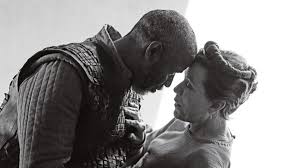
Via Apple.
The cast is wonderful, the filming is fabulous, and I love it very much. This might be my favourite Macbeth.
The weird sisters:
- First appearance:
- The first speech is just narration to a black screen… until suddenly it’s a cloudy sky, with three birds circling, and then it’s NOT the sky but sandy ground.
- Brief interlude to Duncan hearing about the battle, and then back to the witches…
- Except it’s not a trio: it’s one woman, a contortionist with an amazing voice and honestly she’s the most terrifying witch I’ve seen yet.
- She seems to be on the battlefield, and she squawks like a crow – the symbolism is glorious.
- And when she speaks to Macbeth, she’s in front of a pool of water – with two versions of her reflected. And her voice is echoed to sound like more than one person…
- And then her two reflections leave the pool and come to stand next to her!
- Second appearance:
- Three figures in the ceiling, looking down at Macbeth – he hasn’t had to go looking for them.
- There are multiple voices, but only one face.
- “Double, double” is put here, as a way of calling the witch’s master. All ingredients thrown into a pool of water that’s in the castle.
- The emphasis on “no more” was some ominous foreshadowing.
Macbeth:
- First appearance: walking out of the sun, into our view: that’s a symbol. In appropriately worn medieval-ish battle dress
- Second appearance: There’s love for Lady Macbeth, but it’s more restrained than in some other versions. Possibly because they’re much older?
- I think this is my favourite version of the “he’s here in double trust” speech. Washington isn’t a coward, he’s being rational and thinking it all through.
- I like Washington’s thoughtfulness as Macbeth. I do think it’s about age; he would be much less convincing as an impetuous, ambitious man. Which is not to say that he is emotionless: his anger at the idea that Fleance might be the reason he has soiled his soul is real.
- Macbeth seeing Banquo, post-death, is preceded by a crow flapping down the hall… and then when he is fighting Banquo, it turns out to be a crow. Like the crow the witches appeared to turn into at the start….
- Unravelling terribly as the English army approaches.
- He’s so tired by the time the English arrive. And resigned to fate. The way he hears that Macduff was untimely rip’d… again, I think it’s age.
Lady Macbeth:
- First appearance: Long pale dress walking down a long, bright corridor. Hair is a crown.
- Her use of fainting is beautifully timed.
- As queen: she is now in a dark dress, beautifully embroidered. Hair still up in a crown, with an actual crown added to it.
- After the Banquo hallucination, she gives Macbeth a cup of wine and adds a drop of… something… and then the next thing we know, it’s “Tomorrow” and Macbeth wakes up and sees the witches. So… playing into Lady M as a witch herself…
- And then when she comes in to him, her hair is in a rough plait and very messy.
- We actually see her once more, briefly, just before the army arrives – and Ross sees her too, and approaches her… menacingly…
The River has Roots, Amal El-Mohtar

I read this courtesy of NetGalley and the publisher. It’s out now!
This was simultaneously very sweet and very biting.
It’s a delight to read, and it will have you clutching at whatever you’re sitting or lying on whilst doing so.
It’s set kind of-ish in our world and also in Arcadia, which might be Faerie. It’s about sisters and love of all kinds, loyalty and spite, riddles and justice and fidelity and rivers.
The River Liss is a character, and I love them.
The willows are characters, too, in a more understated way. I’m Australian so willows don’t play a huge role in my botanical experience – but I’ve read enough European folklore to understand why they feature here.
This novella is completely captivating, like everything El-Mohtar writes, and I want to gently throw it at everyone so they read it and get to enjoy it with me.
Bean there, Done that: The Island (2005)
I might have seen this twice? Maybe I saw it at the cinema? I have no clear recollection. Unlike Ronin, though, I know I have seem it.
- It has such a spectacular opening: the idyllic boat ride, the terrifying maybe-drowning, waking up in the whiteness of the bed… also, Ewan and Scarlett. SO hot in 2005… and also in 2025.
- I had forgotten this was a Michael Bay! Lots of blue already.
- Michael Clarke Duncan!
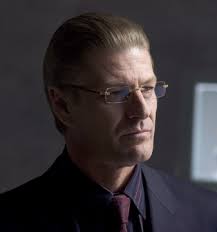
- And THERE’S Bean: Dr Merrick. Maybe a psych? Certainly a top person. And Lincoln knows that needing to see him means there’s something wrong…
- I adore his office. The art, the architecture, the desk-as-screen.
- His glasses are amazing – so early 21st century: frameless, rectangular.
- Slicked back hair, short of course.
- McGregor’s accent is very confused.
- (Steve Buscemi!)
- A pod with “Merrick something” on it, with a human inside… so Dr Merrick is the person in charge then. And thus we discover that the facility is making humans, and the whole “surviving a catastrophe” thing is a lie.
- The xbox boxing arena is terrifying.
- Bean sitting in his room, alone, to watch the Lottery: fireplace, high ceilings, very different from the rest of the place.
- McGregor gets to the area he’s not meant to be in… and then Bean sees him on the security footage and loses his nut.
- Bean does coldly furious very nicely.
- Finally realised who Jones Three Echo is: Neelix, from Star Trek: Voyager.
- Bean selling his product to rich people: the ability to grow a body that will provide organs, and promising that all bodies are vegetative, rather than aware.
- But apparently without living, the organs fail. Which… seems unlikely, but it’s a good story.
- (Djimon Hounsou! Oh. Except he’s a bit evil. Well, a security consultant anyway.)
- Hearing the original Tom Lincoln with Ewan M’s actual accent is wild.
- Bean announces that because of the defect – developing curiosity – four product lines are going to be… eliminated.
- And then he shows that he has a god complex, and that he has convinced himself his ‘products’ have no souls.
- (Dijon Hounsou comes good!)
- Bean actually gets his hands dirty, going after Lincoln with a gun! Fisticuffs ensue.
- Also his hair gets mussed.
- And then he dies because their fight means he ends up hanged.
- Everyone gets out, and now there’s going to be a terrible problem with famous people having clones hanging around, plus they all need to be taught how to live in the world… but that’s not the problem of this film.
- Thing I just realised: I know it’s a completely different situation, but there’s definitely a similarity between this and Severance. Innies and outies.
Verdict: Corporate villain. Even the starting point of his journey – wanting to provide organs for rich people so they can live longer – is grotesque: there’s no suggestion that he starts from a particularly altruistic position. And then willingly keeping conscious humans in prison for his own greed? Evil.
Movies: 5. Beans dead: 4.
Esperance, by Adam Oyebanji

Read courtesy of NetGalley and the publisher. It’s out in May.
Starts as a police procedural, which is fine by me – I love them: Chicago cops turn up to investigate a death, the cause of death is very weird, and how it was managed is baffling. Cops hear about a similar murder a long way across the country…
Meanwhile, someone has just arrived in England – we don’t know where from – and talks like someone from a bad 1930s film. She meets a grifter, they fall into some trouble together, and of course their paths eventually cross the paths of the American cops. And I can’t tell you why or how without going into some of the key revelations, the discovery which was a massive part of why I enjoyed this novel so much.
I spent a lot of this novel not really sure who the traveller was, where they were from, and what their purpose would turn out to be. Sometimes this sort of suspense is really annoying, but not here: although their overall intention was mysterious, Oyebanji still managed to create a character who was fascinating and appealing enough that I wanted to keep hanging out with them. He also does some very clever things with the American cops, I think, although as a white Australian I’m really not in a position to fully comment on that.
The book is fantastic. There’s wonderful characters, excellent interactions between them, and an intriguing and compelling mystery. It covers racism, mammoth questions like what justice really is or looks like – and is a standalone story. Highly recommended.
Beast, by Jade Linwood
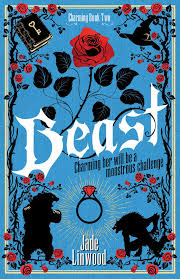
I read this courtesy of the publisher and NetGalley. It’s out in June, in Australia.
This was a lot of fun.
I haven’t read the first book, Charming, which presumably introduces the titular prince and the variety of ladies he has rescued. Fortunately, there was enough backstory provided – and without it being super info-dump-y – that that wasn’t too much of a problem; I picked up fairly quickly that Charming is every Prince Charming, that he’s therefore regarded as a conman and a rogue by the rescuees who have now banded together, and that there’s also some sort of curse on Charming himself, organised by Mephistopheles, that the ladies need to work with Charming to break. Which is all well and good until Charming gets pulled into yet another curse – the focus of this novel, which is of course the Beauty and the Beast one. And it’s gender-swapped, with Charming as the Beauty and a woman as the Beast.
It’s interesting to read a flipped B&B, especially when it’s primarily from the man’s perspective (now I want to read a flipped version from the woman’s perspective). Because of the sort of story this is, Charming never finds Beast particularly offensive, and indeed appreciates many of her qualities from early on. The novel does acknowledge that other men have not been as generous, with some reduced to gibbering wrecks because they’re incapable of seeing past the idea of a very large furry bipedal ‘animal’ coming towards them while inside a house. There’s no great interrogation here or psychoanalytical discussion of what it means to have been transformed; that’s not what this novel wants to do. But there is commentary on Beast having to use a tankard rather than a wine glass, and not wanting to eat in front of potential suitors, and a few other notes that compare how a well-bred lady of the pseudo-medieval society would be expected to look and behave compared with how she looks now.
Other fairy tales also get a look-in here, in particular Red Riding Hood and Hansel & Gretel; they are likewise fractured in really fascinating ways. Linwood seems to have had a lot of fun playing with all of these stories and thinking about how to make recognisable and yet just a bit other. (Red’s hanging out with werewolves; Gretel is traumatised from her childhood – and not by a witch – and now protects herself with bears.)
Fast-paced in a good way, easy to read, some delightful characters: this book was great.
Bean there, done that: The Fellowship of the Ring (2001)
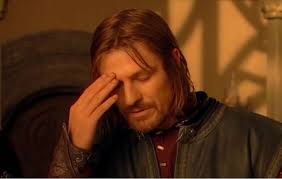
Takes a while to get to Boromir, but that’s ok. We know he’s on the way. Just need to get through the birthday party (not my favourite part of the story), the events in Bree, and the disaster at Weathertop. And THEN we get to Rivendell, and the Council of Elrond.
- Boromir’s entrance is glorious: hair flowing, shield on back, horse looking epic. The very picture of a warrior.
- The hair doesn’t look too bad: not as long as in Patriot Games, at least. And it suits the pseudo-medieval feel of the world.
- Boromir goes wandering, admiring art, meets Aragon… and realises who Aragorn is.
- Already we see some of Boromir’s trouble; ambition, a desire to be great, feeling overwhelmed by someone he thinks could be greater than him.
- Bean does stately very well – relating his dream, arguing with Gandalf from the point of view that he understands.
- And then Boromir gets spiteful: Gondor needs no king.
- “One does not simply walk into Mordor” – Boromir gets some of the great meme-worthy lines.
- Boromir shows his worth in accepting the decision of the Council. (Going just from the movie) I see no reason to suggest, from how this part is portrayed, that Boromir has any thought of treachery in this moment. He is committed to following what the others have decided. Partly to make sure Gondor get in on the honour, to be sure, but that’s understandable and not evil in itself.
- I really enjoy the ‘teaching the hobbits to fight’ scene. It’s about the most human Boromir gets to be, rather than the stuffed-shirt warrior – and shows us his connection to Merry and Pippin early on.
- Picking up the ring in the snow: poor Boromir. He’s far more fallible than he wants to be. (Also Bean plays this scene really nicely.)
- “This is no mine; it’s a tomb” – another great line.
- Nobody can doubt Boromir’s courage, with the way he goes wading into the pool to fight the basically-a-kraken.
- And again – as in the snow on Caradhas – Boromir takes care of Merry and Pippin.
- “They have a cave troll” – ngl, always love this moment. Every time.
- Again, in this fight Boromir shows his true worth; he is a skilled and fierce warrior.
- And again: crossing the broken stairs, Boromir jumps with Merry and Pippin.
- I knew all of these moments but I had never really put them together before. It’s quite lovely, actually.
- (Dwarves should be spoken to about the concept of balustrades, though.)
- It’s Boromir who holds Frodo back when Gandalf is about to fall – which makes sense: he’s probably the least connected to Gandalf of any of the Fellowship.
- When everyone is having a weep, Boromir comforts Gimli. And when Aragorn is being a tough leader, Boromir is the one who pleads to let them have a moment, “for pity’s sake.”
- Boromir’s gentle words to Frodo, about not carrying he weight of the dead, are revealing of who he could have been, with more encouragement.
- Ah Lothlorien. Poor Boromir’s background gives him no way of dealing with so many elves at once, and certainly not the power and majesty of Galadriel.
- What makes Boromir distraught is also revealing – the fear that Gondor is failing, that his father’s strength is failing, and what that will mean for his people and his city.
- And for just a moment, Boromir acknowledges Aragorn as king, and that his return to the city will be exactly what they need.
- Bean plays distraught well.
- I have never noticed that Boromir doesn’t get a special gift (aside from a cloak) from Galadriel.
- Boromir’s boat has Merry and Pippin in it.
- I don’t blame Boromir for trying to convince Aragorn to go via Gondor. He has so much faith in the strength of his people, and it blinds him to alternatives – and to Gondor’s failings.
- I like that Boromir is collecting firewood – he’s not too proud to do menial work.
- “You are not yourself” – this is the key, and Frodo knows it: the ring is using Boromir’s best qualities and twisting them.
- Bean plays the changing emotions in this section beautifully.
- And Boromir gets one glorious last stand. Protecting Merry and Pippin.
- He does a marvellous death scene, Bean.
- Boromir and Aragorn’s last scene is a beautiful one. It’s a cliche, the deathbed clarity, but I don’t care: “I would have followed you, my brother, my captain, my king.”
- Farewell Boromir, over the Falls of Rauros you go.
Verdict: A valiant warrior, let down by his upbringing (OK, so I know that from the rest of the trilogy, whatever) and ultimately susceptible to the ring precisely because he wants to bring glory and honour to his city-state and can’t see the broader picture.
Movies: 4. Beans dead: 3.
Bean there, done that: Ronin (1998)
I have absolutely no idea when I watched this film. I wouldn’t have seen it at the cinema, so it will have been at home sometime… something like two decades ago??
So, it’s a heist…
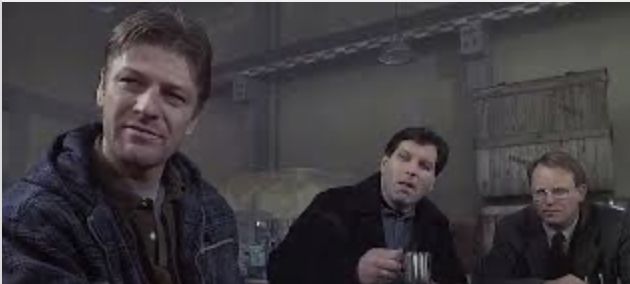
- Sean Bean is Spence, one of the men employed to retrieve a case.
- He seems to be ex-military, and calls himself “a weapons man.” Pretty sure that’s not an innuendo. At least, not in this context.
- (It’s a pretty great cast: I am indifferent towards De Niro, myself, but that’s a very young Stellan Skarsgard, and I often love Jean Reno. I recognise Natascha McElhone but I have no idea from where. And
Elliot CarverJonathan Pryce. ) - He’s English, and has short hair again (I approve). He’s also super nervy, and likes to big-note himself.
- Suddenly Spence is taking over the gun-buying operation? And he’s very jumpy. This seems like a very bad idea.
- It was. Sniper on the bridge, everybody shooting… Spence is very cranky. Absolutely no self-control.
- And then, when they’re back in the car, he’s manic: pleased and excited way out of proportion.
- And then he vomits. Is he high?
- I had completely forgotten how epic the driving is in this film. I know it’s what the film is known for, but knowing is different from seeing.
- Spence then tries to take over the briefing… but Sam / De Niro calls him, and there’s a scuffle, out of which Spence looks very poor. It’s beginning to sound like Spence isn’t the military man he claims to be.
- And so he is let go. With a stark warning about needing to forget the people he was working for.
- Wait, is that the end of Sean Bean in this film??
Oh well. Bean has left the building.
Continue reading →
 Randomly Yours, Alex