Rosalind’s Siblings – anthology
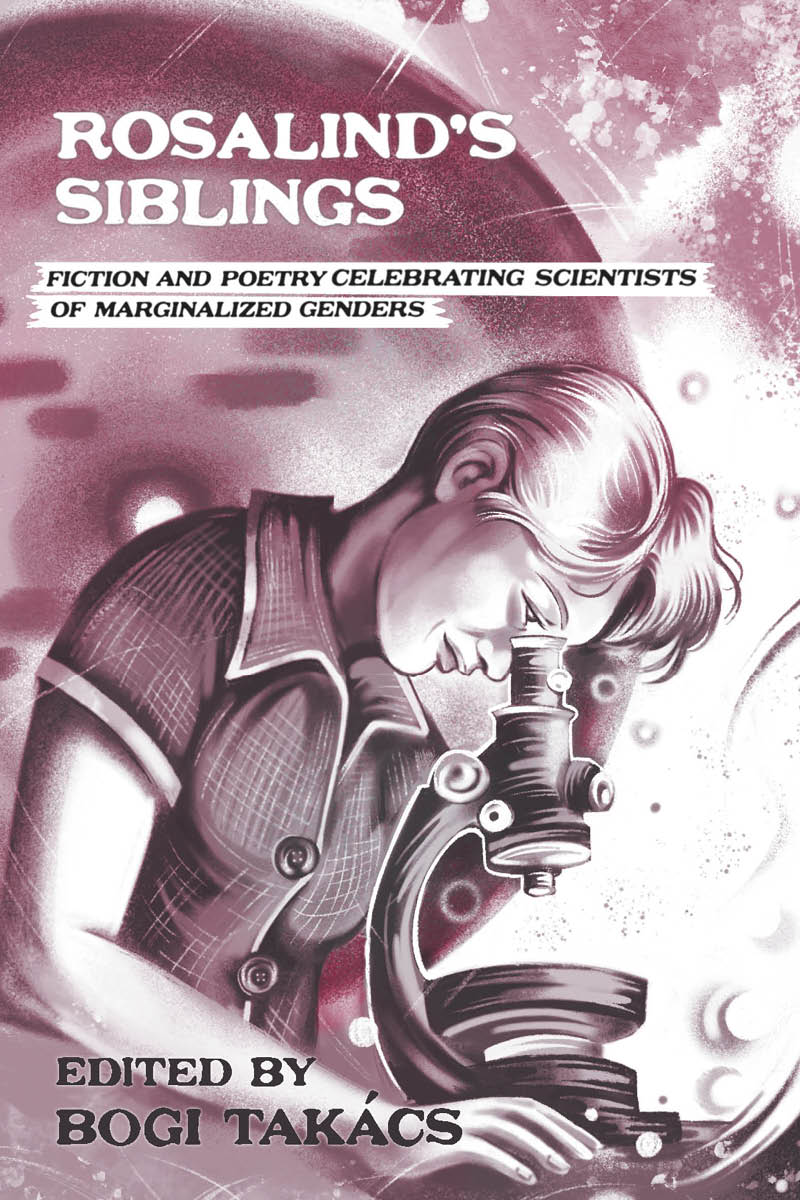
I heard about this anthology c/ Bogi Takács, the editor, and the premise immediately grabbed me (also I trust Bogi’s sensibility). It can be bought here.
The premise here – as the subtitle says – is speculative fiction stories about scientists who are marginalised due to their gender or sex, in honour of Rosalind Franklin – a woman whose scientific discoveries were key to the unravelling of DNA, but who never received the recognition that Watson and Crick did in their own time.
In Takács’ introduction, they note that the stories don’t take a simplistic view of science; there are stories where science is generally a positive force, and stories where it’s not. There are a variety of different sciences presented, a variety of ways of doing science, and a variety of contexts as well. There’s also a range of characters, across gender and and sexuality and neurodiversity and experience and ethnicity and everything else. This reflects the authors themselves, who are also really diverse. The stories, too, vary in their speculative fiction-ness; near-future, far-future, magical realism, on Earth or in the solar system or far away. There are two ‘trans folk around Venus’ stories, as Takács rather amusedly notes – and they are placed one after the other! – but they’re so different that I’m not sure I would have clicked to that similarity without having been made aware of it from the introduction (stories by Tessa Fisher and Cameron Van Sant; they’re both a delight).
As with all anthologies, I didn’t love every single one of these stories – that would be too much to expect. But there were zero stories where I wondered why an editor would include it, and all of them fit the brief, so those are pretty good marks. DA Xieolin Spires’ “The Vanishing of Ultratatts” was wonderful and hinted at an enormous amount of worldbuilding behind the story. Leigh Harlen’s “Singing Goblin Songs” was a delight, “If Strange Things Happen Where She Is” (Premee Mohamed) has gut-wrenching timeliness (science in a time of war), and “To Keep the Way” (Phoebe Barton) utterly and appropriately chilling.

 Randomly Yours, Alex