2016 Snapshot: Nike Sulway
Nike Sulway lives and works in regional Queensland. She is the writer of the books Dying in the First Person, Rupetta, The Bone Flute, The True Green of Hope, and What The Sky Knows. In 2014, Rupetta became the first work by an Australian author to win the James Tiptree, Jr Award. Nike can be found at her blog.
Your most recent novel is Dying in the First Person, which has been getting some rave reviews. There’s a lot going on in the book, but one aspect that you’ve written a little bit about on your blog is the idea of paracosms, or invented worlds. What drew you to the idea of including one in this novel? What do you think paracosms say about individuals or society?
I’m not sure I can put my finger on a single moment when I first encountered the idea of a paracosm, and wanted to write about it. Do other writers really have those singular moments when ideas flash into their thoughts as subjects? I’m not sure that’s every happened for me, instead it’s slow accretion, slow obsessions. Anyway, there are probably at least a few things. As a child, I had a really good friend, a ‘bosom buddy’ as Anne would have said, and we had a shared paracosm. It wasn’t quite like Nahum: it didn’t exist in some ‘other’, undiscovered place. It was the bushland that extended out from the back of her house. But in our relationship with it, that bushland was populated by storms of magical creatures. Fairies especially, but also a terrible, cruel Bunyip, and winged horses and trolls. When we left the house to go bushwalking, we entered that parallel world, as if through a magical portal. One of the interesting things about that process, to me now, is that when we entered the bushland, we also put on other versions of ourselves. We had different names and different bodies. And I remember, very distinctly, looking at my friend, Cavel, and seeing her as other self. Magical and strange. And wondering if she saw what I thought of as my true self, too.
When I came to writing this novel, I think there were several things that collided in my imagination. I’d been working at the LOTE centre (a now-defunct division of the Department of Education, dedicated to supporting the teaching of Languages Other Than English), so I’d spent some time immersed in a community of workers who all had a language other than English as their first language. And then I spent some time in the Netherlands, with my family. My Oma had dementia, and one of the effects of that, for her, was that she slipped in and out of the languages she spoke–particularly English and Dutch–weaving them together in a way that made sense to her, but was often difficult for those caring for her. There were times when her shifts made a kind of mnemonic sense: when she spoke about living in Australia, she would use English, and vice versa, but at other times there didn’t seem to be any rhyme or reason for the shifts. And she was very old, and very frail. I was conscious — we all were — that she was dying. So these ideas, of languages and how they relate to our sense of self and community and family, of alternative realities and shared, created worlds, and the loss of love. The way families can be physically separated, but deeply emotionally connected to each other, all came together in these two brothers, and Nahum, and the stories they wrote for each other.
I’m not sure I can say anything conclusive about what paracosms say about individuals or society for others. That’s much too big a question for me to answer. But I do see patterns in the research I’ve done around childhood paracosms, in particular. Oddly, they’re often connected to children who are conceived of as geniuses — as peculiarly talented or sensitive. They seem, most often, to be expressions of a utopian ideal, but one in which darkness nevertheless lurks. They might be kingdoms where children rule, or where children are not policed by parents and teachers, but there are monsters lurking at the edges of those worlds. War and death and loss.
I suspect that paracosms, like most created worlds in speculative fiction, are most often mirrors that their creators hold up to the real world. Distorted reflections that reveal things about ourselves and our worlds, and poke at them. Sometimes, they’re forms through which we can ask those ‘what if’ questions: what if the moon were made of cheese, what if women were equal citizens, what if gender was understood differently, what if race was understood differently. In Nahum, Samuel and Morgan create a world in which, unconsciously, they wonder what would happen if the only citizens of the world were men, and each of them lived alone.
You spend a good portion of your life talking about writing, and teaching others about it. Does this help or hinder your own writing? And I’m very curious – has the number of students taking such courses increased or decreased lately?
A little of both, actually. Sometimes it’s inspiring and challenging; sometimes it’s enervating and overwhelming. At times, just at a very banal and practical level, the teaching (and other aspects of my day job) mean I don’t have time to write, or the imaginative energy left after long days of meetings and administration, email and committee work. But the classroom, or workshop, and the conversations I have with my postgraduate students, those are most often rich, strange and challenging. I think they make me a better writer. Having to help others become better writers, helping them find the tools they need to express what they want to express, challenges me to do the same thing. To constantly question what I think good writing is, and how it can be achieved, and what it can do. It keeps me from becoming lazy or complacent.
I work in a regional university, and I’ve only been there a couple of years, after a long ‘absence’ from the university sector. At USQ we have a relatively new Creative Writing program, so it’s been growing steadily since I took up the role two years ago. That said, late last year I went to the annual AAWP (Australasian Association of Writing Programs) conference, in Melbourne. It’s a conference that I’d attended annually in my early years as an academic, from the second year it ran. And I was overwhelmed by the number of people there. It was HUGE. So I think, totally anecdotally, that there’s been an enormous increase in the number of students enrolling in undergraduate writing programs, but even more radical growth in postgraduate enrolments, particularly research Masters and PhDs.
Your novels to date are quite different from one another, and your short stories likewise. Do you have ideas or characters you’re hoping to explore in future stories?
I wonder if that’s confusing for readers. I have so many passions as a reader, and I think that that diversity in my reading passions is reflected in the styles and genres of stories that I end up writing. And perhaps my teaching influences me, too. Particularly in the undergraduate program, I’m concerned with offering students the opportunity to write across a range of styles and genres, and that means I’m constantly thinking about, reading, and discussing a wild array of works. This week, it’s been Nature Writing, Science Fiction, Ecological Criticism, Fairy Tales, Fantasy, Historical Fiction and the personal essay. You can probably expect works in ALL those genres from me at some point.
At the moment, I’m working on two novels (one of which might evolve into a kind of not-novel: we’ll see). One is the first of a trilogy of historical novels. It’s called The Orphan King, and is about Edward VI, the orphaned son of Henry VIII and Jane Seymour. The other two books in that series are about his two sisters, each of whom, like him, was the child of Henry VIII, both of whom became queens of England. The three orphaned monarchs are haunted by a trilogy of ghosts: their dead mothers: Jane Seymour, Katharine of Aragorn, and Anne Boleyn.
The other book, Tern, is a fairy tale. At least, what I think of as a fairy tale (to me, Rupetta was a fairy tale, too). It’s the story of a girl, Tern, whose several sisters are cast out of the family home after drought ruins their father and his new wife, pregnant with his first son, refuses to have them in her home. Tern sets out to find each of her sisters, but this is complicated by the fact that each of them has become something else. An animal, a piece of the landscape. So she’s walking around Australia—her and her dog—seeking women who aren’t women in an Australia that’s not quite, but is absolutely, the one you think you know.
What Australian work have you loved recently?
I have been reading a lot of essays lately: I read and absolutely adored Rebecca Giggs’s essay ‘Whale Fall‘. As far as books. My socks were blown off by Quinn Eades’s ‘All The Beginnings’, Josephine Rowe’s ‘A Faithful, Loving Animal’ and by Libby Connors amazing feat of historical work ‘Warrior: A Legendary Leader’s Dramatic Life and Violent Death on the Colonial Frontier’, which tells the story of the Indigenous warrior and lawman of the Dalla people, Dundalli. The book is more than just an account of one man’s life. It’s an account of his people, and of the culture that white ‘settlers’ tried so hard to wipe out.
Which author (living or dead) would you most like to sit next to on a long plane trip and why?
A dead one, so that I can use their seat and my own—really stretch out while they hover without a body in the aisle–and not arrive, at the other end of my international plan trip, feeling like Death.
More seriously? Recently, I listened to David Sedaris reading and discussing Miranda July’s short story ‘Roy Spivey’. This is a story that begins: “Twice I have sat next to a famous man on an airplane.” One of the men the narrator sits beside is “a Hollywood heartthrob who is married to a starlet”. It’s an astonishingly good, heartbreaking, funny, surprising story. July is never disappointing on any of those grounds. And really, I want to sit next to her so I’ll appear, with a name that is ‘almost an anagram’ of my real name, in a future story, poem, film, or artwork by Miranda July.
Miranda July would have had a better answer for this question.
2016 Snapshot: Lisa L Hannett
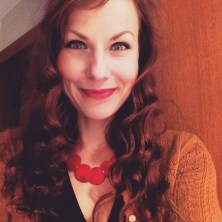 Lisa L. Hannett has had over 60 short stories appear in venues including Clarkesworld, Fantasy, Weird Tales, Apex, the Year’s Best Australian Fantasy and Horror, and Imaginarium: Best Canadian Speculative Writing. She has won four Aurealis Awards, including Best Collection for her first book, Bluegrass Symphony, which was also nominated for a World Fantasy Award. Her first novel, Lament for the Afterlife, was published in 2015. You can find her online at http://lisahannett.com and on Twitter @LisaLHannett
You recently won the Ditmar Award for Best Novel for Lament for the Afterlife – congratulations! What’s the response been like to this novel, and what was it like to write?
Thanks! I was (and continue to be) so chuffed that Lament won a Ditmar for Best Novel; it was a wonderful and surreal experience hosting the awards ceremony at Natcon this year, having no idea who the winners would be, and then announcing my own name in that category! More importantly, though, it felt really special to receive this nod from my peers, especially since Lament is my first novel.
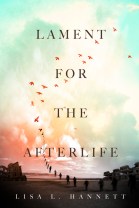 Writing this book was a fascinating challenge, to be honest. At one of the launches, I mentioned that Lament was a complicated response to my perhaps naïve question: “Why war?” and that’s still how I think of it. I am perpetually interested in war stories — particularly wars that seem futile, or that drag on endlessly, or that seem hopeless — and I’m also constantly attracted to narratives exploring ideas of masculinity and/or what it means to “be a man”, which is no doubt also one of the reasons I’m so hooked on researching and writing about the Viking Age. I’m always wondering what happens to the regular folks when they’re confronted with huge social upheavals, and I’m also interested in the power of language to effect change (for better or worse). So, bearing all this in mind, working on Lament meant I was immersed in a bunch of topics that I find so absorbing, which made writing it — well, I won’t say fun because it was sometimes really hard, especially when dealing with such harrowing material. (The footage I watched of WWI soldiers suffering from shellshock while researching this story will be burned into my memory forever.) But it was engrossing, and putting this story together certainly made me grow as a writer. The book’s unconventional structure meant that I could write Peytr’s life narrative out of sequence, which I’d never attempted before, and that also opened up a lot of possibilities in terms of characterisation, plot, and world building. It also meant I avoided the mid-novel slump, since I wrote the middle of the novel after writing everything but the final chapter. It’s a bleak story, so people who are after a cheerful escape won’t necessarily find it’s up their alley, but I couldn’t in good conscience write this story in any other way.
One of the best responses I got was from my editor at ChiZine, who said she was bawling her eyes out at the end, which was the perfect reaction in my opinion. Another brilliant surprise I got was listening to the Writer & The Critic’s “Fab 50” episode and hearing Kirstyn McDermott (whose writing I admire immensely) pick it as her #1! That was pretty exciting. Of course, it was so great seeing Lament get positive reviews on Kirkus, i09, Publishers Weekly, SF Signal and to see it longlisted for the Sunburst Award in Canada. But probably the very best responses have been from soldiers who’ve read the book, given it five stars, then said I’d nailed the guys’ sweary voices, the overall tone, the confusion and dread and boredom of being on the frontlines, and so on. Man, that was as much an honour as it was a relief.
You and Angela Slatter have collaborated on a number of collections in Australia, such as The Female Factory, and these works are quite different for you both. How do you go about writing those stories?
In many ways, Angela and I have such different interests in reading and writing — she’s an enormous crime buff, for instance, and can write a cracking mystery tale, whereas I love reading and watching crime stories but don’t know if I’d ever write one; she’s got such a strong commercial voice, whereas I love veering off into experimental narrative structures; she’s often drawn to writing strong female characters, which I also love doing, but I find myself often depicting vulnerable men — but we have so very many interests in common (mythology, history, fairy tales, etc etc etc) there’s always a place where our styles and ideas can overlap.
When it came to writing The Female Factory, Alisa had given us the challenge of creating Science Fiction pieces (which neither of us do overly much) so it was fantastic having two minds on the job! We brainstormed as much for that collection, I’d say, as we did when writing Midnight and Moonshine, even though that book was about three times longer. No matter what we’re working on together — whether it’s stories about raven-women and Norse gods or about kids cobbling a mother together out of stolen body parts — we always discuss the main ideas, character arcs and plot points together before starting a project. Then, usually, one of us writes the opening, or a key scene, or something crucial to kick things off. Once there are words on the page, we pass the document back and forth between us — adding bits, deleting bits, editing each other’s paragraphs, building on them — until we’ve got the whole thing drafted. This process sometimes takes up to ten drafts, which is many more than we do when working on stories individually. Mostly this is because we’re perfectionists, but also because we’re communicating so clearly and extensively throughout the drafting process; we add loads of comment bubbles explaining the changes we’ve made, and why, so that we’re both on the same page and aiming for the same narrative goals. Also, by the time we’ve gone through this many drafts, the “voice” of the piece no longer seems to be either just Angela’s or just mine. Instead, it’s a third voice that you won’t find in our individual projects — and I think that’s an important feature of our collaborations. Most of all, our partnership works because we’re so open to discussion, we’re not precious about being edited, and because we trust each other implicitly.
You often seem to have a lot of projects on the go at the same time. What’s the most exciting one you’re working on at the moment?
I’ll narrow it down to two because I’m equally excited about them! I’m a whisker away from finishing the edits on my next collection, The Homesteaders, which is a sort of follow-up book to Bluegrass Symphony. Backwoods witches, immortal soothsayers, bear-shaped child-stealers, raven-shaped miners, and lots of ghosts appear in these short stories, and they’re all tinged with a down-home country twang. I’m also doing rewrites on my next novel, Ketill’s Daughter, which is the first in a two-book series called The Invisible Woman. Set in Viking Age Norway, this first book tells the early story of Unn the Deep-Minded — wife of one king, mother to a second, and eventually a famous Viking herself — as she struggles to find her own fame and fate in this warrior world, all while her shape-shifting time-travelling fylgja (a kind of spirit guide) keeps butting in to mess things up for her… The second book in the series (called Deep-Minded) will follow Unn out of Norway into medieval Ireland, Scotland, and finally Iceland.
What Australian work have you loved recently?
Alison Goodman’s Lady Helen / The Dark Days Club is such a rollicking read! I enjoyed it so much, I’m dying to read the next book in the series. James Bradley’s Clade was an astounding work of speculative fiction, and though I read it last year, I still think about it frequently. Another Book One I devoured last year was Kim Wilkins’ Daughters of the Storm; I’m hanging out for Sisters of the Fire! And of course, Angela Slatter’s Vigil: it’s a really fun urban fantasy set in Brisbane, and I gulped it down almost whole.
Which author (living or dead) would you most like to sit next to on a long plane trip and why?
Well, they’d have to be outgoing enough to kick off the conversation because, usually, I’m one of those people on planes who’s like, I don’t care how close together our seats are: please don’t talk to me I just want to read my book and watch a crappy movie and hopefully fall asleep. BUT, assuming I was in a chatty mood … and excluding any writers who are currently my friends (because how to choose only one?!) … I’m going to go with the first name that pops into my mind, and that’s David Malouf. I’ve recently re-read Ransom, which is an incredible reimagining of the story of King Priam, Hector, and Achilles, and good lord it’s a brilliant book — as brilliant as An Imaginary Life, really — and I’d love to have a long talk with him about it, antiquity, poetry, myths, short stories, the libretti he’s written, the great breadth of his knowledge about language, life, the universe, and everything — and I’d also like to ask him where he’s stashed the painting that’s ageing on his behalf (because, seriously, how is it possible that he’s 82? He looks at least twenty years younger. Witchcraft, I say! Or a supernatural portrait.)
Crossposted to the Snapshot blog, along with all the other interviews.
The Lost Child of Lychford
 On sale 22 November from Tor.com. Sent to me by the publisher at no cost.
Previously in Lychford, three women discovered that Bad Things were going down in both a spiritual and literal sense in their village. Together, they managed.
Now, it’s some time later… in fact, it’s Christmas. So you just know something bad is going to happen. Lizzie is the pastor and she’s relatively settled; Autumn is still running her magic shop and she’s taken on Judith, ostensibly as her shop assistant but actually because Autumn is Judith’s apprentice in witchy business. And yes, something bad is happening. Whether it’s worse than the events of the first story is debatable; it certainly affects a few people more immediately, viscerally and unpleasantly than the attempted Evilness of the first story.
Like last time, Judith – the old woman who is cranky and impatient – is my favourite. I felt that she got a bit less airtime this time, although I haven’t actually compared the two; it was just my gut feeling. Nonetheless cranky ladies FTW; I love her practical get-it-done nature and her impatience with what she sees as uselessness. I also love that she is willing to work with the younger women and accept that there are other ways of doing things… eventually…. plus she clearly loves the town, and her son; everything she’s about is protecting the place, and indeed giving everything in the service of that. She takes her responsibilities very seriously.
Lizzie is a bit more fleshed out here than in the first story; she’s less burdened by guilt (as I remember it) and therefore (?causality?) able to act a bit more. Autumn, though, continues to be almost a cipher. She doesn’t get much character development or airtime (although she does make a tremendous sacrifice which Cornell writes nicely).
Again, I’m not sure that this is especially a huge contribution to witchy stories, but it’s engaging and well-written, fast-paced and enjoyable.
Dusk or Dark or Dawn or Day: Seanan McGuire
 Due out from Tor.com in January 2017. Sent to me by the publisher at no cost.
I’m really not one for what’s hot in genre. I only knew about the zombie/unicorn thing when the awesome Zombies vs Unicorns came out. Still, if Seanan McGuire is writing about ghosts, that probably means they either are, or are about to be, hot, right?
Jenna is a ghost, living in New York. The story opens with her death, and as it progresses we discover more and more about what it means to be a ghost – what they can do, if not why. And it’s all about time. Ghosts exist because of people who die before their time, and that gives them a connection to time – giving it and taking it.
This is a just-slightly-alternate version of our world, with some people at least being aware of ghosts on some level. And there are also witches, who have an uneasy relationship with ghosts. And with each other.
Jenna is often focussed on her own time on earth, and when she will be able to move on. Occasionally, this preoccupation got a little wearing – understandable, but sometimes not seeming relevant to the narrative. Nonetheless the narrative flows well, as you would expect from McGuire, but more than that for me the story is about delightful relationships. Not all of the relationships are easy – Jenna and Brenda, for instance, have known each other for many years but wouldn’t be described as BFFs by any stretch of the imagination. Perhaps my favourite is Jenna and Delia; in fact I would love to see an entire story about Delia, Jenna’s landlady who is a ghost and one feisty, feisty lady. With a parrot called Avocado.
Look, it’s Seanan McGuire. You know you want to read it. I’m sorry it’s not out until January, but it gives you something to look forward to, right?
Godless, by Ben Peek
 This book was sent to me by the author, at no cost.
It was fascinating, when I started this, to realise just how long it’s been since I read some epic fantasy.
Quite a while.
This is definitely epic fantasy. You can tell because the blurb begins by telling you it’s fifteen thousand years since something happened, and that something is the War of the Gods rather than a generation ship leaving Earth.
So the gods are dead (or dying), and most humans have just been getting on with their lives: knowing that there used to be gods, and that the consequences of their war and deaths are all around – in the mountains called the Spine of Ger, in the ocean called Leviathan’s Blood – but really, just living. There are a few exceptions, though: those who seem to have some of the gods’ power in them. For most humans, those people are cursed and to be avoided – not least because some of them used their powers to rule parts of the world, with varying levels of success or violence.
The narrative is told through three different characters. Ayae is young, a cartographer’s apprentice, a refugee in Mireea, and about to discover that she is cursed. The middle-aged Bueralan is a mercenary captain employed by Mireea who finds himself going surprising places. And Zaifyr… well, he’s completely unexpected. Old, troubled, complex, selfish, blunt, powerful. Much as I think he would hate it, he really binds everything in the narrative together because of his history, and because of his actions throughout the story.
Godless has action and betrayal, sieges and death and confusion and loss. So, epic. And it’s the first of a trilogy, so nothing is resolved – well, there are deaths, but given this situation that may actually not be as final as in other stories. This book definitely doesn’t stand by itself because the last couple of pages are evil, evil cliffhangers.
My one real problem with this book had more to do with the presentation than the narrative. There are numerous points at which characters are reminiscing about the past, but the text’s appearance doesn’t make it clear what’s happening in the past or in the present. In some books that’s because the characters themselves are confused, but that’s not the case here. It would have been good, therefore, to have the font make the time differences obvious – or even just a break in the text itself would have helped. It meant that I had to work harder than was necessary. There were also a number of typos and odd sentence structures, which frustrated me.
I am definitely looking forward to the second book in the series.
Howl’s Moving Castle
 Yes I’ve only just discovered Diana Wynne Jones. Yes that’s very sad. Yes I understand you read them as a child. No, I’ve not yet seen the movie.
Moving on.
The book is a delight. I myself am the eldest of three (although there’s a brother in the middle – unlike Sophie I’m not burdened with two sisters) so I totally felt for Sophie and her lack of expectations, as the eldest of the family, as well as the burden of expectations. I also loved that Jones upsets fairytale expectations with the half-sister not being evil. And then I REALLY liked that after she is cursed and becomes old, Sophie takes complete advantage of the perks that age provides – being a crone provides lots of leeway, as Ursula Le Guin, amongst others, has discussed. You get to honest and irritated and people have to put up with you!
Speaking of, I see similarities between Jones and Le Guin, in that both of them have a relatively sparse style. Jones doesn’t spend much time explaining the world, explaining what the magic system is and how it works and all the backstory of the characters etc etc. She just dumps you in the world that’s a bit familiar and a bit weird and expects that you’ll be fine. And you are, because the people – even when they’re a fire demon – are recognisable and sympathetic.
Meanwhile, there’s a castle trundling about the moors. That’s awesome.
This is a great fun book with a bit of adventure, a bit of amusing romance here and there that’s kind of gently skewered while also being treated gently, a few surprises, and a young woman mostly enjoying being a crotchety old woman. Plus, being in trade is completely natural and fine, dominating others is not ok, and pre-judging people can get you into trouble.
Don’t read this when you’re 36 unless you miss out when you’re 12. Read it when you’re 12 if you possibly can.
Illume
 I have known Kate Smith for a very long time, and I’ve been reading bits of her fiction for nearly that long. The thing about Smith’s writing is that she is often quite opaque – if you don’t get her song lyric references or her film references, you might be a bit lost. But she writes with a lot of passion and a lot of quirky description – which sometimes gets away from her but sometimes really works nicely.
Illume is set in Paris, and focusses on Thane, who works for the equivalent of UNIT or Shadow Unit or all the other not-really-police-branches who deal with the things that go bump in the night. This time, it’s about lovers who think they can make their love immortal, dangerous mirrors, and vampires. You never really get to the bottom of the characters who make the narrative tick; they’re surface, trading witty repartee and dangerous allusions and making intuitive links. That’s not to say they’re superficial – I don’t think they are – but Smith doesn’t really show us what makes even Thane tick, let alone his partner Mal or his crime-partner Genetta or any of the other odd bods who rock up. And I don’t think this is an oversight on Smith’s part; I think it’s quite deliberate. She seems more interested in the glitz and suggestive shadows than in deep psychological questions. So if you’re up for something light-hearted and fast-paced and quirky – definitely quirky – in the urban fantasy vein, this is your thing.
Galactic Suburbia 145
In which we all had a very exciting weekend. You can get us from iTunes or at Galactic Suburbia.
Launched & pre-launched at Continuum: Defying Doomsday and Something New Can Come Into This World
Tansy & the Silent Producer totally got married!
British Fantasy Award shortlist
CULTURE CONSUMED:
Alisa: The Martian, Trepalium
Tansy: The Geek Feminist Revolution by Kameron Hurley, Cleverman, UnReal, Which Witch by Eva Ibbotson
Alex: Angela Slatter binge: Vigil, Bitterwood Bible and Other Recountings, Sourdough and Other Stories, Black-Winged Angels. Also Revolution School (ep 1 until July 6)
Alex’s new podcast! Acts of Kitchen
Tansy’s new superhero story at The Book Smugglers: Kid Dark Against the Machine
On superheroes, kids, gender and role models: Tansy’s Inspiration & Influences
Please send feedback to us at galacticsuburbia@gmail.com, follow us on Twitter at @galacticsuburbs, check out Galactic Suburbia Podcast on Facebook, support us at Patreon and don’t forget to leave a review on iTunes if you love us!
Kid Dark Against the Machine
 Another short story from Roberts set in the world of “Cookie Cutter Superhero”, from the anthology Kaleidoscope. It’s a world where there’s a machine that makes people superheroes… for a time. Where the first story looked at what might happen when a girl with a physical disability got to the machine, this one looks at the aftermath for one person – what’s it like when you didn’t choose to be a superhero and then you have to go back to being ‘normal’?
I love this story, and I love this world. I love Griff, struggling to deal with the ordinary world and how to fit in to it after a period of fame. I love how Roberts imagines super villains. And I love the hints at what it’s like to have a sidekick thrust on you when you really don’t want one.
You can read it over here. Free!
The Philosopher Kings
 This was really quite different from The Just City. Where I felt that the first book was incredibly focussed on dialogue and discussion about what excellence is, what makes a just city, and how to live out Plato’s ideals – and I don’t mean any of that in a bad way, I adored it – this had a lot more action. What discussion there was often didn’t feel as grounded in philosophy because it was moving away from classical sources and into more personal, I think, reflections on being and existing. This is not necessarily a bad thing, but it is a difference.
There are spoilers below for The Just City.
This is taking place twenty years after the events of the first book. Apollo is still there but Athene is still off in a huff. The place has fractured even further than it looked like it would when Kebes and his crew left; now there are several different cities on the island, all claiming to be Doing Plato in the Right Way – and all looking quite different. I LOVE this idea and wish there had been a bit more about how and why the cities were different. There is some, and it was enough for a taste, but I wanted extra.
Anyway the focus is still on Apollo and his family, so it’s still focussed on the original city. The narrators are Apollo, again, and Maia, again – and I liked keeping these original two because they have changed so much in some ways, and not in others. Maia especially has of course moved further away from the 18th-century girl she used to be. The additional narrator in the book is Arete (which means excellence), daughter of Apollo and Simmea. Yup. She’s quite young and very different in perspective compared to Apollo (natch) or Simmea when she was young because she’s had such a different experience – no being a slave for her, as for her mother, but instead a loving family environment.
The action is mostly spurred by one tragic act which has repercussions for a number of people although not for the entire city necessarily, which is another difference between this and the first; another way that it’s more personal, rather than society-wide. It does lead Apollo to consider more about the realities of being human and all, of course.
I enjoyed it, although not quite as much as The Just City. I cannot wait for the next book because WHOA what an ending.

 Randomly Yours, Alex