Twilight Robbery: the new(ish) Frances Hardinge novel

Reading Frances Hardinge is all about Saracen, for me. Saracen the evil-eyed bully-boy goose.
Of course, there is also Mosca, his owner. This is a world where so many little gods – the Beloved – are worshipped that rather than having their own day, the Beloved have certain hours of a day devoted to them; being born in a Beloved’s time determines your name and, in people’s eyes, your very nature. Mosca was born at the time of Palpitattle, He Who Keeps Flies out of Jam and Butterchurns – Lord of the Flies, if you will. It is an inauspicious name, to say the least, and Mosca’s fierce black eyes and equally fierce temper, and occasional propensity for playing fast and loose with the strict letter of the law, do not help her case. Nor does her ownership and protectiveness of a certain winged warrior. She is wonderful.
There’s also Eponymous Clent, Mosca’s… well. Friend? Protector? She wouldn’t like either of those terms. Co-conspirator, perhaps; ally, usually. Swindler, con-man, runner-away-from-debts and hater of Saracen, Eponymous can usually be relied on to talk his and Mosca’s way out of the trouble that he or she has managed to talk them into. Except at the beginning of this story, where he is in a debtor’s prison and for some reason the town doesn’t seem willing to accept poetry in lieu of actual currency.
Saracen plays a small, though vital, part in the story, just as he did in the preceding novel, Fly By Night – one of my favourite YA books. This time, despite the important role Mosca and Eponymous played in Mandelion, they find themselves once again on the road with little coin for bread or board. Deciding to head for the other side of the river, they find themselves in Toll, a town which prides itself on having the only real bridge across the Langfeather. As with many towns with such a precious commodity and monopoly, Toll is pretty smug. It’s also really, really weird, with some serious discrepancies between Toll-by-Day and Toll-by-Night, which of course Mosca and Eponymous and Saracen end up finding out all about. They just can’t seem to help themselves; start off with a good con or maybe a chance at a reward, ending up uncovering all sorts of interesting things that all sorts of interesting people would prefer to keep covered, thanks all the same, and can I roast your goose?
Hardinge has a wonderful way with words, and is a deft hand at descriptive prose; she’s created a really interesting world here. It’s a fantasy insofar as it’s not our she’s writing about; but at the same time there it’s not magical, nor steampunk. It’s just a world maybe on the cusp of the Industrial Revolution, quite comfortable in itself as a rule even if most cities and provinces aren’t entirely sure who should be ruling them. I really hope there is more Mosca Mye to come.
Boxing Day Super Mega Podcast #2
Stolen largely from Jonathan:
The day after Christmas is a special one, dedicated to winding down after a day of feasting and gift giving, laughter and merriment. Things slow down – unless you have a taste for the mega-discount sales – and people tend to relax with family.
This Boxing Day, a bunch of participants in Australian podcasting joined together to record The Second Annual Boxing Day Super Mega Podcast. Participating were:
- Alex, Alisa, and Tansy from Galactic Suburbia;
- Ian and Kirstyn from The Writer and the Critic; and
- Gary and Jonathan from The Coode St Podcast.
Sadly, Grant from Bad Film Diaries couldn’t make it.
What we ended up with was seven seven people talking, in a fairly organised manner, about their highlights of 2011 and what they’re looking forward to in 2012. Because I [Jonathan] was doing the engineering for this there was a stuff up and the first 20 minutes of the podcast were lost forever. Alex and I did a quick do-over and new intro which we think works pretty well. Either way, we all hope you enjoy it, and that you check out our individual podcasts which will be coming out in the next weeks and months.
You can listen to the recording here, or stream it from iTunes via The Coode St Podcast.
The lottery: Catherynne Valente’s Omikuji Project
 Oh my goodness I loved this collection so much.
I’ve had a hit and miss record with Valente over the last few years. The novel Palimpsest did absolutely nothing for me – I found it impossible to get into and the premise didn’t interest me that much either. I could, though, appreciate the beauty of her language, which made it perhaps more frustrating not to enjoy it as a piece of writing. I’ve liked her short stories more, although again not all of them – there have been a few which frustrated me, a couple because I think they were trying too hard and a couple of others because I just didn’t GET what she was trying to do.
And then there’s this collection.
I signed up for the Omikuji Project recently, because I found out about it when Valente was considering shutting it down for having too few subscribers. The deal is, you pay a certain amount and you get a short story – written just for the subscribers – every month, on beautiful paper with an envelope sealed with wax (apparently; haven’t got my first one yet). This collection is the first two years’ worth of those stories, made available via Lulu, and I figured I would buy it to have nearly the full set.
Many of these stories are riffs on fairy stories, which can be a dangerous thing to approach, but I don’t think Valente hits a bum note with any of them.
I would normally just talk about my favourites in a collection, but I feel like I want to mention every single one of them… so the TL; DR version is just: it’s beautiful. Well worth getting from Lulu.
“The Glass Gear” is a delightful, wistful and bittersweet spin on Cinderella, while the three parts of “A Hole to China” are about a child who attempts to dig just that, and what she discovers at the centre of the earth (hint: not what you were expecting. Whatever you were expecting, not that). “The Kunstkammer of Dr Ampersand” is a travel guide explaining a curio cabinet and OH I WANT that novel! Love triangles, heart-of-darkness experiences… it would be poignant and beautiful, like the cabinet. “How to Build a Ladder to the Sun in Six Simple Steps” takes the idea of planetary spheres of influence in intriguing directions, while “The Pine Witch Counts her Knuckle Bones” takes the idea of natural witchcraft and makes it… greener. Valente gets vicious on Chaucer and Boccaccio with “The Legend of Good Women,” and although I’ve not read all of either of the male-authored accounts I know exactly what she is stabbing at here, and she does it well. “Mullein” is one of the most poignant of the collection, a rather heart-breaking little story about the lengths someone might go to for love, and the reader is definitely left wondering whether it’s worth it or not (although I don’t think the characters are). “That Which lets the Light In” is probably my least favourite, perhaps because I am not as familiar with the Russian stories that she is playing with. A story, or set of stories, I am more familiar with feature in ” A Postcard from the End of the World,” which combines Norse and Greek myths into a homely little story about apples (kind of), and “How to raise a Minotaur” sees your Cretan labyrinth, picks it apart, and puts it back together again with added nuance, contemporaneity and a little bit more hope. “The Economy of Clouds” reverses the traditional perspective of Jack and the Beanstalk; “The Still” is a slightly creepy story about girls and plums. I adored “The Wedding” – the idea of the mismatched couple, or mismatched families, is a banal staple of romantic comedies but this – a human and a rime giant? Delightful. “Reading Borges in Buenos Aires” reminded me that I have been meaning to read more Borges – I’ve only read one collection, and that many years ago – and it also connected in a weird way to The Dervish House, because of its ideas of cities as books with social geography that can be read. “The Folklore of Sleep” didn’t work particularly for me, although I appreciated what she was doing both with the idea of sleep as fundamental but more deeply with the idea of what makes individuals and how others react to that. I think the only clearly SF story in the collection is “Oh, the Snow-Bound Earth, the Golden Moon,” and it would make a wonderful novel too: children and an abandoned lunar colony, where they’re all given lunar names and don’t understand the Earth. Two of the stories in the collection are actually first chapters of novels finished over this period, from Deathless and The Habitation of the Blessed. As a result of reading them here, I must read the former and will be avoiding the latter studiously (which I already guessed based on their blurbs). I only understood the title of “The Opposite of Mary” as I was looking back over it today, and that because last week at church the sermon was about Mary’s response to the annunciation. In this story, there is no announcement of imminent divine arrival, but rather just a divine presence… in the shed, with the tools. And the human interaction is humanly motivated. It’s quite an interesting take, for me, on the idea of such interactions. Valente apparently wrote “Blue with those Tears” almost as a challenge to herself because she loathes other stories of Atlanteans so much – and in typical Valente fashion she cannot leave the idea unproblematised. “The Consultant” was inspired by a friend suggesting the need for a fairy tale consultant, and showcases Valente’s depth of knowledge about the subject. And finally, “Grandmother Euphrosyne” is a wonderful, slightly cranky story – just like a grandmother – that brings in Greek myth and family relationships in a beautiful, beautiful way.
The last thing to say about this collection is that aside from the glorious prose, there are pictures to go with every story – which I believe are largely from the community of Omikuji recipients (can’t wait to join them!), and also the beginning of the letters that Valente sends with each story, which contribute to the larger meta-narrative. This is a really special set of stories.
Galactic Suburbia 48
After our producer went to the effort of getting this out almost minutes after we finished recording, this is a belated set of show notes…
 In which we save the Tasmanian Devils, take on the Classics, review cars, discover that toy fandom exists, plan to read LOTS of Australian women writers, and Wonder Woman still doesn’t have pants. You can get us from iTunes or from
News
Coffeeandink on The Erasure of women writers in SF and Fantasy
Mur Lafferty – My Problem With Classics
Open letter to publishers: book bloggers are not your bitches
Kate Gordon’s Devil Auction – help to save the Tasmanian Devils! (kitten pictures with TEETH)
Australian Women Writers Challenge – sign up now
Jason Nahrung posted a list of the books he plans to read for the challenge – let us know what yours are!
In association with this, Tansy produced a list of award-winning SF/Fantasy books by Australian women.
Please keep sending in your suggestions for a Galactic Suburbia Award – we hope to have a plan for this by our 50th episode and are loving reading the tweets and emails so far.
What Culture Have we Consumed?
Alisa: Bellwether by Connie Willis; American Horror Story; Yarn by Jon Armstrong
Tansy: Akata Witch by Nnedi Okorafor; Jingo & The Fifth Elephant by Terry Pratchett, Shortpacked, a webcomic about toy fandom, obsessed people, lots of GLBTQ characters and feminist commentary on pop culture such as this strip about False Equivalence.
Alex: Coode St podcast with Ursula le Guin, and also with Ian McDonald and Alistair Reynolds; Spook Country, William Gibson; One of Our Thursdays is Missing, Jasper Fforde; Pirates of the Caribbean 4!
Feedback from Kitty of Panel2Panel:
Reasoning With Vampires
Kitty’s post about why Marvel has no equivalent hero to Wonder Woman
TANSY RECS for DC comics that don’t treat women appallingly:
Birds of Prey (start as early as possible, either with the Chuck Dixon issues which are pretty good, or the Gail Simone run which is #56-108)
Power Girl: A New Beginning & Aliens and Apes – Justin Gray, Jimmy Palmiotti, Amanda Conner
Catwoman run by Ed Brubaker
Stephanie Brown Batgirl: Batgirl Rising, The Flood etc.
Secret Six, Gail Simone
Batwoman. Anything with Batwoman.
I HAVE NOT YET FOUND THE PERFECT WONDER WOMAN TRADE TO RECOMMEND. But I do think anyone interested in comics history could get value from reading her first year of adventures, available as Wonder Woman Chronicles Vol. One
Marvel dude saying we don’t have to have female characters
Please send feedback to us at galacticsuburbia@gmail.com, follow us on Twitter at @galacticsuburbs, check out Galactic Suburbia Podcast on Facebook and don’t forget to leave a review on iTunes if you love us!
One of our Thursdays is missing
Sadly, I have been Disappointed.

I was an early fan of Fforde – I adored The Eyre Affair and the next two, to the point where I actually went to an event to hear Fforde speak, which is not usually my thing. I’ve read the rest of the Thursday books and continued to enjoy them, and his other stuff too. So I was excited when I heard there was a new Thursday book.
It did not live up to my expectations. And the main reason is that it felt gimmicky. Which is a ridiculous thing to say because the Thursday books are nothing BUT gimmicks, yet here… it just didn’t work. Maybe there were too many, maybe I was hoping for more substance, maybe I haven’t read enough of the books Fforde was riffing off. I read it all the way to the end, because I did want to know how it was going to be resolved, but… I read it in 24 hours because it was a very easy read, not because I was utterly enthralled.
There were bits I enjoyed. This novel actually has a very clever gimmick at its core which allows for all sorts of interesting discussion: the book is not centred on Thursday Next at all. It is centred on the written Thursday Next – that is, the character playing her in BookWorld, the one who is acting for all of those readers who encounter Thursday in the first five books. Head hurt yet? Clever though, yes? So there’s a whole heap of discussion and some angst about how Thursday ought to be played, and – most humorously and self-referentially – discussion about the fact that the Thursday books are basically unread at this time in the (fictional) world, which itself has all sorts of consequences.
One of the gimmicks that I enjoyed at first but then wore thin was the discussion of BookWorld, where the vast majority of the novel takes place. I like this idea a lot, and there are some interesting insights into genre politics and so on. But it was never quite clear whether Fforde was trying to be subversive, in his discussion of genre and who was dealing well and who <i>should</i> be doing well and which genre had influence on each other etc etc, or… whether he was making observations and assumptions. Because he did both. Which got confusing, since – um, was that bit subversive, or do you actually mean that potentially insulting thing you just said about that genre? Which added a layer of annoyance I could have done without.
Look, if you haven’t read a Thursday book, don’t start here. DO read The Eyre Affair, because it is wonderful, even if – like me – you have read no Dickens. If you are a long-time Thursday fan, I can’t see me talking you out of reading this one. But… borrow it from a library, or buy it second hand.
I Shall Read Midnight
(Sorry, couldn’t help myself with that post title.)
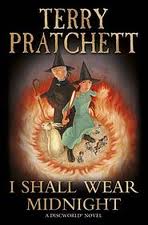 Is it heretical of me to say that I didn’t like this as much as other Pratchett novels? I feel bad for saying it. It’s certainly not that I disliked it – far from it – but I didn’t feel like it flowed as well as some of the other recent stories have.
Overall, I have loved the Tiffany Aching books a great deal. I love that we have followed a character from the age of eight or so, as she discovers that she has to do something that will set her apart from everyone else, and then goes through with it anyway. I love that that character is a girl. I love the way Pratchett has played with and inverted all sorts of tiresome notions from fairy stories and society more generally in writing these stories. I also love that Tiffany is a witch, because I adore the very concept of Headology.
Plus, Nac Mac Feegles for the win.
My issue is not with Tiffany. She continues to be a largely awesome character, who while dealing with adolescence can see the light at the end of that particular tunnel; who has mostly come to grips with being a witch, the burdens of that job and the expectations and responsibilities, while still being human enough to get intensely irritated by them sometimes. Many of the other characters were also brilliant – HELLO Granny Weatherwax and Nanny Ogg, making a comeback appearance! And a new witch, Mrs Proust, who is… all sorts of interesting. I would like to see her interacting with Vimes and the Guard. Or possibly Sybil. Plus the wonderful Preston, who is a totally ridiculous guard.
Also, Nac Mac Feegles. And more of Jeannie, the kelda, whom I love to bits. I love her attitude towards the Feegles… possibly because it reminds me of the way I would like to think that I deal with my students, it occurs to me.
Part of my trouble with this story is with the plot; not the details, but in some of the ways it gets places. There’s a feeling of disconnect between some sections, of moving too abruptly from one idea or action-scene to the next, which made me less than comfortable. I liked the vibe overall, though, of dealing with gigantic issues from history (quite literally) at the same time as dealing with very personal issues. The combination of “all witches are eeevil” with “how will I live with being a witch?” made a lot of sense, and the two complemented each other nicely.
My other minor issue was a feeling of repetition. Now I know, and usually enjoy, Pratchett’s habit of repetition – of phrases turning up again and again, of repeating information with slight changes in phrasing or emphasis. But, and I can’t point to exact instances so you’ll just have to believe me, here it fell a little flat. Perhaps there wasn’t quite the same twistiness, or… I don’t know. It just missed the mark a few times.
Still, it’s an enjoyable book, and I have no hesitation in recommending it. Because, yo, Nac Mac Feegles.
Galactic Suburbia 47!
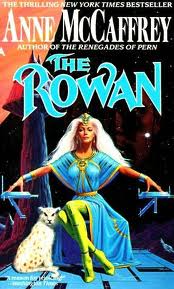 In which we bid farewell to the queen of dragons, squee about 48 years of Doctor Who, dissect the negative associations with “girly” fandoms such as Twilight, and find some new favourites in our reading pile. We can be downloaded from iTunes or got at Galactic Suburbia.
News
RIP Anne McCaffrey (also some tributes)
48th anniversary of Doctor Who!
A website devoted to The Weird and created by Luis Rodrigues. The project is the brainchild of editing-writing team Ann & Jeff VanderMeer.
Critiquing the Bigotry of Twilight-haters, not the same thing as defending Twilight
Call for contributions/suggestions for our GS Award.
What Culture Have we Consumed?
Alisa: Once Upon a Time; The Courier’s New Bicycle, Kim Westwood
Alex: The Steel Remains, Richard Morgan; Blue Remembered Earth, Alastair Reynolds; The Glass Gear, in Valente’s Omikuji Project; also watched Thor.
Tansy: All Men of Genius, Lev A.C. Rosen; God’s War, Kameron Hurley. Comics: Marvel 1602 by Neil Gaiman (abandoned); Batgirl the Greatest Stories Ever Told
Please send feedback to us at galacticsuburbia@gmail.com, follow us on Twitter at @galacticsuburbs, check out Galactic Suburbia Podcast on Facebook and don’t forget to leave a review on iTunes if you love us!
The Steel Remains, and my attention is captured
I’ve been a big fan of Richard Morgan’s science fiction for a while now. When I heard about this (new in 2008), I was interested… and then I stopped being interested. It sounded too much like stock-standard fantasy: the down-and-out swordsman, the half-breed magician, and some barbarian. Really didn’t grab me.

I ought to have known better. I ought to have trusted Morgan’s sensibilities. I ought to have remembered what this man did with Takeshi Kovacs over the space of three novels, and realised that no way was this going to be some boring sword-n-sorcery weak-ass adventure.
I got the sequel, The Cold Commands, to review, and I figured if I was going to do it justice I should read the first book. So I sent my trusty sidekick to the library for it, and I opened it… and, of course, I fell right into this crazy world of ambiguous history and complicated characters.
There are three points of view presented turn-about, chapter by chapter, right up to the end where things finally come together. The down-and-out swordsman is Ringil, scion of an impressive family who are mortified by his homosexuality, while they ought to be bursting with pride because of his role in the recently-ended world-consuming war. The half-breed is Archeth, half-human and half-Kiriath, a race who have recently abandoned this world and taken most of their pretty technological toys with them; she too is homosexual, which adds (in the eyes of those around her) to her exotic, possibly dangerous nature and their disapproval. And finally there’s Egar, once mercenary for the sprawling and decadent Yhelteth Empire, now back home herding buffalo and sleeping with buxom young women of the tribe.
That paragraph highlights just some of the wonderful complexity and narrative twists Morgan places before the reader. It feels like one of those ten-years-later sequels, with its references to the war against the Scaled Folk (dragons, people, dragons; and Egar is known as Dragonbane) in which humanity was aided by the non-human Kiriath, with their technological mastery; now the Kiriath have left the human world, the alliance of disparate human empires and city-states is falling apart, and – of course – the veterans of that war are having to cope with a world that doesn’t necessarily appreciate their sacrifice or understand how they have changed. But it’s not – unless there have been short stories set in this world that I don’t know about, which is possible, this is a reader’s first introduction to it. It’s nice to be brought into a world that’s a complicated, messy place with seriously complicated history. It doesn’t always make sense, especially the somewhat complicated political situation, but Morgan writes with such finesse that I was quite confident it would all come together in the end. And it does… except for the bits that clearly pave the way for a sequel. And I can forgive that. Mostly.
So: the characters. Ringil is making ends meet in a village near his glorious last stand in the war against the dragons, getting pennies for telling stories, until his mother turns up to beg a favour in the form of tracking down a cousin who has been sold into slavery. This, naturally, turns out to be much harder than it sounds; in the first place it means going home and facing his father. And next, it brings him face to face (um… so to speak…) with something out of mythology. Archeth’s life is at the whim of the Yhelteth Emperor, Jhiral, being the left-behind Kiriath half-breed that she is. She goes where he wills if she knows what is good for her, which sees her in this case going to a harbour town where there has been a seriously weird sort-of invasion: sort of because someone/thing clearly came ashore and destroyed much of the city, but then… they went away. Archeth is very suspicious. The third protagonist, Egar, is on the face of it far less complicated than the other two. How complicated can herding buffalo be? … and then he insults the tribe’s shaman, and things go from bearable to fairly bad. With some supernatural prompting. (Seeing a pattern here?)
The plot barrels along at a brisk clip, moving neatly between characters and places, and the characters are captivating from the opening pages. Aside from those two aspects, the really intriguing part for me was the hint that perhaps this isn’t a straight-forward fantasy world at all. There are definite science fictional overtones, starting with the Kiriath and their obvious technological superiority, which is only regarded as sorcery by the clearly backward and superstitious; Archeth and others who fought with them are well aware that it is technology, created by creatures with superior ability, but not magic. Then there are the hints and allusions from various apparently-supernatural characters about other worlds, and travelling between worlds, and what that actually means. Consequently, I’m pretty wild to read the sequel, to see what Morgan does next.
Dear self: trust Richard Morgan. He knows what he’s doing.
Galactic Suburbia 46 – bemusedly belated

Howie needs a Hat
This was meant to post last week!! I don’t know how it got stuck in drafts!!
In which we celebrate the World Fantasy Awards, take on the Kickstarter phenomenon and why people like to support authors/artists directly, Alex is betrayed by Isobelle Carmody, Alisa still can’t finish Tansy’s novel, and we indulge in a feedback frenzy. You can download us from Galactic Suburbia or get us from iTunes.
News
Realms of Fantasy sinks for the third time
Graham Joyce calls BFS Extraordinary General meeting December 9th –
Authors kickstarting their own projects:
Matt Forbeck – 12 novels in 12 months.
Laura Anne Gilman’s novella
CE Murphy’s novella
(mentions also of self publishing projects of Tracy & Laura Hickman, and Liz Williams)
Catherynne Valente’s Omikuji project looking for subscribers in order to keep the project going.
And Tobias Buckell talks about how just because you’re self publishing doesn’t mean you have to be a …
What Culture Have we Consumed?
Alisa: Power and Majesty by Tansy Rayner Roberts, The Courier’s New Bicycle by Kim Westwood
Alex: the Stone Key and The Sending, Isobelle Carmody; I Shall Wear Midnight, Terry Pratchett; end of Life on Mars S2; This is Not a Game, Walter Jon Williams; Distress, Greg Egan
Tansy: Ally Condie, Matched; Lisa Goldstein, The Uncertain Places; Gail Simone, Secret Six: Six Degrees of Devastation; Geek Tragedy, Nev Fountain
Feedback: well overdue!
Please send feedback to us at galacticsuburbia@gmail.com, follow us on Twitter at @galacticsuburbs, check out Galactic Suburbia Podcast on Facebook and don’t forget to leave a review on iTunes if you love us!
The Sending: Obernewtyn book 6
This review contains spoilers for the previous five books.
It’s important to say at the outset that this is not the book I thought it was.
This is not the final book of the Obernewtyn Chronicles.
I knew that Carmody had wanted to split the last book in half, to properly tell Elspeth’s story; I thought that meant books 5 and 6. No. It meant books 6 and 7 – number 7 being The Red Queen, due out next year. I realised that this book could not be the final one with around 100 pages (of 750) to go. Having just inhaled the other five in preparation for a grand finale, it’s fair to say that I was a little peeved when I came to that realisation. I will try not to let this frustration colour my review….
Let’s recap where we left Elspeth and the Misfits in 2008, with the last book (The Stone Key). Dragon, heir to the Red Queen, is missing, as is Miryum the coercer-knight with the body of her would-be suitor Straaka.The farseeker Matthew is still a slave in the Red Lands. The rebels have destroyed the Council and set up a democracy in its place, with many of them being elected in their cities; the Misfits are slowly, slowly being accepted by society. The Herder Faction has been routed from Herder Isle (sorry, Norseland) thanks to Elspeth. Elspeth has broken Ariel’s hold over Rushton, so there’s no more agonising over he loves me/he loves me not. Sador is basically friends with the Land, and they’ve agreed to send ships to the Red Land to help stop Salamander and the slave trade. Anything else? Maruman is as cranky as ever and oh, Elspeth is only a little closer to having all the necessary keys for stopping a second holocaust from happening.
Elspeth’s quest as Seeker has dominated the plot of the last couple of books; her attempts to find the keys and signs Cassandra left behind have been the motivating force behind most of her actions. Either that, or instructions from the futuretellers, which themselves generally move her quest forward too. The pattern seems set to continue here, with Elsepth having raced home at the end of book 5 on instructions from the oldOnes. Then, for the first half of the book, she finds that she must hurry up and wait as Seeker, while fulfilling her function as Guildmistress and master of Obernewtyn in Rushton’s absence. Important things are happening around her: politically, there are moves to ensure Obernewtyn’s place in the Land is confirmed; people come and go, unexpectedly or not; relationships are formed and changed and, in some cases, severed. But the Seeker’s quest seems a bit stalled, because although the ships are getting ready to go to the Red Lands, where Elspeth and futuretellers have seen Elspeth and Dragon together, Elspeth does not have all of the necessary keys to stop Sentinel from awakening. Plus, Dragon is still missing. Which is a problem.
The first half is light on big action scenes. Some of the most interesting action continues to happen in Elspeth’s dreams, where she learns yet more about the Beforetimers, Cassandra and Hannah (although I was disappointed to see that the publishers have altered the formatting, such that the dreams are no longer in smaller type; this was a marvellous way of making such an experience obviously different from the waking world). That’s not to say that I didn’t enjoy the first half, because Carmody is by and large a skilful writer who makes it very easy to convince one’s self to ‘just read one more chapter’ (although her love scenes are a bit perfunctory). And as I mentioned, there are important things happening – it’s just that most of them in the personal arena, which the Obernewtyn Chronicles really focus on the most. While there have been major battles and a revolution in the preceding books, Carmody has shown herself to be far more interested in people: how they react to falling in love, losing a loved one, meeting foreigners, having prejudices challenged, or running a small community. Or, indeed, being told that you are the only hope for the world in the face of a second holocaust (no pressure). I do think that this volume could have been trimmed down, because there was a lot of repetition of Elspeth bemoaning her fate and going over and over the things she has learnt and still must find out. I understand that that’s probably quite realistic – humans, as Maruman is fond of saying, do constantly gnaw at things, usually unhelpfully. It just got a little boring.
The second half changes things, although I can’t explain how or why without spoiling things terribly. Just take my word for it. There’s a bit more action, a few revelations and a couple of resolutions, as well as a whole new raft of problems to deal with. Unsurprisingly. There is some character development, although Elspeth’s development as a human has stalled somewhat. She doesn’t seem to change much any more, especially in comparison with the first three books. Perhaps that’s an unfair comparison, given she was in her late teens then and there were major upheavals in her life to force change – but I certainly didn’t stop changing when I got to my twenties. Perhaps this too is a result of her quest having not quite stalled, but certainly slowed down.
I have been and remain determined to see Elspeth’s quest to the end, but it would be harder to continue reading if the world’s history were not so enthralling. It’s a post-nuclear holocaust world, and I love that, unlike a book such as John Wyndham’s Chrysalids, mind powers are not a result of mutation caused by that holocaust. Carmody keeps revealing more and more of the Beforetime, the end of which is some time – possibly centuries – into our own future. (It’s depressing to think that there might still be a need for a balance of terror at that point.) The hints that Carmody gives about cryogenics, and gene storage, and computers, are really cleverly done. I seriously hope there is resolution of Cassandra’s story, and Hannah’s, as well as Elspeth’s, in Red Queen. The world itself – or at least ‘the Land’, where Elspeth lives – is perhaps a little hampered by having initially been developed by Carmody as a teen; I don’t find it that rich or compelling. The lands of Sador and the Red Lands, introduced later in the series, are certainly more foreign and interesting. (I presume I am not the only one who spends half their time trying to figure out where in our world these places correspond to.)
This is not a stand-alone book, so do not pick it up if you’re curious about Carmody’s work. If you have been on this journey with Elspeth for a while now and are desperate to see just how Carmody is going to tie all of those threads together, then of course you have to read it… but, I would suggest, wait for the last book to be published.

 Randomly Yours, Alex