The Green Man series

I’ve been aware of this series for a few years, but never got around to reading them. Then I found out that Cheryl, of Wizard’s Tower Press, was going to have a table at WorldCon in Glasgow – where I would also be present – and I knew it was finally time to give it a go. I picked up the first book – Actual Paper! – and read it in early September. In a day. And then I bought the next two ebooks… and I read them pretty quickly… and then I caved to the inevitable and bought books 4, 5 and 6 in ebooks, knowing that this was a series I would be consuming in entirety.
All of which is pretty convincing evidence that I am loving this series. Another indication: I am very glad there’s a 7th book coming out this year.
The series follows Dan Mackmain, son of a dryad mother and human father; a carpenter by trade, who moves around following jobs (until he gets ongoing work a couple books in). Having greenwood blood, he can see things ordinary humans can’t – like boggarts and hobs, and dryads and nereids in their natural form, black shucks and wood woses: basically the things out of British folklore. He also seems to have been singled out by the Green Man as the go-to human for when bad things are happening either to, or because of, those folk: murder, mayhem, and other inconveniences. Over the course of the six books he has developed connections across Britain both with actual mythical creatures (dryads, mermaids, nereids, swan maids) and with humans who are either like him (offspring of human/not human couples) or who, somehow, have knowledge of that other world. Together, they basically act to make the world safer whenever issues arise.
The series is set in the here and now, which was clear from the technology, but I don’t think McKenna ever actually specified a year in the early books. Which means she could just have kept writing as if it were 2019 forever. Or she could have chosen to make this a completely alternate world. Instead, the fourth book – which came out in 2021 – talks explicitly about Covid, lockdowns, social distancing… it’s all there. I think it might be only the second book I’ve read (after John Scalzi’s Kaiju Preservation Society) which includes the plague. And that’s largely on me, and the sort of books I read (I do not regret this fact); but it still made it quite remarkable to read, and something I really valued. The other thing I continue to find intriguing across the books is the amount of mundanity that McKenna includes – and I mean this in a good way. Characters are in a cafe; they read the menu, they order, they eat, they pay. There’s a great deal of observed everyday-ness that makes the whole story feel real.
I have no idea whether the stories across these books are building to some grand finale – there have been some hints that maybe some of the otherworldly types are becoming restless, because of something stirring – or whether this is going to be an ongoing crime series as Dan needs to deal with yet another unexpectedly real creature (I don’t know my British folklore well enough to know what hasn’t been included yet, but I’m sure the Celtic fringes in particular will have a lot to offer). I think I would like to see some grand denouement… but who am I kidding, I can totally imagine reading several more of these books even if there isn’t.
The Green Man series is immensely fun: a fast-paced mystery/crime element with a delightful dose of folklore, characters who are generally charming and enjoyable to be around, and engaging writing that means I’ve read pretty much every book in a day. Highly recommended.
The City in Glass

I am relatively new to Nghi Vo and now I want to read pretty much everything she has ever written.
There is so much that is enchanting about this book.
I love the idea of an immortal being having a long-term connection to, basically a relationship with, a particular place and group of people. What that looks like over a long period of time is a key part of what Vo is looking at here. I think connection to place is something that we don’t talk about enough.
And then there’s the fact that the main protagonist is called a demon, while the antagonist is an angel… nice work on the challenging expectations and flipping conventions, Vo.
The writing itself is also just a delight. This was such an easy book to read – it was so easy to just KEEP reading, to be sucked into the world and desperately need to know what was going to happen. This is always a good sign.
I remain delighted to have read this.
The Book Eaters, Sunyi Dean

How, exactly, did I manage to miss reading this when it first came out? I am bemused, because this is exactly the sort of thing I should have been all over.
Well, thanks to the Hugo packet I have finally devoured it.
Book eaters are exactly what they sound like: they are people who look human, but who rather than eating human-food eat, well, books. (Most of them anyway: there are also a few who eat, uh, minds. So it’s a bit zombie-ish (but not).) These folk live in our world but generally have no interaction with humans – they’re a very insular community, necessarily. They’re also a community on the wane; women tend to have a maximum of two children, and some will have none, for health reasons. An intensely patriarchal society as well, women are moved around and married where needed – and, key to this story, kept separate from their children after about the age of 3.
Devon experiences exactly this life: growing up she is treated as a princess, as the only daughter in the house; she is married off, to act as a brood mare basically. However, she is a feistier woman than the men in her life expect, and when her son is born a mind-eater… well, things go a bit sideways, frankly.
The story is told across two periods, in parallel: Devon growing up, and Devon in the now, living in hiding with her son. Eventually, of course, the past catches up with the present, and we understand exactly how Devon has got to this point. So while we certainly start sympathetic to Devon, our appreciation and horror at what she has endured deepen steadily and relentlessly: Dean gets the pacing just right, with a steady revelation of more and more terrible things committed both by and against Devon.
A story of mothers and children, families both blood and found; highly enjoyable, with compelling and fascinating characters, and a plot that REALLY works.
The Last Binding, Freya Marske

Why haven’t I read these earlier? Look, I just have a lot of books on my TBR pile. This first book didn’t immediately jump out at me when it was published – I don’t know why – and so, although I occasionally heard about them as they got published, they just didn’t get to the top of the pile. (Slight spoilers below, largely in terms of who gets romanced.)
But the final book was published last year, and the trilogy has been nominated for the Best Series Hugo, and thanks to the enormous generosity of the publisher the whole trilogy was in the Hugo packet. And so, finally, I have now read the whole trilogy. One book straight after the other. Because, turns out, this is a really great series. What a surprise.
Marske writes of an England where the magical live unknown but side by side with the unmagical – which is similar to what Celia Lake does, but Marske doesn’t have the magical largely keep to themselves; there are nobles with magic who sit in the House of Lords, for instance. But most unmagical don’t know that magic exists; when they do find out, it’s described as ‘unbushelling’,
which has a great explanation behind it as a term. As the first book opens, an unmagical man (Robin) has landed an unexpected civil service job, liaising between the magical and the Prime Minister… but he doesn’t know about magic. His predecessor is missing, and he assaulted for unknown reasons; so he ends up working with magic-user Edwin, and others, to figure out what’s going on. Which turns out to be a whole conspiracy, of course, and unravelling which becomes the trilogy. At the same time, Robin and Edwin are falling in love. Which is a whole delightful thing, but did I mention this is the first decade of the 20th century? So it’s also a rather dangerous thing, given the laws at the time. This is a fantastic introduction to the series, giving all the necessary information about magic etc without ever losing the fast pace.
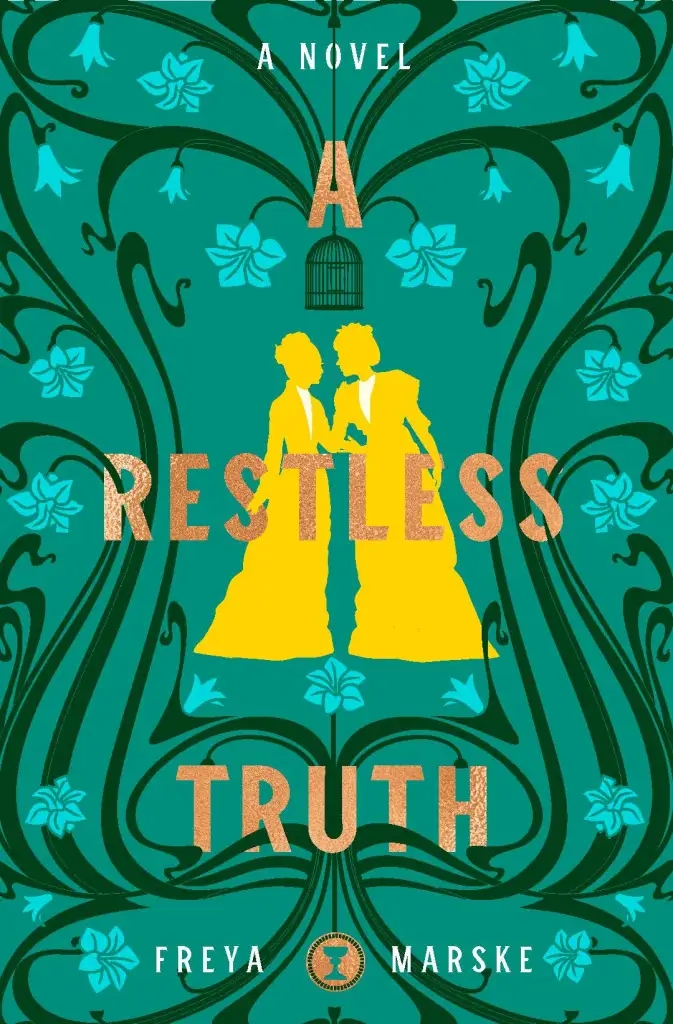
The second book takes place entirely on a ship – so it’s not quite a locked-room mystery, although there are indeed a lot of locked rooms; but there are a limited number of people to do things and a limited number of places for them to happen, which puts all sorts of intriguing boundaries on the author. This time the key characters are Robin’s sister and the dashing Violet, who enjoys being entirely outrageous. A different pace from the first one – partly that’s the ship, partly it’s already knowing about magic and the conspiracy – but nonetheless the consequences are real.
Finally, A Power Unbound – I had realised who one of the likely romance partners would be, in this book, halfway through the second. And I wasn’t overly enthused, I have to say, because his particular style of cynicism isn’t one I love. And the relationship that’s portrayed in this book also isn’t one I enjoyed as much as the first two; I am not as comfortable with how they interact. It’s a dom/sub relationship, and Marske is very clear
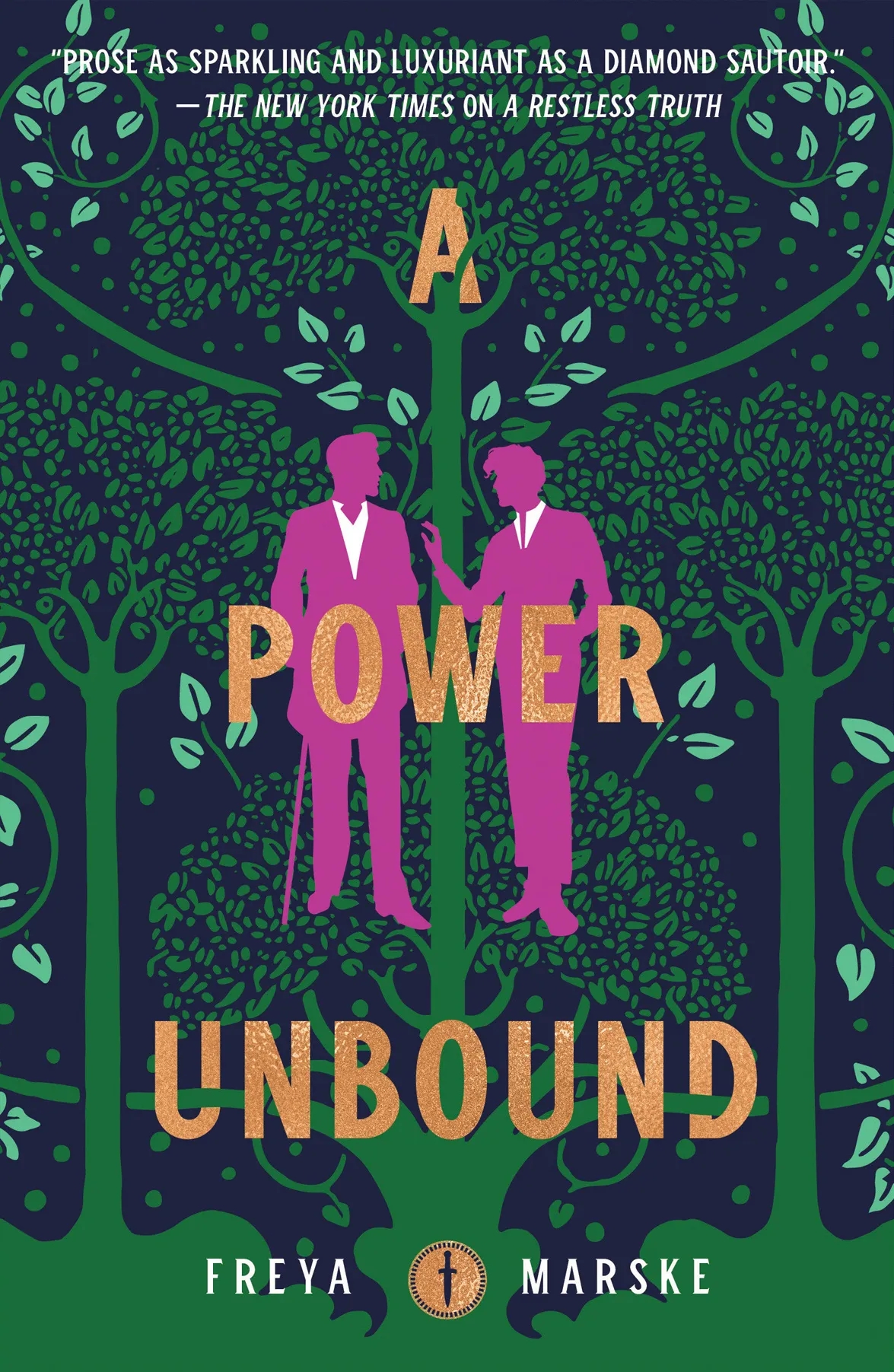
about the pair having boundaries and consent; the play-acting at making use of unequal power isn’t something I enjoy. This is very much a me thing, though; and the relationship does develop, as the others have, in interesting ways. Aside from the romance, the plot ratchets up the consequences of the conspiracy and quickens the pace and basically makes this a tremendous finale to the trilogy. A lot of secrets are drastically revealed, issues dealt with, relationships both restored and complicated – Marske really knew what she was doing.
This trilogy will be high on my Hugo ballot, and I am excited to read Marske’s new book this year.
Long Live Evil: Sarah Rees Brennan
I read this courtesy of NetGalley. It’s out at the end of July.

This book is for everyone who ever day-dreamed self-insert-fic, and didn’t really think through the consequences. (How distracting would I really have been to Biggles and Algie and Ginger? I don’t care about Bertie.) It’s also for those people who connect with the line “always rooting for the anti-hero” (omg turns out I like a Taylor Swift song??).
This book is amazing and wonderful and didn’t do what I expected except insofar as I was, indeed, constantly surprised by events and personalities. Surprised and delighted and absorbed and, not going to lie, a bit stressed out.
At 20, Rae is dying from cancer. Her sister keeps sharing their favourite books with her, to keep her company and to have some joy in her life. Rae didn’t pay much attention to the first book, but then things got interesting in the second. Why does that matter? Because when Rae finds herself in the world of those books, early in the timeline of the first book – in the body of a significant character – trying to figure out what’s going on, and how to fit herself in, is going to be crucial. And, well. As you can probably expect, it doesn’t entirely go to plan. Oops?
Brennan is doing A LOT here. Rae’s experience with cancer – the disease and other people’s reactions, and everything else lost because of it – reads very, very real (turns out Brennan has had very serious cancer recently; I am highly averse to reading authorial experience into books, but sometimes it’s real). So there’s that. And when Rae wakes up in her new body, she needs to figure out what she’s meant to know (and not know), and how she’s meant to act. The decision to embrace the (supposed) villainy of the character she’s inhabiting is a fascinating one with all sorts of consequences, and allows Brennan to comment on all of those Villain Tropes – and especially Lady Villain Tropes – that authors and films have loved to rely on. My particular favourites are the critiques about gravity and balance if you’ve got the boobs of the Classic Evil Seductress.
Sure, it’s got a character dying of cancer, and the fictional world she spends most of her time in is actually not a very pleasant place at all with deeply problematic characters and a dreadful social structure; people die needlessly, and the class structure is appalling. However, it’s Sarah Rees Brennan: this book is also FUN. It’s fast-paced, it loves life, it gets into tricky situations and tries to talk its way out of them, it has people trying to introduce house music where it really doesn’t belong. I consumed this novel and now I’m pining for the sequel and I don’t even know when it will be released.
Highly, highly recommended.
Embroidered Worlds anthology
I read this courtesy of NetGalley and Atthis Arts; it’s out now.
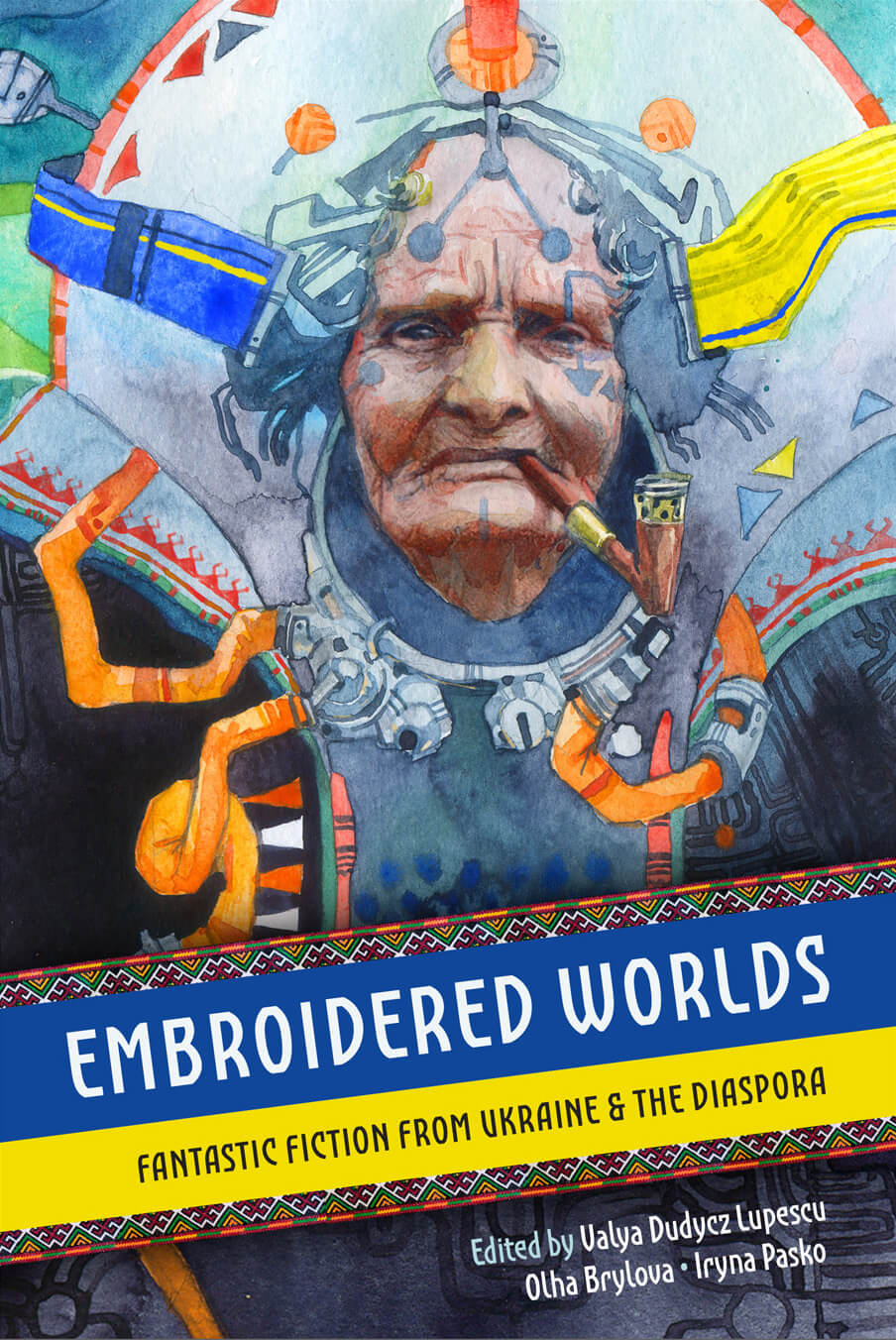
“Fantastic Fiction from Ukraine and the Diaspora”: what a brilliant anthology.
The only theme uniting this anthology is that the authors are from Ukraine, or part of its diaspora. That means that there’s a huge range of types of stories: those that are clearly rooted in folklore (even if I wasn’t familiar with the original); those that are ‘classically’ science fiction; some that are slipstream, some that slide into horror, and a few where the fantastical aspect was very subtle. Some of the stories are very much ABOUT Ukraine, as it is now and as it has been and how it might be; other stories, as you would expect, are not.
One of my favourite stories is “Big Nose and the Faun,” by Mykhailo Nazarenko, because I’m a total sucker for retellings of Roman history (Big Nose is the poet Ovid; it starts from the moment (based on the story in Plutarch, I think) of the death of Pan and just… well. The story does wonderful things with poetry and “civilisation” and nature, and I loved it.
I loved a lot of other stories here, too. There was only one story that I ended up skipping – which is pretty good for me, with such a long anthology – and that was because it was written in a style that I basically never enjoy (kind of Waiting for Godot, ish). RM Lemberg’s “Geddarien” was magic and intense and heartbreaking – set during the Holocaust, cities will sometimes dance, and for that they need musicians. Olha Brylova’s “Iron Goddess of Compassion” is set a few years in the future, and the gradual revelation of who the characters are and why they’re doing what they’re doing is some brilliant storytelling. “The Last of the Beads” by Halyna Lipatova is a story of revenge and desperation, with moments of heartbreak and others that I can only describe as “grim fascination”.
I’m enormously impressed by Attis Arts for the effort that’s gone into this – many of the stories are translated, which brings with it its own considerations and difficulties. This book is absolutely worth picking up. If you’re interested in fantasy and science fiction anthologies, this is one that you really need to read.
A Sorceress Comes to Call

Read via NetGalley. It’s out in August (sorry).
My experience of reading this went like this:
– Got the email that I was approved to read this.
– Thought, “oh, I’ll just download that so it’s ready to read.”
– Thought, “oh, I’ll just start it to see what it’s like.”
– A few hours later, thought, “oh. Now I’ve finished it and I no longer have a Kingfisher novel to look forward to.”
So that’s my tragedy. Of course, I DID get to read it in the first place, so it’s not MUCH of a tragedy.
This book is, unsurprisingly, fantastic. I adore Kingfisher’s work and this is another exemplar. Cordelia’s mother is able to literally control her body – she calls it ‘obedience’ – and as a result, even when she is in control of herself, Cordelia is always on her best behaviour. She has no other family, and no friends except for Falada, the horse, and the passing acquaintance of a neighbouring girl. She has no control over anything – doors are never to be closed in their house – and all she expects of the future is that she will marry a rich husband: so her mother has told her.
Things begin to change when her mother’s current ‘benefactor’ decides to stop seeing her, and providing for her. In order to remain in the style to which she is accustomed, Cordelia’s mother decides to find herself a rich husband, both so that she herself will be looked after and to aid in the effort to marry off Cordelia. This brings the pair into the orbit of Hester and her brother, a rich squire. Through the mother’s machinations, they come to stay at the squire’s house, and Cordelia’s mother sets about wooing the squire. Meanwhile, Hester gets to know Cordelia, and… well. As you might expect, there are ups and downs and revelations and terrible things happen and, eventually, most things turn out okay.
The writing is fast-paced and glorious. The characters are utterly believable. Apparently this is a spin on “The Goose Girl” but it’s not a tale I know very well, so I can’t tell you where Kingfisher is being particularly clever in that respect. But it makes no difference; this is a fabulous novel and Kingfisher just keeps bringing the awesome.
Bespoke and Bespelled

I read this courtesy of NetGalley. It’s out now.
Marnie is:
- a New Zealander,
- living in LA, because she is
- working as a costume supervisor, and
- a stitch-witch: fabric loves her and wants to make her happy.
She is also: - 41,
- ‘generously proportioned’,
- currently single, and
- bi (or pan? unclear).
As the story opens, the show she’s working on has finished, and Marnie is hoping for a position not just as a costume supervisor, but as a designer. And so when a position comes up back home, adapting one of her favourite fantasy series for the big screen, she agrees.
Note: the little nods to what LOTR did for NZ are a delight.
Basically the story is about Marnie on the film set, dealing with a) her attracting to the leading man, and b) weird occurrences that have plagued the filming since it started in NZ, and which begin to seem like they’re not random or natural.
Coming to Healey off the back of the Olympus Inc books, this is exactly what I was hoping for. Cosy, comfortable, fast-paced: I read it in one evening and I have no regrets.
Power to Yield and other stories

Bogi Takács (link to eir review site) sent me a copy of eir book, and I’m totally stoked I got my (electronic) hands on it. (This is eir personal site.)
Takács writes in a variety of styles across these stories. Some are fantastical, some more science-y, and many refuse classification. There are a few themes that recur: the question of identity – how we think about our own, what it informs it, how it changes the way the world approaches us – was what stood out the most, to me. There’s also a lot of questioning of authority and power, in terms of who has it, how it’s used, how it can or should be controlled/mitigated/ challenged. All of which is show that Takács doesn’t shy away from being provocative – but it’s never about just being provocative: there’s a purpose to it, because at heart it feels to me (an educator) that e is an educator – educating people about how the world and people do, could, and perhaps should function, through eir fiction. Which is not to say that the stories feel in the least bit didactic, or preachy, or anything like that! It’s more the vibe I took away from the collection as a whole.
A few favourites, not exhaustive:
“A Technical Term, Like Privilege” – not the sort of story I expect to be grabbed by, because it does have body horror as a fairly integral idea (this is me avoiding phrases like “I was absorbed by this story” because… well, story-reasons). However, the way Takács uses the issues of class and other privilege as part of the discussion is totally up my alley, and works brilliantly.
“Power to Yield” – I haven’t read any of Takács’ other Eren stories (except those collected here), so there were a few moments where I felt a bit adrift; nonetheless, it didn’t actually take away from my appreciation of the story and the characters. As with “A Technical Term,” this has more violence/ bodily harm than I would generally expect a story that I was moved by to include. But it does, and I was moved; this is a story that will stay with me a for a long time. How to build a new society, how to deal with what’s left from the old society, how to balance the needs/the good of the few and the whole… Takács doesn’t offer any easy answers to such questions, but it’s brilliant to see them confronted.
“Folded into Tendril and Leaf” – another one that includes bodily harm and warfare, and now I’m seeing an unexpected pattern! Anyway: magic, love, identity, dual perspectives; this is brilliant.
I read this collection quite slowly, because many of the stories require thinking and reflection and I didn’t want to short-change them, or myself, by simply powering through. Some of them are quite heavy in terms of the issues discussed (violence, various types of discrimination), and some are on the denser side in style (in a good way!), so ditto on the short-changing.
Left-handed and Sinister Booksellers, Garth Nix
Apparently I didn’t review The Left-handed Booksellers of London when I read it, which leaves me with questions… mostly “why??” and “what was I thinking??”
I have loved pretty much everything of Nix’s that I’ve read, and this was no exception. Set in a 1983 with a history that’s slightly tangential to our own world (Clementine Attlee had me HOWLING with laughter), it’s about a girl, Susan, who has a terrible experience with something otherworldly and gets rescued by a bookseller… but not as you know them. Merlin is a left-handed bookseller, meaning he gets directly involved in dealing with incursions of Old World powers and idiot mortals who decide to meddle in things they ought not to. Adventures and revelations and betrayals ensue. Susan isn’t who she thinks she is, the world isn’t as she thinks it is, etc. I love Susan, I love Merlin, everyone should read this.
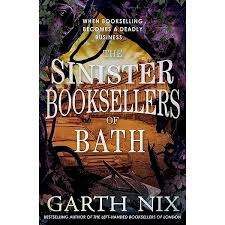
…ALL of which is why I have been looking forward to getting my hands on the sequel! It’s very much a sequel, don’t read this without the first (and why would you??). Susan continues trying to navigate in this newly expanded world she finds herself in; Merlin gets himself into some trouble early on and then they all spend the rest of the book investigating the consequences. Vivien, Merlin’s sister, is back, as are some of the assorted bookseller family members. There’s a mystery, there’s some mayhem, personal crises to be dealt with… and it’s all written as beautifully as Nix ever does. I loved it. A lot. I anticipate re-reading this, and trying to get it into other people’s hands if they’ve somehow slept through it.

 Randomly Yours, Alex