Cinder House, Freya Marske
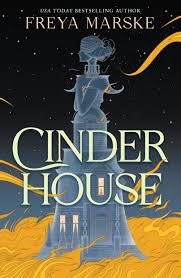
My main take away from this novella is “do not come at me with your ‘fairy tales are dead’ takes.”
This is probably the most imaginative reworking of Cinderella I’ve ever come across. Not least because it starts with the death of Ella’s father… and of Ella herself.
Yes, Ella is a ghost. No, that doesn’t stop her from having the traditional Cinderella adventures. Yes, it makes it more complicated; yes, it makes it absolutely intriguing.
Honestly, don’t even keep reading this review. Just go read it. It’s that good. (Also, novella! I basically read the whole thing while donating plasma!)
If you want more detail: Ella dies at 16. She becomes a ghost and haunts her house. The only people who can see her are her stepmother and stepsisters, and she can’t leave the house… until she finds a way to do so, temporarily.
This is a world with magic and fairies; the fairies are treated much like exotic humans (I choose the term advisedly), and magic has a difficult place in the world. Ghosts are not unknown. Ella’s tie to the house is used brilliantly – I think it’s one of the more clever explorations of that idea that I’ve come across, too, although given my general avoidance of haunted-house-stories (because I’m a wuss), maybe it’s not as novel as I think. At any rate, in not very many pages Marske creates (for me) a whole new way of thinking about hauntings, and I bought it completely.
Marske also manages to make the prince complex and interesting, with – again – a really brilliant take on his character.
Also also: a queered fairytale.
And finally also: gorgeous prose.
I loved this book a lot.
The Last Binding, Freya Marske

Why haven’t I read these earlier? Look, I just have a lot of books on my TBR pile. This first book didn’t immediately jump out at me when it was published – I don’t know why – and so, although I occasionally heard about them as they got published, they just didn’t get to the top of the pile. (Slight spoilers below, largely in terms of who gets romanced.)
But the final book was published last year, and the trilogy has been nominated for the Best Series Hugo, and thanks to the enormous generosity of the publisher the whole trilogy was in the Hugo packet. And so, finally, I have now read the whole trilogy. One book straight after the other. Because, turns out, this is a really great series. What a surprise.
Marske writes of an England where the magical live unknown but side by side with the unmagical – which is similar to what Celia Lake does, but Marske doesn’t have the magical largely keep to themselves; there are nobles with magic who sit in the House of Lords, for instance. But most unmagical don’t know that magic exists; when they do find out, it’s described as ‘unbushelling’,
which has a great explanation behind it as a term. As the first book opens, an unmagical man (Robin) has landed an unexpected civil service job, liaising between the magical and the Prime Minister… but he doesn’t know about magic. His predecessor is missing, and he assaulted for unknown reasons; so he ends up working with magic-user Edwin, and others, to figure out what’s going on. Which turns out to be a whole conspiracy, of course, and unravelling which becomes the trilogy. At the same time, Robin and Edwin are falling in love. Which is a whole delightful thing, but did I mention this is the first decade of the 20th century? So it’s also a rather dangerous thing, given the laws at the time. This is a fantastic introduction to the series, giving all the necessary information about magic etc without ever losing the fast pace.
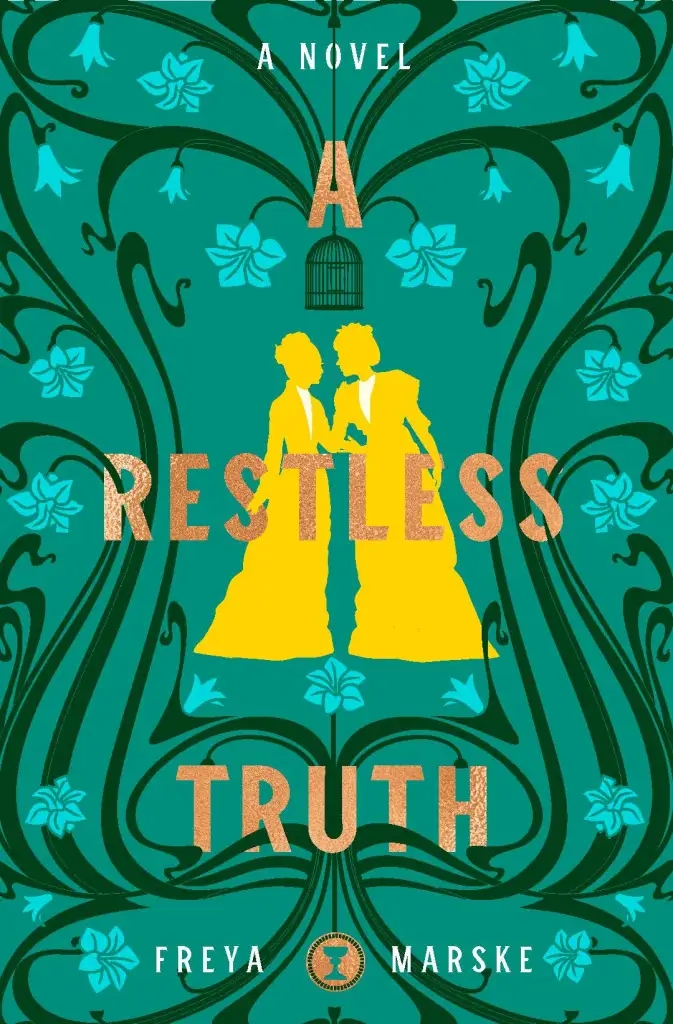
The second book takes place entirely on a ship – so it’s not quite a locked-room mystery, although there are indeed a lot of locked rooms; but there are a limited number of people to do things and a limited number of places for them to happen, which puts all sorts of intriguing boundaries on the author. This time the key characters are Robin’s sister and the dashing Violet, who enjoys being entirely outrageous. A different pace from the first one – partly that’s the ship, partly it’s already knowing about magic and the conspiracy – but nonetheless the consequences are real.
Finally, A Power Unbound – I had realised who one of the likely romance partners would be, in this book, halfway through the second. And I wasn’t overly enthused, I have to say, because his particular style of cynicism isn’t one I love. And the relationship that’s portrayed in this book also isn’t one I enjoyed as much as the first two; I am not as comfortable with how they interact. It’s a dom/sub relationship, and Marske is very clear
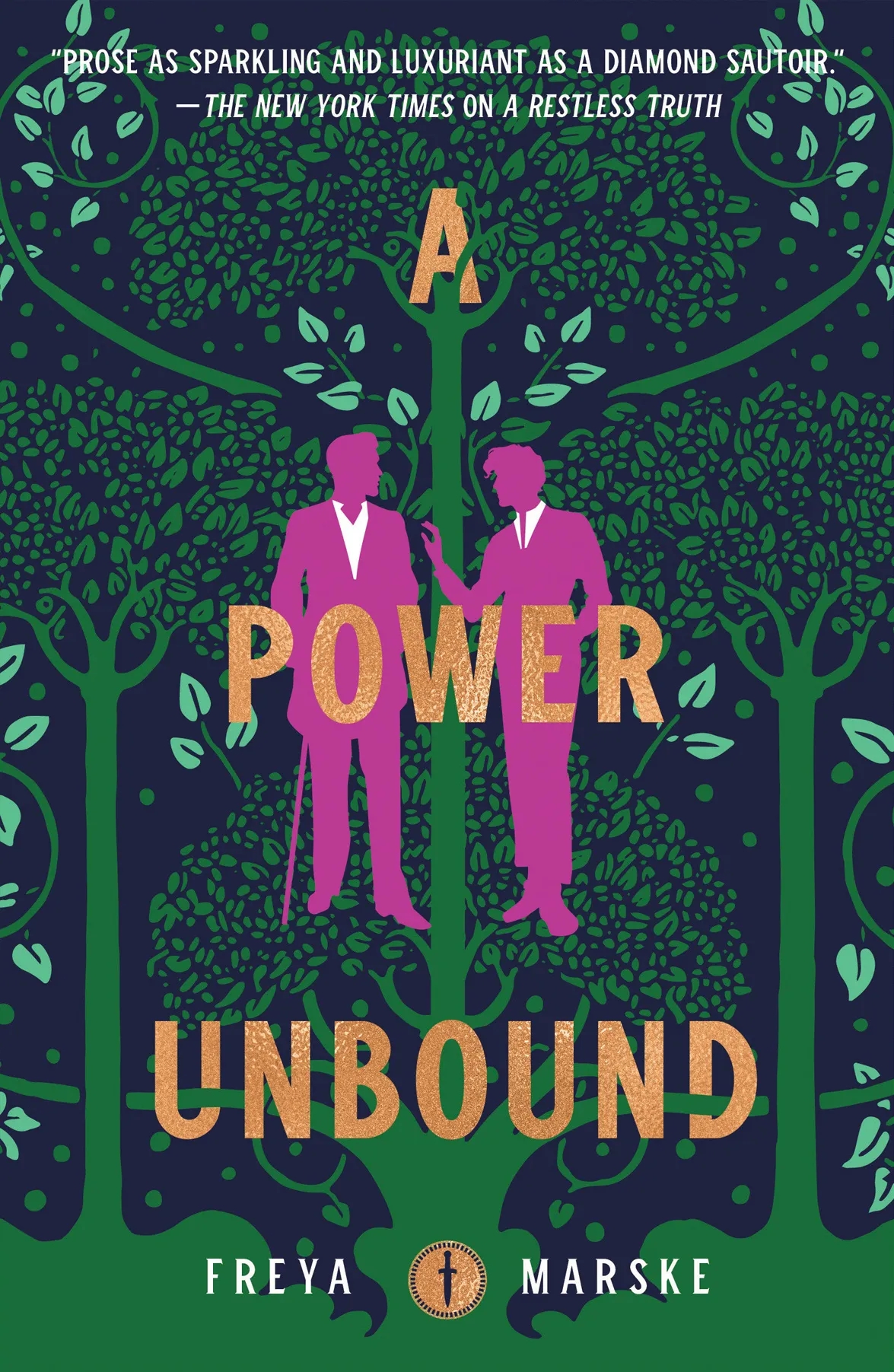
about the pair having boundaries and consent; the play-acting at making use of unequal power isn’t something I enjoy. This is very much a me thing, though; and the relationship does develop, as the others have, in interesting ways. Aside from the romance, the plot ratchets up the consequences of the conspiracy and quickens the pace and basically makes this a tremendous finale to the trilogy. A lot of secrets are drastically revealed, issues dealt with, relationships both restored and complicated – Marske really knew what she was doing.
This trilogy will be high on my Hugo ballot, and I am excited to read Marske’s new book this year.

 Randomly Yours, Alex