Eyes like Stars
 The premise: a theatre set in NoParticularTime, inhabited by every character of every play, who come on stage to perform when their scene is announced. Also inhabited by appropriate backstage personnel, and Beatrice Shakespeare Smith, an inappropriate foundling who loves the theatre (her home) with a passion and who is followed around by the Midsummer Night’s Dream fairies, who are as crude and rambunctious and loyal and awesome as (William) Shakespeare would have wanted. Also, two love interests. With this sort of set-up it would have been hard for me not to be completely in love. Happily, Mantchev does not disappoint.
Beatrice – sorry, Bertie – is a wonderful heroine, defiant and strong-willed, fiercely loyal and amusingly devious. She causes all sorts of mischief in and around the theatre – enough that eventually, she might have to leave, unless she can prove herself. This is a coming of age story, with Bertie discovering her gifts and talents and likes and dislikes, as well as dealing with how other people react to her and act on their own. She faces loss – new and old – and disappointment, confusion (especially about love) and revelation, and the glory of strong and true friendship. Basically, it’s all the good and bittersweet bits of the classic coming of age, in a marvellous and enchanting package.
I loved the Theatre Illuminata. I love the way the scene changes work, I love the irascible backstage types and their petty feuds. I was delighted by how Mantchev took mostly Shakespeare’s characters and used them on stage but also imagined them as people outside of their scenes (much like Rosencrantz and Guildenstern does, without the loopy philosophising and dialogue…). The characters from Hamlet were especially amusing, playing on and reflecting so many of the tensions that can easily be imagined from the play itself, and that might arise from the people playing those characters day in, day out. It’s just really clever. And then there’s the fairies: Cobweb, Mustardseed, Moth, and Peaseblossom. Pulling hair, mooning important people, eating all the cake… it’s all in a day’s work, really, and there better be cake after, too. Oh, and Ariel. I am not a huge fan of The Tempest, but I’ve read and seen it; I loved Dan Simmons’ play on Caliban in Ilium and Olympos… but I’ll never be able to see Ariel in the same light again. (Huh; this connects with Obernewtyn, by Isobelle Carmody, which I’ve also just read. Interesting.)
How much did I love this book? I’ve just ordered books 2 and 3. I HAVE to know what happens.
Slight spoiler: One thing bugged me. She’s all hung up about her mother, and wanting to find her mother, but she doesn’t seem worried about her father until right near the end. This is a girl who’s grown up around Shakespeare, where half the time it’s the mother who is missing, but the father is present. Surely, when she knows neither, she should be curious about both? Also, growing up around those stories, shouldn’t she be wanting to know the romantic story of how they met?
The Farseekers
 Well, it’s better than Obernewtyn, for sure.
*Spoilers for Obernewtyn, the first book*
Continuing my re-read of the Obernewtyn chronicles, I devoured most of this one in a night. Interestingly, it’s set some time after Obernewtyn ends, and therefore we don’t get most of the fight against Alexi and Madame Vega, nor Rushton’s work at being made legal owner of the place. Possibly because Elspeth is out of it for a while thanks to the burns to her legs? Anyway, we open here rather abruptly to discover that Rushton is in charge, and the Misfits have formed themselves rather (too) neatly into Guilds according to their mind powers. This was one thing that bugged me about the book – they all seemed to have come into their powers rather quickly, and easily, whereas I had the impression from the first book that many of them were uncomfortable and certainly not that good at using them because of the fear of being discovered. Perhaps Carmody imagines that once released from that fear, most young people would flourish in experimentation… and when I put it like that, perhaps she is not far wrong.
Anyway, the bulk of Farseekers is not actually set at Obernewtyn, but in the lowlands, as Elspeth and some others set out on a joint mission to find a library and a strong Talent they’ve sensed. Of course, things do not go easily, and they encounter most of the villains foreshadowed in Obernewtyn – Council, Herders, and the Druid himself – in various ways and with various consequences that I shan’t spoil. It is a more convincing narrative than the first book; while there are still happy coincidences and useful chance-meetings, well, that’s really the stock in trade of a fantasy, in some ways; and here it’s done more smoothly and with less jarring “oh hai, yr conveniently who i need” moments.
Characters are more interesting and well developed in this second novel, too. Elspeth is a bit more complicated and nuanced, conflicted between the desire for safety and an impatience with staying put. The characters she goes travelling with show hints of personality and individuality; the most developed and interesting are the animals, and particularly the arrogant stallion Gahltha. He’s way cool. Rushton continues to be gruff and remote but still appealing (to me, anyway!). The new people our Misfits meet on their travels are probably the most interesting characters aside from Elspeth, and although one of them gets a bit preachy and info-dumpy that’s hardly his fault, and I liked him for his rash-yet-considered ways.
Finally, the world is built up just that bit more in this novel, mostly thanks to the travels of our heroes. We learn more about the current society – which is complex enough to be not all bad, but simple enough that the reader knows (well, this one did) that they really wouldn’t want to live there. There’s more about the Beforetimes, too, and I seem to remember that it took me until this book to be absolutely sure that Carmody was envisioning this as OUR world after some sort of human-caused apocalypse. Which is a bit embarrassing frankly. Anyway – more Beforetimes things, and stories too. This sort of idea isn’t unique, but I like how Carmody runs with it.
Obernewtyn, again
 I first read this and the next three a number of years ago; I am re-reading them at the moment, in one hit (probably) because the sixth and final book is FINALLY! being published.
I remembered a fair bit about this story – bits and pieces of Elspeth’s story, like the cat, and Ariel, and aspects of life at Obernewtyn. I had forgotten – or didn’t notice the first time – that the quality is quite patchy. There are some bits that really ought to have been picked up by an editor, like the fact that Elspeth uses Ariel’s name without ever being told it (and with no indication that she had got it telepathically either). Some of the scenes are very rushed, and others are just oh-so-convenient. It reminded me, actually, of Harry Potter & the Philosopher’s Stone. I understand that bits of this were first written when Carmody was in high school, so perhaps this was her debut, which means I’ll give it some leeway. Because it really is a fascinating story, underneath it all. A world recovering from the Great White, which has poisoned significant portions of the land and caused various mutations; now-forbidden knowledge that perhaps humanity caused the Great White with very amazing weaponmachines; the society which has developed over hundreds of years initially to ensure survival and now, of course, ensuring that the social structure and power hierarchy is maintained. And in to the mix a secretive and fairly unpleasant religious group called the Herders (following the god Lud, which I presume is a corruption of Lord? and being Herders is a bastardising of the idea of priests as shepherds?), and then a group of Misfits with mental powers… and there’s a lot of potential for enthralling storytelling.
Elspeth, the main character and narrator, has her moments of awesomeness and her moments of not. She does develop nicely in terms of her sociability, over the course of the novel, and the conflict she feels over who to trust sometimes works and then at other times seems to melt away far too fast. Of the other characters, I always liked Rushton, the gruff farm overseer; the other Misfits Elspeth encounters are hardly developed at all, but have their flashes of brilliance.
If I were reading this for the first time today, I’m not sure I would continue reading it, which is a surprise to me and a sad one. I am going to keep reading, of course, because I know that the plot becomes ever more tricksy… and the incurable romantic in me remembers some of the emotional conniptions from the later books and desperately needs resolution.
Retribution Falls: a review
I received this book to review for ASif!
 I read about the first 150 pages of this 373-page novel properly. I mostly read about the next 100 or so, then skimmed the final 100-odd in case something interesting happened. It didn’t.
The setting is a world where dirigibles are kept up thanks to some element or compound called aerium and electricity is available but by no means universally accepted. The story seems to be entirely set within an enormous mountain range with lots of convenient valleys and hidey-holes for freebooters such as the main characters, with little suggestion of what else what might make up the world (they do visit an icy waste, but it wasn’t clear to me how this worked with the rest of the geography).
The story opens with Frey, captain of an airship and small-time/some-time pirate, being threatened by another lowlife, along with one of his crew. Frey is something of an idealist, in a weird sort of way; all he wants is to be able to captain his ship and fly where he wants. He doesn’t have the heart of a pirate, but takes on shady deals to keep skin and bone together. Also, the travel seems to be good for meeting women. The rest of his crew, whom we meet in the first few pages, have backgrounds in varying shades of grey; they are none of them keen to share their stories, and although the Ketty Jay is far from perfect, it’s a pretty good place to get away from the past, literally and metaphorically. There’s a crazy flyboy, a mysterious navigator, a drunk surgeon, a mysterious upper-crust passenger… as the crew showed their colours, I began to feel like they and the situation as a whole was oddly familiar. Then I realised that it was. They are the crew of the Serenity, from the short-lived TV show Firefly. But not as interesting, not as unique in their characterisation. The captain, Frey, was the most annoying and flat of the lot. I began to suspect that this was not the sort of story I was really going to enjoy when Frey was reminiscing about how close he had come to marriage in the past, and congratulated himself on escaping those dreadful bonds while fooling the woman into thinking he was going along with it, and still sleeping with the woman. With no irony or other commentary in the story about this being a poor way to treat her. This was accompanied by such protestations as the idea that women “forced [men] to lie to them” (128) in talking of sex and marriage. If you are likely to find this, a seemingly throw-away commentary on the relationships between men and women, insulting, then this is not the book for you. It might be argued that this is a minor point, but Frey’s view on women as a whole – especially those he wants to sleep with – permeates the whole book, and besides it is insulting.
As if inspired a tad too much by Firefly, Retribution Falls proceeds in an episodic fashion that was intensely irritating to read. There was connection and continuity between the various set-pieces, but each took place in a new location and the travelling there was generally treated with little interesting detail – there was simply An Arrival (thunk). Some of these individual set-pieces were well constructed, and gave some of the other members of the Ketty Jay depth and interest such that I began to care about them, Crake (the upper-crust passenger) in particular. He is a daemonist, meaning that somehow he manipulates daemons (which I think are like spirits) in order to do… things. It seems akin to enslaving them into objects so that those objects Do Things. He became interesting as he developed a rapport with various other crew members, and as his backstory was revealed. But he still wasn’t that intriguing.
Most of the set-pieces eventually contribute (some in roundabout ways) to the development of the conspiracy which ultimately drives the story. However, getting there took too long and I had already lost interest by the time the scope was revealed. It turns out to have ramifications for the entirety of the… area? (it’s ruled by an Archduke but I’m not sure whether it’s an archduchy or a country or what) – but so little time is spent establishing how big this area is, how many people care about its system of government, how many people are ruled by it, or anything else that might have been relevant that I just didn’t care.
Another aspect of the world-building which lets the novel as a whole down is the religion of the Awakeners. The portrayal of religion in fantasy is a particular bug-bear of mine. It annoys me when a religion is either badly explained or not mysterious enough, and it really annoys me when a religion is whitewashed as stupid and/or evil without adequate reason. There is some discussion here of how the Awakeners began, but no indication of why or how they have risen to a place of prominence. Various characters are shown to be contemptuous of it, but without properly discussing issues such as atheism or agnosticism that would make such rejection of organised religion make sense. Instead, it feels like another aspect of this world that was poorly thought through.
Overall, I was very disappointed in this novel, and do not intend to read the sequels that I am sure are planned.
Hyperion
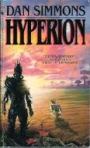
This is my second time reading this book, and happily it was as wonderful and intriguing this time as the first. Of course, I am older and at least a little more knowledgeable this time, so I think I’m actually getting more out of it.
Firstly let me admit to my own blindness the first time I read it: I don’t think I picked up on the resonances with The Canterbury Tales, which is just embarrassing… although at that stage I’m not sure I’d read any of that poem, so perhaps that excuses me slightly! But still, the pilgrims’ stories are each labelled as such, so you would think that I would have picked up on it. But no. There is also – and I guess this is really only obvious right at the very end, but it doesn’t spoil the story – a bizarrely amusing parallel to The Wizard of Oz.
This is is a story set in the 28th century AD, when Earth is no more and humanity has spread to the near reaches of the stars in the Hegira. Multiple planets have been colonised, technology has advanced, there are sentient AIs… and there are still divisions, squabbles, and politics. Sad, but tragically believable. The plot itself revolves around seven pilgrims who have been chosen to visit the Time Tombs at a time of war between the Hegemony – to which most planets belong – and the Ousters, a renegade human faction. The Time Tombs are on Hyperion, they are protected by a terrifying something called the Shrike, and it all goes from there.
Fascinatingly enough, most of the book itself is not taken up with the pilgrimage. Instead, in the spirit of Chaucer, the pilgrims share their stories with each other in an effort to understand both why they have each been chosen and what might happen when they are arrive. Their stories are very different – a military officer, a diplomat, a private investigator, an academic, a Catholic priest, a spaceship captain, and a poet – but they all have common elements of pain and loss and tragedy. And a connection to Hyperion.
I love the different elements that Simmons combines in this book, through the device of the background stories being told through a deliberate and completely plot-appropritate info-dump. I love the mystery of Hyperion, I love the mix of characters, I am enthralled by the diversity of world tied to a somewhat pessimistic view of humanity itself. One of the things that I really love about the book is its exploration of religion and its place in this future. The first story is that told by Father Hoyt, the priest, and it deals very honestly with the issues that do and will face the Church in confronting technological change and everything else the future promises. I appreciate that he imagines a place for such faith, even in a dwindling and sometimes confused manner. And the academic, Sol, is Jewish, and his story ties in many elements and ideas of Judaism. I hope that a Jewish person reading it would have the same reaction to his portrayal as I did to Hoyt (although I am not Catholic). As well as these Old Earth religious hangovers, Simmons also imagines a plethora of brand-new religions based on all sorts of different things. Which is cool.
I am a bit sad that there is only one female pilgrim amongst the seven. Simmons does imagine an improvement in gender relations overall; the CEO of the Hegemony is female, there are female soldiers, etc. He also does not imagine an entirely Anglo future, either; I don’t know whether the pilgrims are ever described in terms of skin tone, although a few of them are described as ‘paling’ and other such giveaways. But many of the worlds have non-Anglo names and predominant cultures. I think his idea of the great Hegira is that humans will have colonised in like-cultural groups, as a number of SF writers have prophesied, and I guess I see the sense in that. But with the ‘farcasting’ technology of the Hegemony, people are able to move around even more easily amongst these planets than we currently do on Earth, so there is a great deal of intermingling.
The other really clever aspect to Hyperion is its connection to the poet John Keats. Hyperion was a Titan of Greek mythology, is a moon of Saturn, and an abandoned poem of Keats’ about the Titans. He tried again with “Fall of Hyperion,” which is also the name of this Hyperion’s sequel. There are nods to Keats in a number of the stories, and I’m sure I missed a few of them. I loved this idea of incorporating a 19th-century poet into a story set a millennium after his death.
I have a lot of books for review on my shelf at the moment, so I haven’t decided whether to read the sequel yet… heh. Who am I kidding.
Change for the Machine

I’d kinda forgotten how much I love good cyberpunk until I read this and Trouble and her Friends. Turns out I really really like it.
Interestingly, in many ways this feels like a prequel to much of the cyberpunk I’ve read. The main contention is the invention of putting sockets into people’s heads to allow them to experience and manipulate the datelines (read: internet) more directly… the result of which, or something similar, is what Gibson and Scott and their friends are basically examining. So from a ‘getting started’ perspective I found this book really awesome, and in lots of other ways too.
Cadigan takes the ‘cast of thousands’ approach, using multiple perspectives (although always in third person) to show lots of different dimensions and angles to the story. There were times at which this was a bit confusing, but on reflection I wonder if this wasn’t done intentionally. There were quite a few chapters which shifted perspective where the new character could have been one of several, and it’s only revealed whose story we’re reading after a page or so. This contributed to the fairly frenetic feel that the entire book indulges in, which is largely appropriate given the madness that ensues in the second half of the story. It’s also very nice because the variety of characters and their individual stories give wonderful perspective and insight into different aspects of the story. Which I liked.
The world Cadigan has created is simultaneously a bit dated – it was published in 1991 – but, once some of the terms are translated, also quite recognisable. She talks of datalines and how people get their news; that’s basically souped-up data retrieval services and massively hyped up RSS readers that do the work for you. And then they use the sockets initially to rev up rock music videos, which is just such an hysterically funny idea that the sheer bizarreness just carried me away giggling and happily belief-suspended. Also, there’s a lot of drug use. Which is perhaps neither here nor there, but also certainly adds to the manicness.
The plot revolves around the introduction of sockets and what that might mean for society, with a whole lot of corporate hijinkery and espionage and hackery as well. There’s a father/daughter relationship that pops up every now and then – not something you see every day in this sort of futuristic novel – as well as, somewhat surprisingly when you see the characters, a love story that’s not very romantic in one way, but actually really is sweet in a fierce I’ll-deck-you sort of way. Plus a load of bizarre and whacked friendships and enmities that go a long way towards populating this world with dysfunctional but quite entertaining characters.
This was my first Cadigan novel. I’ll be coming back for more. (In fact I have Tea from an Empty Cup sitting on my shelf….)
Only Ever Always forever
 I’ve always been wary of reviewers who call authors ‘ambitious’. It seems like a potentially back-handed compliment; like, ambitious but didn’t succeed? Ambitious in the evil stab-you-in-the-back way?
I must call Only Ever Always ambitious. And I mean ambitious in try-anything, why-the-hell-not way. Because this is a novel that combines first, third, AND second-person narratives, and that’s pretty ambitious. And outrageous to even suggest. What’s awesome is that, although I found the first few shifts in perspectives a bit disconcerting, it most definitely works.
Russon gives us two different worlds, two sides of the same coin in many ways, where – to push the analogy perhaps too far – one side has been subjected to normal wear and tear, but the other side has been used much, much harder. In the first world is Claire, living a very recognisable life with recognisable griefs – no less grief for being recognisable, of course. In the second is Clara, living in a world where medicine is hard to find and four walls for one room is unusual, but still with its recognisable elements: powerful people pulling strings, and small people getting stuffed around. Somehow, Claire’s and Clara’s paths come within reach of each other… and things change.
The narrative structure is one of the most striking things about this book; it’s only 157 pages long, but those changes in POV are dramatic and confronting and, well, striking. And effective; to be in the position of a character and telling the story one moment, to having your story told at you, to then being only an observer – it works, at this length anyway, to make the characters and their stories all the more enticing and compelling. This would probably have been the case anyway, because setting Claire’s grief against Clara’s struggle to survive and the conjunctions between their worlds makes for a really engaging plot. And the character of the two girls – their similarities and differences – made them very engaging characters, too; Claire in particular was believable, with her attitudes towards her family and beloved objects.
Finally, let me say that this is a really interesting cross-over of fantasy and science fiction. The multiple-worlds thing can be either a fantasy or SF trope. The dystopic world that Clara inhabits makes this, I think, more of a science fiction than a fantasy, but really that’s splitting hairs. It could be read as either. And it’s brilliant either way.
Crossing the Universe: not as easy as it sounds

Girl. Boy. Spaceship. Murder. Deception. Totalitarian political system, manipulation, and art.
I loved this book a very, very great deal.
Like Leviathan Wakes (and it’s about the only thing the two books have in common, aside from the whole space thing), Across the Universe is a dual narrative, although here it’s two first-person voices. In this case, one POV is Amy: frozen in hibernation, accompanying her parents to a new planet to be amongst its first colonists. (Which may make you ask how she can be a narrator… just trust me on this one.) On the other hand is Elder, awake on the same ship Amy is sleeping on, part of the generation crew tasked with looking after the ship while it travels to the planet – a journey of some 300 years. The story revolves around Amy waking up ahead of time. Accidentally. And she’s cranky about it. As you would be. Amy’s awakening is a disruption on two significant levels: for Elder personally, because he finally has someone around of the same age but she’s like no one else he’s met; and for the ship, not least because it is mono-ethnic – an ethnicity that Amy quite clearly does not fit. Both Elder and the ship as a whole struggle to figure out how Amy can fit in. On a ship hurtling through space, with limited resources and no way to leave if you don’t like things, fitting in seems of paramount importance. So what does Amy do, what does Elder do, and why is Amy awake now anyway?
Along with a cracking pace and intriguing plot, there are some meaty issues to be dealt with. On the large scale, there’s the issue of how a generation ship could be made to work. This is a question that has frequently taxed SF; Elizabeth Bear’s Dust/Chill/Grail sequence is one example that goes in completely different directions from Revis. On the face of it life on the Godspeed looks like it works quite well, but very quickly it becomes obvious that perhaps there are cracks that have been papered over. Connected to this is the question of leadership, and what makes a good leader; Elder is learning from Eldest, and his reflections on what works and what does not are by no means trivial. On the more personal scale is how individuals deal with trauma, and expectations, and their own inner demons. Amy’s angst over whether to join her parents, and then how to cope with being woken early, is visceral and compelling. Elder’s disagreements with Eldest and how discoveries about the ship are in some ways less shattering, but have further-reaching consequences. And then there’s Harley, who I wish had had more of a presence in the novel. An artist, impacted by tragedy, and a better friend to both Elder and Amy than either to the other. His perspective, even though we get it solely through Amy and Elder, adds great richness. And poignancy.
Also, there is a love story. But not an easy one.
Plus, that cover! Beautiful!
There is some hand-wavey science-y stuff that doesn’t entirely make sense, and for the more technically-minded this may well be enough to throw you out of the story (Niall H!). I am not that person; I love my science but I am willing, for a good cause, to be very forgiving of hand-waving when it’s not too obvious (to me!) – and as you can see, this was a very good cause indeed (for me).
This is (of course) the first in a projected trilogy. I hope Revis can maintain the awesomeness.
(To make things even more fun, Beth Revis sounds like a totally awesome person. She was a teacher, who loved teaching! She likes Shakespeare for the dirty jokes and wrote her MA on CS Lewis’ Till We Have Faces (oh I must re-read that, I haven’t read it in such a long time). She is racing her mother to see which can get to the most (US) states! That says… quite a lot, really.)
Some slight spoilers in the comments.
Mappa Mundi

Really enjoyed the story as a whole. It opens with a series of vignettes, “Legends,” mostly set in the childhood of various characters. One of the games I played as I read was figuring out which character had had a legend (this shouldn’t have been very hard, given they are all named… but I have a poor memory and I read too fast, so you know. It worked for me). This was a really cool technique. However, the characters are not a strong point – more to the point, I think the female characters are not a strong point. Some of the men weren’t great either, but more of them were interesting and appealing and relate-able than women, for me.
The story as a whole is a compelling one, dealing as it does with mind-mapping and (potentially) -controlling technology. The world is a very near-future one – even closer than when Robson wrote it, actually, since some of the technology she throws in that in 2001 may have seemed quite ‘tomorrow’ is already here! Most of the story flows nicely, with only a few only-for-the-narrative moments, none of which were tooo jarring. It’s well-paced, and the shifting between characters works nicely to build tension and provide juxtaposition.
This review was written ages ago and I meant to add more, and then… time went on… and now of course I have forgotten what I was going to say. I was also going to link to Dreams and Speculation, the blog that hosted the 2011 Women in SF Book Club until it folded a couple of months ago, but the blog itself seems to have disappeared – which is sad, because we had a really interesting discussion on various aspects of this novel.
The Leviathan may be awake…
… but it’s not that impressive, as these things go.
 The inner solar system is quite well colonised, and humanity is beginning to move out into the outer reaches as well. Unsurprisingly, there is friction between the planets – and the asteroid colonies – in some of the same ways, I feel, as there was in Africa when European countries decided they wanted to establish colonies on that continent (without, happily, the mitigating issue of prior occupation). Who should have control – the people in the area or the people back home? How do you make decisions when communications suffer a significant lag – and when the conditions there are significantly different from the conditions here? And then you add in travel time, and rogue elements care of capitalism and free enterprise, and you have a rather chaotic system. On the scale of the solar system, even if you restrict yourself to the asteroid belt and in, that’s a very messy situation indeed. I really, really enjoyed the world-building here. The description of the living situation on the asteroids in particular was very compelling, and the way in which – for example – relying on external sources for all of your air and water would change people’s attitudes towards those fundamentals, and the corresponding cascading effects, was beautifully drawn. I also enjoyed that the focus was largely off-planet; it would have been a very different story had it been slightly more, well, grounded.
The notion of Earth/Mars rivalry is not a new one, of course; many authors who have suggested planetary colonisation have imagined at least political disputes, if not war, over issues such as governance and resources. Here, though, it is not the focus of the plot; more the background, and the catalyst, and eventually the binding factor in two quite different narratives. One of those narratives is a detective yarn that owes a lot to the noir: grizzled cop looking for missing girl, ends up getting involved in something much bigger than he expects. The other narrative is of a space-lovin’ ship’s captain who stumbles across the wrong derelict, and ends up getting himself chased from one end of the system to the other because of some rather delicate intel that he accidentally gets his hands on. Miller, the cop, and Holden, the captain, trade chapters throughout most of the book – although it’s all in third-person, so there’s still a barrier between reader and character. Their stories start in quite different places (literally and metaphorically), and spend the novel (550-odd pages) merging and twining and departing in clever and intriguing ways. James S.A Corey is actually Daniel Abraham and Ty Franck writing together (quite why you would go with a nomme de plume and then tell absolutely everyone about it confuses me; were they told that collaborations didn’t sell, or was it whimsy?), and I wonder whether each of them was largely responsible for one narrative – not that I could pick a difference in writing styles.
I had one big problem with this novel, which colours my view of it, and that was Miller’s developing preoccupation with Julie, the girl he is tasked with finding. Some of the reasons for why he might become obsessed with her are developed along the way, but it made me feel quite uncomfortable, and additionally I did not feel as though that discomfort was part of the intended effect. While other characters acknowledge that Miller has taken it a bit far, quite how creepy and weird that is is not made explicit. This was problematic for me, although not enough to make me stop reading.
My view, then, of Miller is tainted by his (non-)relationship with Julie. Overall he is one of those not-necessarily-likeable characters whom a reader nonetheless can (perhaps grudgingly) admire and appreciate (caveat above in mind), making hard choices and occasionally getting them wrong but standing by them, and his own morals, through various tribulations. And I did end up overall admiring him. Holden is a very different character, as is appropriate for a multi-point of view novel. He tends more towards action, although to say that one is brain and the other brawn is doing both a disservice. I think Holden is easier to like, as a person, although he certainly has his own faults. This may partly be because we see Holden interacting more positively with more people, particularly the crew of his ship, whom we also get to know somewhat; Holden’s story is largely theirs as well, and they are a disparate and motley group indeed. Their banter, and their cooperation, helped make Holden’s sections of the story more enjoyable for me than Miller’s.
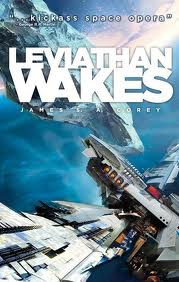
The cover of my paperback has George RR Martin proclaiming this book as “Kickass space opera” and, much though I hesitate to quibble with GRRM, I feel I must. An enjoyable piece of SF, absolutely. I’ll probably read the sequels (this is the first of a trilogy, and it ends with a really awesome twist). While I am not especially one to quibble over sub-categorisation, for me this was not space opera. It was not… operatic enough. Not grandiose enough. The distances involved were too small, the plots too petty (in the sense of petite, rather than mean), the scope and implications not wide enough for it to count as such. Still, it was an enjoyable ride and it will be interesting to see where Corey/Abraham/Franck go with the story in the rest of the trilogy.

 Randomly Yours, Alex