Snapshot 2012: Helen Merrick

Helen Merrick is an SF reader, critic and fan. By day she teaches Internet Studies at Curtin University in Western Australia and writes a bit about SF, feminism, fandom, online communities and sustainability. Her publications include the edited collection Women of Other Worlds, and numerous articles in books such as On Joanna RUss, and The Routledge companion to SF. Her book the Secret Feminist Cabal was shortlisted for the Hugo, won the William Atheling, and was on the honours list for the James Tiptree Jr Award. She has just finished a co-authored book on feminist theorist Donna Haraway called Beyond the Cyborg (forthcoming from Columbia UP) that manages to include a fair bit of SF and Ursula Le Guin, which makes her very happy.
Your examination of the role of feminism in science fiction fandom, in The Secret Feminist Cabal, was on the Honor List for the Tiptree Award in 2010 – congratulations! What was it like to be recognised in this way?
I was totally blown away! It was the icing on the cake in terms of how the book was received by the SF/F community, which I totally did not expect, given it was an academic book. I seem to recall I found out about it on twitter, as I hadn’t even seen the honours list. It was all the more rewarding as the Tiptree award mostly honours fiction, and only a handful of non-fiction works have been recognised by the judges. It was also, of course, a lovely feeling as so much of the book is indebted to, and documents, the communities and histories that surround the Tiptree award, its motherboard, and the feminist sf fandom that helped support its foundation. I even ‘stole’ the title off the Tiptree award motherboard (they did give me permission)!
Some of your research interests lie, broadly, in how feminism interacts with science fiction and vice versa. Do you see the two converging or diverging at the moment, and why?
Both, actually. I think we are seeing some really important conversations happening around feminism, gender, sexuality and race within the community in the last few years. And while there are certainly times when it feels like we are still fighting the same old battles Joanna Russ, Vonda McIntyre and others were waging back in the 70s, I think there is an improvement in terms of the kind of audience that are listening, and changing their views. What really encourages me is the impact of a younger generation of awesome feminist authors, editors and readers on this dialogue: like the Galactic Suburbia team (yourself, Tansy Rayner Roberts and Alisa Krasnostein), Alisa’s Twelve Planet series, and others such as Brit Mandelo (Tor) and Julia Rios (Outer Alliance), and authors such as Cat Valente, NK Jemisin and Karen Lord. This is not to overlook the work of others like TImmi Duchamp at Aqueduct Press, the Wiscon group, the Tiptree award and other feminist initiatives in the field that have kept these conversations on the board. On the other hand, I do wonder, along with Gwyneth Jones, about how well contemporary feminism/s are being expressed in the SF/F fiction itself, and whether we are too ready to welcome kick-ass female heroines as an easy sign of success? Not that I don’t enjoy reading books with kick-ass heroines, but I worry about what it means if this becomes a mainstreamed, diluted sign of what feminism in genre is about. But then again, we have had recent works as diverse as Kameron Hurley’s God’s War, Nnedi Okorafor’s Who Fears Death, and Kim Westwood’s The Courier’s New Bicycle which all do brave, confronting work with gender, sex and sexuality which are anything but comfortable!
You’ve been involved in helping to edit and re-write some of the gender-related entries of the SF Encyclopedia, now (moving) completely online. What importance do you attach to this sort of resource?
I’m so glad you asked me about this! The SFE3 is — and will be — an amazing resource. I felt it was an incredible honour to be asked, and I was really chuffed when Peter Nicholls brought me on board in order to work on entries related to feminism and gender. I remember back when I was first working on my PhD thesis, Nicholl’s first edition of the Encyclopedia was a very important source for me. Even though it was very much of its time, there were long lists of female authors of SF that provided an important starting point for much of my research. The SFE3 is a herculean task of bring the second edition up to date, which has involved an absolutely enormous amount of work behind the scenes by the editorial team of Nicholls, John Clute, Dave Langford and Graham Sleight. So far I’ve edited the entries on feminism, and women writers of sf; I’m working on a new entry on gender, and also will be editing the older entry on women as subjects of sf.
What works by Australians have you been loving recently?
So Many! I’ve been following along the Australian Women Writers Challenge which I think is a great initiative, and has helped me keep track of the aussies I’ve been reading. Books I have loved recently: Rayner Robert’s Creature Court trilogy, all of the 12 Planet collections, Glenda Larke’s Stormlord trilogy, Lara Morgan’s Rosie Black Chronicles, and Kim Westwood’s Courier’s New Bicycle. I’ve also enjoyed Carole Wilkinson’s Dragonkeeper (which is from a few years ago, but I just read it when she came out for the writer’s festival – lovely children’s fantasy), Kate Gordon’s Thyla, Rebecca Lim’s Mercy series (paranormal YA), Joanne Anderton’s Debris and I have Margo Lanagan’s Sea Hearts waiting on my to-be-read shelf.
It’s two years since the WorldCon was held in Australia. How do you think the speculative fiction scene in Australia has changed since then?
Aussiecon 4 was such a buzz, and a great chance to showcase Australian talent — in some ways it feels like the energy has just carried on. We seem to be seeing more and more quality Aussie spec fic being published all the time; certainly the Aussie awards lists of the last couple of years have been absolutely packed with fantastic work. And I can’t help but notice how well Aussie women are doing in the field – especially in fantasy and YA. It’s also worth noting the enormous growth of home-grown podcasts in the spec-fic scene, which certainly seem to help keep up the Australian profile in the international scene: Galactic Suburbia, Coode St, Writer and the Critic, Bad Film Diaries – the list goes on. I think its very encouraging that off the back of Aussiecon there appear to be all sorts of avenues and channels that have opened up in terms of conversations and connections with the international scene. We may be small, but we get noticed 🙂
This interview was conducted as part of the 2012 Snapshot of Australian Speculative Fiction. We’ll be blogging interviews from 1st June to 8th June and archiving them at ASif!: Australian SpecFic in Focus. You can read interviews at:
http://thebooknut.wordpress.com/tag/2012snapshot/
http://kathrynlinge.livejournal.com/tag/2012snapshot/
http://helenm.posterous.com/tag/2012snapshot
http://bookonaut.blogspot.com.au/search/label/2012Snapshot
http://www.davidmcdonaldspage.com/tag/2012snapshot/
Snapshot 2012: AA Bell
 Anita Bell is the author of three of the bestselling business books of the decade. Writing as AA Bell, she’s also a multi-award winner with her first speculative thriller Diamond Eyes, which won the first of its many accolades while still only a draft manuscript (at half its final length) in the 2009 FAW Awards. In the past decade, she’s also published over 200 short stories, articles and poems under her pen-names, and picked up various awards for crime, comedy and children’s adventures.
Your novels Diamond Eyes and Hindsight (and the forthcoming Leopard Dreaming) revolve around Mira Chambers, a character who is blind and, for part of the time, institutionalised. How did you develop Mira?
In two stages; the real character, and her fantastical ability to see the past. As Mira says;
“I’m trapped between two worlds. The one I can see from yesteryears, and the one I must live in, that remains invisible to me.”
For the fantastical ability: I was driving to an optometrist’s appointment to get my eyes checked 12 years ago, when my young son asked me how eyes worked. So I used my diamond ring to show how lenses can bend and focus light, which also sparked the idea for the story and title; Diamond Eyes.
Anyone with over-crystallised eyes is usually blind. To them, we are invisible, but from personal experience, I knew that having one sense robbed away, while making life extremely difficult, can also help us to “see” the world more richly through other senses. It’s also an interesting phenomenon that blind people can still dream and have visions, same as sighted people. And sometimes, sighted people can detect movement through their own eyelids, or see through the skin of their hands when a bright light is set behind their palms.
So my love and wonder of the sciences behind our amazing world also makes me question if the light and other wave-length radiations that we currently know through sight, warmth and mechanical means of detection, are merely the tip of the proverbial iceberg. And I know from basic kindergarten science that light travels differently through water and other materials, so with Mira, I’ve simply challenged the concept that light always travels at the same speed, by proposing that there is a band of “slower light” that she can see:
“Can you keep a secret? … I can only see the way things used to be, leaving me blind to the normal visible spectrum. I see the ghosts of yester-year, while you remain invisible to me… From my perspective, there are ghosts and invisibles. So if I can see people I cannot hear, and hear people I cannot see, which ones are really my hallucinations?”
Ben scratched his head. “From your perspective, I suppose they all are.”
“Bingo!” She clapped him on the shoulder. “If I’m crazy, you’re part of my insanity. The only way I’ve been able to cope so far is by obeying the rules of the ones who can hurt me.” – Diamond Eyes
The Setting: Until Mira learns to control her ability to focus on different dates, she can only see life a century ago, so consequently, everyone thinks she’s crazy, and that gave me the initial setting of an asylum.
As luck would have it, I’d just worked for a decade in the spooky halls of a century-old mental health facility, which afforded me a wealth of rich characters, juicy settings and conspiratorial sub-plots to draw from.
For the character: Mira is an amalgam of all the people I’ve come to admire for their ability to rise each new day with fresh dignity and determination, even though life and other people consistently conspire to knock them down again. She also gives me the opportunity to explore concepts of freedom and independence, and the irony that the more freedoms we gain for ourselves, the more rules society can have for constraining us.
“I’m not afraid of dying,” Mira cried. “I’m afraid my life will never begin!” – Hindsight
What were you aiming to do with and through her, and do you feel that you’ve succeeded?
In addition to the concepts of dignity and independence, as above, the trilogy with Mira has given me the rare opportunity to propose unique new slants on ghosts, ESP and the afterlife. And she’s finally learning how to see any time period, past or future, from a million years back to a million forward – so no. I’m not finished with her yet. Although the trilogy concludes with Leopard Dreaming in October, there’s still so much potential to explore many other fantastical and supernatural concepts in fresh new ways, and at any moment in time or space, even if it’s not with Mira as the main character.
“I’m cursed with the ability to see any secret, solve any crime and witness any moment in history, so for me, the door to great dangers has barely creaked open.” – Leopard Dreaming
Diamond Eyes won the 2011 Norma K Hemming Award for Excellence in Science Fiction and Fantasy Themes – congratulations! How did that feel, and what impact has it had on you and your thoughts about writing?
Last year, Diamond Eyes won by unanimous vote from the judging panel. I was stunned. That book took me ten years to write as my first foray into speculative fiction, but they told me it stood so far apart from the many hundreds of other wondrous entries, they didn’t need a shortlist. So when I saw there was a shortlist this year, my husband dug me in the ribs and joked, “you must have slipped.”
Then I saw the caliber of writers in the shortlist for 2012 – writers I’ve admired for ages – and could finally appreciate that the Hemming Award for Excellence is one of the highest and most coveted we have. The award itself is also the most beautiful. (Designed by Sarah Xu.)
Since the sequel Hindsight is currently shortlisted in 2012, the feeling is amazing. I’m blown away. But I didn’t write to go after any awards. I wrote because many of the terrible experiences I’ve had in my life have been eating away at me. One of the most sinister characters from the trilogy portrays it succinctly in Hindsight:
In the candlelit darkness of his wine-cellar-dungeon, Fredarick sat on an empty beer barrel, with two taller wine barrels that supported a plank as his table. No sensor lights or intruder alarms to disturb him anymore; he’d disarmed them, so in this loneliest place on the island, he was as free as he could be to prepare for the coming conflict.
With the stolen weapon set up and waiting, he tapped at the M key once, like a kitten testing a snake.
It didn’t bite, so he tapped another key and another, until his fingers fluttered feverishly over the Braille keyboard and he realised the venom was already within him, needing to bleed out onto the page. Safer there in code, he dared to hope, since a small dose had once served as its own antidote…
Are there more Mira Chambers novels in the works, or do you have other projects underway? Where do you hope to go in the next few years?
Leopard Dreaming is the grand finale for Mira’s trilogy. At least, it was meant to be the grand finale. There’s a spooky little boy with a gift similar to Mira’s who keeps popping up in the backstory, so if he survives the final draft, only Mira can see where the future may take her… or him.
<evil laugh>
What Australian works have you loved recently?
• Kim Falconer’s Road to the Soul,
• Alison Goodman’s Eona, and
• The Devil’s Diadem by the late great Sara Douglass.
Coincidentally, they’re all shortlisted with Hindsight for this year’s Hemming Award for Excellence. ☺ Alas, compared to their experience in this genre, I’m still the rank outsider.
It’s been two years since Aussiecon 4, the World Convention that Melbourne hosted. What do you think are some of the biggest changes to the Australian speculative fiction scene in that time?
The market has become a financial fist that’s closing around Aussie publishers and booksellers. Libraries too, to some extent. It’s squeezing the life out of them, and all genres are suffering for fledgling writers and best-sellers alike. Meanwhile, internet sales are booming with dreck that could be so much better, if properly developed. So the sooner these two worlds can kiss and make up with new living arrangements, the better for all of us.
This interview was conducted as part of the 2012 Snapshot of Australian Speculative Fiction. We’ll be blogging interviews from 1st June to 8th June and archiving them at ASif!: Australian SpecFic in Focus. You can read interviews at:
 http://thebooknut.wordpress.com/tag/2012snapshot/
http://kathrynlinge.livejournal.com/tag/2012snapshot/
http://helenm.posterous.com/tag/2012snapshot
http://bookonaut.blogspot.com.au/search/label/2012Snapshot
http://www.davidmcdonaldspage.com/tag/2012snapshot/
Snapshot: Sean the Bookonaut
Your blog, Adventures of a Bookonaut, aims to promote Australian speculative fiction through reviews and interviews. Why did you decide to start the site? What have been the challenges and rewards in writing for it?
I have been blogging since about December 2006 in various forms. I never thought it would stick. I have a shelf full of empty journals because I love the idea of recording my thoughts but writing down something that no one ever read kinda felt a bit silly, pretentious even.
I think the difference with blogging was the interaction and the exchange of ideas, the connection to a wider community that shared my passions.
In March 2008 I started blogging about an abusive Ministry that promised an all in one solution to various issues affecting young women, from unwanted pregnancy to mental health issues. From 2008-2010 I helped a group of abuse survivors get the Ministry closed in Australia, it still operates internationally.
After those 2 years I was suffering from burnout, it’s very hard to blog when all you have to write about is injustice and bad news. Adventures of a Bookonaut was initially a way to enjoy blogging and talking about my love of books, and it’s mostly good news stories.
The blog started in August 2010 but I decided to focus on Speculative Fiction around the time I got a chance to review Trent Jamieson’s Death Most Definite. So yeah you can blame Trent. I had also finished some studies in Journalism so I was eager to use some of my training.
Promoting the Australian speculative fiction scene seemed to be both a natural extension of my personality and I had a couple of very good role models in Marianne de Pierres and Rowena Cory Daniells who despite their heavy workloads, promoted other authors and writers, and were brilliant at building community (still are).
The challenge has been keeping a balance. A balance in my blogging and in my reading. It’s cool getting review copies for about the first 3 months then the reality sets in that you really have quite a bit of reading to do and it never stops. The rewards have been meeting and interacting with authors, fans and other book bloggers.
You’ve been pretty vocal on your blog and other social media sites in promoting and encouraging other people to get involved with the Australian Women Writers Challenge for 2012. Why did you decide to take the challenge on board? How do you feel about it, five months in? What have other people’s reactions been?
Now this one I can blame on Galactic Suburbia. In 2011 after having listened to Galactic Suburbia for a few episodes I ended up doing a Gender Audit of my reading. Sadly the original post was lost in a blog move instigated by hacking; but the results were very poor, much poorer than I’d led myself to believe. Somewhere in the 18 % Female author range was the end result – pretty ordinary for a reviewer. So that year I made a conscious decision to focus on trying to get a 50/50 split. I managed 40/60 due to a loss of focus and the fact that a lot of my review copies were by male authors.
So in 2012 Elizabeth Lhuede started the Australian Women Writers challenge in response to the poor reviewing that Australian female authors were getting from traditional reviewing sources. I was engaged in a couple of posts about gender, and implicit bias and decided to put my money where my mouth was and give myself a very structured approach to achieving gender parity in my reading and reviewing. Nothing like fear of failure to motivate.
I truly think the only way that you can tackle cultural bias is through fairly blunt and blatant approaches like a challenge or instituting some sort of systematic approach. Left to personal whim you’ll just end up reverting to what is ingrained.
I think it’s important to be vocal about it because we need to show men reading, reviewing and enjoying books by women. It’s going very well by the way. I finished the challenge a couple of books back but will continue until the end of the year.
There’s no sign of quality female speculative fiction running out.
As well the as the blog, you’ve been contributing to Galactic Chat, a podcast of interviews with – mostly – Australian authors. What has it been like to record interviews rather than write them? What are its challenges? Do you find ‘live’ interviews more rewarding than written ones, or do they both have things to recommend them?
A lot more work for a start. Writing questions for written interviews is generally fairly easy; the interviewee has to do all the work (unless it’s transcribed from audio, which you’d have to pay me to do – two finger typist).
The challenges are generally technical. I got over my nerves when I interviewed Kelley Armstrong.Everything seemed to be going wrong that day. I had the wrong number, I was recording in my lunch hour, people wanted to use the room I was in. Nothing like interviewing a New York Times bestseller as your first. She was lovely though.
I do enjoy the live interviews as they feel more dynamic to me and you can take advantage of the ebb and flow of conversation. Sometimes questions just naturally flow into one another. I still do some written questions of course, it’s handy if you want to ask a group of people the same questions to get a consensus or to form a large picture on an issue.
What Australian works have you loved recently?
Gotta love goodreads, it makes answering this much easier. When We Have Wings by Claire Corbett, I thought was brilliant. Kind of sad it didn’t make it to the Ditmar ballot. It just blew me away with the vision of a world with genetically engineered wings- the physical, social and cultural changes that would be a result of such an innovation.
Margo Lanagan’s Sea Hearts was another book that showcased her skill and playfulness, I wrote of it: “Reading Lanagan is like watching the world through aged glass. The world and its characters are identifiable but there is a ripple, a distortion that separates us.” And she makes me feel like this with most of her work.
Bitter Greens by Kate Forsyth was just one of those joyful surprises you get as a reviewer. I’d never read her work before and Bitter Greens tickled several of my fancies – historical fiction and mature fairytales being two of them.
The Shattered City by Tansy Rayner Roberts was a bloody good second book, not a bridge between book 1 and 3, but upping of the ante in what is a very unique tale.
Bad Power by Deb Biancotti just makes me want to read an expanded novel length version of the world that’s been created.
Roil by Trent Jamieson, I think is his best work to date. I could go on.
What would you like to see happen in the Australian speculative fiction scene over the next couple of years?
I have only been participating in and observing the scene for a relatively short time, so take what I say with that in mind. I’d like to see it more connected. By that I mean, I get the distinct impression that in fandom at least, there are distinct communities within the larger community. I think this is the result of geography to a large extent and I am not sure that we have taken full advantage of online resources to address this. I think things are beginning to coalesce though, podcasting seems to be growing and fanzines once consigned to the printed form are getting easier to find online. But perhaps fans are happy, I come from a culture of isolation, living in remote communities most of my life.
I’d also like to see a deeper appreciation of our Australian Speculative Fiction history. I do get the sense that we might be too forward looking, focussed on the next best thing. Have you tried finding copies of George Turner’s work, even his Miles Franklin Award winning book? Very difficult.
 This interview was conducted as part of the 2012 Snapshot of Australian Speculative Fiction. We’ll be blogging interviews from 1st June to 8th June and archiving them at ASif!: Australian SpecFic in Focus. You can read interviews at:
http://thebooknut.wordpress.com/tag/2012snapshot/
http://kathrynlinge.livejournal.com/tag/2012snapshot/
http://helenm.posterous.com/tag/2012snapshot
http://bookonaut.blogspot.com.au/search/label/2012Snapshot
http://www.davidmcdonaldspage.com/tag/2012snapshot/
Snapshot 2012: Penni Russon

It was occasionally difficult to track. I decided that when Claire entered Sedge that it would be third person, to highlight a further disconnect (the waking dream), but also to make it really clear to the reader that a significant shift had happened. There was one scene where Claire and Clara occupy the same space and I had a lot of trouble deciding what POV that should be from!
Your trilogy from a few years ago, Undine, Breathe and Drift focussed on a teenaged girl and her discovery of magic. What drew you to working with this particular mythology, and bringing it into the modern world?
I grew up in Tasmania which is where Undine is set. I was fascinated by what it meant to grow up on an island – I am still curious about this, as I come to realise actually just how socially disadvantaged Tasmania is compared to Melbourne where I live now. Anyway, to me it seemed natural that magic would be linked to the ocean. I once commented on Twitter about experiencing ambivalence with regards to the ocean. Another writer scoffed (I’m paraphrasing), ‘The ocean makes me feel many things, but nothing so wishy-washy as ambivalent.’ But I am happy to embrace my wishy-washiness! I am fascinated by ambivalence, ambiguity, halfway states, where you linger between, not quite one thing or another. Undine is all about being halfway between – human and magical creature, love and like, the thing and the reflection of the thing and so the Undine myth (which is not literally in the novel) is a metaphor for this.
I love Margaret Mahy’s YA fiction, so I wanted to write something with “magic in the real world”. Writing Undine was a very organic process, I really didn’t understand much about the practical aspects of writing fantasy when I began. The Undine books are actually incredibly autobiographical in parts, many incidents in the books actually happened to me.
You’ve written both speculative fiction and what might be called mainstream YA as part of the Girlfriend series; do you see yourself having to choose between genres, or continuing to cross them, in the future?
I think all my books belong together, despite the genre crossing. They are really all about those halfway states, about what’s real and what’s pretend. In The Indigo Girls the girls go night surfing – this is very similar to the way Undine experiences power and her body. In Little Bird Ruby-Lee falls in maternal love with the baby she is babysitting, and then transfers these feelings onto the baby’s single father in a romantic way and then has to try and figure out what is real and what is part of her fantasy life. I don’t think I will ever tire of this theme
What are some works by Australians that you’ve been enjoying recently?
I loved Queen of the Night, Leanne Hall’s excellent sequel to This is Shyness, with its comic book aesthetic. The FitzOsborne’s at War, the third book in Michelle Cooper’s Montmaray trilogy, made me cry and smile and laugh – these are historical fiction, though Montmaray is a made up island. I really admire Cooper’s world building, the way she stitches her fictional world and history together so seamlessly. Also this year I loved Foal’s Bread, which I read as magical realism.
Also I am reading Emily Rodda’s Fairy Realm books aloud to my six year old! Emily Rodda and I will be on a panel together at the Melbourne Writer’s Festival – my daughters are very excited!
It’s been two years since the World Science Fiction Convention was held in Australia. How do you think the speculative fiction scene in Australia has changed since then?
Well, the biggest change in Australia in the last two years is the loss of Borders and Angus & Robertson, the “middle” market, and at the same time many publishers are dropping their sales staff, instead having booksellers go to the website to select stock for their stores. I think as a result we are going to increasingly see a bigger divide – a lot more trashy trash, and some really interesting, experimental “literary” spec fic that works hard to catch a bookseller’s eye. Perhaps as a result of this, I think publishers are more focussed on “The Pitch” than on “The Talent” (though I don’t think a talented author will ever be overlooked). Still, it’s easier for publishers to sell books that can be summed up in a sentence, not just to customers, but to their own marketing departments, to booksellers, to reviewers, to overseas markets. It was really hard for me to sum up Only Ever Always in a sentence, and the exercise seemed artificial, nothing to do with marking art. It was actually the rights manager, Angela Namoi who crystallised it by describing it as ” a meditation on grief”. Of course the question I started out asking was where do stories come from? And Angela made me realise I had answered that question: “from lack, from absence, from loss. From the spaces between where the lost things dwell.”

This interview was conducted as part of the 2012 Snapshot of Australian Speculative Fiction. We’ll be blogging interviews from 1st June to 8th June and archiving them at ASif!: Australian SpecFic in Focus. You can read interviews at:
http://thebooknut.wordpress.com/tag/2012snapshot/
http://kathrynlinge.livejournal.com/tag/2012snapshot/
http://helenm.posterous.com/tag/2012snapshot
http://bookonaut.blogspot.com.au/search/label/2012Snapshot
http://www.davidmcdonaldspage.com/tag/2012snapshot/
tansyrr.com/tansywp/tag/2012snapshot/
www.champagneandsocks.com/tag/2012snapshot/
https://randomalex.net/tag/2012snapshot/
http://jasonnahrung.com/tag/2012snapshot/
Snapshot 2012: Tansy Rayner Roberts

So you’ve just had the final book in your Creature Court trilogy published by HarperCollins. How did that feel and what’s been the reaction to it?
It was a huge relief to get the book out there and have the trilogy be complete – and while I was expecting pangs of loss as well, they haven’t arrived yet, possibly because it’s so long since I completed the third book and left the characters behind. I’ve been delighted by the response to the books – a bunch of award nominations certainly help a nervous author feel like they’re doing the right thing! And very happy that many of my loyal readers seems to think that it ties up well with the third book. Would be terrible to stumble at the last post…
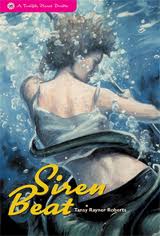
I understand you’re currently working on a novel-length treatment for Nancy Napoleon, the character first introduced in the novella “Siren Beat” as the supernatural protector of Hobart. Aufleur of the Creature Court books were set in a heavily fictionalised Rome, but you took a fairly faithful approach to Hobart in the novella. What is it like giving your home town the fictional treatment? Does it liberate or restrict you?
Faithful apart from the kraken in the Derwent, the Fates running a pub in Salamanca Place and the sexy sea pony, you mean? One of the things I love most about urban fantasy is the way that it conveys a strong sense of a realistic location – it’s one of the best aspects of the crime genre that it has taken on as its own – and I definitely wanted to Just Add Magic to Hobart for this particular series. I actually find it quite intimidating to write work set in Tasmania rather than in imaginary worlds, which is part of the reason I avoided it so long. There’s a freedom to it but it can be stressful too – at one point I destroyed a very specific area of the city, part of which is where friends of mine live, and I actually felt incredibly guilty about that, as if it might have some kind of sympathetic magic effect on the real population.
Another danger is that I know the area so well but don’t necessarily know what parts I’m taking for granted rather than describing properly, which is where good beta readers and editors come in!
The Creature Court is set in a secondary fantasy world, Nancy Napoleon in a recognisable Australia. Your short stories have bounced between near future ‘real world’ settings and fantastical ones. What sort of settings do you see yourself working in for the future? And is there one genre that is most likely to keep you, or do you anticipate genre-crossing and -blurring?
The lovely thing about science fiction and fantasy is that I don’t have to choose, not at all. If one piece of work is especially successful then I have no qualms about doing more of that sort of thing, but otherwise I prefer to keep my work as diverse as possible, to keep me entertained. Lots of genre crossing and -blurring, as much as possible! BRING IT.
Right now, for instance, in an only slightly chaotic tangle of novel and short story projects, I am writing steampunk Victoriana gothic with faeries and robots, contemporary ghostbusting comedy, genderbending science fiction, smutty superheroes, and a boarding school time travel romp (or tragedy; haven’t decided yet). The four shorts I’ve written so far this year (I am RICH in short stories) are post-apocalyptic surrealism about Wuthering Heights, magical realism with talking kangaroos, horror-fantasy with imps, and a war veteran romance set against the backdrop of a famous children’s fantasy novel. I really don’t like to be tied down…
Which Australians’ work have you been loving recently?
So much great short fiction! I have a soft spot for Narrelle M Harris’ Twelfth Planet collection Showtime, though not remotely unbiased because I helped edit some of the stories. I really enjoyed Ishtar, featuring stories about the goddess by Kaaron Warren, Deb Biancotti and Cat Sparks – some of the best work than any of them have ever done, plus the theme itself makes me so very happy. It’s a great book to read for big bad mean goddess action. In the comics world I am excited to see Nicola Scott back drawing for DC Comics, and the title in question Earth 2 is looking pretty fantastic so far. When it comes to art, I want to hug every single thing that Kathleen Jennings draws, and I was particularly impressed with her work on the Fablecroft book To Spin a Darker Stair.
It’s two years since Australia hosted the WorldCon. What do you think are the biggest changes to the Australian speculative fiction scene in that time?
Are we absolutely sure that it’s only been two years? I feel like I blinked and missed them. The rise of podcasts is something I have greatly enjoyed, but that was already well underway when the Worldcon happened. I think the interest in e-books from readers is probably one of the biggest changes, but we’re still yet to see how that pans out for Australian publishing. And of course, we’ve been losing bookshops hand over fist across the country. Sad, and a sign of a new paradigm heading our way. If only we knew exactly what it looked like…
 This interview was conducted as part of the 2012 Snapshot of Australian Speculative Fiction. We’ll be blogging interviews from 1st June to 8th June and archiving them at ASif!: Australian SpecFic in Focus. You can read interviews at:
http://thebooknut.wordpress.com/tag/2012snapshot/
http://kathrynlinge.livejournal.com/tag/2012snapshot/
http://helenm.posterous.com/tag/2012snapshot
http://bookonaut.blogspot.com.au/search/label/2012Snapshot
http://www.davidmcdonaldspage.com/tag/2012snapshot/
tansyrr.com/tansywp/tag/2012snapshot/
www.champagneandsocks.com/tag/2012snapshot/
https://randomalex.net/tag/2012snapshot/
Snapshot 2012 is HERE!
The Australian Speculative Fiction Snapshot has taken place three times over the past eight years. In 2005, Ben Peek spent a frantic week interviewing 43 people in the Australian spec fic scene, and since then it’s grown every time, now taking a team of interviewers working together to accomplish! In the lead up to Continuum 8 in Melbourne, we will be blogging interviews for Snapshot 2012 conducted by Alisa Krasnostein, Kathryn Linge, David McDonald, Helen Merrick, Ian Mond, Jason Nahrung, Alex Pierce, Tansy Rayner Roberts, Tehani Wessely and Sean Wright. To read the interviews hot off the press, check these blogs daily from June 1 to June 7, 2012.
As we celebrate the breadth and depth of the Australian spec fic scene, 2012 Snapshot is also a bittersweet time and we take the opportunity to remember two well-loved members of the community who sadly passed away in the past year: Paul Haines and Sara Douglass.
You can find the past three Snapshots at the following links: 2005, 2007 and 2010.
Let the stories begin…
Galactic Suburbia turns 60 and has cake
 In which we celebrate our 60th episode and Peter MacNamara Award for Excellence win with cake, yarn and superheroes. For best results, consume this podcast with fabulous cake and/or sock yarn. You can get us from iTunes or Galactic Suburbia.
News
Aurealis Awards:
Sturgeon shortlist
50% female speakers at a tech conference and how it was done
The Hugo Packet is released
Kirstyn examines her 23 year old self through the lens of her current feminist self.
Marvel Comics follows Archie’s lead with a gay marriage between Northstar and Kyle: the news was launched by Whoopi Goldberg on The View.
Chicks Unravel Time announced from Mad Norwegian Press and Tansy is in it
What Culture Have we Consumed?
Alex: The Monster, Garth Nix and Sean Williams (Troubletwisters #2); Agatha H and the Clockwork Princess, Phil and Kaia Foglio; Birds of Prey: Dead of Winter; Wonder Woman: Rise of the Olympian
Tansy: Discount Armageddon by Seanan McGuire, Made in Dagenham
Alisa: Black Heart by Holly Black; The Avengers movie
Please send feedback to us (especially about any cake you may have eaten or yarn you may have knitted with this podcast) at galacticsuburbia@gmail.com, follow us on Twitter at @galacticsuburbs, check out Galactic Suburbia Podcast on Facebook and don’t forget to leave a review on iTunes if you love us!
Galactic Suburbia #59
 In which the boob window is explained. Don’t say we’re not educational! You can get us from iTunes or Galactic Suburbia.
News
Drink Tank loves us! Download their Hugo shortlist commentary here.
Mondy loves us too! He makes us go awww.
James Tiptree Jr finally in the Science Fiction Hall of Fame, and about time too.
Talking to Alistair Reynolds: he defends the idea that science fiction has a limited number of plots
Women in (Japanese) Comics: Cheryl Morgan reports; Anime News Network
Some kickstarter stuff:
Feminist Historical Anthology from Ann & Jeff VanderMeer
Scalzi on Amanda Palmer and how she worked hard for 10 years to get her “overnight success”
What Culture Have we Consumed?
Alisa: We Wuz Pushed by Brit Mandelo
Alex: Castles Made of Sand, Gwyneth Jones; Captain America; The Avengers; Confusion of Princes, Garth Nix
Tansy: A Confusion of Princes, Garth Nix; The Avengers; Earth 2 & World’s Finest; Ishtar
Tansy’s Note: “I do not mourn the boob window” is a classic line that should be long remembered and oft repeated – but Cheryl Morgan said it first! I only steal from the best…
Please send feedback to us at galacticsuburbia@gmail.com, follow us on Twitter at @galacticsuburbs, check out Galactic Suburbia Podcast on Facebook and don’t forget to leave a review on iTunes if you love us!
A Confusion of Princes

I was really looking forward to this book, so perhaps that’s why I was a bit disappointed: expectations too high?
Khemri, our narrator, tells us straight up that he has died three times, and that this is the story of those deaths “and my life between.” It’s also made clear that although he is called a Prince, he hasn’t been born into a royal family but, rather, effectively kidnapped – requisitioned might be a better term. The story is that of Khemri learning that much of what he knows about being a Prince is wrong, or at least wrong-headed. He learns this while avoiding being killed – usually not because of his own wits – and while gradually coming to terms with the realities of the Empire. He has a wise, enigmatic Master of Assassins by his side (and the novel includes a bonus short story that gives just a little more insight into Haddad’s character), and while he does die a few times the first time isn’t until he’s actually learnt some things, which is a plus.
The overall story is fairly enjoyable. The twists and turns in Khemri learning how the Empire actually works, as opposed to how he has been taught that it does, is generally well played, although not especially original; there were only a couple of times I was genuinely surprised. I enjoyed the idea of the Princes all vying to be the next Emperor and how that might play out when there are ten million of them, mostly bloodthirsty or at the very least ruthless. And the world building was particularly interesting.
Truth be told, it was the world building that really kept me reading. The combination of Mektek, Bitek and Psitek is wonderfully intriguing – how an empire could get to the point where all three are valued, and used, and used in conjunction is fascinating. The idea of the Empire itself was… interesting, and intriguing even, but there wasn’t quite enough background or explanation to satisfy me. There is some explanation of what it means to be Emperor by the end of the story, but still not really anything about why it is an empire that rules this sprawling, mostly-human conglomeration of planets; nor why or how it was decided that Princes ought to be sought from the general population. I really liked this aspect, but it still was confusing about why it was there in the first place, if not simply as a narrative device.
Sadly, it was an aspect of the world building that really, really grated on me and meant that even if the story had been glorious, I would still not have been in love with this book. Princes get mind-programmed thralls: butlers, valets… courtesans…. This aspect of Khemri’s life, and the fact that throughout all of his adventures he basically accepts this as his due, revolted me. If there had been some questioning of this ‘right’ for Princes, if there had been some interaction with a thrall that indicated they had awareness and Khemri wondered about them, I could perhaps have swallowed a bitter pill and taken this for an aspect of a hinted dystopia. But there isn’t. Instead, we have slaves, who have been programmed, conditioned, to serve their master and be incapable of rebelling. This, I cannot accept.
On a different note, Khemri is your Perceval-type character. (Remember when David Eddings wrote a big long thing about how to construct a fantasy world and story? Maybe at the start of… I forget, one of the Belgariad tag-along books. Anyway, he said your main character, who was clearly going to be male, basically fell into Arthurian archetypes, and Garion was Perceval: the slightly dim well-meaning young fellow who needed everything explained to him.) He’s arrogant and dim, without realising the latter while relishing the former; he has his hopes for his young Princely life dashed and then nearly his actual young Princely life as well, and he gradually learns about power and authority and their right use and etc. Standard stuff. Haddad is nicely played as enigmatic-older-guide, and I would really liked to have seen more of him; the fact that people such as him get assigned to different Princes over their careers suggests all sorts of intriguing possibilities for issues of loyalty. Other than that, there’s A Girl, and a fairly large cast of C-characters who alternately challenge, nearly kill, and befriend our hero.
The gender issue is also an interesting one in this story. Princes can be either male or female, and they are treated no differently from one another; once you are a Prince, with all the conditioning and genetic tweaks attendant on that, you’re just… a Prince. Male or female no longer counts for anything, if it ever did. The same goes for priests and assassins; there seems to be no barrier about holding significant roles within either field, or indeed any other, based on gender. With all of that, the one female who plays a significant role is a love interest. She does other things too, but it still feels like she almost entirely defined by the romantic aspect, and the impact this has on Khemri. Which was a little disappointing.
Overall, I was somewhat disappointed: by the thralls specifically, but by the lacklustre nature of the story more generally. It’s touted as a space opera, but it’s just not grand enough for that. Some might argue that it is grand enough for a YA space opera, but I don’t think YA means getting to be a little bit boring with plot and magnificent gestures. It may be that I am cynical and jaded (never let it be said that I am too jaded to admit that’s possible). On the other hand, maybe this does just miss the mark.
Galactic Suburbia 58
In which we pore over the Ditmar ballot, Alex makes Tansy squirm about her nominations, Alisa makes Alex say ‘sexytimes’ more than once, and we take on the hard-hitting issues of the day: plagiarism, pirates and mommy porn. You can get us from iTunes or Galactic Suburbia.
News
Ditmar shortlist
Shirley Jackson shortlist featuring Deborah B
Stephenie Meyer moves into film production and who can blame her?
Story Siren & Plagiarism: Smart Bitches presents the story. Kristi’s apology.
MindMeld looks at great SF reads for teenage girls. But what KIND of teenage girls?
What Culture Have we Consumed?
Alisa: Feed by Mira Grant
Alex: By Light Alone, Adam Roberts; Lathe of Heaven, Ursula le Guin; In the Mouth of the Whale, Paul McAuley; Among Others, Jo Walton;
Tansy: Womanthology, The Pirates! Band of Misfits
Feedback: Fifty Shades of Grey
COMPETITION – SHOWTIME – What’s your favourite vampire?
Please send feedback to us at galacticsuburbia@gmail.com, follow us on Twitter at @galacticsuburbs, check out Galactic Suburbia Podcast on Facebook and don’t forget to leave a review on iTunes if you love us!

 Randomly Yours, Alex
