BSG rewatch: Unlimited access

2.8: Final Cut
This episode interweaves the repercussions of what has become known to the Fleet as “the massacre on Gideon” – when Tigh sent marines in to get their supplies, and they opened fire on civilians – with the sort of episode I didn’t think we’d get on BSG: the behind-the-scenes, daily-life one. Both of these strands are made possible by a new character, D’Anna Biers, played by Lucy Lawless.
D’Anna is investigating the ‘massacre’, and will potentially put out a very damaging (for Tigh, and Galactica) report. To counter this, Roslin and Adama invite her on to Galactica, with unlimited access to the crew, so that she can get a sense of what it’s like for them – and report on that to the rest of the Fleet.
This is a very clever thing for Roslin and Adama to do, of course; the theory is that finding out that the pilots who protect you are human, and have their own fears and dreams, will make the Fleet more sympathetic towards them and more forgiving. It’s also a clever piece of writing for the show, because unless you introduced a psychologist character, or showed them having fairly uncharacteristic D&M conversations with each other, showing the sort of emotional turmoil we get here would have been very difficult indeed. As a result, we get to hear why Cat has been taking stims by the fistful, and we get to see Dee trying to put a brave face on everything, as well as a few other character insights. I love Felix Gaeta more and more with each episode – he’s so competent, and calm, and yet in this episode, he talks quite frankly about why he smokes and what his plans had been before the attack. Oh, and seeing Baltar so desperate to get interviewed is quite frankly.
Meanwhile, Ellen has been terrified by some graffiti in the cabin she shares with Tigh, and a shuttle Tigh was meant to fly on develops a problem that would have killed him and the crew if it had taken off. It turns out that the man who led the Gideon mission has been sent a little bit nuts by the event and its repercussions, and is seeking vengeance through Tigh. It’s an interesting insight into the ramifications of acting as a soldier, and the conversations had by various people about how to react to the events – from Adama, and Tigh, as well as others – show that the writers were not trying to paint anyone as wholly good or bad. I was a bit disappointed with just how patriotic and triumphalist the episode got in the end, though; it verged on nauseating.
The very, very end of this episode is chilling. A theatre, with the human-looking Cylon models watching D’Anna’s footage… and D’Anna there, reassuring them that yes Caprica-Sharon is doing well, and the baby is still alive.
CYLON!!
BSG stats:
- Starbuck in the brig: 1
- Baltar in the brig: 1
- Women Baltar shows interest in (not including Six): 4
- Women Baltar actually gets to sleep with: 2
- Baltar religious conversions: 2
- Different sexy dresses worn by Caprica-Six: 14 (and one sports outfit)
- Apollo sides with President against Dad: 4
- Number of Cylons viewers know about: 6
- Number of Cylons humans know about: 2 (and Starbuck an additional one)
- Roslin has a vision: 3
- People deliberately thrown out the airlock: 1 (+3 threats)
- Ships lost: 1
- Ellen gets suggestive: 3
- Starbuck and Apollo do fisticuffs: 1
- Starbuck and Apollo kiss: 1
BSG: Putting the band back together
 2.6: Home, part 1
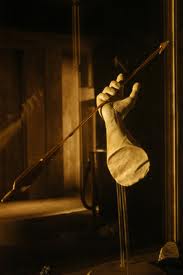
Starbuck, Helo and Caprica-Sharon make it back to Kobol and the 24 ships that have followed the President back there. Apollo, of course, goes slightly insane on seeing Sharon, his father only just recently coming around from being shot by the original. The President threatens to throw Sharon out of the airlock, to Helo’s obvious horror, and then she mentions that she knows where the Tomb of Athene is… which buys her some time. Things are not all hunky-dory among this rebel crew, of course: Mr Meier, Zarek’s off-sider (played by the same guy as played one of the nastier Jericho characters), keeps encouraging Zarek to consider what might happen out there to, say, Apollo and/or the President. Now that they have the Arrow, Roslin takes a crew down to Kobol to search for the Tomb and thus the way to Earth. Everyone is terribly suspicious of Sharon, of course… and the fact that she saves them from a Cylon ambush actually doesn’t help very much. It’s always possible to see something like that as still being self-serving.
Back at the main fleet, Adama seems to be losing it a bit. He’s back in charge but he is far more wounded than he would like to admit by Apollo’s desertion of him. He chooses a new CAG – one that Tigh is very much against, with good reason it turns out, since his inattention nearly gets Cat killed on a training op. Having been invited to speak with him frankly, Dee tries to encourage Adama to see that putting the Fleet back together should be of paramount importance. He dismisses her, but eventually realises he was right and announces their return to Kobol. Of course, the real question is just what will he do to Roslin, Apollo, and everyone else who ‘abandoned’ him?
This episode doesn’t sound like a particularly exciting one, but once again it’s the seemingly little moments of tension that really make this show amazing. Roslin’s duplicity in stopping Helo from threatening Apollo and then ordering Sharon’s death is a remarkable demonstration of her ruthlessness. Adama not immediately coming back to full strength and being visibly affected by the loss of people to Kobol is a slightly uncomfortable reminder that this man, who is in charge of the safety of humanity, is himself frail and flawed. Apollo is incredibly pleased to see Starbuck – perhaps more than he should be – and even gives her a kiss on the lips. Plus, it’s a two-parter, so you then have to go straight on to…
2.7: Home, part 2
Once again this episode has two narrative tracks. One is on Kobol, as Adama finds the President and they fulfil her mission; but the other is on Galactica and centres on Baltar.
Baltar is getting increasingly frustrated with Six; she has told him that their child will be born in Galactica’s brig, and Baltar just can’t stomach that. Six gets so frustrated with him, in turn, that she next appears to him looking completely different: hair straight and slicked back, little make up, and instead of her trademark slinky dress she looks like she’s just back from the gym. In this guise she laughs at him and tells him that he is indeed going nuts, and she is his sub-conscious mind playing tricks. The possibility of insanity is played up by the cinematography, because there are a number of shots of Baltar, mid-conversation, talking to an empty room. This has rarely happened in the past, except perhaps at the end of a conversation. Baltar then goes off to get his brain scanned, looking for a Cylon chip, but of course there isn’t one…
Meanwhile, on Kobol, Adama – and Billy, whom Adama decided was a good addition to the team looking for Roslin – do indeed find the Indiana-Jones-wannabes. Adama of course has a very bad reaction to Caprica-Sharon… and the Chief, who is also along, perhaps as bad. It’s all very fraught really. They spend a bit of time reconnecting, camping in the rain, and then tramp off looking for the Tomb. Meier is working on Sharon, getting her to agree to killing the old man (again). When they finally get to the tomb, Sharon double-crosses Meier – shooting him – and willingly surrenders to Adama, to prove that she is working of her own free will and not because she is programmed. No one much really believes her, although I think Adama is troubled by it.
The episode ends with entry into the tomb, and our heroes being shown how to reach Earth: it’s the place where all of the constellations representing the Twelve Colonies are visible in a certain way in the sky. Now, this is slightly problematic from an astronomical point of view, but it is beautifully done for the show. I love that the main pointer for them, from where they are, is the Lagoon Nebula – because I’ve seen that, through my telescope. So we conclude with hope: the President is reinstated, martial law is over, and we know (kinda) how to find Earth. Hurrah! … although Caprica-Sharon is in the brig, Helo and the Chief are going to have some serious issues, and Baltar is… well, Baltar. Good times.
BSG stats:
- Starbuck in the brig: 1
- Baltar in the brig: 1
- Women Baltar shows interest in (not including Six): 4
- Women Baltar actually gets to sleep with: 2
- Baltar religious conversions: 2
- Different sexy dresses worn by Caprica-Six: 13 (and one sports outfit)
- Apollo sides with President against Dad: 4
- Number of Cylons viewers know about: 5
- Number of Cylons humans know about: 2 (and Starbuck an additional one)
- Roslin has a vision: 3
- People deliberately thrown out the airlock: 1 (+3 threats)
- Ships lost: 1
- Ellen gets suggestive: 3
- Starbuck and Apollo do fisticuffs: 1
- Starbuck and Apollo kiss: 1
Betrayer of Worlds
This review initially appeared at Dreams and Speculations. Thanks to TJ for having me as a guest reviewer!
 Title: Betrayer of Worlds Title: Betrayer of WorldsAuthor: Larry Niven and Edward M Lerner Format: HC Page Count: 315 Genre: SF Publisher: Tor Pub. Date: 2010 ISBN-13: 9780765326089 Series: sort of the fourth in the series of prequels to Ringworld Rating: 6 out of 10 |
Summary:
Louis Wu is dragooned by the alien Nessus into trying to help his species, the Puppeteers, from the possible menace of another species, the Gw’oth. Meanwhile all sorts of machinations are going on within the various species, with potentially disastrous results for all of them.
Brief Version:
I was expecting a grand space opera/adventure. What I got was something that tried to be that but instead left me cold, with no connection to characters and caring little for the outcome.
Review:
The publishers claim that this book can stand alone. It proclaims itself a “Prelude to Ringworld,” but there is no mention on the jacket that there are three other books that fall in the same category, all of them covering events chronologically preceding this one. While it is true that enough back story is given that events and references (mostly) make sense, that back story cannot help but feel frankly tedious. And sometimes there just wasn’t enough explanation for various characters’ motivations or desires to make sense. I think the publishers would have been better marketing this as the fourth in a series, allowing relationships and character nuances to therefore develops organically – and readers like myself, coming in late, be damned.
This review is necessarily biased by the fact that I have read no other Ringworld book. I have no doubt that those who have read the other prequels, or even those who have read the original series, would be more forgiving of its flaws and more understanding of subtleties that no doubt passed me by. Nonetheless, a discussion of the plot and some of the characters:
It’s a fairly complex plot, with multiple changes in viewpoint and numerous crosses and double-crosses. There are humans, Puppeteers (they prefer Citizens) and the Gw’oth; there are stationary planets as well as the Fleet of Worlds belonging to the Puppeteers; there are spies, and mercenaries, and politicians. Bad things happen. Some good things happen, but not many. With few exceptions, though, there was little development of motivation for the Evil Deeds. Additionally, the plot sometimes bypassed ‘fast-paced’ straight to ‘chaotic and jumpy’.
It was the characters that seriously let me down. Louis Wu, aka Nathan Graynor, is a seriously boring lead human. He’s meant to be the one that the reader can genuinely identify with… but he was so dull. He largely lacks motivation and personality; he’s haunted by family memories that are poorly explained; and he mopes a lot. He also gets off a drug addiction so annoyingly fast that it simply screamed Plot Device.
The Puppeteers – so named by humans, apparently, because their double heads look like sock puppets! – could have been very interesting indeed. I don’t recall ever reading about a species whose distinguishing characteristic is ingrained cowardice: cowardice such that they flee a disaster still many thousands of years into their future. But… this is a species with space-faring capabilities; a species whose only limbs are their (three) legs – they manipulate things with their lips and tongues. It is totally unclear to me how they developed any technology at all with those two characteristics; perhaps it’s covered in another book, but it made them quite implausible to me. I did like that they took classical human names when interacting with our species – it was a nice touch – but there was so little presented of their society that really, I did not care.
The main redeeming feature of this book are the Gw’oth, as a society. Wily undersea critters that I imagine look a bit like anemones – they certainly have wavy tentacle bits – they are divided in this story between two planets, one a traditional monarch-ruled society, the other essentially a science-based, Enlightenment-type place. In the latter, the Gw’otesht – essentially a gestalt of made of numerous individuals – are finally accepted as legitimate members of society. This species is genuinely intriguing, and their motivations and desires made the most sense of all.
Two other things bugged me about Betrayer of Worlds. First, the madey-uppy slang. It felt forced and silly. Second, the women, and lack thereof. The first female who gets any real amount of page-space falls into bed with Louis. There’s a female merc, and some female Gw’oth who have a genuine, if cameo, role. And the place of women or reproduction in Puppeteer society is totally opaque; there’s a mention of Companions, who might become Brides if necessary, but that’s it.
So… yeh. I finished it, but I will admit that I skimmed for the last hundred or so pages; I wanted to know how it resolved – and there were some surprises, which pleased me – but overall, the writing did not warrant a thorough read and the required use of my time.
Rating: 6 of 10
I acknowledge being biased by my lack of knowledge about the rest of the series. However, that should not make as much of a difference as it did to feeling a connection – or emotion at all – towards the characters. It should, in a good book, make me itch to go read the rest of the series. Sadly, the writing and characterisation let what could have been quite a good story down. I may one day track down the original Ringworld, and if it’s amazing I might try the others, but they by no means go to the top of my (teetering, slightly perilous) to be read pile.
Darkship Thieves

This is the March book for the Women of SF Book Club, and I was really quite excited about reading it. Check out that cover! It’s a 2010 book, but it looks delightfully pulpy, doesn’t it? I was rather hoping that, being written by a woman and with a woman like that on the cover, this was going to be a good, maybe feminist, take on the old pulps: a good adventure with a strong, doughty female character as the lead. After the first two book club books – Dust and The Dispossessed – I was hoping that this book would be a bit more plot-heavy, a bit more adventure-y, a bit more… classic SF, I guess.
I was disappointed.
Some spoilers ahead.
I was disappointed from the outset, because the lead character – Athena Hera Sinistra – seems rather too preoccupied with her body, and especially her boobs. Now I have no problem with characters being concerned with body image; it’s an entirely appropriate subject matter to be dealt with. But this novel is written in the first person, and I found Sinistra’s discussion of her own body rather too much like what might come from a fairly juvenile male writer; it felt uncomfortably like she was objectifying herself, and not in an ironic way. Sinistra disappointed for most of the novel, frankly. She had the makings of a very interesting character: headstrong, with a difficult family life, some awesomely non-stereotypical skills, and a habit of kicking men in the balls. But… but. She suffered from a rather egregious problem, which was not really her fault: poor writing. She just was not believable. What could have been entertaining snark fell flat; what could have been an ironic take on the adventuring spacefarer that I was anticipating fell flat; what could have been a fascinating look at a strong woman in a man’s world just got boring. And the other characters suffered from the same problem; they were far too 2D for the book to be engaging.*
Despite the book being set some fuzzy many years in the future, the world is indeed still a man’s world – even more than it is today. That’s a little disappointing, and it’s not actually explained very well why that should be the case. And this was another aspect that was disappointing: the world-building. The small amount of history that is dished out over the course of the entire novel is really quite fascinating, and it was one of my favourite parts; I would probably read the book about her posited 21st/22nd century. But the world as it exists in this novel… doesn’t get fleshed out enough. The world of the darkship thieves – where Athena finds herself for a while – is an interesting contrast to Earth, both in the novel and today, but it too isn’t fleshed out very much. Coming after The Dispossessed I was perhaps always going to be let down by the lack of politics, but there’s little explanation at all for how the place manages to exist, and less about why it exists as it does.
I was disappointed by the plot, and that’s really what makes me sad. I could handle the characters being a bit flat, and I could handle skimpy world-building, if only the plot had zinged along at an exciting pace and had really great climaxes, reveals, and drama. But it didn’t. It’s not that the plot dragged; its problem was quite the opposite. Events happened at such a dizzying pace, in some sections, that you barely had time to draw breath – but they weren’t events that should have happened that quickly. I can understand a battle, or a series of decisions, happening at a breathtaking pace – if they’re well-written. Here, they were often events that would have been better off either being given very little space and therefore importance, or attended to with more leisurely writing and attention to detail. Rather than feeling absorbed by the plot and borne along by it, I felt thrown around and sometimes thrown out altogether. It left me disgruntled. And the twist at the end, about what Athena is? I saw it coming way too early. I don’t usually pick twists, and I like it that way: I enjoy being surprised by the author. So that the bid ta-da was not so big saddened me all over again.
Finally, I was disappointed by the romance. If the romance had had any sizzle, if there had been any genuine suggestion that there would not be romance and then it happened in a really awesome way, I would have been able to regard the story with some fondness. But it was obvious from the get-go that the characters were going to get it on… and then they finally did, but there were no fireworks, and no passion; it wasn’t even one of those delightful feelings-creeping-up-on-you scenarios. In a word: boring.
I was disappointed to be so disappointed. I really, really wanted to like this book. Of course, I’ve loved the first two books of the Book Club where many people have loathed both, so it will be fun to be the disgruntled one for a change…
This may be one of the snarkiest reviews I have ever written. I did indeed finish the book, because I was really hoping it would redeem itself. It didn’t. I actually skim-read the final hundred pages or so…
* Yes, that’s right people; I just totally dissed a book on account of the characters being too 2D. I know! Perhaps I am finally getting more sophisticated! … keep reading…
Meanwhile, back on Caprica…

2.4 Resistance
We get a serious amount of time on Caprica in this episode and the next, which is quite refreshing really because Tigh is just stuffing things up more and more back at the Fleet. When ships start to refuse to supply Galactica because of the declaration of martial law, Tigh – egged on by the ambitious Ellen – send marines to get their much-needed tylium. And there are shots fired, and civilians are killed. With this catalyst, Apollo decides to go the whole mutinous hog, and get Roslin off Galactica… and Billy decides he can’t, ultimately, countenance that, although he doesn’t stop them. This is, of course, a huge step for Apollo; his gut instinct for civilian, democratic government overrules his military training and his loyalty to his commander/father. I think his character, in these episodes, is at one of its most formative and interesting stages. So often in TV and movies we get unconflicted soldiers – or if they are conflicted, the agonies aren’t nearly as finely played out. The irony of relying on Zarek for refuge is, of course, delicious.
On Caprica, Starbuck and Helo have a shoot-out… with Caprican survivors, and resistors. When they finally agree neither side are Cylons, we finally meet Samuel Anders: top Pyramid player and all-round lovely man. Starbuck naturally agrees with me on that, by the way. Discovering there are still people on Caprica is an awesome revelation – it’s nice that the writers didn’t just ditch the planet. Of course, Sam is a good reason for it, but still it shows an holistic approach that is quite refreshing.
2.5 The Farm
This is one of my least favourite episodes in some ways because it deals with some very unpleasant topics. One, really: the issue of how repopulation might happen after an apocalypse, and how women might be treated in the aftermath. Starbuck is injured in a firefight with some Cylons,and she wakes up in a hospital. A pleasant young doctor tells her sympathetically that Sam is dead – sad! – and that she is lucky to be alive – yay, I guess? Anyway, he then gets around to telling Starbuck that basically her ovaries are her most valuable asset, childbearing her most valuable skill, now, to rebuild humanity. Can you guess how Starbuck reacted? Quite quietly, actually, probably at least partly because she’s still woozy from the drugs. But she’s certainly not very impressed. She gets more and more suspicious of the doctor… until finally she gets out of her room, and discovers that the hospital is being run by CYLONS!! and that there are other women hooked up as incubators. This short scene is horrific, and upset me quite a lot. I was so pleased when Starbuck got out and those women were put out of their misery… although terribly angry that there was no way, apparently, to actually save them. I know the idea of how women might be treated in this sort of situation has been dealt with by a few authors – Marion Zimmer Bradley and Joanna Russ, for two, neither of whose books on the issue I’ve read, although I certainly mean to. It’s not really something authors tend to deal with… male authors, especially, I think.
Also, almost as an aside we learn from Simon, the doctor, that Starbuck’s xrays show many, many old, healed fractures – especially on her fingers… Starbuck is incredibly angry at hearing this, and it goes no further, but it does hint at yet more dreadfulness in her history.
Back at the Fleet, Adama is awake again – hooray! But he doesn’t revoke martial law; instead he decides he wants to search every single damned ship to try and find the President and his son. Hello, bitter betrayal. Seriously not happy. Roslin decides to ‘play the religious card’, and makes an announcement to the Fleet declaring her intention to return to Kobol and thence find Earth. Adama decides to let her go, not expecting many to join her… but about a third of the Fleet do follow. This, of course, places Adama in an incredibly tricky position. Follow Roslin? Keep wandering around aimlessly? Oh the decisions. Plus, there’s quite a nice moment where Adama cries over the dead Boomer – shot by Cally, of all people – showing just how conflicted he is over this once-beloved and valued member of his crew. I really, really love the humanity of both Adama and Roslin, and the fact that both leaders can have this humanity and still be completely believable hard-asses.
BSG stats:
- Starbuck in the brig: 1
- Baltar in the brig: 1
- Women Baltar shows interest in (not including Six): 4
- Women Baltar actually gets to sleep with: 2
- Baltar religious conversions: 2
- Different sexy dresses worn by Caprica-Six: 12
- Apollo sides with President against Dad: 4
- Number of Cylons viewers know about: 5
- Number of Cylons humans know about: 2 (and Starbuck an additional one)
- Roslin has a vision: 3
- People deliberately thrown out the airlock: 1 (+1 threat)
- Ships lost: 1
- Ellen gets suggestive: 3
- Starbuck and Apollo do fisticuffs: 1
Let’s go toaster shopping
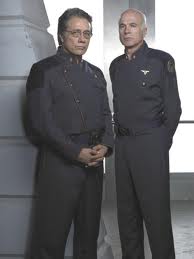 The start of season 2! Oh the excitement, the dread! Will Adama survive? What will happen on Caprica?
2.1 Scattered
The episode starts with a flashback to Adama and Tigh as rough young things, when they first join the Fleet. It then cuts very quickly to the present Fleet jumping away from the Cylon attack… but Galactica finds herself all alone. The Fleet is missing. Oh no!
Cut then to the downed Raptor on Kobol; the survivors are seriously not coping. The Lt is charge is totally out of his depth, and the Chief is too much a military man to try and go against a superior, although he does give advice when and how he can.
Yet another cut, and it’s Caprica: Starbuck and Sharon are at odds, and Helo is a bit helpless in figuring out what to do.
Back to Galactica, and Tigh is hitting the bottle hard. He beats up Boomer, at least partly to soothe his own feelings of helplessness at not being able to help Adama. Meanwhile, Gaeta comes up with the idea to network the Galactica’s computers so they can try and find the Fleet faster than otherwise possible, and Apollo is allowed out of the brig on parole, at least until the Fleet is back together again. The end is cliffhanger-y: trying to find the Fleet, Galactica gets attacked by Cylons and although they fight them off, a Cylon ship manages to crash into Galactica; we still have people on Kobol; and we still have people on Caprica. This is a Not Good Situation.
The most interesting part about this whole episode – aside from seriously earning the name ‘Scattered’, as we jump from one set of beloved characters to another – is the insight into Tigh’s soul, and his friendship with Adama. It’s not made entirely clear, but I think the suggestion is that both of them got out, or washed out, of the Fleet as young men; Tigh got bitter, but Adama refused to give up. He eventually got back in, and he then kept his promise to Tigh by bringing him back, too. So really, Tigh owes his entire career – and, probably, his life, since he seemed already about to drink himself to death – solely to Adama. This goes a long way towards explaining his ferocious loyalty and protection of the man. It’s dogged, it’s bloody annoying, but it’s also admirable.
2.2 Valley of Darkness
Having problems with your electricity? If you’re on board Galactica, that doesn’t mean Gremlins; it means enormous metal men with really scary guns. Yes, who would have guessed? The downed ship offloaded Cylons onto Galactica. Also, there’s a virus in the system, left by the nasty Cylons after they tried to penetrate all of Gaeta’s clever firewalls. The Cylons spend this episode attempting to take over the ship, or at least disable the important bits. Like life support. Roslin is freed by Apollo because the brig is in the way of the Cylons; he and various others attempt to hold off the Cylons. Which they do, although there are some casualties. Roslin ends up back in the brig at the end, though; Tigh is a hard, hard man. I love Roslin’s grace in this episode; she is a very proud woman and refuses to break under pressure.
Flick to Caprica: Helo and Starbuck are together, Sharon having nicked off somewhere. They find Starbuck’s old place: it’s filled with random art, piles of unpaid bills, and a very unsavoury frig. They listen to some music and then head out together in Starbuck’s army-surplus Hummer. I love this insight into Starbuck; we so rarely get a look back at what our people were like before the attack. She’s so quirky – the flat is nothing like I would have expected. Especially the art, which was done by her.
Meanwhile, down on Kobol, things are going very badly. They forgot some of their medication; the Chief takes a couple of people to retrieve it but they get ambushed, and one of them dies; and when they get back to the team, it’s too late to save the injured man. And they euthanase him. This vignette of the remaining humans is a stark depiction of attitudes and reactions while under pressure. The officer doesn’t cope; Baltar is next to useless, distracted by Six, and the vision he has of a baby – his baby, apparently; and the grunts are totally bewildered, which is understandable.
It’s a chaotic episode, but a good one.
2.3 Fragged
Much of this episode focusses on Kobol. The survivors discover that the Cylons are building an anti-aircraft battery, clearly to take down the expected search and rescue mission from Galactica. The Lt decides they need to attack it – which kinda makes sense, but yo, consider your people! A civvie, two grunt deckhands, and the Chief… not exactly brilliant military material. He really, really falters under pressure. What’s fascinating is that he’s shown going, step by step, through the things he’s been taught to do as an officer. But he doesn’t adapt them to the situation; he’s incapable of being innovative and flexible. When Cally balks, he pulls his gun on her… and Baltar shoots him. It’s a fascinating moment: has Baltar done it to save Cally? If so, why? Was it almost accidental, out of fright? I think it’s impossible to get a read on Baltar at this moment. It just further complex-ifies him. And as a result of the shooting, Six says she is proud of him, because killing makes you human. That’s one helluva bleak view on humanity. Then they get rescued, and everyone lies about the Lt’s death….
Meanwhile, Tigh is making more and more of a hash of things. I think he realises that things are going badly, but he just keeps on digging that hole. He declares martial law, insults the Quorum of Twelve, and is generally realising just how hard command is. Of course, he never wanted to be in command… not that Ellen wants to hear that. Dear Ellen goes to visit Roslin in the brig, where the President is having serious withdrawal issues – she hasn’t had her medication in a while. As a result, Ellen convinces Tigh to let the Quorum see the President, to get them off his back. Of course, because Billy is a resourceful young fellow, he gets her the drugs just in time so that Roslin is perfectly coherent when the politicians visit. Coherent enough, in fact, that she tells them about her visions. And that she is dying. This causes quite a stir – and most of the Quorum believe her. Tigh is left looking like an idiot.
This is one action-packed episode. Even the seemingly-quieter moments, with discussions of faith and politics, are incredibly tense.
BSG stats:
- Starbuck in the brig: 1
- Baltar in the brig: 1
- Women Baltar shows interest in (not including Six): 4
- Women Baltar actually gets to sleep with: 2
- Baltar religious conversions: 2
- Different sexy dresses worn by Caprica-Six: 11
- Apollo sides with President against Dad: 3
- Number of Cylons viewers know about: 4
- Number of Cylons humans know about: 2
- Roslin has a vision: 3
- People deliberately thrown out the airlock: 1 (+1 threat)
- Ships lost: 1
- Ellen gets suggestive: 3
- Starbuck and Apollo do fisticuffs: 1
BSG: not an update
I’m waaay behind in recapping BSG – which we have been watching, and I’ve even been taking notes, but the actually writing bit isn’t happening. In lieu of that, until I get my head together, I present BSG-as-romance: shipping Starbuck and Apollo.
It’s not really much of a secret any more that I am secretly a total sap at heart, is it?
Sanctuary: we give up
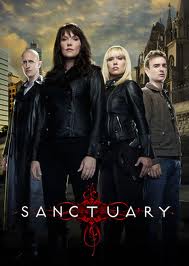 We’ve given Sanctuary the pilot and the first ep aaand… I think we give up.
I liked Amanda Tapping as Sam Carter in SG-1, so I didn’t think it unreasonable to chase up her next project (well, after Atlantis). But… this is not Stargate. For a start, Tapping has a ridiculous English accent which I just can’t take seriously. For seconds, even if the action in Stargate was sometimes a bit tacky – and I love it but I’ll grant that – at least they mostly built the sets. Here? It looks like every second shot is done against a blue screen and then the set added in later, because the production company was too cheap to figure out how to do a big-ass gothic pile other than via computer.
I didn’t mind the first episode; the getting-the-team-together thing is often quite interesting too me, and Tapping’s mysterious Dr Magnus clearly had A Past. The slightly-haunted-but-mostly-down-to-earth forensic pysch she recruits had some potential as the audience’s Everyman; I didn’t mind him. And Magnus’ daughter Ashley – Buffy crossed with Whistler from Blade 3, the one played by the Jessica – was humorous in a ham-kinda way. In fact, the best bit of the whole show has been the silly repartee between mother and daughter, where mother worries but only because she’s the one asking daughter to deliberately put herself in harm’s way. So I was willing to watch a few more… but then we watched the first proper ep. And it got my goat. Badly.
How badly? Well, apparently the last recorded mention of bubonic plague was in Scotland in the 800s (wah?). And the Morrigan are an ‘ancient’ myth first recorded in ‘medieval times’ – specifically in Arthur’s day. Yeh. From that point on I was just cranky and unwilling to give it any slack.
If you can tell me that halfway through the season it got better I will reconsider, but at the moment I am considering me and Sanctuary as officially Not Going To Happen.
Genesis, by Bernard Beckett
 Oh. My.
A librarian friend shoved this into my hands when I mention enjoying science fiction, and to be honest I was a bit dubious – I’d never heard of Beckett, for a start. Anyway, I started reading it last night and… I couldn’t put it down. Quite seriously. I read it in one hit. Now, it’s YA, and it’s only 145 pages, but still – I considered going to sleep at one point, but I picked it right back up again and kept on reading. Totally addictive.
This review has some spoilers
In one sense, the book’s story happens over only five hours: the five hours of Anaximander’s examination to try and get into The Academy. Her special topic is the life of Adam Forde, on which she expects to get grilled by the three Examiners for the whole time. Her first surprise comes when they ask her about the early years of The Republic, and she has to scrabble for her memory of history. Then they finally come to Adam, and the formative moments of his life, and she is comfortable in what she knows – although she also knows that some of her theories are controversial. Things do not, of course, proceed exactly as she had anticipated…
On another level, the examination is a clever way of recounting a fairly large whack of the book’s immediate history, without it feeling overwhelmingly like an info-dump, and weaving a story through those events. Anax and her Examiners, it is revealed, live in almost a post-apocalyptic world. The setting, New Zealand, is apparently the only place to have survived a dreadful war and subsequent plagues, all thanks to a far-seeing and eventually quite ruthless business man, Plato. He insisted on NZ’s quarantine, enforced by a great sea fence. The society which eventually developed – or was designed – centres on people’s usefulness to society, and their talents as determined by genetic testing. Adam Forde had been tested as being a Philosopher – the highest grade possible. But when he acts against his training – allowing a refugee girl past the sea fence – things start to get out of control. And then he is asked to interact with an Artificial Intelligence, to help it learn.
On yet another level, of course, the book is a searching and illuminating examination of what it means to be human, what it means to construct a society and what things we are willing to give up to have a safe society, how important safety and comfort are and at what price they should be bought… you know, all the easy topics. It’s not done cavalierly; I am staggered by how much depth Beckett managed to cram into this little book.
Perhaps the most clever aspect of the book is that you could simply read the story, and it’s quite engaging. You could read it and understand some of what Beckett is discussing about society, and it’s riveting. And then, when you start understanding the classical allusions, things get really interesting: Anaximander was one of the earliest Greek philosophers, apparently teaching Pythagoras and getting all into the scientific mode of thought. Her teacher in the book is Pericles – he who led Athens during part of her Golden Age, fostering democracy, beginning the Parthenon, and involved with the war on Sparta. The society of The Republic (set up by Plato? this is one of the more blatant references, and perhaps it was done deliberately to trigger the classical connections) is a lot like Sparta, and like what the original Plato suggested too. This is a very, very clever set up – but not so clever as to be overwhelmed by smugness.
The conclusion is… well, I am still thinking about it. This is where it gets REALLY spoilery!
I began to guess at the twist when the Examiners were pushing Anax about the Final Dilemma, and the discussions between Art (the AI) and Adam. I realised there just had to be some great reveal coming up, and that Anax and the Examiners were actually descendants of Art simply made sense. It didn’t lessen the tension, though – and it in no way prepared me for Pericles’ actions in the very last paragraph. I can’t believe I managed to sleep after that; it was, truly, gut-wrenching. Also, having finally looked carefully at the front cover (above), I am saddened: there wouldn’t be nearly as much of a surprise if you noticed before reading that those are orang utan hands.
This is a magnificent book, and I can’t believe I had never heard about it. I think I may have to try and buy it so I can shove it into other, unsuspecting hands.
Chasm City
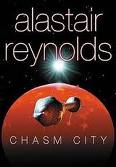 As with Revelation Space, this is the second time I’ve read Chasm City – and the first time was some years ago. Consequently, while there were a few things I remembered quite well, I still managed to be surprised by some of the twists and turns of the plot. This time, there were more occasions on which I picked up hints and allusions; I was quite proud of guessing what might be going on until I remembered that I’d already the thing…
Some spoilers follow
It’s another awesome space opera from Reynolds. One of the things which I had misremembered – and perhaps it applies more to one or both of the other Revelation Space books I’ve not reread yet – is the amount of cross-over between the stories. There are some allusions to ideas and people from Revelation Space here, but they are both very definitely stand-alone novels. And I like that; it’s a universe, rather than a series. I really liked that it ended with Tanner clearly talking to Khouri, which is one of the opening scenes from Revelation; it felt quite neat for readers of both books.
This book has quite a different feel from Revelation, which is interesting to see – to change from just your first to your second, particularly within the same universe, seems… game? Anyway, it is largely told with a first-person narrator – with occasional flashbacks to an historical character – and consequently the story is mostly linear (with the exception of those flashbacks, and the narrator’s own thinking about his past). I enjoy a narrator – particularly one, as in this instance, who is a bit unreliable. In fact I enjoyed most of the characters in this novel; there aren’t many, with the exception of the narrator (Tanner) who are particularly deeply developed, but they are certainly all individuated without becoming cliches. There’s a nice range of female and male characters, doing a range of different activities and with a range of different motivations – I think I said a similar thing about <i>Revelation</i>, but it’s true and it’s one of the appealing things about Reynolds.
The settings for Chasm are great. We’re in about the same time period as in Revelation, so chunks of the galaxy have been colonised, but there’s no FTL so getting places is still damn hard work. There are two prime locales: Chasm City itself, of course, on the planet Yellowstone, and the planet of Sky’s Edge. These are two radically different places, so Reynolds gets to indulge in two quite different visions of what interplanetary colonisation might look like. In thinking about that issue, I utterly adored the slow revelation about how the colonisation of Sky’s Edge came about; the slow generation-ships thing is enthralling, for me, and thinking about the lengths people might go to to get an edge is intriguing. I particularly enjoyed the slow but steady revelation and discussion of Sky Haussman’s character; that you start the novel knowing he was characterised as both a hero and a villain, and slowly that image is problematised… yeh, it really works for me. And Sky’s actions of course present an immense ethical quandary – which the reader can’t help but approach with the knowledge that it caused a centuries-long war on the planet itself. Chasm City, of course, is a wonderfully outrageous city, and I loved that Reynolds opened with an excerpt from a document explaining how the city has been affected by a plague – so the reader has that extra bit of information, and thus an advantage over Tanner. For me, it heightened the sympathy the reader could feel for him. And the plague itself iconic: something that affected the machinery of the place doesn’t seem disastrous, until you remember that this is a society using nano, with therefore machinery in everything – and everyone…. There are so many possibilities inherent in that idea.
The plot itself has a kinda revenge tragedy thing going on, which can be a bit tedious but in this instance is skilfully drawn out and well played, too. In fact there are numerous side-plots that at times could threaten to overwhelm the central point – the revenge – but ultimately Reynolds draws them all together and reveals that actually, he knew what he was doing all the time (of course).
It’s another of my favourites. Not quite as comforting as Revelation, in that the stuff about Gideon is rather off-putting, but familiar and relaxing nonetheless. And a damn good story.

 Randomly Yours, Alex