Megan Whalen Turner’s The Thief
I picked this up because someone – maybe Tansy? – was appalled that I’d never read any Megan Whalen Turner. So here we go. (Slightly spoiler-y but not very.)
This is definitely aimed at a YA audience (ish), and I think I would have adored it if I’ve read it a little younger. That said, I enjoyed it more than the first couple of pages suggested I might.
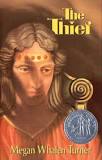 The book opens with a thief, Gen, in prison. He’s pulled out of his cell and taken for an interview with the king’s magus – head scholar, not magician, so an interesting choice of words there – because the magus wants to use his particular talents for a very specific mission. It’s a rahter intriguing beginning because it’s unclear how the reader should feel about Gen: clearly he’s a thief, so that’s bad; but he’s an engaging narrator, which is ambivalence-making; the magus isn’t that nice and the king is a bully, so that makes Gen look good. There’s also a question over Gen’s abilities, since lots of people are taunting him for the boasts he made before his capture, and clearly he’s been in jail for ages, so does that make him a bad thief? On the other hand, the fact that he’s going to be used by the magus is an indication of his skill, so… yeh, lots of ambivalence here. I like well-constructed ambivalence.
Turner keeps Gen an engaging character for the length of the novel. Various bits and pieces come out about his past, and his sense of self, and all of these go to construct an intriguing and likeable man. I had to stop after the first chapter or two and re-read some sections because I half-wondered whether Gen was going to turn out to be female… that would have been really awesome, but alas no. (There’s only two female characters, I think, who get any real airtime, and that not much.) I was really, really impressed with the twist at the end… I had been fully expecting a fairly straightforward ending, and would have been fine with that – although quite what could have been done with Gen when they got back I don’t know, maybe just allowed to slip away? Anyway, the way such a major revelation actually worked in perfectly with what had gone before? Genius. The magus is a bit fickle, especially in his attitude towards Gen but also towards his two students, and I could never quite figure out whether he was meant to be thawing out over the course of the journey or if he was indeed this mercurial, sometimes-ill-sometimes-even tempered teacher that everyone had to be careful of. Overall not entirely convinced. Of the others on the journey – I don’t feel that they were quite rounded out enough for me to care that much. Interestingly, Gen is big enough to basically plug that lack. There are other characters here and there but none that are memorable.
The plot, obviously, is that of a quest – go find this ancient artefact which could have ramifications on… stuff. Along the way there’s politics and mythology and personality clashes, and a lot of walking and some adventures. It’s fun and well-paced – the walking doesn’t drag (heh), the discussions the characters have enliven things nicely, and the conclusion packs a really brilliant punch. I ploughed through this very easily and with great enthusiasm.
So I liked the characters, and the plot was fun. The world is another aspect that made me ambivalent. The author’s note vindicated my feeling from the opening chapters that this was definitely heavily influenced by Greece, and its ancient (and semi-mythologised) past. However I was weirded out by scrolls and books in the same library – which I know must have happened, but it’s still weird – and Turner only notes that Gutenberg did movable type in 1445 in the author’s note, just to give context I guess. So it’s kinda real-world ancient, kinda medieval, kinda… not. That aspect bugged me a little but when they got into the countryside it wasn’t such a problem. For the world itself – I was impressed to see the levels of the politics discussed, which makes me wonder actually at my tagging it YA although it did get to be a Newbery Honor Book. I liked the Canterbury Tales-esque aspect of telling stories to each other, although these were of mythology not everyday life, and that these myths were clearly inspired by Greek tales but made wholly Turner’s own by twists and details; there was some discussion about how much the gods affect everyday life, although not much. In all it was quite a comfortable world, I guess.
This is the beginning of a series; I will definitely be looking out for the rest of them. You can buy a shiny new copy over at Fishpond.
Alanna: the first adventure
I was given this book by a student teacher placed with me some time ago, a major Margo Lanagan and Isobelle Carmody fan who was scandalised that I hadn’t read any Tamora Pierce. And I finally got around to reading it, hurrah! (She also gave me a pencilcase that she made herself and decorated with important history dates – how cool is that?? – and a copy of A Woman in Berlin which I haven’t read yet but I WILL, I SWEAR.)

So, I should say upfront that I don’t think I loved this book as much as M wanted me to, and I think that is entirely the fault of my age and cynicism. Oh, I fully intend to get my hands on the rest of the series at some stage because I do want to find out what Pierce does with Alanna, especially once her secret is out… but it’s unlikely to be a Great Classic in my heart.
That said… some spoilers follow, because I want to dissect a couple of bits.
So, that said… I liked Alanna, although the 30-cough-something in me is intensely amused and eye-roll-y at a ten year old having the nous to set up such a trick on her father. It’s interesting that Pierce made the father neither evil nor dead (the dead bit is left to Mum) but so intensely disinterested and absent that this trick could work; I would have thought this would have a rather larger impact on the child than it appears to. Anyway; it’s set up as ‘special child with special talents’ right from the start, so that’s not something I can complain about. And I DO genuinely like Alanna. Much as I deplore the violence I admire the pluckiness of wanting to beat your own enemies; I like that she speaks in a forthright manner, and her determination to be as good as the boys – and that she fully intends to reveal her secret when she’s passed her tests and go on to have adventures. I really, really liked that Pierce addressed the issue of menstruation and Alanna’s annoyance at having biology forced on her (also, the bit where she realises her chest is jiggling? Priceless). I am sad that she has the “but I’m not good enough because I’m a giiirrrlll!” tantrum, but I do like that it’s the male companion who tells her not to be so ridiculous.
I forgot to mention the premise of the story. Alanna wants to be a knight. Her twin brother doesn’t; he wants to be a sorcerer. Conveniently, boys are taught magic at the convent to which Alanna is to be sent to learn How To Be A Lady; and Thom, the brother, can forge Dad’s handwriting. So, switch-a-roo and Alan(na) is off to the big city to learn how to cudgel opponents… I mean how to be a knight. Essentially this is a boarding school story but rather than being nerds or wizards or international students, this is Knight School. There’s all the sorts of things you would expect – fitting in, working hard, dealing with bullies, annoying/scary/awesome teachers – with added swords.
There are some nicely subversive elements here, against the traditional Learning to be a Knight story, especially in the form of Sir Myles. (It must be said I was a little afeared that Myles was going to end up having a sexual attraction to young Alan, when he suddenly asked Alanna to accompany him to his home castle. Lucky it was only inspired by a dream! Haha!) The undercutting of chivalry, and the seeming contradiction of what is expected of a knight – honour vs beating opponents up, etc, isn’t fully fleshed out and may simply pass a young reader by – but I appreciated it. Especially in contrast to the “yeh, beat up the bully! That’s the solution!” rhetoric, which kinda revolted me.
Things that made me very eye-roll-y: Alanna is so fed up and tired after two days that she decides to leave (but of course changes her mind…) and THEN, a few months later, has enough time to go out and do EXTRA training with George so she can beat up the bully? Really? So she magically found time for travel AND for the lessons?
Also: George. I’m as much a fan of your King of the Thieves as the next person who read David Eddings as an impressionable teen, but… a king in their late teens? Named George? With such a highly developed sense of morality? I don’t buy it.
Also also: “the Gift.” The reality of this magical ability just wasn’t developed enough early on – either what it is or why Alanna hates it so much – for me to be particularly impressed when she pulls out the stunt of making Jonathan recover. I am intrigued by the fact it appears, at least in this use of it, to call directly on the gods – gods who don’t appear to have much impact on everyday life, as far as I can see, in terms of worship or morality.
Things that concern me: I worry that Alanna and Jonathan will end up having a Thing. That will annoy me. Or Alanna and George. So the prince and the king of thieves will end up fighting for her hand. That would be BAD.
All of this aside, I really will look up at least the next book, to see where Pierce takes Alanna. My version of this first book has the opening chapter of the second, as a teaser, and… yeh, I am intrigued.
The Changeover
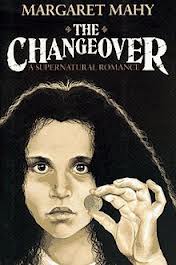
So back in Feb, my friend Kate challenged dared suggested that we re-read The Changeover, by Margaret Mahy. I agreed readily enough, not having read it for a number of years – and then discovered that I didn’t actually own a copy any more, how is that even possible?? Kate went all silent-running on me for a while, but she has now posted some of her own thoughts, so I will finally do the same… spoiler: the Suck Fairy did not visit!
Verdigris Deep
 I have had this sitting on my TBR pile for ages, and given how much I adore Hardinge it doesn’t make sense it took me so long to pick it up. Oh well, water under the bridge… heh… Anyway, I went in expecting a rollicking adventure like Fly by Night. After all, how bad could it be to take coins from a wishing well, right? And even if there is a spirit in there who doesn’t like being stolen from, how bad can it be? And if she decides that you need to help her in fulfilling some of the wishes, that can’t go badly, can it? Especially if she gives you some shiny powers to aid you in that effort?
Yeah. This book was way darker than I had expected. On reflection Mosca Mye’s adventures weren’t all sunshine and skittles either, but I don’t think I ever actually feared for her life, or that Saracen the goose would end up in a pie (much as he might have deserved it). Nor did Mosca ever end up with eyes growing on her knuckles.
Josh, Ryan and Chelle sneak off to a village they’re not meant to visit, and they miss the last bus their tickets will get them home on. To get more money for tickets, Josh goes down a wishing well. Over the next couple of days, all three children discover that weird things are happening: Ryan is growing weird itchy wart-things on his knuckles, Chelle can’t stop herself from randomly spouting what seems like nonsense, and Josh is making light bulbs blow and phones go staticky. Naturally, with some experimentation and a weird dream experience for Ryan, they discover this is connected to their theft from the well and they have now been press-ganged into granting wishes, with powers to help. Fun, eh?
Of course, we all know that wishes are – as Ryan describes it – a bit like conkers. There’s the outside bit that you can see, but then there’s the inside bit – the meaty bit – that’s often darker, and spikier, and not so speak-out-loud. But the spirit in the well knows that bit, too.
Things get out of control. Of course. There’s adventure – some exhilarating and some terrifying – and some occasions of just sheer terror for Ryan, our point of view character, in particular. As with the best stories there’s more than one level of problems to be dealt with, and I’ve rarely read a YA/kids’ book where parental arguments are shown quite so realistically, along with the child’s reaction. Also the fact that your parents aren’t necessarily going to get along with your friends’ parents, although that was mostly just funny. Adolescent friendship and its highs, lows, difficulties, competition, and hierarchy is treated very tenderly: Hardinge pulls no punches but does allow her characters to develop over just a few days in reaction to their circumstances. I’m quite sure most people will recognise aspects of Ryan, Chelle and Josh’s little clique, and not necessarily with rosy memories either.
As for other characters… there’s also a mean old lady who was, on reflection, actually treated rather poorly – she was certainly nasty but probably didn’t deserve quite the ending she got – and a nice young lady whose agoraphobia wasn’t explored in great detail but was treated with sympathy. There are five parents between the three children, which is rather a change from your classic YA where the parents are got rid of or otherwise not involved in the story; Ryan’s parents are very present in much of the story, and they get to be appropriately complex. And the spirit in the well – I won’t say much because I don’t want to spoil it, but I was really impressed with the context Hardinge develops, and especially with the ultimate resolution.
Look, I read this in an afternoon. It’s utterly absorbing and gloriously written. Just read it already. You can buy it from Fishpond.
(Apparently it was released as Well Witched in America. I do not know why.)
The Golden Day: a review
I picked this book up at The Moat, a bar/restaurant slightly underneath the Victorian State Library. It has a shelf of books that can be taken by customers on the proviso that at some stage, you put one in yourself – although a further proviso is “No Dan Brown” (seriously it 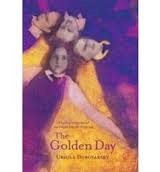 says that on the sign). Anyway I’d heard of Dubosarsky and never read any of her stuff, and the cover was immediately entrancing – look at that purple! and the gold is luminous!
There’s a little bit of Picnic at Hanging Rock around this book, which Dubosarsky herself acknowledges, as well as a lot of inspiration from art – especially that of Charles Blackman, whose paintings and drawings provide the chapter headings. It also, she says, draws on her own memories of being a Sydney schoolgirl.
Eleven little girls have a somewhat peculiar teacher, who takes them out of school down to the nearby gardens, to consider the world and attempt poetry and to listen to a gardener-cum-poet, Morgan. (It’s fair to say that there were a lot of alarm bells for me as a teacher with this book! The 60s were truly a different world…) But something happens – something unexpected and terrible, but probably not what you’re thinking: let me spoil this slightly and say nothing happens to the girls themselves, IT’S OK Tansy can read this if she hasn’t already.
While the ongoing repercussions of the Serious Event colour the entire book, Dubosarsky works other issues in, in the same way that such issues would probably be experienced by your average kid. It opens on the day Ronald Ryan is hanged (the last such event in Australia); the Vietnam War is ongoing. Closer to home, things are not entirely well in the homes of at least one of the girls, although exactly what is going on is never fleshed out; the reader sees glimpses in the way that a casual schoolfriend sees glimpses, only when they’re allowed or by accident.
It’s a very short book – 150 pages of well-spaced type. It’s a delightfully written book, with evocative descriptions of schoolrooms and gardens and slightly creepy creeks. Dubosarsky captures the innocence and bewilderment and childish cunning of children very nicely too; a student would have no trouble seeing themselves in this novel, in the attitudes and expectations of the schoolyard. It’s also potentially a frustrating book. It begins in 1967, with the girls about 10 years old; it covers about a fortnight in their lives, mostly in the schoolroom with occasional forays outside. It then jumps to one afternoon in 1975, with four of the girls sitting their final HSC exam, and a final intriguing addendum to their experience eight years earlier. The story is left ajar – not quite open, not quite closed… I guess this is fitting since the girls themselves are on the cusp of adulthood, so their lives at this point are liminal, balancing between two aspects.
The Golden Day is intriguing, and luminous like its cover; I have no doubt this will stay with me into the future. Especially when considering excursions.
You can buy The Golden Day at Fishpond.
Brian Caswell: Merryll and Butterflies
I don’t know how, but I had forgotten about Brian Caswell until my sister linked My Sister Sif with Merryll of the Stones, and I realised that NO nostalgic trip to early adolescence would be complete, for me, without him.
 Merryll of the Stones has time travel, romance, dragons and other mythical creatures, and Wales. Also tragedy, but romance. Old book, and romance… yeh yeh ok, I actually am a total sap. Have we not realised that yet? Whatever.
Megan’s parents are killed in a car crash; she wakes up from a coma speaking Welsh, and conveniently having to go live with relatives in Wales. She meets unpleasant school girls, a mostly sympathetic but vague set of relatives, and the odd and intense Em. She then goes back in time to a period when Wales was being all mythological and warlike, and… there’s a prophecy, and mistaken identity, and struggling to find your way physically and mentally and emotionally, and it is JUST ALL AWESOME. Megan, so far as I recall, is an immensely sympathetic and believable character – not perfect, but aiming for the right; her relationships with the girls around her really resonated with me. Plus, yes, the awkwardness of her relationship with Em had a great appeal – dealing with his intensity and oddness, his secrecy and mystery but he’s neither a vampire NOR A STALKER. Just saying. And again plus, a really cool vision of ancient Wales. I’ve always had a thing for Wales and the Celts. This was absolutely one of my go-to books as a young girl. (And I currently can’t find my copy. I think my sister has stolen it.)
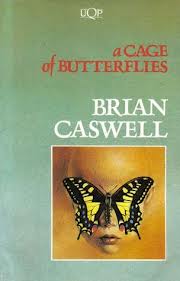 Cage of Butterflies is verrrry different in theme, but equally awesome and resonant in tone and characterisation. Super intelligent teens in a ‘think tank’ educational facility discover that just over there, in the bit of the institute they shouldn’t know about, is a bunch of babies with… abilities. Who do not like being kept in the institute and experimented on.
I remember this as being a bit more plot-driven than Merryll; the lead characters, Mikki and the boy whose name I’ve forgotten, have to find out about the Babies and then have to figure out what to do with/for them and then deal with some consequences (it has a bit of ‘much later…’ as the conclusion). And I definitely remember that as being exciting and tense the first time I read it. However, as with Merryll, the real draw is the characters themselves. Perhaps this won’t surprise anyone, but I was absolutely a square at school, and the idea of a place filled with really smart kids hanging out together and, while not necessarily just sitting around talking about books all day – there are still fights and awkwardness and general teen-type things – there’s no condemnation for being smart. That was a pretty exciting thing to read about. I liked the alternating point of view – girl and boy, who by the way rather like each other, ooh er, as well as working really, really well together and complimenting each other beautifully physically (the boy has, IIRC, something wrong with his legs…) and mentally (different strengths – and genuinely different, not better/gender based. Again, IIRC… maybe I’ve got rosy glasses towards this). It was a delight in general, is what I’m getting at.
Brian Caswell, I owe you a great debt for adding lovely gentle readable and believable romance and characters and story to my life.
My Sister Sif
Look, I’ll just admit it up front, ok? I was not a horse-y girl. I could not understand Saddle Club; even though I wasn’t very maternal as a young girl, I still preferred Babysitters’ Club books over the horsey ones. (I also did not understand the appeal of the Gymnasts books.) But what I lacked in love for equines I more than made up for in adoration of dolphins. Yes, I was That Girl. I wanted to be a marine biologist for aaaages – until I discovered that they usually spend their time studying plankton, and only the luckiest get to swim with dolphins and make a living from it. I had (… have) dolphin jewellery, and dolphin statuettes, and… yes, you get the picture.
 Unsurprisingly, this story captured my heart and made it ache. Terribly. For many varied and heartbreaking reasons.
Riko and Sif go from Australia to their family home on a Pacific island, where it’s revealed (to the audience) that they’re related to mer-people. Who have a connection to dolphins.
There’s romance – for Sif, with a scientist, and for Riko a somewhat confused attempt from what I remember as being a not-entirely-human character, but maybe that’s my memory. There’s adventure – people doing suspicious things on their island, especially. And there’s character. Riko is wonderfully realised – rebellious, envious of her sister and desperately loving and protective of her at the same time, practical and down to earth and determined. Sif is the more fey – physically, having more of a connection to their mer-relatives, as well as personality wise; this is, I realise, something of a Jane/Lizzie Bennett pairing. Hmm. And in the end, there’s also a lesson to be learnt, which is done blatantly but also in a ‘you’ve seen all of this, isn’t it obvious?’ way: Riko goes home determined to change society, beginning with the children, to make it more like dolphins and less likely to destroy the environment… as is happening around the island, and which has helped bring about the great tragedy in her life. Which is the bit that made me cry. Which is Sif dying.
I remember incredibly evocative descriptions of the people and the places, I remember desperately wanting to BE Riko and try to save Sif, and I remember trying to swim like the mer-people are described as doing, too, to my embarrassment. On which note, this was one of the first serious attempts at explaining merfolk that I remember reading, and it still strikes me that their attempt to include their land-bound brethren is a remarkable one – developing breathing apparatus and the like. I think I still want to be Riko.
I should re-read this. I’m quite sure the power of Riko and Sif has warded off the Suck Fairy.
It’s Tansy’s fault I’m reliving these childhood memories. See this post for her love of Grange Hill…
Snapshot 2012: DM Cornish

An illustrator by training and a deeply unrepentant word-nerd, D.M.Cornish is old enough to have seen the very first Star Wars. From such delighted flights of fancy he has developed an almost habitual outlet for his passion of word conjuring through the invention of secondary worlds and in particular the vast and dangerous Half-Continent. A foruitous encounter with children’s publisher, Omnibus Books, gave him an opportunity to develop these ideas further. A thousand words at a time, this has lead to the writing and illustrating of the Monster-Blood Tattoo series – Foundling, Lamplighter and Factotum.
In 2010 you had a story included in the anthology Legends of Australian Fantasy, edited by Jonathan Strahan and Jack Dann. What was it like being included in an anthology with the likes of Sean Williams and Isobelle Carmody? And did you enjoy the opportunity to explore the Half-continent, initially created in your trilogy of novels focussed on the young character Rossamünd, from a different perspective?
It was an honour to be asked to contribute and an honour to be included amongst such lights as Sean and Isobelle: though I have such a thick and purple way of writing I fear some readers who were the for Isobelle or Sean or Ian etc might have found my own story a bit “lumpy”.
It was a delight to write from not just one but several different points of perspective about the Half-Continent, to tell a simpler tale with all adult characters not limited by their youth or social station.
Your (first, hopefully!) trilogy, formerly Monster Blood Tattoo and now often known as The Foundling’s Tale, was also completed in 2010. What was it like to have all three books out into the wide world? What sort of reception has the trilogy as a whole received?
It feels good, though kind of remote too: they have a life of their own where ever so often a reader contacts me with encouragement that lets me know the story is finding a good home somewhere.
Probably the change of series title from Book 2 to Book 3 in the USA has not helped its cause there, but here is Oz it has done okay. I did not perhaps take the story to places some were hoping for and can see myself now how I might have done things better
On your blog you have mentioned that you’re working on a new novel, which may or may not turn into a multi-volume series, that is definitely not about Rossamünd. Can you tell us who the focus is instead? Is it still set on the Half-continent?
It is indeed still set in the Half-Continent and it focuses on a very very minor character from the third book of Monster-Blood Tattoo, Factotum, who becomes a protagonist unto himself and has adventures all of his own. I am finding that he is in some ways a successor to Rossamünd, that the themes of MBT are carrying on in this new fellow’s story, though he is older – in his twenties and has a sense of direction and control over his life that Rossamünd never felt in MBT.
HINT: for those who have read Factotum, the character I am writing about now makes an appearance in MBT 3 based upon his ability to draw.
What Australian works have you loved recently?
Well, as lame as this is going to sound, I have not been doing a whole lot of reading for a little while now, but there is one beautiful gem that has got me fascinated, Anywhere But Earth, an anthology jammed with the luminaries of the Oz spec-fic scene.
Also, I very much loved the animated version of Mr You-rock-sir Tan’s The Lost Thing.
Two years on from Aussiecon 4, the World Convention held in Melbourne in 2010, what do you think are some of the biggest changes to the Australian Spec Fic scene?
Now that I cannot answer – I sit in a room on my own making up stuff and rarely poke my head out to test the wind’s direction. So, shame on me, I can only offer a shrug.

This interview was conducted as part of the 2012 Snapshot of Australian Speculative Fiction. We’ll be blogging interviews from 1st June to 8th June and archiving them at ASif!: Australian SpecFic in Focus. You can read interviews at:
http://thebooknut.wordpress.com/tag/2012snapshot/
http://kathrynlinge.livejournal.com/tag/2012snapshot/
http://helenm.posterous.com/tag/2012snapshot
http://bookonaut.blogspot.com.au/search/label/2012Snapshot
http://www.davidmcdonaldspage.com/tag/2012snapshot/
Snapshot 2012: Penni Russon

It was occasionally difficult to track. I decided that when Claire entered Sedge that it would be third person, to highlight a further disconnect (the waking dream), but also to make it really clear to the reader that a significant shift had happened. There was one scene where Claire and Clara occupy the same space and I had a lot of trouble deciding what POV that should be from!
Your trilogy from a few years ago, Undine, Breathe and Drift focussed on a teenaged girl and her discovery of magic. What drew you to working with this particular mythology, and bringing it into the modern world?
I grew up in Tasmania which is where Undine is set. I was fascinated by what it meant to grow up on an island – I am still curious about this, as I come to realise actually just how socially disadvantaged Tasmania is compared to Melbourne where I live now. Anyway, to me it seemed natural that magic would be linked to the ocean. I once commented on Twitter about experiencing ambivalence with regards to the ocean. Another writer scoffed (I’m paraphrasing), ‘The ocean makes me feel many things, but nothing so wishy-washy as ambivalent.’ But I am happy to embrace my wishy-washiness! I am fascinated by ambivalence, ambiguity, halfway states, where you linger between, not quite one thing or another. Undine is all about being halfway between – human and magical creature, love and like, the thing and the reflection of the thing and so the Undine myth (which is not literally in the novel) is a metaphor for this.
I love Margaret Mahy’s YA fiction, so I wanted to write something with “magic in the real world”. Writing Undine was a very organic process, I really didn’t understand much about the practical aspects of writing fantasy when I began. The Undine books are actually incredibly autobiographical in parts, many incidents in the books actually happened to me.
You’ve written both speculative fiction and what might be called mainstream YA as part of the Girlfriend series; do you see yourself having to choose between genres, or continuing to cross them, in the future?
I think all my books belong together, despite the genre crossing. They are really all about those halfway states, about what’s real and what’s pretend. In The Indigo Girls the girls go night surfing – this is very similar to the way Undine experiences power and her body. In Little Bird Ruby-Lee falls in maternal love with the baby she is babysitting, and then transfers these feelings onto the baby’s single father in a romantic way and then has to try and figure out what is real and what is part of her fantasy life. I don’t think I will ever tire of this theme
What are some works by Australians that you’ve been enjoying recently?
I loved Queen of the Night, Leanne Hall’s excellent sequel to This is Shyness, with its comic book aesthetic. The FitzOsborne’s at War, the third book in Michelle Cooper’s Montmaray trilogy, made me cry and smile and laugh – these are historical fiction, though Montmaray is a made up island. I really admire Cooper’s world building, the way she stitches her fictional world and history together so seamlessly. Also this year I loved Foal’s Bread, which I read as magical realism.
Also I am reading Emily Rodda’s Fairy Realm books aloud to my six year old! Emily Rodda and I will be on a panel together at the Melbourne Writer’s Festival – my daughters are very excited!
It’s been two years since the World Science Fiction Convention was held in Australia. How do you think the speculative fiction scene in Australia has changed since then?
Well, the biggest change in Australia in the last two years is the loss of Borders and Angus & Robertson, the “middle” market, and at the same time many publishers are dropping their sales staff, instead having booksellers go to the website to select stock for their stores. I think as a result we are going to increasingly see a bigger divide – a lot more trashy trash, and some really interesting, experimental “literary” spec fic that works hard to catch a bookseller’s eye. Perhaps as a result of this, I think publishers are more focussed on “The Pitch” than on “The Talent” (though I don’t think a talented author will ever be overlooked). Still, it’s easier for publishers to sell books that can be summed up in a sentence, not just to customers, but to their own marketing departments, to booksellers, to reviewers, to overseas markets. It was really hard for me to sum up Only Ever Always in a sentence, and the exercise seemed artificial, nothing to do with marking art. It was actually the rights manager, Angela Namoi who crystallised it by describing it as ” a meditation on grief”. Of course the question I started out asking was where do stories come from? And Angela made me realise I had answered that question: “from lack, from absence, from loss. From the spaces between where the lost things dwell.”

This interview was conducted as part of the 2012 Snapshot of Australian Speculative Fiction. We’ll be blogging interviews from 1st June to 8th June and archiving them at ASif!: Australian SpecFic in Focus. You can read interviews at:
http://thebooknut.wordpress.com/tag/2012snapshot/
http://kathrynlinge.livejournal.com/tag/2012snapshot/
http://helenm.posterous.com/tag/2012snapshot
http://bookonaut.blogspot.com.au/search/label/2012Snapshot
http://www.davidmcdonaldspage.com/tag/2012snapshot/
tansyrr.com/tansywp/tag/2012snapshot/
www.champagneandsocks.com/tag/2012snapshot/
https://randomalex.net/tag/2012snapshot/
http://jasonnahrung.com/tag/2012snapshot/
A Confusion of Princes

I was really looking forward to this book, so perhaps that’s why I was a bit disappointed: expectations too high?
Khemri, our narrator, tells us straight up that he has died three times, and that this is the story of those deaths “and my life between.” It’s also made clear that although he is called a Prince, he hasn’t been born into a royal family but, rather, effectively kidnapped – requisitioned might be a better term. The story is that of Khemri learning that much of what he knows about being a Prince is wrong, or at least wrong-headed. He learns this while avoiding being killed – usually not because of his own wits – and while gradually coming to terms with the realities of the Empire. He has a wise, enigmatic Master of Assassins by his side (and the novel includes a bonus short story that gives just a little more insight into Haddad’s character), and while he does die a few times the first time isn’t until he’s actually learnt some things, which is a plus.
The overall story is fairly enjoyable. The twists and turns in Khemri learning how the Empire actually works, as opposed to how he has been taught that it does, is generally well played, although not especially original; there were only a couple of times I was genuinely surprised. I enjoyed the idea of the Princes all vying to be the next Emperor and how that might play out when there are ten million of them, mostly bloodthirsty or at the very least ruthless. And the world building was particularly interesting.
Truth be told, it was the world building that really kept me reading. The combination of Mektek, Bitek and Psitek is wonderfully intriguing – how an empire could get to the point where all three are valued, and used, and used in conjunction is fascinating. The idea of the Empire itself was… interesting, and intriguing even, but there wasn’t quite enough background or explanation to satisfy me. There is some explanation of what it means to be Emperor by the end of the story, but still not really anything about why it is an empire that rules this sprawling, mostly-human conglomeration of planets; nor why or how it was decided that Princes ought to be sought from the general population. I really liked this aspect, but it still was confusing about why it was there in the first place, if not simply as a narrative device.
Sadly, it was an aspect of the world building that really, really grated on me and meant that even if the story had been glorious, I would still not have been in love with this book. Princes get mind-programmed thralls: butlers, valets… courtesans…. This aspect of Khemri’s life, and the fact that throughout all of his adventures he basically accepts this as his due, revolted me. If there had been some questioning of this ‘right’ for Princes, if there had been some interaction with a thrall that indicated they had awareness and Khemri wondered about them, I could perhaps have swallowed a bitter pill and taken this for an aspect of a hinted dystopia. But there isn’t. Instead, we have slaves, who have been programmed, conditioned, to serve their master and be incapable of rebelling. This, I cannot accept.
On a different note, Khemri is your Perceval-type character. (Remember when David Eddings wrote a big long thing about how to construct a fantasy world and story? Maybe at the start of… I forget, one of the Belgariad tag-along books. Anyway, he said your main character, who was clearly going to be male, basically fell into Arthurian archetypes, and Garion was Perceval: the slightly dim well-meaning young fellow who needed everything explained to him.) He’s arrogant and dim, without realising the latter while relishing the former; he has his hopes for his young Princely life dashed and then nearly his actual young Princely life as well, and he gradually learns about power and authority and their right use and etc. Standard stuff. Haddad is nicely played as enigmatic-older-guide, and I would really liked to have seen more of him; the fact that people such as him get assigned to different Princes over their careers suggests all sorts of intriguing possibilities for issues of loyalty. Other than that, there’s A Girl, and a fairly large cast of C-characters who alternately challenge, nearly kill, and befriend our hero.
The gender issue is also an interesting one in this story. Princes can be either male or female, and they are treated no differently from one another; once you are a Prince, with all the conditioning and genetic tweaks attendant on that, you’re just… a Prince. Male or female no longer counts for anything, if it ever did. The same goes for priests and assassins; there seems to be no barrier about holding significant roles within either field, or indeed any other, based on gender. With all of that, the one female who plays a significant role is a love interest. She does other things too, but it still feels like she almost entirely defined by the romantic aspect, and the impact this has on Khemri. Which was a little disappointing.
Overall, I was somewhat disappointed: by the thralls specifically, but by the lacklustre nature of the story more generally. It’s touted as a space opera, but it’s just not grand enough for that. Some might argue that it is grand enough for a YA space opera, but I don’t think YA means getting to be a little bit boring with plot and magnificent gestures. It may be that I am cynical and jaded (never let it be said that I am too jaded to admit that’s possible). On the other hand, maybe this does just miss the mark.

 Randomly Yours, Alex