The Crimson Road, A. G Slatter
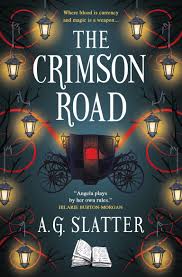
A.G Slatter is an author that I pretty much insta-buy these days. Especially when I know that the story is in her Sourdough universe. Even when the story is about vampires, which I am usually suspicious of – I do not love horror, as a rule; but I trusted that Slatter would not make the story too scary, and that those bits that make it horror would be worth me persevering through.
All of which was true of this novel. It’s yet another fantastic story. Which is not to suggest that I am getting complacent! I guess there’s a possibility that at some point Slatter’s imagination could go off the boil? Today is not that day, though, and may it be kept far, far away.
So: Slatter’s vampires are Leech Lords, and they have bee largely contained by an uneasy alliance of church and Briar Witches (whose story came out a year or two ago). It will not surprise you to learn that this containment is under threat.
Our point of view is Violet; we begin the story with her father having died, and she is hoping that she might now finally be free of his relentless tyranny and insistence that she train as fighter all day every day. Again, no surprise to learn that life is not actually going to turn into eating-chocolates-on-the-chaise-longe, although how all of that transpires is a wonderfully involved and intricate and devastating series of events.
That pretty much sums up the whole novel, really. There’s a quest; there are friends made and abandoned and fretted over; there’s fighting and surprises and hard choices.
I read this novel very, very fast because putting it down was anguish. Highly rated for anyone who wants more Sourdough universe; and if you haven’t read any Slatter yet, this would make an excellent entry point.
The Ministry of Time

What is there to say that hasn’t already? I read this because it’s on the Hugo shortlist this year, so that was already (likely to be) a good sign.
- Time travel done quite cleverly – excellent.
- Super slow-burn romance that basically makes sense – very nice.
- Politics that develop and get more and more tricksy as the novel progresses, in ways that I actually didn’t expect and was deeply impressed by as the book went on – magnificent.
- Pointed, thoughtful, and clever commentary about race, ethnicity, passing, immigration, assimilation – very, very nicely done.
This was another book that I had deliberately not read anything about before going in – the name told me all I needed to know, especially once it got on the Hugos list and friends started raving about having enjoyed it. So I went in with no expectations. (If you want to be like me, just stop reading now!)
I really didn’t expect that the idea was that people were being brought into the 21st century. I think the initial explanation of that is perhaps the weakest part of the story: why do this? I don’t think the “for science!” explanation is pushed enough to be convincing. And yes maybe that’s part of the point, but… on reflection, I do think that’s the one bit that’s too vague.
I really, really didn’t expect the whole explorers-lost-in-the-frozen-wilds chapters. They make a lot of sense in terms of elaborating Graham’s character. And it’s only in hindsight that I can see that they’re also doing some interesting work in terms of showing two groups, coming into contact, who find one another unintelligible.
One of the twists I picked up early – I think at the point where the author was starting to really flag it, so I won’t take any credit for being particularly clever. I did not pick up one of the other twists until it was presented to me, which was a highly enjoyable experience.
This is a debut, so I am left with “I hope Bradley has a lot more ideas left in her head.”
The Fortunate Isles, Lisa L. Hannett

What an amazing, intriguing, occasionally distressing, emotional and beautiful set of stories.
Everything I’ve read by Hannett, I have loved. This is not to say I’ve read everything of hers – some of her work has tended a little too horror, for my delicate reading sensibilities, or at least the descriptions of them have deterred me. But the collections and novel that I have read… I never regret it. And that goes for this, too.
By the way, you can buy it right now!
It’s a set of short stories, but it’s pretty close to being a mosaic novel. The key tying everything together isn’t a person, but the place: the Isles themselves. They’re not a “real” place in that you won’t find them on a map. But once you remember Hannett’s love of, and knowledge about, Viking history, it’s not hard to see how inspired this place (and some events) are by that northern part of Europe. I got to visit Orkney last year, and I could feel resonances with that place as I read. Everything about these stories is connected to the idea of the islands: the people being insular; the space being liminal; whether characters look to land or water as home, inspiration, solace, threat, provider or destroyer.
There are a few characters, and families, who reappear over the course of the stories, reminding the reader that the Isles are a small place and that while some people leave, most don’t – or if they do, they usually come back. Most of the characters are human – usually, mostly – but several of them aren’t, and a few are liminal. There’s magic, but it’s not easy or familiar or common. What there is mostly is humanity. Love and hatred, jealousy, fear and despair, joy and determination. Hannett is really, really good at people. She’s also very good at narrative, don’t get me wrong: the amount of twistiness she can get into just a few pages is remarkable. Mostly, though, I read these stories for the people.
This is a splendid collection and I am delighted it’s been republished.
The Incandescent, Emily Tesh

I had absolutely no idea what this book was about before I started reading it. I had pre-ordered it months ago purely on the basis of “Emily Tesh”. That’s how much I loved Some Desperate Glory: Tesh has become an insta-buy.
So then I discovered that it’s a school story, with the focus on one of the teachers; and that it’s modern, and a fantasy. Very different from Some Desperate Glory! Which is not a problem – but intriguing.
TL;DR I adored this book. Like, a lot.
The school bit: I was a teacher for a fair while. Not in a private school, not in a private boarding school, and not in a British private boarding school. And yet, this book was so clearly written by someone who was a teacher. The notes about no one getting on the wrong side of the office staff. About respecting the groundskeepers. About how experienced teachers view new teachers, and why teachers even do the job… and that’s all before the actual teaching, and the teacher-student interactions. I loved it. And it’s all necessary and appropriate for the story, too.
The fantasy side: this is a world where magic-users can access the demonic plane and make use of their power to do… well, magic. There’s also other ways of doing magic but that’s the focus here. The main character teaches invocation, and is an acknowledged expert in her field. Some of her students are remarkably strong and intuitive. You can probably start to anticipate some of the ways things might go wrong.
There’s also romance: it’s a significant thread throughout, although more along Han-Leia lines (important but not actually driving the narrative) than Wesley-Buttercup lines. It’s real and powerful and deeply believable.
Tesh writes beautifully, I wouldn’t change a thing, and I know that I’ll be re-reading this novel. And I’m sorry if you’ve got a lot on your plate, Emily, but please can you write more novels?
The Strange History of Samuel Pepys’s Diary
Many moons ago, I did an undergrad subject that I thought was part of the English department but was actually in Cultural Studies. It was about how “classics” get to be part of the canon – about how much there is to the construction of the canon, and that it’s not just organic. So we looked at the various versions of Hamlet, and Pound’s editing of “The Wasteland”, and James Joyce’s work at making Ulysses seem like a classic before it was even published. All of which was in my mind as I read this amazing, fantastic book.
I read this book courtesy of NetGalley and the publisher, Cambridge University Press. It’s out at the end of June, 2025.
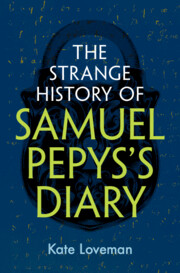
What Loveman is doing is not just assessing and explaining the Diary, but also putting it in its historical context across the 350 years of its existence. How and why Pepys originally wrote it – and the fact that it is almost certainly not JUST a diary recording his uncensored thoughts, but consciously constructed. And then, even more interesting for me, the life of the Diary after Pepys’ death.
The Restoration is not my favourite period, so I haven’t studied the Diary much, if at all – and being Australian, I wasn’t subjected to excerpts at school. So I had no idea that most of it is in shorthand, nor that for the last three centuries very few people have been able to actually read the Diary: what scholars have worked from is a transcription – a translation, even, given that transcribers don’t always know what was intended. And then there’s the fact that until the 1970s, there was NO unexpurgated version of the Diary published. Early editors cut out bits that were perceived as too raunchy, as well as bits that were perceived as too boring (also often, apparently, bits involving women…). So again, what people have “known” about Samuel Pepys has been constructed by choices, consciously or unconsciously made. The way Loveman sets out this publication history is completely absorbing in a way I hadn’t really expected.
This book is deeply historical: it’s thoroughly researched, involving I can’t imagine how much time in archives. It is simultaneously wonderfully engaging, clearly written, and inclusive of fascinating tidbits – a newspaper column written like Pepys during the First World War, making daily observations! And a biting section about the work of editors’ and transcribers’ wives, “With thanks to…”, for the enormous amount of unpaid work they have put in over the decades.
This is a book that appeal not just to folks who know something about Pepys and his diary, but to anyone with an interest in how history is constructed. Splendid.
The Baker’s Book
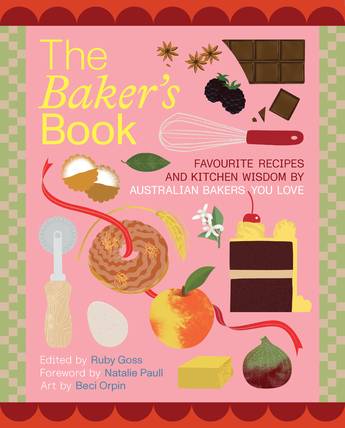
I received this book from the publisher, Murdoch Books, at no cost. It’s out now; RRP$45.
I am remiss in reviewing this book! My excuses are a) being away for a couple of weeks, and b) finding opportunities to bake things when there’s not many people around.
I am not particularly an aficionado of the Australian baking scene. In fact, I think there might be only one place mentioned in here that I know (more on that later). Thus I do not know whether this is a representative, or interesting, or eclectic set of bakers. I can guess that they are, based on recipes, but I don’t know for sure. What I can judge, though, are those recipes, and I can say: it’s a fascinating selection. There are easy things and quite hard things; ingredients I’ve never used, and equipment I won’t bother owning, and takes on old favourites. There are savoury recipes but mostly sweet, and recipes for different occasions. There are also personal reflections from the bakers: about their personal journeys, or perceptions of baking, and often how those things relate to life in general. It’s a really nicely constructed book, both in contents and in physical appearance.
Recipes I have made:
Continue reading →
 Randomly Yours, Alex