Object Lessons: Snack
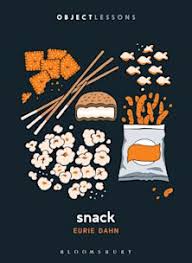
I read this courtesy of NetGalley and the publisher, Bloomsbury. It’s out now.
Like the other excellent Object Lessons books, this combines a deeply personal reflection on the topic along with some historical, cultural, and almost anthropological observations. It’s such a short book – barely over 100 pages – but it covers a lovely range of topics. Chapters include: Origin stories; Infantile Snacks; Fruits and Vegetables; Guilty Pleasures; and Chocolate and Dried Squid. One of those chapters is only a page long.
The author is the child of Korean migrants to America, and so her story is one of figuring out where she fits – and of enjoying both deeply American and deeply Korean snacks. She explores what makes a food a snack, and changing attitudes to the whole question of snacking. There’s an entire section about the relationship of diet culture to snacking (arguing that the diet industry actually promotes snacks, which when I thought about it for a whole 3 seconds I realised was staggeringly and twistedly reflected in my knowledge of advertising). And then there’s the fact that Big Tobacco bought into the food industry when theirs was starting its downward spiral…
The book is very American, as Dahn herself recognises early on; she mentions some American snacks I’ve never come across, but of course much of it translates to Australia as well. I think it’s a result of this focus, plus the question of migrants and snacks, that means some of the framing for the book is around the question of how invented Flamin’ Hot Cheetos, and their subsequent place in the American psyche (do these exist in Australia? Certainly they’re not ubiquitous. I assume I could find them in a speciality store, which is itself an amusing reflection given Dahn’s discussion of finding dried squid in Korean speciality stores in her youth).
The personal side really works in this context. Discussing one’s childhood snacking, the snacks one then foists on one’s own child – all very relatable.
This is a delightful little book.

 Randomly Yours, Alex