The Hunger of Those Who Built It
Read courtesy of the publisher, Stelliform Press. It’s out in September; you can preorder it now.
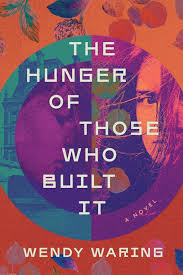
Wendy Waring does an intriguing narrative thing in this novel. The first 60 or so pages alternate between Lou, who has managed to infiltrate The Oxbow – an exclusive and exclusionary colony, basically, set up in the middle of a crumbling Paris – and Diane, Lou’s aunt, Green architect/designer and largely responsible for The Oxbow.
Then all of a sudden we get a timeshift: back 16 years, before The Oxbow exists. Diane is offered a job in Paris, creating vertical farms and helping to green part of the city, at the same time growing food for the inhabitants. It’s a world where in theory, at least, technology is greening, and so some aspects of early-21st-century urban life can change – massive highways, for instance. But, as Diane slowly learns, there are still privileged groups seeking to keep all the good stuff to themselves.
Basically, the majority of the novel is following Diane as she learns how her dream gets turned into the gated community of The Oxbow.
So on one level, it’s a story of a woman watching her dreams get manipulated and changed away from her vision. And it’s powerful for that: how hopeful intentions can be subverted, how good plans can be made to go astray, and so on. How corporations can destroy individual hopes. And, as well, there are some intriguing ideas for how cities might indeed change – for good; this is being advertised as solarpunk, after all.
The novel is not only about ambition and technology and urban infrastructure, and the big picture, though. It’s also focused squarely on the smaller picture: Diane wants to go to Paris because she is seeking reconnection with her sister, from whom she has been estranged for many years. There are many reasons for their separation; some familial, others political and philosophical. None of them have easy solutions, and Diane is frequently conflicted about her own as well as her sister’s attitudes. What I liked about Waring’s story is how very real it feels. Siblings are exactly those people who know how best to get under your skin, and who are also (often, not always) the people you want to be drawn back to.
I have one quibble with the story: an event in Diane’s history turns out to be very different from how she understood it, which has serious ramifications, many of which are part of the point of the story. But one consequence, about the dating of other events, doesn’t seem ever to be addressed, which is unfortunately something I really struggled to reconcile.
However! All up, I very much enjoyed this novel. It’s well written – I devoured it – and Waring balances the macro, urban issues with the micro, personal issues beautifully. They each feel as important as the other.
As a debut, I am deeply impressed, and hope that we can expect more of the same in future from Waring.
Department of the Vanishing
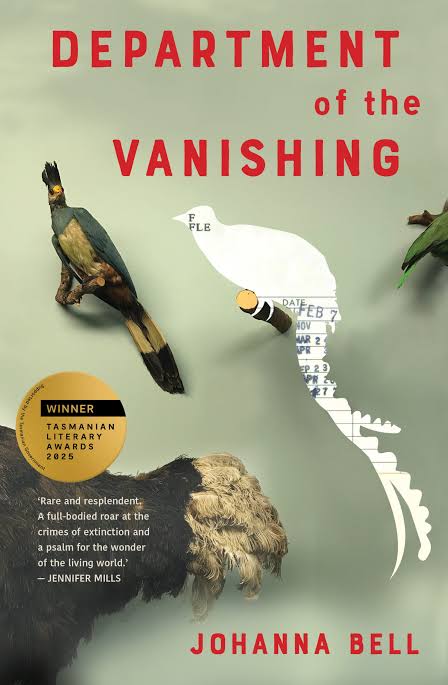
This is another book I read because of Ian Mond. If you’re interested, here’s the publisher, Transit Lounge.
Poetry is very much not my vibe. I have always worried that I just don’t get it and so almost feel I shouldn’t be allowed to read it, and certainly not comment on it. Is this ridiculous? Of course it is. Well, mostly. Am I actually afraid of some beret-wearing, cigarillo-smoking, pretentious white man tut-tutting me?
Well. A little bit. Yes.
Anyway, I’m going to comment on this book despite my fears. And it is poetry – almost all of the text is set out as couplets, with almost no punctuation. Sometimes the story is hard to follow as a result, when it’s not clear how the clauses fit together. Which is, I presume, part of the point. A lot of the time, it’s completely clear, and a delight to read.
This is not, though, just a poetic novel. It’s also playing with the idea of found footage.
Almost every poetic page has a library stamp on it: RESTRICTED, or an accession stamp, or the link. In between poetry pages, there are collages of newspaper headlines; excerpts from the narrator’s police interviews; photographs and stills from video; pages where birds sounds are turned into text; transcriptions of the narrator’s mother’s maybe-dementia ramblings; and many lists.
Some of the found footage includes excerpts from other books, and friends, I dogeared a page because I didn’t have a bookmark handy when I got to the bit about Shifting Baseline Syndrome: “a gradual change in the accepted norms for the condition of the natural environment due to a lack of experience, memory, and/or knowledge of its past condition. (Soga & Gaston, 2018).
Ava lives in a too-near-future Australia, in 2029. She works for the Department of the Vanishing, archiving references to birds that are, or are nearly, extinct. (There’s a moment where she’s allocated the pelican: where to start? With Stormboy, of course – and my mid-40s-heart gave a great big heave.) She is also caring for her ailing mother, grieving her long-lost father, and seeking connection through a series of flings. Plus, of course, all the heartache that comes with her work.
It’s almost eye-rollingly trite to call this novel is a wake-up call, but of course that’s what it is. The idea that I would no longer hear kookaburras or magpies or the various teeny little tweety-birds I hear on the regular is horrifying. Is there something I can personally do? Probably not. Maybe I should send a copy of this book to some politicians.
It’s a splendid piece of art and I hope it gets more attention.
Platform Decay, Martha Wells
I read Platform Decay! Of course! And of course I liked it! Although… it’s a bit different from what I was expecting.
What was I expecting? I think I was expecting more pew-pew space adventures with ART, to be honest. It’s where System Collapse appeared to be leading, after all.
Instead, we get a story that’s focused on very few characters – none of whom we’ve had much, if any, interaction with in the past (Murderbot excepted, obviously) – on a new and potentially hostile space ring. There is a tie back to the previous two stories; there always is, because the Corporates are small-minded, vindictive, petty, bullies who can’t let anyone get away with anything if they can possibly do something to them.
TL;DR there is a good amount of action, there is an excellent amount of banter and snark, we get to experience quite a different space habitat, and Three is still around. I won’t be sad to come back to this one as part of my maybe-it’s-annual re-read of the series.
A few more thoughts:
Murderbot: continues to be an absolute delight to follow. I wouldn’t keep reading if I didn’t find its style immensely enjoyable. I like that we can see real change in the way it thinks about humans, more along the lines of ‘weary acceptance’ but in reality it’s a little bit more… well… emotional than that. Although it wouldn’t appreciate me using the word. I also continue to take great joy in its competence. I am a sucker for competence. Also, it’s actively learning about its organic side and taking steps to look after itself, and following other people’s suggestions (sometimes). How healthy is that??
Slight spoiler:
Continue reading →Julian: Rome’s Last Pagan Emperor
My knowledge of Roman history goes: not great to okay for the Republican period; not bad for the Julio-Claudians; verrrry sketchy and potted post the Year of Four Emperors, right up to… like, the fall of Constantinople. There are bits and persons in there I know about! But it’s not connected up.
Anyway then I learned there was a newish (2023) biography of Julian, and I was excited.
Julian “the Apostate” is one of those fascinating characters who pop up in Roman (and other) history: they don’t last long but they have an outsized legacy because of a key thing or moment. In Julian’s case, it’s that he is the nephew of Constantine – our man who moved the Roman Empire’s capital to the city he modestly named for himself, and also paved the way for Christianity to become the dominant religion in said empire. Was Constantine a “real” Christian? What do you even mean by that? Not relevant, for the purposes of this biography (and, uh, completely impossible to answer anyway). What IS important is that after Constantine, the empire was basically expecting a Christian emperor. And so when Julian comes along and goes PSYCH! I’ve been pretending for a decade or so!, there are a lot of people who are Unimpressed.
This is a short biography: we’re talking 133 pages, and they’re not huge pages either. So there’s not super detailed info about every day of Julian’s life. What Freeman does present, though, is an excellent overview of the main stages of Julian’s life: upbringing in Asia Minor after his now-emperor cousin kills the rest of their family (… yeah…), then raised to Caesar (sub-emperor) and sent to fight in Gaul – with no military experience! but apparently sometimes reading about a thing does make you good at it! Then back towards Constantinople, expecting to fight the cousin, who conveniently (fr) dies on the way, leaving Julian uncontested as Augustus. At which point he begins to try bringing back pagan ways, and eventually oppressing Christians.
And then he heads off to Persia. Apparently he paid more attention to Alexander than to, like, pretty much everyone else. It doesn’t go well.
Freeman’s writing is immensely readable. I don’t think you need to have much knowledge of Roman history to understand what Julian is doing; Freeman presents enough background that the various issues – like the place of Christians in society by this point – is easy to grasp. He doesn’t go into the weeds about what the Senate and others are doing at this point, or even what’s happening in the rest of the empire; this is a very focused, narrow biography, and it works for that reason.
Left-Wing Ladies
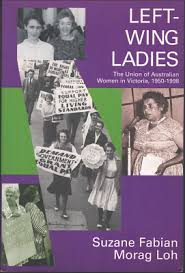
I received this book as a gift for speaking at a meeting quite some months ago, and I’ve only just got around to reading it – not from lack of interest, but just… you know. Life.
So! It’s quite short, at only 177 pages, and it’s very readable. There are a lot of acronyms, so it’s a good thing there’s a list of them at the start of the book. It probably helps to have a bit of knowledge about Australian, and particularly Victorian, history from 1950-2000, but honestly it wouldn’t matter if you knew nothing. It’s based on a lot of archival research – someone has clearly been very conscientious at keeping minutes, pamphlets, letters etc – and some oral history interviews as well.
I knew a very small amount about the Union of Australian Women before diving into this: that they existed, in the first place, which is probably more than most people my age. I had come across them in my anti-Vietnam War research, as there were several women in both Save Our Sons and UAW, and they kept getting discussed in passing with regard to other actions around peace and women’s stuff. What I did not know was the extraordinary breadth of issues that the UAW took on, nor anything about their internal politics.
For me, the most interesting aspect is what the women in the UWA worked towards. They started out as an explicitly working-class organisation, and saw themselves as more aligned with unions than anyone else; there’s a really interesting discussion about being concerned with wages not keeping up with price hikes, rather than being concerned with salaries, which I think is a difference that doesn’t get discussed so much these days. When you add that concern for class difference to the fact that in Victoria, in particular, the UWA had Aboriginal members and worked to support ideas like land rights – well before that was popular – and that they printed their information in languages other than English and worked to support migrant women workers: I rather think these women – many of whom would not have described themselves as feminist! – were expressing intersectional feminism decades before it was being discussed in those terms. Which is not to say they were always on the cutting edge of women’s issues; the book points out how members reacted to discussions of prostitutes as workers, for instance, and the early reluctance of UWA to support ease of abortion access. On both topics, though, the UWA did come around to supporting women broadly.
One of the things I can’t get over is that so many of the things they were agitating for from the 1950s on are still relevant today. Pay equity (although at least that’s now legislated…). Accessible childcare. The problem of the price of goods rising faster than wages. Aboriginal rights. Environmental issues. Safety for women and children. And their number one issue, across five decades: peace.
The internal political situation is an important aspect, if not quite as gripping. As with so many organisations like this, there was much external discussion about whether they were merely a front for the Communist Party. And it’s true that many early members were members of both, and that the CPA contributed to the UWA and may have had a hand in guiding it. They were also associated with international socialist organisations for several decades, and the Australian issues brought about by the Sino-Soviet split showed themselves in the UWA too. But it’s clear that the UWA was never just a Communist organisation.
The Victorian branch of the UWA was the last one in existence. It has basically folded now: in 2021 they announced that their remaining funds would be used to fund activities for “the leadership, training and rights of Aboriginal and Torres Strait Islander women, girls, non-binary and gender diverse young people.” I can’t help but be a bit sad that I will never experience the UWA, although I have met some women who were themselves members.
The Raven Scholar
I read this because it’s in the Hugo Awards packet. When I got to the end, my main thought was “ah crap, another book that makes ranking my vote hard.”
Actually that’s a lie. On two fronts.
1. I had already thought that at about the 1/3 mark.
2. I also thought “eeeeee I need the second book NOW.”
Set in an empire where basically everyone pledges to one god of eight gods – who are all (in theory) revered for their different functions; and where the imperial title changes at the latest every generation – via a series of trials. This is really intriguing world. Yes it’s monarchy yet again, but this idea that the crown cannot be inherited and that the choice of who will be next is via not just physical tests but social, emotional, and intellectual tests – well, that’s nicely novel, and also makes up a substantial portion of the novel itself.
The story opens with a young woman whose father was condemned, when she was very young, as a traitor. It’s an excellent way to set up some of the problems with the system as it exists, highlight some of the inequities, and also demonstrate that Hodgson has an excellent storytelling knack. Because the novel is not about that girl, it’s about someone completely different – the titular scholar.
Talking too much more about the narrative gets into “I enjoyed discovering the twists and turns and don’t want to take that away from other readers” – I knew nothing about this book, going in, except that a) it was in the Hugo packet and b) Renay of Intergalactic Mixtape is always pleased when there’s a new review of. So if you’re keen on a clever take on fantasy, intriguing worldbuilding, morally problematic characters, truly superb twists (I thought I had figured one out but nope golly I was wrong) and a little bit of emotional devastation, this is for you.
A few slightly spoiler-y comments below the fold.
Continue reading →Object Lessons: Concrete
Read via NetGalley and the publisher, Bloomsbury Academic. It’s out in September.
The thing about this book is the thing about almost all of the Object Lessons: if you asked a random person, a short book about concrete should not be this enthralling. Because most people do not spend all their time thinking about concrete, even if – perhaps because – they are surrounded by it all the time.
And yet. Parnell shows that the history and cultural context of concrete is compelling. That it speaks to questions of modernity and sustainability, memorialisation and objectification, capitalism and whether aesthetics matter and the ramifications of controlling the literal building blocks of a society.
I enjoyed reading this and I learned an enormous amount. Will I still wander around oblivious to the amount of concrete around me? Will I still ignore all of the ways it’s used and what it actually looks like? A lot of the time, probably, yes; it’s hard to retrain your eyes and expectations. But every now and then I will look across a city, or consider a building site, and I will think about how concrete works under tension, and whether the use of concrete has helped divorce builders from their materials, and how environmentally problematic the use of current concrete is, as well as how incredibly useful it’s been over the last couple of centuries. And those are good things.


