Wickhills
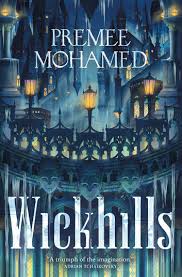
The short version is that if you enjoy a thoroughly realised fantastical city, and you like spies and mystery, you should probably just stop reading this review and go get this.
And if you’ve heard of Mohamed as a predominantly horror writer, don’t worry; while there are certainly unpleasant things happening in this novel, I don’t think I’d classify it as horror. (I say this as a mostly non-horror reader.)
If you’re still here… this review contains some minor thematic spoilers, but nothing major.
There’s something about a novel that loves a city that tends to delight me. Sometimes it’s a real city — China Mieville’s Kraken loves London; sometimes fantastical… to make a similar point, Mieville’s The City and the City. Tolkien’s Minas Tirith has elements of this; Grace Chan’s Melbourne in Every Version of You; Makana Yamamoto’s space station in Hammajang Luck has some of the same vibe. And when that city has weirdness as well… you’ve got me. And I say that as someone who is distinctly not good at directions; if the clue to who the murderer is relies on knowing what’s west and what’s east, from a comment ten pages ago, I am not going to pick up on it.
Wickhills the city is a significant character in its own right in this novel. We’re thrown into it, and its fantastical nature, very quickly: the Market Street Wyrm is on the first page; we have windmills and museums, banks, a busy port, child labour. Across the novel we learn about omnibuses, a variety of options for artificial light, and the fact that humans are only one of the sentient species inhabiting the city. Wickhills is unstable – its geography can change in an instant; Wickhills is a version of democratic; and Wickhills is impossible to know completely.
The main narrative character is Ferec, which is fitting as he has made it his goal in life to try and understand Wickhills as best he can. Unconnected – except insofar as his obsession is useful on-the-job knowledge – for nearly ten year he has worked for Seaborne, a highly secretive counter-terrorism organisation. His jobs have ranged from assassination to seduction to infiltrating and undermining seditious groups. As the novel opens, he and his partner are waiting for a ship to arrive, so that they can locate and procure a particularly valuable asset.
And it all goes downhill from there.
This sort of novel will often feature a ‘getting the band together’ section – which I usually enjoy; I love some repartee and squabbling to figure out team roles. Mohamed, however, largely eschews that. Ferec doesn’t get to pick most of his team; they spend very little time on bonding or coming to know one another. Instead, the entire focus is the mission. Because that asset Ferec lifted off the boat turns out to be wanted by some very serious people (of course) and is far more dangerous than anyone had understood (of course).
Much of the novel is the action of Ferec securing the asset (and losing it and retrieving it etc). But there’s a philosophical aspect to the novel as well, which for me puts the novel in quite a different light. Ferec himself is not an innately moral man, but he does believe in the importance of Seaborne and its place in the city. Over the course of the novel, however, the place and use of Seaborne — effectively a secret police — is brought into question by various characters. Ferec is made to look at how his world works, and where it fits with what he understands of the city. And these questions — of how societies function, the role of secretive power structures, where and how power is exercised — they’re always important to ask; they feel vital at the moment.
Mohamed writes beautifully; her descriptions are evocative, her conversations often tantalisingly full of ellipses but conveying just enough information. The novel provides some answers, but nowhere near all of them — I could imagine at least half a dozen more novels just picking up on some of the points mentioned here. I haven’t even mentioned that Ferec’s boss is a manticore.
Some people are going to find the lack of clarity around some points very frustrating. But no one ever knows their city completely, so what makes you think you would know Wickhills — a much weirder city than the one you live in — any better?
Highly recommended.
Sugar, season 1
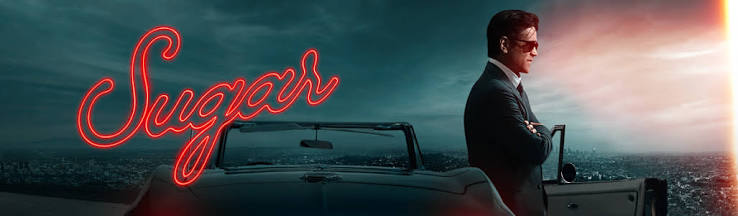
I was spoiled for The Big Reveal before I started watching Sugar. I’m a bit mad about it, I’ll admit – it would have been tantalising; it was still tantalising enough; but it did also make me move watching the show further up the list. So there’s that.
ALL THE SPOILERS FOR SEASON 1, stop reading now.
Seriously.
Continue reading →LOTR: Book 3
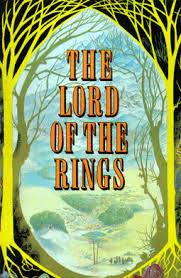
Finally I am back to this! Here’s a link to Book 2 (and thence to Book 1).
And now we get the split: the Fellowship has broken: Frodo and Sam have gone East; Merry and Pippin have been nicked by Orcs; Aragorn, Gimli, and Legolas choose to follow along after. Boromir is dead. And for this entire book we have only those second two sets; for a while, we have no knowledge of Frodo and Sam and the Ring, just like their friends. Which is really quite a remarkable choice, when you think about it: in theory this story is meant to be all about the Ring, isn’t it? But we go 170-odd pages with no knowledge of its whereabouts!
Other thoughts:
- I still really enjoy following Aragorn et al as they track the Orcs and hobbits. There’s something delightful to me in the description of the land, and of the chase.
- My attitude is now very coloured by the film-version of the Rohirrim – and especially their theme – but I do find them a magnificent, romantic, people. Dreadfully violent and arrogant, of course, but nonetheless. Tolkien captures their bravery and their pride, as well as the sense that the time for those attitudes might be coming to an end.
- Everything about Fangorn Forest, and Fangorn himself, delights me. The way Tom Bombadil’s forest is a foreshadowing of this one delights me; that much of the forest is untouched by other people delights me; Fangorn’s stoicism that can also be kindled to action delights me.
- I cannot imagine how it must have been for the first readers to have Gandalf back; I do not recall my own reaction. The metaphors-made-real of purifying by fire and ordeal are resonant and powerful, and I still find it awe-some.
- I’m sure readers who come to this from having seen the films must be very surprised by the swiftness of the Helm’s Deep battle. I do love that section in the film, don’t get me wrong; but I also like that it’s actually just another part of the action, and then the key folks go off to Isengard.
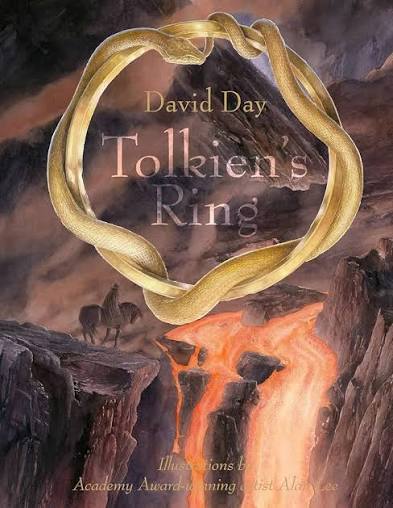
- At some point in high school, I won a book prize (okay, I won a lot of book prizes; but this is the only specific one I remember). The librarian knew me fairly well (unsurprisingly), and she chose the prizes, so I was given David Day’s Tolkien’s Ring – a beautiful hardcover version. It might have been the first time I read anything vaguely academic (it’s not academic) about Anglo-Saxon people, and about the Norse. Most importantly, that book introduced me to the idea that there are two moments in LOTR where Tolkien is chastising Macbeth, and the first one occurs at Helm’s Deep when the Huorns arrive and deal with the Orcs. That is how one should have Birnam Wood come to Dunsinane, Mr Shakespeare.
The last couple of times I’ve watched these films, I’ve often skipped through the Frodo and Sam sections. They’ve become the least interesting parts for me. Partly it’s the lack of action, and also the lack of colour; partly it’s that I find them so earnest and (genuinely) pathetic – I find them too hard to watch. But now there’s 150 or so pages of nothing but Frodo and Sam and Sméagol/ Gollum.


