The Brilliant Boy, Gideon Haigh
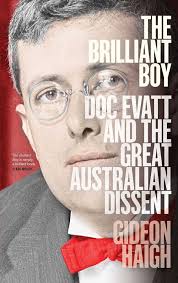
Doc Evatt and the Great Australian Dissent
Ok. So. Firstly, this is not the book I thought it was going to be. Partly that’s on me – I didn’t read the blurb carefully. So that’s a lesson. It’s also on the person who recommended it to me, because he led me to believe it was a proper – that is, complete – biography of Doc Evatt. And it’s not.
So, actually, possibly firstly: did you know that Gideon Haigh wrote full-on proper history, and not just cricket?? Me neither, until I was recommended this book.
Maybe this is first: until last year, I really didn’t read modern biographies, and I certainly didn’t read modern Australian biographies, let alone modern Australian political biographies. And now I’ve read two, arguably three, and I am having a minor (very, very minor) identity crisis.
All of that out of the way:
I know of Doc Evatt for having been instrumental in setting up the Universal Declaration of Human Rights, doing other important work at the UN, and then being shuffled off and ignored by the Labor Party and Australian politics more broadly. I had absolutely no idea about his early life, how he got into politics, or what he was like as a human – except that he’s generally regarded as “brilliant and/but mad.” This book is almost entirely about Evatt’s early life, focused on his career as a lawyer and then as an exceptionally young High Court judge.
Do I care much about the law, the legal profession, or even much about how the Constitution is interpreted? No I really do not. Were there bits – large chunks excerpted from lawyers’ speeches, and bits from judgements – where my eyes glazed over? What do you think. Did I nonetheless find this a fascinating biography? I am almost embarrassed to admit that I really did. And that’s partly because Haigh is a really great writer, and partly because of the actual point of the book. Yes, it’s about Evatt. But it’s also about the idea that someone should be recompensed for the suffering they experience – not just physical injury – when someone has done them wrong.
The book opens not with Evatt, but with the death of a young boy – “the brilliant boy” – a child of Polish Jewish migrants who drowned in water collected in a hole in a road thanks to roadworks, in the early 1930s. The council hadn’t put up much in the way of protection. The mother suffered enormously from what was then termed “nervous shock” in the months and years after his body was found. And that was the focus of many court cases. Were the council liable for the mother’s suffering?
Warning: there’s a lot of callous and misogynist language in the judgements handed down.
I did, indeed, learn a lot about Evatt. I have much greater respect for his intellect and achievements – as well as some appreciation for why he was and is regarded as a bit mad. There have been two full biographies written of the man, but they’re both quite old and I don’t feel like I can go read them now. Along with all of that, I also learned a great deal about the development of how pain and suffering are viewed in the law, and – knowing that our current system is very, very far from perfect – feel very thankful that I live now, rather than a century ago.
Object Lessons: Lipstick
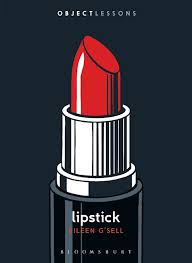
I read this courtesy of NetGalley and the publisher, Bloomsbury. It’s out on Feb 19.
I have a fraught relationship with the idea of femininity. I obstinately rebelled against participating in most forms for a long time, for complex reasons that mostly had to do with what I thought was important about my identity. Eventually, I realised I was being stupid, and that things I enjoyed were not things that got in the way of who I was. I was 35 when I decided actually, I do like lipstick, and started regularly wearing it to work, and when I went out.
So this new Object Lessons, about lipstick, and in particular about how it is viewed, used, stigmatised, discussed, and historicised? This book was written for me.
And it is very well written. As with all of this series, the book is intensely personal as well as being well researched and reported. Given the way lipstick is viewed by different groups and individuals I particularly liked the way G’Sell incorporated the views of other people – those who love wearing it, and those who hate it, all for valid and important reasons. There aren’t all that many apparently innocuous objects that can get such intense, contradictory, and equally important reactions (although the bra does spring to mind, as it were).
As always, we get some history – folks of all genders wearing makeup in ancient Greece, 1930s film femme fatales, etc – as well as some anthropology (Iranian women wearing lipstick, examining the perennial comment about sales of lipstick going up in times of economic hardship), along with the intensely personal reflections.
The list of chapter titles will give a sense of what the book encompasses:
- Painted Ladies and Tainted Men
- Painted Ladies and Painted Men
- Lipstick Feminism and Sticky Pleasures
- Whitewashed Beauty, Appropriation, and Lipstick Legacies
- A Femme-Friendlier Future?
I loved it. This is a book for anyone who has thought about what it means to wear lipstick. or makeup more generally.
Object Lessons: Ballot

You can take compulsory voting from my cold dead hands.
I read this book c/ NetGalley and the publisher, Bloomsbury. It’s out now.
I love every Object Lessons book. In some ways, this one is like the rest – part history, part social commentary (almost anthropology), part personal experience. However, it’s a much more immediately relevant topic than, say Skateboarding or Perfume. As well, all of those have been partisan – they’re written by people who like skateboarding and perfume – but it’s much more obvious in this one: the author is outspokenly progressive – votes Democrat, because America, although – happily – she is also very clear on the failures of various Democratic leaders.
Compulsory voting forever.
One important thing to note here is just how American this book is – more noticeably than many of the others I’ve read. The author is American, and it’s one of the most personal Object Lesson I’ve read, so the narrow focus flows from that. Which is not inherently a problem – American voting is a fascinating / appalling thing to view from afar. What is… let’s say disconcerting is the way the book is written without acknowledging that it is, functionally, entirely aimed at an American audience. Does anywhere else vote on its judges? The local equivalent of district attorneys or sheriffs? Maybe they do, but nonetheless – that shit’s wild. Plus all the state vs federal laws, not to mention the college system OMG. Thus much of what the author says is not automatically applicable to my experience, and I would guess not to the experience of many other people around the world. (This comment also reflects that I had not carefully read the blurb, so partly this is on me.)
I will fight for compulsory voting.
(Note: it’s actually not compulsory to vote. It’s compulsory to get enrolled; then it’s compulsory to choose between a fine ($100) or rocking up at the election and having your name marked off. No one compels you to mark a ballot and put it in the box.)
I knew some bits and pieces examined here. The whole voter ID thing, and how it’s manipulated – wild. (Doesn’t happen in Australia.) “Use it or lose it”?? See note re: compulsory voting. The ways in which prison populations – mostly filled with people who can’t vote – are still counted as population for purposes of figuring out county borders etc?? Everything about this system makes me, an Australian with a clearly perfect and incorruptible election system,* laugh at the idea of America as a wonderful democracy.
Another thing to note is that this is not a history of the physical ballot process, which I initially assumed it would be. The process (as it happens/ed in the USA) is covered super briefly. Instead, this is essentially an overview of voting practices in the very recent US past. Which is certainly interesting, if not what I thought I was getting (see previous comment about not having read the blurb, and that’s on me.)
It’s very well written, and completely depressing.
* This is a joke.
The Man Who Stopped the Sultan
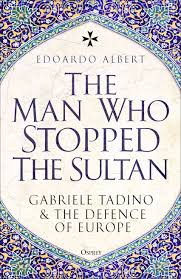
Read courtesy of the publisher and NetGalley. It’s out at the end of January, 2026.
This book is pretty great. For a reader even vaguely interested in the Europe and Ottoman Empires of the 1400 and 1500s, it provides a brilliant perspective that is often missing from other, entirely Euro-centric accounts I’ve read.
Did I know Henry VIII, Frances I. Suleiman, and Charles V were all around the same age?? No I did not. Doesn’t that give the 1500s a slightly different complexion. (Also I love the dismissal of Henry VIII and England as not particularly relevant to the happenings on the Continent at this point….)
This is larger than JUST a biography of Gabriele Tadino, although it is also that. Tadino is himself a fascinating figure – an engineer when military engineering is completely changing in reaction to technology, basically in the centre of things because of birth (living near Venice when shit is getting real, thanks very much not-so-Holy, definitely-not-Roman Emperor) and then being persuaded to join in with the Knights of St John over on Rhodes when Suleiman and his crew are laying siege. Tadino is not perfect, and there’s also bits of his life where the records completely dry up – but Albert has done a convincing job of recreating a lot of his experiences, and suggesting the whys and wherefores around them.
Alongside the Tadino exploits, though, this is also a magnificent examination of European and Ottoman relations in this key period. I don’t know all that much about Suleiman, nor the Ottomans at this time more broadly – but I know more now, and my disgruntlement at writing European history of the 16th century without reference to what was going on over East, and indeed well into central Europe, is Large.
Well written and accessible for the generally historically intelligent reader – no need to have very specific knowledge of people or places – this is a really great book.
Taco, by Ignacio M. Sanchez Prado
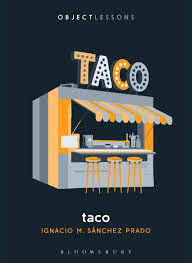
I received a copy of this from the publisher, Bloomsbury, at no cost. It’s out now.
I love everything about the Object Lessons series. Basically I’ll read every single book, no matter the subject matter. In this case, the subject matter is a bonus: I am a massive fan of food history, and food as social commentary. The taco works beautifully for that.
I am Australian, which means I have little knowledge of “the taco” as cultural object. My first experience was your classic Old El Paso hard shell, and I was well an adult before I discovered that this was not the “authentic” way to eat them – and having said that, Sanchez Prado’s discussion about the question of authenticity is a thing of absolute beauty. I knew that there was controversy within the US about Mexican food, because racism; I knew that “Mexican food” is a multifaceted thing. Sanchez Prado brings all of this to light in a rigorous and readable way – within the under-150-pages context of an Object Lessons book. He provides an extensive reading list, too, for those who want to go further.
This is a fabulous celebration of what was once street food, poor food, and has now suffered “elevation” and popularisation and has become symbolic of much, much more than some food wrapped in some other food. It’s a great introduction to a lot of issues. Definitely one for the food nerd in your life.
Frostbite, by Nicola Twilley
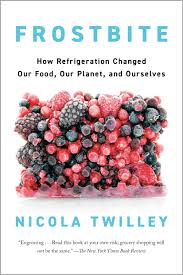
I came to this book because I am a fan of the podcast Gastropod, and Twilley is one of the hosts. She’s an immensely engaging host there, and she’s also an immensely engaging author. Her interest in and passion for “food through the lens of science and history” (the podcast’s tagline) comes through here: the history, present, and future of refrigeration and its connection to food is told thoughtfully, clearly, and with honest acknowledgement of the issues as well as the benefits.
One of the things I hadn’t really expected, but should have given the podcast, is just how much time Twilley spent actually experiencing the things that she discusses. She works some shifts in cold storage warehouses! She visits farms and factories! She goes to China and Rwanda as well as all over the US! And she has clearly talked to A LOT of people about all of the issues.
A fairly big focus of the book is the development of artificial refrigeration for food: the reasons for its necessity and the various people who were involved in trying to do so, the things they tried and how often they failed. I had no idea that people thought it would be ear impossible, but Twilley lays out the reasons for why it was so very hard and honestly I ended up surprised that it happened at all.
The bit that I found quite distressing was the reality of how much space is used for cold storage, and its environmental impact. But Twilley also points out how important refrigeration can be for things like reducing food wastage – one of the things I like about her reporting is that it’s not just two-sides-ing for the sake of it, but is looking at the issues very clearly and thoughtfully.
It’s a great book. Definitely one for people who are interested in how processes that we absolutely take for granted actually work.
(One thing to note, for those of us not in the USA: the book does use Fahrenheit throughout, which meant for me that I have no idea what the temperatures she’s referring to actually feel like.)
Margaret Beaufort: Survivor, Rebel, Kingmaker
I read this courtesy of NetGalley and the publisher. It’s out in November.
Absolutely fantastic biography, and also introduction to the entire period.
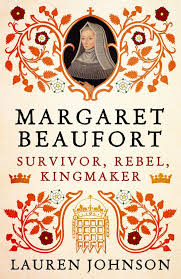
I love a biography that (re-)examines a woman in her context. Johnson is clear that she’s not the first to write a biography of Margaret Beaufort, but that one of the new things she’s doing is putting her very much in the context of women – the women she interacts with over her life: her mother and half-sisters, mothers-in-law and friends and servants and rivals, daughter-in-law and granddaughters. This gives a fantastic insight into what’s going on for noblewomen at this time in England, Wales, and even Scotland.
Of course, an enormous amount of the book is about Margaret’s interactions with men, too: husbands, mostly, but then eventually her son, as well as various half-brothers and stepchildren, not to mention cousins. My goodness, the cousins: when you’re a noble with a long lineage, you are related to EVERYONE of any importance. And, apparently, you knew them, or could at least call on them in times of need / just for the heck of it. Which really puts the War of the Roses in context, because it’s all about brothers and cousins fighting amongst themselves and devastating the countryside in the process.
Margaret Beaufort had a remarkable life. Terrible, at some points – pregnant and widowed at 13 – but also long, with many healthy and loving relationships (as far as we can tell), and eventually a son and then grandson on the throne. Not a terrible ending, one suspects. Lauren Johnson does an excellent job of making Margaret as human and relatable as feasible, while still reminding us that her life 500 years ago was very, very different from what we experience today. She does a very good job of trying to make the names easy to process (TOO MANY HENRYS and JOHNS), and the politicking easy (ish) to follow. This is a really great book.
Into the Mainstream, by Tom O’Lincoln

This is not the book I thought it would be. Which isn’t the book’s fault, but does affect how I think about it.
I thought I was getting a … straightforward history of the Communist Party of Australia. And that’s certainly a significant part of this book. But what the book is ultimately focussed on is the way Communism, and Marxist ideas, has often been done badly in Australia. O’Lincoln is very upfront about the fact that he is very unimpressed by most of the leadership of the CPA, especially from the 1970s onwards. Of note: the book was published in this format in 2009 but was actually written in 1985, which itself definitely and necessarily has an impact.
The other problem is that the book presupposes quite a lot of knowledge – both philosophical and historical – that I don’t really have. Again, that’s partly a factor of it having been written 30 years ago, so the intended audience would have had more immediate knowledge of things that I just don’t. But there’s also no interest in defining “left” and “right”, assuming that the reader will have a shared understanding of what that means – and I have to tell you, reading about a Communist party veering to the right is always weird (yes, I do understand how that works). There’s no attempt here at leading the reader into understanding the various issues (like the difference between socialism and communism, and why you would regard liberal reformism as bad) – because the reader is assumed to already be on O’Lincoln’s wavelength. Again, not necessarily bad, but does suggest a very specific audience.
Worth reading? If you’re interested in the development of the CPA over time, probably yes. But prepare yourself for some pretty heavy philosophical lifting.
The Far Edges of the Known World
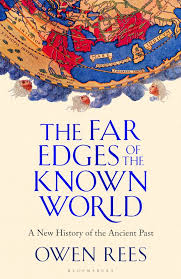
This book is right up my alley. Really old stuff, questioning received wisdom, drawing together both evidence that has been known for ages and new discoveries via archaeology… and engagingly written as well. I enjoyed it immensely.
Rees starts with the poet Ovid, who for some unknown reason got exiled by that Great Bastion of Reason, Octavian Who Got Himself Called Augustus (“Illustrious One”). Basically for the rest of his life – as far as we can tell – Ovid spent his time complaining and petitioning to be allowed back to the Centre Of Life and Light, Rome. Now, firstly this does give us David Malouf’s quite fabulous An Imaginary Life, so that’s a good thing. But it also deeply colours how subsequent historians have thought about “the edges” – those bits where if there’s a bright centre to the universe, you’re in the town that it’s farthest from. And as Owen Rees shows, this is just not a fair way of characterising “the edges” at all. Not least because “edges” implies a centre, and (the centre of a galaxy being a real thing notwithstanding), the idea that there is a “centre” to “civilisation” brings up SO MANY QUESTIONS.
The first section is about pre-history – which is a concept that Rees takes pains to explore as a concept – and it looks at Lake Turkana in Kenya (some of the earliest human occupation), the Great Cataract in Sudan, and Megiddo in Israel. This section was absolutely enchanting and sets up a lot of the ideas followed in the rest of the book: contact between different areas, the sorts of evidence we can use, and so on.
Section 2 looks at the Greek world, and Section 3 looks at the Roman. So we get the expected ‘edges’: ancient towns in (what is now) Ukraine, Egypt, France, and England, Morocco, and Egypt. This was the bit that was most familiar to me – because I know about these empires – and which was therefore the most fascinating, because it complicated all of that so fantastically. The cross-fertilisation between the hegemonic empire and the ‘barbarians’ on the border, what we can figure out of how people interacted: I LOVE IT.
Finally, the last section is ‘Beyond the Classical World’ – the book is really aiming at a specifically English, maybe American, audience, those people who are very firmly in the “Greece and Rome are THE ancient areas and everywhere else is weird.” I suspect folks who come from a perspective that says India and China were really important – let alone other civilisations – will find some of the sentences a bit surprising, maybe borderline patronising, because there’s a little bit of “these other civilisations also existed!” I suspect this does not actually reflect Rees’ own perspective, but the expected audience. ANYWAY, this section looks at ancient towns in Ukraine, Pakistan, Vietnam, and Ethiopia and Eritrea. This section was really cool and MUCH more unknown for me.
I guess the short version is “I learned a lot and enjoyed doing it.”
Fulvia: The Woman who Broke all the Rules in Ancient Rome
THIS BOOK.
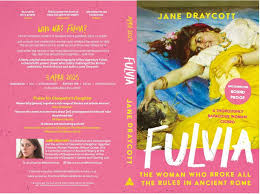
Argh, this book. I have been waiting to get my hands on this book for… I dunno, a year or something? And now I have read it and it was wonderful.
I have enjoyed Jane Draycott’s work since reading Cleopatra’s Daughter: she has a wonderfully engaging style, she makes it clear when she’s making educated guesses but doesn’t shy away from them, and she’s determined to excavate interesting women out of either being completely ignored (Cleopatra Selene), or mostly ignored except when they’re excoriated (Fulvia).
Had I completely forgotten that Fulvia was married to Marc Antony? Uh, oops. I KNEW there was another reason that I was dead keen on learning more about her.
So little is known about Fulvia as a person that Draycott has to spend quite a lot of time going over what is known about OTHER Roman women in order to a) have a stab at discussing what most of Fulvia’s life was like, and b) putting her in context for both why some of the things she did were so unusual, and why some of the things she did were NOT unusual but still got maligned. While I already knew a lot of these things it was still great to see it all put together like this, and particularly in conversation with the life of one particular woman – for someone coming to the book with zero knowledge of Rome, I think it would be pretty accessible. The main thing that isn’t all that accessible, and which there is no getting away from, is the names. My goodness, Romans, could you not have had more imagination in your nomenclature? Gets me every single time.
Anyway. This book is a delight. It’s the best sort of revisionist history: not just accepting what ancient sources say, but examining their reasons for doing so; adding in the archeological evidence, as well as other source material; and bringing a trained feminist idea to persuasively make the case for how misogyny has worked over the centuries to write Fulvia’s story.
Look, it’s just really good. Highly recommended for anyone interested in late Republican Rome, and/or women’s history in general.

 Randomly Yours, Alex