Queen of the Desert: the film
As I mentioned in my post about the book Queen of the Desert, a biography of Gertrude Bell, I finally got around to reading the book after seeing the biopic directed by Werner Herzog and starring Nicole Kidman. I didn’t mind the film; my mother, having read the book, didn’t love it but didn’t hate it; having read the book I am increasingly annoyed by the film.
The good things: Continue reading →
Gertrude Bell
 Every now and then I come across a new historical figure and I think
HOW IS IT POSSIBLE THAT I HAVE NEVER HEARD OF THIS PERSON WHAT HAS THE WORLD BEEN DOING THIS JUST SHOWS HOW MUCH STUFF GETS LOST
Usually that person is a woman, although not always. Gertrude Bell is the most recent of these people. I don’t even remember how I heard about her – it might have been in passing in a podcast or something? – at any rate the moment I heard about her I went online to see if there was a biography about her. There are two, I think, modern biogs; this seemed to be the better rated, and so I immediately bought it. Since then my mother has read it, since I always have too many books to be read, and she loved it; then we spent some time together which just happened to coincide with Nicole Kidman’s movie about Bell being at the cinema, so we went to see it and I was pushed to move my reading of this bio to the front of the reading queue.
Gertrude Bell might be described as the ‘female Lawrence of Arabia’, but really it would be more accurate to say that he was the male Gertrude Bell, since I think she had more adventures and was more involved in the immediate post-WW1 decisions regarding Mesopotamia.
The Age of Genius
This book was sent to me by the publisher at no cost. 
This was a really interesting book; I’m just not sure it’s entirely the book that AC Grayling thinks it is.
I adore the concept of exploring a century as a turning point; in fact for Grayling, the seventeenth century was “the epoch in the history of the human mind” (p3, his italics). Obviously other historians have disagreed, as he acknowledges, but even if there are strong arguments for other times – or even suggesting that such a claim is ridiculous – it nonetheless should make for an interesting book.
The Rebirth of Rapunzel
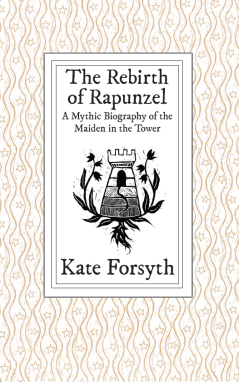 This book was given to me by the publisher at no cost.
I adored Kate Forsyth’s Bitter Greens a few years ago – a reimagining of the Rapunzel story, along with the story of one of its first tellers, Charlotte-Rose de Caumont de La Force (1650-1724). It’s a book of excruciating loveliness, whose three interleaved stories are told in heartbreaking detail and with great compassion.
But I’m not here to talk about that. If you haven’t read it – and even if you don’t think you like fairytale reimaginings – you really ought to go read it.
What The Rebirth of Rapunzel does is present Forsyth’s research into the story of Rapunzel – about the differences in versions, and the people who told them, along with what the story has meant, can mean, and what it shows us about fairytales in general. I think it’s just awesome that research like this can find a home; it’s so depressing when something you’ve spent many years on simply… disappears into a black hole. Forsyth has made her research very readable. I’m coming from a background of literary and historical criticism (I’ve read a couple of the books Forsyth refers to), but I’m pretty sure that such a background isn’t necessary to understand and appreciate Forsyth’s points. This isn’t academic-lite; it’s academic-approachable. Continue reading →
Consider the Fork
 When I listened to the first episode of Gastropod, I immediately decided I needed to read Bee Wilson’s Consider the Fork. And now I have, and I was not disappointed.
To start with the writing: Wilson writes beautifully. Her prose is clear, occasionally whimsical, sensible, and altogether a delight to read. It’s not that often that I read 280 pages of history in just over a day, even when I’m on holidays. In fact at one point I tried to put it away because I was worried I would finish it too quickly (I was away from my bookshelf; I was feeling a bit irrational, ok?). Her love of food and history and cooking come through clearly; she mingles the occasional personal anecdote with what’s clearly broad-ranging research. But she also doesn’t get bogged down in the research – she’s not aiming to construct a thorough, blow by blow account of the development of cooking or food technology. She’s writing for an educated but non-professional audience and she does it really well.
The chapters are organised around probably the most important aspects of cooking and its technology: pots and pans; knives; fire; measuring; grinding (I admit this one surprised me a little); eating; ice; and the kitchen itself. In each chapter she gives some of the current thinking about where and if possible how the technology began (in some instances in the Palaeolithic, in others more recently), and then – depending on the objects – skims through the ancient world, the medieval, and the early modern.
My main quibble with the book is its European preponderance, but I do wonder whether I’m being overly sensitive about that. There’s a wonderful section about the Chinese knife, the tou; and a discussion about the difference in fork+knife vs chopsticks; some about the differences in wok cooking opposed to more European methods; and other mentions as well. I wonder if there’s more history done on this from a European perspective – or that’s translated into English anyway. Although if that’s the case I would have liked a mention of the dearth of literature.
Another small quibble is that sometimes her language implies that the changes in cooking technology were things that the population had just been waiting for. While that might be true for can openers (invented FIFTY YEARS after the invention of the tin, I kid you not), sometimes it grated a little: to whit: “At last, these people [the ancient Greeks] had discovered the joy of cooking with pots and pans” (12). I get what she means but it grated a little.
Anyway. A few gems include ideas for future ice cream experiments (burnt almond, orange flower water, cinnamon, apricot, quince; bitter cherry; muscat pear…), the history of the refrigerator and freezer and how they show differences between the English and Americans post-WW2, and developments from coal to gas to electricity in terms of stoves. Also the thing about the tin opener. SO WEIRD.
Overall this is a joyous book that I highly recommend if you’re into food and history, especially both at the same time. Her writing really is marvellous, you might learn something, and it re-inspired me to get into my kitchen and make something. (Which was annoying because I was on holidays, but whatevs.)
Theodora, Empress of Byzantium
 I’m really conflicted by this book.
On the one hand, how awesome to have a biography of a woman who was so influential in her time and who has continued to be so, intermittently, in art and so on for the last 1500 years! (I know there are other bios.)
On the other hand, Cesaretti has written what would be better described as a “biographical novel” than a strict biography. Partly this is due to necessity – there is little information about Theodora, and much of what we do have comes from a rather prejudiced source; Procopius appears to have despised her. So while I appreciated a lot of the work he did to put Theodora into context, there is a lot of fleshing out that I felt involved a wee bit too much license.
On the plus side, Cesaretti appears to have done a lot of research into what else was going on around the Byzantine empire, and does provide a lot of context for Theodora and her political and religious positions. Obviously this is a woman who cannot be understood without that context, especially around the question of Monophysite v Dyophysite (Christ having one or two natures, versions of which debate wracked the early Christian world for quite a while).
On the negative side, Cesaretti’s style sometimes really bugged me. I have no idea whether this is an artefact of translation, either of words or of Italian style, but I found his repetition of words and ideas unnecessary – it made me quite impatient.
Happily, the book itself is a quite lovely object. I have a hardback version and when I took the slip cover off I discovered the cover itself was white with the design shown above. It has a lovely map (at both the front and back – not sure why you’d repeat it) showing how far Theodora’s husband, the emperor Justinian, expanded the Byzantine empire, and it has quite a few pictures throughout, many of them specific to Theodor or Justinian.
Sadly, getting back to the Procopius issue, it felt like Cesaretti couldn’t quite figure out whether he mostly believed Procopius or not. While Cesaretti keeps pointing out how Procopius denigrates Theodora, especially around her sexuality and her lowly beginnings as an actress (coughprostitutecough, says Procopius), Cesaretti seems to accept the stories of her having sex with lots of men but tries to put a happier spin on it somehow. There’s not really a discussion about how maybe these stories were a way of undercutting her power (because how else to decry a powerful woman than to talk about her getting it on with dozens of men). Now maybe there is reason to think she was promiscuous… but Cesaretti doesn’t outline that case. He just tries to consider her sexuality in a broader context. Which, fine, maybe she really liked having sex. Whatever. But when the information about that is from someone with an axe to grind? Colour me dubious.
I’m not sad I read this book; I did read the whole thing. I think Theodora is an important woman to understand and my understanding of the Byzantine empire more generally is woeful (did you know they invaded Italy to try and take Rome back from the Goths? Me neither). But I probably wouldn’t recommend this to someone who didn’t have a fairly hefty dose of skepticism in their bones.
The Romanovs
 This book was provided to me by the publisher at no cost.
This book is a physical example of how hard it is to do complete histories of stuff from much before the 18th, even really 19th, century. Of the 650-odd pages, the last half covers less than the last century of the Romanov dynasty (which started in 1613 and went to 1918). Not because Michael or Peter the Great or Catherine the Great did less stuff, but because there’s less stuff firmly attested. Or attested at all. Whereas there are heaps of diaries and letters and non-Russian people talking about the goings-on certainly around Napoleon, and then even more so afterwards with the various power struggles, the Crimea, and then into the 20th century.
Anyway: this book is, as the name suggests, a biography of a dynasty. As with any biography there’s a certain frisson in knowing how everything ends – in this case, in a damp cellar with gunshots. I’ve done a fair bit of reading around the end of the dynasty (this bio of Alexander Kerensky was great, and I also read a bio of Nicholas and Alexandra recently), and I know names like Catherine the Great (it’s always weird to make connections like she’s active during the French Revolution), but I didn’t really know how it all connected. The answer is with blood, and sweat, and more blood, and a lot of trial and tribulation. Then more blood.
I was intrigued by, and quite liked, the format of the book. It’s divided into Acts: The Rise, The Apogee, The Decline. Each Act is divided into scenes, like The All-Drunken Synod and The Golden Age and Colossus, where the names are intended to reflect the individual Tsar (or, occasionally, Tsarina) who is the focus. It’s not quite a chapter per Tsar, in the earlier half, but it comes close. Additionally there’s a map early on showing the extent of the Romanov empire at different times, and each Act opens with a family tree, while each scene opens with a cast list – family, courtiers, other hangers-on. Which is a good thing because if I learnt nothing else I learnt:
- By golly there’s a lot of people with the same name in Russia over this period. I’m not just talking about the number of men called Alexander or Nicholas – Montefiore’s use of nicknames was a lifesaver – but the surnames! There’s like three important families! For three hundred years! … which also tells you something about the dynasty and who was important of course.
- If I thought the English royal family had a complicated family tree, I was kidding myself. The Romanovs are incredibly hard to follow – partly from marrying across generations, occasionally, but also with cousins coming and going and multiples wives and WHOA. I just gave up eventually.
There’s also quite a few pictures, in four different sets across the book, showing portraits and architecture and such things. I love that part of a good history book.
Other things I learnt:
- There were a surprising number of important women. Catherine I had acted as empress even before Catherine II reigned so superbly, and Anna was between both of them and Elizaveta, while Sophia was ‘Sovereign Lady’ for a while in the late 1600s and another Anna was briefly regent.
- Did I mention the blood? There was a lot of blood spilt by and for this dynasty. Like, a lot. Even if you don’t count the Napoleonic Wars (which were EPIC) and then World War I, of course, there was a LOT of fighting. Some of the blood was even Romanov blood… looking at you, Peter III, and all you would-be usurpers.
- There was a lot of infidelity. Two of my favourite picture captions are one depicting “A rare happy marriage” between Nicholas I and his Prussian wife Mouffy (this is another thing: the nicknames), while immediately below is a picture of Varenka Nelidova, “the beauty of Nicholas I’s court,” whom “he visited twice daily” because she was his favourite mistress. Not just mistress; favourite mistress. These Romanovs, they could not keep their pants on.
- How German the Romanovs were. So many princesses came from the German principalities – Hesse-Darmstadt, Wurttemberg, Holstein-Gottorp and so on – I’m frankly amazed that some more-Russian types didn’t do some maths and throw them over on account of not being very Russian. I guess that’s partly what Catherine II did, to her husband Peter III – where SHE is the formerly German princess and HE is acting all “I wish I were Prussian.”
- Napoleon was a cad. So were many of the Tsars.
The one thing that really bugged me was the use of footnotes. I want a history book to have copious endnotes where sources are detailed – this reassures me that the author really has done their research. When these are presented as footnotes, it clutters up the page too much. When the author uses endnotes for sources and footnotes for extra stuff that didn’t quite fit into their narrative, well, I’m largely ok with that – if it’s done well. Here it felt like there were footnotes on almost every other pages, and the thing that MOST annoyed me was that the symbol was almost never at the end of the sentence. Which for someone like me meant I was breaking in the middle of a sentence to go read a footnote that WASN’T ALWAYS ACTUALLY RELEVANT. I mean, what even is that about? By the second half I was basically training myself away from this compulsion and at least waiting to the end of the sentence, so that I wasn’t wasting time going back and re-reading the whole sentence. I’m still very bemused by a bunch of those footnotes because I don’t know why they were included, except to imagine Montefiore was just so excited by the fact that he wanted to include it.
While there were a few other stylistic tics that occasionally annoyed me, there was nothing bad enough to prevent me from reading this pretty steadily and basically enjoying the whole book. It’s a big book, but it doesn’t require much in the way of prior knowledge, so if you want an overview of Russian political history from 1613 to 1918 this is a pretty good place to get it. It’s also got violence and sex. Quite a lot of both. And some comparisons with modern Russian politics that gave me pause, too.
The Amazing Mrs Livesey
The publisher sent me this book at no cost.
 So Ethel Swindells – whose name is hilarious in context – had something like forty aliases, eight official marriages, five divorces (… think about that for a moment…), four children, and a few stints in prison. She gained goods on credit, borrowed money, passed fraudulent cheques, stole from numerous people, and tried very hard to live the high life whenever possible. She apparently got to be about 20 stone (c. 125kg), which is relevant because it meant she could be identified on the street more easily than not when there were outstanding warrants; she could be incredibly friendly and lovely and persuasive; she left all of her children when they were young; she made up amazing stories about her life, borrowing liberally from movie stars she admired. Reading the story of her life is horrifying, because she hurt and near-ruined a lot of people, but also fascinating, to see how one person could leave quite such a trail of destruction.
It’s not quite tragedy + time = comedy, but it does come close.
However, I’m conflicted on this book.
On the one hand: holy smokes, a book about a woman! One who wasn’t noble and wasn’t a saint and isn’t generally famous today! That’s pretty awesome.
On the other hand I was disappointed to have a suspicion confirmed by the Author’s Note – at the end of the book: that this is written “as narrative or factional history, real people and actual events… woven together with fictitious character names, and imagined conversations and actions to bridge occasional gaps in the storyline or account for unnamed people.” It was pretty obvious that that must have been what Nicholls was doing, since there was no way that the levels of detail she represented could exist about such a person, but it was annoying to find this at the end of the book; felt a bit like misrepresentation, actually, which is hilarious in a book about a conwoman. I have little problem with reconstructed conversation – I’m not so naive – but I would have liked a note about what the book was trying to do, up front. Additionally there’s one moment where the narrative acknowledges an unnamed character, but that’s all; I’m left wondering if there were others.
Also there were some annoying typos, which aren’t the fault of the story but always grate on me.
If you’re interested in semi-ordinary life in Britain and Australia during and between the world wars, this gives something of a glimpse. It’s not the best written book in the world, but it’s a fast read and it’s generally engaging and Mrs Livesey (… etc…) was clearly quite something.
The Oxford History of the French Revolution
 Overall this is a very readable book about the French Revolution. I’m not sure it would work for the complete novice – because I’m not, so I can’t judge that anymore. But it gives a generally thorough overview of the French Revolution and, interestingly, its impact on the wider world; Ireland and Poland both get mentions as being inspired by the Revolution itself during the Revolution, and the rest of Europe by virtue of conquest, with Latin America being mentioned in passing. Haiti also gets a few mentions in terms of the uprising there inspired by the Revolution.
I have two complaints; one stylistic, the other content. The first is that some of the writing is a bit obscure, in that sentences could definitely have been better formulated to avoid confusion. The second is Doyle’s attitude towards women. On the first page he mentions ‘an empty-headed queen’, and doesn’t really walkabout Marie Antoinette much except in terms of being anti-revolution. On one of the last pages he mentions that equality between men and women was never going to be a thing, despite women’s contributions to the revolution – which he’s mentioned about once, with the Women’s March to Versailles, which would be hard to avoid – but there he talks about women pushing matters to extremes, and Mme de Stael as ‘Necker’s busybody daughter’ (!!), and Theroigne de Mericourt and Olympe de Gouges and Claire Lacombe only once each. I found this very disappointing. Of course you can’t mention everyone in one book, but surely these women deserve more than just the one line dismissal of their contributions.
I would still recommend this a very good overview, keeping in mind that no single book is going to be perfect.
Sheila
 Sheila Chisholm led a remarkable life, which I think is done justice by this biography from Robert Wainwright.
Born into a well-t0-do family outside of Sydney, she went to England in 1914 to make her debut. When war broke out she and her mother ended up in Cairo, helping to care for injured soldiers there… and while there she married a young Scottish lord. He ended up being a drunk gambler, so after two children and quite a long time in a fairly unpleasant marriage (not a violent one, though, it seems), they divorced. By this time she was firmly established as one of the Beautiful People, with friends in the highest echelons of society and she herself becoming a trend setter. Being friends with the English princes may well have helped with that. Eventually she remarried, this time an English lord (lower in the ranks that the Scottish one). One of her sons died at the very outset of World War 2. Her second husband died soon after. After some time, she married for a third time, this time to a prince: Dimitri Romanoff. Yes. Romanoff.
Life wasn’t all love and dresses and travel (frequently to America!), although there was a great deal of that, and it does Sheila a great disservice to only think about her in terms of who she married and who she might (or might not) have had an affair with. Sheila started an interior design business with her second husband; she was deeply involved in a variety of charities, including organising a ball to raise money for one of the biggest hospitals in London. She also, in 1948, started Milbanke Travel (John Milbanke was the English lord). Two decades later, when she sold it to a British hotel and restaurant company, it had eight branches in Britain and 200 staff, as well as operations in the US and Australia – and “it had  generated a turnover of £5 million.”
Additionally, Sheila had an amazing set of female friends, many of whom were influential in their own way. In fashion – Sheila was one of the first women to have really short hair in London – and in the parties they threw, and attended, and therefore had the chance to influence important people. Sheila knew Winston Churchill and Joseph Kennedy, Rudolph Valentino and Evelyn Waugh. And of course two kings of England were, for a time, close friends. I think that, in a way, the parties Sheila and her ton went to may have had some similarities to the salons of eighteenth-century France. Perhaps they were mostly about gossip, but real discussions can and do happen around gossip.
Robert Wainwright has written a really interesting biography. As with so many biographies of women I think it has to be accepted that there’s no way to be certain about some parts of Sheila’s life. Wainwright is relying heavily on memoirs, diaries, and letters for some parts of his reconstruction. That said, she was such a powerful and famous woman that she did get mentioned a lot in newspapers, and interviewed for the Women’s Weekly a few times, so there’s more about her than for many of her peers.
Reading this biography is a bit like reading a regency romance (… except there are three different kings mentioned…): there’s a lot of dressing and partying, and there are names like “Buffles” for Lord John Milbanke; Anthony Hugh Francis Harry St Clair-Erskine; Count Court Haugwitz-Reventlow; and Viscount Marmaduke Furness. I will never again accuse those romance writers of making up ludicrous names.
The other awesome thing is that Wainwright has managed to write an intensely readable biography. This is a truly page-turn-y experience. I’m not sure I will read many more biographies of this era – I’m not that interested in your average dude from this period – but I have zero regrets about reading this.

 Randomly Yours, Alex