Cardigans
 Well, I’ve finally done it.
I knitted a piece of clothing that really counts as clothing… because my brain suggests that mittens, hats, socks and scarves don’t really count.
Just don’t argue with the brain. It’s not really worth it.
Anyway, this cute little number will fit my goddaughter for all of five minutes, but she seems to love it for now. In fact I made the mistake of showing it to her before I put the buttons on and it took me weeks, and her mother’s determination for it to have buttons, to get it back in order to attach them.
This was most definitely a labour of love because I made several rather frustrating errors when I started that saw a few hours’ worth of working being ripped and redone.
Twice.
1968: a biography
 This book came out a decade ago. I think I’ve owned it for that same length of time – I seem to recall getting it as a freebie at some readers’ night at a bookshop. I’d adored everything else by Kurlansky that I’d read, so it seemed like a good deal at the time. And then it just… got lost in the pile of books that I own and haven’t got around to reading. As happens all too often. Plus, I overlooked it because after all, 1968 is really quite recent, yeh? And modern history… well, it’s just politics. And there’s more interesting stuff to read than politics.
I’m not sure what made me pick it up last week. Possibly something I’d been talking about with someone, or I wanted to check something. Who knows; doesn’t matter. What matters is I read the introduction and I was hooked. Kurlansky talks about four significant factors that made 1968 stand out: the example of the civil rights movement in the US speaking to a generation that felt alienated and who despised a war being waged by a massive nation against a small one, and all of it occurring at a time when television was becoming a potent force. It’s not a unique year – I’m sure you could write this sort of insightful ‘biography’ for most years, of the twentieth century especially. But it really is a significant year.
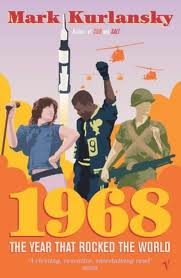
(A little quibble about the cover: the Rolling Stones aren’t mentioned, so why put Mick with either Tommie Smith or John Carlos, who used the Black Power salute at the Mexico Games, and a soldier in Vietnam, and a rocket? It doesn’t really make sense. If they wanted to symbolise the student movement, then surely Abbie Hoffmann or a SDCC poster or similar would have done the trick. It irked me. )
From the point of view of a historian, Kurlansky is quite open about the impossibility of his being completely objective, and in fact rejects the idea of any historian doing so. He was born in 1948 and hence experienced a little bit of what he’s writing about, especially the anti-Vietnam stuff. This comes through in how he writes, but how much that’s a problem is going to depend on how hungry you are for that impossibly elusive objectivity – and how hard you find it to sift the presentation of information to find whatever you think is ‘true’. I think that the medium for conveying the message is worth it, and you just read with that in mind.
And this book is worth reading both for the style – which is intensely readable – and for the content. Kurlansky eschews too many footnotes (and in fact makes that endnotes, and without numbers in the text), so it reads less like a formal history and more as an engaging narrative. Yes the historian in me occasionally frowned at some of the things he says without appearing to back it up. That’s what you get for more conversational-style history… and actually that suggests what this book is like: it felt more like the book of the series. I can easily imagine each of the chapters here being turned into an episode of television.
The absorbing nature of the narrative is aided by the astonishing story that’s being told. Bare bones: Martin Luther King Jr and Robert F Kennedy are both killed in this year; there are student riots/protests/movements all over the US and the birth/growth of significant student movements, as well as in France, Germany, Mexico, Poland and Czechoslovakia, sometimes accompanied by workers’ movements; the Olympic Games in Mexico; attempt at revolution in Czechoslovakia that’s put down by Soviet tanks; civil war in Nigeria; unrest in Israel; the Tet Offensive in Vietnam; Nixon winning the US election; Apollo 8; race issues, gender issues, political issues… . Yeh. It was a big year.
Kurlansky does a wonderful job of putting actions in different places in perspective – connecting them to one another. This is particularly true of the discussion around the student movement, which is really the heart of the book. And there’s something to be warned about: although there is quite a good discussion (IMO) of the Polish and Czech experience, especially, this is still at heart an American book. The Nigeria/Biafra ‘conflict’ is dealt with seriously and soberly, but it doesn’t get nearly as much air time as the attempts at student sit-ins around American universities. Is that a problem? Depends on what you’re wanting out of the book. And it depends on what you think actually made more of an impact around the world at the time, and since then. The by-line is “The year that rocked the world.” Did American students flagrantly defying authorities, and students being beaten by police, ‘rock the world’ more than a million people dying in Biafra? … unfortunately, possibly yes, for several reasons – not least of which is the one that Kurlansky himself spends quite some time discussing: television. There were cameras rolling when students got beaten in the streets of Chicago and New York. Not so much in Nigeria. Plus, the reality is that America had and continues to have more of an impact on world attitudes and trends that Nigeria does – for good or ill, in terms of ascertaining impact it doesn’t matter. My point is more that if you want a book that balances every country’s experience equally, this is not for you. It’s more than the history of one nation but less than a complete history of the world. So check your expectations first.
This is a really fabulous book for bringing out the important issues and the people of this one year. He sets the events and the people into context – casually dropping in Yasir Arafat and Bill Clinton, among others, for future connections, as well as giving background on Martin Luther King and the development of Palestinian identity and the Nigerian conflict and issues in Czechoslovakia. It’s not quite a history of the entire decade but it’s more than just a history of a year.
I love that this book ends with optimism. 1968 itself is such a torrid confusion of hope and despair that going from “racism, poverty, the wars in Vietnam, the Middle East, and Biafra” to the picture of our little blue and white and green marble, as seen from Apollo 8 going around the moon, seems peculiarly appropriate. And then to conclude with Dante – “Through a round aperture I saw appear / Some of the beautiful things that Heaven bears, / Where we came forth, and once more saw the stars.”
This book can be found on Fishpond.
GoldenEye
 This review is part of Project Bond, wherein over the course of 2014 we watch all of the James Bond movies in production order.
 Summary: in which Bond races a plane to the ground, a tank and a train play chicken, and Bond deals with a space laser. Again. Oh also he gets a new face. Again.
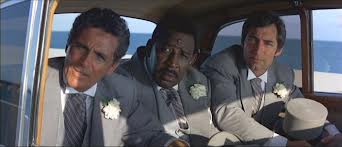
Alex: Now we get into the movies that I know really well. What can I say? I’m absolutely a product of my generation. And what’s fascinating is that this film, and Pierce Brosnan, feels much closer to what I understand as ‘classic’ James Bond – certainly more than the Moores, although perhaps I’m just biased… there’s the martini, the gambling, the cars, Q… a bit of banter but mostly cold-eyed getting-the-job done-ness. I mean, look at that stance (on the right). Doesn’t it just – well, not scream, but state politely and firmly and with a gun in its hand that this man will succeed?
The film opens with perhaps the most dramatic opening ever:
… marred only by the fact that there’s about three different hairstyles on the man involved. Oh well. Then a bit later Bond throws himself off another cliff and chases a plane to the bottom of a ravine and manages to get into the plane before it hits the bottom. I’m pretty sure there’s a fundamental lack of understanding of physics implicit in this scene. Oh! And we also saw Sean Bean, as Agent 006 (I don’t think we’ve ever met another oo agent?) get killed! (which just shouldn’t be a surprise to anyone.) Although then he turns up as ‘starring’ in the credits – hmm, spoiler much?
Anyway then it’s nine years later, after the boob-filled credits, and Bond is driving fast in a car with a woman – at which point I realised: no woman in the prologue! Amazing!! This woman is meant to be evaluating Bond but instead is all gooey and giggly, and quite put out when Bond starts flirting with a woman in a fast red car who nearly gets them all, and a large peloton of cyclists, killed. This is Xenia Ontatopp, whose name makes even Bond pause, and proceeds to kill her Admiral-boyfriend. We know that she’s going to be bad not so much from the killing but because she’s clearly turned on by inflicting and receiving pain. This is clearly coded as abnormal, and as we know by now, Bond villains are generally abnormal in some way. Also, she goes on to steal a brand new fancy pants helicopter. Bad Xenia, bad!
Meanwhile, in Russia, Natalya the computer programmer is having to deal with sexual harassment from a colleague. Apparently this is funny. (This theme is repeated in an exchange between Bond and the new Moneypenny – back to being M’s secretary – who archly points out to Bond that  his statement could be seen as sexual harassment and that the punishment is one day having to make good on your insinuations. Way to go scriptwriters, in making sexual harassment at work a sexy sexy thing.) Anyway most everyone is killed pretty soon by Xenia and the space laser – I’m sorry, space-based EMP – called GoldenEye. The EMP is cool but perhaps to most striking thing about this scene is how modern it looks, with its banks of computers. Yes perhaps this dates me – after all they’re all big clunky CRT screens etc – but they’re still on desks, being used by individuals, and there’s a whole bunch of them.
Anyway, because of this event we go back to Britain and get to the best bit of the whole movie: the new M. Hello Dame Judi Dench I love you very much. Seriously the interaction between this M and Bond is the highlight of the entire thing. There’s disparaging discussion about her being a bean counter and then she turns up and is cold, calculating and totally ready to send a man off to die. She’s willing to accept when she’s wrong and she’s willing to do something about it. Also: “if I want sarcasm I’ll talk to my children,” and Bond is “a sexist, misogynist dinosaur.” So tough. So real. So human – “come back alive.”
 Eventually it turns out that the helicopter was stolen for Alec – Sean Bean – who’s not dead but is scarred (see? abnormal) and who was always going to use his position to hurt Britain in some way because his parents were Lienz Cossacks, betrayed by the British after
 WW2. In a botched attempt to kill Bond, Alec introduces him to Natalya – and this picture, on the right, reflects no part of the film whatsoever at any point in time. They end up in Cuba, where they foil Alec’s plans for stealing lots of money and – perhaps more importantly – wiping London’s computer records and sending England “back to the Dark Ages.” Actually Alec, in the not-Dark Ages they had print copies so they would have been fine if you’d used an EMP on them. But I guess your history education is a bit lacking. Anyway, this plot idea is an interesting one – not physical destruction but informational. Also, it reminded me a lot of Die Hard with a Vengeance.
My assessment of the first Brosnan Bond? He looks like Dalton, which is interesting. I think it continues the more violent/’realist’ tendencies of Dalton but is somewhat softer; Brosnan already has more quips than Dalton. M is awesome – did I mention that? On the women issue, Natalya is highly competent as a computer programmer – despite being constantly undervalued by her arrogant “I am inVINCible” co-worker Boris. But Moneypenny is a bit sad, and Xenia chews the scenery like it’s going out of fashion, and Minnie Driver is just bizarre as a Russian gangster’s mistress strangling a cat singing “Stand by your Man.” The explosions are bigger than before, the stunts are incredible, and the chase scenes are fantastic. This is a very enjoyable film.
James: A modern action movie which hasn’t dated as much as I thought it might. I had never realised how like Dalton Brosnan looked either until this re-watch. We’re back to the cold war with great classic gadgets, though we see the rise of product placement with the Omega watch foreshadowing Nokia, BMW and others in future Brosnan films. The portrayal of computer hacking is typical of movies from this era (or full stop?) – the slightly nerdy looking, yet likeable character madly bashes at a keyboard while others look on applying pressure of death or similar and some how when the hack is completed it’s always show in some very cartoonish visualisation rather than they reality of unix terminals and copying files off a system. Q doesn’t disappoint with gadgets like a pen grenade and we introduce one of my favourite good bad guys Robbie Coltrane playing Valentine a Russian mobster. The finale of the movie is magnificent set against the background of Arecibo’s 305m radio telescope dish built into a volcanic crater in Puerto Rico (and it really is). It’s like a less rubbish version of the finale from You Only Live Twice in Japan. 3.5 Martinis.
The Tiptree Award Anthology vol 3
 I just love these anthologies. I love what it showcases – the diversity of what the different Tiptree panels have judged as falling into the category of ‘exploring and expanding gender,’ which is the remit of the Tiptree Award each year. I love that it shows diversity within the genre, full stop. I love that the anthologies don’t just have fiction, and don’t just have fiction from one or two years, but that there’s non-fiction and older works as well. And that the introduction and sometimes the introduction to each piece are interrogating themselves, the pieces, and the scene in general.
There’s a lot to love.
I’ve had this volume waiting to be read for aaaages. I thought it appropriate to read as I rode public transport on my way to interviewing Rosaleen Love – what I’ve read of her work fits into the broader milieu of the works represented here. As I read, I couldn’t believe that I’d allowed myself to leave this book festering on the shelf for so long.
The non-fiction includes an essay of Pam Noles’, called “Shame,” which struck me very deeply: about the experience of watching and reading science fiction as a person of colour, and not seeing yourself. Her dad sounds awesome: he called the movies she was watching “Escape to a White Planet,” and “Mars Kills the White People.” There’s an enormous amount in this essay that I, as a privileged white reader (gender does not trump race – it’s not a competition) probably need to read it again. Several times. And that the editors paired it with Dorothy Allison’s essay on Octavia Butler was very nice – the latter doesn’t talk all that much about race, more about Butler’s vision of women in the future, but the two are surely entwined… perhaps not especially in Butler, but certainly in Butler. And then there’s a letter from L Timmel Duchamp to Alice Sheldon/James Tiptree Jr, which is a lovely musing on what Sheldon/Tiptree as person and as author has meant to one individual.
Geoff Ryman looks at some possible consequences of the internet arriving in an out of the way village; Nalo Hopkinson goes domestic, sinister and mythological all in one hit; Margo Lanagan does weird weird things that I’m still figuring out in “Wooden Bride” – the story that, I think, gets the shortest introduction of all, since “some stories shouldn’t be introduced” and doesn’t that just describe all of Lanagan’s work? Aimee Bender’s “Dearth” is a devastating, heart warming, bewildering story about maternity and mothering… and I’ve just realised the protagonist is never named. And isn’t that a statement in itself. All of the stories so far were new to me, and Bender was a new name. And then it gave me Ursula Le Guin’s “Mountain Ways,” one of my favourites of her short stories. I can’t possibly pick a favourite story, because that would mean choosing between Le Guin and Ted Chiang: “Liking what you see: A Documentary” is another of his glorious mucking-with-structure stories in which the question about whether you should turn off the ability to see/appreciate beauty is presented as if as a transcribed documentary. And the fact that there are no visuals to accompany this story about visuals just adds to its power and general gloriousness. And for the editors to pair this with Tiptree’s “The Girl Who Was Plugged In” – well, I’ll admit that I did not reread the Tiptree. It was just going to be too raw an experience. So too was “Litte Faces,” by Vonda McIntyre, but I didn’t know that before going in. Deeply disturbing and weird (but not entirely in an unpleasant way), as well as powerful and impressive – and so very different. So, too, the final story – different that is, slightly less weird and disturbing – is “Knapsack Poems,” from Eleanor Arnason. She uses a character who is effectively distributed over eight bodies to tell a story of travel and experience, and I couldn’t help but be reminded of Ann Leckie’s Ancillary Justice. I’m not sure the similarities are much more than superficial, but they’re intriguing anyway.
This anthology works as something read from cover to cover in a sitting or two; it could be dipped into over months; it could be hopscotched. It should be read in any way you can.
Noah
I watched Noah last week with some friends from church. We weren’t expecting A Beautiful Mind, but I would have been happy with Gladiator.
I did not get Gladiator.
I wasn’t expecting it to be completely true to the biblical account.
Which is good, because there were some remarkably true-to-Bible bits (Noah does indeed get drunk and found by his sons in the nud)… but then there were weird magical type bits, too. Like Methuselah making a barren girl fecund, and a snake skin having maybe magical powers? Also, no 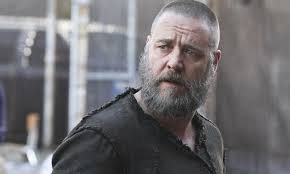 God. Rusty sometimes implored the clouds, and they talk about the Creator, but God never interacts.
I did not expect quite as much angsty Rusty, but I definitely got it; and I really didn’t expect such weird and dramatic hair, and hair changes, as I got. I also didn’t expect the film to be having an identity crisis about whether it was a BC Fantasy film, or a post-apocalyptic SF film. It had occasional moment of both.
The creators (heh) kept the basic story… which you’d kinda expect if you want to have even credence as a Noah story. So people have got bad and Noah has a dream (change) wherein he realises humanity will be wiped off the earth via a flood, and he builds an ark to save the animals and a few people – his family – coincidentally. The animals come in two by two (ish), there’s a dove brings notice of land being back, and oh yes, Noah gets drunk afterwards.
For the changes, though… the biggest one is the change to Noah’s family. Japheth is a child when they board the ark, and Ham does not have a wife or girlfriend or any prospect of one. Shem has Ila (Emma Watson), but she’s barren (or so Noah believes), so there is no chance for continuing humanity – and that’s a good thing because Noah comes to be convinced the humans need to be wiped off the planet, which is very convenient since he hasn’t managed to get ladeez for his lads anyways. When he discovers Ila’s pregnancy, he proclaims his intention to kill the child if it’s a daughter, because that would allow the race to continue. OH THE DRAHMAH. Then Ila gives birth to twin girls, and Noah finds – after oh such a high tension moment – that he can’t kill them. So now humanity is going to continue because CLEARLY Japheth and Ham will procreate with their much younger nieces EW EW. (Oh, did I forget to mention there are spoilers here?)
I guess I understand wanting to add family tension in to the story, but surely there are better ways than this. Even the tired old ‘sisters-in-law not getting along’ would have been better than this – and that’s saying something.
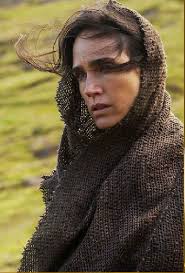 Let’s stop and think about the women for a moment. Jennifer Connelly is a great with a rubbish script… although I don’t think her name is ever actually used (apparently she’s Naameh). There is at least one point at which it looks like she’s wearing a very finely woven garment, though, while everyone else is getting around in very natty leathers (Noah appears in what is almost a leather/rags suit towards the end), which is a bit weird and one of those which time period is this? moments. Her character is mostly the supportive-wife type – and since that’s biblically accurate, I suppose (she doesn’t get much airplay there), I guess it’s nice they gave her anything to do. She’s fierce in defence of Ila. And Ila – again, I think Watson does well with a rubbish script. She has quite a lot of agency, for a movie of this sort – she
  speaks without first being spoken to, she’s noble, she’s fiercely protective of her children and defiant as well. But this is all within the rubbishness of the script. There’s one other named woman, who appears for about five minutes – Na’el, I believe – whom Ham meets when he goes off to find himself a bride. They chat, she seems ok, they head back to the ark… and then she gets trampled to death when her leg is caught in a bear trap (this was another what the hell time period is this set in? moment), and Noah refuses to help. Which is about as bad as it gets for all the unnamed women in the camp of the Evil Mens who are planning to storm the ark when it’s time. Their fate is not explicitly shown, but there’s lots of screaming.
There’s a lot else to be said about this film but I’m not sure I have the energy required to take down the ONE HUNDRED AND THIRTY MINUTES in their entirety. The CGI/green screening was… actually some of it was really good – some of the animals were exceptionally lifelike. But overall it just felt so incredibly fake it was difficult to care. Also, they made the ark basically brick shaped. Also also, Anthony Hopkins are you so hard up for cash this was a necessary career choice? Fella, go on Patreon – I’m sure you’ll get lots of supporters and you’ll never need to think about this again. 
And then there are the Watchers. Who are kind of rock Ents, and kind of Transformers I guess, and kind of that turtle-mountain thing from Neverending Story, and kind of just really really weird. Because they’re fallen angels, see: they fell to earth to help Adam and Eve when they were kicked out of the Garden, and then their fiery essence was encased in rock? Or something? They end up helping Noah because he’s in the direct line of descent from Seth, and because he’s on a mission from God (it HAD to be said). They are, hands down, the WEIRDEST part of the entire film.
I will never get back those minutes. I am more glad than I can say that I spent them with friends, and not alone with the film; and it did involve tea and the last of last year’s mince pies, so I guess it wasn’t a complete loss. I guess.
Licence to Kill
 This review is part of Project Bond, wherein over the course of 2014 we watch all of the James Bond movies in production order.
Summary: in which Bond goes off the range (again), Leiter loses a leg, and Bond meets a seriously awesome pilot. Also, Benicio del Toro chews some scenery.
Alex: I am still loving Timothy Dalton and wishing that there were more of him as Bond. I know that the coming Brosnan is a  lot of fun (well… I hope the Suck Fairy hasn’t visited too hard), but Dalton! He’s so cool! Sigh.
This film’s prologue involves Bond and someone we’ve never met going to Felix Leiter’s wedding… but on the way they go help out with a raid of some  sort. OF COURSE. Because it’s only wimminz who get all hung up about weddings, and HA HA isn’t it funny when you switch the stereotype and it’s the man who’s late? oh the lolz. This raid introduces us to Sanchez, who is clearly evil because he drags a pretty girl out of bed and whips her for having left him. (If further proof is needed, his pet iguana has a diamond necklace.)
After the boob-heavy credits, Bond finds Leiter in his study – at a rather modern looking computer! – while the wedding party is going on; he’s talking to a woman who completely brushes off Bond. OOH, FORESHADOWING. Leiter’s wife Della makes some reference to marrying off Bond, and once again we get a nice moment of continuity as Bond goes all mopey at remembering his OTP. Dawwww. Also, they give him a monogrammed lighter. FROM THE LEITERS. GET IT? Meanwhile, Sanchez has escaped, and he and his goons come after Leiter. And then, just to prove that this is no Roger Moore film, Sanchez has his sharks BITE OFF FELIX LEITER’S LEG. And they also killed Della. At which I am completely



 Naturally Bond wants revenge, and eventually he confronts M about this, in Ernest Hemingway’s house – and they’re only there to give Bond the excuse to say “I guess this is a farewell to arms,” which… I dunno… it’s a long set up for little pay off.
Anyway the movie goes on and centres on both Bond getting revenge and a desire to stop a major drug lord from getting more power. Bond teams up with Pam Bouvier – she who brushed him off earlier – and proves herself early on by pulling a much larger gun than him when confronted with Dario (del Toro) and co. She’s what Dr Goodhead, in Moonraker, came close to being: proficient, professional, and awesome. They do eventually get it on… but she kisses him, prompting the (somewhat amused, still patronising) line “Why don’t you wait til you’re asked?” To which she replies, “Then why don’t you ask?”
Q turns up, in the field again; Wayne Newton also turns up, as a televangelist type who is helping Sanchez sell drugs to cartels in various cities. He is as grotesque as he always seems to be. Bond inveigles his way into Sanchez’ place… things go well, things badly, random Hong Kong ninjas working for HK narcotics turn up and stomp on him… Bond turns Sanchez into a paranoid maniac, and people die.
Women? Bouvier is indeed awesome. She has some great lines, she’s always competent and clear-headed, and she deals quite well with confronting Bond’s other love interest – is this the first time that’s happened in Bond films? The two sex objects actually meeting? The second is Lupe, and unfortunately all the awesomeness was spent on Bouvier because Lupe’s dialogue and characterisation are appalling. She falls for Bond too hard and too fast – and I guess you can explain this as her wanting to escape Sanchez, but it’s not framed that way.
Race? Leiter’s other groom is Sharkey, a black man, and there seem to be no issues with that. One of the DEA assistants is also black, and I think some other random background characters too. The story is set largely in “Isthmus City” so many of the goons and thugs are vaguely Latino; it was shot in Mexico so I’m sure that the cast was from a varied ethnic background. There’s also the “Eastern” drug lords that Sanchez is trying to woo. Overall, yes there’s the stereotype of Central/South America being in the drug trade, but there are also white people involved (Sanchez’ main helper is Anglo, his American contact is too), so I actually think it does mostly ok from a race perspective. For its day, especially.
James: Perhaps my favourite Bond theme music by Gladys Knight, great gadgets too thanks to Q Branch. “Everything for a man on holidays” – explosive alarm clock (never wake up), explosive toothpaste, a Hasselblad palm-reading gun camera and a Polaroid camera which shoots a laser and makes x-ray prints. Dalton is enjoyable again and it will be interesting to see how the transition to Pierce Brosnan feels as we move into what I’ve always considered the modern Bond era. We’re ordering our drinks shaken and not stirred again. 3 Martinis.
Landline: review
 This book was provided to me by the publisher.
I’ve never read anything else by Rainbow Rowell, but a lot of the Goodreads reviews talk about her style being really easy – and it is. I started reading this late one afternoon and I’d read the first 100 pages before I realised what had happened. The story is well-paced; officially it takes less than a week, although there are serious flashbacks that kinda make that a lie. The prose flows – lots of familiar-sounding dialogue, enough detail to sketch in believable places and people. I’m not great at explaining how prose works. All I know is that this was delightful to read, and partly that was the words themselves.
The premise: Georgie has the chance at a dream job – but she’ll have to work over Christmas. Husband and kids go off on their family holiday without her. Georgie discovers that the old landline at her mum’s house somehow allows her talk to her husband – but him from the past. The novel is then filled with the minutiae of daily life: work and memories and family relationships and that worrying and gnawing at problems that gets so familiar when you’re old and have lots of worrying to do.
The best thing about this story is that it’s about a woman thinking about, and worrying about, her marriage. That sounds very self-indulgent and maybe a bit dull or stupid, but bear with me. It’s refreshing to read about a woman confronting problems like this and not taking all the blame, not taking a convenient way out, and not having things magically solved. (Maybe there are lots of books like this – in fact I’m sure there are – but they’re not on my radar.) Yes, there were a few points where I got a little uncomfortable about what might almost be being suggested about her (‘letting herself go’, etc), but for me at least they never quite got to the really problematic point; they were redeemed by some thought or action that pulled it back, didn’t make her the villain for not having time to buy new bras, and so on. And I liked that the focus was on the bit after the happily-ever-after – the bit after marriage, and after kids, and things aren’t entirely wonderful but they’re also not entirely horrid, they’re just… life. But they can still be better, and yes life and marriage require work and that’s ok.
Georgie was pretty easy to identify with, and all the surrounding characters were too. At times I wondered if Rowell was trying too hard to be ‘inclusive’ – but then I realised that just maybe I was overthinking it, that actually there wasn’t a huge amount of diversity (although to be fair the cast isn’t that big), and that none of the ‘minority’ characters were such just to make a statement. (See how my brain gets me caught up in tangles?) Also, the pugs are hilarious.
Self interrogation:
I was going to start this review by saying “this isn’t the sort of book I normally read.” Which is basically true, but why start with that line? And I started thinking about the answer to that question. And then I thought about starting this review with this self interrogation… and I realised that that was still front-and-centring the issue, rather than the novel. It’s one worth talking about but it’s entirely too self-indulgent to make it the first bit. So, here it is, at the end.
This is not the sort of book I normally read. Because it is, first and foremost, a romance. And I don’t think of myself as someone who reads romance, even though actually I love ‘good’ romance in my novels and movies – by which I mean it’s realistic but/and sweet but not saccharine, and – most especially, in my head – not the focus of the story. So why was I so keen to defend myself? Because despite all the time I spend thinking about why reading SF isn’t a bad thing to do, I still automatically feel like I have to barricade myself away from that genre – the female one, the one that everyone else bashes when they’re not bashing romance – even though I am well, well aware – in my head – that oh my goodness there are so many things wrong in thinking/acting like that. And the other thing is that this is absolutely SF. If we’re happy to accept John Chu’s “The Water that Falls on you from Nowhere” as SF – and heck, we should be – then so is this. That short story is all about a romantic relationship and how it works out with the family; the SFnal element is water that, literally, falls on you from nowhere. It’s never explained. So this, a story that’s about a romantic relationship and family, where the main character has access to a phone that allows to talk to someone 15 years ago? This is absolutely SF. Was I more embarrassed because this was written by a woman, and therefore more clearly can be classified as a romance? Because it’s a novel rather than a short story from an obviously SF venue? Who knows. At any rate, I’m not embarrassed by having read it, because it’s one of the easiest – pleasant, fast, cosy – books I’ve read in ages.
Alexandra Kollontai
 This post
 is was meant to be written as part of the Women’s History Month Cranky Ladies of History blog tour.
… But I didn’t get there, which is all sorts of tragic and sad, because this lady is outrageously and fabulously fantastic. So, in brief, because I can’t stand to have this post sitting in my head and not share it:
If a memoir was published as “The Autobiography of a Sexually Emancipated Woman” in 2014, there would be, I think, three possibilities: it’s ironic, and actually about the difficulties of sex & the city; it’s the story of a woman from [insert stereotypically sexually-repressed religious group] discovering sex; it’s a woman who’s been living under a rock and missed the last fifty years of women and sexuality.
However… use that as your title in 1926? That makes you a seriously Cranky Lady. So does being centrally involved in a political revolution and then being the sole woman in a political administration.
Alexandra Kollontai was a firm believer in Marxist ideology, and its commitment to bettering the world via bettering the place of the proletariat. A Russian, she joined the Social Democratic Labour Party in 1899, but didn’t follow either the Mensheviks or the Bolsheviks when the party split in 1903. She did eventually join the Bolsheviks in 1915, and was appointed Commissar for Social Welfare in the new Bolshevik administration after October 1917. From about 1920 on, she began to have some problems with the directions being taken by Lenin and his closest allies. Rather than sitting back, Kollontai helped to form the Workers’ Opposition. Yes, she formed a group within the young Communist Russia that could be seen as directly opposing Lenin. How many others can claim that? Sadly, Lenin managed to close them down, and from this point Kollontai started getting pushed out. And she was even less welcome by Stalin, who got rid of her by sending her out of the country. But this wasn’t exile, and there was no ice-pick to the head (oh Trotsky); instead, she was invested as the USSR ambassador to Norway, then Mexico, then Sweden.
She was the first female ambassador not of Russia, but in the world.*
World’s first female ambassador. In 1923. As a way of getting rid of her. Lady, you are awesome. Stalin, you are… a bit of a dope.
Of course, it wasn’t just Kollontai’s political politics that some people had a problem with. It was her social politics that really stirred things up. Marxist and feminist theory have worked together in understanding the marginal place of women in the home as being a similar thing to the class problems of the proletariat: Engels suggested that women’s subordinate place in the home was part of the capitalist machinery. And Kollontai ran with this. And – note the autobiography’s title – she believed that this applied to sexual relationships as well. Some people got all antsy about her being all free-lovin’ and so on, but I don’t think she was a proto-hippy. I think she was in favour of monogamy, but not as a way of tying women down. As a partnership of equals.
Alexandra Kollontai is an aspect of the Russian Revolution that too often gets overlooked – as does what she and other women achieved for women in general. I understand that the legislative changes don’t make up for the lived horrors of those first few years, but when we ignore them (like when we ignore the radical changes to divorce laws in the French Revolution, in favour of concentrating on the Terror), we’re ignoring a significant part of history – and attempts to change the world should be regarded seriously, even if they get overshadowed by famine and war.
*Her Wikipedia page, which is wickedly short on details, calls her the first ambassador of modern times, stating Catherine of Aragon was briefly an ambassador to England before her marriage.
The Living Daylights
 This review is part of Project Bond, wherein over the course of 2014 we watch all of the James Bond movies in production order.
Summary: in which, Timothy Dalton.
Alex: I guess it could be that thing where comparing something mediocre to something bad makes the mediocre thing look good. I’m not sure. But by golly, Timothy Dalton is my favourite Bond of the series so far. He’s not in his 60s, for a start! I’m not sure either whether there was a change in the writing team, but the script was way, way better than most of what we’d come to expect from the Moore era. Yes, there were a couple of silly lines – but very few innuendos, and it was fast-paced, and it just worked. Intriguingly, Dalton managed to switch between cold-blooded-killer and warm-human quite convincingly: there’s a lovely line where he declares, freezingly, “Stuff my orders – I only kill professionals.” I think Dalton’s portrayal of Bond has a lot to do with the script, but I think also that Dalton is simply a better actor than Moore. His face comes alive when he’s talking to the love interest, and shuts down when faced with evil and crazies. Also, he asks for a martini “shaken not stirred” and THEN we meet Felix Leiter and we are BACK in truBondland!
In discussion, James and I decided that this movie felt, for us – as film-viewers in their 30s – like an action film. Not “a 60s action film” – something that you had to watch with period glasses on – it just felt like a normal movie. Yes, some of the effects have dated, and yes it’s clearly not a 21st century world. But overall it was… familiar. I don’t think I’d quite realised just how ‘period’ the earlier Bonds had been.
So. The film then. Bond goes to Czechoslovakia to assist a KGB general in defecting, and doesn’t kill the sniper who’s aiming for him. Koskov declares that the new head of the KGB, Pushkin, is looking to kill enemy spies and the British should therefore take him out. Bond is dubious, and  goes back to Czechoslovakia to
 check out follow up on the cellist, who was the sniper. To cut through the rather exciting chase scenes etc, it turns out Koskov is working with a crazy American mercenary/arms dealer to get arms into Russia and Pushkin is in the way, so they’re trying to set Bond up to get rid of him. The cellist is Koskov’s girlfriend but he’s unfaithful – which is fine, because she has Bond now, zing! – and because this is set during the Soviet occupation of Afghanistan, we end up with Bond being helped out by the “Afghan resistance” – the Mujahideen. Oh, the times and the way they do change. (They’re led, incidentally, by an Oxford-educated man with a delightful accent.) 
The plot is fast-paced and well-paced: there are some nice quieter moments that don’t drag the whole movie down, and they work nicely for character development. There are some spectacular chases, and – what the Bonds have always done – there is glorious use of spectacular scenery. Going from the snow of Austria to the desert of Tangiers was breathtaking and really worked; I think they used Morocco for Afghanistan and it looked fantastic, too, although I can’t testify to its verisimilitude. 
Women? We have a new Moneypenny! Which is sad, because Lois Maxwell was awesome, but her mooning over Bond at this point would have been… awkward… more awkward than it was when they were the same age, I mean. And this time Moneypenny (a sexy young blonde) doesn’t appear to be M’s secretary: she’s Doing Research and appears to be based in Q Branch. Nice step up in the world, girl! (… within the ideas of the film world, I mean.) There’s one incidental sexy woman, in the prologue: we nearly went the entire scene with nary a boob, but Bond ends up parachuting onto a boat where a rich young woman has been complaining of boredom. Not any more, honey! There’s also a woman who helps Bond get Koskov out of Czechoslovakia, who is played entirely for laughs: she’s one of those big, blocky women that often gets used to portray how dreadful it must be for the lads in Soviet countries, and she uses sex to distract a manager! oh the lolz! Yeh… Anyway, the main female character is Kara the cellist. She’s not a bad character, not as action-y as the last couple – she is a cellist after all! – but not completely useless. She was game to participate in Koskov’s defection, after all, even though it turned out her rifle was given only blanks and she was meant to be killed. She is suspicious of Bond, as you would be, and fights him at appropriate moments, but naturally ends up falling head over heels in love. Seriously such magic. At least she ended up with some of her dreams come true, like playing cello in the West.
Incidentally, there a couple of beefcake shots to try and complement the cheesecake ones; it doesn’t quite match yet, but points for trying I suppose. Also I loved John Rhys-Davies as Pushkin.
James: The crunchy disco theme from the 70s (Man with the Golden Gun) gives way to an 80s electronica remix of the Bond theme for the opening chase and then we quickly move through to the credits with girls in swimsuits rather than naked silhouettes – moving on from the era of free love I guess. I love the little touches with this film like the chunky walkie talkies for the KGB goons.
The Aston Martin in this film may very well be the best yet, from a gadget point of view anyway – lasers, rockets (“I’ve had a few optional extras installed”), modern ‘safety’ glass (bullet proof), spike tyres, skis and finally rocket propulsion. All deployed in a single magnificent chase scene. It was nice to see the man ordering a drink, shaken and not stirred of course. It’s a new Bond for a new era, harder and yet more human. 3.5 Martinis, shaken and not stirred.
Galactic Suburbia 106
In which the Galactic Suburbia crew discuss the future and present death of blogs, explore our personal relationships with social media (but mostly Twitter), and stage a memorial ceremony for the death of Livejournal. WE LOVED YOU, LIVEJOURNAL.
You can get us from iTunes or at Galactic Suburbia.
News
Patreon!! Spoilerifics!! Oh my!
Pet Topic
Future redundancy: The death of blogs?
What blogs do you still read? What blogs are the key places to find out about shiny new things?
What Culture Have we Consumed?
Tansy: Intelligence
Alex: Risk: Legacy; Monstrous Regiment, Terry Pratchett; Beacon
Alisa: yes we really are going to make her throw a book away every single time. She… reinterprets the term’s challenge. But the results are worth it.
Please send feedback to us at galacticsuburbia@gmail.com, follow us on Twitter at @galacticsuburbs, check out Galactic Suburbia Podcast on Facebook, support us at Patreon (http://www.patreon.com/galacticsuburbia) and don’t forget to leave a review on iTunes if you love us!