A Forest, Darkly, by A.G Slatter
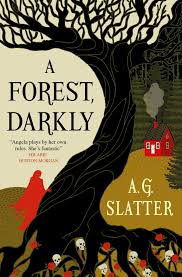
Read courtesy of NetGalley and the publisher, Titan. It’s out in February 2026.
The short version is that I like everything Slatter writes, and this was no exception. If you’re interested in reading complex characters, fascinating worldbuilding and plots that feel familiar and then go in entirely unexpected directions, with a “this feels like a fairytale but WOAH” vibe, then she is definitely one for you to look out for.
This is very loosely a version of Red Riding Hood, but I promise you have absolutely no idea what’s going on with any of the characters from my having said that. The central figure is a witch – I could say she’s a good witch, but that’s way too patronising and shallow and, well, inaccurate. She’s trying, ok? She’s not a witch who’s looking to eat children. There are, though, a significant number of children in the book, to whom some unpleasant things do happen. There’s also a blacksmith, and some non-humans, and a forest.
Mehrab, the witch, has been getting on well enough in her little cottage in the forest, far away from any signifiant towns. The nearest village is also far enough away that getting there requires a conscious choice, and anyone coming to her is doing so deliberately. One day, Fenna – the woman who brought Mehrab herself to this cottage, and who has brought other girls to stay there over the years – brings Rhea to her: the girl is a witch, and is on the run. Part of the novel is about Mehrab and Rhea figuring out how to be around each other.
A mother and father arrive at the cottage soon after Rhea; their little girl went missing a few days ago, and they ask for Mehrab’s help to find her – but she has no luck. And then the girl arrives home some weeks later… but seems to be different. Part of the novel is about figuring out what’s going on with Ari, and other children too.
Mehrab’s past is very mysterious; she gives little away to Rhea, or the reader. The gradual revelation of why she was herself on the run when Fenna brought her to this forest, and why she makes the particular choices she does, is a thread running through the entire novel.
I loved everything about this novel.
The novel is within Slatter’s Sourdough universe, but there is absolutely no need to have read anything that comes before; there’s reference to a couple of characters from other novels but they’re very much just as background, in the way that a complex world will always have background. However, if you’re already a fan, REJOICE! It’s always good when there’s a new one.
Canterbury 2100
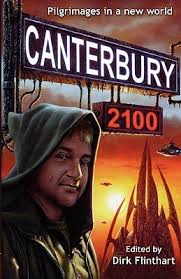
I really thought that I had reviewed this fifteen years ago when I first read it, but apparently not. How ridiculous! Anyway, I decided to reread it on a whim, and it’s still a delight.
It’s based on Chaucer’s Canterbury Tales, of course – pilgrims telling stories as they travel to Canterbury. Here, after a series of apocalyptic events only vaguely referred to, a bunch of people (mostly pilgrims) are travelling to Canterbury on a nuclear and steam-powered train. They’re delayed by rain (and worse), and start telling stories. The same sort of stories, at heart, as those told in Chaucer’s story: individuals and communities, loss and love and hope and tragedy, believable and not; all revealing tantalising glimpses about the people and their world.
There’s a great range of styles, as there should be in an anthology like this, and maybe sometimes the stories don’t seem like they’re quite coming from the same world. But honestly, would someone from Kununurra tell the same sort of story about Australia as someone from Canberra? And did you really think all of these people were telling the unvarnished truth? … all of which is to say, the collected stories feel real in a very human way.
Published in 2008, one of the fun bits is to look at the authors and see who I still know. Third up is Angela Slatter, who is still going from strength to strength; likewise Trent Jamieson, Lisa L Hannett, Kaaron Warren. There’s Martin Livings and Laura E Goodin and Grant Watson and Thoraiya Dyer… and of course it’s edited (and with connecting text) by Dirk Flinthart. Truly it’s a who’s who.
If you can still find it, this is such a fun anthology.
The Crimson Road, A. G Slatter
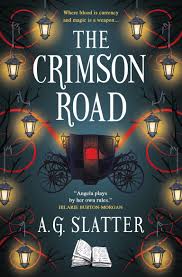
A.G Slatter is an author that I pretty much insta-buy these days. Especially when I know that the story is in her Sourdough universe. Even when the story is about vampires, which I am usually suspicious of – I do not love horror, as a rule; but I trusted that Slatter would not make the story too scary, and that those bits that make it horror would be worth me persevering through.
All of which was true of this novel. It’s yet another fantastic story. Which is not to suggest that I am getting complacent! I guess there’s a possibility that at some point Slatter’s imagination could go off the boil? Today is not that day, though, and may it be kept far, far away.
So: Slatter’s vampires are Leech Lords, and they have bee largely contained by an uneasy alliance of church and Briar Witches (whose story came out a year or two ago). It will not surprise you to learn that this containment is under threat.
Our point of view is Violet; we begin the story with her father having died, and she is hoping that she might now finally be free of his relentless tyranny and insistence that she train as fighter all day every day. Again, no surprise to learn that life is not actually going to turn into eating-chocolates-on-the-chaise-longe, although how all of that transpires is a wonderfully involved and intricate and devastating series of events.
That pretty much sums up the whole novel, really. There’s a quest; there are friends made and abandoned and fretted over; there’s fighting and surprises and hard choices.
I read this novel very, very fast because putting it down was anguish. Highly rated for anyone who wants more Sourdough universe; and if you haven’t read any Slatter yet, this would make an excellent entry point.
Restoration: Angela Slatter
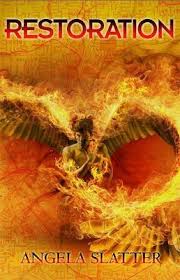 This book was sent to me by the publisher, Jo Fletcher Books, at no cost. It was launched just a week or so ago – hooray!
I’m going to be smug and say this is actually the second time I’ve read this, because Slatter sent me a very early version which, as I say, makes me feel very smug indeed. I’ve loved Verity since I first came across her many years ago in the Twelfth Planet Press anthology Sprawl; that short story, “Brisneyland by Night,” morphed into the first book in this trilogy.
This post will contain spoilers for Vigil and Corpselight (which apparently I didn’t review?? What even, PastMe??). If you like urban fantasy, if you like banter, if you like angels and sirens and Weyrd and weird things, you really should just go and get them. Also it’s set in Brisbane, and I don’t know Brisbane but it seems to make an excellent backdrop for these shenanigans.
So. Verity has made a deal with a broken angel in order to save her mother, newly back from the apparently dead, and the rest of her newly created family. She has had to give up her job working as the go-between for the Weyrd and the normal, there are several Weyrd who loathe her, and the angel has stuck her with a sidekick-cum-informant who has been responsible for several atrocities in Verity’s life. So we just know that it’s going to be a bumpy ride, and of course that’s the case. Not that I was able to predict any of the narrative beats; it all took weird and wonderful turns, for Verity and for Brisbane and for the whole set really.
I continue to adore McIntyre. Also her police sidekick. And Ziggi. Also the sirens in general. … ok, so I just really like this whole crew, and I want to eat the food served by the Norns. But I do not want to actually live with any of them because that just seems like a recipe for disaster.
This is a fine end to the trilogy, if it has to only be a trilogy. Because delightfully there are definitely signs that there could be a book four, which I HEARTILY APPROVE. Also there is looots of room for short stories to fill in a whole bunch of back story. JUST SAYING.
Highly, and happily, recommended.
The Tallow-Wife
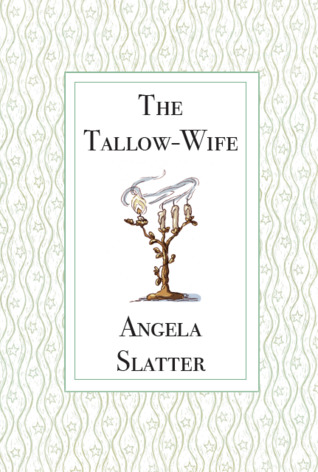 I can always rely on Angela Slatter to shatter my heart.
This wee volume was put together by Fablecroft for Conflux, the Canberra SF convention, this year. It’s a teaser for Slatter’s next volume of stories set in the world of Sourdough and Bitterworld Bible, basically. The main feature is the title story, with a couple other short bits included, and – to make it extra special – illustrations from Kathleen Jennings.
“The Tallow-Wife” is exactly the sort of story I have come to expect from Slatter, especially when it’s a story from this world. It’s a family story, it’s a gentle story, it’s a nasty story as only family stories can be. There’s hints and suggestions of machinations that aren’t spelled out, there’s layers of heartbreak and confusion, and it’s all presented in beautiful prose that sometimes bewilders me: how can such lovely words be telling a story that tears me up? It took me a good couple of weeks to read this – I read it in two sittings but after I put it down the first time I was super reluctant to pick it back up because I knew it would just hurt. And it did, but it was worth it, and I loved it for all the pain.
It must be noted that this is a lovely <i>object</i>, too. Hard cover, Jennings pictures; it’s a delight.
Galactic Suburbia 145
In which we all had a very exciting weekend. You can get us from iTunes or at Galactic Suburbia.
Launched & pre-launched at Continuum: Defying Doomsday and Something New Can Come Into This World
Tansy & the Silent Producer totally got married!
British Fantasy Award shortlist
CULTURE CONSUMED:
Alisa: The Martian, Trepalium
Tansy: The Geek Feminist Revolution by Kameron Hurley, Cleverman, UnReal, Which Witch by Eva Ibbotson
Alex: Angela Slatter binge: Vigil, Bitterwood Bible and Other Recountings, Sourdough and Other Stories, Black-Winged Angels. Also Revolution School (ep 1 until July 6)
Alex’s new podcast! Acts of Kitchen
Tansy’s new superhero story at The Book Smugglers: Kid Dark Against the Machine
On superheroes, kids, gender and role models: Tansy’s Inspiration & Influences
Please send feedback to us at galacticsuburbia@gmail.com, follow us on Twitter at @galacticsuburbs, check out Galactic Suburbia Podcast on Facebook, support us at Patreon and don’t forget to leave a review on iTunes if you love us!
Black-Winged Angels
Continuing my Angela Slatter kick…
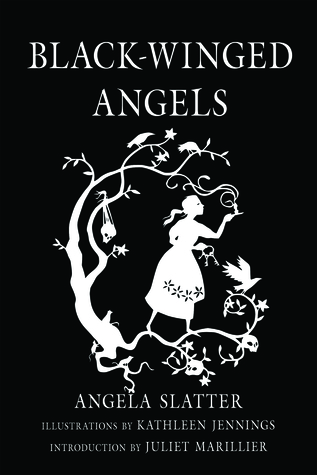 “Baba Yaga is a woman who cannot be bound. She will bear no more children, she bow to the wishes of no man; she is independent, adrift from the world and its demands. The world, in ceasing to recognise her value, has granted her a freedom unknown to maids and mothers. Only the crone may stand alone.” (p135)
Angela Slatter’s exploration of the different ways women can be is one of the things I love most about her work, and it’s evident in this reprint collection. Most of the stories build on European fairytales or characters – Bluebeard, the Snow Queen, Melusine, the Little Match Girl. But the focus is different from the familiar story, because Slatter changes or explains the motivation, or centres on a different protagonist, or moves the setting and therefore the entire context… and she forces the reader to reconsider the telling of those stories, and what we can or should get out of them.
The quote above is one of my favourite parts of the whole collection, putting me immediately in mind of Ursula Le Guin’s reflections on being a ‘crone’, especially the essay “The Space Crone.” How often is old age meant to be something women should fear? And while Slatter’s Baba Yaga is by no means always happy with her status, she lives it.
This book is also a beautiful object. I have a hardback copy; the cover is black with a white cut-out illustration by Kathleen Jennings. Jennings’ artwork appears throughout the book, with each story having a dedicated picture – some quite simple, some incredibly complex. I love Jennings’ work and she beautifully complements Slatter’s ideas.
Vigil
A number of years ago, Angela Slatter wrote “Brisneyland by Night” for Twelfth Planet Press’ anthology Sprawl. It was excellent. Vigil is that story grown-up and turned into a novel, with at least two (I believe) more stories about Verity Fassbinder scheduled.
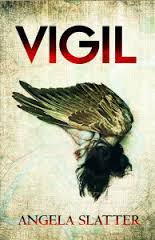 This novel was sent to me by the publisher, as an uncorrected bound proof. Also, I had the enormous privilege of reading it in draft form, which I just can’t tell you how awesome that was. I have re-read it now partly because I have a bad memory and I knew the details had escaped me but that I loved it; partly because it’s Angela Slatter and she always withstands re-reading; and partly because it was sent as a review copy, so of course I had to. It was mostly the first two, though.
Verity Fassbinder “has her feet in two worlds” – that of the Normal, where there is definitely no magic and the only things that go bump in the night are trees in the wind and possums in the bins, and that of the Weyrd. With the Weyrd, things going bump in the night may well be very old, very cranky, and very powerful. Also, weird. Her father was Weyrd; he could change shape and he was a criminal, against both Normal laws and Weyrd customs.
Verity is a wonderfully attractive heroine. She inherited strength from her father but violence is not (always) her first recourse in a dangerous situation; she’s got a pretty short temper and little patience with bureaucracy and authority; she’s a fierce friend and protector of her neighbours, single mum Mel and daughter Lizzie; she lives in a clapped-out old house in Brisbane’s suburbs. She has little interest in fashion, she’s stubborn and determined, she’s willing to compromise and admit when she’s wrong. Basically she’s human, with flaws and problems and the sorts of characteristics I would absolutely love in a friend.
Slatter’s plot is not at all straightforward. She starts with the scenario from “Brisneyland” – children going missing – and builds layer upon layer of Weyrd problems that may or may not be connected. The death of a siren (hence the cover image), the disappearance of a young man, possibly random other deaths – all of which Fassbinder must solve, with varying levels of help and hindrance from a range of friends, acquaintances, enemies and bystanders. It’s a detective story with paranormal elements, and while that’s not a unique proposition it’s the setting and the side characters (and of course Verity herself) that make this wonderful.
Brisbane is by no means a fast-paced city. Slatter has jokes about the places that do or do not get flooded; there’s jokes and having to eat out before 8.30pm; there’s a distinctly slow-paced, I guess Australian feel to the whole situation. Moving this to an American city would make it very different, and lose a lot of its charm; I hope that translates to non-Australian readers.
Verity is aided by Ziggi, driving an entirely disreputable taxi and watching her with his third eye; she’s employed, kind of, by a Weyrd ex-boyfriend, Bela, who has some hidden depths and unexpected shallows. She’s helped and hindered in sometimes equal proportions by the Norn sisters – home of an addictive caramel marshmallow log that I wonder whether Slatter has actually made – and has all-too-frequent dealings with (Normal) Detective Inspector McIntyre, who may very well be my favourite of all the side characters (sorry Ziggi) for her ‘whisky-and-cigarettes voice’ and her even lower interest in putting on a good appearance than Verity. I really hope she continues to turn up throughout the series. I would swap her for Bela any day.
Vigil is fast-paced, quirky, full of twists, and thoroughly grounded in Brisbane (even if it is a somewhat imaginary Brisbane) and the reality of immigrant Australia. I love it and I want more Verity.
Sourdough and Other Stories
 Reading this has been a long time coming. I think I’ve owned it for a couple of years, but I’ve never quite got there before now… mostly because I knew that once I had read it, I would have read it, and then it wouldn’t be sitting there waiting to be read.
Yes, sometimes my brain is weird.
TL;DR: totally, totally worth it; wonderful and strange and making me moon-eyed. It is indeed like reading those fairy tales that were deemed Not Really Fit for young children and discovering that THAT is where the good stuff is.
Almost all of the narratives in this collection are connected in some way to other stories. Sometimes this is explicit: there are a couple of families for whom generations get stories. Others are more round-about, as a passing character in one gets developed in another. This goes too, of course, for The Bitterwood Bible in which Slatter has written prequel stories, of sorts. The fact that I read Bitterwood first meant I got to see some of the places where she went back and filled in gaps, fleshed out history, made connections clearer. The upshot is that reading the stories is a bit like moving to a small town. You meet one person and then another and only a few months later do you discover that those two have History; and then over time all the rest of the connections come tumbling out – except some of them still stay hidden, teased at the edge of perception. Sourdough and the world that Slatter has created here is exactly like that.
One of the things I fiercely love about the stories here and in Bitterwood is the focus on women – and that they are so very varied. Women are daughters, mothers, lovers, wives, friends, neighbours, enemies; they are skilled, bored, frustrated, vengeful, magical, lost, bewildered, smart, sacrificial, victims and heroes. They are human.
Seriously, just read this. Come back and thank me later.
Galactic Suburbia 129
In which we explain the metaphorically violent nature of Australian politics, celebrate the return of Feminist Frequency and our faces are on the internet.
And I am late in posting this! Holidays will do that, when you don’t take a laptop camping… you can get us from iTunes or Galactic Suburbia, anyway.
What’s New on the Internet
Malcolm Turnbull is not Tony Abbott: the Australian Spill Story
Our national sport
The onion thing, no we don’t get it either.
New Feminist Frequency Tropes v Women in Video Games – Women as Reward & Special DLC Mini Episode.
The Three Hoarsemen Podcast Episode 25 featuring Alisa
Galactic Suburbia on Books and Pieces
What Culture Have we Consumed?
Alisa: Mad Max Fury Road; Undisclosed: The State vs Adnan Syed Podcast
Alex: Slaughterhouse 5, Kurt Vonnegut; Archer’s Goon, Diana Wynne Jones; I finished Stranger in a Strange Land!! Also Of Sorrow and Such, Angela Slatter
Tansy: Dawn, Octavia E. Butler; Bombshells #1, Marguerite Sauvage & Marguerite Bennett; The Cornell Collective; Supernatural
Please send feedback to us at galacticsuburbia@gmail.com, follow us on Twitter at @galacticsuburbs, check out Galactic Suburbia Podcast on Facebook, support us at Patreon and don’t forget to leave a review on iTunes if you love us!

 Randomly Yours, Alex