An Aura of Familiarity
I hadn’t heard of the Institute for the Future until I found out about the short anthology they put out recently, called An Aura of Familiarity: Visions from the Coming Age of Networked Matter. The point of it is to explore, in science fiction, the possibilities of a human future that is even more hyper-connected than it is today. I’m delighted by the idea of such an institute existing at all, and the fact that they are calling on creative types to offer their perspectives.
This is a lovely-looking book, even in digital format; the pictures throughout, contributed by Daniel Martin Diaz, are fascinating – I’d love prints of them.
Rudy Rucker starts the anthology with “Apricot Lane.” In this version of the networked future, every single item you buy has the ability to speak to your brain – and not just to advertise themselves, but telling you anything they feel like. Not only does this vision of connecting suggest hyperconnection with your belongings (and others’), but the lack of privacy suggested is also staggering. It’s a clever concept, and a horrendous one; I didn’t love the narrative itself though.
“Lich House,” by Warren Ellis, is horrifying in a different way: here, someone has managed to get into a house that ought to be impregnable, and attack the occupant. The ‘getting in’ has involved essentially killing the house, and most of the narrative is actually taken up with the dying of the house, in rather gruesome detail. So, it’s a clever idea – and again a clever vision of connection – but don’t read it for the narrative; it’s a vignette not a story.
Ramez Naam’s “Water” focuses particularly on the commodification of water, although other consumables are also networked and able to advertise directly to your brain (you can turn the ads off, but that costs a lot more). The opening of the story is, again, horrifying – showing how someone might massage the ads you receive to their benefit (this is of course not so far removed from your internet experience today). But the majority of the story is actually about how this networking might be manipulated for economic gain. This is the most interesting story of the first half of the anthology.
Madeline Ashby, the only woman in the anthology, contributes “Social Services” – and, again, showing a theme, this is an intensely creepy story. The networked matter is important to the story but not vital. The point, instead, is in how people manipulate one another and the consequences of that.
“From Beyond the Coming Age of Networked Matter,” by Bruce Sterling – one of the early lights of cyberpunk – takes the idea of networking matter to an extreme and vaguely Lovecraftian end. Disappointingly, it’s the least interesting story.
The final story is from Cory Doctorow. “By His Things will You Know Him” just pips “Water” as my favourite. It’s a close, deliberately claustrophobic story: a man whose estranged father, a hoarder, has recently died – and he has to deal with his effects. The funeral director introduces him to a new programme that will catalogue everything using clever new intelligent devices. Doctorow cleverly entwines the story of grief and the story of obsession; the idea of ‘networked matter’ is fundamental to the narrative but does not dominate, as in some of the others here. It’s a wonderful story that could easily appear in a different setting and still make sense.
Weimar
In something of a break from my usual reviews, have one about a history of Weimar Germany.
 This is not the book I thought it was going to be. I bought it in the expectation that it would be an in-depth look at the history of Weimar Germany as a political and economic institution, because that’s what I’m particularly interested in. Instead, this takes a much broader look at Weimar Germany as a particular period in a nation’s history, and consequently looks at politics, economics, architecture, sound and vision, philosophy and sexuality across 1918-1933: how these things developed, changed, challenged and were challenged, and what it all meant to at least some of the people living there at the time.
A couple of things to note first of all: one, I am horrified and deeply ashamed that some members of the Lutheran and Catholic Churches espoused the anti-Semitic rhetoric of the age. Yes, church leaders have never been exempt from secular pressures and concerns, and there have been instances of the Church being subsumed into nationalistic/ worldly concerns across its entire history. Nonetheless, the attitudes of some high-profile members (and it was only some) was horrifying to read. And two, if a nation needed an incredibly selfish reason to be inclined towards accepting refugees these days, the list of people who fled from Germany after 1933 should stand as a reminder that people who are forced to leave their country often have exceptional skills to offer the place that will accept them. Perhaps if PNG plays its cards right, it will experience quite the efflorescence in the coming decade?
What did I learn? Well, the politics and development of events across the Weimar period was set out fairly clearly, and added some depth. The economics section proved that I am really not an economic historian, and the imperative towards growth that allowed hyperinflation to get a hold (because <i>some</i> inflation is a good thing) just doesn’t actually work in my brain. The exploration of the Weimar milieu, though, was the bit that I was both not expecting and got the most out of. The impact of architecture – the development of radio (microphones!) and cinema – the sexual reform movement: I understand a little better why the conservative and radical Right were so incensed by what they saw changing, and how they reacted. Weitz makes the Weimar period sound quite captivating if you happened to be in the right place at the right time: Berlin, basically, in the mid-late twenties; and if you had money to burn. If you were planning a time-travel visit, you would arrive in 1925 and leave before 1930; you’d make sure you had a good middle-class office job, too – Weitz is careful to mention that life for the majority was not the glitzy, cabaret-soaked free-loving experience that is sometimes upheld as “Weimar’s golden period.” In fact, the insight into working-class lives is also remarkable – and horrendous.
One of the foci for Weitz, because it apparently was for many of the commentators of the time, was the ‘mass’ aspect of Weimar society: an era of mass communication, mass society… more people moving to the cities, the blurring of art as being for mass consumption or not… it seemed at a few points that Weitz was using Weimar as a case-study in what mass society can be, when it has such poor pre-conditions as Germany in 1918.
I did not love the penultimate chapter. He spends a long time going over what a couple of philosophers and architects do after they flee Germany in 1933. And that was interesting, but it did not need to take forty pages. Forty pages would have been better spent doing more of a survey of the variety of intellectual and art-types that he had covered over the book, not obsessing Herbert Marcuse and Hans Morgenthau – whose work as transmitted by Weitz, I freely admit, I do not understand and care little for.
Overall, this does work as a good introduction to the issues, history, and implications of the Weimar period for Germany, and less completely, Europe and America. If you are interested in history beyond the political and economic, this is the sort of coverage that will work.
You can buy it at Fishpond.
Galactic Suburbia 86
In which we feed the feedback, unpack the Hugo packet, and put Jane Austen on a bank note. You can get us from iTunes or over at Galactic Suburbia.
What Caught Our Eye:
Twitter… the abuse of Caroline Criado-Perez
Chief Commissioner – Have a look at yourself
Mary Beard Will Tell Your Mum How You Behave on Twitter
Feedback!
We appreciate every email sent to us, even if we very rarely do this thing we are doing, and read them out. But this time we did that thing!
Culture Consumed:
Alex: Eternal Flame, Greg Egan; the rest of the Alanna books, Tamora Pierce; Pacific Rim
Tansy: Hugo packet reading – short story, novelette, novella, also Splendid Chaps Seven/Religion, & new social justice pop culture Aussie blog No Award.
Alisa: Hugo Packet including novels
Please send feedback to us at galacticsuburbia@gmail.com, follow us on Twitter at @galacticsuburbs, check out Galactic Suburbia Podcast on Facebook and don’t forget to leave a review on iTunes if you love us!
Women’s suffrage in Britain
 I was a bit scared that this book was going to be intensely academic, which is why I’ve put off reading it for a while. But lo, I was wrong! It was instead intensely readable.
In fourteen fairly short articles, this survey covers a wide range of generally lesser-known topics of the movement for women’s suffrage in Britain. It covers things like the drama, poetry and fiction that came out in support of the suffrage movement; some of the lesser known societies, especially during WW1; the actions outside of London, and those undertaken by working-class women; and the continuing work after 1918 to get the franchise on the same terms as men had it (women over 30 who were householders could vote after 1918; men over 21 could vote). The only chapter that covered things I already basically knew was one on Christabel Pankhurst, who along with her mother Emmeline is probably the most well-known of all suffrage activists.
I learnt an enormous amount about the activities undertaken as well as people’s attitudes. I had always assumed there was a basic oppositional dichotomy between the suffragists (constitutional activists) and the suffragettes (militant activists); not so. Friendships networks were at least if not more important for many women than their ‘official’ societal associations. I also really appreciated reading about some of the literary men who contributed towards the movement; it’s salutary to be reminded that the women weren’t fighting against the entirety of the male population, and that those who opposed women’s suffrage were, eventually, quite a minority.
The depressing part of the story overall is that so many of the issues raised against women voting, and having any position in public life, are frighteningly recognisable in contemporary discourse. A hundred years ago. Seriously.
Alanna 4: Lioness Rampant

SPOILERS
Once again, let’s talk about that cover. It’s way too dark, for a start. Alanna is still not in armour, even though she becomes the king’s champion. The horse is still the wrong colour. The red glow makes sense, I guess, but… yeh. This really doesn’t work for me. The title basically works; it’s better than In the Hand of the Goddess at least.
And again: junior section of the library, people! Weird!
At last, a proper quest. I was beginning to wonder whether it would happen! We had two books of boarding school, one book of… I dunno how to characterise the third, actually. And then here, a quest. Not your average quest, of course, but a quest nonetheless. In fact, a road trip! Alanna learns of a Fabulous Jewel and decides that hey, this is exactly the sort of thing she should be adventuring after as a knight errant. Along the way she meets – and Takes Up With – one of the few men genuinely her match in fighting, Liam; plus a refugee princess, who she eventually matches with Jonathan to take that little problem off her hands; and when she gets back to her home, she helps to bring down a plot against Jonathan (now king), with the back-from-the-dead Roger at its heart. Plus she finally ends up with George, who’s been holding out so faithfully.
The quest angle was interesting, not least because it takes up less than half of the book. The Dominion Jewel does end up being fundamental to Jonathan keeping ahold of his kingdom (literally), but the trip is definitely more about the travel than the destination. Alanna’s relationship with Liam is perhaps the most fascinating of all her loves. For a start, Liam is terrified by her use of magic – so she knows right from the start that they won’t be a long term item (although I am mighty, might sad that he died). His knowing more about some aspects of fighting lends an interesting tone to their relationship, since it takes on a teacher/student aspect – it’s not overdone, though. Her frustration at his occasional desire to protect her comes through well, and not usually as an ‘I’m the strong man’ attitude but more of a ‘I love you so I want to protect you’ thing – which is quite reasonable, from his perspective, if frustrating from hers. And then finally we get female relationships, with Alanna relating to the princess Thayet and her bodyguard, Buri, on a fairly level playing field: Thayet actually outranks her, as no woman she has interacted with daily ever has; Buri is pretty nearly as good a warrior as her. And they manage to have occasionally spiky but generally very good friendships, based on mutual trust and equality. Hooray!
Oh, and she gets the jewel, by nearly defeating and then amusing an elemental being. Awesome. Off home then.
Alanna’s relationships with Jonathan and George have complicated, as they ought. Jonathan is willing to be chivalrous, but really knows that their marriage wouldn’t be awesome; plus, he’s smitten by Thayet, as Alanna was planning. Plus, being married to your Champion would just be awkward. George keeps on being the faithful one, and eventually that pays off. Awww.
Clothes play a rather interesting role in this story. I like that Alanna has a complicated relationship with clothes. It makes sense. I love that she is allowed to mash somewhat-feminine clothes with her status as a knight when she is presented to the court. Liam’s poor reaction to her being in a dress, because that doesn’t suit the box into which he wants to place her, is a wonderful exploration of identity and expectations. The resolute determination of showing that she can be feminine – and like feminine things – and that this does not detract from her status or fighting abilities is magnificent.
There are some things that are rushed, here, as they have been throughout. Alanna’s relationship with her brother Thom, in particular, is never fleshed out enough for my liking; Thom as a character is too distant and unrealised. We just have to accept that he’s become proud because of his power, but that he gets tricked by Delia into resurrecting Roger.. and then he finally gives in and is willing to accept help from his former teacher whom he previously seemed to despise. It’s all a bit of a mess, really, which is unfortunate because I think the twins’ relationship could have been a much more intriguing aspect of the story than it was allowed to be.
I am unconvinced by the conclusion, too. I am happy enough with her ending up with George, although it is just oh-so-convenient that he’s noble now (not to mention pardoned), so there’s no issue of her marrying below herself. However, the idea that she would immediately agree to have children after a year or two of marriage struck rather an off note for me. She’s just made him amend his suggestion that she settle down to going off roaming with him, and now she’s confirmed to near-immediate motherhood? Given the rather pointed bits about her knowing nothing about children – although she does learn – this just seems out of character. And it was an unfortunate way to end, too; I don’t really see why there had to be a discussion of children along with the discussion of marriage.
Overall, I am pleased to have read this quartet; I read the last three in about 24 hours. I may at some stage seek out the next set of books set in Tortall, but I’m (really) in no hurry. Pierce was doing some interesting things, here, but I’m too old and well-read to be as completely overwhelmed as I might have been in my teens. Still, I’d have no hesitation in shoving them down anyone else’s throat.
You can get Lioness Rampant from Fishpond.
Alanna #3: The Woman who Rides like a Man
SPOILERS

Soooo… let’s talk about that cover then. Can you spell Twilight? SERIOUSLY, PEOPLE. There is so much more to this story than a love triangle! And WHAT the heck is she WEARING?? Is there a Valley Girl in the desert that’s not mentioned? She’s a KNIGHT. She could at least be wearing a burnoose, given she spends a large amount of the story in the desert. But nooooo they have to make it look like this almost modern. You can pretty much ignore the sword in her hand, even! Urgh. Also, I wouldn’t go for either of these fellas.
Still, at least this is a better title than the second one. “Woman who rides like a man” is both directly relevant to the story and intriguing.
Also, found in the junior section. Really makes me think that the staff haven’t read it.
Alanna is now a knight, and like she has been saying for two novels, is off to seek whatever knights errant seek. Warmth in winter and some distance from both Jonathan and George, in this case, plus getting away from people who disapprove of boobs behind armour. She ends up in the desert that she visited in the first book, and stays with a tribe of the Bazhir. She accidentally becomes the tribe’s shaman because she kills the existing one; oops. She also becomes teacher to three young Gifted teens, one of whom dies, and she challenges notions like girls-can’t-d0-stuff. Meanwhile, she breaks up with Jonathan when he gets very high and mighty about her marrying him, is adopted by Sir Myles as his heir – so now she gets to have her own title because after all her brother inherits Trebond; and takes up with George, at last.
Again, a lot happens in a short novel. I think this one felt better paced overall – perhaps because now Alanna is a knight, which was the whole point of the first two, things can slow down a bit and events can happen kind of for their own sake, rather than to move Alanna along to that particular end. This also covers a shorter period of time, but still felt like there were important things going on.
Again, Alanna grows and changes. In particular her attitude towards being female comes out in fits and starts, and this really makes sense. After all, she’s hidden being a woman for so long – and put all of the potential trappings of femininity out of her mind for so long, disregarding them in her quest to be a knight and definitely seeing them as the lesser of her options – that it makes sense it would be hard to change. I think it does make sense that it might eventually start to be appealing, or at least provoke her curiosity; especially when her lover makes rude comments about not being feminine enough.
There are some problematic things in this novel – I wasn’t entirely comfortable with the characterisation of the Bazhir. However, Alanna’s stay with them does twist some conventions nicely; her very presence challenges some of their notions, and many of them show willing to change when shown that the alternative isn’t disastrous (mostly). I like that there is an insight into the women of the tribe; after all, Alanna is in that sometimes awkward, sometimes useful liminal space of female-knight: she inhabits both masculine and feminine sides. So she learns the magic and the fighting… and then she also learns weaving, and values that, seeing that the women have as much to offer as the men. I love that she is not actually very good at weaving when she starts.
I am intrigued again by the… I hesitate to use the word ‘casual’, because it makes her sound like she just sleeps with anyone, so let’s go with ‘straightforward’ attitude shown towards sex. She’s broken up with Jonathan; George again makes a move; she takes up with him. It’s more than pragmatic – after all George declared his love back in the other book; it’s not rebound sex; and she’s not hung up on the morality of it. This is definitely a different way of portraying such things from your average faux-medieval story.
I think this is my favourite of the four books. Alanna seems to get to be most herself with the Bazhir; she faces challenges and makes decisions like a knight would and should. And she faces the consequences squarely, occasionally with remorse as required. She’s growing into someone to genuinely admire.
You can get The Woman who Rides like a Man at Fishpond.
Alanna #2: In the Hand of the Goddess
A while back, I read Alanna: the First Adventure. I said at that time that I would read the rest of the quartet at some point, but I wasn’t in a screaming hurry. Then the other day on Galactic Suburbia, Tansy announced that she was commencing a re-read. Well, I couldn’t let her re-read beat my initial read, could I? What if she said spoilery things?? So, I went out and borrowed the next three. And read them…
SPOILERS

So. The second book. First off, let’s talk about this cover. It’s from the 2011 re-release, and it is less than awesome. Her horse’s name is Moonlight, fercryinoutloud. At least she’s got a sword and is dressed in squire-ish clothes. Secondly, let’s talk about where I found it: in the junior section of the library. Not the YA section; the junior section. I can maybe see the first book fitting there, but not the entire series. I found that weird before I read them, and then as I read the casual attitude towards sex – the sex isn’t explicit, in the slightest, but it is very clearly present – I was even more astonished. Also, the killing of people with swords, which again isn’t the most graphic violence but still, not sure you’d want a ten year old reading it. Thirdly, the title… well, it makes sense in some ways, but it doesn’t inspire me and in fact makes me roll my eyes. I would not pick this up based on the title. (Of course I would already have been put off by the cover of this particular edition.)
Anyway. The story picks up with Alanna now being squire to Jonathan, the prince, who knows that she’s actually a girl. The story essentially covers her progression towards becoming a knight. It covers three or four years in 240 pages. Sometimes you blink and it’s a year later. Some writers carry that off with aplomb – mostly I’m thinking of Ursula le Guin here I think – but I’m not entirely convinced of it by Pierce. Over that time, Alanna acquires a cat, Faithful (many of the names that appear in this series I am entirely unimpressed by); a lover, in Jonathan; and of course becomes a knight. And, in a very rapid turn of events, she kills her nemesis, Duke Roger. That particular bit happened so fast my head was spinning.
Alanna grows up, as she needs to, and generally that’s well done. She frets about things fairly convincingly. It was good to see that Pierce allowed Alanna’s friends to accept her being a girl relatively easily; that she had proved herself enough that it was straightforward for them to still see her as a knight.
Battle scenes aren’t dwelt on, which I appreciated. The aftermath, though, is not ignored; Alanna throws up after her first real skirmish, the patching up of soldiers is shown in as detail as the battle itself – which isn’t glorified – and when Alanna isn’t able to fight, she goes off and helps the healers. I like how practical Alanna is; I like that the reality is shown, although of course Alanna is Super Gifted in every area necessary (which sometimes does get a bit wearing).
Jonathan is a bit boring. I was surprised when he and Alanna fell into bed together relatively easily; later, there is a suggestion that this diminishes Alanna’s virtue in some eyes, but she doesn’t worry about it at this stage. I can’t help wondering about the power issues of a prince sleeping with a vassal – although of course this has always happened in history – but also the rather weird situation of a knight sleeping with his squire… although of course this may well have happened in history….
As a rogue, George of course is more interesting. I’m a bit impatient with love triangles though.
Really, this book gets through things extraordinarily fast.
You can get In the Hand of the Goddess from Fishpond.
Galactic Suburbia 85
In which we talk about gender stuff in publishing and gaming, Alex votes in the Hugos and Alisa’s thesis starts coming together. A good week! You can get us from iTunes or over at Galactic Suburbia.
Caught Our Eye
Sexism in genre publishing: A Publisher’s Perspective
JK Rowling and Robert Galbraith – An Open Letter to Writers & Would Be Writers
The Mary Sue & gaming culture: What we aren’t talking about when we talk about inclusion and representation, and what we are
Culture Consumed:
Alex: Hugo reading (novellas and novelettes)
Alisa: Publishing and Reading as Dissent: Resistance, Literary Tourism and Arsenal Press, Casey Stepaniuk (The Word Hoard Vol 1, Issue 1)
Tansy: Alanna the First Adventure by Tamora Pierce, All-New X-Men: Yesterday’s X-Men, Brian Michael Bendis & Stuart Immonen; Red Sonja #1 by Gail Simone; Much Ado About Nothing!
The Galactic Suburbia Road Trip – we have fun over at the SF Signal Mind Meld!
Tansy’s review of The Other Half of the Sky is up at the Cascadia Subduction Zone.
Kaaron Warren won a Shirley Jackson for “Sky”!
Please send feedback to us at galacticsuburbia@gmail.com, follow us on Twitter at @galacticsuburbs, check out Galactic Suburbia Podcast on Facebook and don’t forget to leave a review on iTunes if you love us!
Katherine Swynford
This isn’t a real review, but I wanted to register how much, overall, I enjoyed this biography of Katherine Swynford that I read recently.
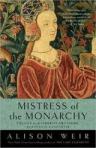
I have read a lot of Alison Weir’s work. I know she sometimes gets accused of writing populist history; personally I find her a really intriguing mix between populist and academic. On the one hand – what’s wrong with being populist if you’ve done your research?? Making intriguing women like Swynford accessible to a general public is something to be lauded very, very highly. On the other hand, there were bits that I absolutely skimmed over because they were so dense; I’m sorry, I just don’t find descriptions of household objects and suchlike that riveting. Maybe that makes me a bad historian… or just not a good domestic historian. Anyway – this was largely very readable and enjoyable, and I think would be found so by reasonably educated people with little detailed knowledge of medieval England.
And then there’s the subject. Katherine Swynford! Attendant to Philippa of Hainault when she marries the English Edward III; governess of some sort to John of Gaunt’s (third some of Edward III) children; then (after his beloved first wife dies, and her possibly lamented but not so much husband also) John of Gaunt’s mistress and mother of at least four of his children; then repudiated for some time when he gets a bit thing about maybe becoming king of Castile, plus pious; then, finally, John of Gaunt’s third wife. Which also wrangles the legitimacy of her children by him. All of which doesn’t include the building works she manages in various places, the bringing up of a number of children, possibly being involved in politics at different stages, oh and her sister married Geoffrey Chaucer.
She’s a major reason the Tudors had a connection to royalty, before forcibly taking the crown (they’re descended from the Beauforts, who are the legitimised children mentioned above). She’s also the progenitrix of six American presidents.
Katherine Swynford was clearly a remarkable woman. She was on good terms with a large proportion of the English nobility – admittedly, partly because she was widely known as John’s mistress and thus had access (heh) to his ear, but nonetheless she was clearly highly regarded. She was also on good terms with most of the clergy with whom she came into contact, for example in Lincoln where she appears to have lived right next to the cathedral for many years. She must have been a remarkable housekeeper – in the very broadest and most impressive sense, since it appears that the place she first lived in with her first husband was a bit crap, frankly, and she was largely responsible over many years for making it a good place to live. Plus, she lived through remarkable times: this is the Hundred Years’ War, and also the time of Wat Tyler’s mob rampaging through London and burning the Savoy Palace… which would be the palace belonging to John of Gaunt. Fortunately, not while he – or she – was in it.
It’s brilliant to see such a woman getting a biography. I love Weir’s introduction to this which confesses that pretty much this is the biography she’s been working towards for years – she just had to have the clout to manage to get her publisher to agree to it. Way to go to get what you wanted!
Rasputin’s daughter
 A little history lesson: Gregory Rasputin was a Siberian peasant who, after being introduced to the Tsar and Tsarina of Russia in the early part of the twentieth century, somehow appears to have had a positive impact on the haemophilia of their son and heir. There were all sorts of rumours going around about him and his relationship to the Romanovs and the way he behaved in St Petersburg, and he was eventually assassinated. This book is more than a hundred pages of his daughter reminiscing about her father, and about 30 – which I didn’t read – of Rasputin’s own reflections on holy places he’s visited.
I recently helped my sister to move house, and one of my jobs was unpacking her books. In doing so I discovered that she had appropriated a number of books that belonged to me but that I’d left at home… anyway. I also discovered this book on her shelf, and I was astounded for a few reasons: that the book exists at all; that she had bothered to nab it (I was reminded that she had studied the Russian Revolution at school)… and that it had belonged to our paternal grandfather. This is somewhat surprising because although not a Communist, our Grandpa was definitely an old-school union man, voted Labor all this life, detested the Vietnam War (wasn’t it awkward when Dad enlisted and went over?)…

etc. So why he had a book aimed at salvaging Gregory Rasputin’s reputation is beyond my ken.
This book is part vindication of Rasputin as a largely good man, part protest at his treatment while alive and his reputation after death, and part somewhat dubious insight into life in Petersburg in the lead up to, and early part of, World War 1. Did I learn anything that I am willing to treat with little scepticism? Yes: Maria Rasputin’s explanation of the fact that her father was not a monk, but was rather a Starets has no need to be distorted and was genuinely helpful in my thinking about him. So too is the fact that Maria and her sister lived with Rasputin for most of the time he was in Petersburg! – this is not something that I have ever seen discussed, and although obviously a father is perfectly capable of being evil and not showing it to his daughters, it’s still an interesting addition to his character. Like I said, Maria (and I’ll keep referring to her by her first name because ‘Rasputin’ would be just too confusing) is clearly aiming to redeem her father’s name, so she stresses that their living room/reception area door was very rarely closed – thus clearly refuting the idea that, at home at least, Rasputin was up to no good and holding orgies (one of the big accusations against him). She doesn’t pretend he was a saint – in fact, she protests against that idea vigorously – and admits that he took up drinking… but blames that on the experience of Petersburg itself, and bad influences, and the need to get just a little bit of downtime.
There’s a whole lot that is pure propaganda. And I can understand that; it can’t have been a comfortable position to be in, as the daughter of such a notorious man. Especially if he had been a loving father, and all the calumny just felt so alien and unlike the man you knew. I was fascinated to read that Maria accepted – or at least wrote that she accepted – the supernatural elements of Rasputin’s story: that he was clairvoyant, enabled by a special connection to God that also enabled him to have special healing powers… I hadn’t expected that aspect.

One problem, for me: I couldn’t help but here Tom Baker’s voice every time Rasputin spoke. That was distracting.


 Randomly Yours, Alex