Diamond Eyes
 I received this as a freebie at last year’s NatCon, and kept it to read because it was the second winner of the Norma K Hemming Award (“the Norma”). As an Australian award that seeks to recognise specfic literature that deals with gender, race, sexuality, class, and disability, it sounds like an award I would like to stay on top of. That said, I still haven’t managed to get hold of the first winner, Maria Quinn’s Gene Thieves… but I will, honest. Obviously, since the book won last year and I only read it last week, it didn’t zoom to the top of my TBR – but after the sequel, Hindsight, also won the Norma, I thought I ought to get on to it. Despite the fact that I had heard a number of less-than-positive comments about it.
First up, I’ll say that it’s readable. I know that sounds like very faint praise, but a few people had suggested that it wasn’t – readable, that is – and I disagree. The sentences make sense, the world building and general plot make sense, I wasn’t confused about who was who and doing what. So, there’s that.
The plot
Mira Chambers is in an institution, although for much of the book it wasn’t entirely clear why. Yes, she seems to be blind, but that doesn’t get you made a ward of the state. I figured out eventually that it’s because she’s an orphan… Anyway, back to the plot. Mira is nasty to the people who are meant to be looking after her, although as the novel opens she’s introduced to a new nurse, Ben, and there seems to be some hope that maybe he’ll be nicer and so will she. Their burgeoning friendship takes up a significant part of the novel. The plot also revolves around the revelation/investigation into the nature of Mira’s blindness (hint: she’s not really blind, in the can’t-see-anything sense… she just sees differently). Also, there’s a military conspiracy.
The characters
I didn’t like Mira much. Partly this is because she’s not very likeable for the first third or so, even when we get an insight into her reasoning and what she’s experienced in life; partly it’s because I didn’t feel like I ever got to understand her very well at all. And she wasn’t interestingly mysterious, either. For maybe the first half of the novel I couldn’t even figure out how old she was, and that bugged me because I couldn’t figure out whether the relationships around her – with nurses and fellow inmates – made sense or not.
I also didn’t like Ben much. At times too saccharine and at others too morose, he wasn’t consistent enough as a character for me to develop a rapport.
Most of the military characters were a bit silly, as were the science-types. The Matron was almost as inconsistent as Ben, when she could have been awesome because she is trying to change the system from the inside, and that takes guts and determination.
The best character, by far, was Freddy. Probably suffering (is that still the right way to describe it? I sought another word and came up blank… could be holiday brain) from multiple personalities, he is paradoxically quite a consistent character. I really enjoyed the way Bell wrote him, and the way she used him and his… gifts.
The world
It was unclear to me for much of the story where this was taking place. That’s not a problem in itself: I am very happy for novels to take place in an Everywhere (like the Portland of the Troubletwisters stories). However, it became a problem when all of a sudden maybe halfway through, real Australian places were being named and described like it was meant to make sense to the reader. And it didn’t. It’s also not clear when these things are taking place. I initially thought this was a near-future novel, but it increasingly became clear that it was meant to be today. Which is fine, it just confused me.
Overall…
I am conflicted. I must be honest and say that while I read the first 100 pages properly, I did skim the rest (about another 400 pages). That is, I read most of the dialogue, and I read some chapters completely, but there were significant sections where I let my eye scan down the page to see if anything interesting was going on. And much of the time, there wasn’t. However, I think that Bell has created an interesting gift/power/whatever for Mira (which I won’t spoil here), and I am actually tempted to read the sequel just to see where she goes with it.
The Norma
Having read the novel, I profess myself surprised that it won the Norma. Does it deal with gender? Well, the main character is a woman… please don’t lets pretend that’s enough. Race? Ben isn’t white, but that’s not central in the slightest nor dealt with except for an ‘oh really?’. Sexuality? No. Class? No. Disability? … ah. Mira is blind – or everyone thinks she is. But she can see, just differently. Someone suggested to me that actually she’s not disabled; she has a superpower instead. I’m not entirely convinced by that argument, since she is definitely hampered in living her normal life, which suggests that even if it is a power it’s a problematic one at best. Another way this possibly covers disability is the fact that Mira is considered psychologically disturbed by a number of the other characters, and so is Freddy and many of the other people at the institution. But just because that’s how they’re regarded, and even if that’s what they are, doesn’t necessarily make the story a good exploration of those issues. Woman on the Edge of Time does a good job of exploring what it means to be regarded as mad, and how society deals with that. I do not think Diamond Eyes does – and maybe Bell wasn’t setting out to deal with it. I am therefore left wondering whether there was so little published in Australia in 2010 that dealt with the issues the Norma wants to recognise, that this was the best there was? It’s an ok novel, but I don’t think it’s groundbreaking in the issues it wants to address.
Galactic Suburbia 63
 In which we look at the politics of female author portraits, why you shouldn’t tweet celebrities about their alleged irrelevance, and start thinking about what we’re going to vote for in the Hugos. You can get us at iTunes or from Galactic Suburbia.
News
Women in SF & Fantasy in Australian media – the article is a month old, but still relevant!
WA Premier’s Book Awards Shortlist announced and Penni Russon is on it!
Top 10 list of the greatest female SF/fantasy authors ‘of all time’ – do you agree?
Tansy’s Pinterest board of portraits of “Lady Novelists”
It’s Not Wise to Be A Jerk to Felicia Day
What Culture Have we Consumed?
Alex: Schismatrix Plus, Bruce Sterling; Embassytown, China Mieville; Snow White and the Huntsman; Bitter Greens, Kate Forsyth; Diamond Eyes, AA Bell
Tansy: Salvage, by Jason Nahrung; Medea, Kerry Greenwood; Captain Vorpatril’s Alliance by Lois McMaster Bujold; Ame-Comi Wonder Woman & Batgirl; Silk Spectre #1 by Darwyn Cook & Amanda Conner; The Invincible Iron Man, Matt Fraction
Alisa: Blackout, Mira Grant
Please send feedback to us at galacticsuburbia@gmail.com, follow us on Twitter at @galacticsuburbs, check out Galactic Suburbia Podcast on Facebook and don’t forget to leave a review on iTunes if you love us!
[photo: Stella Miles Franklin, older and more characterful than we usually see her in images]
Galactic Suburbia 62
 In which Alisa and Alex bravely confront the realities of podcasting without Tansy, and come up rather short… (ha!). You can find us on iTunes or at Galactic Suburbia
Convention Highlights
Alex’s blog & con report roundup
Embiggen Podcast (hang around after we stop talking to hear it!)
Chronos, Ditmar, etc: the Aussie winners
Locus Awards: more winners
Women in SF & Fantasy in Australian media – check out the article quoting several Australian spec fic writers & editors
What Culture Have we Consumed?
Alex: Prometheus; Ishtar (Kaaron Warren, Deb Biancotti, Cat Sparks).
Please send feedback to us at galacticsuburbia@gmail.com, follow us on Twitter at @galacticsuburbs, check out Galactic Suburbia Podcast on Facebook and don’t forget to leave a review on iTunes if you love us!
[Photo Credit: Cat Sparx – Kirstyn and Mondy enjoying the convention!]
=========
 In collaboration with Writer and the Critic, we are delighted to present a special podcast dedicated to the critically acclaimed Twelve Planets series of short story collections and recorded live at the beautiful Embiggen Books in Melbourne.
Trouble and Her Friends
 So… I’ve been meaning to write this review since August, when I read it. I’ve therefore managed to get to it before a year is out, if only just. Which is good. But the reason it’s taken me so long is because there are so many things I wanted to say! … and of course I’ve forgotten most of them. Because that’s the way these things work. I did make a little list of notes as I went, so this is going to be a somewhat disjointed review as I write those notes and try to remember what I meant by them. Bear with me?
Firstly, this is a really really great book. Seriously. I went and bought two or three more Scott books pretty much immediately (the fact I haven’t managed to read them yet says nothing about Scott and everything about my teetering TBR pile). It has plot, it has characters, it has a brainworm… for me, this is like the pinnacle of cyberpunk. This is what it should do. The plot has action and intrigue and nice twisty bits; I quite enjoyed the description of being on the brainworm and participating in the net. The characters are nicely varied, and Trouble herself is complex and sympathetic and compelling. The blurb makes it sound like a techno-western (Trouble as “the fastest gun on the electronic frontier”) and while I’m not entirely sure it works, I think I can see where it’s going.
As I was reading, I had this really awesome revelation about how it connects being a cracker to gender, and how old-school crackers don’t like the idea of the brainworm because it allows bodily experience within (what is effectively) virtual reality or the internet. And I thought – hey, woman dealing with physicality, which men so often don’t do! … yeh, turns out this was by no means something that I noticed all on my own, but something that was in my head because Helen Merrick had pointed it out in The Secret Feminist Cabal… which is the main reason why I wanted to read Trouble in the first place. Oh, so meta. And so dumb.
Anyway, for a book published in 1994 it’s a bit depressing that, in this indeterminate time in the future, women and homosexuals are not still equal. Scott also says some interesting things about inequality and the willingness or desire to have the physical experience: “it was almost always the underclasses, the women, the people of colour, the gay people, the ones who were already stigmatised as being vulnerable, available, trapped by the body, who took the risk of the wire” (p128-9).
There’s also a pessimism in Scott’s thoughts on how society will view the net: with suspicion, is the answer. She imagines fairly rigorous policing of it, both externally and internally (maybe because of that same notion of the ‘wrong’ people hanging out there?); the net is scary, in need of tight controls – slowed down, checked thoroughly – so that mainstream upright society isn’t threatened.
It’s awesome. Cyberpunk and gender stuff and a ripping story. Awesome mix.
You can buy Trouble and her Friends at Fishpond.
Castles Made of Sand
Jones begins this story just minutes after the conclusion to Bold as Love, such that I had to go back and read the last chapter of that book to make sense of this one. Which, to my mind, doesn’t happen very often; it made it feel like this was less a sequel, as such, and more a continuation of the same story. As it should be, I think.
*Spoilers here for Bold as Love*
I loved this novel. A lot. Maybe not quite as much as I loved the first one, because that was all bright and shiny and shocking and new… but it’s love nonetheless.

I still liked the characters. Fiorinda is a bit more grown up and less annoying baby-rock-princess; still vulnerable (if not as much as the boys think) and spiky with it; she’s not my favourite person to read but she is sympathetic. Mostly. Ax, now dictator of Britain in some sense (I found the politics a bit hard to follow, especially figuring out how the rocknroll counter-culture side fit in with the still-existant Westminster government), struggles believably with the difficulties of leadership and relationships. Sage… well, Sage was always going to be my favourite, but/and he gets darker here too. He struggles with love and with science-cum-magic, and with music, too.
The plot… well, it’s hard to go into it without being spoilery, which I would like to avoid. But there are metaphorical dragons that our heroes must confront: some political, especially in the form of neo-Celtic pagans who’ve read a bit too much about maybe-druids and their sacrifices; some personal, both in how to balance one relationship with another and how to balance any relationship with power and expectations. And then there’s the people who are actively trying to bring down this counter-culture, for their own political and personal reasons.
Look, it is wonderful. Not without flaws, and not without uncomfortable bits (those two not always the same); but it’s a fascinating view of the world and explores some provocative ideas for how to make the world a better place. Also, she brings the magical aspect just a little bit more into view…
For a spoilerific and eye-opening (for me) description of this novel, especially as it relates to Arthurian and medieval fantasy tropes, my hat goes off to the Wikipedia contributors for this novel. Well done indeed.
Agatha H and the Clockwork Princess
*Some spoilers for the first Agatha Heterodyne novel/some of the graphic novels*
 Yes I am a fangirl. Let’s move on, and firstly talk about the look of this lovely book. I don’t mind the cover – I think it’s appropriate and quite pretty – but when I was reading I took the dust jacket off and oh my, I don’t think I can put it back on again. The hardcover itself is beautiful, with gorgeous gold embossing and little swirls and… it’s just wonderful.
So, the story. This covers, I think, volumes 4-6 of the graphic novels (I may be wrong). Agatha has escaped from Castle Wolfenbach and quite literally falls to earth in company with Krosp, the talking cat. She gets taken in by a travelling circus, after a few adventures, and things proceed from there: more adventures, some science, a little bit of romance, and some interesting characters too. Things are, of course, not entirely what they seem in the circus; and even if that were the not the case, odd things are afoot within Europa so Agatha and her friends are confronted with monsters and other unpleasant people as they travel around. And then there’s the castle with the slightly crazy people…
You probably wouldn’t enjoy this novel without having read the first one. If you’ve read the graphic novels, then you know exactly what happens here already. For me, I read the graphic version long enough ago that I’d forgotten many details, so it was still highly enjoyable. Additionally, I think the Foglios are adding more detail in, especially in terms of back story for some of the more minor characters – and for Europa, and the places visited, as well. I am still a word-reader at heart, and much as I love the graphic novels I don’t think I yet have my eye ‘in’ – I’m sure there are details I miss in pictures that I easily grasp in words. So, it works. Actually I think the main indication that this novelisation works is the fact that it makes me keen to go back and read with the pictures, because I do love them.
Another reason I enjoyed this novel is that the Jagermonsters feature. A lot. Which makes me happy. Also, it so passes the Bechdel test. There are women who are warriors, and schemers, and costumers, and mechanics, and while men feature in their discussions they’re not the sole focus. It’s not perfect, but it’s pretty good.
Galactic Suburbia in Melbourne
 In which we report live and punchy (not enough sleep to be sassy) from Day 2 of Continuum 8: Craftonomicon, Natcon 2012 in Melbourne Australia. You can get us from iTunes or at Galactic Suburbia.
NEWS
The Con so far: panels, parties, yarn and cupcakes…
What Culture Have we Consumed?
Alisa: Deadline by Mira Grant
Alex: Game of Thrones s1; Dirk Gently’s Holistic Detective Agency; The Courier’s New Bicycle, Kim Westwood (YES ALRIGHT AT LAST)
Tansy: Timeless by Gail Carriger, Cracklescape by Margo Lanagan
Please send feedback to us at galacticsuburbia@gmail.com, follow us on Twitter at @galacticsuburbs, check out Galactic Suburbia Podcast on Facebook and don’t forget to leave a review on iTunes if you love us!
[Photo credit: Cat Sparks]
Continuum 8
Or
My Con Experience, by Alex, aged… quite enough thanks.
It was Craftonomicon, the 51st National Australian Science Fiction Convention, this weekend, and the first weird bit about it was that I got there by taxi, and not by plane.
My con started properly on Friday afternoon with a panel on space opera with m1k3y and Jonathan Strahan that went remarkably well, not least because the former was an admirable moderator. I got to gush about a few books and discuss why I like it and what makes something space opera; Tansy thinks I am very harsh because I said generally it has to move outside of the solar system. I say: if it doesn’t, it’s hard to be grand enough to count.
Next I helped Terri and Alisa move a mountain of cupcakes in preparation for Twelfth Planet Press Hour, in honour of two new Twelve Planets books and Jason Nahrung’s Salvage, and TPP in general. The cupcakes were wolfed in minutes, although it is fair to say that people did usually stop for a moment to admire the artwork that Terri had made of them out of frosting and sugar. So very much sugar.
I think Friday ended with dinner, and… I forget. It was a while ago now. There was a great deal of talking. Actually that was kinda the theme of the whole con. The official theme was craft, and I got a number of inches completed on my scarf; the unofficial theme was Talk As Much As You Can. Me and my peeps managed this quite well 😀 .
Saturday I sat in on a panel called “Masters of Podcasting,” which has to be said in an echo chamber to get the full effect, featuring Alisa and Jonathan and Kirstyn and Terry. Tansy and I were very restrained and did not heckle. They said some quite interesting things, like podcasts being the lazy person’s fanzine to create (that’s Kirstyn’s view), which SO resonated. Then I was on a panel called Fans and Faith, with three Christians and a Jew; we made the Jewish boy, Mondy moderate, and a very fine job he did by asking provocative questions and pointing out that while we might not like the representations of Christians we find, at least there are a few – not so much with Jews, especially of the Orthodox persuasion, nor Muslims (Kameron Hurley makes a start in addressing this). It was a good discussion in all and only derailed towards the end by someone basically asserting that you can’t have faith and accept the scientific method, which he believes is essential to SF…
In the afternoon we did a Galactic Suburbia that lasted just ONE HOUR – show notes to come when the Silent Producer has recovered from the con. After that I travelled with Alisa and nine of her Planets (and a few other audience members) to Embiggen Books, which oh my it might have been better for me not to find. What a BEAUTIFUL bookshop! With a door hidden as a shelf and everything!! Mondy hosted the podcast that involved all nine Planet authors and Alisa talking about the project and their individual approaches to it, and it was a lot of fun to sit in the audience and listen to such a diverse range of women talk about their approaches to writing and to the project. Drinks and dinner followed, and I got home… later than Friday.
Sunday I made it in to the con in time to see half of the “Elizabethans are awesome” panel, and then wandered around and helped restock the Twelfth Planet table and generally mooched and chatted. My last panel to contribute to was one on book blogging and reviewing, which went ok. I scurried from that to the live recording of The Writer and the Critic, which was entertaining of course even though they did not especially like Crystal Singer, by Anne McCaffrey, which I adored in my teens.
The evening was taken up with dinner, trying to find out when power might be restored in Perth, and then frocking up because it was Awards Night! And I love awards. It was the Chronos (Victorian state) and Ditmar (national) awards night, with a couple of others thrown in – mostly lifetime achievement type things, plus the Norma K Hemming, for a book which addresses gender/class/disability issues. I won’t go into all of the winners – that would be a Galactic Suburbia job! – but I will proudly mention that I won two! I got the Best Fan Written Work for Tiptree, and a collection of her short stories, which thrilled me immensely. And then… then, they announced that Tehani and I won the William Atheling award for criticism for our conversational review series of the Miles Vorkosigan novels. This thrilled me absolutely to bits, and if there hadn’t been lots of people there I may even have had a tear in my eye. The rest of the night involved much talking and laughing and a midnight run for ice cream….
Monday was hard to get to, mostly because it was a public holiday and my tram never showed, so I ended up driving in so that I could catch Alisa, Terri and Jonathan before they winged their way back to Perth. I managed it, and then I went to a panel that was officially meant to be about whether women are equal to men in sf and fantasy, but ended up ranging over a variety of mostly interesting topics. After a spot of chatting and lunch I concluded my con with a panel on “The Awards Debacle”, which was sadly lacking in any controversy because the panelists all agreed with each other.
Now, I am tired, but not as tired as those who had to actually travel to get home; I am anticipating an early night before returning to the so-called real world. But this con has been a seriously awesome experience: lots of talking, lots of knitting, lots of talking. I met a couple of people I only know via the ether, which was great, and it was really wonderful to spend face to face time with the people I talk to so often but so rarely get to experience with body language! We all had ‘the con voice’ by Monday morning – dropping about an octave – partly from aircon, partly from late nights, partly from talking too much but only just enough.
And that’s my con-going for the year.
Snapshot 2012: DM Cornish

An illustrator by training and a deeply unrepentant word-nerd, D.M.Cornish is old enough to have seen the very first Star Wars. From such delighted flights of fancy he has developed an almost habitual outlet for his passion of word conjuring through the invention of secondary worlds and in particular the vast and dangerous Half-Continent. A foruitous encounter with children’s publisher, Omnibus Books, gave him an opportunity to develop these ideas further. A thousand words at a time, this has lead to the writing and illustrating of the Monster-Blood Tattoo series – Foundling, Lamplighter and Factotum.
In 2010 you had a story included in the anthology Legends of Australian Fantasy, edited by Jonathan Strahan and Jack Dann. What was it like being included in an anthology with the likes of Sean Williams and Isobelle Carmody? And did you enjoy the opportunity to explore the Half-continent, initially created in your trilogy of novels focussed on the young character Rossamünd, from a different perspective?
It was an honour to be asked to contribute and an honour to be included amongst such lights as Sean and Isobelle: though I have such a thick and purple way of writing I fear some readers who were the for Isobelle or Sean or Ian etc might have found my own story a bit “lumpy”.
It was a delight to write from not just one but several different points of perspective about the Half-Continent, to tell a simpler tale with all adult characters not limited by their youth or social station.
Your (first, hopefully!) trilogy, formerly Monster Blood Tattoo and now often known as The Foundling’s Tale, was also completed in 2010. What was it like to have all three books out into the wide world? What sort of reception has the trilogy as a whole received?
It feels good, though kind of remote too: they have a life of their own where ever so often a reader contacts me with encouragement that lets me know the story is finding a good home somewhere.
Probably the change of series title from Book 2 to Book 3 in the USA has not helped its cause there, but here is Oz it has done okay. I did not perhaps take the story to places some were hoping for and can see myself now how I might have done things better
On your blog you have mentioned that you’re working on a new novel, which may or may not turn into a multi-volume series, that is definitely not about Rossamünd. Can you tell us who the focus is instead? Is it still set on the Half-continent?
It is indeed still set in the Half-Continent and it focuses on a very very minor character from the third book of Monster-Blood Tattoo, Factotum, who becomes a protagonist unto himself and has adventures all of his own. I am finding that he is in some ways a successor to Rossamünd, that the themes of MBT are carrying on in this new fellow’s story, though he is older – in his twenties and has a sense of direction and control over his life that Rossamünd never felt in MBT.
HINT: for those who have read Factotum, the character I am writing about now makes an appearance in MBT 3 based upon his ability to draw.
What Australian works have you loved recently?
Well, as lame as this is going to sound, I have not been doing a whole lot of reading for a little while now, but there is one beautiful gem that has got me fascinated, Anywhere But Earth, an anthology jammed with the luminaries of the Oz spec-fic scene.
Also, I very much loved the animated version of Mr You-rock-sir Tan’s The Lost Thing.
Two years on from Aussiecon 4, the World Convention held in Melbourne in 2010, what do you think are some of the biggest changes to the Australian Spec Fic scene?
Now that I cannot answer – I sit in a room on my own making up stuff and rarely poke my head out to test the wind’s direction. So, shame on me, I can only offer a shrug.

This interview was conducted as part of the 2012 Snapshot of Australian Speculative Fiction. We’ll be blogging interviews from 1st June to 8th June and archiving them at ASif!: Australian SpecFic in Focus. You can read interviews at:
http://thebooknut.wordpress.com/tag/2012snapshot/
http://kathrynlinge.livejournal.com/tag/2012snapshot/
http://helenm.posterous.com/tag/2012snapshot
http://bookonaut.blogspot.com.au/search/label/2012Snapshot
http://www.davidmcdonaldspage.com/tag/2012snapshot/
Snapshot 2012: Sean McMullen
 Sean McMullen has had seventeen books and seven dozen stories published. His neo-steampunk story Eight Miles was runner up in the Hugo Awards in 2011, and he has won a dozen other Australian and international awards. His latest novel is Changing Yesterday (2011), a young adult time travel story described as Terminator on the Titanic. Sean works in scientific computing, has a PhD in medieval fantasy literature, and teaches karate in Melbourne University. More of Sean’s background and some sample stories may be found at www.seanmcmullen.net
Last year you were nominated for a Hugo Award, for your novelette “Eight Miles,” which appeared in Analog in September 2010 – belated congratulations. What was it like to be nominated? Did it change how you felt about the story?
Thank you, belated congratulations are still congratulations and are very welcome. As a general observation, once you have “Hugo” attached to your name life is never quite the same again. I had represented nominees several times at Hugo ceremonies, and I once I even presented a Hugo, but nothing prepares you for the celebrity status of actually being a nominee. As it happened, Eight Miles came in second, but I then discovered that being runner up is pretty special as well. It’s rather like winning a silver medal in the Olympics: it may not be gold, but nobody else has one and people cheer almost as loudly.
I always felt that Eight Miles was an exceptional story, but I never thought it would be noticed widely enough to get a Hugo nomination. The final version turned out pretty well exactly as I wanted it to, which is probably rare for all authors – no matter what they say in interviews. We tend to know what we want from a story idea without being able to get the full 100% of the vision into words. When we do manage it, I think it happens more by luck than design. For me, stories like Neil Gaimen’s Ramadan, George R. R. Martin’s Sand Kings, and Terry Pratchet’s Troll Bridge manage to get it all together in this way. My most recent story, Electrica, gives me the same general feeling as Eight Miles, but unfortunately getting a story noticed is just as much a matter of luck as turning the vision into text, so I’m not getting my hopes up yet..
Your novels have often garnered praise not just for the characters and pacing but for their humour. Is the humour an intentional inclusion, or is it a result of what you yourself are like and like to read? What can humour add to an otherwise already enjoyable story?
Without humour a novel cannot be realistic. Humour is everywhere in our lives, so how can anyone leave it out of fiction? Humour helps us cope when we’re staring into the abyss, just as it gets us through the mind-numbingly boring bits of our lives. We use it to deflate the pompous, to take the edge off tragedy, to get over loss, and to resist the temptation to take success too seriously. I can’t write anything without humour sauntering in and making itself at home. I’m particularly proud of getting some laughs into my PhD thesis and still passing (warning to other PhD students: don’t try this at home, I was probably just lucky). So what does humour add to an otherwise enjoyable story? Realism, as far as I’m concerned.
If you can’t joke about an extreme situation, you are probably not aware of how terrible the situation is. During the S11 attacks I was in a United Airlines jet over the Pacific, and when we landed in Auckland the captain announced what had happened to the World Trade Centre. We passengers were horrified and terrified, yet we tried to cope by swapping jokes about it. For example, someone said I looked like a member of some Goth Liberation Movement, so I was sure to be taken away for questioning. My contribution went thus: “The LA terminal was shaken by three minor earth tremors while we were waiting to board, which was pretty unsettling. After we took off I said to my daughter If a bigger earthquake happens now, at least we’re up in the air and safe.” It was gallows humour, but everyone laughed.
Getting back to fiction, have a look at some serious and often quite bloody TV shows like Rome, Dexter, Babylon 5 and Game of Thrones. They are definitely not comedies, but they contain more humour than many supposedly funny shows.
You have mixed writing novels and short stories for much of your career, exploring different sorts of issues and ideas in the different lengths. Why do the different formats appeal to you? Do you see yourself continuing in this vein?
If you have a great idea, you need the right vehicle to display it. The idea might be wonderful, but too limited for a novel or too big for a story. That means you must either throw it away, or write it in a length that suits it. True to my Scottish heritage, I’m too stingy to throw anything away, so I write everything.
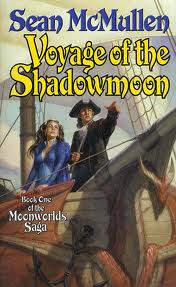
Sometimes I finish a story and realise that I could incorporate it as part of a novel. Queen of Soulmates was a story of love, longing, betrayal and mathematics that finished with all sorts of possibilities that could be explored further, so I later expanded it into the novel Voyage of the Shadowmoon. My 1999 novel Souls in the Great Machine had four earlier short stories in it. Would the novels have been written without the stories coming first? Probably not.
 By contrast, my story of time travel and music, The Colours of the Masters, was built around an idea which only needed about seven thousand words to tell it very nicely, and had no scope for further development. In the same way, some plots can only be told as novels. Before the Storm was very heavily character based and needed a lot of background to establish the 1901 Melbourne setting and society, so it could only work as a novel.
Scriptwriting has a lot in common with short stories, so I seem to be writing more short works now that I am also doing scripts. On the other hand, I’m also writing another novel because I have a great idea for a Regency steampunk plot. Stoke up that furnace, Heathcote, her batteries are running down…
What Australian works have you loved recently?
I have been concentrating on non-print Australian genre works for a while now, so this is probably not the answer you are expecting. Currently Australian companies produce about one movie in four that is identifiably SF, fantasy or horror. Although most are written overseas, this still represents a lot of Australian creativity in these genres, so I’m calling them Australian works and using them for my answer (My apologies for talking about some things that are not yet on release, btw).
Generally speaking the recent movie themes are fun rather than profound, but then we need a bit of fun. The Last Man On Earth features a girl telling her blind date that she would not see him again if he were the last man on Earth. In an echo of The Quiet Earth, she wakes up the next morning to find everyone on Earth but herself has vanished. In Iron Sky, Nazi spacecraft have secretly taken the Third Reich off-world in 1945, and now they are returning to give us a dose of deja vu. Speaking of carrying retro carnage on into the future, I, Frankenstein has Frankenstein’s monster become immortal, and pop up alive and well in the Twenty-First century. Rather cheesily, he is now called Adam. According to Ben Adams has the devil being so thoroughly outclassed by humans in terms of evil behaviour that he has a nervous breakdown and has to book himself into a clinic.
As I said, most Australian genre productions are written elsewhere, but occasionally something great comes out of a local story. Back in 1998 the Australian director Alex Proyas turned his vision Dark City into a brilliant movie with international stars and local production companies. Why are there not more locally written genre movies like this, while there are dozens of genre books from Australian authors being published? According to my calculations it costs about a thousand times more to fund a commercial movie than a commercial book, and this sort of money is generally not available here. Because most of the finance for the films comes from overseas, the scripts tend to come from there too.
I have been spending a lot more time on scriptwriting lately, and have had movie options taken out on six of my published works. Out of all these, one script for a short film, Hard Cases, has got as far as casting, and it probably has enough finance to actually go ahead. This is out of out of over a hundred stories and novels that I have had published, and a couple of dozen scripts that I have written. As I said, print is a lot easier and cheaper than media, but I like both so I do both.
Two years on from Aussiecon 4, the World SF Convention held in Melbourne, what do you think are some of the biggest changes to the Australian Spec Fic scene?
The massive expansion of social media and digital publishing are, without a doubt, the dominant factors. Fans are spending a lot more time on Facebook and Twitter, which are making authors accessible on a scale undreamed of even five years ago. This has pretty strong implications for promoting books, getting awards and everything else associated with publishing.
However, add this to online publishing and ebooks and we start to see the down side. There was a time that one person could get a book published for every thousand who wrote one. Now the whole thousand authors can and do get themselves published, so promotion has become a nightmare because there is just so much stuff out there. We authors with pre-existing reputations are not quite so badly off, because our names are recognisable, but talented Australian beginners have problems that were not even invented when I started writing, so they certainly have my sympathy. Readers have my sympathy too, because the ratio of drek to quality has increased enormously, making it much harder to track down a good read. Eventually some sort of literary spam filter will be developed and make someone very rich, but currently that particular app is just science fiction.
 This interview was conducted as part of the 2012 Snapshot of Australian Speculative Fiction. We’ll be blogging interviews from 1st June to 8th June and archiving them at ASif!: Australian SpecFic in Focus. You can read interviews at:
http://thebooknut.wordpress.com/tag/2012snapshot/
http://kathrynlinge.livejournal.com/tag/2012snapshot/
http://helenm.posterous.com/tag/2012snapshot
http://bookonaut.blogspot.com.au/search/label/2012Snapshot
http://www.davidmcdonaldspage.com/tag/2012snapshot/
tansyrr.com/tansywp/tag/2012snapshot/
www.champagneandsocks.com/tag/2012snapshot/
https://randomalex.net/tag/2012snapshot/
http://jasonnahrung.com/tag/2012snapshot/
http://mondyboy.com/?tag=2012snapshot

 Randomly Yours, Alex