What if there were more to The Odyssey?
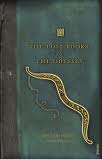 A number of reviews over on goodreads seem to have two things in common: the reviewer hasn’t read the source material, and they didn’t particularly enjoy this collection. I applaud someone for stepping out of their comfort zone, but I really don’t understand bagging something when the fundamental context isn’t understood. Because this really, really doesn’t stand stand with knowledge of The Iliad and The Odyssey, and it doesn’t pretend it even wants to.
I adored this collection, and I am fantastically thankful that I happened to pick it up a few years ago at the closing-down sale of my favourite bookshop (which has since reopened!). I’m not an author, but I would suggest that anyone who wants to write short fiction – and who has the background – should read this, because it does the short form in glorious, scintillating ways.
The Preface claims that this set of 44 stories translated from variations to the standard Homeric tale found in Oxyrhynchus. I’ll admit that for the first couple of stories I actually half-wondered whether this might possibly be true – I’d never heard of such a find, but Oxyrhynchus has been an incredible literary treasure trove; it’s not like I work consistently in the field so it’s feasible I might have missed hearing about it. I fairly quickly decided that this wasn’t the case, but it doesn’t matter in the slightest. I feel that Mason has stayed true to the core of the mythology, and what more could you want?
Some of the stories presented here are vignettes, others are more substantial stories. Most of them take aspects of The Odyssey and… shift them. Sometimes subtly, sometimes extravagantly, but almost always with that kernel that means it feels basically plausible to an archaic Greek mythological milieu. There are a few that stray beyond those bounds, but even those are wonderfully well written, so I don’t mind. They too help to build up sense of shifting possibilities, what-ifs and could-have-beens. There are a few stories that take aspects from other parts of Greek mythology and tie them, in convoluted but logical ways, to the Troy story; and just one or two that could feasibly be set outside of the 13th century BC, but not with any firm proof that they do so.
A review of all 44 stories would be tiresome and, in some cases, impossible without ruining the sheer pleasure of the reading act. Suffice it to say that Penelope gets some attention, Athene a bit more, and Calypso and Circe a lesser bit. Most of them involve travelling, which is naturally appropriate; some are in Troy and some on Ithaka. Sometimes Odysseus is triumphant, other times a coward, and occasionally seen through others’ eyes – like Polyphemus (sorry, bad joke). Once, Paris is Death. Occasionally, the reality of a two-decade absence is hinted at. Tragically, Hektor does not feature in any meaningful way.
This collection is wonderful and glorious and I loved it very much.
Brian Caswell: Merryll and Butterflies
I don’t know how, but I had forgotten about Brian Caswell until my sister linked My Sister Sif with Merryll of the Stones, and I realised that NO nostalgic trip to early adolescence would be complete, for me, without him.
 Merryll of the Stones has time travel, romance, dragons and other mythical creatures, and Wales. Also tragedy, but romance. Old book, and romance… yeh yeh ok, I actually am a total sap. Have we not realised that yet? Whatever.
Megan’s parents are killed in a car crash; she wakes up from a coma speaking Welsh, and conveniently having to go live with relatives in Wales. She meets unpleasant school girls, a mostly sympathetic but vague set of relatives, and the odd and intense Em. She then goes back in time to a period when Wales was being all mythological and warlike, and… there’s a prophecy, and mistaken identity, and struggling to find your way physically and mentally and emotionally, and it is JUST ALL AWESOME. Megan, so far as I recall, is an immensely sympathetic and believable character – not perfect, but aiming for the right; her relationships with the girls around her really resonated with me. Plus, yes, the awkwardness of her relationship with Em had a great appeal – dealing with his intensity and oddness, his secrecy and mystery but he’s neither a vampire NOR A STALKER. Just saying. And again plus, a really cool vision of ancient Wales. I’ve always had a thing for Wales and the Celts. This was absolutely one of my go-to books as a young girl. (And I currently can’t find my copy. I think my sister has stolen it.)
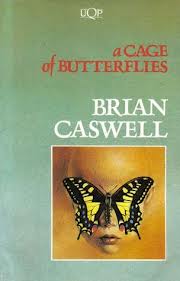 Cage of Butterflies is verrrry different in theme, but equally awesome and resonant in tone and characterisation. Super intelligent teens in a ‘think tank’ educational facility discover that just over there, in the bit of the institute they shouldn’t know about, is a bunch of babies with… abilities. Who do not like being kept in the institute and experimented on.
I remember this as being a bit more plot-driven than Merryll; the lead characters, Mikki and the boy whose name I’ve forgotten, have to find out about the Babies and then have to figure out what to do with/for them and then deal with some consequences (it has a bit of ‘much later…’ as the conclusion). And I definitely remember that as being exciting and tense the first time I read it. However, as with Merryll, the real draw is the characters themselves. Perhaps this won’t surprise anyone, but I was absolutely a square at school, and the idea of a place filled with really smart kids hanging out together and, while not necessarily just sitting around talking about books all day – there are still fights and awkwardness and general teen-type things – there’s no condemnation for being smart. That was a pretty exciting thing to read about. I liked the alternating point of view – girl and boy, who by the way rather like each other, ooh er, as well as working really, really well together and complimenting each other beautifully physically (the boy has, IIRC, something wrong with his legs…) and mentally (different strengths – and genuinely different, not better/gender based. Again, IIRC… maybe I’ve got rosy glasses towards this). It was a delight in general, is what I’m getting at.
Brian Caswell, I owe you a great debt for adding lovely gentle readable and believable romance and characters and story to my life.
Investigate Your Way Through Adolescence
There was a time in my life before speculative fiction ruled. Who knew?
I read a fair bit of Nancy Drew, but it hasn’t stayed with me. I don’t think my library had any Hardy Boys; I certainly never read them. That doesn’t mean I was at a loss for teen investigations, though. Oh no.
 #1. Trixie Belden
I was totally mad for Trixie Belden. I have no idea where I got them – probably an older friend of the family – but I know I read a loooot of them.
I used to imagine myself as one of their gang, and falling in love with Jim…! (or, since he was so clearly all over Trixie, I’d settle for Dan, the somewhat dour but very useful stable boy.) I loved that Trixie wasn’t the oldest, or male, but that she was clearly the leader of the group – even her older brother Brian usually followed her lead. Plus, adventures, and travelling around the country, and a cool group of friends with a variety of talents, and… yeh. Perfect. Plus plus, a lot of the investigations were actually very clever, and had neat little twists. Not that I remember very many of them, because they were a long time ago and I just read them one after another and they all blur together…
Words I would not know without Trixie Belden: jalopy. Also, that it was possible to have violet eyes (Di was not my favourite, but boy did I envy those eyes).
 #2. Alfred Hitchcock and the Three Investigators.
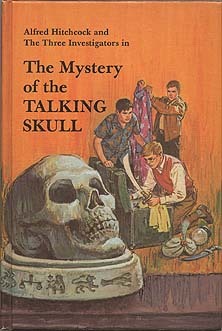
A series that I quite literally could not get my hands on enough of (because the library didn’t stock them).
I loved the three different characters who made up the team: Jupiter – smart and ‘chubby’; Pete – nervous and athletic; and Bob, the studious one. To be honest I actually don’t remember enormous details about them in any specific book, but I remember enjoying their conversations immensely and thinking that it was awesome how they were all so different but worked so well together. I liked the settings of the books – I seem to recall quite a few being set in/around carnivals – and I adored the intricacies of the mysteries they got themselves involved in. I liked that Jupiter was regularly underestimated because he was fat but that I the reader was very smug in knowing that his brains made up for any perceived deficiency – and clearly the people who thought poorly of him were villains or redshirts because everyone good knows Jupe is the leader. Duh. I really liked Jupiter. Plus, again, fun twists to the plot, some of which I even hadn’t already guessed for myself.
I’m still quite the sucker for police procedurals – also Shadow Unit – and I think I can trace that back here.
My Sister Sif
Look, I’ll just admit it up front, ok? I was not a horse-y girl. I could not understand Saddle Club; even though I wasn’t very maternal as a young girl, I still preferred Babysitters’ Club books over the horsey ones. (I also did not understand the appeal of the Gymnasts books.) But what I lacked in love for equines I more than made up for in adoration of dolphins. Yes, I was That Girl. I wanted to be a marine biologist for aaaages – until I discovered that they usually spend their time studying plankton, and only the luckiest get to swim with dolphins and make a living from it. I had (… have) dolphin jewellery, and dolphin statuettes, and… yes, you get the picture.
 Unsurprisingly, this story captured my heart and made it ache. Terribly. For many varied and heartbreaking reasons.
Riko and Sif go from Australia to their family home on a Pacific island, where it’s revealed (to the audience) that they’re related to mer-people. Who have a connection to dolphins.
There’s romance – for Sif, with a scientist, and for Riko a somewhat confused attempt from what I remember as being a not-entirely-human character, but maybe that’s my memory. There’s adventure – people doing suspicious things on their island, especially. And there’s character. Riko is wonderfully realised – rebellious, envious of her sister and desperately loving and protective of her at the same time, practical and down to earth and determined. Sif is the more fey – physically, having more of a connection to their mer-relatives, as well as personality wise; this is, I realise, something of a Jane/Lizzie Bennett pairing. Hmm. And in the end, there’s also a lesson to be learnt, which is done blatantly but also in a ‘you’ve seen all of this, isn’t it obvious?’ way: Riko goes home determined to change society, beginning with the children, to make it more like dolphins and less likely to destroy the environment… as is happening around the island, and which has helped bring about the great tragedy in her life. Which is the bit that made me cry. Which is Sif dying.
I remember incredibly evocative descriptions of the people and the places, I remember desperately wanting to BE Riko and try to save Sif, and I remember trying to swim like the mer-people are described as doing, too, to my embarrassment. On which note, this was one of the first serious attempts at explaining merfolk that I remember reading, and it still strikes me that their attempt to include their land-bound brethren is a remarkable one – developing breathing apparatus and the like. I think I still want to be Riko.
I should re-read this. I’m quite sure the power of Riko and Sif has warded off the Suck Fairy.
It’s Tansy’s fault I’m reliving these childhood memories. See this post for her love of Grange Hill…
Riddle of the Trumpalar
I mentioned in my last post that Lord of the Rings was not my first conscious experience of speculative fiction. I know that I had read some before I got to that point. The first book that I can consciously remember reading that counts as fantasy is The Riddle of the Trumpalar, by Judy Bernard-Waite (who I know now was not one but three people).
 Oh how I loved this book with all my heart. I’m afraid to go back to it now, for fear of the suck fairy, but it had a powerful pull on the childhood imagination of me. Twins, living in Sydney, get sucked into a Moreton Bay fig, where they meet the Trumpalar, who is not quite your normal living-in-a-tree dryad figure… and then up end spat out in the early Sydney colony, and have to help out one of their (maybe convict? I forget. Probably Irish) ancestors.
It’s a little bit Playing Beattie Bow, really, isn’t it? I bet they all came out round about the bicentenary.
Anyway: twins! time travel! even history! (although I didn’t know I loved history at that stage.) I was living in the tropics at the time so I didn’t know Moreton Bay figs from a rose, but since moving south – as an adult! – I’ve had a bit of a Thing for them. And let’s be honest here, an enigmatic figure living in a tree rather predisposed me to fall in love with Legolas and Lothlorien. I remember really enjoying the interaction of the twins – a boy and a girl – with each other and with their ancestor. My fuzzy memory tells me that their parents were actually alive and both around, although of course they lived in the present – but their mum in particular was cool. The Trumpalar I also don’t remember very clearly, although the picture above – which was the copy that I had – also made a strong impression on me. Check out that flowing grey hair! The strength and nobility of that nose! He may have had a book-lined study inside the tree… or maybe that was just my imagination.
I blame this as the beginning of my affair with fantasy. Thanks, all three of you, Judy Bernard-Waite.
Lord of the Rings: a child’s memory
Tansy is doing a series of blog posts this week in honour of Book Week about childhood reading and everything around it, so I thought I would add a few thoughts myself. And I am starting with Lord of the Rings.
When I was 12, I was in competition with a friend: who could read the most in that year. We decided it would be on both pages read and total number of books read, but books had to have over 100 pages. Now I got my total books up fast because I was reading a lot of Babysitters Club (I know, right?). However, they were short, and I was mighty competitive back then. So I looked at my parents’ book shelves and I picked the fattest book I could. And why yes, it was LoTR.
I had read fantasy before- that’s another post- but I had definitely never read anything like this. I don’t actually rememeber whether I had read Hobbit first or not… something says not. Anyway, I was blown away. I imagined myself joining the fellowship, and Legolas was my first serious book crush. I loved it so much I read it in 20 days, which was quite quick work for 12 year old me… and important in making sure that I didn’t fall behind in the reading competition, too. I loved it so much that when I started working as a checkout chick, my first major purchase was my own, one volume, not-falling-apart copy – and that was SO exciting. I loved it so much that for a while there, I read it every year; I think I’ve got up to about a dozen or so. This is one book that has had a genuinely long-lasting impact.
Weird fact: I listened to a cassette of the Beach Boys a lot of the time while I read LoTR the first time, such that I had flashbacks to the mines of Moria and the forests of Lothlorien in response to Little Deuce Coupe and California Girls for years after.
For those who care, I don’t think my friend and I ever decided who had won our competition. I think we might have got sick of it.
Galactic Suburbia 66!!
 In which we suffer post-Olympics slump but make up for it by talking about sport in SF/F: from coyote baseball, holodeck racquetball and the points system of Quidditch to the history of sport in Doctor Who. And don’t forget that Buffy was a cheerleader! You can get us from iTunes or Galactic Suburbia.
News
World Fantasy ballot released.
Mythopoeic Awards include Delia Sherman and Lisa Goldstein
New Science Fiction Awards Database Website by Mark R Kelly (Locus)
Kirstyn McDermott makes Jason Nahrung a mug based on Alex’s GS review of Salvage
New Galactic Chat: Sean interviews Trudi Canavan
Readercon Apology sets the standard.
Feedback: Sean & Kitty on the harassment at cons issue.
What Culture Have we Consumed?
Alex: Existence, David Brin; all of Planetary, by Warren Ellis; Caliban’s War, James SA Corey
Tansy: “Foundlings” by Diana Peterfreund in Brave New Love; Shooting the Poo 14 (Sherlock Holmes) & 15 (Alien movies part 1)
Alisa: Coode St Podcast Ep 112 featuring Genevieve Valentine, and… reading unapologetically is a life skill!
Pet Subject: Sports in SF/F
The tennis match Alisa refers to is this one with Billie Jean King.
Please send feedback to us at galacticsuburbia@gmail.com, follow us on Twitter at @galacticsuburbs, check out Galactic Suburbia Podcast on Facebook and don’t forget to leave a review on iTunes if you love us!
Existence: a review
 I believe this is the sort of novel that people might be thinking of when they suggest science fiction is ideas heavy but character and/or plot light. I’d never really understood that accusation of modern SF… until now. (I would have given it 3.5 if I could.)
It took me more than a fortnight to finish reading this. For fewer than 550 pages, that’s… well, for me that’s positively an age. I did consider giving up on it, several times in fact. But the ideas kept me coming back and made me determined to see it through, to see what Brin did with this sprawling, messy saga. And I think I’m glad that I did. Not absolutely positive, but probably.
Anyway, let me first talk about the positives. There are some really, really awesome ideas here. The basic premise that drives the plot is a first-contact one, but done in a fairly unusual way: a crystal snatched from orbit, activated by human touch and sunlight, that appears to contain alien life of some sort. The unfolding drama of the knowledge revealed – and how it changes, or at least develops, over time – and how humanity deals with it is a genuinely fascinating take on Fermi and all the other variations on “where are the aliens, what will they do when they get here, and how will we respond?” That’s the plot, boiled down to its essentials; and it was fairly intriguing.
Also intriguing was the world Brin set this alien contact against. If there’s a clear explanation of when this is occurring I missed it, but it seems to start only a few decades from now. Complete climate collapse has not occurred but is still very much on the cards; technology has continued to advance in leaps and bounds, towards smart-specs and similar toys imagined by cyberpunk so many decades ago but which still seem elusive in 2012; AI appears to have been achieved, along with other technological wizardry. I liked that there appeared to be variety in this world, in how people dealt with technology at least. I did not especially like the world itself, though – although this is not in itself one of the novel’s negatives. The world is not quite dysfunctional enough to be a dystopia – although that would perversely probably have been easier to read. Instead this is a world apparently divided into ten Estates not just determined by wealth but by allegiance to such abstracts as Science and The Media; a world where inequality is as, if not more, entrenched than today, with apparently few people acting against it, and added fears of technology on the one hand and the ‘Autism Plague’ on the other; frankly, a world that I hope does not come to pass. From an objective point of view, this is a fairly well-described world, although I am unconvinced of its realism.
The novel’s structure is linear chronologically and inconsistent in perspective. Numerous characters act as the focus over the 550 pages: the most prominent are a novelist, a journalist, a society lady, an astronaut, and a peasant. There are also excerpts of such non-plot devices as books and talk shows thrown in, which generally works. These different perspectives serve to give just that, of course – different perspectives on the world and on the events unfolding. Over the course of the novel, there was only one character that I particularly liked, and who did manage to get a word in for the entire length of the novel: the journalist, Tor. She had a fun role to play as the inquisitive, poking-nose-in type, despite various problems hampering her abilities.
This brings me to one of the problems in this novel – two, actually. One is the characters. Most of them weren’t necessarily unlikeable so much as they were unapproachable or uninteresting. Additionally there were a few characters who promised to be or do quite interesting things who just… disappeared. Their narrative stopped popping up, occasionally with little or no resolution to their particular quandary or arc. This was intensely frustrating. This is definitely not a novel for those who prefer their story to be character driven.
The second problem was the structure itself. It was often unclear, at the opening of a new section, exactly who was speaking or where the events were happening. Sometimes that was cleared up, and at other times it was left opaque and mysterious. And sometimes these mysteries resolved with later revelations, but there are still some bits that don’t seem to fit in at all, and really that just seems like a waste of words and my time.
Thirdly, there’s the world itself. I felt like Frank Poole, the dead astronaut who wakes up at the start of 3001: The Final Odyssey to find it’s a millennium later, and suffers a fair amount of culture shock. Now I love cyberpunk and far future stuff, so culture shock isn’t necessarily an unpleasant experience for me. But here, it just made me tired, and irritable. A new piece of technology? Cue eye-rolling and mutters of ‘really? more?’ – because it seems to be set in the near future (as someone one said, near future is within the reviewer’s lifetime), and therefore improbable. The technology may not have been so overwhelming, though, if it wasn’t for the language. Brin has messed with a lot of language to indicate how heavily reliant this version of the future is on computers, frequently turning ‘a’s into ‘ai’: aissistant, for example; or adding ‘v’, as in virtisement; or even combining both in vraiffiti. Add in a whole bunch of gobbledy acronyms (tsoosu=to see ourselves as other see us=viewing yourself through one of the innumerable cams in place in this world; hello, panopticon Big Brother), and I simply found it overwhelming.
Overall, then, this is a big-ideas novel that is let down by two-dimensional characterisation and what occasionally feels like deliberately obfuscating language.
Galactic Suburbia 65!
 In which we discuss gender at the Olympics and sexual harassment policies at conventions, fight about whether we should read the comments, and Alisa reads more novels than Alex & Tansy PUT TOGETHER. You can get us from iTunes or download from Galactic Suburbia.
NEWS:
Readercon harassment discussion:
Masterlist & timeline of links
Cheryl looks at the practical side of developing harassment policies for conventions
Translation awards winners
Travel Fund Mark II sends two Swedish authors to WFC.
What Culture Have we Consumed?
Alisa: Earthly Delights by Kerry Greenwood, Naked in Death by J D Robb
Alex: Stargate Universe season 1; Ashes to Ashes season 3; Silently and Very Fast, Catherynne M Valente; Birds of Prey: Death of Oracle
Tansy: X-Men S.W.O.R.D No Time To Breathe; Uncanny X-Men: Dark Phoenix (The Ultimate Graphic Novels Collection, not Marvel Masterworks as I said in the podcast, worth also noting that the US are more than 20 issues ahead of Australia); Besieged, Rowena Cory Daniells
For next episode: send us your favourite examples of sport in SFF.
Please send feedback to us at galacticsuburbia@gmail.com, follow us on Twitter at @galacticsuburbs, check out Galactic Suburbia Podcast on Facebook and don’t forget to leave a review on iTunes if you love us!
Embassytown: a meandering not-review
These are some random thoughts, often connected to thoughts about other Mieville novels I’ve read; it’s not a thorough-going review, partly because there’s just so much going on that if I tried to write one, I would leave something out and end up feeling annoyed or inadequate; and partly because other people – including the awesome Ursula le Guin! – have already written those. So I won’t even pretend to put myself up there!
Anyway…
Mieville writes urban stories. Here, and in other novels – pretty much exclusively, at least insofar as I’ve come across. There are ‘agricultural’, or non-urban, areas on this world, but even they feel quite industrialised, by modern Earth standards; they’re tamed, and seem to exist almost exclusively to produce for the city, having no existence outside of that. This aspect is neither here nor there in terms of the story, but it is interesting in terms of his focus across the entire oeuvre. Or at least, I think so.
 Also in consideration of all of Mieville’s works that I’ve read comes this observation: they’re all about obsession. Kraken obsessed over belief and social structure; Perdido St Station was obsessed with race; The City and The City was consumed with an obsession for truth on the one hand and blindness on the other. I’m not saying these were exclusive themes or foci, but they were significant and informed the entirety of each story. Embassytown is obsessed with language: how language works, what it does, what it allows. I think this is one reason why I loved it so much – I love language, and thinking about language, and thinking about how language constructs our world view and indeed perhaps even our selves. And so, clearly, does Mieville. The consequences of an entire race thinking about how to lie – not being able to do so, what that means for every layer of society but also for history and story telling and so many other aspects of human society – was totally riveting.
That all sounds mighty highbrow. Of course, as with the other Mieville novels mentioned above, this one works on multiple levels. I think it would be perfectly possible to read this as… not quite a straightforward narrative, because the structure itself isn’t entirely linear and straightforward… but it can be read without your mind being forced off into the philosophical byways indicated above (yanno, if that’s your thing. Me, I like the byways. The nicest flowers are usually there.).
The story itself reflects a post-colonial attitude towards what might happen when humanity spreads its collective wings and goes spreading its presence across the galaxy, thanks to a wonderful take on FTL. It’s not quite the drug-fuelled flight of Dune, it’s not quite the worm-holes of countless SF novels and movies, it’s… something a bit wilder, a bit more out-there, a bit more mysterious and weird and awesome. Ahem. Anyway, Our Heroine escapes from her annoying backwater of a weird human colony, out to the exciting wide galaxy… only to end up at home after a while, and then things get really weird.
Home is the eponymous Embassytown, and the particularly weird bit is how humanity communicates to the indigenes. With difficulty, and two people at a time, is the answer. Confusing? Somewhat. Eventually awesome? Absolutely.
I must admit that I found the first few chapters quite a slog, and if I didn’t trust Mieville to turn on the awesome pretty soon I may not have powered on through. But I did, and my faith was rewarded (obviously). One of the difficulties was the non-linear nature of the narrative. Past/future/present being entangled, chapter by chapter, is not a problem for me – I am constantly intrigued by stories that reveal a conclusion and then explain how characters got there; it’s like studying history, for me. What was a bit of struggle was not having a clear idea of sequence, or even – at the start especially – a clear idea of who was doing what. Like a palimpsest, though, Mieville built up the history/contemporaneity gradually and skilfully and rewarded just that bit of perseverance.
I loved it. It got my Hugo vote. I enjoyed the characters, I loved the intrigue of the humanity/alien interaction, I really enjoyed the philosophical challenges of language and colonialism. LOVE.


