Galactic Suburbia 48
After our producer went to the effort of getting this out almost minutes after we finished recording, this is a belated set of show notes…
 In which we save the Tasmanian Devils, take on the Classics, review cars, discover that toy fandom exists, plan to read LOTS of Australian women writers, and Wonder Woman still doesn’t have pants. You can get us from iTunes or from
News
Coffeeandink on The Erasure of women writers in SF and Fantasy
Mur Lafferty – My Problem With Classics
Open letter to publishers: book bloggers are not your bitches
Kate Gordon’s Devil Auction – help to save the Tasmanian Devils! (kitten pictures with TEETH)
Australian Women Writers Challenge – sign up now
Jason Nahrung posted a list of the books he plans to read for the challenge – let us know what yours are!
In association with this, Tansy produced a list of award-winning SF/Fantasy books by Australian women.
Please keep sending in your suggestions for a Galactic Suburbia Award – we hope to have a plan for this by our 50th episode and are loving reading the tweets and emails so far.
What Culture Have we Consumed?
Alisa: Bellwether by Connie Willis; American Horror Story; Yarn by Jon Armstrong
Tansy: Akata Witch by Nnedi Okorafor; Jingo & The Fifth Elephant by Terry Pratchett, Shortpacked, a webcomic about toy fandom, obsessed people, lots of GLBTQ characters and feminist commentary on pop culture such as this strip about False Equivalence.
Alex: Coode St podcast with Ursula le Guin, and also with Ian McDonald and Alistair Reynolds; Spook Country, William Gibson; One of Our Thursdays is Missing, Jasper Fforde; Pirates of the Caribbean 4!
Feedback from Kitty of Panel2Panel:
Reasoning With Vampires
Kitty’s post about why Marvel has no equivalent hero to Wonder Woman
TANSY RECS for DC comics that don’t treat women appallingly:
Birds of Prey (start as early as possible, either with the Chuck Dixon issues which are pretty good, or the Gail Simone run which is #56-108)
Power Girl: A New Beginning & Aliens and Apes – Justin Gray, Jimmy Palmiotti, Amanda Conner
Catwoman run by Ed Brubaker
Stephanie Brown Batgirl: Batgirl Rising, The Flood etc.
Secret Six, Gail Simone
Batwoman. Anything with Batwoman.
I HAVE NOT YET FOUND THE PERFECT WONDER WOMAN TRADE TO RECOMMEND. But I do think anyone interested in comics history could get value from reading her first year of adventures, available as Wonder Woman Chronicles Vol. One
Marvel dude saying we don’t have to have female characters
Please send feedback to us at galacticsuburbia@gmail.com, follow us on Twitter at @galacticsuburbs, check out Galactic Suburbia Podcast on Facebook and don’t forget to leave a review on iTunes if you love us!
One of our Thursdays is missing
Sadly, I have been Disappointed.

I was an early fan of Fforde – I adored The Eyre Affair and the next two, to the point where I actually went to an event to hear Fforde speak, which is not usually my thing. I’ve read the rest of the Thursday books and continued to enjoy them, and his other stuff too. So I was excited when I heard there was a new Thursday book.
It did not live up to my expectations. And the main reason is that it felt gimmicky. Which is a ridiculous thing to say because the Thursday books are nothing BUT gimmicks, yet here… it just didn’t work. Maybe there were too many, maybe I was hoping for more substance, maybe I haven’t read enough of the books Fforde was riffing off. I read it all the way to the end, because I did want to know how it was going to be resolved, but… I read it in 24 hours because it was a very easy read, not because I was utterly enthralled.
There were bits I enjoyed. This novel actually has a very clever gimmick at its core which allows for all sorts of interesting discussion: the book is not centred on Thursday Next at all. It is centred on the written Thursday Next – that is, the character playing her in BookWorld, the one who is acting for all of those readers who encounter Thursday in the first five books. Head hurt yet? Clever though, yes? So there’s a whole heap of discussion and some angst about how Thursday ought to be played, and – most humorously and self-referentially – discussion about the fact that the Thursday books are basically unread at this time in the (fictional) world, which itself has all sorts of consequences.
One of the gimmicks that I enjoyed at first but then wore thin was the discussion of BookWorld, where the vast majority of the novel takes place. I like this idea a lot, and there are some interesting insights into genre politics and so on. But it was never quite clear whether Fforde was trying to be subversive, in his discussion of genre and who was dealing well and who <i>should</i> be doing well and which genre had influence on each other etc etc, or… whether he was making observations and assumptions. Because he did both. Which got confusing, since – um, was that bit subversive, or do you actually mean that potentially insulting thing you just said about that genre? Which added a layer of annoyance I could have done without.
Look, if you haven’t read a Thursday book, don’t start here. DO read The Eyre Affair, because it is wonderful, even if – like me – you have read no Dickens. If you are a long-time Thursday fan, I can’t see me talking you out of reading this one. But… borrow it from a library, or buy it second hand.
I Shall Read Midnight
(Sorry, couldn’t help myself with that post title.)
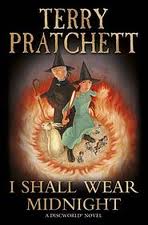 Is it heretical of me to say that I didn’t like this as much as other Pratchett novels? I feel bad for saying it. It’s certainly not that I disliked it – far from it – but I didn’t feel like it flowed as well as some of the other recent stories have.
Overall, I have loved the Tiffany Aching books a great deal. I love that we have followed a character from the age of eight or so, as she discovers that she has to do something that will set her apart from everyone else, and then goes through with it anyway. I love that that character is a girl. I love the way Pratchett has played with and inverted all sorts of tiresome notions from fairy stories and society more generally in writing these stories. I also love that Tiffany is a witch, because I adore the very concept of Headology.
Plus, Nac Mac Feegles for the win.
My issue is not with Tiffany. She continues to be a largely awesome character, who while dealing with adolescence can see the light at the end of that particular tunnel; who has mostly come to grips with being a witch, the burdens of that job and the expectations and responsibilities, while still being human enough to get intensely irritated by them sometimes. Many of the other characters were also brilliant – HELLO Granny Weatherwax and Nanny Ogg, making a comeback appearance! And a new witch, Mrs Proust, who is… all sorts of interesting. I would like to see her interacting with Vimes and the Guard. Or possibly Sybil. Plus the wonderful Preston, who is a totally ridiculous guard.
Also, Nac Mac Feegles. And more of Jeannie, the kelda, whom I love to bits. I love her attitude towards the Feegles… possibly because it reminds me of the way I would like to think that I deal with my students, it occurs to me.
Part of my trouble with this story is with the plot; not the details, but in some of the ways it gets places. There’s a feeling of disconnect between some sections, of moving too abruptly from one idea or action-scene to the next, which made me less than comfortable. I liked the vibe overall, though, of dealing with gigantic issues from history (quite literally) at the same time as dealing with very personal issues. The combination of “all witches are eeevil” with “how will I live with being a witch?” made a lot of sense, and the two complemented each other nicely.
My other minor issue was a feeling of repetition. Now I know, and usually enjoy, Pratchett’s habit of repetition – of phrases turning up again and again, of repeating information with slight changes in phrasing or emphasis. But, and I can’t point to exact instances so you’ll just have to believe me, here it fell a little flat. Perhaps there wasn’t quite the same twistiness, or… I don’t know. It just missed the mark a few times.
Still, it’s an enjoyable book, and I have no hesitation in recommending it. Because, yo, Nac Mac Feegles.
Spook Country!
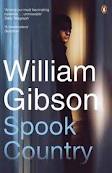 I read Pattern Recognition, which is loosely connected to Spook Country, last year, and got to the end thoroughly confused about whether it was meant to be SF or not. Partly this is because yo, it’s William Gibson, Master of Cyberpunk; surely it must be SF?? This is the sort of confusion I also have reading Karen Joy Fowler’s work, sometimes, and I have no doubt that both authors play on that tendency, in those who come with expectations anyway. But back to this novel – I did not have quite the same confusion here. Partly this is undoubtedly precisely because I was confused by Pattern Recognition, and have thought through things like “the SF vibe” etc enough to not expect overtly SF elements. But I think it’s also because there is actually less of said vibe here. Which is not to say that this isn’t an excellent story, of course.
Gibson takes several different narrative threads, all quite disparate, and weaves them together quite delightfully. A few times it was obvious where threads would tangle – which isn’t a problem, just an observation – and a few times they crossed in totally unexpected ways. The threads involve Tito, a young Cuban man involved in some shady deals; a man named Brown, who may or may not be government, whose point of view we never actually get (for which I am thankful) but whose movements are recorded for us by someone he has basically kidnapped; and Hollis Henry, who used to be a rock singer and is now trying to make it as a journalist. These three are really different and have necessarily different ways of viewing the world, and their interactions within it. The contrasting pictures of what is going on are nicely done – when you get into the groove of who is who, I don’t think you could mistake Hollis’ chapters for anyone else’s, nor the others’.
One of the interesting stylistic points here, I think, is that Gibson uses quite short chapters. I don’t have a problem with long chapters, but short chapters have a definite impact on the rhythm of a story, especially when a new chapter heralds a new point of view, as it does here. It definitely contributes to the sense of action and pace, which I enjoyed. Conversely, something which slows the pace a little but by no means detracts from the story is Gibson’s attention to detail. He describes some rooms intimately, and goes out of his way to name brands and describe clothing and buildings. I find this a really fascinating tendency, because it could potentially date the book very quickly. For now, though, it basically works.
Galactic Suburbia 47!
 In which we bid farewell to the queen of dragons, squee about 48 years of Doctor Who, dissect the negative associations with “girly” fandoms such as Twilight, and find some new favourites in our reading pile. We can be downloaded from iTunes or got at Galactic Suburbia.
News
RIP Anne McCaffrey (also some tributes)
48th anniversary of Doctor Who!
A website devoted to The Weird and created by Luis Rodrigues. The project is the brainchild of editing-writing team Ann & Jeff VanderMeer.
Critiquing the Bigotry of Twilight-haters, not the same thing as defending Twilight
Call for contributions/suggestions for our GS Award.
What Culture Have we Consumed?
Alisa: Once Upon a Time; The Courier’s New Bicycle, Kim Westwood
Alex: The Steel Remains, Richard Morgan; Blue Remembered Earth, Alastair Reynolds; The Glass Gear, in Valente’s Omikuji Project; also watched Thor.
Tansy: All Men of Genius, Lev A.C. Rosen; God’s War, Kameron Hurley. Comics: Marvel 1602 by Neil Gaiman (abandoned); Batgirl the Greatest Stories Ever Told
Please send feedback to us at galacticsuburbia@gmail.com, follow us on Twitter at @galacticsuburbs, check out Galactic Suburbia Podcast on Facebook and don’t forget to leave a review on iTunes if you love us!
The Steel Remains, and my attention is captured
I’ve been a big fan of Richard Morgan’s science fiction for a while now. When I heard about this (new in 2008), I was interested… and then I stopped being interested. It sounded too much like stock-standard fantasy: the down-and-out swordsman, the half-breed magician, and some barbarian. Really didn’t grab me.

I ought to have known better. I ought to have trusted Morgan’s sensibilities. I ought to have remembered what this man did with Takeshi Kovacs over the space of three novels, and realised that no way was this going to be some boring sword-n-sorcery weak-ass adventure.
I got the sequel, The Cold Commands, to review, and I figured if I was going to do it justice I should read the first book. So I sent my trusty sidekick to the library for it, and I opened it… and, of course, I fell right into this crazy world of ambiguous history and complicated characters.
There are three points of view presented turn-about, chapter by chapter, right up to the end where things finally come together. The down-and-out swordsman is Ringil, scion of an impressive family who are mortified by his homosexuality, while they ought to be bursting with pride because of his role in the recently-ended world-consuming war. The half-breed is Archeth, half-human and half-Kiriath, a race who have recently abandoned this world and taken most of their pretty technological toys with them; she too is homosexual, which adds (in the eyes of those around her) to her exotic, possibly dangerous nature and their disapproval. And finally there’s Egar, once mercenary for the sprawling and decadent Yhelteth Empire, now back home herding buffalo and sleeping with buxom young women of the tribe.
That paragraph highlights just some of the wonderful complexity and narrative twists Morgan places before the reader. It feels like one of those ten-years-later sequels, with its references to the war against the Scaled Folk (dragons, people, dragons; and Egar is known as Dragonbane) in which humanity was aided by the non-human Kiriath, with their technological mastery; now the Kiriath have left the human world, the alliance of disparate human empires and city-states is falling apart, and – of course – the veterans of that war are having to cope with a world that doesn’t necessarily appreciate their sacrifice or understand how they have changed. But it’s not – unless there have been short stories set in this world that I don’t know about, which is possible, this is a reader’s first introduction to it. It’s nice to be brought into a world that’s a complicated, messy place with seriously complicated history. It doesn’t always make sense, especially the somewhat complicated political situation, but Morgan writes with such finesse that I was quite confident it would all come together in the end. And it does… except for the bits that clearly pave the way for a sequel. And I can forgive that. Mostly.
So: the characters. Ringil is making ends meet in a village near his glorious last stand in the war against the dragons, getting pennies for telling stories, until his mother turns up to beg a favour in the form of tracking down a cousin who has been sold into slavery. This, naturally, turns out to be much harder than it sounds; in the first place it means going home and facing his father. And next, it brings him face to face (um… so to speak…) with something out of mythology. Archeth’s life is at the whim of the Yhelteth Emperor, Jhiral, being the left-behind Kiriath half-breed that she is. She goes where he wills if she knows what is good for her, which sees her in this case going to a harbour town where there has been a seriously weird sort-of invasion: sort of because someone/thing clearly came ashore and destroyed much of the city, but then… they went away. Archeth is very suspicious. The third protagonist, Egar, is on the face of it far less complicated than the other two. How complicated can herding buffalo be? … and then he insults the tribe’s shaman, and things go from bearable to fairly bad. With some supernatural prompting. (Seeing a pattern here?)
The plot barrels along at a brisk clip, moving neatly between characters and places, and the characters are captivating from the opening pages. Aside from those two aspects, the really intriguing part for me was the hint that perhaps this isn’t a straight-forward fantasy world at all. There are definite science fictional overtones, starting with the Kiriath and their obvious technological superiority, which is only regarded as sorcery by the clearly backward and superstitious; Archeth and others who fought with them are well aware that it is technology, created by creatures with superior ability, but not magic. Then there are the hints and allusions from various apparently-supernatural characters about other worlds, and travelling between worlds, and what that actually means. Consequently, I’m pretty wild to read the sequel, to see what Morgan does next.
Dear self: trust Richard Morgan. He knows what he’s doing.
Yellow Blue Tibia: a review
I received this book to review for ASif! Published by Orion, 2009.
 This novel is billed as an autobiography, “Konstantin Skvorecky’s memoir of the alien invasion of 1986.” Skvorecky had an established reputation as a science fiction writer in the USSR in the mid-1940s, when he and a number of other SF authors were called together by Stalin to write the story of a new enemy for the USSR, on the assumption that the defeat of capitalist America was nigh. Their task was to invent an alien nemesis that Stalin and the Communist Party could use as a focus for the hatred and fighting spirit of the people of the USSR. As quickly as this was all put together, though, it was shelved.
Skip forward to the mid-1980s, and Skvorecky is an old man, near-alcoholic and bitter. His writing career has largely been a bust, as has his personal life. All of a sudden, however, Powers That Be are taking notice of him once again – including some people whom he has not seen since those frantic weeks in the 1940s, creating Stalin’s new enemy. His (mis)adventures take him to Chernobyl, lead him to meet an intriguing American woman who is an ambassador for Scientology, and bring him into conflict with the KGB. All of this within the possible context of an actual alien invasion.
The above premise sounds delightfully intriguing. Even if these adventures were happening to an ordinary person, I would be anticipating at least an entertaining adventure, possibly with some discussion about the functioning of the USSR at this time. Add in the fact that the narrator is a science fiction author and Roberts appears to have all sorts of possibilities in front of him, of exploring how a science fiction mentality can influence perceptions of the world, or at least jokes about turning everything that happens to the character into a story.
Sadly, Roberts in no way lived up to my hopes. The opening section, with the SF writers comparing notes and striving to out-do each other in Stalin’s eyes, is a wonderful look at Stalin’s influence and the way that writers (sometimes) interact with each other. That’s 26 pages of 323. From there… Skvorecky was a soulless narrator, for whom I had little sympathy or time, not even a “I wonder what will happen to him next” car-crash fascination, largely thanks to the stilted dialogue. This problem may in part be attributed to wanting to sound like it has been translated from Russian, but that’s not enough of a reason to make me forgive it. More than that, Skvorecky is unpleasantly arrogant and boring. Events happen to him, and he is pushed around by them – which didn’t have to make him unappealing (just look at Arthur Dent), but added to dull dialogue and an overall frustrating plot, it just didn’t work .
Aliens being responsible for the Chernobyl disaster, as part of their invasion plans, and all sorts of possibly-crazy people – including a KGB officer – running around believing that there is an alien invasion underway: this has lots of potential for madcap adventure. It did not eventuate. It was not fast-paced enough to sustain my interest when the characters were unappealing; the diversions away from plot were not interesting discussions of life or politics or the writerly craft, which would also have mitigated the lack of pace, but were instead mostly boring discussions between characters about little of consequence.
This is not a book I can honestly recommend to anyone.
Galactic Suburbia 46 – bemusedly belated

Howie needs a Hat
This was meant to post last week!! I don’t know how it got stuck in drafts!!
In which we celebrate the World Fantasy Awards, take on the Kickstarter phenomenon and why people like to support authors/artists directly, Alex is betrayed by Isobelle Carmody, Alisa still can’t finish Tansy’s novel, and we indulge in a feedback frenzy. You can download us from Galactic Suburbia or get us from iTunes.
News
Realms of Fantasy sinks for the third time
Graham Joyce calls BFS Extraordinary General meeting December 9th –
Authors kickstarting their own projects:
Matt Forbeck – 12 novels in 12 months.
Laura Anne Gilman’s novella
CE Murphy’s novella
(mentions also of self publishing projects of Tracy & Laura Hickman, and Liz Williams)
Catherynne Valente’s Omikuji project looking for subscribers in order to keep the project going.
And Tobias Buckell talks about how just because you’re self publishing doesn’t mean you have to be a …
What Culture Have we Consumed?
Alisa: Power and Majesty by Tansy Rayner Roberts, The Courier’s New Bicycle by Kim Westwood
Alex: the Stone Key and The Sending, Isobelle Carmody; I Shall Wear Midnight, Terry Pratchett; end of Life on Mars S2; This is Not a Game, Walter Jon Williams; Distress, Greg Egan
Tansy: Ally Condie, Matched; Lisa Goldstein, The Uncertain Places; Gail Simone, Secret Six: Six Degrees of Devastation; Geek Tragedy, Nev Fountain
Feedback: well overdue!
Please send feedback to us at galacticsuburbia@gmail.com, follow us on Twitter at @galacticsuburbs, check out Galactic Suburbia Podcast on Facebook and don’t forget to leave a review on iTunes if you love us!
This is not a blog post
(Well, of course it is; but every chapter is entitled “This is not a…” and the trick is to figure out whether that’s the truth, or a lie, or a clue, or all three.)

This is not science fiction.
Well, it might have been when it was published – in 2008 – but I’m fairly sure that the requisite technology actually exists in the real world, now, to make everything (except maybe for the twist, but I’m not sure) actually work.
Dagmar Shaw’s job is writing ARGs – massively multi-player games where players access information etc on the web, but sometimes partake in real-world and real-time events, too. It’s all about puzzle-solving and cross-referencing with other players to figure out what the next clue is and how the game’s story is going to unfold. When things go wrong for Dagmar, she finds herself tapping into this Group Mind, and the possibilities inherent in having several tens of thousands of people – bored people with access to the wonders of the internet – willing to work for you are demonstrated.
It’s not the sort of game I can imagine myself being involved in, but I absolutely understand the appeal. One of the neat narrative tricks Williams uses is including message forum threads, so that the players’ points of view become part of the narrative; they’re nice little vignettes. I know that there have been some attempts, usually connected with marketing (which this is too), to have real-world/web crossovers, but I understand they’ve not always been that successful. Williams suggests one way of making it successful: better writing, and better narrative.
I like Dagmar. I read the sequel to this (Deep State) first, which is something that I almost never do, and while the idea of this sort of game is intriguing and I wanted to see how it started, it was Dagmar that was the clincher. It’s not that she is that unique or anything, she’s just an engaging and absorbing character. Which is really nice.
Overall this is a highly entertaining, fast-paced, well-detailed and appropriately twisty story. It’s probably not the sort of book to read twice, because of the twists and turns, but I thoroughly enjoyed it.
The Sending: Obernewtyn book 6
This review contains spoilers for the previous five books.
It’s important to say at the outset that this is not the book I thought it was.
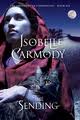
This is not the final book of the Obernewtyn Chronicles.
I knew that Carmody had wanted to split the last book in half, to properly tell Elspeth’s story; I thought that meant books 5 and 6. No. It meant books 6 and 7 – number 7 being The Red Queen, due out next year. I realised that this book could not be the final one with around 100 pages (of 750) to go. Having just inhaled the other five in preparation for a grand finale, it’s fair to say that I was a little peeved when I came to that realisation. I will try not to let this frustration colour my review….
Let’s recap where we left Elspeth and the Misfits in 2008, with the last book (The Stone Key). Dragon, heir to the Red Queen, is missing, as is Miryum the coercer-knight with the body of her would-be suitor Straaka.The farseeker Matthew is still a slave in the Red Lands. The rebels have destroyed the Council and set up a democracy in its place, with many of them being elected in their cities; the Misfits are slowly, slowly being accepted by society. The Herder Faction has been routed from Herder Isle (sorry, Norseland) thanks to Elspeth. Elspeth has broken Ariel’s hold over Rushton, so there’s no more agonising over he loves me/he loves me not. Sador is basically friends with the Land, and they’ve agreed to send ships to the Red Land to help stop Salamander and the slave trade. Anything else? Maruman is as cranky as ever and oh, Elspeth is only a little closer to having all the necessary keys for stopping a second holocaust from happening.
Elspeth’s quest as Seeker has dominated the plot of the last couple of books; her attempts to find the keys and signs Cassandra left behind have been the motivating force behind most of her actions. Either that, or instructions from the futuretellers, which themselves generally move her quest forward too. The pattern seems set to continue here, with Elsepth having raced home at the end of book 5 on instructions from the oldOnes. Then, for the first half of the book, she finds that she must hurry up and wait as Seeker, while fulfilling her function as Guildmistress and master of Obernewtyn in Rushton’s absence. Important things are happening around her: politically, there are moves to ensure Obernewtyn’s place in the Land is confirmed; people come and go, unexpectedly or not; relationships are formed and changed and, in some cases, severed. But the Seeker’s quest seems a bit stalled, because although the ships are getting ready to go to the Red Lands, where Elspeth and futuretellers have seen Elspeth and Dragon together, Elspeth does not have all of the necessary keys to stop Sentinel from awakening. Plus, Dragon is still missing. Which is a problem.
The first half is light on big action scenes. Some of the most interesting action continues to happen in Elspeth’s dreams, where she learns yet more about the Beforetimers, Cassandra and Hannah (although I was disappointed to see that the publishers have altered the formatting, such that the dreams are no longer in smaller type; this was a marvellous way of making such an experience obviously different from the waking world). That’s not to say that I didn’t enjoy the first half, because Carmody is by and large a skilful writer who makes it very easy to convince one’s self to ‘just read one more chapter’ (although her love scenes are a bit perfunctory). And as I mentioned, there are important things happening – it’s just that most of them in the personal arena, which the Obernewtyn Chronicles really focus on the most. While there have been major battles and a revolution in the preceding books, Carmody has shown herself to be far more interested in people: how they react to falling in love, losing a loved one, meeting foreigners, having prejudices challenged, or running a small community. Or, indeed, being told that you are the only hope for the world in the face of a second holocaust (no pressure). I do think that this volume could have been trimmed down, because there was a lot of repetition of Elspeth bemoaning her fate and going over and over the things she has learnt and still must find out. I understand that that’s probably quite realistic – humans, as Maruman is fond of saying, do constantly gnaw at things, usually unhelpfully. It just got a little boring.
The second half changes things, although I can’t explain how or why without spoiling things terribly. Just take my word for it. There’s a bit more action, a few revelations and a couple of resolutions, as well as a whole new raft of problems to deal with. Unsurprisingly. There is some character development, although Elspeth’s development as a human has stalled somewhat. She doesn’t seem to change much any more, especially in comparison with the first three books. Perhaps that’s an unfair comparison, given she was in her late teens then and there were major upheavals in her life to force change – but I certainly didn’t stop changing when I got to my twenties. Perhaps this too is a result of her quest having not quite stalled, but certainly slowed down.
I have been and remain determined to see Elspeth’s quest to the end, but it would be harder to continue reading if the world’s history were not so enthralling. It’s a post-nuclear holocaust world, and I love that, unlike a book such as John Wyndham’s Chrysalids, mind powers are not a result of mutation caused by that holocaust. Carmody keeps revealing more and more of the Beforetime, the end of which is some time – possibly centuries – into our own future. (It’s depressing to think that there might still be a need for a balance of terror at that point.) The hints that Carmody gives about cryogenics, and gene storage, and computers, are really cleverly done. I seriously hope there is resolution of Cassandra’s story, and Hannah’s, as well as Elspeth’s, in Red Queen. The world itself – or at least ‘the Land’, where Elspeth lives – is perhaps a little hampered by having initially been developed by Carmody as a teen; I don’t find it that rich or compelling. The lands of Sador and the Red Lands, introduced later in the series, are certainly more foreign and interesting. (I presume I am not the only one who spends half their time trying to figure out where in our world these places correspond to.)
This is not a stand-alone book, so do not pick it up if you’re curious about Carmody’s work. If you have been on this journey with Elspeth for a while now and are desperate to see just how Carmody is going to tie all of those threads together, then of course you have to read it… but, I would suggest, wait for the last book to be published.

 Randomly Yours, Alex