Damascus: Taste of a City
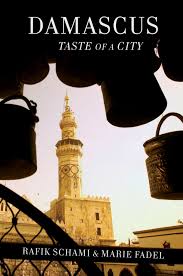
Some time ago I got a bit carried away: I discovered Haus Publishing and their astonishing range of “travel” books, and it’s fair to say I bought quite a few. This is one of them. I had never heard of Scami before, and I didn’t really know what this book was about, but I figured someone talking about Damascus was likely to be fascinating.
Schami is an author, and Syrian, and (at time of writing) had been living in exile in Germany for decades. This book is (he says) essentially transcriptions of phone conversations he had with his sister, Marie: she wondered around their part of Damascus – the Old City, the Christian Quarter – and described what she was seeing, hearing, smelling, remembering. Alongside that are the recipes. Apparently Damascenes are well known for their cooking. The book collects recipes from friends, relatives, and associates of Schama’s family, alongside incidental details about how it can be served, why this person makes the best one, and so on.
It’s very close to walking with a resident, which of course is the point. It’s also an insight into familial and friend relationships – people that I will never know, with complexities I can never understand and which can only be hinted at here, but which speak to a vibrant city that is one of the oldest continually inhabited cities on the planet. It’s almost but not quite voyeuristic – it’s gossipy, for sure, but for me it stops short of being intrusive, so I didn’t feel uncomfortable about knowing these details of people’s lives.
I can’t wait to go back through the book with sticky flags, figuring out what to cook from it.
The Baker’s Book
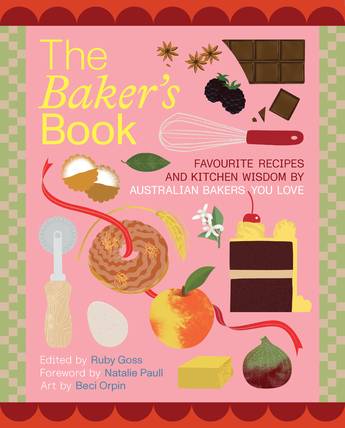
I received this book from the publisher, Murdoch Books, at no cost. It’s out now; RRP$45.
I am remiss in reviewing this book! My excuses are a) being away for a couple of weeks, and b) finding opportunities to bake things when there’s not many people around.
I am not particularly an aficionado of the Australian baking scene. In fact, I think there might be only one place mentioned in here that I know (more on that later). Thus I do not know whether this is a representative, or interesting, or eclectic set of bakers. I can guess that they are, based on recipes, but I don’t know for sure. What I can judge, though, are those recipes, and I can say: it’s a fascinating selection. There are easy things and quite hard things; ingredients I’ve never used, and equipment I won’t bother owning, and takes on old favourites. There are savoury recipes but mostly sweet, and recipes for different occasions. There are also personal reflections from the bakers: about their personal journeys, or perceptions of baking, and often how those things relate to life in general. It’s a really nicely constructed book, both in contents and in physical appearance.
Recipes I have made:
Continue reading →Middle Eastern Feasts
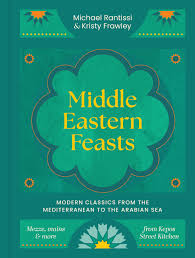
This book was sent by the publisher, Murdoch, at no cost. It’s available now (RRP $39.99).
I can imagine someone telling me that I have enough Middle Eastern cookbooks in my life. They would be wrong.
I have never heard of Kepos Street Kitchen, presumably because I am not a Sydney-sider, so I have no connection with the recipes in this book that are apparently iconic at that restaurant. But that makes no difference in actually browsing and enjoying these recipes, so don’t let that put you off. There is a delicious range of recipes to try, and pretty much all of them are approachable.
Chapters in the book include Brunch, Mezzo, Salads, Feasting, and Dessert. So that was already a good start.
Recipes I have tried:
- Zucchini, sujuk and labneh omelette: I subbed in locally made chorizo for the sujuk. I think this is more like a frittata than an omelette (it’s finished in the oven) and it was fantastic.
- Bourekas (Middle Eastern sausage rolls): I was intrigued by this idea. Uncooked mince with some flavourings, rolled in strips of puff pastry and then curled into snails: magnificent.
- White bean dip: very easy, very tasty.
- Green beans with goat’s cheese, almonds, and lemon: the perfect way to serve beans. No notes.
- Za’atar pita bread: I love making bread, and I love za’atar, so this was always going to be a good choice. The pita recipe is very easy.
- Yemenite pan roti: my one failure. I’m not sure whether it was my fault – maybe the weather was too humid? – but I did also find the instructions a bit hard to follow. Stretching the dough was not as straightforward as it sounded from the instructions, and it wasn’t clear how the folding was actually meant to work. The roti tasted fine but they didn’t have the layers that they should have. I may try this again at some point when I have the nerve.
- White bean and sumac salad: delicious. Any opportunity to use sumac is a good thing.
- Broad bean, tomato, and cumin seed salad: without doubt the greatest discovery from this entire book. I grow broad beans every year and am always looking for new ways to use them. Why the title doesn’t also include the preserved lemon which I think is the star is beyond me. I will be making this salad a lot.
- Hot-smoked salmon and potato salad: another salad I have already made several times. Also includes boiled eggs, olives, sukkah and parsley. The perfect summer salad.
- Chicken chermoula: it’s just a recipe for chermoula, which is then used as a marinade but it was still pretty good. I also used the chermoula for prawns which was delicious too.
- Persian meringue cake: I had no idea how this would turn out, and the answer was “unbelievably delicious.” I made halvah to go in it (because I had been wanting to try making it for ages); it ended up too crumbly and so you couldn’t taste it. The recipe calls for a white chocolate glaze and even I, with my insatiable sweet tooth, think that would be a gigantic step too far. When the cake already includes halvah, dates, rosewater and nuts – in a meringue cake – adding white chocolate seems… irresponsible. But I will be making this cake again, oh yes.
This is a delightful cookbook. It’s not particularly breaking new ground, but it does have some delightful flavour combinations, and I am not sad to have it in my library.
Mexico in Your Kitchen: Mely Martínez

I received this book from the publisher, Rock Point (part of the Quarto Publishing Group), at no cost. It’s available now, $45.
I’ve been making my way through this book for… a while now. But: life. Anyway! Now I’ve made enough of the recipes to be able to say that yes, this is a cookbook I’ll be keeping; there are several recipes that I expect will become staples.
How I got to now without a Mexican cookbook in my house is something I can’t quite believe, but here we are. I’ve made bits and pieces, but just by looking recipes up after having something particularly good at a restaurant. Oh, and one of my lockdown purchases was a tortilla press, at a time when a local Mexican supplier had a deal on (press + 3x1kg bags of corn meal). So I’ve now been inspired enough that I have bought more corn meal, Mexican oregano, some dried chillies, and Mexican chocolate…
The first thing to know before you rush out to buy this as your first Mexican cookbook is that it is Martínez’ second book. This means that it does not include some of the more basic, fundamental recipes; she includes a list of the recipes from that first book, and it’s things like tortillas, Frijoles Refritos (Refried Beans), and Pico de Gallo. So if you want the very basics, I suspect it’s actually a good idea to get that first book (The Mexican Home Kitchen), which I don’t personally own but I assume is as good as this one.
Martínez starts with an overview of Mexican food customs, and then – ever-useful for folks looking to cook outside of their usual customs – “The Mexican Pantry”. This section doesn’t just explain foods that the reader may be unfamiliar with (in my case, nopales); it also talks about how particular foods (eg carrots) are used in Mexican cuisine. There’s an entire section on Peppers; living where I do, many of these are inaccessible, but it was useful to see which are hotter than others, so I can make adjustments as necessary.
So, things I have made!
- Chilquiles: actually a breakfast food, but we had it for dinner. Fried tortillas, avocado, refried beans, a tomato salsa… this was totally delicious.
- Papas con Chorizo (chorizo with potato): hilariously, thanks to a mistake with my butcher, I did not get my chorizo… so I made this with bacon instead. And it was fine, but it would be better with chorizo.
- Chilorio: pork shoulder, simmered for an hour, then cooked with a sauce made from peppers and various spices. Super tasty, super easy; almost a breakfast, but this Anglo-Celt can’t come at that.
- Spicy Pork Short Ribs: didn’t make this with short ribs, because this isn’t a common cut in Australia, as far as I can tell (at least not in my area). But it was delicious nonetheless: simmering the pork and then frying it in its own fat is intriguing and excellent.
- Tuna empanadas: delicious also! Empanadas are very easy!
- Tilapia a la Veracruzana: I don’t think we have tilapia, so I used rockling. Fish, capers, olives, tomato… you’re not really going to go wrong.
- Enfrijoladas: same deal as enchiladas, but the sauce is made with beans (frijoles), rather than a tomato or pepper sauce. The things you learn! Stuff tortillas (cheat and use bought wraps) with (store-bought) roast chicken, top with a black bean sauce and avocado… fancy as! And super tasty.
… and there are still more I haven’t made yet. Recipes are generally well written, with clear instructions and times. Photos aren’t the most stylish I’ve ever seen but they do convey what the end result should look like. I’m looking forward to a lot more Mexican in my life. (Anything to facilitate more avocado.)
Deliciously Ella: Healthy made Simple
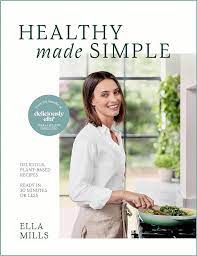
I was sent this book by the publisher, Hachette, at no cost. It’s out now; $34.99.
I had heard of Deliciously Ella, but have never seen the original book nor made use of the website. This is my first encounter with Ella Mills. And the first thing I should note here is that this book is not designed for me. I don’t need convincing that eating vegetable is a good idea, and I loathe the word “wholefoods”. While I know that all cookbooks are in some way aspirational, and advocating some sort of lifestyle (yes, yes, thinking about Nigella…), the sort of lifestyle being shown here is definitely not for me. There’s a lot of beige, a lot of jewellery while saving up food… and I rather object to using your kids as props in your book.
So, yes, I was rather suspicious going in, I’ll admit. However, the premise of the recipes themselves is one I can get behind: 30 minutes or fewer for every dish, no more than 10 ingredients, and no more than 5 steps for each dish. There’s absolutely a place for that sort of cooking, and if you can show me some clever combinations of ingredients, then I am 100% here for it.
The good:
- avocado and butter lettuce salad with a crunchy protein topping: Ok, I object to the ‘protein’ in the name, but I’ve now made this several times and I’m keeping it. Basically, avo and soft lettuce, with oil and Dijon dressing, and then toasted chickpeas, sunflower seeds, and pepitas on top. Genuinely delicious.
- 15-minute black dahl: some lentils, tomato paste, coconut cream and curry powder blitzed together, and then cook that with more lentils and onion and spinach. I was pleasantly surprised.
- creamy paneer-inspired tofu: look, I just made this with paneer. Spices and tomato and spinach and paneer. It was fine.
… there are a few other recipes in here I could imagine making, but the reality is that for me, there was really nothing new. If you were just starting out on the idea that you might want to cook for yourself, and wanted to make things that were fast and easy and you were pretty sure were healthy, then this would be a really great book. Also, lunches where you’re pickling onion?? Where the prep time is 15 minutes?? And the TIP is that you can make it a ‘packed lunch’? I know lots of people are working from home still, but surely that’s unrealistic.
I will note that I object to the inclusion of breakfasts in a book like this. Yes they’re “prep ahead” but that just means that you’re adding yet another thing to your to-do list for the night before, when this book is selling time-saving as one of its advantages. Suggesting that breakfast must include something you’ve made, rather than cereal or what have you, is a bit frustrating. Still, at least it does include a few treats, like biscuits, so it’s not completely on the ‘no fun food’ train.
Flavour, by Sabrina Ghayour
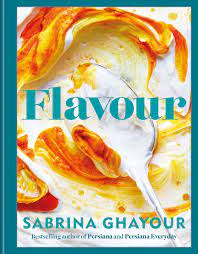
This book was sent to me by the publisher, Hachette, at no cost. It’s out now, RRP $45.
I have reviewed three of Ghayour’s previous cookbooks, and own all of them. I am confident to say that if I was only allowed to own one writer’s cookbooks, I would be incredibly sad AND I would choose Sabrina Ghayour.
As with all of her books, this one is laid out beautifully and the accompanying pictures are appropriately mouth-watering. Few of the recipes have really extensive ingredient lists; Ghayour is definitely in favour of simplicity and being straightforward. Where there is a longer list, it’s generally herbs and spices, most of which I would regard as accessible in Australia. There are a few points where there’s a translation necessary for Australian audiences – I believe pul biber is usually sold as Aleppo pepper here; and when Ghayour calls for “four preserved lemons”, she does not mean four of the my one-doesn’t-fit-in-your-palm homemade preserved lemons. Ghayour has continued here something I’ve loved from the last couple of books: a suggestion or two of what you might serve with the present recipe – a salad to go with a meat dish, for instance. I love that she has given thought to which flavours complement one another.
The chapters include Salads; Little bites and Savoury treats; Meat, poultry, Fish and Seafood; Vegetables and Pulses; Pasta, Noodles and Grains; and Sweet. Recipes are clearly marked Vegetarian and Vegan.
Things I have made:
- Dried Lime and Spice Marinated Lamb chops – I used steak, because I just cannot be having with chops. I had never blitzed dried limes before but they are a flavour BOMB and this was absolutely delicious.
- Lamb, Dried Fig and Preserved Lemon Tagine – going on high rotation. Love a good casserole, and the flavours are fresh and unctuous.
- Crispy Sticky Harissa Lamb – also delicious. Honey, rose harissa (I bought some because of Ghayour, and it’s great!), rice vinegar, soy and cornflour for the sauce.
- Pan-fried Salmon with Barberry Butter – I have barberries because of a meatball recipe or two, but this is another excellent way to use them.
- Root Vegetable, Chickpea, Feta and Barberry Tart – O.M.G. This was amazing. I think we ate it for three? four? meals in the week. Filo pastry, parsnip, carrot (I didn’t use celeriac – I don’t think it’s that accessible here). This is AMAZING and I LOVED IT. SO EASY.
- Creamy Spiced Sausage Pasta – the creaminess is from mascarpone, which I was surprised by and it was really good. You get the sausage out of its casing, which is always the best way to use it, and then it’s tomato and spice and the mascarpone.
- Harissa, Tahini and Lamb Spaghetti – another to go in high rotation. I was surprised by the harissa and tahini together, but it was brilliant.
- Mushroom Spaghetti with Creamy Pistachio and Garlic Sauce – yes, I know, it’s boring but this is another banger. The creaminess is from tahini again, and it works amazingly with the pistachio. I added some snow peas and asparagus, because I have an abundance, and used noodles instead of spaghetti because I had none.
I haven’t made any of the sweets yet, but I am eyeing off a few; and there are several other recipes that I already know I want to make. This is a great cookbook.
River Cottage: Great Salads
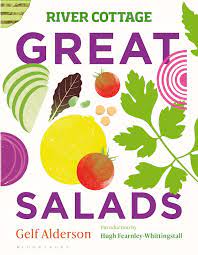
I received this book from the publisher, Bloomsbury, at no cost. It’s out now.
So I’ve had this book in my kitchen for a few months now, and I just… keep not getting around to reviewing it. Obviously. And there are a few reasons for that. December and January were a hectic time for a variety of reasons, and although summer does mean salads I only used this a couple of times. Which leads into the other reason for why it’s taken me so long to review it: I haven’t been that inspired by it. That is, I like the idea of what this book is doing, but a lot of the specific recipes just… haven’t grabbed me. And I do think this is a me-thing, not the fault of the book.
Partly, I think it’s because this is a British book. There are ingredients in here that I either don’t know, that would be hard to get, or that I just don’t love. Buckwheat groats; gooseberries; chicory; kohlrabi… they’re not in everything, but I do find it off-putting when I browse through. So that’s one thing – a me-thing. I’m also not a massive fan of sweet things in salad, which is totally a me thing, and the idea of raspberries with tomato just seems appalling! Perhaps, too, I’ve just been a bit sluggish (heh) with salads lately. As I flick through, I am reminded that there really are salads in here that I would enjoy. So I should try them.
A few that I have tried, and really enjoyed:
- Zucchini, toasted buckwheat, goat’s cheese and dill: didn’t use the buckwheat… don’t remember what I used instead, actually. Hmm. Hmm. Maybe chopped almonds? It was good, anyway. Zucchini and goat’s cheese FTW.
- Fennel, celery and apple with creamy almond dressing. Delicious.
- Barbecued leeks, spelt and sunflower seeds: BBQ leeks! So good. Again, didn’t use spelt; think I used barley instead.
- Charred zucchini, broad beans, snow peas and fresh curds: the fresh curds made me impatient; I did it, but I wouldn’t do it again – didn’t think they lent anything much to the salad.
Yeh yeh, I just need to challenge myself, and actually try more of the recipes. If you’re interested in varied salad recipes, then I suspect this will be a good book for you; there’s definitely combinations I hadn’t thought of, and many of them really do intrigue me (cavolo nero with peach – hmm – and cashews and goat’s cheese… curried roots with pearled barley and parsley…).
Bake, from Paul Hollywood
I received this from the publisher, Bloomsbury, at no cost. It’s out now; $52.00 for the (very lovely) hardcover.
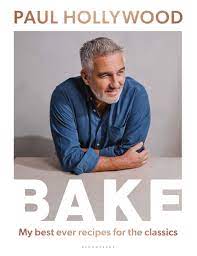
I’m not naturally a celebrity chef fan, and I was late to the Great British Bake-Off. But I do now love GBBO, and I enjoy Hollywood’s style within the show as a rule; I also own his bread book because it has a very good range of styles, and is accessible. So I was quite interested to receive this and see what it contains.
First, in terms of appearance: this is, unsurprisingly, a very pretty book. I love a hardcover – although I’m a bit sad this is lacking a ribbon. Just one of those things I like. Anyway! The recipe pages are entirely standard, so they’re perfectly easy to read and follow; the pictures are nice and appealing. There are a few recipes that have some step-by-step photos – croissants, for instance, and the meringue roulade, which didn’t seem to need it as far as I was concerned.
There are six chapters: Cakes, Biscuits and Cookies, Breads and Flatbreads, Pizzas and Doughnuts, Pastry and Pies, and Dessert. There’s nothing especially revolutionary or new in these sections. The subtitle is “My best ever recipes for the classics” and that’s exactly what this delivers. So if you want a surprising take on ginger nuts or a revolutionary way of making croissants, this is not the book for you. Instead, I would class this as your second baking book. It’s not the book for a novice; there are some assumptions about techniques and so on that would stump someone who’s never baked. But for a person who enjoys baking and wants a book with a good variety of recipes – ones to make all the time and ones for occasional adventures – this is pretty good.
What I’ve made:
- No cakes yet! Just haven’t had the inspiration. But I have my eye on the Chocolate Orange Banana Bread.
- Biscuits: Hazelnut and Apricot Cookies are excellent and will go into steady rotation. The Double Chocolate Chip Cookies were fine, but probably not better than others I already make. The ginger biscuits were exactly what they should be. I’m quite interested to try his scones, just to see how his method works.
- Bread: I made his baguettes! Which was time consuming although not a lot of work. I think I over-proved at one stage? They still tasted ok, just not a great shape. Excellent tip: I froze a couple, and then defrosted and ‘refreshed’ for a few minutes in the oven, and they were really good!
- Pizzas and Doughnuts: haven’t been making pizza recently (don’t ask; we haven’t found the required bits for the pizza oven…) and I cannot come at deep-frying doughnuts.
- Pastry and Pies: I love a pie, so I’m looking forward to making some of these; it just hasn’t happened yet. The recipes look excellent and fairly doable; I’ll probably even make the pastry, at least a couple of times, to see how that goes. I HAVE, though, made the danishes! Just to say that I have, and that I can. I wasn’t in love with the pastry – it seemed a bit too bready, and not flaky enough, so I’m not sure if that’s me or the recipe. It’s a long and drawn-out process, but not too hard. The one thing I was cranky about was making the creme patisserie. The recipe says mix ‘until thickened’. Now I’ve been making a lot of custard, so I assumed I was going to that consistency and it would thicken a bit more when rested. Nope. I ended up having to warm it again to thicken it further, because it went absolutely everywhere when I tried to put it on the pastry. This is one reason why I don’t think this is a novice’s book.
- Dessert: I made the meringue roulade (with berries, not mango). And it’s easy as, and very tasty, so this is going on the make-again list for sure..
The Year of Miracles (recipes about love + grief + growing things)
I was sent this book by the publisher, Bloomsbury, at no cost. It’s out now; $44.99.
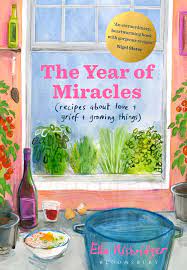
The memoir / cookbook genre is not one I knew I needed, but it turns out I do. When it’s done well, anyway. Looking over other food-type books I realise I do own a couple. I think I hope it accrues even more examples, and that they will be as well written as this.
Firstly, this book is gorgeous. The front cover there gives a sense of the illustrations – watercolours, I think? – that appear throughout the whole book. It’s a memoir of a year, and each month is a chapter and the first page of each gets a lovely, representative image; so do most of the recipes, and the headings for each get a band of colour. It’s the sort of book that’s a delight to literally flick through as pops of colour jump out.
Also: it has a ribbon. All cookbooks, and indeed every hardback, should come with a ribbon. It’s a fact; I don’t make the rules.
I haven’t read the first of Risbridger’s memoir/cookbooks (but watch me watch out for it now) so I don’t know about her life as described there, beyond what you glean from this one. But the prologue explains that her partner died a couple of years before, and at the start of 2020 (oh, what a phrase that is just resonant now) she has moved into a new house with one of her best friends to try and start anew. And then, you know. 2020 happens. But as we also know, life continues, and continued. Friends still exist and people still need to eat and plants can be planted, and love still exists. And this is really what the book is: a meditation on all those things. Risbridger reflects on grief and love, and coming to terms with the messy realities of how people affect us for good and ill – and how even when we love people we can resent doing things for or with them but simultaneously not resent it thanks to that love. Risbridger seems very honest in these pages. Memoirs are not my natural reading fodder but this one, I enjoyed.
The other aspect is the food, of course, and reading the recipes was also a delight. I am not the person who reads recipes for fun, as a rule, but these ones I did because Risbridger brings a chatty style even to her instructions. That won’t be to everyone’s taste, I’m sure, but I enjoyed it a lot. On making pie pastry: “Try not to work it too hard, but honestly? You’re probably fine. You’re making your own pastry” (p10). [Note: I was not entirely fine, but that’s probably because I didn’t have enough Parmesan in the pastry. Also, I’ve never grated butter for pastry; it’s messy but also a whole lot easier than trying to cube it.] The recipes are a glorious range from three-ingredient brownies (hint: a LOT of Nutella) to chicken pie, with dumplings and several soups and various condiments along the way. I have made the pie – chicken and mushroom and miso (I have bought miso! I’ve never used miso!), and it’s fantastic; her sour cherry and chocolate chip biscuits, which are meant to have marzipan but a) I didn’t have any and b) the other person wouldn’t enjoy them (burnt butter! what an idea!); and “Theo’s chicken”, which also has miso, and ketchup and ginger and garlic and sesame oil. You cook it super hot at first and then a bit lower, and the marinade basically burns; I didn’t love that part quite so much but overall it tasted fantastic. There are definitely other recipes in here that I’ll be trying, too.
This is a delight of a book.
Breadsong: How Baking Changed Our Lives
This book was sent to me by the publisher, Bloomsbury, at no cost. It’s out today (3 May 2022); $39.99.
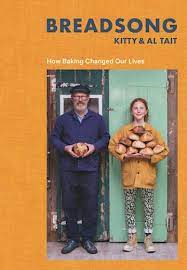
I actually finished reading the memoir part of this book a couple of weeks ago – the day I received it in fact. But I had to wait until I had baked a couple of the recipes before I could do a legit review!
This is two books in one. The second part is a cookbook – all bread or bread-adjacent (a couple of biscuits and cakes). So far I have made the Miracle Overnight White Loaf, which is a marvellous no-knead, overnight (duh) bread that you cook in casserole dish; and today I made the focaccia, which uses the same dough but you press it out to make focaccia. Both of these are AMAZING and will definitely be in high rotation. A large section of the recipes is sourdough, and… I’ve done the sourdough thing, and I’m just not sure I can face going back to the world of the starter. I’ll have to give it some more thought. There are definitely other recipes I want to try – bialys, and their mini panettone buns. Each of the recipes is laid out beautifully – I love that there is a different font for the chat at the start, and the ingredients, and the recipe itself. It’s also got delightful photos and in general the cookbook aspect is just fabulous.
But the recipes are only half the book. The first half of the book is a memoir. This book is written by Kitty and her father, Al – they tell the story together and they each have a distinct font. It’s the story of how they ended up running a bakery together, and while that sounds all heartwarming – and it is, absolutely – but it starts because baking a loaf of bread is one thing that Al tries to help Kitty with her crippling anxiety. Like, anxiety that made going to school impossible, getting out of bed barely feasible, nothing in the world seeming worthwhile. I deeply appreciated the honesty that Al in particular presents here – that he and his wife did not see what was happening at the start, that they were bewildered by the change in their youngest daughter, and that they struggled to figure out what to do. Kitty, of course, is also very honest: she didn’t know why it happened, either, and makes no excuses for it, or for feeling the way she did. It just was.
The book explores the slow movement from Kitty deciding she wanted to bake a loaf of bread – to wanting to make more, and therefore being allowed to use neighbouring ovens – to giving bread away because she was making so much, leading to a subscription service, then a pop-up, and then an actual real bakery and high street shop. Well, I say slow, but it all happened over about 2 years and that’s just incredible.
It’s the sort of book that makes me think “maybe I could be a baker and make bread all the time and bring joy to people!” and then you keep reading and you realise just how much stress the whole thing is, and how early you have to get up (unless you’re the Margaret River bakers who sell their bread from 3pm onwards, LIFE GOALS) and… yeh. I’ll just stick with making bread for people in my house, thanks.
As a memoir, the book is a delight. It’s honest and thoughtful and funny (when appropriate). It’s got enough context of other things going on that you know bread isn’t absolutely everything, but it’s also very clear that the focus is the story of Kitty not being able to go to school —> opening the bakery; it’s not a complete autobiography. The different fonts make the dual authorship work really well, there’s lovely pictures and photos throughout, and I really did sit and read the 150-odd pages in one day, because I started and then I had to keep going. I didn’t really need another bread book in my life but I definitely needed this book.

 Randomly Yours, Alex