The Jewel and her Lapidary
This was provided to me by the publisher at no cost.
I haven’t read it in a very long time, but I was immediately put in my mind of Anne McCaffrey’s Crystal Singer series, because part of the point of this story is that people can talk to, and be influenced by, gems. I seem to recall that things didn’t always go well for Killashandra and her friends, and of course this story only exists because things go wrong for the two main characters, and indeed their entire world (well, valley).
The good thing about this story is that it focuses on the relationship between two young women: a Jewel, youngest scion of the royal family, and her lapidary or bound servant. Their discussions about duty and oaths and what to do when faced with crisis were interesting enough.
However. There were a few things where the book just misses its mark.
For a start there’s no discussion about the morality or not of having a (literally) bound servant. Sima is not a slave, but it’s a near run thing. That made me uncomfortable.
Additionally, there were narrative aspects that could have worked but just didn’t quite get there. Firstly, there are some breaks in the narrative where a ‘modern’ travel guide apparently describes the area where the actual story is taking place – a tactic that can add unexpected depth or twists to stories, I’ve found – but these break-ins didn’t do that. They didn’t seem to match the story parts they were paired with, and they were too superficial to add much to the story. Secondly, while I’m not a reader who demands every part of a story be filled in, I felt like there were too many gaps in this story; too many times where I think the idea was that lucanae are alluring and tantalising but this was just frustrating and confusing.
Overall I didn’t mind the story but I didn’t feel that it had much substance to completely make up for the bits that frustrated.
The Golem and the Djinni
This post should be read in conjunction with Mondy’s review, because I read it when he first posted it which is, clearly, a long time before I read the book, and it influenced my reading of the Jewish (and by extension Muslim) bits quite a lot. Also, this is another book given to me by Katharine, because she is a great big book nerd.
And this post is pretty much spoiler-filled. You’ve been warned.
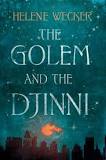 Over on Goodreads, I gave this four stars, because I rounded up; I would have given it 3.5 for preference.
On the good side, this is really nicely written – it wasn’t a chore to read it, I generally enjoyed the switches of narrative perspective, and the Golem and Djinni both provide interesting perspectives on humanity. In fact I think this is the strength of the book (… and this is interesting given I read it very soon after The Just City): these two characters give Wecker the opportunity to think about volition and control and desire through two creatures whose natures are intended to be opposites. The Golem is created to be obedient, and lacking a master means that she has to think through controlling herself, and how not to respond to every whim she encounters, and it’s really hard. When at liberty, the Djinni was accustomed to doing exactly what he wanted and when, indulging any whim he might feel without reference to any consequences. Now restricted by the iron cuff, he’s unable to take any form he wants – so there’s an external restriction – and living as a human means that at least to some extent, he needs to learn about consequence and responsibility. So it’s a bit like watching two toddlers learn about how to be responsible human beings, when those toddlers have superhuman strength or the ability to liquify metal, and who already look like adults and so are treated as such by those around them – no leeway like actual toddlers get. I really felt for the Golem as she wanted to restrict herself and not lash out; I sympathised with the Djinni for feeling imprisoned and also that he wanted to encourage the Golem to actually explore who she is.
I really liked the way that Wecker always referred to the Golem and the Djinni in those terms. As Mondy points out, this is a good way of showing that they’re outsiders. Although they have been given names by those around them, they do not fit in.
I don’t know why Wecker chose the end of the 19th century for her story; it could just be that it was a period that she liked. Post-WW1 could have worked, I think, because living in the Roaring 20s would have allowed all sorts of interesting discussions. (Clearly post-WW2 would have required too many other discussions that would get in the way of the story Wecker was trying to tell.) Anyway that aspect mostly worked; I’m no expert so I have no idea whether it was accurate or not.
On the more negative side, there were a couple of things that really bummed me. Sophia Winston is a big part of that. She gets seduced by the Djinni and doesn’t appear to regret it – fine. She gets pregnant to the Djinni and then loses it in a mystical manner and then her body doesn’t recover and then the Djinni is taken to her house to warm up post-suicide by cooling attempt (… because she’s got the closest fireplace or something? Saleh’s thinking was a bit of a stretch there). And then apparently this is a sign to her family that her reputation is ruined and so her engagement is called off and she goes off on a tour of Warmer Climes (the Mediterranean) aaaannddd… that feels like a really raw deal and I didn’t much like how she was basically just used as a toy by the Djinni and then kinda left, lost, by Wecker.
And the ending really didn’t work for me. Constant reincarnation because the nasty magician is bound to the Djinni? It was sprung on me too quickly, with no prior suggestion of spirits being reborn, so it felt really jarring. Although I did like the eventual taking of the copper flask back the djinnis to look after, getting the magician into the flask was also dubious. And finally, the suggestion at the end that the Golem actually Has Feelings for the Djinni? nonononono. I do not like this suggestion at all. Not because I don’t think she should be allowed to have feelings, but because a romantic relationship there destroys what I thought was interesting about their relationship. These are two completely opposite non-humans trying to live in human society. A romantic relationship just weirds things out.
I enjoyed reading it, but I don’t think I’ll be reading the sequel.
The Just City
I hadn’t even heard of this book until Katharine mischievously sent me a copy because she wanted to know how I would feel about it. And my initial feels are: omg THERE BETTER BE A SEQUEL.
Is that what you were expecting, K?
 The premise: Athene (yes, she who sprang fully formed) wonders what would happen if humans attempted to put Plato’s Republic into action – with a little help from her, of course. So she gathers together a bunch of people from across time who have all prayed to her, perhaps inadvertently, after reading The Republic and wanting themselves to put it into practise. And they’re going to collect slave children, and they’re going to try out their city on a certain island that will eventually be destroyed by a volcano… (yes Athene is aware of how recursive this is I LOVE YOU JO WALTON).
Apollo, meanwhile, is confounded by Daphne wanting so much to get away from his tender advances that she was happy to be turned into a tree, so he decides to become mortal to explore ideas of volition and equal significance. And hanging out in the fledgling Republic of the philosopher-kings seems like an interesting and pragmatic way of doing so.
The book’s chapters switch between a few different characters. Apollo gets a few, but not most, which is good because I liked his perspective and seeing what life was like for a being with godly knowledge but human limitations, but it would have got old to have him as the focus. Instead, most of the chapters are from female perspectives. Lucia, renamed Simmea, is from what I take to be the early Christian period; she’s bought as a slave and taken to Thera, destined to be brought up in the first generation of true Republicans. Maia, originally Ethel, was born in Yorkshire in 1841. Well educated for a girl at the time she appears destined for the standard gloomy life of struggling middle class woman, until she happens to cry out to Athene… and she’s transported to Thera to act as one of the guardians, teaching the new generation how to be their best selves and eventually develop into Plato’s philosopher-kings (… well, some of them).
I’ve not read The Republic. In fact, I’ve never read anything of Plato’s in much depth or at much length (I’ve taken some Classics subjects so I must have read a bit… right?). This is not, however, a problem for reading this novel because Walton does a wonderful job of having her characters discuss the various issues and conundrums and ideas that Plato raises – all without it seeming like an info-dump. Just as setting up the city is an experiment for Athene, this book is a thought-experiment itself. This book reminded me in some ways of Ursula Le Guin’s The Dispossessed, because so much of it is conversation- and ideas-driven. There is some action, but it is not the focus – and most of the action is connected to the ideas, showing them in action in some way. And I never once found it boring.
Issues confronted:
Slavery, good or bad? And can you have the perfect society as suggested by Plato without slaves to do at least some of the jobs?
Individuals as ‘fit for purpose’: should someone else get to determine what you do for your  entire life? Should your worth be entirely determined by the work that you do?
How to be one’s best self: I could not help but think of Bill and Ted, of course. But it is also a deeply intriguing question: how do we help ourselves and those around us be excellent?
Censorship: can it be a good thing?
Who can you trust? How do you know? Are there levels of trust, or areas in which someone is trustworthy and others in which they aren’t?
There is JUST SO MUCH in this book I have only scratched the surface IT IS EXCELLENT.
Slight spoiler
The one off-note that didn’t really work for me was the rape early on of one of the guardians. While it was occasionally referenced later on and certainly had some impact on the woman involved, I didn’t really see why it needed to be a part of the narrative. And it seems weird to say that this is a minor quibble, given the topic, but overall I think it’s dealt with mostly ok; it just didn’t quite sit right with me.
Aaaaand in finding the image for this post I’ve just discovered that the second book already exists in the world AAAAAAAH *buys*. (Also buys a hard copy of The Just City, for re-reading and shoving into people’s hands. My mother MUST read this.) You can get The Just City from Fishpond.
Deadman’s Hand and Pieces of Hate
I received these from the publisher at no cost; the first was a freebie with the second.
Deadman’s Hand
The scene: Deadwood. I have no idea whether this was actually a real town but it appears to have become That Place Where Westerns Happen. The plot: a bad man needs killin’. This bad man happens to be some sort of demon, or shapeshifter, or something, named Temple; the one to do the killing is Gabriel, who seems to have been hunting Temple for a long time.
My favourite part about this story is the narrator. He’s not an entirely convincing Watson, all naive and stuff, but he does provide a really interesting perspective on the clash of two basically inhuman forces. It means that we get to see Gabriel as genuinely hurt and and hurting, which emphasises his grit when he gets back up again to confront Temple. It also means that we see the consequences for this sort of clash happening in a relatively normal little town. It’s a town that’s seen its share of killings, but nonetheless their appearance has an impact; and it has an impact on our narrator on a personal level, too. All of that made the story that bit more approachable, where otherwise it would have felt quite divorced from possibilities of empathy.
Written well enough, fast paced.
 Pieces of Hate
I was expecting another with an uninvolved narrator. So when it turned out to be Gabriel himself, I was surprised and a little disappointed. I can see why Lebbon did this; this story, which certainly felt much longer than the first (not sure if it really was), gave Gabriel’s backstory and motivation for his quest to kill Temple. But I think that this could have been done in discussion with someone else, perhaps while on the voyage to Port Royal (the scene this time: en route to, and briefly in, Port Royal). That would have made it seem a bit less like Gabriel was moping around, and simultaneously wallowing in his fury and hate which were a little distasteful. I’m not saying he shouldn’t be angry for what happened, just that I got impatient and a little bored with all of the WOE FOR ME bits.
There was a lot going on in this story that didn’t involve the search for Temple. Some of it was showing Gabriel to be a bad-ass, which actually I didn’t need; it’s clear he is, and I think it would have been more impressive to have the clash between him and Temple show his chops, rather than killing maiming… well, not innocents, but not-Temple. Gabriel knows that he’s no saint and doesn’t claim to be, but it is hard to really be on the side of someone who is not-quite-as-bad-as the villain.
It wasn’t a bad story, although the pacing felt a bit off; I’m not sure I care enough to read the third in the series.
Jonathan Strange and Mr Norrell
This was… not what I was expecting.
If I was being unkind, I would be tempted to use the word ‘interminable.’ But that’s not really fair because after all, I did finish it, and I mostly enjoyed reading it too. So it wasn’t unbearable. But it did go on for far longer than I thought made sense.
 It’s not what I was expecting because this is, in a way, much more like a history book than a novel. It didn’t have the beats that I was expecting; there’s not really that much of a climax, in the end, which was deeply surprising. To be honest I’m a bit surprised that this won quite so many accolades when it was released. Is it because it was doing something quite new, and this is like kids today watching The Matrix and being all “yeh, so?”? Because I’m feeling a bit… yeh, so?
I was intrigued early on by Mr Norrell, unpleasant as he is… and yet, not that unpleasant. I wondered about Mr Childermass… who ended up being a bit surprising, which I appreciated, but somehow was still quite a muted character. Sir Walter Pole was a bit flat. Jonathan Strange… well. I was somewhat bemused that we got his childhood story, since that seemed out of character for the novel overall – no one else gets that sort of background. I understand Strange is meant to be the focal character, but it still felt odd, coming after so many chapters of Mr Norrell. I liked him overall – more than Mr Norrell, which is to be expected, since Strange gets a lot more action and is presented more sympathetically; I really liked him over in Spain. Stephen Black did feel like a rounded character, but it was quite uncomfortable to see him bullied by the man with the thistledown hair.
That’s the men. As for the women… there was a serious lack of agency going on here. Lady Pole is, I think, a catalyst for an enormous amount of the action, but she doesn’t do anything. She just… exists. Arabella Strange has a bit more action, but is still not an instigator. And that about does it for the women.
I think one of the things that felt odd is that there is no clearly discernible villain. Now I don’t mind a story without a villain, but I think I was expecting one – so that’s another way this story isn’t what I was expecting. Which is therefore partly my fault. But also the story appears to be setting itself up to have a villain, and then wrong-footed me. I don’t think it’s surprising that I was unbalanced.
Also, I wanted a lot more about the Raven King. For me, that figure just ended up being too mysterious, such that I felt a bit frustrated.
I did like the world that Clarke created – using the real 19th century England and adding a detailed and convincing history of magic. I loved the idea of northern and southern England having been ruled by different kings, and that the north still sees itself as separate; this is believable. That practical magic would have been allowed to fall by the wayside basically makes sense if it’s been dwindling anyway… and that the existing ‘magicians’ would all be these pompous greybeards who wouldn’t touch real magic is brilliant. The glimpses into the politics were interesting although I didn’t feel that they added much.
I’m glad that I’ve read it. I can’t imagine that I’ll re-read it. I guess I might lend my copy to someone at some point… maybe if I know someone who’s got a real thing for Napoleonic stories? Hmm, perhaps my mother, now that I think about it.
Neverwhere
Read in a day.
Not my first Gaiman novel, despite what I initially thought; I read The Ocean at the End of the Lane a few years ago, which I also loved. I’ve had this sitting on my bedside table for about three quarters of a year, from a workmate….
 Man accidentally gets involved in things beyond his ken. Weird things are happening in the part of the world that ordinary people know nothing about. People are not all they seem. British Museum features. Prose is incredibly page-turn-y. There’s not much else to say, really.
This is a love-letter to London, in some ways, and for that reminded of China Mieville’s Kraken. There is little else of similarity, but it does amuse me to think of reading these two together as a guide to the Weird of London. It’s also, as Gaiman himself suggests, a fantastical way of pointing out the forgotten and ignored in society. There is a romantic aspect to London Below that means you maybe envy those people – but then you remember what Anaethesia experienced to get to London Below, and then what happened to her, not to mention a few others, and you realise: this is no party. London Below is a tough and unpleasant place.
The book also reminded me of Michael Scott Rohan’s Cloud Castles, Chase the Morning, and The Gates of Noon. Richard is not as unpleasant as Stephen Fisher, but there’s still the drawn-into-weird-things-against-his-will aspect, as well as the refusing-to-believe thing. I think I like Richard a bit more, though, because he’s more self-aware overall. He also reminded me of Richard Macduff, from Douglas Adams’ Dirk Gently’s Holistic Detective Agency. Again with the bewildered thing.
By the end, all I could think was how much Richard was going to be in need of Miss West’s school for those who find their way to fairyland and then have to cope with reality (in Every Heart a Doorway).
Ascendant
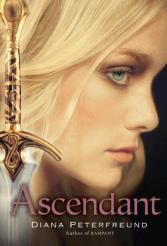 I didn’t adore Rampant, the first book, but I was very curious to see where Peterfreund would take Astrid and her fellow unicorn-hunters. This sequel was a bit darker than the first, but overall has many of the same preoccupations: the difficulties of committing yourself to a life of killing and celibacy when you’re sixteen, the difficulties of being forced together with a bunch of girls you don’t know and have little in common with, occasionally having to deal with a crazy mother. So while I didn’t adore this one, either, I definitely don’t regret reading it.
The main surprise for me with the first book was (what felt like) its overwhelming interest in Astrid’s love life. By the end I could see why this was important – in terms of plot – and of course if Peterfreund was setting out to write a teen romance with killer unicorns then that’s totally cool; it’s just not what I had expected, which is my problem not hers. That continues into this book, naturally, with some neat (well, difficult actually) twists that meant it wasn’t simply rehashing the initial plot. Peterfreund is certainly not interested in making life easy for her characters. The romance didn’t work for me but I’m not a teenager, so maybe I’m too cynical.
I liked that Astrid got to experience life a bit outside of the Cloisters, and that she got to think through her difficulties with the whole idea of killing. There’s a nice, if simplistic, balance between Cory on the one side, all in favour of killing the lot, and Phil wanting to set up some sort of genuine conservation – and Astrid fitting between them. It did relieve me that Kill The Beast! didn’t become an overwhelming theme for the novel.
I’m surprised there’s no third book. … and I’ve just looked at Peeterfreund’s website which says that she’s hoping to write the third, Triumphant, “soon” (but I don’t know when the site was updated). I’ll probably end up reading it, although it’s not a preorder-in-a-mad-rush kinda thing.
The Devil You Know
This book was provided to me by the publisher at no cost.
 In this novella, KJ Parker has taken the idea of Faust and puts his own spin on it. In most versions of that story, Faust makes a deal with the devil – in the person of Mephistopheles – whereby Faust gets all of his desires seen to and the devil gets his soul after some specified period of time. Classically, Faust panics at the end of the deal; of course the irony is that all Faust has to do to get out of the deal is to ask God for forgiveness and he’d be fine.
But this isn’t a review of Faust.
Saloninus is the greatest philosopher-scientist of his age, and possibly of all time. This is a secondary world, but Parker amuses himself by attributing numerous real-world achievements to Saloninus, I guess as a way of stressing how awesome Saloninus is. He makes a deal with… well, the being is never clearly identified as a demon, but that’s clearly the idea. Saloninus gets youth and twenty years of the demon being at his beck and call; he gives up his soul in return. Right from the start the demon is suspicious – why would such a man want to sell his soul for a mere twenty years? – and that’s what drives his(?) narrative throughout. Saloninus’ deal isn’t entirely clear.
One thing that got a bit annoying was the frequent switch in perspective, between the demon and the philosopher-scientist. In the version I read, an ARC to be sure, there wasn’t an easy way to tell the difference between narrators until, sometimes, a paragraph or more into the new section. Of course I got there, but there was more work involved than was necessary.
Overall, it was a fairly fun take on the idea of selling your soul.
SPOILER
The one real reservation I have is that the ending really didn’t work for me. I just wasn’t convinced by Saloninus’ motivation at all.
Galactic Suburbia 133
In which Alisa has feelings about Lovecraft’s image being associated with (and from next year, removed from) the World Fantasy Award.
WHAT’S NEW ON THE INTERNET
World Fantasy Awards announced
CULTURE CONSUMED
ALEX: Alex: re-reading the James SA Corey series, The Expanse, books 1-3, so I could read the fourth one, Cibola Burn; Eff Yeah Film and Feminism podcast; Manners and Mutiny, Gail Carriger.
ALISA: PhD research and experiments.
TANSY: Tremontaine Parts 1-3 by Ellen Kushner & others, The Sorcerer to the Crown by Zen Cho, I, Zombie, Supergirl, Jessica Jones
Skype number: 03 90164171 (within Australia) +613 90164171 (from overseas)
Please send feedback to us at galacticsuburbia@gmail.com, follow us on Twitter at @galacticsuburbs, check out Galactic Suburbia Podcast on Facebook, support us at Patreon and don’t forget to leave a review on iTunes if you love us!
Lustlocked
 This story was provided to me by the publisher at no cost.
An amusing, light and fluffy story.
It’s the second story to be set in the restaurant Sin du Jour, and I’ve not read the first; that didn’t seem to be too much of a hindrance. I think I missed a little bit of the tension between characters (and initially I thought the two main characters were lovers, not housemates), but the cast is reintroduced well enough that I had no trouble following the various interactions.
The basic premise is that there’s going to be a goblin wedding – well, the crown prince of goblin-dom is marrying a human – and this version of goblins is that they are the bright and beautiful… in fact most of them are Hollywood celebrities. You already know who the Goblin King is (yes, really, Wallace went There); I’m not entirely sure who the queen is meant to be: she’s described as the most famous supermodel, and my mind went to Elle Macpherson, but maybe that’s just because I’m Australian? Perhaps it could be Naomi Campbell? (ETA: Thoraiya tells me a certain Goblin King is married to supermodel Iman. Oops.) Anyway, such beautiful creatures naturally require an extravagant wedding aaaaaand then things go bad. Some of the story is around preparing for the wedding (goblins eat jewels, of course) and some of it is dealing with, um, rampaging lusty reptiles. So half almost cosy culinary fantasy, half magic/mayhem fantasy.
Don’t read this for deep philosophical reflections. Do read this for a bit of banter, a bit of snark about celebrity, and people getting themselves out of sticky situations in amusing ways. It comes out from Tor.com in January.

 Randomly Yours, Alex