Fearless Beatrice Faust
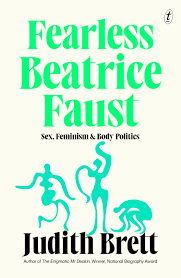
I very rarely read biographies of modern people. Faust only died in 2019, so that’s VERY modern by my standards. But I’ve been interested in how people approach modern biographies, for a project, and so this one was recommended. Having enjoyed Brett’s “From Compulsory Voting to Democracy Sausage,” I was fairly sure I’d enjoy her style, so this seemed like a good option.
Turns out, Faust was an amazing woman. Would I always have agreed with her? Oh no. Would I probably have found her abrasive to work with on a committee? Oh yes. Would I nonetheless have loved to be a neighbour, occasionally going over for coffee and hanging out? For sure.
Faust had a difficult upbringing: her mother dies from childbirth complications, her father is distant, her eventual stepmother unpleasant, and Faust herself is a sickly child (and continues to have multiple chronic conditions for most of her life, which are an enormously complicating factor for her). Yet she is clearly highly intelligent; she gets into Mac.Rob, the select-entry Melbourne girls’ school, and then Melbourne University to do an honours degree in Arts, and eventually an MA. Over her lifetime she writes many tens of thousands of words, and basically becomes a public intellectual – but not an academic, mostly because of misogyny.
Faust was extremely open about her life: her sexuality and sexual experiences, her abortions, her accidental addiction to benzos – all were fuel for public talks, articles, government submissions, and the many letters she wrote to friends.
She was also the founder of the Women’s Electoral Lobby, a key member of the Abortion Law Reform League, and various other women-focused campaigns. Her relationship with “women’s lib” and some aspects of feminism were fraught – she’s just that bit older than many of the agitators of the early 70s – and she definitely had some views that 1970s feminists had a problem with. In particular, some of the ways she talked about pronography, and – even more problematically – her apparent defence of some paedophiles were very troubling. Brett goes into these topics in great depth, sympathetic to Faust in that she tries to understand her views as well as possible, and present them fairly, but not so sympathetic that Faust gets a pass when she is saying unwholesome things.
Brett’s overall style is intriguing. She was approached by Faust’s friends, after she died, saying that she would be a good subject – and Brett said yes for many reasons, including the personal connection (living in Melbourne, some of the same haunts). Brett is not absent from the text, and I appreciated this aspect a lot. That’s not to say that Brett makes it all about her. I mean that Brett will mention when Faust’s reasoning is ambiguous, or when she got something wrong; and in dealing with some really hard topics – like her views on paedophilia – Brett wrestles with why Faust may have thought the way she did, and also calls her out for views that are pretty clearly inappropriate by today’s standards. Brett insightfully considers the question of whether Faust would be considered a TERF today, because she believed that biology was a significant part of a person’s identity; she concludes that it would be easy to say yes, but that Faust’s view is more nuanced than many TERFs, so perhaps not (Faust also didn’t seem to have a problem with a trans woman she spent some time with).
Beatrice Faust absolutely deserved to have a biography written about her. I’m glad Judith Brett was able to do so.
Fulvia: The Woman who Broke all the Rules in Ancient Rome
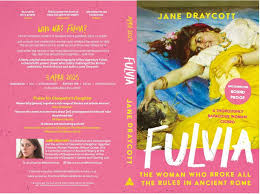
THIS BOOK.
Argh, this book. I have been waiting to get my hands on this book for… I dunno, a year or something? And now I have read it and it was wonderful.
I have enjoyed Jane Draycott’s work since reading Cleopatra’s Daughter: she has a wonderfully engaging style, she makes it clear when she’s making educated guesses but doesn’t shy away from them, and she’s determined to excavate interesting women out of either being completely ignored (Cleopatra Selene), or mostly ignored except when they’re excoriated (Fulvia).
Had I completely forgotten that Fulvia was married to Marc Antony? Uh, oops. I KNEW there was another reason that I was dead keen on learning more about her.
So little is known about Fulvia as a person that Draycott has to spend quite a lot of time going over what is known about OTHER Roman women in order to a) have a stab at discussing what most of Fulvia’s life was like, and b) putting her in context for both why some of the things she did were so unusual, and why some of the things she did were NOT unusual but still got maligned. While I already knew a lot of these things it was still great to see it all put together like this, and particularly in conversation with the life of one particular woman – for someone coming to the book with zero knowledge of Rome, I think it would be pretty accessible. The main thing that isn’t all that accessible, and which there is no getting away from, is the names. My goodness, Romans, could you not have had more imagination in your nomenclature? Gets me every single time.
Anyway. This book is a delight. It’s the best sort of revisionist history: not just accepting what ancient sources say, but examining their reasons for doing so; adding in the archeological evidence, as well as other source material; and bringing a trained feminist idea to persuasively make the case for how misogyny has worked over the centuries to write Fulvia’s story.
Look, it’s just really good. Highly recommended for anyone interested in late Republican Rome, and/or women’s history in general.
The Fall of Egypt and the Rise of Rome
Read via NetGalley and the publisher. It’s out now.
My feelings on this book are conflicted. There are some good bits! There are also some frustrating bits that definitely got in the way of my enjoyment.
The good bits: just the existence of a book about the Ptolemys is a pretty good thing, I think. They so often get ignored in histories of Egypt; and they just end up as a prologue to Cleopatra VII. And I get it – it’s hard to figure out where they fit in, as an invading ruling family that doesn’t fit with OG Egypt. I am also intrigued by the idea of putting the Ptolemaic dynasty and the rise of Rome together: if you know anything about the two, you know they have a stunning convergence in Cleopatra VII/ Caesar / Marc Antony, but what de la Bedoyere shows is the ways Egypt and Rome had been interacting for generations beforehand, and why therefore Caesar went to Egypt and Cleopatra thought getting the Romans involved made sense. I have a much greater appreciation now for the ways Rome was meddling in their surrounds, and how Egypt and Syria and others were using external players in their internal struggles.
Other positive aspects are the fact that the women get some discussion (although that’s also a source of frustration, see below), and the fact that this is written fairly accessibly, within the confines of ‘there are a lot of the same names and that gets very confusing’. I appreciated that the author did acknowledge things like ‘Roman historians have a LOT of prejudice’ and that there are several aspects of Ptolemaic history where historians simply do not have enough information to adequately explain things.
So. The less good bits. Firstly, the frustrating-ness is partly a product, I suspect, of writing a book that’s intended to be generally accessible – so it doesn’t go into a lot of detail about some aspects, and doesn’t have all THAT many references either. Instead, the author just makes claims… which are sometimes such that I raised my eyebrows. Perhaps the most egregious, from my perspective, is the fact that he doesn’t try to examine why various non-Roman kings in the Mediterranean world would appeal to Rome at the start, when Rome is an international upstart. He simply says that it happens because the Romans had won some wars. There seems to be an underlying assumption that Rome was always going to preeminent, so it makes sense that everyone acknowledged this early on. I wanted to write “needs more evidence” in the margin.
Secondly, the portrayal of the women is fairly problematic. The second Ptolemy was the first to marry his sister. De la Bedoyere blithely states that the sister, Arsinoe, basically made the marriage happen after she ran to her brother for help when previous marriages had gone badly wrong, because she was so ambitious. There is no explanation offered for her characterisation as ‘ambitious’. The fact that she married various rulers doesn’t tell us anything about HER attitudes. There is no suggestion that maybe Ptolemy forced or convinced her to marry him. Given the extravagant after-death cult stuff set up by Ptolemy II – which may be partly about playing into Egyptian religion – it seems more like to me Ptolemy II was either besotted or very, very political (why not have both?!). There are other moments when the various other Cleopatras, Berenices, and Arsinoes are also treated like this: mothers acting as king instead of stepping down for their sons, or manipulating brothers… and maybe some of them were indeed political machines! But I need evidence of that – because achieving that in such a patriarchal world would be admirable and worthy of applause! I point you also to this claim: “Worried that her power and influence were waning after his triumph over [another ruler], [Cleopatra Thea] tried to poison her son. Having already killed one child, killing another must have seemed comparatively easy.” NO WORDS.
Fourthly, connected to what I said earlier about acknowledging the problems with Roman sources in particular: relaying what those sources say in great detail, AND THEN spending a couple of lines saying ‘but we can’t take everything they say at face value’ doesn’t really work. Pretty sure that’s what lawyers do when they know a jury will be asked to ignore some evidence, but THEY’VE ALREADY HEARD IT (lol, at least that’s how it works on tv, and you see what I mean). I really think those sections – usually bad-mouthing a Ptolemy, and especially Cleopatra VII – needed to be PREFACED with ‘but the Romans had an agenda’. I really got the sense that de la Bedoyere doesn’t care for Cleopatra VII at all, to be honest; he claims she didn’t care for Egypt in the slightest, just her own power, and again – I’d like to see more evidence please.
Finally, there are some odd choices in terms of the book’s presentation. Every now and then there are boxes with random bits of information that is tangentially connected to the main part of the story. I found these more distracting than helpful – although I guess YMMV and maybe for some people this really works.
Overall… I’m reluctant to recommend this to an Egypt or Rome novice. I really think you need a slightly sophisticated reader who is able and willing to question some of the assumptions, and put things into context. So like I said: I am conflicted.
Shakespeare’s Sisters, Ramie Targoff
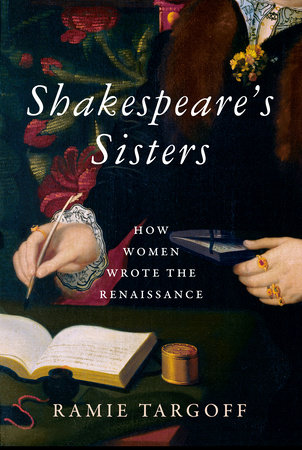
Read via NetGalley. It’s out now.
I’m here for pretty much any book that helps to prove Joanna Russ’ point that women have always written, and that society (men) have always tried to squash the memory of those women so that women don’t have a tradition to hold to. (See How to Suppress Women’s Writing.)
Mary Sidney, Aemilia Lanyer, Elizabeth Cary and Anne Clifford all overlapped for several decades in the late Elizabethan/ early Jacobean period in England – which, yes, means they also overlapped with Shakespeare. Hence the title, referencing Virginia Woolf’s warning that an imaginary sister of William’s, with equal talent, would have gone mad because she would not have been allowed to write. Targoff doesn’t claim it was always easy for these women to write – especially for Lanyer, the only non-aristocrat. What she does show, though, is the sheer determination of these women TO write. And they were often writing what would be classified as feminist work, too: biblical stories from a woman’s perspective, for instance. And they were also often getting themselves published – also a feminist, revolutionary move. A woman in public?? Horror!
Essentially this book is a short biography of each of the women, gneerally focusing on their education and then their writing – what they wrote, speculating on why they wrote, and how they managed to do so (finding the time, basically). There’s also an exploration of what happened to their work: some of it was published during their respective lifetimes; some of it was misattributed (another note connecting this to Russ: Mary Sidney’s work, in particular, was often attributed to her brother instead. Which is exactly one of the moves that Russ identifies in the suppression game). Some of it was lost and only came to light in the 20th century, or was only acknowledged as worthy then. Almost incidentally this is also a potted history of England in the time, because of who these women were – three of the four being aristocrats, one ending up the greatest heiress in England, and all having important family connections. You don’t need to know much about England in the period to understand what’s going on.
Targoff has written an excellent history here. There’s not TOO many names to keep track of; she has kept her sights firmly on the women as the centre of the narrative; she explains some otherwise confusing issues very neatly. Her style is a delight to read – very engaging and warm, she picks the interesting details to focus on, and basically I would not hesitate to pick up another book by her. This is an excellent introduction to four women whose work should play an important part in the history of English literature.
A Question of Age, Jacinta Parsons
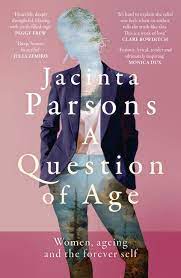
Not the sort of book I would gravitate towards; but I heard Parsons speak at the Clunes Booktown festival this year, on a panel about ageing – which was interesting itself – and I decided it would be worth reading.
This is in no sense a self-help book, as Parsons says in the very first sentence. It’s part-memoir, in that it includes a lot about Parsons’ reflections on her own life and experiences – growing up, living as a white, disabled, woman, conversations she’s had with women about the idea of age and ageing; partly it’s philosophical reflections on the whole concept of ageing, particularly for women; and it also bring together research about what age means in medical and social contexts, the consequences of being seen as ‘old’, what menopause is and means, and many of the other issues around ageing. I should note here that it’s not just ‘life after 50’ (or 60, or 70); there’s also exploration of the experience of little girls growing up, the changes from adolescence into adulthood, and then into ‘middle age’ and ‘being older’.
It’s a book that’s likely to make many readers feel pretty angry. Not at what Parsons is suggesting (in my view), but the facts that she lays bare. About the way that girls are treated as they mature; about the way ‘old’ women are treated; at the way ‘old’ bodies are viewed, and everything around those moments. It made me realise how privileged I have been, in either not particularly experiencing (or not noticing) a lot of the sexualisation that women experience, and in not having a career that’s geared in any way around my appearance. I had a discussion recently with someone who mentioned that they didn’t feel like they were allowed to let their hair go grey, as I am – that their appearance was too important in their (corporate) work, and grey wouldn’t fit the image. I felt so, so sad that that’s what the world is enforcing. (I have always delighted in my grey streaks; it’s only partly because I am too lazy to bother with colouring it.)
Parsons is at pains to discuss what her identity means in the context of ageing – being white, and being disabled, being cis; she strives to include the experiences of queer, trans, and especially Indigenous Australian women throughout. It’s not even 300 pages in length so clearly it’s not the definitive book on the topic: a book with the same origin written by an Indigenous woman, or a collective, is going to turn out very different. Parsons is making no claim to be all-encompassing and I liked that. This is a deeply personal book, while also including a lot of science and stats and other women’s voices.
In many ways this feels like the start of a conversation. To use a meta book analogy, this isn’t the prologue – we’ve been having these conversations and there’s been research done in some important areas – but it’s around chapter 1 or 2. There’s still so much more to explore, and to examine, around ideas of ageing. And individuals need to be having these conversations, too – older women with younger, as well as peers.
Very glad I picked this up.
Stroller, by Amanda Parrish Morgan
I read this courtesy of NetGalley. It’s out on 20 October 2022.
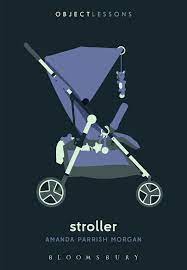
Of the four Object Lessons books I’ve read so far, this is by far the most personal. It’s really quite remarkably personal, actually, and I admire Morgan for what she says about herself to illustrate the points she’s making more broadly about society.
While the focus of the book is the stroller (or pram), this is very much a book about motherhood, mothering, expectations on and of mothers, and how consumer goods like the stroller fit within that. I am not a mother, but even I know some of the pressures and expectations from society imposed on, and internalised by, mothers. Morgan describes herself as someone who didn’t expect to be a mother from early on; and as someone whose identity was strongly tied to being a runner. Both of these things influenced the way she perceived maternity, and the stroller. Her early recounting of telling a (not-mother) friend that she’s going to try and have a baby, and the quite awful reaction from that friend (“That’ll be the end of all your running”, p6), sets up a lot of what Morgan picks up through the book (and made me worriedly think back to how I’ve reacted to child-announcements from friends. I don’t think I’ve ever been that awful?). Morgan relates her experiences of juggling not wanting to fall into the ‘must have everything’ trap, to not be swayed by alarmist or aspirational advertising. She talks about juggling routines, two preschools, her own desire to run (between two preschools, with a double stroller); and she relays the commentary she received from onlookers, too, which honestly just made me mad.
Morgan mixes in academic discussion, too: of how American society emphasises the ‘production’ part of ‘reproduction’, with the mother as unskilled worker; the use of the word ‘labour’ and ‘delivery’ and what they suggest about the relationship between mother and child and the whole process of the second leaving the first. And then how baby products get tied into identity, and parenting strategies, and what all of those things mean and say about you and your choices. It emphasised a lot of things for me: just how harshly mothers are treated sometimes, how many minefields need to be navigated, and how unapproachable so many of our cities and spaces are. Also, my goodness it’s harder in America than in Australia (paid maternity leave, etc).
It’s not quite the book I was expecting – there’s not a huge in-depth history of strollers and their alternatives, for instance, although there is some – but it was nonetheless engrossing and… well, I want to say enjoyable, but that’s not quite the right word. I read it quickly and with fascination.
The Future is Female! Volume 2: 1970s
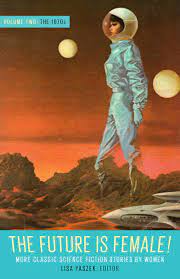
I read this courtesy of NetGalley. It’s out in October 2022.
Lisa Yaszek has put together another very fine set of stories that highlight the variety of science fiction that has been produced by women, this time in the 1970s. Arranged chronologically by publication date, this fiction has some stories that are angry, and some that are more on the whimsical side; some that (I think) could only have been written by a woman, and others that don’t particularly reflect a gendered authorship (and then there’s the James Tiptree, Jr). Some feel like classic SF, others are more experimental. I didn’t love them all. As a set, this is a really amazing way to showcase the variety of what women can write and have written.
Some I’ve read before: “When It Changed” (Joanna Russ) always gets me and I hope will always be discussed as part of science fiction in general, and not ever just relegated to ‘battle of the sexes’ conversations. I don’t understand why we don’t talk more about “The Girl who was Plugged In” (Tiptree) when we discuss cyberpunk; “The Screwfly Solution” (Raccoona Sheldon) is always completely horrific, and so is “Wives” (Lisa Tuttle), for very different reasons. I have always loved “Of Mist, and Grass, and Sand” (Vonda N. McIntyre) for its exploration of love and compassion – and same, in some ways, with “The Day before the Revolution” (Ursula K. Le Guin), although the latter is even more poignant; I always need to just stop and stare into the distance for a moment when I read it.
Of the others, there were several that stood out. I’ve read very little by Chelsea Quinn Yarbro; “Frog Pond” was very nicely paced, and the reveals built up beautifully. Kate Wilhelm’s “The Funeral” was quietly terrifying as the state of America was slowly revealed – and these two, next to each other, were particularly distressing to read in the current state of the world. “The Anthropologist” (Kathleen M Sidney) feels in some ways like it’s in conversation with Heinlein’s Stranger in a Strange Land, with its exploration of living between two very different worlds. And as someone who occasionally feels sad for Curiosity and Voyager etc, never being able to come home, “View from a Height” (Joan D Vinge) was something of a gut-punch. Gorgeous, but a bit harrowing.
… clearly, I think this anthology works for both people with some knowledge of the state of the 1970s field, and I believe it would also work for those who want an introduction to 1970s SF in general. It’s nicely comprehensive.
Public Faces, Secret Lives
I read this courtesy of NetGalley. It comes out in May 2022.
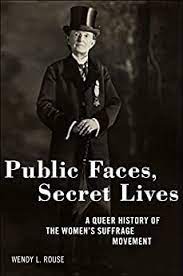
I have been known to joke that historical women were invented in the 1960s – before that, only Cleopatra, the Virgin Mary, Joan of Arc and Elizabeth I existed (obviously none outside of the European context). More recently I have added that queer people were invented in the 21st century.
I was joking, but … only because there’s an element of truth. Straight white men rule history, amiright?
This book, then, is a massively important addition to the history of the fight for suffrage.
I should point out that although I have a fairly substantial library of suffrage books, they are all either Australian or British. My knowledge of the American experience is limited to the film Iron Angels, and the magnificent “Bad Romance” spoof video clip. I do not, therefore, know a lot about the private lives of the main characters like Susan B. Anthony, who aren’t covered here in any detail because it’s been done elsewhere. It’s interesting therefore to get the focus on women who were, apparently, lesser lights – or who have become such as the history of the period has been presented.
I’m also not an expert on queer history, so I don’t know whether Rouse’s particular definition is standard or expansive. Here, queer is outlined as “individuals who transgressed normative notions of gender and sexuality… suffragists who were not strictly heterosexual or cisgender” (p2). There’s a nice point about how language changes and that words we might use to describe relationships today, for instance, may not have been available to or appropriate for people in the past.
The chapters follow general themes, or categories, allowing Rouse to explore different ways in which queerness was expressed – and fought against, in some instances. For example, in the chapter “Mannish Women and Feminine Men”, she examines how some suffragists fought against the derisive stereotype of ‘mannish women’ by insisting that suffragists perform femininity to a signifiant degree – to the detriment of gender non-conforming individuals and those women who advocated less restrictive dress. Other chapters include “Queering Domesticity” and “Queering Family” – so many of these women ended up setting up house together, and whether they were in physically romantic relationships can often not be conclusively determined, but they still spent their lives together! There’s also “Queering Transatlantic Alliances”, “Queering Space” and “Queering Death”, so it covers the entire gamut of suffragist lives.
There’s a really nice intersectionalism at work here, too, with commentary on how “queer white suffragists… helped maintain a system of white supremacy by policing access to the vote” (p63), for example. There are definitely black and First Nations people mentioned in the book, but I suspect one problem of not being familiar with the American history here is that I didn’t automatically recognise the name of any of the suffragists – let alone recognise whether they were white or not. Still, Rouse did point it out, and made note of the times when white suffragists, for instance, either tried to block black women from marching in demonstrations or told them to go to the back of the line. There’s mention, too, of class – something that’s often lacking in standard stories of the British fight for suffrage, if it focuses on Emmeline and Charitable Pankhurst and forgets Sylvia.
I’m really glad this book exists. It’s a really great look at the American fight for women’s suffrage in general (as far as I can tell), as well as presenting a dimension that is much-needed across all history.
The Rebel Suffragette
I received this to review via NetGalley.
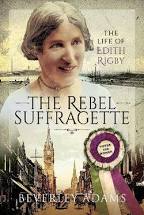
The good things:
- It’s always good to have another woman featured in a history book! And I mean that very seriously. Minor men have had tomes devoted to them. To have an individual suffragette whose name is not Pankhurst (not that I don’t love a Pankhurst) get a book is AWESOME.
- I love suffrage history in all its guises and having a book that’s about circumstances outside of London – or Manchester – is great.
These things are big and important. The negative things are generally smaller, so although there are more they are basically balanced in my mind. But these are important things to note, I think:
The negative things
- There are some really annoying editorial aspects. Partly this is about commas instead of semi colons, which I think must be from the editor becuase I’ve seen the same thing in other books from this publisher. It irks the editor in me.
- There’s a chapter about “Men and the Media”, which has basically nothing to do with the suffragette in question. If the author had placed her in a wider context more often, then this might almost have made sense a chapter – but even then I’d be dubious. This chapter had no place in this biography. And nor did the chapter about the relationship between the royal family and the suffrage question – it was completely out of place.
- The title. Almost by definition if you were a suffragette you were a rebel, and Edith did nothing that was rebelling against the WSPU general vibe. So the title is click bait at best.
- One of the historian’s problems with writing such a biography is the dearth of resources. There’s a fine line to be walked in between theorising from thorough research, and making vague suppositions about things like, in this case, the relationship between wife and husband.
- A couple of specific irritants: the idea that women went in hunger strike to be classed as political prisoners becuase then they’d get better perks, rather than becuase of a real political reason, is just insulting. Also, the author suggests that the whole WSPU and Pankhursts ditched campaigning in WW1, when actually Sylvia Pankhurst was disowned by her mother and sister for doing the opposite.
Finally, I found the discussion about whether 21st century can or should condone the militancy of the suffragettes quite lacking in depth. It was more a series of questions than a rigorous interrogation of the place of violence in political campaigning. And it didn’t really need to be included – there’s no need to pass judgement on the subject of your biography.
Overall I think this is a really worthwhile biography – Edith was clearly a fascinating woman and I greatly appreciated being able to learn about her place in the suffrage movement. I’ve seen the picture of her being removed from the gates of Parliament and had no idea who she was! It’s not perfect, but it’s a good addition to the suffrage library.
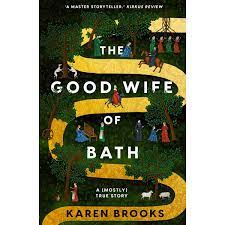
The Good Wife of Bath
I received this as a review copy via NetGalley.
I love a story about reclaiming women – whether it’s in history or fiction. Turns out I’ve read a few of these recently: Wendy, Darling and Forces of Nature for example. And The Good Wife of Bath fits into that space: yes, it’s that Wife of Bath, perhaps Chaucer’s most contested character (from The Canterbury Tales anyway).
I have to admit it’s a long, long time since I studied Chaucer at university, and I’m not sure I read all of the Wife’s Prologue and Tale even then (I found the language really hard going, not going to lie). Which means that people who’ve never read any Chaucer (like, most of the population, surely) will be just fine with reading this. If you do know the Wife’s original story I guess you get that extra frisson when a name is dropped, but it’s not essential to the story. Honestly I got more of that from the fact Chaucer is a character in the book and I know bits and pieces about his life courtesy of Who Murdered Chaucer? which I recently re-read.
Anyway. The story is Eleanor’s biography, basically beginning with her marriage at age 12 to a stranger several decades older than she is. Which is a deeply unpleasant thought, but it wasn’t until I got to the Author’s Note that it occurred to me that many people would find this shocking – the shocking-ness of not knowing this was at least sometimes a reality in the 14th century, I mean. 12 was the legal age of marriage in much of Europe for much of the Middle Ages, a fact I already knew and so I guess I’ve already dealt with being shocked by that. (I still don’t find it a pleasant idea, don’t worry.) In Chaucer’s recounting, the Wife talks of having had five husbands, and how she has tried to have mastery over them. Two thirds of the book is Eleanor as wife: who she marries, why, and what her life is like in each circumstance. In many ways it’s an exploration of the possibilities for a woman in the late 14th century: a good life or hard, a loving husband or abusive, allowed by her husband to participate in decision making or treated like a child, and the fact that her property becomes his property at marriage. And then the last third is Eleanor attempting to live as a feme sole, or sole woman – not connected to a man – which basically translates to “target”.
What Eleanor doesn’t personally experience, the women within her circle do. And overall that means that this book has some hard parts to read. Life for everyone in the Middle Ages had its brutality, especially compared to many of the things I take for granted in 21st century urban Australia; and the mid 14th century has the added bonus (?) of the Botch – what we call the Black Death. Life for women had its particular brutalities, and Brooks presents these as a part of life. Eleanor is at times very poor, and at times relatively wealthy; living on a farm or in town; respectable and not, surrounded by family and not. Brooks explores the lot. And by including Chaucer as a character, with as accurate a biography as is available, Brooks also includes bits of the contemporary politics (Lollards, John of Gaunt, 1381…).
The one thing I was left feeling a bit… confused by is the subtitle: A (Mostly) True Story. I love an unreliable narrator, and Eleanor certainly has the potential to be one. But nowhere is there a clear suggestion that she is being slippery, or fiddling with facts to make herself look better, or do anything other than present her story as she experienced it. So the suggestion that she is somehow being crafty in presenting her story doesn’t make sense. I actually forgot it was the subtitle while reading, because it’s just not relevant.
Overall, this is a great addition to the reclaiming of women’s voices within fiction. It’s fairly long; that’s balanced by being very readable, and smartly paced: it’s certainly not a trial to read. Definitely recommended to the historical fiction crowd, or if you were compelled to read any of Chaucer at any stage.

 Randomly Yours, Alex