The Strange History of Samuel Pepys’s Diary
Many moons ago, I did an undergrad subject that I thought was part of the English department but was actually in Cultural Studies. It was about how “classics” get to be part of the canon – about how much there is to the construction of the canon, and that it’s not just organic. So we looked at the various versions of Hamlet, and Pound’s editing of “The Wasteland”, and James Joyce’s work at making Ulysses seem like a classic before it was even published. All of which was in my mind as I read this amazing, fantastic book.
I read this book courtesy of NetGalley and the publisher, Cambridge University Press. It’s out at the end of June, 2025.
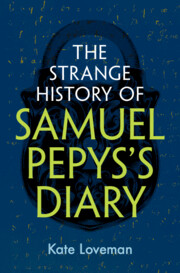
What Loveman is doing is not just assessing and explaining the Diary, but also putting it in its historical context across the 350 years of its existence. How and why Pepys originally wrote it – and the fact that it is almost certainly not JUST a diary recording his uncensored thoughts, but consciously constructed. And then, even more interesting for me, the life of the Diary after Pepys’ death.
The Restoration is not my favourite period, so I haven’t studied the Diary much, if at all – and being Australian, I wasn’t subjected to excerpts at school. So I had no idea that most of it is in shorthand, nor that for the last three centuries very few people have been able to actually read the Diary: what scholars have worked from is a transcription – a translation, even, given that transcribers don’t always know what was intended. And then there’s the fact that until the 1970s, there was NO unexpurgated version of the Diary published. Early editors cut out bits that were perceived as too raunchy, as well as bits that were perceived as too boring (also often, apparently, bits involving women…). So again, what people have “known” about Samuel Pepys has been constructed by choices, consciously or unconsciously made. The way Loveman sets out this publication history is completely absorbing in a way I hadn’t really expected.
This book is deeply historical: it’s thoroughly researched, involving I can’t imagine how much time in archives. It is simultaneously wonderfully engaging, clearly written, and inclusive of fascinating tidbits – a newspaper column written like Pepys during the First World War, making daily observations! And a biting section about the work of editors’ and transcribers’ wives, “With thanks to…”, for the enormous amount of unpaid work they have put in over the decades.
This is a book that appeal not just to folks who know something about Pepys and his diary, but to anyone with an interest in how history is constructed. Splendid.

 Randomly Yours, Alex