Buried Memories, Simon R Green
I received this via NetGalley.

I have not read any of the previous Ishmael Jones books; the NetGalley description doesn’t make it clear that this is part of a series. However, I am a long-time fan of Simon R Green, and as with many of his other books he provided enough background – without it being a massive info-dump – that I was able to carry on my merry way and enjoy the book regardless.
Ishmael Jones arrived on Earth in 1963; his dying spaceship turned the sole survivor into a human and wiped his memory of what had come before. Over the next few decades – covered, I assume, in the books I haven’t read – Jones has both tried to hide his identity from nefarious groups who would like to exploit aliens/their technology, and also investigated mysteries himself – because Simon R Green never missed an opportunity to do clever things with mysteries and whodunnits. In this narrative, Jones has realised he was not, in fact, the only survivor of his crash, and he’s going back to where it all started to try and get some resolution.
There’s banter, a spooky rural English village, murders, twists and turns and double-crosses, and ultimately a fairly satisfying conclusion.
Also, any book that opens with “Call me Ishmael” (except for the original) is going to get an appreciative eye-roll from me.
This was fun. Fans of Simon R Green know what they’re getting. Possibly not the place for those new to Green to begin their adventures (I would say that’s the Nightside books; the Blue Moon stories are a different kettle again).
Phoenix Extravagant, by Yoon Ha Lee
I received this to review via NetGalley.
I haven’t felt especially like reading big fantasy, or dragon fantasy, for quite a while now. Even when the author was Yoon Ha Lee, whose Machineries of Empire I love exorbitantly, I just thought… nah.
More fool me. Lucky that books don’t disappear forever, and that I have now been able to read this.
Jebi is an artist. All they want to do is make art. They apply for a position as an artist within the Ministry of Art, which will mean art but also working for the conquerors of their nation. When they fail to get that position, they must find an alternative option if they want to keep eating… and this leads to twists and turns they never expected, discovering friends and enemies and further difficulties of life in a conquered land.
This is set in a secondary world but it seems to me that Jebi’s home is analogous to Korea, with Japan as the conqueror, although it’s not a direct parallel. There’s magic, usually fairly low key and initially I wasn’t sure if it was intended to be ‘just’ superstition (later events show not). There’s also technology, sometimes working in tandem with the magic, as with the automata that seem like golems to my largely European trained eye; I don’t know if there’s a Korean or other Asian analogue. There’s tanks and guns but electricity is unevenly distributed – it’s a really interesting look at a world with unevenly distributed technology.… like our actual world. It’s also, as already implied, a deeply interesting take on the issue of colonialism and empire and collaboration and compromise and I really, really loved that aspect.
Brilliant. Hugely enjoyable.
Beyond the Blue Mountain
I received this book via NetGalley.
Interesting overall but with some frustrating gaps.

The intro to this book explains that it was begun as a memoir for children and grandchildren and later expanded for a general readership. This explanation is useful because it doesn’t read as a polished memoir. There are lacunae and years brushed over; the most egregious is what happens to his first wife. She is mentioned as having post partum depression with their first child, then the depression recurs over the next several years, and eventually she just… disappears from the story. And then he talk about holidaying with the woman who was initially his PA, and with whom he spends his retirement. In a book designed for the family this makes sense – the kids know what happened to their mum. For me this was just bewildering.
As the blurb outlines, this is partly the memoir of a rock climber, about which I’m not especially interested except that it does mean travel to interesting places, and partly the memoir of an almost accidental MI6 officer. That bit is also mostly interesting in the way it’s told here because of the travel involved. I’m not particularly up on the political intricacies of places like Benghazi in the 1960s and 70s so there were swathes of narrative where the assumed knowledge – which I don’t have – meant I didn’t have a solid grip of what was happening: names that meant nothing, dates likewise. Nonetheless, this was an overall entertaining story with some interesting insights into different places from the perspective of a intelligence officer who didn’t seem to perceive himself as a spy.
Neptune, by Ben Bova
I received this to review c/ NetGalley. Kinda glad I didn’t spend money on it… which gives you a hint of what this review will say.

Oh boy.
Do not come for character development or realistic relationship building.
The overall narrative is interesting enough and the theory that drives the second half of the plot itself is fine. But the scientific consequence isn’t nearly developed enough; it’s a leap. I’m all for short sharp stories, no need for a trilogy, but this was just a bit silly.
Lots of spoilers follow.
Character development: there really is none. The woman, Ilona, whose obsession with finding her father’s remains somewhere on Neptune funds the first venture to the planet, and basically drives the entire narrative? So little development as to be non-existent. The old space-sailor on his last adventure? basically no development beyond that. The scientist who doesn’t actually seem to have any real knowledge of Neptune, but who is in love with Ilona after a brief meeting… is just a nothing. And even the scientist who joins the second mission, apparently as a government stooge, is just… a nothing. There are hints of the possibility of intrigue: is she deliberately seducing the other scientist? is she also just a pawn? WHO KNOWS. WHO CARES.
When Ilona and co get to Neptune they discover her father is dead – OF COURSE – but they also discover what turn out to be alien remains. And somehow, very quickly, it’s decided that these aliens were responsible for destroying life on Uranus (how did we come to that conclusion? who knows!) and also an ice age on Earth. As I said, as a premise I am SO HERE for this idea. Explore the repercussions of this for me – either on Earth or in the wider galaxy! … but that basically doesn’t happen. There’s a politician who is worried for his career and scientists who don’t like it – which again, cool! explore this angle – but no. No exploration. It just ends up being boring.
And the conclusion is simply appalling. Like, really awful. Ilona’s obsession with having lost her father leads to her bearing his clone. This is gross and nonsense and just weird.
I won’t be reading anything else by Ben Bova having read this.
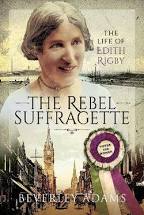
The Rebel Suffragette
I received this to review via NetGalley.
The good things:
- It’s always good to have another woman featured in a history book! And I mean that very seriously. Minor men have had tomes devoted to them. To have an individual suffragette whose name is not Pankhurst (not that I don’t love a Pankhurst) get a book is AWESOME.
- I love suffrage history in all its guises and having a book that’s about circumstances outside of London – or Manchester – is great.
These things are big and important. The negative things are generally smaller, so although there are more they are basically balanced in my mind. But these are important things to note, I think:
The negative things
- There are some really annoying editorial aspects. Partly this is about commas instead of semi colons, which I think must be from the editor becuase I’ve seen the same thing in other books from this publisher. It irks the editor in me.
- There’s a chapter about “Men and the Media”, which has basically nothing to do with the suffragette in question. If the author had placed her in a wider context more often, then this might almost have made sense a chapter – but even then I’d be dubious. This chapter had no place in this biography. And nor did the chapter about the relationship between the royal family and the suffrage question – it was completely out of place.
- The title. Almost by definition if you were a suffragette you were a rebel, and Edith did nothing that was rebelling against the WSPU general vibe. So the title is click bait at best.
- One of the historian’s problems with writing such a biography is the dearth of resources. There’s a fine line to be walked in between theorising from thorough research, and making vague suppositions about things like, in this case, the relationship between wife and husband.
- A couple of specific irritants: the idea that women went in hunger strike to be classed as political prisoners becuase then they’d get better perks, rather than becuase of a real political reason, is just insulting. Also, the author suggests that the whole WSPU and Pankhursts ditched campaigning in WW1, when actually Sylvia Pankhurst was disowned by her mother and sister for doing the opposite.
Finally, I found the discussion about whether 21st century can or should condone the militancy of the suffragettes quite lacking in depth. It was more a series of questions than a rigorous interrogation of the place of violence in political campaigning. And it didn’t really need to be included – there’s no need to pass judgement on the subject of your biography.
Overall I think this is a really worthwhile biography – Edith was clearly a fascinating woman and I greatly appreciated being able to learn about her place in the suffrage movement. I’ve seen the picture of her being removed from the gates of Parliament and had no idea who she was! It’s not perfect, but it’s a good addition to the suffrage library.
You Sexy Thing, by Cat Rambo
I received this to review via NetGalley.

This is right on the edge of “too silly” for me. It mostly doesn’t fall over, but skirts precipitously close. There’s mention of magic to do various things (although it all happens off-stage) at the same time that this is a galaxy-spanning society with a multitude of species and, it seems, a variety of FTL options for travelling around. There’s a bit of prophesying going on, too, just to add to the mix.
The blurb suggests this is Farscape meets Great British Bake Off. Yes to the Farscape: improbably different alien species interacting, living and working together; up to and including a biological ship, now I think about it. There’s also a bit of Firefly. These comparisons are good for me; if you’re able to suspend your disbelief about humans and squid-like and bird-like and vegetative species all being in the same place, then you’ll be fine with this. The GBBO comparison is a bit thinner and honestly that’s where I was a little disappointed. Cooking is definitely a factor here – the protagonists are running a restaurant when everything goes to hell in a handbasket, and features sporadically throughout. It’s not a competition and there’s not much baking, and really there could have been more food in general. So if what you’re really craving is a pretty food-based narrative, I don’t think this will meet your needs.
The story is a fairly straightforward one – which isn’t a negative: Niko and her companions were soldiers, now run a restaurant, things go boom (not their fault, swear), and then adventures ensue. Including hijacking and piracy and identity trouble and pasts coming back to haunt, etc. It’s fast paced, there’s a good amount of banter, there’s engaging characters, and no desire to make this any sort of morality tale or a solemn exposition of galactic society. It’s a romp, and for that it was well worth it.
(It should be said that there’s some rather surprising violence about halfway through – surprising because up to that point it hadn’t been graphic at all – which I found disquieting because it seemed so out of place.)
All up, a fun read, and honestly isn’t that something we need right now?
Bread & Water
I received this book to review via NetGalley.
This is a set of essays, many published elsewhere previously, written by a woman who has been many things: a chef, a restaurant owner, a writer; mother, both married and single; a culinary student and a teacher; resident on farms and in cities and, as these essays are written, back on the farm that was originally set up by her grandparents. The essays are ruminations on life, reflections on choices both good and bad, an exploration of cause and consequence, and a meditation on – as the title suggests – food and water: the place of both in our lives, how they can impact on the way we live, the positives and negatives.
When I read a book like this I think, How can I find more books like this? What category do they come under? I’m not interested in reading just any essays on life; the focus on food and, I suspect, having a female author make these particularly appealing. I’m also not always interested in just reading about food for its own sake – the connection to life more generally, here, as well as the stories behind the growing and making of food, helps make these essays intensely readable and occasionally challenging.
Hobsbawn-Smith is writing these essays having moved back to the Canadian prairie. She reflects on many moments in her life, from horse riding as a teen to the area around her farm becoming a lake for seven years, with stories of her sons growing up in between. Sometimes she recounts stories for their own sake; more often she’s thinking about what they mean – how they reflect and connect to other moments in her life, what they show about the importance of family and feeding each other, how she has come to be the person she is today.
I didn’t always agree with the conclusions about life that Hobsbawn-Smith reaches; and I suspect that, given the differences between us (age, aspiration, location) she wouldn’t have a problem with that. But I do feel challenged – reminded, rather – to consider food more meaningfully, to remember the love that making and giving food can show; to try and take life just a little slower; and to be more aware of where food comes from. Trying to be intensely locavore is something that works if you’ve got the time and the money, which is something society as a whole needs to struggle with – and it’s not something that’s particularly doable for me right now. But I can, for example, be more mindful of seasonality.
These essays were deeply enjoyable to read, both on an intellectual-challenge and -stimulation level and also as prose in and of itself. Hobsbawn-Smith writes beautifully of food, and nature, and experience; she has an entire essay of her love for a temperamental oven, which is a delight. She made me remember that food is more than fuel, that life can be lived slowly, and that doing so is worthwhile.
Wendy, Darling

I received this book via NetGalley.
Jean Rhys gave me the story of Bertha, Rochester’s first wife, in Wide Sargasso Sea. Seanan McGuire made me consider what happens to children when they come home from their otherworld adventures. AC Wise gives me the story of Wendy, and what happens after Neverland, and the reality about Peter Pan.
Peter Pan is an awful person.
(I should note that it’s well more than 20 years since I read Peter Pan, so it’s possible that I’ve missed some of the more subtle and clever nuances that Wise brings to the story. (And to be honest when Hook was mentioned, my brain immediately went to Dustin Hoffman…). Clearly, though, this is not a problem for appreciating the novel, Whether it would be as thoroughly appreciated with zero knowledge of the original is unclear; I suspect it would be fine, given the depth of story about Wendy as a human, but some of the references might be a bit weird.)
Wendy, Darling presents its story over a few different timelines: Wendy in Neverland. Wendy after World War 1, when she is committed – by her brothers – to an asylum. Wendy married, and a mother. And the story of Jane, Wendy’s daughter… I think you can guess what happens to Jane.
This book is amazing. This book is compulsive reading (I read it in 24 hours, and it only took that long because ugh, life). This book is sharp and piercing and reflects on a whole lot of the issues that the (white, patriarchal) world has come aware of since Barrie wrote his original. (Uh, hi there Tiger Lily….) And this book balances being well-paced and driven by action in some parts, with being deeply reflective and thoughtful in other parts. You know how sometimes you get to a different timeline in a story and you’re all “get on with it! get back to the other bit!”? That never happened here.
It’s about memory, and family, and loss, and compromise, and fidelity. The pain and the joy of growing up, the complexity of relationships, how much we can hurt the ones we love and how we can make our own families. And the fierce, wonderful, difficulty of life.
I just love it. Everyone should read it. It should be nominated for all the awards.
In the Watchful City

I received this book to review via NetGalley.
This… is a really hard book to write a review on.
I could just say it’s amazing, but that doesn’t give you much sense of, well, anything.
I could just say it’s a book you have to experience to appreciate but… that’s so deeply a cop-out I can’t even.
So. Let’s try this.
Characters? Varied and intriguing and even though you’re with most of them for such a short period of time, I felt emotionally connected to pretty much all of them. I’m pretty stony-hearted so that’s saying a lot. Gender diverse (two, I think, non-standard pronouns), very little physical description so imagine what you like of skin colour etc (aspects of Chinese-based world-building like references to foot binding had some impact on my imagination).
World-building? One of those instances where there are so many little moments where something is mentioned and I’m like “wait WAIT what? You need to explain that more!” and the author just ignores me (unsurprisingly) and although I don’t fully understand some idea (which might be my lack of cultural context or it might be deliberate), it turns out actually I don’t need those details to fully experience the world and the story. Having said that, by the end of the story I had a lot of tantalising detail that gave me a very full sense of the world – far more full than might be expected from a fairly short story, and especially one that’s not entirely linear.
Plot? There’s one main one – Anima lives in Ora, and works basically as part of a surveillance system, designed to keep citizens safe. Anima meets someone very unexpected, as well as experiencing tragedy. But along with that, there are additional stories, told to Anima via representative objects… and I loved Anima but maybe I loved the stories more? Some involve great loss and some involve victory and they all help to develop a sense of the world in which all of this is taking place.
It’s SF and it’s fantasy. The writing is gorgeous. It’s utterly absorbing. It’s going on my list of things to nominate for awards next year.
How Iceland Changed the World
I received this book to review via NetGalley.
Take a person, group, or – in this case – country that has rarely featured in mainstream histories of Really Important Stuff, and show how actually this person / group / country was significant.
I love this formula. It’s how you get great histories of women, a lot of the time, or Mark Kurlansky’s Basque History of the World. So taking the same approach to Iceland absolutely makes sense, and it really works.
Bjarnason is coming to this as a journalist, rather than as an academic, and that’s apparent in the writing style: it’s a bit more chatty, a bit more amused, than your classic history – even an historian that’s trying to be really approachable is unlikely to describe an early Icelandic historian as Iceland’s first nerd. I loved it: the book is super comfy to read – very engaging, and well-paced. The latter is aided by the fact he’s not trying to cover absolutely everything in Iceland’s history. Instead he’s picked a few key moments – as the title suggests, where Iceland’s history has interacted in interesting or significant ways with the wider world – to illuminate the several centuries of Iceland’s human habitation.
For me, I think the first few chapters were the most interesting. I knew the basics about Erik the Red and and Leif Ericsson and their escapades and ‘discovery’ of North America. Have I heard of Gudrid Thorbjarnardottir? No I haven’t. Because patriarchy. Anyway, she’s rescued along with a bunch of other castaways by Leif, and then went on a voyage that went to North America, where she gave birth to the first European American. There’s a lot in that. So those discoveries are the first chapter – along with the settling of Iceland and Greenland by these Europeans, and how that affected the rest of Europe – and then the second chapter looks at other ways Iceland interacted with medieval Europe. It focuses a lot on the recording of the sagas and how Iceland’s parliament functioned, and of course bloody Snorri Sturluson. And then the third chapter is Iceland’s volcanoes leading to several years of very, very bad weather and general climatic problems, some of which I’d heard of while others (like the lung problems in England) were completely new.
Chapters 4-9 are modern history, and most of it’s 20th century. This shouldn’t be too surprising because even though there’s a spectacular amount of evidence about Iceland from earlier than that, especially in comparison to some other places. it still doesn’t compare to modern obsessions with record keeping and, of course, our ability to store things durably (not that good quality paper is any defence against half of Copenhagen boring down and destroying the university and its records, no that’s not a random example). So there’s Iceland’s part in WW2 (small but significant) and in “the first of Israel” (through involvement in the UN), and Iceland in the Cold War – focused on Bobby Fischer.
There were only a few bits that didn’t feel like they worked, for me. In particular, discussing NASA”s sending of astronauts to Iceland to ‘practice’ on lunar-like surfaces is cool, but then a lot of the chapter was actually about the changing landscape thanks to the introduction of an invasive species (which some people happen to like). But this was a rare example of ideas not feeling like they fit together.
This was an absorbing book that taught me and entertained me and gave me more appreciation of Iceland. Which I suspect means the author can say “job done”.

 Randomly Yours, Alex