The Cold Commands
I’d like to say that The Cold Commands is a satisfactory or entertaining sequel to Richard Morgan’s The Steel Remains, but those who have read the latter would know that I was lying through my teeth; it couldn’t be either. So I will go with ‘appropriate.’ Other adjectives to describe it as a novel include ‘enthralling,’ ‘chilling’, and ‘relentless’.
You could probably read this without having read the first book, but personally I wouldn’t recommend it; partly because things make more sense in context, and partly because The Steel Remains is excellent.

The enthralling part comes largely from the characters: the situations they find themselves in and their development as people. As with the first book, the story is largely told from the perspective of Ringil, Egar and Archeth. Ringil is recovering – slowly – from his time with the dwenda Seethlaw, but he has changed: not only older, maybe wiser, definitely sorer, but in some even more intangible ways also involving blue fire and interest from the dark gods themselves. Ringil is a delightfully ironic take on the stereotypical fantasy hero; he’s a warrior, wields a sword gifted to him by non-humans, and has a strong sense of justice… but he’s also homosexual in a world that doesn’t accept that, has been disowned by his family and forgotten by most of the world, and doesn’t particularly want to fight most of the time. On the other hand, Egar Dragonbane quite likes fighting, almost as much as he likes having sex. Exiled from his home on the barren steppes, Egar is struggling to come to terms again with city living and his one-time mistress. Egar is definitely more in the Conan tradition, and provides an interesting contrast to Ringil, with the added benefit of more brains that nomadic barbarians have classically been awarded. Also, more humour. Rounding out a truly unlikely trio is Archeth, I think the most interesting of the three. She’s a half-breed – half human, half Kiriath, the now-absent one-time allies of the humans – which means she has access to and some control over what might be magic or might be highly advanced technology (there’s definitely some playing with the old Clarke adage here). She too is homosexual, leading to some difficulties, which combined with the fact that she is female and has the ear of the emperor – sometimes – leads to clashes with religious authorities. On top of all of this is her continuing anguish at having been left behind by the Kiriath, which she feels both as a betrayal, and as a failure on her part, of not being good enough to accompany them. These three came together many years before the events in even The Steel Remains, to deal with the threat posed by the Dragons. The Steel Remains was mostly about their individual adventures and problems, with those issues coming together towards the end to reveal the beginnings of a very interesting pattern. Here, they have their own chapters, but the links between them are more obvious and their private fights and confrontations more definitely, if still obscurely, connected.
Chilling and relentless describe the overall plot; both are to be expected in a novel by Richard Morgan. The Steel Remains left our (anti)heroes having defeated a possible dwenda invasion, and feeling slightly uncomfortable about what that might mean for their world. Dwenda are still something of an issue in this sequel, but there are other maybe-threats too, such as the Dark Court, the gods worshipped by some, who are paying an disturbing level of interest to the goings-on of individuals like Ringil; and something, or possibly someone, that appears to have newly come from the absent Kiriath but without a user’s manual. Plus there’s the everyday, run of the mill threats like a mildly crazy emperor (who might feed you to the octopus), unpleasantly near-crazy religious zealots, and inter-city strife over trade and slavery. The relentless part comes from the steady pace of things going wrong or new problems being discovered. It’s not frenetic, in that the characters are not running from one thing to the other unless they’re being chased; instead it’s like a normal few months where almost nothing goes to plan, and problems pile up on top of each other slowly and steadily. Ringil, Egar and Archeth find themselves involved in problems they would actually rather not have anything to do with, thanks all the same, but don’t seem to have a choice about. All of that is chilling, too, as is the uncomfortable knowledge that while there are some happy times for the three protagonists, this is unlikely to all end well. And then there’s the deft and clever world and secondary characters created by Morgan; that’s chilling too, because they are so very real. For example, the various cities and their politicking, internal and external, are intricate and recognisable, and quite clearly keep going about their business without much concern for the events being portrayed in the novel. Then there’s the slavery, newly legalised in a number of states. Slavery, and the treatment of slaves, is often portrayed in an unemotional way – as a business opportunity. It’s clearly not because Morgan approves of slavery; Ringil in particular works rather hard to stamp it out. But the presentation of how it could become normal very quickly is indeed chilling because of its plausibility. And the way that people appear to have forgotten recent history, too, is both plausible and recognisable.
Overall this is an enthralling piece of fiction, ticking a lot of boxes for me: quirky and original characters; action that’s well-described and gritty without being in love with gore; deft world building that doesn’t swamp the story; and a story that leaves me desperate for more. I am fairly sure that there should be a third book about Ringil and his grim band (not that I’ve seen anything official about that), which makes me very happy indeed.
Galactic Suburbia 51
 In which women aren’t funny, don’t write important books, but come in handy as assassins and thieves. You can get us from iTunes or download us from Galactic Suburbia.
News
Connie Willis named SFWA Grand Master
Liz Bourke on Strange Horizons & the art of the mean review
Survey shows that men (as well as women) often play characters of the other gender while gaming – in many cases, men are bored with or alienated by the big musclebound male characters, which game designers think they want. Sound familiar?
Hoyden about Town are asking for guest bloggers to crosspost their Australian Women Writers Challenge reviews on Hoyden (ASIF also keen to do so)
More on feminine tosh: a good solid article in the Australian media (shock!) about the women in literature issues of recent months (and, you know, decades).
Have we been following the “Women aren’t funny” stoush that played out in NYT? This interesting development.
DC Comics – cancellations & new titles – Tansy is especially excited by World’s Finest (featuring the Earth 2 Huntress & Power Girl)
Stranger with My Face – Women in Horror film festival in Hobart, Tasmania – 17-19 February
Tansy’s book launch for Reign of Beasts (Creature Court Book Three) on 2 February at Hobart Bookshop, 5:30pm.
What Culture Have we Consumed?
Alex: Ashes to Ashes season 2; Dr Who season 1; Rocannon’s World, Ursula le Guin; The Declaration, Gemma Malley; Grey, Jon Armstrong; The Collected Works of TS Spivet, Reif Larsen. BBC 4 “Cat Women of the Moon” podcast
Tansy: Destination: Nerva (Big Finish, audio), Astonishing X-Men by Joss Whedon, The Name of the Star by Maureen Johnson, DVD Extras Include Murder, by Nev Fountain
Alisa: absorbed in novel submissions; The Big Bang Theory; Swordspoint Audiobook, written and performed by Ellen Kushner
GS Award will be proclaimed… in a short while!
Winner of Alex’s Yarn giveaway: Jo
Tansy: Creature Court trilogy give away!
Email to tell us about one book you read after we talked about it on GS to be eligible
Please send feedback to us at galacticsuburbia@gmail.com, follow us on Twitter at @galacticsuburbs, check out Galactic Suburbia Podcast on Facebook and don’t forget to leave a review on iTunes if you love us!
Galactic Suburbia: now half a century old
 In which we leap happily back and forth (with occasional ranting) over those fine lines between feminist critique and anti-female assumptions, plus share our bumper collection of holiday culture consumed. Happy New Year from the Galactic Suburbia crew!
NEWS AND LINKS
Hugo nominations open and we’re gonna have our say
Aqueduct Press will be publishing Brit Mandelo’s thesis, “WE WUZ PUSHED: On Joanna Russ & Radical Truth-telling”!
Islamic superhero comic turned animated series The 99 to screen in Australia (ABC3)
Amanda Palmer’s wedding post
Great piece on how the very idea of ‘Mary Sue’ is sexist, ties into this episode’s theme about the criticism of female characters.
The wealth of powerful girl heroes in today’s YA
WHAT CULTURE HAVE WE CONSUMED?
Alisa: Shades of Milk and Honey, Mary Robinette Kowal; The Freedom Maze, Delia Sherman (with cover art by Kathleen Jennings); The Vampire Diaries; Primeval; The 99; Planetary; Homeland and Boxcutters.
Alex: The Double Life of Alice Sheldon, Julie Phillips; Changing Planes, Ursula le Guin; Perchance to Dream, Lisa Mantchev; Twilight Robbery, Frances Hardinge; Chronicles of Chrestomanci vol 1, Diana Wynne Jones. DOA and Going Postal.
Tansy: The Freedom Maze, Delia Sherman; Beauty Queens, Libba Bray; Snuff by Terry Pratchett, Going Postal (TV) – Batman (animated) & My First Batman Book by David Katz, David Tennant & Catherine Tate in Much Ado About Nothing (DIGITAL THEATRE DOWNLOAD AWW YEAH).
Please send feedback to us at galacticsuburbia@gmail.com, follow us on Twitter at @galacticsuburbs, check out Galactic Suburbia Podcast on Facebook and don’t forget to leave a review on iTunes if you love us!
Distress: a Greg Egan novel
 Thanks to this book I finally (kind of) understand what anarcho-syndicalism is. Ish.
This was a brilliant book on a lot of levels. It takes some really serious physics that had even me cross-eyes at points, adds gender/sexuality politics and anarchy-syndicalism, and even manages to have a plot in there.
The physics: the plot revolves around a physics conference and the possible revelation of a Theory of Everything, courtesy of (female, African) Nobel Prize winner Violet Mosala. There are people with conflicting theories, and others who – for reasons of their own – don’t necessarily want a Theory of Everything, thankyouverymuch.
Gender/sexuality politics: this is not a world where people pretend that there are only male and female. Instead, there are seven genders: en-male and en-female (what society today would class as ‘normal); asex (which covers a whole spectrum of people, from those who choose to become physically asexual through to those who choose to appear as such to the world); ifem and imale (which sad to say I’ve forgotten what they are!) and ufem and umale (u might stand for ultimate, I’m not sure; I thought of them as the airbrushed and queasy-making sorts you see on body-building magazines). There’s a wonderful section near the start where the main character talks about gender and gender migration as “ninety percent politics,” and that becoming asex in particular is a protest action. It’s really thought-provoking stuff, not least because I think it’s done really neatly and while there is a bit of info-dumping, it is in context and it is relevant to the story – and it’s not preachy, either.
Anarcho-syndicalism: the majority of the book takes place on Stateless, an engineered atoll run on anarcho-syndicalist lines. Which no one in the wider world of politics is very happy about. There’s some quite intriguing discussion of how this works and why the place doesn’t collapse into genuine and destructive anarchy, which – like the gender discussion – mostly feels natural. Frankly, even when it doesn’t I found it so intriguing that I didn’t much care.
The plot: a fairly pedestrian journalist/documentary maker Andrew ends up on Stateless to cover the physics conference and particularly Mosala and her ToE. There are complications: physics-related, political, personal. There are twists and revelations. It’s fast-moving enough that I certainly didn’t get bored; there’s enough character development that I was happy to follow Andrew on his voyage of exploration and discovery, and I liked Mosala too – she’s more complicated than Andrew, and although it might have been interesting to have some of the story from her perspective part of the point of the novel is, I think, the public perception and representation of people.
One of the other things I really liked about Distress is that it is quite Australian. There’s a great bit where Andrew is talking about civil rights, and he mentions a few people who might get annoyed if they were told to avoid generalisations: Dr King, Ms Greer, and Mr Perkins. I would bet there’s a lot of people in Australia, and most outside of it, who wouldn’t get that reference. But Egan doesn’t explain it (which I liked). There’s also a rather bitter section midway through about “Professional Australians,” which sounds like quite the rant against politicians but also perhaps ex-pats who get the job (somehow) of defining Australia to foreigners, full of “a claustrophobic vocabulary of tired nationalist myths.” It also has a rather harsh critique of Young Einstein, which I remember loving but I’m sure the Suck Fairy has visited in full force.
Alice Sheldon and James Tiptree Jr: a remarkable life
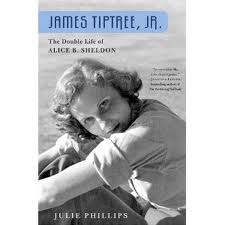
It’s probably impossible for me to give an adequate review of this amazing biography. It is written so beautifully, and Sheldon/Tiptree’s life so extraordinary, that it’s hard to encapsulate in anything other than this book.
For those late to the party: Alice Sheldon wrote SF as James Tiptree Jr and remained incognito for many years. This biography sets out Sheldon’s entire life, though, not just the fiction-writing part, because it is truly a life worth recording. She went to Africa three times, with her parents, before the age of 15 – one time on a gorilla-hunting expedition. Life at home was no fairy tale… and she got married at 19 to a man she had only met a few times. They stayed together for about 6 years. She tried university, she tried being an artist, she tried journalism. She joined the WAC during WW2 and thus met her second husband, Ting. She got a doctorate in psychology, she tried chicken farming, and – the reason most people will read this bio – she wrote science fiction, mostly in short story form. She was a complex woman, probably a difficult one, beset by a number of demons – how to deal with emotions, her mother, depression, anger, and drug use. I’m not convinced I would have liked her as a person. That’s beside the point, though.
This is not a happy story. There is a lot of heartbreak and difficulty in Sheldon’s life, on large and small scales. Phillips’ discussion of her depression and drug use is sympathetic: not so delicate as to ignore it, not romanticising it or making excuses, just… this is how it was. Which was heartbreaking, to be honest. The way Sheldon herself wrote about her feelings and frustrations was agonising, perhaps because, frankly, it was (for me) just faintly recognisable.
One thing I really liked about this biography is Phillips’ use of names. She calls her subject Alice early on, and Alli after Ting’s mother starts using that nickname (she loved it apparently). She also uses Tiptree when referring to the fiction and letters and possible thoughts of that alter-ego, which I think is a lovely way of complicating what could otherwise be dismissed as ‘simply’ a nom-de-plume. (Phillips also devotes some time to Raccoona Sheldon, and how Tiptree and Raccoona were seen to interact by editors etc.) It’s a true history book too: Phillips has used a lot of primary material, and – delightfully – quotes from it frequently. This worked really well, and was utterly riveting, when it came to Tiptree’s letter writing. Tiptree was an inveterate letter-writer; fan letters, letters accompanying stories, the occasional letter to a magazine… Tiptree was a regular correspondent of a huge number of people, and by regular that might be a letter every fortnight or so. And the people? Oh, Ursula le Guin and Joanna Russ, for example. (My head exploded a little bit at the idea of those three exchanging letters and talking about each other to the other. Which they did.) Yes, it did inspire me to write a fan letter to Julie Phillips.
I am not of the opinion that one must know the gender, sexual orientation, ethnicity and schooling history of an author in order to understand or appreciate their work as a piece of art. There is, however, no denying that some background or knowledge can add depth. Knowing Tiptree to be a woman does change how we read some of his/her fiction; and knowing something of her struggle with sexuality and sex can add depth, too, as well as her experiences of colonialism in Africa an Europe after WW2.
These comments haven’t even touched on Sheldon’s sexuality, her politics, or any number of other issues in her life. It’s a really, really great biography – even if you’re not interested in Tiptree’s fiction, this is a remarkable life, and illuminates all sorts of interesting things about life in one part of America from the 1920s to the 1980s.
Changing Planes: a Le Guin collection
 I am a big fan of le Guin, but this is definitely not a favourite collection. It’s amusing, but it’s not excellent (for me, anyway).
The conceit behind the collection I did really like: the idea that the boredom of sitting in an airport could trigger a visit to – wait for it – a different plane, as in of existence. It seems to be that the body itself does the travelling, because people come back with presents and sometimes arrive back on their own plane upside down. This is quite a fun take on the idea of alternate realities, since I think the idea also is that all of these planes are variations on Earth.
Each story in this collection is set in, or describes, a different plane, and many of them have little actual plot. It’s more like a travelogue, which makes sense and perhaps accounts for my less-than-in-love reaction. Some of them are very clever; some of them are quite clearly making a specific point about contemporary ideas, technology, or issues, or are presenting a topsy-turvy view to challenge and confront the reader. So there’s a plane where almost everyone is royalty; one where after about the age of 7, hardly anyone speaks; and one where people share their neighbours’ dreams. There’s a plane where two major cities fought for decades over a couple of acres of riverside property, and one where developing wings is a disability to be pitied. On another plane a scientific experiment attempted to develop children with no need of sleep, raising questions of the necessity of consciousness and sleep for sentience, and another where violence is a way of life.
I guess I expect le Guin to always turn out serious, hard-hitting and difficult fiction, which this is – largely – not. It’s a bit unreasonable of me, but there you go; I don’t expect light-hearted from her! It is a delightful collection, though, and of course all of the stories are very well written and there are some totally delightful descriptions.
Boxing Day Super Mega Podcast #2
Stolen largely from Jonathan:
The day after Christmas is a special one, dedicated to winding down after a day of feasting and gift giving, laughter and merriment. Things slow down – unless you have a taste for the mega-discount sales – and people tend to relax with family.
This Boxing Day, a bunch of participants in Australian podcasting joined together to record The Second Annual Boxing Day Super Mega Podcast. Participating were:
- Alex, Alisa, and Tansy from Galactic Suburbia;
- Ian and Kirstyn from The Writer and the Critic; and
- Gary and Jonathan from The Coode St Podcast.
Sadly, Grant from Bad Film Diaries couldn’t make it.
What we ended up with was seven seven people talking, in a fairly organised manner, about their highlights of 2011 and what they’re looking forward to in 2012. Because I [Jonathan] was doing the engineering for this there was a stuff up and the first 20 minutes of the podcast were lost forever. Alex and I did a quick do-over and new intro which we think works pretty well. Either way, we all hope you enjoy it, and that you check out our individual podcasts which will be coming out in the next weeks and months.
You can listen to the recording here, or stream it from iTunes via The Coode St Podcast.
Spoilerific book club: YARN
 In this, episode 49 of Galactic Suburbia, we have a spoilerific one for you. This time we’re tackling Yarn, by Jon Armstrong. It is totally full of spoilers. Please only listen to this podcast if you’ve read the book, plan never to read the book, or really and truly don’t mind spoilers. You can get it from iTunes or download/stream from Galactic Suburbia.Characters:
Tane
Vada
Kira
Pilla
M-Bunny
Authors & books mentioned:
Janet Catherine Berlo – Quilting Lessons – Notes from the Scrapbook of a Writer & Quilter
Jennifer Chiaverini
The Friday Night Knitting Club novels – Kate JacobsAlso, GREY (the not-prequel set in the same world) is up for grabs – comment with your thoughts on YARN and I’ll choose a random winner.
Bad Power is so good

This fourth in the Twelve Planets series, from Alisa at Twelfth Planet Press, comes back to the idea presented by the first collection – that of an interconnected suite of stories, which build on and enhance one another but also stand by themselves. I think this comes second only to Love and Romanpunk for me, so far, and as I’ve already discussed, I’m in no way unbiased about that delightful little book.
The overarching idea here in Deborah Biancotti’s set is, as the title suggests, the use and abuse of power – especially when it is given to ordinary, or even undeserving people. The blurb asks “Hate superheroes? Yeah. They probably hate you, too.” It feels to me that the idea of ordinary people having powers and struggling with them is something that’s only become interesting in the last few years. Biancotti does not present unreservedly heroic or villainous people, in general, here. They do some stupid things… but they’re not out for world domination. They do some heroic things… but they have their struggles and failures, too.
The first story is “Shades of Grey,” in which Esser Grey confronts the idea of immortality and finds it not really to his liking. His reasons for not liking it involve some intriguing of character development, and the consequences should be ruinous for him but mostly end up being so for other people around him instead. I don’t think you can like Grey, exactly, but his story is an excellent introduction to the issues of power as Biancotti imagines them. And we are also introduced to the wonderful Detective Palmer, who keeps popping up throughout the rest of the sequence. Like in the second story.
“Palming the Lady” might be my favourite of the set. Not that it’s a pleasant story, by any stretch of the imagination. There’s a somewhat spoilt rich boy, son of a famous father, who claims to being stalked by a homeless woman; Detective Palmer, newly in the bad books at work, is assigned to look into it. Which means talking to said homeless woman at much closer quarters than she is comfortable with, and finding out more information than she is comfortable with. The ‘stalker’ is confronting on a number of levels: for her appearance, and her (lack of) status, and her talent. And for the conjunction, too, of a remarkable talent in an unremarkable woman. I did not like the rich boy, Matthew, but fortunately most of the story is actually about Palmer, who shows delightful tenacity as well as an endearing capacity for not understanding things immediately. Also, a weary love of humanity.
My dislike of Matthew made me slightly wary of “Web of Lies,” the third story, because it features him again. Fortunately, this is quite a different story, and quite a different Matthew too. It begins at his father’s funeral an unspecified amount of time after the second story,and – appropriately – features his mother to a much greater extent than “Palming the Lady.” There, Palmer met her once and dismissed her as having “a prescription problem.” This story delves into her life and shows it to be about far more than simply a bored housewife and overuse of valium. This one creeped me out quite a lot; somewhat sinister mothers will do that. Matthew is theoretically the centre of the story, with his problems in understanding the power that he is coming into, but the mother is where my interest really lay.
The fourth story is quite different, and it took me a while – in fact, until reading the next story – before I really understood how “Bad Power” really fit into the suite. I think it works overall, but certainly when I first started it I was a bit confused. Partly this is the difference in narrative voice: where the first three are third-person, modern Australia, and set in wealthy enough areas, this one is first-person, somewhere ill-defined, and very definitely not well-educated. It’s an unpleasant story (again). In this case the unpleasantness comes about because of other people’s reactions to our narrator’s power, which haven’t been explored on a medium-to-large scale in any of the other stories. And it definitely provides interesting context about how attitudes towards ‘power’ have changed, as well as attitudes towards individuals and, hmm, maybe social responsibility? After I got into the rhythm of the narrative style this was a really good story.
Exploding the Twelve Planets paradigm, this collection has FIVE stories, finishing off with “Cross That Bridge.” In many ways it ties together aspects of all four of the previous stories in nice, but not too neat, ways – ways that still leave me hungering for more story set in this world, for sure. We’re back with police work, this time with a Detective Ponti (heh, Latin joke!) at the helm, looking for a missing child. This is probably the most hopeful of all of the stories, where power is used largely for good – or at least mostly non-destructive – purposes, and where indeed an actual purpose for the powers exhibited so far can be imagined, and undertaken.
As should be obvious, all of these stories tie together, and I can see the reasoning behind the sequencing. However, I think you could probably read them in any order (hmm, except perhaps #2 and 3, which should be read in sequence) and enjoy the exploration of ideas they present. You could also, crucially, enjoy them completely independently – although I would imagine that that would leave you wanting more, to an even greater extent than I do at the moment. This collection really works.
Tiptree, and a collection of her short stories

I bought this collection of James Tiptree Jr’s short stories (and two of Raccoona Sheldon’s) because I was going to be part of the 2011 Women in SF Book Club, being run over at the (now-defunct) Dreams and Speculation blog. D&S’s now-defunct status is part of the reason why it’s taken me the whole year to read the collection – although to be fair it would have anyway, since the idea was to read 1-2 stories per month for the book club. But instead I’ve read the last third in the lat two days. I tried to host the Tiptree bit here on my blog: I posted my own spoiler-y thoughts on Delicate Mad Hands and Houston, Houston, Do You Read? However, I didn’t get much interest in them, so I discontinued it.
Now, however, I have finally finished the collection! And what a collection.
I have read bits and pieces of Tiptree’s work before, but most of these stories were completely new. The thing that most immediately strikes is that that they are intimately concerned with life and death, and with reproduction in defiance of the latter. I know this could be said about a lot of authors, but it really is a clear and obvious preoccupation in many of these stories. Perhaps not coincidentally, Tiptree can in no way be described as a happy writer. Which is not to say that she lacks joy; there is a great deal of that fierce, loving-life-in-the-face-of-death joy that can be both poignant and exultant, in these stories.* But you could bet on a story having a not-entirely-happy ending, and much of the time you would win.
And yet I love it. Tiptree breaks my heart and yet I love her writing. She is confrontational – about humanity, about individuality, about reason – and she is challenging, she is grim and she breaks my heart but there are very few stories that I didn’t love in this collection, even if they gave me agony.
What didn’t I like? I didn’t enjoy the titular “Her Smoke Rose Up Forever”, nor “Love is the Plan the Plan is Death.” The former was, I think, too… cold? for my liking; the latter was, dare I say it, a bit too weird – it was too hard to really figure out what was going on, who was speaking and why. Really, it just didn’t grab me. Ditto “And So On, and So On,” which was a let-down of a piece to end the collection with, although I guess I can understand the rationale; it sort of wraps up the entire collection and everything it’s been saying, and suggests that maybe it’s just the self-involved mutterings of a “kid these days.” That sort of deliberate invitation to dismiss everything that came before really didn’t work for me.
However, that leaves 15 stories that really worked for me.
The collection opens with “The Last Flight of Dr Ain”, and it meshes quite nicely with “The Screwfly Solution.” Both appear to deal with some sort of plague affecting the whole world, although the diseases have different impacts. “Screwfly” in particular is a scary read, as a woman – how male sexuality could be manipulated.
“And I Awoke and Found me Here on the Cold Hill’s Side” – the title an allusion to Keats – is one that I had read before and one that gets me every single time. Human-alien contact stories generally fall into two categories: “zomg they’re going to kill us!!!” or love-in. Tiptree presents a third option: we care, they don’t. It’s a subtle story, and I think one that tends to play on the mind – whose impact deepens the longer you think about it. “The Women Men don’t see” deals with a similar-ish story, and is probably the least obviously SF of the stories in the collection. But the description of male/female interaction, and the perception particularly of men’s behaviour, is brilliant. And heartbreaking. Probably the weirdest story of the lot, also dealing with an alien encounter, is “A Momentary Taste of Being.” It’s also I think the longest in the collection, I’m sure reaching novelette length. It’s amazing and horrendous at the same time: the interactions of the humans on a survey mission are, to a large extent, frightful; the backstory Tiptree gives some of the characters abhorrent; the reality of the alien is weird and mind-blowing and masterfully original. I’m not sure that I loved it, but I’m definitely in awe.
“The Girl who was Plugged In” is a most remarkable piece for 1973, anticipating as it seems to GPS and reality TV is horrendous ways. This is one that made my heart bleed and yet I loved it. It’s so clever – Tiptree had such a searing way of evaluating humanity, our foibles and penchants, and they come through here, in talking about what we love and what we discard; in this case, humans who do and don’t fit our preferences. That also connects in some ways to “With Delicate Mad Hands,” which is another heart-rending but fiercely awesome stories – of beating the odds, of being what you want to be, and finding fulfilment. Cold Pig is one of the most wrenching of Tiptree’s protagonists, because of what she endures and the dreams that she holds.
“The Man who Walked Home” is post-apocalyptic and takes place over a long period of time, and shows Tiptree’s very clever manipulations of time and physics; it’s one of the few stories that doesn’t deal with aliens, in some way or other. It suggests a somewhat gloomy view of humanity’s future, which isn’t necessarily present in all of her work – for example, “And I Have Come upon this Place by Lost Ways” and “On the Last Afternoon,” along with numerous others, imagine humanity having spread out through at least part of the galaxy, if not always to everyone’s betterment. “And I Have Come” reflects a certain view of how to colonise, I think, which Tiptree challenges in really interesting – if somewhat nihilistic – ways – while “Last Afternoon” has a human dealing with two different types of alien creature and being confronted with his own, and his species’ mortality. Also post-apocalyptic-ish is “She Waits from All Men Born,” which is Tiptree’s most obvious meditation on the issue of death and its intimate connection to life. Very, very, clever.
“Your Faces, O my Sisters! Your Faces Filled of Light!” seriously, seriously broke me. IT’S SO SAD. I’m pleased to see that this one was published as Raccoona Sheldon, because I cannot imagine anyone thinking this was actually written by a man. At the same time, “Houston, Houston, Do You Read?” was published as Tiptree, and it’s one that I can kinda understand as being seen as masculine, but at the same time – so, so not. “Houston” is one of my favourites of the whole collection; it’s just so damned clever, the reveals come so teasingly and obviously, once they’re there.
“We Who Stole the Dream” is, I think, the only story not written from the point of view of humanity. Instead humanity is in the place of ignorant, unhelpful alien – which is quite a shock in the middle of the collection. It’s also, to my grieving heart’s extra battering, apparently set in the same universe as Brightness Falls from the Air, because it references Star Tears which are intricately involved in that (brilliant) novel’s plot. This is another really clever story about the lengths people (in this case non-human ones, but whatever) will go to, for their children. And so, in some ways, is “Slow Music” – another of my absolute favourites. Here humanity has interacted with aliens, but we never see them – we just see the result, which is the River, which appears to have attracted almost everyone on Earth. And so we’re left with a boy, who comes across a girl… and then there’s a most marvellous examination of modern life and its trappings.
This is a seriously brilliant collection. I would recommend, though, not reading the introduction first, because there are a few spoilers, as I found to my annoyance.
*In case you’re just joining us, James Tiptree Jr = Raccoona Sheldon = Alice Bradley Sheldon.

 Randomly Yours, Alex