Witches of Lychford
 This book was provided to me by the publisher at no cost.
In Witches of Lychford, Paul Cornell takes the idea of witches being people (and particularly women) who are tasked in some way to protect the humdrum population from things they don’t understand. Here, the place is a bog-standard (on the outside) English village, which is facing a very real and common threat: a giant supermarket chain wanting to move into the village and Change Things. On the face of it those things are alarming enough for those who are traditionalist, or who moved to the country to get away from big business and the corporate nature of the modern world. Underneath, though, is a far more alarming truth – that changing things in Lychford, such as boundary markers and the like, could have devastating results for the way the ‘real’ world interacts with the world of Faery and other, more malignant dimensions.
Cornell’s focus is on the three women who might have a chance to do something about this. By far my favourite is Judith Mawson: at 71, she has “a list of what she didn’t like, and almost everything – and everybody – in Lychford was on it.” There’s a point late in the story where she grudgingly tells someone they are not on that list. Cranky old women for the win, I say. Judith is competent but not a superhero; she gets things done and grumbles about it – and sometimes she fails. Also, her tragedy is absolutely and completely appalling.
The other two women were less convincing to me. Having read a few of these Tor novellas it’s striking to see some of the similarities – I don’t know whether it’s deliberate or if it’s just fallen out that way in my reading. But there are some similarities in theme between this and Angela Slatter’s Of Sorrow and Such, and in one of the young women there’s a link to Seanan McGuire’s Every Heart a Doorway because she spent time in the land of Faery and has been damaged by it. Her friend is the newly-arrived pastor, whose faith has been challenged by events in her past and who is really not feeling like she fits into the parish, where she herself grew up. Lizzie, the pastor, and Autumn both felt rather flat to me – especially coming off the back of McGuire and Slatter. Their issues were less emotionally gripping than I would have liked and they did not especially appeal to me as people, either (or perhaps concurrently). Nor did their role in solving the problems feel like it was fundamental.
Despite this problem of characterisation, I did still enjoy the book. It’s not a significant addition to the fiction on witches, or the real/faery divide, but it’s an interesting story and there are some lovely moments.
Attack of the Clones
Our idea initially was that we would watch one episode a week, which would get us about up to episode 7. But Phantom Menace left such a bad taste in our mouths that we decided we had to watch the second: it’s not a great film, but at least it’s not as bad as the first. Right?
So:
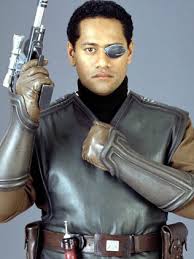 Attack of the Clones: things that weren’t too bad:
- Jay Laga’aia.
- Ewan McGregor’s hair is definitely better in this film.
- Obi-wan in general is better in this film. He’s better when he’s stern.
- Female assassin.
- Female Jedi!!
- Yoda in a city.
- Yoda taking part in politics.
- YODA FIGHTING.
- Jedi younglings are super cute.
- Jango Fett.
- Boba Fett.
- Christopher Lee!
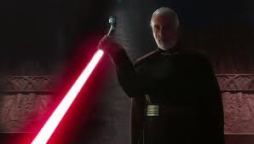
- Christopher Lee in a speed racer!
- Christopher Lee with a light sabre!
- Christopher Lee fighting Yoda!!
- James: at least they got John Williams back.
- And the use of CG isn’t quite as bad as Episode 1.
What were you thinking, George?
- Not enough Jay Laga’aia.
- You kept Jar Jar, George. You kept Jar Jar.
- Amidala + Anakin: everything about every scene they are in together.
- Amidala’s clothing choices. I’m not presuming to speak for every woman here, George, but I think it would have been more realistic for a woman who is being forced to be alone with a man whose romantic interest makes her uncomfortable not to wear provocative clothing. YES she has a choice in what she chooses to wear, NO I am not blaming her for Anakin’s infatuation, but nonetheless it’s a dubious choice for your costuming.
- Anakin in general.
- So petulant
- So creepy towards Amidala
- His rebelliousness towards Obi-wan is just embarrassing.
- You have NO RESPECT FOR PHYSICS, George. Super leaps between struts is one thing. But the level of timing required to jump from the speeder onto the assassin’s speeder, not to mention the leap itself, is truly ludicrous. NO RESPECT, George.
- Amidala always getting pushed around by the menfolks. Boring, George.
- You fridged Shmi Skywalker, George. Couldn’t you at least have given her a bit more of a story for herself? Shown her with Jack and the kids?
- You made Christopher Lee say some really bad dialogue, George. That’s nearly unforgivable.
- James: the CG is still pretty bad.
The Phantom Menace
In honour of The Force Awakens coming out… whenever that is, we’ve decided to rewatch Star Wars. All six. In in-universe chronology.
Yes, today we watched The Phantom Menace.
The Phantom Menace: things that weren’t too bad:
- The references to the original trilogy were mostly kinda cute, and not all of them were over the top. The “I have a bad feeling about this” is meant to immediately make someone like me feel at home, and I liked that. Also going through a ventilation shaft was pretty funny.
 The meet-cute of C3PO and R2-D2 is, indeed, quite cute.
- The cameo from Warwick Davis: weird! But cool.
- Samuel L. Jackson.
- A nod to diversity: at least two noticeable black humans and two female pilots! Amazing.
- Liam Neeson’s hair.
 The fight between Qui-Gon and Darth Maul is fantastic.
- Double-ended light sabre!!
- James: the music. At least they got John Williams back.
What were you thinking, George?
- It’s a film about trade negotiations going wrong. I mean really.
- TOO MUCH CGI GEORGE. This is why we can’t have nice things.
- Qui-Gon’s use of mind tricks as soon as things are slightly difficult is just repulsive.
- Darth Maul. Not his existence, his lack of one. What a wasted character, man.
- He has basically no dialogue!
- He has no motivation!
- His fight with Qui-Gon is too short.
- The pod race. I did not need to see all three laps, George.
- The Gungans. I am all in favour of ignored/oppressed people showing they have something to contribute, but did it have to be in such a racist and boring way?
- Jar Jar Binks. Everything about him.
- I do mean everything.
- Anakin.
- Ani? Really? For the boy who grows up to be Darth Vader? Seriously.
- Why did you make him so young?
- Why did you make him so petulant?
- Didn’t your casting call throw up any other options?
- Ewan McGregor’s hair.
- Qui-Gon is a master Jedi and he’s fooled by some make-up as to who actually has the power in the entourage of women? Really?
- George, you made Anakin the product of a virgin birth and only spent ten seconds thinking about it. I mean, seriously, man, what the hell?
- James: the visuals reminded of Bedknobs and Broomsticks. It just looked plastic.
Galactic Suburbia 129
In which we explain the metaphorically violent nature of Australian politics, celebrate the return of Feminist Frequency and our faces are on the internet.
And I am late in posting this! Holidays will do that, when you don’t take a laptop camping… you can get us from iTunes or Galactic Suburbia, anyway.
What’s New on the Internet
Malcolm Turnbull is not Tony Abbott: the Australian Spill Story
Our national sport
The onion thing, no we don’t get it either.
New Feminist Frequency Tropes v Women in Video Games – Women as Reward & Special DLC Mini Episode.
The Three Hoarsemen Podcast Episode 25 featuring Alisa
Galactic Suburbia on Books and Pieces
What Culture Have we Consumed?
Alisa: Mad Max Fury Road; Undisclosed: The State vs Adnan Syed Podcast
Alex: Slaughterhouse 5, Kurt Vonnegut; Archer’s Goon, Diana Wynne Jones; I finished Stranger in a Strange Land!! Also Of Sorrow and Such, Angela Slatter
Tansy: Dawn, Octavia E. Butler; Bombshells #1, Marguerite Sauvage & Marguerite Bennett; The Cornell Collective; Supernatural
Please send feedback to us at galacticsuburbia@gmail.com, follow us on Twitter at @galacticsuburbs, check out Galactic Suburbia Podcast on Facebook, support us at Patreon and don’t forget to leave a review on iTunes if you love us!
Rampant
By Diana Peterfreund
Sadly I did not love this book as much as I had hoped. Partly this is me, partly it is the book.
I had read the novella, Errant, so I thought I kinda knew what the story was going to be about. But Errant is set… I forget when, some time in the past. Rampant is not; it’s about a girl in modern America learning about unicorns. Which is fine, it was just a bit of a surprise. I had t read the blurb, deliberately; I didn’t want any spoilers since I figured it was going to be the sort of book I’d like anyway.
Killer unicorns? How can that not be awesome? That’s what it’s about, by the way. Unicorns are real and they hunt animals and people. Only certain people can hunt them in return. This is the learning-about-your-abilities book. If that’s your thing, feel free to ignore my whinging! Just go read it; it’s certainly enjoyable enough that I wouldn’t dissuade potential readers automatically.
Anyway, what I really had not expected was how much the book would be focussed in sex. Not having it, how people feel about you if you do or don’t, etc (do American teens really feel pressured to have sex before they leave high school??). It does make sense, given that Peterfreund has kept the virginity aspect for her unicorn hunters, but… it felt like it got in the way of what I was expecting, which was learning about unicorn hunting and dealing with that aspect of your nature. Which, yes, virginity is part of that. But there was a lot of going on dates and agonising which I guess just isn’t what I was interested in reading.
So I’m willing to agree that in that aspect, definitely a problem of my expectations. And I did like the discussion around rape, attitudes towards and reactions to, although the victim seemed to deal with it faster than I would expect. (Not that I want intense victiming either, necessarily.)
On the book’s side, I felt that the plot went a bit too fast sometimes; fast enough that things got a bit improbable (yes yes, around the killer unicorns bits) and too convenient. In the characters I especially found Astrid’s mother a bit much; a bit ridiculous.
For all its faults I will definitely read the sequel, Ascendant, at some point.
Up the Walls of the World
This book is absolutely bonkers. Mad. And completely wonderful.
This was Tiptree’s first novel, but naturally enough many of the concerns and interests of his short stories are present here as well. I am so sad that he did not write more novels; this made me so happy, as did Brightness Falls from the Air, that I do wonder what else could have come from that amazing brain.
Let’s start by talking about the authorial situation and get that out of the way. This was published in 1978. Tiptree had been revealed as Alice Sheldon at the end of 1976. I was surprised therefore to discover that the brief bio in the end flap (oh hard backs I really do love you) makes no mention of him being her, although it does acknowledge Tiptree as a pseudonym. But I guess that pre internet, how are people going to know about the identity? Via Locus maybe, and fanzines, and word of mouth. Tiptree was not such a big deal that the New York Times was going to run an expose. Presumably therefor with this publication your more casual, less crazy SF fans aren’t going to know who Tiptree ‘really’ is – and Tiptree is enough of a name (… and male…?) to make it worth keeping the pseudonym. But THEN I turned to the back and the back cover image is Sheldon! Now I’ve seen the pic before and it’s quite obvious to me who this is; but others have suggested that this could, actually, be an ambiguously gendered person. I’m not entirely convinced. But anyway, there’s that.
Now, to plot. I’m going to be entirely spoilery because I really want to think about what Tiptree is doing here.
Aurora: Beyond Equality
I felt like a traitor giving this book only three stars on Goodreads. But it has to be said that I don’t feel the anthology lived up to what it was setting out to do.Does that make me a heretic? Possibly.
In the introduction, Susan Janice Anderson discusses how hard a lot of people said they found the topic. That they had to invent an entirely new society in order to talk about men and women being actually equal (to which in my head I say, duh; you’re writing SF aren’t you? Maybe that’s a bit harsh). It was very interesting reading about what they wanted to avoid (female monsters), and how hard it was to find models of what they did want. The Dispossessed and “When it changed” were of course mentioned.
The stories:
Sorcerer of the Wildeeps
This was provided to me by the publisher.
 This is not a straightforward novel. The plot is not linear, the characters are slippery, and so is the language sometimes. But it is engaging and haunting and (much as its trite to say) challenging.
1. The plot is not linear. The focal character, Demane, sometimes has flashbacks to his past experiences – and sometimes to the experiences of other people, and sometimes he’s simply reflecting on history. It’s not always clear when this is happening, which I think is a stylistic choice; it took me a little while to understand when that was happening, but once I left myself go with the flow it usually made sense. The only frustrating thing by the end of it was that I really, really wanted to know more about Demane’s history and that of the world he lives in, with its Towers and demigods gods who have gone back to the stars…
2. The characters are slippery: this is somewhat related to the lack of narrative linearity (did I mention this isn’t a problem? It’s not a problem, as long as you don’t mind having to work a bit). Demane is definitely not straightforward – he’s got one mammoth backstory that only gets revealed in dribs and drabs, and that’s nothing on Captain, whose life is like a picture that’s entirely in shadow except for one tiny bit where one spotlight hits. Again, not a problem, but it does make it hard to explain what you’ve just read: “There’s this guy who works with a merchant caravan at the moment but he’s had this amazing life in the past, where he was kinda taught magic except it’s not magic, and in the present he’s trying to keep everyone around him alive…”
3. The language is slippery too. I’m not referring to the dialogue here, which is written very much in a spoken style (I know nothing about Wilson but I presume he’s thought long and hard about the use of the n-word; I can’t imagine Tor leaving that in a book without it being very deliberate and considered, either); dialogue doesn’t bother me. I think the elusiveness of the language often related to the non-linearity of the narrative actually. It took me a few pages to get the hang of it anyway, and once I was properly immersed it flowed beautifully.
I will look out for more work by Kai Ashante Wilson. Well recommended.
Night Sky Mine
I feel conflicted about rating this on Goodreads. I’d like to make it 3.5 – I’m such a sucker for half marks; I guess I tend towards ambivalence? I dunno…
(see what I did there?)
 The set-up is great, as I’ve come to expect from a Scott novel. In fact after I read the first few pages I sighed with happiness and wondered why it took me so long to get around to reading this – it’s been on my shelf for ages – since the writing is lovely and captivating and immediately immersive. So that’s a wonderful thing and the prose itself stays very readable. The plot, though… it feels like a very long build up to a very abrupt and somewhat unsatisfying conclusion. I was surprised, as I read, that there were increasingly few pages left to go and no sign of clima – oh, there it went! Blink and you just about miss it. It felt like Scott either got bored by the story and/or characters (I’m going with the latter), and just wanted out, or she’d been given a timeframe that meant she had to rush the conclusion. Perhaps that’s a disservice and she always intended it to work that way, but it didn’t work for me.
Anyway: the story has two different plots that end up entangled. In one, Ista lives on a station owned and run by the Night Sky Mine Company, and she’s learning to be a hypothecary – someone who deals with what we would call the virtual world. There are safe nets, controlled by companies and governments, and then there are the wildnets – where anything might develop. Programs are flora – basically immobile – or fauna; Scott has developed an awesome nomenclature that give teasing hints as to characteristics of these programs (chogets and hug-me-tights and walaroo…). That was the aspect that felt really familiar from other Scott novels and that playfulness is something I really enjoyed.
The second plot involves Justin and Tarasov, men of very different backgrounds trying to make their relationship work dirt-side. Tarasov works in policing and they end up getting involved in an investigation that leads them to the Night Sky Mine system, and meeting up with Ista, and discovering that they all have some common interests that they want investigated.
The virtual world aspect is intriguing; there are hints at how it developed and got away from strict human control, but nothing too definite. The other world-building aspect that is intriguing is how Scott imagines human society working; this is no utopia, although it’s not quite a dystopia either (so quite realistic then). Humanity, at least within the Federation systems, are born into quite distinct castes – Union, Management, Transport, probably a few others – and there are definite resentments towards the different groups; Union always feels hard done by and that they are always the bottom of the pile. Friendships across castes are difficult, and love even more so. And then Scott adds another group, which I think is absolutely true to human nature: the Travellers. People who reject the idea of being tied to a caste and a certain job and a certain place. The most extreme Travellers (the Orthodox) take a spiritual view of their place in society, while Reformed Travellers are in it for the movement and lack of stricture. I could definitely read more stories set in this world, exploring how the different groups interact.
In the end I certainly don’t regret reading the book. I am glad that it wasn’t the first of Scott’s books I read, because I probably wouldn’t have gone on to read others – and then I would have missed out on Trouble and Her Friends which is definitely one of my very favourite cyberpunk stories.
Of Sorrow and Such
I received this as an ARC from the publisher.
 Firstly, LOOK AT THAT COVER OH MY IT IS A THING OF BEAUTY.
Secondly, Margo Lanagan is right, as usual. This is a riveting read.
Mistress Gideon, the narrator, is not a nice person. She’s not a good person, either; she works for and wants the best for those she loves, and for that reason is a fierce and loyal friend… but she’s not nice. And she’s not good. She is terrible to her enemies.
Mistress Gideon has enemies because she is a witch. Those of her neighbours in Edda’s Meadow who know she is a witch don’t say anything, because it’s useful having a witch nearby. But when visitors come through with a bit too much curiosity… well. Curiosity can be unhealthy.
Slatter has written a – well, not a lovely story. There’s a bit too much ruthlessness and hands cut off for ‘lovely.’ But it is a fierce story and one that demands to be finished; it’s complex and surprising. Don’t expect an entirely happy ending. It takes the old story of witches being found out and burnt at the stake and makes it a far more dynamic tale, exploring motivations and cause and consequence and collateral damage.
What I liked most, in the end, is that this is a story focussed on women. Women who love and who hate and who survive and who hang on through sheer bloody-mindedness. There are brutal witches and resentful teenagers and flighty wives and despairing lovers and bitter sisters and the guilty, the grim and the determined. Some of the women are a number of those things at the same time. These women are complex and challenging and very very real.
Of Sorrow and Such will be out in October. You know you want to read it.

 Randomly Yours, Alex