Stranger in a Strange Land
 I don’t really remember when I started this. It might have been 2012, or 2013. You see, I’ve been reading it for about half an hour every fortnight of school time… and not quite every fortnight even then. So it’s taken me a while. And I feel somewhat bereft now that it’s finished. It was such a hefty, cosy friend every time I went into the library to set a good example by reading.
Yes, this was my first Heinlein. Yes it was deliberate; I’d heard it was his “liberal” book, and the concept intrigued me. Yes, I know there are people who are appalled by this. I did read the whole thing though, so it wasn’t that bad (… over a few years…).
Not having read other Heinlein I don’t really know how else he presents his politics. I’ve seen the move of Starship Troopers, but I think there’s some squabbling about whether he meant the novel to be quite as satirical as the movie ended up being? Anyway, from the perspective of a leftie in the 21st century, this doesn’t seem all that liberal in its politics. I mean, I guess it seems to be advocating a form of socialism, but I’m not sure how seriously anybody was meant to take that (although given how prevalent ‘grok’ is in certain circles… hmm). Of course if you take ‘liberal’ to mean ‘happy to talk about sex and have sex and I don’t believe in marriage to have sex’ then yes, it is liberal. Of course compared to modern books the sex scenes are positively chaste and I had to re-read some sections to understand what the fuss was about (ohhh he talked about them kissing but he meant they weren’t ONLY kissing…).
It’s a very long book to talk about the return of a human child to Earth, now a man, who has been raised by the inhabitants of Mars and has therefore quite a different way of understanding the world. He has no clue about human interactions and the ability to perform various mind-tricks like telekinesis and so on. There’s also a financial aspect since the way the law works he appears to be the owner of or ambassador from Mars, plus other technological side-benefits, which means that he is a multi-millionaire… all of these things naturally mean he has more enemies and would-be friends than he can deal with.
Interestingly the focus, I think, is not really on Mike, the Man from Mars. Nor is it on Jill, his nurse, at least not after the first bit. Instead the character who has really stuck with me is Jubal. Jubal almost seems to me how I imagine Heinlein to have been (and this is completely unfair since no one is born old): old, cranky, seen it all, cynical, bored by the world but still in love with it, impatient, garrulous, and desperate to do right by all those around him. Also the most amazing sense of entitlement. Jubal appears to have tried everything worthwhile and he runs a house that is at once a commune, a resort, and a demanding place of work. His obstinance and his love of his adoptive grandchildren, his bullying and arrogance matched with the fact that he uses his enormous brain for the good of those he loves – this, rather than Mike, seems to me to be the epitome of humanity.
Because in many ways I think Mike is meant to represent the best of humanity. But he’s a distant figure, for all he sleeps with every woman he gets close to as far as I can tell. He is unknowable. Interestingly he’s an inversion of the Great White Saviour trope, I think, because he’s doing humanity better than humanity but he IS human, just raised by a distant and unknowable people. I’m not sure that he’s being a better Martian than the Martians; we’re not given that info.
There are some appalling moments, especially about the women; this is not unexpected. The stuff about Fosterites was weird and a bit uncomfortable (but not nearly as weird as the bits about Foster himself!). The inclusion of a Muslim character surprised me, given the publication date… and the way he’s treated by those around him is simultaneously welcoming and also appalling.
I am glad I’ve read it. I’m not sure I would recommend it to anyone. Perhaps someone like me who is old enough to be cynical and hasn’t read any Heinlein before… as long as they’ve read enough other SF to know that it’s not all like this. Will I read any more Heinlein? I’m honestly not sure. There are so very many other books to read.
Call for submissions – scientists writing sf
Something that might be of interest…
Guidelines for Science Fiction by Scientists
Editor: Mike Brotherton, PhD
Type of publication: Print, e-book
Publisher: Springer (Science and Fiction: http://www.springer.com/series/11657 )
Pay: Likely 1 cent/word plus a royalty share
Genre: science fiction
Word Length: up to 10k, 3k-8k preferred, plus bio and afterword (see below)
Deadline: January 31, 2016
Reprints: No
Submissions and Queries: Email to mbrother@uwyo.edu (pdf, doc, docx, rtf)
Who can submit: This anthology is open to “scientists” of all types, as long as that characterization can be fairly supported, and includes working researchers, retired scientists, those with science and technology degrees working in closely related fields,
and scientists who have turned full-time writers. If you’re uncertain if you qualify, ask. We are looking to meet reader expectations given our title, and will provide bios describing each authors scientific background. We are open to previously unpublished fiction writers. Collaborations between scientists and non-scientist co-authors are welcome as well.
What kind of stories: We are looking for entertaining, well-written short stories in which the science plays a central role, from fundamental concepts to cutting edge-speculation. Scientist characters and scientific thinking are welcome, but not necessary. Our goal is a balanced volume, ideally covering multiple disciplines such as physics, astronomy, biology, chemistry, computer science, geology, planetary science, robotics, etc., without being focused too heavily in only one or two areas. Subjects within engineering, the social sciences, and mathematics are also welcome if approached from a scientific perspective. Show us what’s fascinating, exciting, or important about science. Bring us a sense of wonder. Share what it is to think like a scientist.
Inspire us to want to support science. Point out the dangers and responsibility ever increasing knowledge brings. Write a story that puts the science in science fiction.
Afterwords: Each submission should include an explanation and discussion of the relevant scientific concepts used in the story, up to about 1000 words. Afterwords can include the inspiration for the story, relevant mathematics, citations to the scientific
literature, or detailed explanations that can potentially educate as well as enlighten.
Archer’s Goon
 Yes, that Archer’s Goon.
I really do not understand how I missed Diana Wynne Jones as a child. It’s not like I was too old for her stuff when it was coming out. It’s not like there weren’t libraries in my town. There were even bookshops! … but there it is. I didn’t read my first Jones until a couple of years ago – a Chrestomanci – and I’ve been hearing about Archer’s Goon for ages. And now I’ve finally read it.
Yes, it is magnificent. Yes, I loved it. Yes, I will be foisting it onto every young person when I think they’re not quite ready for it.
If, like me, you haven’t read it – well, just do so. It’s about a family whose house gets gently invaded by a very large man with a very small head who insists that Dad has to write 2000 words, Or Else. And things go on from there with discovering that the town really does not run the way they thought it did. Which naturally leads to Adventures. And those adventures were genuinely absorbing and often unexpected and always wonderfully written.
So what did I really like?
Firstly, the family situation. The adventures centre on the son, Howard, but Mum and Dad are absolutely present and important and relevant. I love the family dynamics, actually; that Mum and Dad are so different, Dad is so magnificently obstinate and Mum is wonderfully competent; that they have a raging row which does not result in them considering divorce; that they complement one another and generally work together. And then there’s Awful. Seriously a family who nickname their daughter Awful and still go out of their way to make sure she’s ok – this family is so REAL. I love them.
I love the Goon. When people were talking about the book I couldn’t for the life of me figure out what the title meant. Clearly goon can mean henchman, but it didn’t seem to fit here; then there’s the Aussie slang term for cheap wine, and that really didn’t seem to fit… so I was lost. Discovering that actually it did mean henchman was a surprise, but made sense once I realised that Archer was of course a person. Anyway, I liked the Goon a lot. Especially his dialogue.
And I liked the plot. I loved that Jones did not explain absolutely everything about Archer’s family and their place in the town; you just need to accept that this is what Howard and his family know, so of course it’s what the reader knows. We regularly deal with events that we don’t have complete context for, so why must it be different in a novel? Going around visiting the different members of the family to investigate what’s going on is of course a familiar trope; it reminded me of Garth Nix’s Keys to the Kingdom series (which of course is a series, not a stand-alone, something else which is a bit different in Jones), amongst others. There’s nothing wrong with using this trope, of course – it’s used so often because it does let the author show you stuff about the world and reveal the plot in bits and pieces. And Jones does it so well.
Finally, in looking around for a picture of the cover, I discovered that it was a TV show – which I vaguely remember someone talking about at some stage. Is it wrong that I immediately got the Round the Twist theme song in my head? (Roger Lloyd Pack as Dad is SHEER BRILLIANCE.)
Galactic Suburbia 128
In which other women are magnificent on the Internet, Fangirls are happy, and something mysterious is happening in Night Vale. You can get us from iTunes or at Galactic Suburbia.
What’s New on the Internet
Nicola Griffith crunches some data about book bias between winners & shortlists
Kristine Kathryn Rusch’s Women and SF blog, and the Vonda McIntyre Starfarers post in particular
Kate Elliott on Diversity Panels: Where Next?
What Culture Have we Consumed?
Alisa: Fangirl Happy Hour Podcast
Alex: Night Vale; Seanan McGuire, Every Heart A Doorway; Catherynne Valente, The Girl who Circumnavigated Fairyland in a Ship of her own Making
Tansy: Court of Fives by Kate Elliott, Letters to Tiptree
You can buy Tansy’s murder mystery Drowned Vanilla in ebook now!
Please send feedback to us at galacticsuburbia@gmail.com, follow us on Twitter at @galacticsuburbs, check out Galactic Suburbia Podcast on Facebook, support us at Patreon and don’t forget to leave a review on iTunes if you love us!
Galactic Suburbia: Tiptree Month!
It’s Tiptreemonth! Our second Tiptree Spoilerific looks at several of James Tiptree Jr and Raccoona Sheldon’s most iconic and important short stories from the collection Her Smoke Rose Up Forever. You can get us from iTunes or at Galactic Suburbia.
Houston, Houston, Do you Read?
Your Faces, O my Sisters! Your Faces filled of Light!
And I Awoke Me Here on the Cold Hillside
The Girl Who Was Plugged In
Love is the Plan the Plan is Death
The Screwfly Solution
The Women Men Don’t See
You can Skype us to leave a short feedback message about Tiptree or any of our other episodes, to be included in a future show.
03 90164171 (within Australia) +613 90164171 (from overseas)
Please send feedback to us at galacticsuburbia@gmail.com, follow us on Twitter at @galacticsuburbs, check out Galactic Suburbia Podcast on Facebook, support us at Patreon and don’t forget to leave a review on iTunes if you love us!
The Girl who Circumnavigated, etc
Neil Gaiman said this book was a “glorious balancing act between modernism and the Victorian fairy tale, done with heart and wisdom.”
Yes.
 I love a sneaky, omniscient narrator who takes liberties with speaking directly to the reader. Especially when they’re not condescending to the reader but takes us into their confidence, presumes we are as intelligent as they are, and goes out of their way to be warm and inclusive.
I love a story where the girl who goes to Fairyland is chosen because she is irascible and short-tempered sometimes. Not because she is good or pretty.
I adore the concept of all children being Heartless in some degree or other. I adore Wyveraries (wyverns and libraries having babies, why not?), although a land of Autumn doesn’t really translate to the Australian experience – especially not for a girl who grew up in the tropics, where leaves don’t really turn red, let alone fall off branches – unless there’s a mighty storm.
I do actually really like whimsy, when the wide-eyed joy is balanced with just enough cynicism that is self-aware enough not to get in the way.
I like it when heroines are sensible and determined, when they know they’re in a story and try to decide how to be in that story, and when they get to be brave and afraid at the same time.
I liked this story more than I expected. I liked the pictures, too.
Conquerors: or Portugal goes to India
I read Conquerors: How Portugal Forged the First Global Empire courtesy of the publisher, via Net Galley.
 Roger Crowley has done a wonderful job of acknowledging the truly stupendous effort that was required for Portugal – tiny, generally-ignored-by-Europe Portugal – to get a trading foothold in India… while also detailing, in occasionally remorseless detail, just how barbarous the Portuguese practises were in getting and maintaining that foothold.
I believe it’s important to acknowledge things like the astonishing insight that, in order to take advantage of winds and currents, ships needed to swing way, way out west from the African coast in order to then be driven east, around the Cape of Good Hope, and into the Indian Ocean. I think we should acknowledge the hundreds of unnamed sailors who died on the voyages of exploration – from scurvy, dehydration, disease, fights with inhabitants encountered along the way – who families didn’t know their fates sometimes for years, and whose names are not commemorated in geographic features. And understanding historical context is important too: wanting to get to the Indian Ocean in order to screw the Egyptian Muslims is definitely unpleasant, but (and this is not to downgrade the unpleasantness) I want to know why they did it.
Crowley does these things. Using what can only be limited information – since who cares about sailors drawn from jails and the lowest classes – he gives an indication of what life must have been like on these tiny, tiny carracks travelling across a big big ocean. And while I might have liked just a little more context about why the Portuguese king – furthest west of Christians! – had quite such fervent crusading dreams, he does do a good job of setting these remarkable few decades of exploration into a global political context.
But with all the yes-they-were-remarkable (the leaders, that is; your grunt sailor really has no choice) because of their tenacity, and vision… it was impossible for me to not to be appalled by the actions of the Portuguese, both as they travelled the coast of Africa and when they got to India. (Please note that I am of course not singling the Portuguese out as particularly barbaric!) The actions taken against Muslim traders and their families for example were shocking and, in the established context of trading in the Indian Ocean, unnecessary. And their arrogance in dealing with Hindu rulers, likewise.
I think the aspect that surprised me most – which it really shouldn’t have, because I did actually know some of it but hadn’t put it together – is just how well-established trading was in the Indian Ocean. It makes sense, too: after all, it’s basically like a great big lake (rough and all, I know) with land on three sides – land with really different stuff that just screams out to be traded. And with monsoon winds that are regular to make criss-crossing if not straightforward then timetable-able – well of course the various different civilisations, from Malacca and what is now Malaysia over to what is now Oman, with India in between, they’re going to do what humans do: explore, and look for ways to make money. To some extent Crowley presents this pre-existing as idyllic; few disagreements between merchants or rulers, and so on. I have no doubt this was not the case, humans being humans, but it was long-established and everyone seemed to be getting something out of it, so why rock the boat.
And then along come Europeans, en masse (there were a few random Euros about previously, but never in big groups). They already dislike Islam and are looking to completely stop them from trading in this area (which, nicely for the Portuguese, will also screw Venice). They completely misunderstand Hinduism, because a) they’ve never encountered it before and b) they’re expecting to meet Christians (who do exist in the east, just not quite in the numbers the Europeans thought), so logically the Hindus must be Christians. And the Portuguese Christians demand exclusivity in trading rights (wha-??) and that the Muslims be kicked out (WHA-??) and if you don’t like our terms we will shoot our fancy guns at you until there is death and destruction.
Another aspect I enjoyed of Crowley’s book is his analysis of the Portuguese themselves. This is largely focussed on the leaders, since that’s who get books written about them in the day (early 16th century), and because they do shape policy after all. Finally I discover that Albuquerque is a Portuguese name! (…this one didn’t go to America, so I assume it was a relative.) The difficulties of leading men in what were, admittedly, difficult conditions – human enemies all around (largely of your own making but in the end that doesn’t matter when they’re fighting you), plus scurvy and weird new diseases… and a king whose letters only reach you once a year, who is getting advice from your enemies back home, and who wants you to pay the sailors with money you make from your trading thank you very much. Crowley does a generally good job of presenting these men as actually human, rather than icons, although at the same time they were clearly exceptional men to do what they did.
Another aspect that surprised me, which had a big impact on the Portuguese: this period is really a turning point in understanding how wars are fought (well, for the Portuguese anyway; Agincourt was a while back…). The fidalgos are all about one-on-one combat, personal honour, reckless charges and self-sacrifice. Albuquerque in particular isn’t stupid; he sees how impossibly pointless these tactics are, and starts making changes. He starts making men train in squads, to work together, and with weapons that can be used in such conditions. The fidalgos however are so insulted by this that at one stage they apparently tried to break the weapons! Of men who might be able to help them not die in battle!! I just can’t even.
Parallels have been drawn between this age of European exploration and the modern space age. I think these are warranted to some extent. The money, the dreams, the bravery and tenacity required – these the two periods have in common. I’m glad the moon did not have inhabitants for the Apollo astronauts to patronise and threaten, though.
Crowley has written an accessible book about a remarkable and depressing period in world history.
Letters to Tiptree
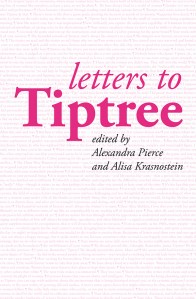 It is Tiptree month, because yesterday Alice Sheldon would have turned 100. I am completely ensnared in All Things Sheldon/Tiptree at the moment because of Letters to Tiptree, which was launched yesterday for Sheldon’s birthday and which has been consuming much of my time over the last few months. I’m immensely proud of this book and still incredibly honoured that Alisa asked me to co-edit it with her.
A few people have written articles about Sheldon and Tiptree, so here – have some links:
Leah Schnelbach on What James Tiptree can teach us about the power of the SF Community
Brit Mandelo on Where To Start with the Works of James Tiptree, Jr
Tansy Rayner Roberts on Raccoona Sheldon’s “The Screwfly Solution”
Galactic Suburbia on the amazing biography written by Julie Phillips a few years ago
Alisa talked about Tiptree and other things over on the Three Hoarsemen podcast
Not sure you’re interested in reading a whole bunch of letters to Sheldon/Tiptree? Here are some examples:
Gwyneth Jones (includes one of the greatest lines ever)
Every Heart a Doorway
The publisher sent me an e-galley of this book.
Just like I like Mary Robinette Kowal’s stories for talking about the bit after the falling-in-love stage, and shows that married life can be worth stories, Seanan McGuire has presented a story about the girls and boys who come back from fairyland… and wish they hadn’t.
 Nancy went to the Halls of the Dead and basically learnt to act as a statue to please the Lord and Lady there. Her parents, of course, do not understand what she experienced and think she needs to be helped through whatever trauma is causing her to tell such dreadful tales. I’d never really thought to consider what Alice’s parents or friends might have thought… although Swift does have Gulliver deal with some repercussions of his travels and travails (these two go together in my mind because of a uni subject that made me read both).
Fortunately for Nancy, Miss West has a school specifically for people like her; those who have gone to other places and desperately want to go back, because that is home. Which sounds all well and good and like you’re going to meet people with whom you have lots in common… but not all fairylands are alike. In fact McGuire does marvellous work of sketching out how such places might be categorised, including the difficulty of ever really categorising such places, and if the place that felt like home to you was all about stillness and silence, how much do you actually have in common with someone who went to a land called Confection filled with light and colour? Yeh, adolescents have a hard time finding anyone they can actually connect with.
While simply telling a boarding-school story with such a bunch of misfits would probably have been enjoyable of its own, McGuire decides to hit them with problems as well – murder, to be specific – to play out the ramifications of trust issues, insecurity, and bonding under duress. And I haven’t even mentioned the fact that not all of the characters are heteronormative.
McGuire has created a fascinating world here, and much as I would like a series of boarding-school books set at Miss West’s, somehow I think that might hurt the magic. This is a wonderful novella and I’m glad it found a home with Tor. It comes out later this year. ETA: turns out it comes out in April 2016. Sorry!
Binti
I was set an e-galley by the publisher.
 A young woman is accepted to university but her family don’t want her to go. Sounds like a familiar story… but the university is off-world, Binti’s people don’t tend to leave even their particular patch of Earth, and there’s a whole mess of trouble awaiting her on the journey.
I liked Binti as a person. I liked her strength and vulnerability and that while she disregarded her family’s wishes, it didn’t feel rebellious or anarchic: it was so that she could be the very best she could, and bring that back to her people and family to benefit them. I especially liked that this was a young woman whose talents were in maths; the description of ‘treeing’ as she followed mathematical equations down rabbit holes is enchanting.
I had to go look up the Himba people, and indeed they are a real group of people in Namibia, who do use an ochre paste on their skin and hair. I really like that verisimilitude in Okorafor’s work, and the suggestion that a semi-nomadic group of people in Nambia could have a story written about them involving space travel? Who’d have thought! (/sarcasm)
There’s a great big galaxy here of which Okorafor has barely scratched the surface. I rather hope she returns; I think this would make an excellent YA novel, or series (the idea of an entire planet as a university, that still manages to have lakes and forests? Awesome).
Binti will be on-sale September 22 in ebook, paperback & audio over at Tor.com.

 Randomly Yours, Alex