Fulvia: The Woman who Broke all the Rules in Ancient Rome
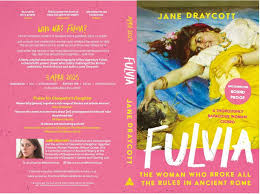
THIS BOOK.
Argh, this book. I have been waiting to get my hands on this book for… I dunno, a year or something? And now I have read it and it was wonderful.
I have enjoyed Jane Draycott’s work since reading Cleopatra’s Daughter: she has a wonderfully engaging style, she makes it clear when she’s making educated guesses but doesn’t shy away from them, and she’s determined to excavate interesting women out of either being completely ignored (Cleopatra Selene), or mostly ignored except when they’re excoriated (Fulvia).
Had I completely forgotten that Fulvia was married to Marc Antony? Uh, oops. I KNEW there was another reason that I was dead keen on learning more about her.
So little is known about Fulvia as a person that Draycott has to spend quite a lot of time going over what is known about OTHER Roman women in order to a) have a stab at discussing what most of Fulvia’s life was like, and b) putting her in context for both why some of the things she did were so unusual, and why some of the things she did were NOT unusual but still got maligned. While I already knew a lot of these things it was still great to see it all put together like this, and particularly in conversation with the life of one particular woman – for someone coming to the book with zero knowledge of Rome, I think it would be pretty accessible. The main thing that isn’t all that accessible, and which there is no getting away from, is the names. My goodness, Romans, could you not have had more imagination in your nomenclature? Gets me every single time.
Anyway. This book is a delight. It’s the best sort of revisionist history: not just accepting what ancient sources say, but examining their reasons for doing so; adding in the archeological evidence, as well as other source material; and bringing a trained feminist idea to persuasively make the case for how misogyny has worked over the centuries to write Fulvia’s story.
Look, it’s just really good. Highly recommended for anyone interested in late Republican Rome, and/or women’s history in general.
The Seven Wonders of the Ancient World

I received this book to review at no cost, from the publisher Hachette. It’s out now (trade paperback, $34.99).
As someone who has been keen on ancient history since forever, of course I was intrigued by a new book on the seven ancient wonders. And I’ve also read other work by Hughes, and enjoyed it, so that made me doubly intrigued.
Before I get into the book: of course there is controversy over this list. Hughes acknowledges that, and goes into quite a lot of detail about how the ‘canonical’ list came about – the first surviving mention of such a list, why lists were made, what other ‘wonders’ appeared on such lists in the ancient world of Greece and Rome, as well as what other monuments could be put on such a list were it made today. I appreciated this aspect a lot: it would have been easy to simply run with “the list everyone knows” (where ‘everyone’ is… you know), but she doesn’t. She puts it in context, and that’s an excellent thing.
In fact, context is the aspect of this book that I enjoyed the most. For each of the Wonders, Hughes discusses the geographical context – then and now; and the political, social, and religious contexts that enabled them to be made. This is pretty much what I was hoping for without realising it. And then she also talks about how people have reacted to, and riffed on, each of the Wonders since their construction, which is also a hugely important aspect of their continuing existence on the list.
- The Pyramids: the discussion of the exploration inside, by modern archaeologists, was particularly fascinating.
- The Hanging Gardens of Babylon: the discussion of whether they even existed, and if so where, and what ‘hanging’ actually meant, was intriguing.
- Temple of Artemis: I had no idea how big the structure was.
- Statue of Olympia: I had NO idea how big this allegedly was.
- Mausoleum of Halikarnassos: NOT HELLENIC! Did not know that.
- Colossus of Rhodes: also had no idea how big it allegedly was, nor the discussion around its placement.
The Tigris Expedition, Thor Heyerdahl

All of the things I said about The Ra Expeditions also apply here. Although this is happening in the late 1970s, so the racism is both a bit less, but also even less comfortable, if that’s possible.
Interestingly, I didn’t find this as historically problematic as Kon-Tiki or Ra. I think that’s mostly because he’s only sailing around places where there is actual archaeological evidence for contact – Mesopotamian stuff found in the Indus Valley, and vice versa – so there clearly was contact, although at how many degrees of separation is unclear from just those remnants. Although I did have to stop and laugh when Heyerdahl earnestly suggests that just because there’s a similarity between how a place name is said today, and how we think a word was said in a language nobody now speaks – well, that’s evidence that they might be the same place!
For real.
ANYWAY. I don’t need quite such an expurgated version of this book as with the other two, because the ideas and the language aren’t quite as offensive. And as with the other two, this is genuinely a fascinating adventure story. Getting the built made – of reeds, in Iraq – is another amazing story of ingenuity and the problems of materials etc in an area that really didn’t have ‘modern’ resources at the time. Was importing South American boatbuilders the most authentic way of doing it? Probably not. Anyway, then you’ve got eleven men on this little boat navigating the Arabian Gulf Persian Gulf Sumerian Gulf (there’s a whole thing about which name is appropriate), which is filled with enormous boats and isn’t all that easily navigable… and they go to Oman, and Bahrain, and Pakistan, and then back west – honestly it’s an amazing journey, with a lot of quite serious problems that they do manage to overcome. Heyerdahl is open about some of the friction experienced between the men – he has to be, given there’s someone with a camera filming them for much of the voyage – as well as their frustrations about what’s going on on land.
Would I recommend this wholeheartedly? No. Would I recommend it with reservations? Sure. Only to an historically literate reader, who’s in a place to deal with fairly stereotypical 1970s attitudes. It’s probably the best of the three in terms of not being problematic.
Messalina: A Story of Empire, Slander, and Adultery
I read this courtesy of NetGalley and the publisher. It’s out in May 2023.
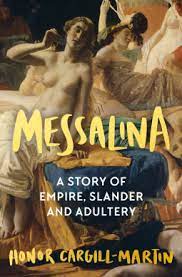
It’s incredibly hard to write modern biographies of ancient women. Not least because most ancient historians didn’t care that much about women as individuals; they only mattered when they intersected with men (… not too different from many wikipedia entries today, actually), and also for Roman historians they were often used as literary devices – history writing being quite different in the first few centuries AD in Rome from what it is generally accepted to be in the West today. SO that leaves a serious paucity of information for the person who wants to write a serious biography of, say, Messalina. I have a fantastic biography of Agrippina the Younger on my shelf, which does a good job of trying to consider Agrippina as a person, rather than just a mother and/or power-mad; one of Theodora that is slightly less successful but made a valiant attempt. And now, at least, Messalina: a woman whose name has become a byword (and at one point medicalised) for the over-sexed and never-satisfied woman, whose sexual depravity was the source of her power, and whose only use of that power was evil.
I loved this biography a lot. Messalina was human! Who knew?
The author gives what I think is an excellent overview of the social and cultural and immediate historical situation in Rome in the early Julio-Claudian period, in particular looking at the ways in which expressions of and usage of power had been altered with the change (albeit begrudgingly accepted) from republic to empire. And the point is to situate Messalina within that. (Had I completely forgotten just how illustrious her lineage was? Oh yes. Perhaps I never really knew – descended from Mark Antony! And from Octavian/Augustus’ sister! Very impressive.)
There’s a good attempt at reconstructing just what sort of thing Messalina was doing after Claudius became emperor, as well as logical (rather than misogynistic) rationale for it: like she’s shoring up her own power base, and that of Claudius, and that of her son. The arguments here are persuasive, although of course we’ll never know. I particularly liked that Cargill-Martin never tries to completely purify Messalina: did she have affairs? Possibly; maybe even probably! Were other women doing so? yes. Could there actually be political as well as passionate reasons for doing so? Absolutely. Was it possible for Messalina to both want to have sex AND be a political actor? WHY YES, IT WAS.
Basically I think this is the sort of (properly) revisionist history that a nuanced understanding of women in history enables. Messalina can be treated as a human, as a worthy subject for serious history: she made mistakes, she made what we would think of today as some poor choices, she was constrained by her historical context, and she really didn’t deserve the way that last 2000 years have treated her. Especially Juvenal’s poetry; he can go jump.
Highly recommended particularly to anyone interested in early Roman empire history, or women’s history.
Spoiled: The Myth of Milk as Superfood

I read this via the publisher and NetGalley. It’s out in April 2023.
This is an angry book.
I’m not saying that’s a bad thing, or that the anger is unjustified. Just that Mendelson doesn’t make much effort to hide the fact that a lot about Big Dairy in America makes her angry, and that the appalling lack of science around the claims for milk make her angry, and that the fact drinking milk is pushed as some mighty panacea when actually the ability to digest cow’s milk as an adult human is largely restricted to humans descended from north-west Europeans… that makes her angry, too.
Some of the most crucial sentences for understanding the point of the book comes early on: “… the founders of modern Western medicine had no way of understanding the genetic fluke that allowed them… to digest lactose from babyhood to old age… That lack turned the one form of milk that is most fragile, perishable, difficult to produce on a commercial scale, and economically pitfall-strewn into a supposed daily necessity for children and, to a lesser extent, adults.”
Yeah.
The section I most enjoyed for itself was the first part, where Mendelson looks at the long history of dairying, and in particular points out that drinking “fresh” milk (which is a whole other discussion of terminology, given what happens to milk in most Western countries today) wasn’t something early herders did. Instead, they were using fermented milk – naturally fermented, from being left out in the heat. She goes through the science of what’s actually happening in this fermentation, discussing why the bacteria in the milk doing all of this doesn’t poison human consumers of such milk. There’s also a really interesting discussion about the archaeology and other evidence for dairying of various forms in numerous locations.
Science is a fairly big part of the book, which I also enjoyed. There’s a lot about what’s in milk of various types, and why, as well as how that’s connected to the digestive system of the various animals that humans choose to milk. Plus the discussion about how limited the ability to actually properly digest full-lactose drinking-milk is, among the adult human population. If you can digest milk as an adult, it’s you that’s the genetic mutation, not everyone else. Doesn’t that make all the soy milk etc-haters look like numpties.
The angry-making bit really starts when the discussion turns to the 18th century in Europe, and the way that ‘drinking fresh milk’ suddenly became imperative for children, in particular, and the idea that if children were denied all the milk they could possibly consume then somehow society was failing them. All of which is nonsense since… see above. And then, of course, it gets into how the industry makes claims, and medical types get on board, and honestly it just makes me really sad and horrified to see how outlandish claims based on ‘science’ (sometimes) that has now been superseded, or sometimes just based on a desire to make money, is still having a massive impact on how we think and act today.
Also? this insistence on drinking-milk all came as a) more people were living in towns and b) before good refrigeration and c) before adequate food-safety measures like pasteurisation (which gets a whole section here, because of the raw food movement) were in place. All of which meant a bunch of kids, in particular, actually got sick and many of them died because of the milk they were told they needed to consume in order to be healthy.
One of the reasons for the angry nature of the book is its focus on the modern American dairy industry. I’m not going to claim that the Australian industry is immensely better, because I don’t know all that much about it, but I do know that we do things a bit differently. And then there’s the way in which drinking-milk is still being pushed as necessary… to populations that are, overwhelmingly, unable to digest full-lactose milk as adults. I think that’s just appalling.
Don’t read this as a fun history or science of milk. Do read it if you’re interested in how drinking-milk got to be the thing it is today – which is genuinely fascinating, as well as infuriating. There’s discussion of Kellogg’s, and milk-drinking cults, and the furore around pasteurisation and homogenisation, and the raw milk fad as well…
Sewer, by Jessica Leigh Hester

I read this via NetGalley. It’s out in November 2022.
OK, first thing to note is that you probably want a relatively strong stomach to read all of this… and you definitely don’t want to read it while eating. While it’s not revolting, there are some descriptions of sewers and fatbergs that are not the most pleasant of reading experiences.
Secondly, stop flushing wipes. No, seriously. Even the ones that say they’re flushable. Stop flushing them. They’re not really flushable. When you put something down the toilet it doesn’t ACTUALLY, magically, disappear. It still needs to go somewhere. And wipes? Oh, they do not disintegrate and become harmless like you might imagine. Stop. Flushing. Wipes.
This book is really remarkable. As with the best of the Object Lesson books, it’s personal and it’s deeply researched and it’s fascinating. Hester is convincing in her argument that sewers are vital to understand because they help us understand our past, as well as consider our future. She is also adamant that investing in sewer infrastructure is something that has been lacking (and I’m completely terrified and appalled by some of the stories about that) and is vitally important for our future. No one wants a return to typhoid and cholera in places like London. Which also means that those places without good, sturdy, reliable sewers – ones that DON’T JUST EJECT WASTE INTO THE OPEN WATER – absolutely need financial assistance in getting that done. If you don’t think that’s a priority… you’re wrong. Simple as that.
Highly recommended for the civil engineer in your life, or the person who’s always asking ‘why is it like that?”, or the person with the more-scatalogical-than-necessary sense of humour.
Also, STOP FLUSHING WIPES.
Cleopatra’s Daughter, by Jane Draycott
I read this courtesy of NetGalley; it’s out in November 2022.

Ever since I read a biography of Beregaria – the only English queen who never even visited England – I have been very keen on biographies of women who have just been overlooked. (It wasn’t Berengaria’s fault; she was married to Richard I while he was on his way to crusade, then he got kidnapped and then he was off fighting in France, so… she never got across the Channel.)
Did I know Cleopatra VII had a daughter? Yes. That she was taken as a prisoner by Octavian back to Rome? Yes, although it wasn’t as immediately accessible knowledge. Did I know that this daughter then went on to marry Juba. king of Mauretania, and that she ruled there with him for many years? NO I DID NOT. And I kind of feel a bit aggrieved that I got to be 42 without knowing this.
Draycott has written a quite splendid biography, especially considering the limitation of the source material available. One of the things I particularly like about her style is that she’s not pretending knowledge that she doesn’t have. The reality is that there’s very little information about Cleopatra Selene’s childhood, either in Alexandria or in Rome; so Draycott presents what is known for children and families in those places in those times, indicating that this is a good estimation. I like this approach a lot.
Having said that the material is limited, I was surprised at the sources that do exist – see above, not knowing anything about Cleopatra Selene’s adulthood. There are (probably) statues (identifying ancients in statue is notoriously hard); there are coins; and there are some written references, too. So it’s not all a guessing game ; and when Draycott does make some leaps (like Zenobia maybe being a descendent??), she’s pretty clear about the tenuous nature of the links.
It’s likely that both Cleopatra Selene’s twin, Alexander Helios (yes, yes, Mark Antony, you have a great sense of humour AND hubris), and their younger brother Ptolemy, both died as young boys – Draycott makes a compelling case that this was probably from natural causes, given that Rome was a malaria-ridden swamp and that there doesn’t seem to have been a reason to kill the boys and leave the girl alive. Cleopatra Selene marries Juba, also a sort-of captive in Rome, and then they’re sent off to rule Mauretania – possibly, Draycott argues, with Cleopatra Selene taking an active part as co-ruler, given the example she’d been set by her own mother. She seems to have lived there for around 20 years, although there’s no definite date of her death recorded anywhere.
Finally, I particularly liked Draycott’s handling of the question of Cleopatra Selene’s ‘ethnicity’. That modern understandings (or imaginings) of ‘race’ and ‘ethnicity’ are very different from what people of her time would have thought about themselves or others, that it can’t be resolved what colour her skin was given the lack of definite knowledge about Cleopatra VII’s ancestry, and so on. I think she deals sympathetically with the idea of Cleopatra being ‘Black’, within the context of both not knowing for sure and those ancient people having different notions of what it means; she does make the firm point that Juba himself was (what today would be called) a Black African, and therefore their children were ‘mixed race’ and ‘mixed ethnicity’ (Greek, Roman, Egyptian, African). I like that Draycott is aware of these issues and isn’t pretending that such discussions don’t exist, or that they are somehow irrelevant to the discourse she’s part of.
Well written, thoughtful, and giving a broad understanding of both Cleopatra Selene as a human (as much as can be from the limited sources) and her context in time and place. This is what I want from a biography.
Queens of the Wild
I received this book via NetGalley. It’s out at the end of May, 2022.

As an Arts student of the late 90s, who did do some mythology-type subjects, I have vaguely come across some of the ideas that Hutton explodes here. So that was quite the trip.
The main idea: that the four concepts, or beings, or narrative tools – Mother Earth, the Fairy Queen, The Lady of the Night, and the Cailleach – are in no way part of a pagan religion that has survived sin Europe since pre-Christian times. No matter all the stories about witches as pagans or Beltane feasts.
In the opening Hutton revives a differentiation (first proposed by himself in 1991) between two concepts: ‘surviving paganism’, where a pre-Christian religion has actually survived beneath/within Christianity; and ‘pagan survival’, where a belief of object has been redeployed from a pre-Christian to a Christian religious context.
This book has a LOT of historiography, as Hutton explores some of the why and some of the how for the development of the idea that four specific concepts have a long, pagan, pedigree. The very first chapter was probably my favourite, as he explores the development of the study of folklore and how various academic and non-academic types explored and theorised beliefs – especially peasant beliefs – and how attitudes to those sorts of things changed over time. Following the thread from one person to another – occasionally from just one article to an explosion of theories, books, films, and other academic articles – was astonishing.
In the four main chapters, Hutton seeks to find the four characters he has chosen to interrogate – to find the earliest mentions, to find their possible connections to pre-Christian ideas, to find the ways in which they’ve been used in the academic literature. In every case, he comes to the conclusion that none of these are true ‘surviving paganism’ – always with the caveat that more information may be found, and that of course there’s a dearth of written information for so much of the early part of the pre-Christian/Christian boundary. He’s pretty convincing, unsurprisingly.
Moderately academic, but I think accessible for a reader with only a basic knowledge of both the historiography and the characters he explores (which is me).
Persians: the Age of the Great Kings

I read this courtesy of NetGalley. It’s out in April 2022.
I really, really wanted to love this book.
(That, children, is called ‘foreshadowing’. You can almost see the BUT looming behind those words.)
A book that’s basically the postcolonialist version of Persian history we’ve all been waiting for! A view on Persian history that’s not just repeating the Greek and Roman commentaries that were absolutely written with a very particular perspective! YES PLEASE. And even more when Llewellyn-Jones makes the acerbic comment in the introduction about how the concept of European superiority can be dated back to Herodotus etc and the way they presented the terrifying East. So yes, let’s have a version of Persian history that is largely based on Persian sources, or uses the Greek sources very carefully – to find the Persian reality behind the Greek propaganda.
And it starts so well. There’s a discussion about Persia vs Iran as a name – and I’m not sure whether his explanation of the political nuances there are accurate, so I defer to others on that, but it seemed to make sense within what I do know. There’s a discussion about the archaeological activities that give historians what they know from Persepolis etc, and a candid admission about the lack of sources. The Persian history proper starts with a discussion of the movement of different peoples into the area we know today as Iran, and some speculation about how they interacted etc. Then it moves into discussing the development of the Persian empire as empire, and interaction with the Medes. All of this section was intriguing and the use of inscriptions was well done. I did start to get a bit uncomfortable about the lack of reference to other sources – like other historians; I understand that getting the balance of what can seem to be most approachable, and what can seem too scholarly, may revolve around footnotes etc but… there’s just no way the author didn’t use other references.
I also started to get a bit uncomfortable when the author claimed that Cyrus’ mother “delighted in singing Median nursery rhymes to him” (p60 of the e-version), because that seems… weirdly specific? And then I got to the description of him as “lean and good-looking in that way that Persian men are uniquely handsome” (p63 of the e-version) and I had to stop and blink and decide whether to laugh or cry. What happened to treating the Persians as real people and not exoticising them, which I thought was part of the postcolonial agenda? I also have a problem with the statement that “A society that requires such codes of respectful behaviour” (obeisance before the monarch, etc) “is very likely to have autocratic political organisation, characterised by the coercive power of a king” (pp194-5). It just seems too blanket a statement.
And then! We have Darius’ half-sister and wife described as “a Lady Macbeth-like villainess, hellbent on power and ruthless in her bloody ambition” (p288) and I really started to wonder whether it was now a different author, or if he had been to sexy the book up. Next we have “years of adoration and unnaturally demonstrative mother love meant that [Darius] was self-centred, cruel, vindictive, and brutal” (p292); and that mothers experience “that particular twang of jealousy… when their sons give their hearts to other women” (p294). In case we worried that it was about misogyny, we then have a eunuch described as “a veritable creature of the court” (uh, eunuchs who are made eunuchs to BE at court are literally that??) who was “born to corruption, whose ambitions were for the very highest office of state” (p333) and I just can’t even. The author then has the temerity to accuse the Greeks of employing the “topos of the wicked eunuch” and I need to ask some questions about self-awareness.
So. I am ambivalent about this book. It’s a super necessary idea, and the use of Persian inscriptions and the way some of the Greek sources are handled is a really good example of how to read through sources to get more than they think they’re saying. On the other hand, some of the descriptions are clearly ridiculous (robes of “chiffon-like linen, gauzy cotton, and shimmering silk” (p293) – not to mention that nursery rhyme – really need some evidence!). And the bits quoted above are enough to make me despair. Did I learn something about the Persian empire and the kings who ruled, and the way it all worked? Absolutely. Is this the last word in Persian imperial history? I sure hope not.
Would not recommend to someone who is completely new to the history of this area and time, or to someone who is naive in reading historical books. For those looking to deepen their knowledge, it’s useful – with the caveats above.
The Nile: A New History of the World’s Greatest River
I received this book courtesy of NetGalley.
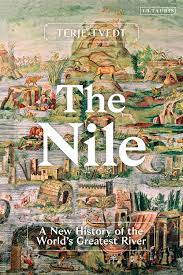
I should start by saying that this book is not quite the book I expected. Given it’s the Nile, and given the blurb, I expected the book to be much more about the swathes of history involved in that region of the world. There is, of course, discussion about the role of the Nile in the grand sweep of ancient Egyptian history, and what might be called “medieval” history for want of a better term. There’s mention of ancient Nubia, and some commentary on “medieval” Ethiopia, as well as the Rift Valley and the Olduvai Gorge. However, the reality is that the vast majority of this book is focused on European, and in particular British, colonialism – efforts to control the various parts of the Nile for their own purposes. So I was surprised by that, and occasionally disappointed that it was so modern in focus.
This is also not “just” a history book, and in general this is a good thing. It has aspects of a travel memoir; the author has travelled to every country he mentions, I think, and to most of the parts of the Nile and its tributaries discussed. So there are sections where Tvedt is quite personal in his writing, reflecting on his own experiences and how this matches – or doesn’t – with historical or literary representations of the places. This aspect I enjoyed a lot.
As well, there are aspects of historical theorising that I found quite intriguing. The author challenges Edward Said’s theories about ‘orientalism’ and whether it’s appropriate for this challenge to apply to all aspects of European writing; and challenges most historians in their refusal to consider the very solid, material, and geographic nature of a river like the Nile. I don’t know that much about the theories he’s challenging so I can’t say with full confidence whether he makes perfect sense; but certainly many of the ideas he raises seem fair.
But overall, the book is indeed about the Nile: as something that has shaped geography, as something that has shaped the civilisations that exist along its banks and those of its tributaries, as something that has contributed hugely to political tensions over the last 150 years or so. I had no idea there was a 1929 Agreement that basically said upstream countries could do nothing with the Nile unless Egypt agreed! And of course for most of those upstream countries, this was signed by the imperialist powers then in control… so since the 1960s there’s been argument about whether those powers had the right to sign on behalf of these now-existing countries. Nor had I ever considered the notion of the Nile as a weapon (withhold water, or release too much if you’ve got a dam); or the idea that the Suez Canal crisis can also be linked to control of the Nile.
I learned a lot about the realities of European colonialism and imperialism in the Nile basin – primarily the British, but also German and Italian (I didn’t learn anything new about Belgium, and Leopold). The machinations made me sick all over again: water for Egypt so Egypt can grow cotton to supply to England for the cotton mills…
In terms of structure, the book basically flows from the Nile Delta (seriously under pressure thanks to climate change) to the various sources of the Blue and White Niles (hello, Stanley and others). So it’s not chronological; I quite liked this geographical perspective, though, and it certainly makes sense in the context. Each chapter is broken into what are basically vignettes. It means the author doesn’t have to make one solid narrative for each geographical area, but instead takes various different issues and treats them in sometimes one, sometimes five, pages.
This is a thoroughly researched, detailed, meticulous and very clever story of the Nile.

 Randomly Yours, Alex