Quantum of Nightmares

I read this book courtesy of NetGalley and the publisher, Tordotcom. It comes out in January, 2022.
This is a Charles Stross novel on… whatever drugs you take that make you talk at, like, three times the normal speed. (Hmm. Is it speed?)
One blurb says this is a Laundry Files novel. Another says that it is Laundry Files-adjacent… and that’s the accurate one. I haven’t read every Laundry Files, but I’ve read enough that I know what’s going on. The start of this novel, though, was unrecognisable… so then I went to look it up, and it’s the sequel (not mentioned in the blurbs I saw) to a spin-off. So… that’s all important information to have on hand. (There is no Bob Howard in this novel.) Having said that, I did read the whole thing and I did largely enjoy it, so Stross manages to get enough background info in without dry info-dumps to make it understandable… eventually.
CW: there’s some pretty gross stuff here. Think… meat packaging… and really the very worst bits about what can go wrong in abattoirs. Also, and I’m only slightly joking, if you have a phobia about HR and their policies, this is not the book for you; it takes corporate speak and the ill-intentions of large corporations to a whole new level. I suspect this does count as horror, because of those aspects, in which case this is right on the giddy edge for me.
There are many different strands entwined throughout this story. There’s a pseudo-nanny looking after kids who are not what they seem (well, they’re annoying little kids but with Extras); there’s loafers who just want to play D&D who get pulled into annoying real world stuff; there’s the aforementioned HR and a truly heinous view of cut-price supermarkets and a nightmarish future for how they might turn a profit. There are desperate people and sad people and bewildered people; there are double-crosses and worshipping of sinister entities and ruthless acts that just made me blink at their atrociousness. It’s not a particularly happy book; nor is it uplifting; so if that’s what you need right now, go somewhere else. But there is a dark humour to parts, and there’s a diverse cast of characters (trans, queer, not-Anglo), and the occasional good deed, so it’s entirely and unrelentingly depressing.
… when I put it like that I’m not sure how I managed to get through it! It’s not quite as bad as that makes it sound. For one thing, it rockets along at a tremendous pace. I never quite got lost but it was occasionally a white-knuckle, hold-on-tight and trust that Stross is in control of the narrative kind of experience. I probably only kept going because I do, indeed, trust Stross to land such intricate stories in a way that makes sense. Which he does here, yet again.
I don’t think I’ll go find the first book now – I suspect much of it is now spoiled, because I know who survives various difficult situations. Also, if it’s like this one, I need a fair while to balance out the grimness. But I don’t regret reading this one.
Medusa

I received this as a review book from the publisher, Bloomsbury. It’s out on November 1; trade paperback $22.99.
Ah, Medusa. I love her as a character – always have. She has so much to give and so much to say about how women are viewed and used; especially women with power. Burton acknowledges Caravaggio for his portrait of her, as part of the inspiration for this book; I’ve seen Medusa heads in the cisterns under Istanbul. She is an evergreen figure.
The blurb suggests that #MeToo was part of the inspiration for the narrative, and you can see a lot of that here. You can tell a lot about the times in which the story is told from how the, uh, interaction between Poseidon and Medusa is framed. It’s crystal, blindingly, clear here that Medusa was absolutely the innocent. So far so good; not entirely new. But what intrigued me here was the framing of Medusa’s whole life: that she has been accused of being vain – after her neighbours started making comments about her appearance – there’s good commentary here on social expectations and how we just can’t win. And even more than that is the way that Medusa’s sisters talk to her, and what she comes to realise: about her value as a person, and about telling her own story. It’s incredibly powerful. I can well imagine giving this to a mid-teenage kid, frustrated by the messages from the rest of society, and hopefully having good conversations because of it.
Oh also there’s Perseus. Yeah yeah.
Actually that’s unfair – he’s presented in a more complex way here than is often the case, too, and I appreciated that. This is very much Medusa’s story, though, and I love that Perseus is there in service of her growth.
The one thing that disappointed me a bit about the story was that Athena is described as making Medusa’s sisters into Gorgons… but what a Gorgon is never gets explained. It’s not entirely obvious whether this is meant to be punishment, or just a change.
As well as the story, Medusa comes with glorious illustrations. I don’t have the vocabulary to really explain them: there are some examples here, and the most incredible portrait of Medusa is here. Olivia Lomenech Gill has made Medusa glorious – Burton describes the snakes in genuinely loving detail, and Gill has captured that. The pictures throughout are a delight; some are almost like collages; the colours are vibrant, and occasionally juxtaposed with almost pencil sketches. There’s a magnificent four-page set where it’s Medusa on one side of a rock, and Perseus on the other. I’m not entirely ignorant of art, but I don’t always appreciate it as much as I should… these pictures definitely add to the overall quality of the book, and it wouldn’t be the same without.
This is a great addition to the overall discussion of Medusa.
The Historian, by Elizabeth Kostova
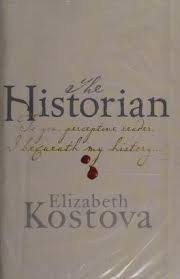
I have been chastised in the past – and rightly so – for saying ‘I don’t like horror’ and then trying to justify something as ‘not being real horror’ and therefore ok for me to like. I’ve only done this a few times, I think, and I have been super aware of not doing it since that particularly poor attitude was pointed out.
(And for me, horror and thriller are close enough that they go together. I don’t enjoy them, in general, for the same reason: I do not like being scared.)
So I do not like horror. This is, though, the second time I’ve read this book.
Many, many years ago, I went to visit my mum interstate because my beloved aunt had cancer, and we knew it was terminal. A day or so after I arrived, she died, and so I was fortunate to be able to stay for the funeral. This did mean, of course, that I didn’t have enough clothes for while I was there… and, oh so small in the pile of consequences, I didn’t have a book to read.
All of this context makes sense of the fact that I read this book. Despite the title, if I had read the blurb I would never have read this book ordinarily; I do not tend to enjoy vampire stories, and I don’t know much about the historical or literary Dracula, so there’s no appeal there. But my mum had it, and I was bored and needed distraction, and so I read it. And, yes, I enjoyed it. Enough so that when my mum was clearing out books, I took it with me – mostly for nostalgia.
I recently re-read it, and I enjoyed it again. It wasn’t as scary this time – not only because I knew what was coming (I had mostly forgotten) but also because I wasn’t reading it stupidly late at night…
I like the way it’s basically a series of found documents; done well, it’s a very clever and appealing style for me. The one thing that irritated me was the letters sounding far too literary, even for a bunch of academics. Anyway – there’s letters from various people, across time; and historical documents, and the occasional bit of narrative to join it together.
In some ways this is almost a Dirk Pitt or Indiana Jones version of history: following one improbably clue after another, happening to meet useful people and locating useful documents in unlikely places. Nonetheless I enjoy reading about historians in archives, doing real primary research!
It doesn’t make me interested in going to read more about vampires. In thinking about where this sits in horror/thriller territory, I would guess that some horror fans wouldn’t class it as horror – but since I’m not one, I’m not sure, and I’m also not au fait enough with the intricacies of the genre. The level of violence isn’t greater than other books I read; I suspect I managed to read it because the focus isn’t on scaring me out of my wits. Is this a “it’s horror but…” argument? maybe. Are there bits I found frightening? yep. The first time I read it, I read it late at night a couple times, and that was definitely a bad idea. Does this mean that I might enjoy other books in the horror or thriller genre? Maybe, but there are so many other books I want to read where I’m in little danger of increasing my fear of the dark, I probably won’t seek them out.
Green Chili and Other Impostors
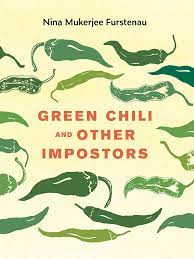
I read this courtesy of NetGalley.
Part travel memoir, part personal memoir, and part food history; it’s an intriguing combination. Furstenau discusses her own history – born of Bengali parents, in Thailand, and then growing up in the US. Throughout the book are comments about how hard it was to demonstrate that her visa to India ought to reflect that heritage, but given a lack of paperwork for her parents, it wasn’t to be. This sense of questioning where she belongs is woven through her discussion of “Indian” food, as she looks into the histories of both ingredients and dishes. “Indian” because some of what is discussed is about how now-common ingredients in Indian food actually came to India (green peas, chillis, potato… cheese…); and also some things you might think of as Indian are not, and some things appropriated by others are, of course, from India.
The author travels around India, sometimes visiting relatives and sometimes finding food-connected people, who talk about history and share recipes and teach her to cook some of the dishes. And these recipes are included, of course – Sandesh and Nolen Gur Cheesecake; Kedgeree (which is Indian, not Scottish, and the story of it becoming a breakfast staple is fascinating and I have never eaten it!); Koraishutir Kochuri (puffed bread with green pea filling, and goodness I really want to make this)… and so many others.
This book is very readable; it’s enjoyable to journey around India, it’s varied in what ingredients and ideas it discusses, and the recipes seem easy to follow.
Year’s Best African Speculative Fiction (2021)
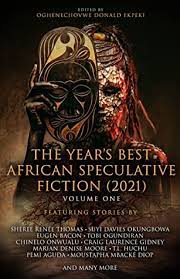
I read this courtesy of NetGalley.
As someone more au fait with anthologies than me pointed out, this anthology doesn’t have a introduction. So there’s no discussion of what speculative fiction is, let alone what African speculative fiction is. Which means that the answer to both of those questions is: These stories. All of them. These authors write that.
A few of these names – Sheree Renee Thomas, Tobias S Buckell – were familiar to me, but most were not. Part of this is that I don’t read a whole heap of short fiction these days, especially not the online magazines – it’s too hard – but it’s also partly about the speculative fiction scene that gets a lot of notice still being really white (I am not very wired into the whole scene these days anyway). Which makes an anthology like this excellent… because we’re a long way away from not needing such a thing, so don’t bring me the “but everyone’s work should be judged on merit” nonsense.
Anyway: the stories! This is a truly diverse set of fiction. There’s magic and there’s robots and there’s myths and there’s so-close-to-reality, and there’s horror (sometimes akin to the close-to-reality); there’s stories set in recognisable places and future places and past places and nowhere-places. Women and men and ungendered and who cares, families and not, hope and not,
I didn’t love every story, but I never do, with an anthology. And some of those were horror, which I pretty much always don’t enjoy. There was only one story that I got impatient with and skimmed over, which is a pretty good hit-rate in 360 pages.
This is great. I hope it’s the first in a long line of such volumes, as the cover page suggests.
Redshirts
I read this courtesy of NetGalley.
I am very late to this Scalzi party, clearly.

I remember when Redshirts first came out and a lot of the discussion about it. But although I’d seen all the Star Trek movies to that point, I’d never watched any of the tv, and I didn’t feel that much affinity for the show – and given all the talk was of this book being a riff on that, I didn’t feel compelled to read it.
Now, though, I have watched all of Voyager; and all of Discovery and Picard to date; and even, perhaps most relevantly, most of Lower Decks. So really, for me, this is the right time to read this book.
I also, at the original publication, had read zero Scalzi. I know, this is kind of amazing for someone so into the genre. But he just never really came across my radar. And then I finally came across the Interdependency trilogy, and gave it ago, and fell very heavily in love with those books. So, now I can say that I like what I’ve read of his work. Again, this timing was good for me.
So, what of Redshirts? Having read Mary Robinette Kowal’s introduction, I was expecting this to be hilarious. And… it wasn’t. At least, not for me. That is, there were some funny bits, mostly in dealing with expectations and stereotypes, sometimes in the language, and such things. But I didn’t laugh out loud. So in that way I was a bit disappointed. As a narrative, though, it really is very clever and very well done; as Kowal also said, it takes an idea at the start – the lowly types of Star Trek etc who never get much screen time – and develops them into characters, and THEN completely turns what you’re expecting not only on its head, but sideways and inside out and into configurations I couldn’t imagine. So all of that was surprising, intriguing, and enjoyable. I will admit that the very end I found … not disappointing, exactly, but perhaps bewildering? That is, I didn’t feel like it added much, if anything, so I was left feeling blinking and a bit confused – there was a lack of resolution, because too much had been added on (perhaps this is the complaint about the “too many endings” of Return of the King…).
Is this a fun book to read? yes. Did I actually have to watch a lot of Star Trek to enjoy it? No; but I think a bit of knowledge does deepen the appreciation of what Scalzi is doing. Does my slight disappointment mean I’ll never read another Scalzi? Oh heck no. I don’t think he’ll ever be a “must buy now” author for me, but I will always be keeping an eye out for his work.
Of Fear and Strangers
I received this via NetGalley.

What an absolutely remarkable book. It’s not quite what I was expecting – which was a history of, I guess, where xenophobia has occurred, and maybe it consequences. But more interestingly that that, this is a history of the very concept of xenophobia. It does use examples of historical xenophobia – of course it does; you can’t discuss what the word means without showing what it has looked like. But it’s more psychological and philosophical than I was expecting, as a way of getting to the guts of why humans can react so poorly towards strangers, and how we have tried to explain that to ourselves.
And the first thing I learned is that ‘xenophobia’ as a word is brand new. Like, end of the 19th century new. Makari goes through his whole journey of discovery about this – detailing what he read and what explanations he chased down – in what almost amounts to a thriller in terms of sudden clues popping up. This was the first hint that not only was this going to be fascinating information, but also that the style was going to keep me engaged and keep me ploughing through what otherwise might have been overwhelming, both intellectually and emotionally. This was also building on a very personal opening to the book: Makari outlines his own family’s experience of being “xenos” – strangers – descended from Lebanese ancestors, living in America, experiencing the dismissal of “Arabs” and wondering about his family’s place in the world. Being published in 2021, as well, and of course, the question of xenophobia and how “we” react to the “stranger” remains as tragically relevant today as it has been at any time in the past.
Part 1 explores “The Origins of Xenophobia” – where the word originates, how it was used to describe the so-called Boxer Rebellion in China – and therefore the ‘mad’ reaction of Chinese people to Westerners and all the ‘enlightenment’ they could bring. And then how the word was used in colonial contexts – xenophobia is a product of the inferior mind, because ‘they’ don’t understand what ‘we’ (colonisers) are bringing, and they don’t know any better than to be hostile! And then on through Conrad’s Heart of Darkness, flipping that idea of xenophobia around and showing how colonisers might be the scared ones… and then on into discussion of immigration. Sadly, that connects really early on with Jewish migration, and then of course the book leads into the Holocaust.
Part 2, then, explores “Inside the Xenophobic Mind.” I have neither philosophical nor psychological training, so this part both taught me many new things, and was also surprisingly approachable. Well, approachable in terms of understanding in general, although again confronting in some parts – like the experiments to train kids into having phobias to try and understand how such fears can develop… and also because some of the philosophical aspects definitely went over my head. So this section, too, made me think much more both about xenophobia as a concept but also about how different groups have approached the desire to understand it – external or internal reasons, love and projection and can we ever truly know someone else… and so on.
I would heartily recommend this to people who are interested in why humans act the way they do, for people seeking an understanding of the way the world is and has been; whether you’re an historian or not, whether you’ve knowledge of psychology or not, Makari makes difficult concepts relatively straightforward to grasp. And he doesn’t claim to be able to explain all of humanity, but the book does suggest a range of ways that we might try to think about ourselves, and our neighbours, and our leaders… and think about why we react the way we do. And that can only be a good thing, right? In fact, I think that as many people as possible should read this book, so that we can be much better at talking about these things and be a little less defensive.
How I Became a Tree
I read this courtesy of NetGalley.
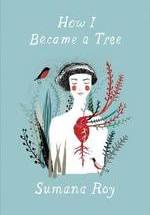
This is definitely not the sort of book that I can read all in one hit. I took me several weeks, in fact, of dipping in and out. But that’s ok, because this is in no sense a narrative, or a memoir, or something that particularly requires you to remember pertinent details from one moment to the next. Instead, this is a wide-ranging book on the idea of how people relate to trees (and plants in general), how humans are like and unlike trees, what we can learn from them, how various humans have written about or otherwise interpreted trees, and what it might mean for a human to be more like a tree.
Like the editor at Yale who decided to pick this up for their press – it had already been published in India – I too was captivated by the first line: “At first it was the underwear. I wanted to become a tree because trees did not wear bras.”
PREACH.
Reading it in 2021 as I did, perhaps the idea that most (I’m sorry) took root (really, I am sorry) was the idea of tree time. That tight schedules and being rushed and hurried / harried and always needing to be places and do stuff at speed is just… not fun. (Especially when the pandemic makes all of that also feel like running in place.) Tree time, though? Trees, in Roy’s words, show “disobedience to human time”.
I don’t agree with everything that Roy talks about here – I don’t even agree that all of the questions she asks are relevant or useful. But I appreciate her asking them nonetheless, and therefore forcing me to consider them whether I want to or not.
Chapters range across a meditation on why flowers are seen to be attractive but not trees, in art and how children are taught to draw or paint; the ideas of x-raying plants, what the way nature is studied says about humans, what it might mean to have sex with a tree, what death means for trees and how religions connect to and reflect on trees and forests. And a lot more. Roy writes in the first person – this is an intensely personal book for all it’s not a memoir; Roy examines her own memories, and reactions, and hopes and intentions and fears, throughout the book. After all, it’s her musing on becoming a tree that instigates the whole thing; she reflects on her childhood experiences of trees, and how that relationship changes as she gets older; commenting on what it means to be childless and to be ageing, to be in a relationship and part of a family, and how those things are like and unlike the world of trees.
Aside from the meandering consideration of trees and how humans can be / are not like them, one thing that was particularly interesting for this Anglo Australian was the lack of cultural touchstones that I am familiar with. There were a few – a reference to Shakespeare here, Brecht there, DH Lawrence and Ovid. But much of the literature and art and philosophy referenced was foreign to me, which is only right since Roy is writing in India, and comes (I think) from a Bengali background. There are Hindi and Buddhist texts, Indian philosophers and authors… and a bunch of western authors, too, whom I’d never heard of because I don’t go in for philosophy or botany in any great way.
This was an intriguing, insightful, challenging and wide-ranging consideration of plants and humanity. Well worth reading if you’re feeling like humans need to, or could, learn how to be different.
A Girl Made of Air
I read this courtesy of NetGalley.
Well.. This was … quite weird. And consequently, kinda hard for me to review. Let me get some thoughts down:

- I don’t tend to go in for circus stories. I have never been fascinated by the circus as a place, so I don’t gravitate to stories about them. Not that I hate them! But I have no comparisons to make as to whether this is a good circus story or not. The circus is not made out to be a deeply loving family or a wonderful magical place… magical, perhaps, and certainly for the punters, but wonderful? Not always.
- The structure of the story is intriguing, and one of the aspects that I really enjoyed it. It opens with what might be a dream or might be a memory. Then moves on to an interview, with the child from the first part now an older woman, talking about her family and her life as a funambulist – a tightrope walker. The interview hides as much as it reveals. The rest of the book then swings between the older women reflecting on her life and the experience of doing that reflecting, and then back in time to the experiences she is re-living.
There’s a biography being revealed, clearly. But it’s also a rumination on the nature of memory and the nature of family and the possibilities of, the realities of, memory. This aspect – how it makes the reader think about how we tell our own stories – was probably, for me, the most intriguing aspect.
- There’s a lot about parents here. The failures of parents and who is a parent – that it’s not just about biology – and what parents can or should or can’t be. What children can, should, and shouldn’t know about their parents. And how all of those things (can) have an impact on children…
- There is also, unsurprisingly!, a lot about learning to walk on a tightrope. As someone who really doesn’t like heights, that was both terrifying and fascinating. But it’s really not the focus – it’s a means to an end, really.
- Overall I enjoyed this story, although it’s very much not my usual sort of thing.
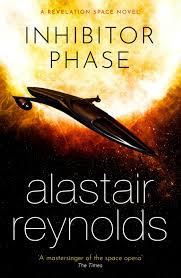
Inhibitor Phase
*high pitched keening noise*
New Alastair Reynolds. Set in the Revelation Space universe.
*high pitched keening noise*
I received this book from the publisher at no cost. Trade paperback available August 31, $32.99.
In case the above reaction wasn’t enough to give it away, I am a verrrry big fan of Alastair Reynolds. Which isn’t to say I love everything he’s written; I haven’t. However, Revelation Space continues to be one of my very favourite sequences of books, ever, so the idea of another in that universe… well. /fans self.
The preface suggests you could read this cold, and I guess you could – certainly enough other books ask you to work pretty hard, with random names like Conjoiner thrown at you with little explanation. There’s a joy in discovering what it’s all about! For me, though, a huge part of the joy came from remembering all the details of the Revelation Space universe, so I really have no idea what it would be like to go in with no knowledge.
This story is set later than almost all of the other Revelation Space stories. Humanity is on the brink thanks to an external threat – and there’s an interesting connection here to the Cixin Liu’s Remembrance of Earth’s Past stories, with the idea of profligate species spewing out radio and other signals and just letting everyone who might be out there hear you… and that maybe that’s not a good idea.
Miguel de Ruyter is sheltering with a small band of humans on a very inhospitable rock. As always happens, a stranger comes to town… and things go very wrong very quickly.
People aren’t who you expect, mistakes are made, epic crises are experienced and occasionally averted, light years are travelled, planets are visited. Discoveries, chases, explosions; courage is found and choices are made.
I loved it. I loved it a lot. I love the way it talks about humanity (very broadly interpreted) in all its messy, confusing, loving, courageous, selfish and impossible character. I love the grand scope and the narrow detail and the insistence that there must be room for both. I love the writing and the characters and I’m so excited that it exists.

 Randomly Yours, Alex