Swarm
This book was sent to me by the publisher, Allen & Unwin, at no cost. It’s available now; RRP $19.99.
When I read the first book in this series, Zeroes, I was a bit underwhelmed. I felt like it didn’t fully deliver on its promises – not quite dramatic enough, somehow, or heroic, or problematic. I didn’t hate it… I was just a bit disappointed. So while I was very excited to receive the sequel to review, I experienced some trepidation.
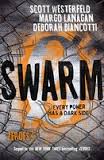 And then I picked it up. And then I couldn’t put it down. And I read the entire thing in an afternoon… and, ahem, evening; it’s been a while since I read past my bedtime in order to finish a book.
Folks, the sequel is better than the first. Shocking, I know. Continue reading →
The Martian

I’m honestly not sure whether I would have kept on with this book without having the context of the film. Probably? The will-he-survive narrative is a gripping one, after all, and it’s so different from superficially similar narratives. But I was surprised, while reading, to see how different this is from the film. I don’t mean different in terms of plot, although there are a couple of differences – but nothing significant. I mean different in terms of … richness, I guess. Detail. I guess it’s not fair to compare a visual medium with a print one, but some writers manage to convey a richness of detail – not always in a lot of words (Okorafor, Le Guin). Weir is not that person – well, not in this book anyway.
Anyway, I did enjoy it – partly because I’d been wanting to read the source material having loved the film. I liked the science-heavy nature of it: there’s a lot of discussion about chemistry but it didn’t get to Greg Egan levels (I love Egan but even I glaze over at vector diagrams in my SF). Mark Watney is a somewhat less engaging character when he’s just talking to you, rather than accompanied by Matt Damon’s facial expressions – maybe I was spoiled in that regard by the film, but BookWatney has less of a sense of humour, I think. There’s still some nice interactions between the different characters, which I enjoyed, and at least some of the diversity that I enjoyed in the film is present in the book.
Also, because I love this stuff: I am now absolutely convinced that they cast Sean Bean in his role SOLELY for the purpose of that one LOTR joke, and no one will ever convince me otherwise. Plus there’s no way, despite what my beloved thinks about my obsession with conspiracy theories, that it was accidental that two characters who talk together about Watney’s communication access are called “Chuck” and “Morris”.
Recommended for people who like some science in their science fiction. Kudos to the developers of the film for seeing the potential in this book.
Children of the New World
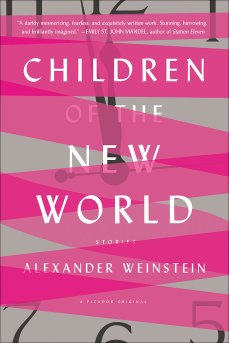 This book was sent to me by the publisher at no cost. It will be out on 31 October; RRP $22.99.
This collection of short stories reminded me a bit of Rob Shearman’s work. These aren’t quite as weird as Shearman’s (in the ‘New Weird’ sense, not just really quite strange), but there’s a similarity in the focus on everyday details in a weird, sometimes science fictional setting; an emphasis on relationships and humanity amidst technology and worlds (both local and global) falling apart.
I’ll bet this doesn’t often get talked about as science fiction; I bet it gets discussed as literary fiction, like The Book of Strange New Things. But for me, it’s definitely sf. Continue reading →
Galactic Suburbia 153
In which letters are written to Octavia Butler. Get us from iTunes or at Galactic Suburbia.
What’s New on the Internet?
British Fantasy Awards: Letters to Tiptree won one!
No Award on Conflux & Asian Flavours in SFF fandom.
Octavia project: Octavia Estelle Butler was born on 22 June, 1947, and died in 2006. In celebration of what would have been her 70th birthday in 2017, and in recognition of Butler’s enormous influence on speculative fiction, and African-American literature more generally, Twelfth Planet Press is publishing a selection of letters and essays written by science fiction and fantasy’s writers, editors, critics and fans.
We are looking for letters addressed to Butler, which should be between 1000 and 1500 words. We are paying 5cpw up to $USD75 for letters, to be paid on publication. We are looking for World First Publication Rights in English, and exclusivity for the first twelve months of publication.
Submissions: octaviaproject@twelfthplanetpress.com
More Butler stuff: Radio Imagination
Tansy’s new releases: Bounty (the final Fablecroft book) & Unmagical Boy Story
CULTURE CONSUMED:
Alisa: Jamberry & business training.
Alex: Once Upon A Time season 2; the Patternmaster series, Octavia Butler; The Starry Rift, James Tiptree Jr; Goldenhand, Garth Nix.
Tansy: The Life & Times of Angel Evans, by Meredith Debonnaire; DC Superhero Girls: Hero of the Year; Revolutionary Art: Writing For Social Justice webinar series; Hex – How to Be a Fan on iView; Labyrinth Board Game Facebook page; Dracula’s Feast on Kickstarter.
Please send feedback to us at galacticsuburbia@gmail.com, follow us on Twitter at @galacticsuburbs, check out Galactic Suburbia Podcast on Facebook, support us at Patreon and don’t forget to leave a review on iTunes if you love us!
Binti: Home
 This novella was sent to me by the publisher at no cost. It will be out on 31 January 2017.
What does it mean to go home?
What does home mean?
What does it mean to belong?
If others don’t accept you, can you belong?
Do genetics equal identity?
If you change, are you still yourself?
What makes people family?
Binti featured Binti leaving home and changing in some fairly drastic ways. Here, Binti goes home, for a bunch of complicated reasons, and is forced to confront the sorts of questions I’ve asked above. She’s forced to confront aspects of herself that have changed – and been changed – and, perhaps more difficult, how her family react to this. She’s also confronted with some unpleasant truths about home and family, all in (in my e-version) about 90 pages.
It’s a bold and striking story of humanity and tradition in the context of an alien-rich galaxy. It’s beautifully written (of course) and there’s a huge amount of tantalising detail that Okorafor just… doesn’t explain much. This in no way impacts on the story; it’s an indicator of rich Okorafor’s writing is. Binti is a wonderful character and I’m so glad to have another part of her story told. I suspect there may be at least one more story coming… .
Also, look at that cover! How awesome is that!
Highly recommended, likely to be on award ballots next year.
Patternmaster
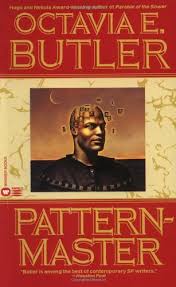 Well, this finally makes sense of Clay’s Ark. You can definitely read this by itself, but it is far stronger as the culmination of the preceding books. I’m genuinely astonished that this was actually her first published novel and that she then went backwards in the story. What a genius.
That said, this is not the strongest book of the series. The Clayarks are just ciphers, really, an enemy for the sake of an enemy; something for the characters to react against.
That also said, there’s definitely some interesting character work here. I especially love Amber, at working with the system but not within in. Teray got a bit wearing after a while.
With the background knowledge of Doro and Mary from previous books, it’s intriguing to fill in the gaps to see how the world at the end of Mind of My Mind could turn into the world here: the development of Houses, how people are seconded, and the attitudes towards mutes. Butler could so easily have written many more stories here, filling in those gaps, but it clearly wasn’t what she was interested in doing.
I was most sad to see Butler expecting there to be sexism and fear of bisexuality present in this future.
The Starry Rift
My copy claims that Sheldon died shortly after completion of this book. WOE.
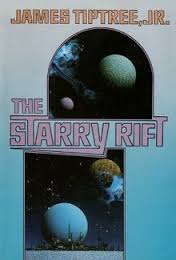 Confusingly, the quote on the front of my copy calls this a science fiction novel, which confused me immensely since I thought Tiptree only wrote two, and I have read them both. Anyway, it became a bit clearer as I read: this is three short stories linked together by the idea of two students asking a librarian at the Great Central Library of Deneb University, for help in their research on humans. So you could tenuously see this as one, 1001 Arabian Nights-style narrative, but I think that’s stretching it a bit..
Anyway, the three stories do all centre on humans; in the first and third, it’s humans in conflict with aliens – new aliens – and in the second it’s human on human violence. They are, despite the conflict, surprisingly positive stories about humans overcoming difficulties. All of the stories take place in or around a place called the Rift: an area of space that is relatively empty of stars, and therefore planets – which, pre-FTL, makes it hard to navigate through (something about needing landmarks, I think).
The first story is definitely my devastating favourite. “The Only Neat Thing To Do” got a number of accolades when it was published, and they are well deserved. Coati Cass is 16, space-mad, and has just been given “a sturdy little space-coupe” for her birthday. So off she goes exploring… and of course, runs into something unexpected. The nobility that Tiptree imagines for Coati, and the realism of her voice, are both just wonderful.
“Good night, Sweethearts” is an interesting story of identity, celebrity, loss and starting over. It’s a good story but it doesn’t really stand out for me.
Lastly, and longest, is “Collision”. This story is told both by humans and by the aliens with whom they are coming into contact; the conceit is that this story has been constructed through interviews with participants. There’s a human exploration team, and there’s bad humans called Black Worlders who have been doing some nasty things, and there are aliens who are getting angry at humans… The blurb says that “explorers cross impassable chasms of language, biology and hallucination to prevent a new age of war,” which about sums it up. Like I said before: surprisingly positive.
Overall this may not be quite the strongest of Tiptree’s work, but it’s still damn fine and should be read for “The Only Neat Thing To Do” anyway.
Bonus note: referencing your own work (Brightness Falls from the Air) to make sure it’s clear these stories are in the same world. Good work, Tip!
Clay’s Ark
 Having read Wild Seed and Mind of My Mind, this was not at all what I expected of a book set in the Patternmaster series. It seems only peripherally attached to the Patternmaster series courtesy of something Clay, whom we meet in Mind of My Mind, developed.
Still, the book deals with some of the same preoccupations as are developed in the first two books, in particular how people manage go live under compulsions and especially how that impacts on sex and relationships and children. It was interesting to see Butler explore similar issues coming about from different motivations.
In itself, this is a very different sort of contact story from what is more commonly written. The contact is almost just a macgyver to allow the exploration of how confinement and externally imposed obsessions might play out.
Not Butler’s strongest work, but intriguing and enjoyable (well… within the bounds of devastating sf…) nonetheless.
Later: having now read Patternmaster, this book makes a bit more sense. Interestingly, I think this is the stronger.
Mind of My Mind
 Just go read it. Seriously.
As I mentioned in Wild Seed, I am glad I read that novel first – the background it provides for Doro, and Emma, is devastatingly important. Of course you could read this first – publication order – and then have the background filled in… but this order definitely worked for me.
This book is very focussed on Doro and the people he manipulates people to his own ends. Even when other characters – Emma (Anwanyu), and especially Mary – get to tell their own story, it’s always connected to Doro: against or in favour, in reaction somehow, trying to figure out how to circumvent or please him. He is the Patternmaster. He is the puppetmaster.
This book takes place over a much shorter timeframe than Wild Seed – just a few decades. In the prologue, Mary is a small child in an abusive home; the narrative picks up with Mary, one of Doro’s many children and an important part of his experimentation, in her late teens. Mary becomes the focus of the story as she seems to be the fulfilment of Doro’s plans, and it basically follows her development and discovery of her powers.
Unsurprisingly, Mind follows some of the same themes as Wild Seed. Why humans acts they way they do, how compulsions can work and why we act in our own worst interests; what slavery can look like. It develops the discussion of the difference between haves and have-nots to a greater extent, and the consequences of power. The idea of family and its power as well as its destructiveness. Humanity at its best and worst.
This book isn’t always pleasant to read, but it is always powerful and it’s always well written and I will definitely be reading it again.
Goldenhand
This book was sent to me by the publisher, Allen and Unwin, at no cost. It’s out now; RRP $24.99.
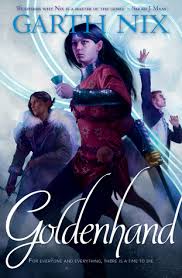 This BOOK! I’m so happy to have read this book! I’m so happy this book exists! (Spoilers for the other Old Kingdom books. Just go read them.)
I’ve been a fan of the Old Kingdom books for a long time. Not as long as they’ve existed – Sabriel came out about 20 years ago and I didn’t read it then – but long enough ago that when the prequel, Clariel, came out in 2014 I was a bit over the moon. So with Goldenhand being a direct sequel to Abhorsen, I’ve been pining for this book for a good while.
This is most definitely a sequel. I’m not sure how it would stand by itself – there’s not a lot of explanation of the whole necromancy by bells thing, nor of the Charter, and there’s a moment where Lirael is required to use her mirror and I was like wait, what? because it’s been a while since I read the other books. But really that’s all right because just READ ALL THE OTHERS ANYWAY.
Lirael is pining the loss of the Disreputable Dog, and trying to fit in with her newly discovered much older half-sister Sabriel and her family, and learning to be the Abhorsen. Something I loved about Lirael was how she always struggled to fit in as a Clayr, and I like that Nix hasn’t just made her magically (heh) well-adjusted. Meanwhile, of course, things aren’t entirely hunky dory in the rest of the kingdom: a nomad appears unexpectedly at the Greenwash Bridge, and even more unexpectedly proceeds to be attacked by other nomads and their awesomely freaky magical constructs. Cue mad flight down the river…
The book follows two tracks: Lirael, taking charge of Abhorsen business while Sabriel has a holiday (heh so cute), which means investigating a message about Nicholas Sayre and there being a magical creature on the wrong side of the Wall… and Ferin, the nomad messenger, whose endurance makes all the other characters look a bit weak and who just occasionally has a wicked sense of humour.
I love Ferin.
Nix’s writing is incredibly easy to read: it’s fast-paced, and it has lovely descriptions that allow you to imagine the place but not get bogged down in detail. I love the idea of the Charter and the additional development that the magic system gets here. In the interview with Nix that’s included in the book, he seems a bit bemused by how many people mention the gender balance in his books. But here’s the thing: when you’re reading about some guards being awesome in fighting and realise that any number of them are women, and that’s just so not a thing for this world, it still blows my mind. Multiple women in multiple sorts of roles: it can be done.
This is a wonderful addition to the Old Kingdom world and I’m so happy that it exists.


