Doctor No
This review is part of Project Bond, wherein over the course of 2014 we watch all of the James Bond movies in production order.
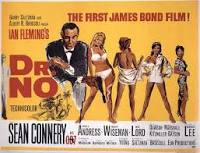 Summary: Bond is sent to Jamaica after the MI6 agent there (Strangways) is killed. It turns out that he was investigating Crab Key and its mysterious inhabitant, Dr No, as possibly being the source of interference that has Cape Canaveral and NASA all het up. Bond continues this investigation, ending up on the island and eventually foiling Dr No’s dastardly plan. Which involves an atomic reactor. Along the way Bond sleeps with a few ladies, gets one ally killed, and kills several people himself. And he has a shower.
Alex: It was interesting to see how many of the elements that define Bond in the cultural mind are present from the outset. The opening scene has Bond gambling with a beautiful woman, whom he ends up sleeping with (this is a mutual seduction); he drinks a martini that’s been shaken; he flirts outrageously with Moneypenny (and throws his hat on the hatstand), and M is also present; there are car chases galore, and even Felix Leiter and SPECTRE. The one aspect missing is Q, and any sort of technogadgetr (Geiger counters don’t count). The other thing that’s really different is the opening credits: there’s no prologue before them! But there are some dancing-lady silhouettes, so that foreshadows later developments, as does the man-in-gun-barrel shot. Also the theme music; I love this original score. Interestingly, there is no mention of “James Bond”; there are some “007”s plastered on the screen, but that’s it – the movie is “Ian Fleming’s Dr No”.
The introduction of Bond as a character says a lot. As mentioned, Bond is first seen gambling in a club. Someone is looking for him, so we already know his name (that would never happen in a film today), but when the camera gets to the card table we don’t see his face for ages. We see the back of his head… then his (well-manicured) fingernails… then his face, as he lights a cigarette and gives his name as “Bond. James Bond” in reply to the woman asking. I have no idea how popular Connery already was by this stage, but he can’t have been an unknown – not to get that sort of treatment. Bond’s character is relatively nuanced throughout the film. He goes from gambling and flirting with a stranger, to flirting with Moneypenny, to being deadly serious with his boss (and being petulant when told his Beretta is a sissy gun). In Jamaica he Gets Things Done: turns the tables on would-be murderers, orders people around, deals with a nasty spider, and kills with (apparently) absolutely no qualms. He’s cold and hard when it’s required, but warm and flirty when he can; he’s calm while the spider crawls all the way up him (if he’d been a woman this would have happened with the sheet off, rather than wrapped around him) – but then jumps out of the bed, clearly panicky. This characterisation surprised and pleased me.

The supporting cast left a lot to be desired, although there were some good bits.
Quarrel, the local Jamaican boatie who was helping Strangways has some good moments: suspicious of Bond, he manages (briefly) to have him at a disadvantage; his local knowledge and boating skills are clearly valued by Bond and Leiter. At the start he clearly

sees himself as Bond’s equal, although this seems to disappear over the course of their partnership. Annoyingly, when they get to Crab Key Quarrel is depicted as superstitious and needing to drink rum to bolster his confidence – the former I could cope with because Honey Ryder also believes in the dragon, but the latter is totally unnecessary. Also, he dies an unnecessary death and is then forgotten. Boo.
I tried to keep track of the non-white characters throughout the film, expecting it to be pretty dire. They do mostly appear as murderers and servants, and often as totally under Do No’s sway… but there are a few white characters who fit this bill, too, so it’s not a racially clear-cut thing. The worst bit, race-wise, is that as far as I can tell two of the characters are in ‘yellow-face’: Miss Taro and Dr No himself are played by white actors. (I may be wrong about Miss Taro – perhaps she’s not meant to be of Asian descent – but the eye-liner and hair seem to be suggesting it…).

Dr No says that his father is German while his mother is Chinese, so I guess there’s an excuse for not using a Chinese actor, but still…. I was also reminded of Stella Young’s comments at the Splendid Chaps podcast about villains and disability. Dr No has something wrong his hands – we’re not told what, although Bond assumes his hands are fake. In the book I think he also has weird eyes. The point being, he’s not right somehow. Bond is the epitome of Manliness, and is Defending Humanity; his opponent is somehow less than/different from human (I mean all of this in the context of the movie of course), and is therefore deserving of being taken down.
Honey Ryder (in the book, she’s Honeychile) – played by Ursula Andress – is the most famous part of the movie, I think; her walking out of the ocean must be one of the more iconic moments in popular cinema. Like Quarrel, her best moments are at the start of her relationship with Bond. She’s suspicious of him, afraid that he’s going to steal her shells; she’s defiant and doesn’t want to have anything to do with him. She’s confident of her own abilities and indeed proves herself very useful – taking Bond and Quarrel somewhere to hide, showing Bond how to stop the mosquitoes from biting, and so on. Sadly, this utility and resourcefulness do not survive under the weight of James Bond. She quickly becomes fearful and a bit useless – dressed up as a doll, taken to dinner then dismissed while the men talk of great things, and then chained up so she can be rescued. Sad.
There is a good case for arguing that this is a science fiction movie. Dr No is being investigated because he is somehow interfering with the Mercury missions being launched from Cape Canaveral – Leiter says they’re about to try moon fly-bys, which by 1962 standards are absolutely SF. Additionally, Dr No’s evilness is driven by atomic power, also SF-nal for 1962. And there are automatic sliding doors.
I enjoyed this more than I had expected. The fights are cheesy, the car chases involve a lot of blue screen, and some of the dialogue is dreadful. But a lot of it was actually shot in Jamaica, which is beautiful; it’s well-paced – no extended fights or chases; and I liked that Dr No isn’t completely transparent. This was definitely a good start to Project Bond.
James: Well, what has Alex left unsaid? I enjoyed that right from the gun (see what I did there) we’re off and racing with the traditional Bond theme blaring out on trumpets… Classic and colourful lettering … Dr No, Ian Fleming and then the short credits. The quality of the blu-ray transfer is striking. Having watched these films growing up on VHS etc to see them re-scanned from the original first generation camera films is a treat. Film’s look is timeless, the colour is beautiful and of course the technology dates it but otherwise it could be any modern film.
If I had one observation it’s that the whole film somehow seems more dated and cheesy the longer it goes on. It’s still from that era when cinema seems overacted compared to more modern films. I loved how many of the key Bond elements are firmly in place, the booze, the women and the regular supporting cast and yet somehow the cliche doesn’t feel tired? How many books had Fleming written before this film was made? I rate this Bond 3 Martinis.
2013: the tv and movies
So it’s that time of year, when everyone does their wrap-ups. Me, I’ve been keeping track of most of the tv and film I’ve consumed over the year, because I think it’s interesting – particularly to see what I re-watch…
Movies for the first time:
Hotel Transylvania * Abraham Lincoln, Vampire Hunter (on the plane, ok??) * Pitch Perfect * Brave * Cloud Atlas * Oblivion * Iron Man 3 * The Prestige * Jack Reacher (I may have fallen asleep) * The Odd Angry Shot * Much Ado About Nothing (2012) * A Good Day to Die Hard * Pacific Rim * RED 2 * Star Trek Into Darkness * Gravity * Olympus Has Fallen * GI Joe: Retaliation * Thor: The Dark World * Elysium * The Wolverine * Ender’s Game * Man of Steel
Total: 23
Movies re-watched:
Die Hard with a Vengeance * Indiana Jones: Raiders of the Lost Ark * The Avengers * The Mummy * Airheads * Skyfall * Iron Man * Iron Man 2 * Good Night, and Good Luck * Knight and Day * Space Cowboys (in honour of Cmdr Hadfield) * The Lord of the Rings (all three, extended editions) * Thirteen Days * Apollo 13 * The Odd Angry Shot (yes, again) * Snow White and the Seven Dwarves * Nicholas and Alexandra * Oblivion * Singin’ in the Rain * Harry Potter and the Deathly Hallows Pt 2
Total: 22
TV seasons (not including rather a lot of Doctor Who):
Caprica (first and only season) * Warehouse 13 (season 1) * The Triangle (three-part series I am embarrassed to have watched) * FarScape (season 1) (rewatch) * Downton Abbey (season 1) * Wallander (5 episodes) * Downton Abbey (season 2) * Game of Thrones (season 2) * The Bletchley Circle * Downton Abbey (season 3) * Newsroom (season 1) * Battlestar Galactica (season 1) (rewatch) * Battlestar Galactica (season 2) (rewatch) * The Day of the Doctor (…twice…) * Battlestar Galactica (season 3) (rewatch) * A Very British Coup
Total: 14 seasons
I would have thought we watched more tv this year, so that’s interesting. Battlestar Galactica has fairly long seasons, though, so that’s taken a fair bit of the last quarter of the year.
Project Bond
I like James Bond movies. In fact, I went through quite a phase as an 18 year old of reading all the Bond books I could get my hands on (even, gasp! non-Fleming ones).
My husband likes James Bond movies.
Together, we have seen all the Brosnan and Craig films, and a few of the classics when the opportunity has arisen. A few weeks ago we went to Melbourne Museum’s Designing 007 exhibition, and it’s incredible. Costumes (golly the women have been tiny), props, mood boards, story boards… an enormous casino room, clips from films, etc etc. Brilliant!
But.
Now, it must be said that I have a spectacularly poor memory. Yet even taking that into account… well, it turns out that I may not have seen as many classic Bonds as I thought I had. As many as I had assumed, and been assuring the husband of.
 And thus is born Project Bond. Said husband dreamed it up while drunk on the glory of Aston Martins and sharp suits. We have purchased the entire suite of James Bond movies from the last 50 years (all 23 of them), and we plan to watch one a fortnight for 2014. And the only way that I was convinced to go along with this crazy idea was the tantalising suggestion that – you guessed it – I should review each one. It was briefly suggested that perhaps I would refrain from indulging in too much ranting over the gender politics… but this suggestion was quickly retracted.
2014 starts this week, and so does Project Bond. Stay tuned for our first review, as James Bond takes on the nefarious Dr No.
Thor 2: a spoilery discussion
SPOILERS, right? You’ve been warned.
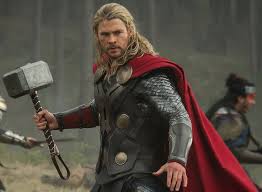 Let me get this out of my system: oh my GOODness WTH Greenwich? GREENWICH? ARE YOU FOR REAL??
Ahem.
So. Thor’s second solo(ish) outing. I think it’s got a slightly better plot than the first. It’s still a crazy romp (see here for The Mary Sue’s review that suggests it’s not as crazy as it could/should be – too caught up with realism for a story that is hello, based on Norse mythology – which I agree with). There’s going to be a conjunction of the nine worlds (which makes me think that Lara Croft should be finding something awesome, amiright?), and this is causing all sorts of gravitational ructions between the worlds… and the Dark Elves are waking up, having been totes smashed by Odin’s dad a while back, and they want reveeeeeeenge. Also the Aether, a magic substance that will help them bring about everlasting darkness (which raises all SORTS of questions about why they have eyes, etc, but this movie is not the place for a discussion of evolutionary biology (insert joke about Chris Hemsworth’s abs here)). Things go wrong for everyone, surprise! There are battles, there is science, there are monsters, and there is kissing.
Things I liked:
Sif is awesome.
Jane was science-y! (And thanks to a science discussion early on with Darcy, the movie passes the Bechdel test.)
Friga was brilliant. With a sword. Also the tricksiness.
The relationship between Thor and Loki. Prickly but sad, angry but wanting-to-be-hopeful… more nuanced than I was expecting, to be honest. Not knocking Hemsworth but I think a lot of that was down to Hiddleston, because as the wrong-doer he had a harder job making Loki both unrepentant and dismayed at the outcome of his actions. That moment when you realise that everything you’re seeing in Loki’s cell is a trick? – sheer brilliance.
The end! (of the movie itself that is, not the stingers). I was pretty sure I knew what was going down, but it was nice to see it actually happen.
Things I was sad about:
There is not enough Sif.
 I will never get the image of Stellan Skarsgard in y-fronts out of my brain.
GREENWICH. You cannot be serious about using Greenwich as as the locus of the nine worlds’ conjunctions. And you really cannot be serious about drawing lines that converge there that start at Stonehenge, Snowdon and… other unnamed places because if you named them it’d be even more obvious how STUPID this is…. And in conjunction with this, you really, really cannot be serious about the ancients having left messages for us from “last time”: the Egyptians, the Chinese, the Mayans… the MAYANS? The Mayans were not building monumental structures at the same time as the Egyptians and the Chinese! I… I have no words. Look, even Skarsgard is dubious about his own words!
Darcy and the intern getting it on. Yes I was expecting it, but still.
I liked it. I love superhero movies (except for Spiderman. It just hasn’t worked for me). So… there are explosions and fight scenes and some delightful snark. And Loki. It’s exactly what I expected.
Han Solo
What can I say, I’m one of those people who thinks that Solo is really the star of the Star Wars movies; I was very annoyed that eps1-3 didn’t make a reference to him, even something as small as ‘here’s this kid I’m teaching to be a smuggler…’.
Anyway, a friend was cleaning out her house of books and I became the recipient of a Rather Large Bag of Star Wars novels… and I have finally dipped my toe in. I started here partly because SOLO, and partly because of this article about the author, AC Crispin, having recently died. And I had no idea that AC = Ann.

So. Solo.
Look, this is not a novel that was ever going to win literary prizes. The prose is a bit clunky, some of the characters are a bit stock, and yes the overall plot is a bit hackneyed. BUT! But.
a) It’s SOLO. Who doesn’t want to know how the galaxy’s most loveable rogue got to where he is? Who doesn’t want to know why someone so rough on the outside actually has such a soft smooshy inside? (Much like a tauntaun…). Plus, how did he GET that tough exterior? How did he and Chewbacca find each other, and what about the Millennium Falcon? These are questions I really want an answer to. So, I’ll read the novels.
b) It expands the Star Wars universe. I think one reason why I really like the idea of the enormous number of tie-in novels is that they’re all set in the same universe, but they don’t concentrate on just one bit. The Zahn novels didn’t; this one novel takes the reader to a few different planets, and while most of them are (as far as I recall) referenced in the original movies, this book looks at them from a rather different perspective – and it still works. It’s a lot grubbier, mostly. Yes Solo is a smuggler in the movies, yes Tatooine is the planet-futherest-from-the-bright-centre-of-the-galaxy – but really you don’t see much of the seamier side of the planets, let alone of the empire as an Evil Empire. Contrariwise, Crispin sets a lot of her story in the criminal underground, or on a slave plantation. Some people are nice, some are downright rotters.
c) Gratuitous Star Wars references. Sure Solo’s miff-ed-ness at being called scruffy got a bit tired after a while, but still – funny.
d) It takes Star Wars stuff but it makes it different. There’s an elderly Wookee woman that Solo’s friends with, and there are clear parallels to Chewbacca (also with his non-human companion Muuurgh) – but it’s not identical. There’s a romantic interest and again, parallels to Leia but by no means identical, and indeed provides some rather thought-provoking points on why Solo reacts the way he does to Leia (abandonment issues). Links to the Hutts, being a pilot, etc – all of these essential elements are there, but Crispin does interesting enough things with them that it’s by no means ‘young Solo just imitates old Solo.’ And that’s cool.
Thus this novel was definitely light entertainment. It’s light because it doesn’t require an enormous investment of time or thought-process from the reader – although it does raise genuine issues and does not simply ignore them. It’s entertainment because there are pirates, and smugglers, and chases, and Han Solo.
Bogarde

Once upon a time, I was 16. One 16-year-old Saturday afternoon, I switched on the television to discover a black-and-white Dirk Bogarde being sentenced to death by He-Who-Would-Be Rumpole (Leo McKern). I was horrified and mesmerised. And then when Bogarde declaimed “It is a far, far better thing that I do, than I have ever done; it is a far, far better rest that I go to than I have ever known” … well, there was definitely Something In My Eye. Such that my mother had to ask what the problem was, and when I told her Dr Simon Sparrow was on a tumbrel, headingfor the guillotine… she just shook her head.
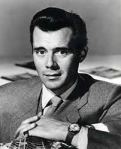
I am of an age to remember when Friday nights were a Great Night for movies. My dad stayed up super-late with me once, to watch Breaker Morant, and had to almost physically prevent me from ranting and raving about the injustice of it all, because who does high-horse morality better than a 15 year old? Anyway, the ABC went through a period of classic British films, whence my introduction to Carry On. And after Carry On came the Doctor films. And Dr Simon Sparrow just stole my heart. (Seriously! Look at those eyes!)
All of this is the long-way-around way of saying that a few years after all this, my mother bought me a biography of Bogarde. That was quite a long time ago now. I have an unfortunate habit of appreciating the books she buys me but not reading them for ages. In my defence this is a BIG book – like 700 pages big – and somehow 700 pages of biography is different from 700 pages of space opera. Because I finally, finally read it. Hooray! And it took me quite a long time (like over a week).
I vaguely remember Mum breaking it to me that he was gay; I had no idea that he went on to have such a successful career as an author, nor that his film career was quite as… fraught.
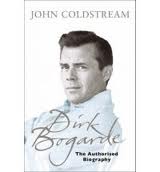 The bio had some excellent bits in it. I was fascinated by the discussion of film-making in Britain in the 50s and 60s (and a bit horrified); the idea of Judy Garland and other such bright lights going over to Bogarde’s place for Sunday lunch kinda blew my mind. But there are some problems here as well. Firstly, and most annoyingly, Coldstream makes quite a deal of the fact that in his memoirs, Tony Forwood often appears as entirely marginal, sometimes only as a manager vaguely hanging around. The reality is that they lived together for something like 50 years. Coldstream makes this part of Bogarde’s fear of being outed as gay (totally reasonable in the 50s when Britain still had its laws making homosexuality illegal), but also part of his rewriting of his personal history. My main beef with this, though, is that Coldstream doesn’t actually interrogate Bogarde and Forwood’s relationship himself. I don’t mean that I wanted to read an expose of their sex life; I mean that I was left wondering whether they actually were lovers, or had an entirely platonic relationship or… what. Coldstream fell into the same problem – not entirely ignoring Forwood, but not properly considering his significance – that he accused Bogarde of. Which means there’s this huge part of Bogarde’s life – was he gay? Was he asexual? – that is ignored. And if you’re writing a bio, that should (I feel) be either part of the discussion, or completely left out, and if the latter then that needs to be spelled out for the reader. Especially in Bogarde’s case where his drop-dead-beauty was part of his appeal as a film star, and where his sexuality has been cause for discussion for a very long time.
My other gripe with this book concerns two really weird bits. One: Coldstream sent off samples of Bogarde’s handwriting to a graphologist. That’s someone who analyses handwriting and tells you about your personality. Um, weird. Two: the biography ends with a totally bizarre story of the people who bought Bogarde and Forwood’s estate in France being superstitious about a possession of Bogarde’s bringing them bad luck. Also, um, weird.
If you’re interested in film history, this is awesome. I’ve left it with my mum and I think she’ll get more out of it because she’ll know more about the people being mentioned. If you’re interested in biography generally this actually is quite a good one – it’s perfectly readable and Bogarde really did have a fascinating life, serving in WW2 then acting in theatre and films – and oh the drama (heh) around that – then going on to writing and public appearances.
A Good Day… to watch Bruce Willis
Wellllll… let’s be honest here. Pretty much any day is a good day to watch Bruce Willis. But to be specific, I finally watched A Good Day to Die Hard.
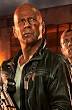 It seems to me that the Die Hard franchise is much like the early Star Trek movies; the odd-numbered ones are the good one (I do have a soft spot for #2, but it is not as good as 1 or 3). This outing for old-man-McLean is definitely a more enjoyable film than the fourth one was. And I think there’s a really significant reason for that: he’s with his son, rather than his daughter.
SPOILERS ahoy!
The story: Our McLean finds out his son is in a Russian prison. He goes to see what’s happening. He arrives as his son is breaking a Russian political prisoner out. It is revealed that the son is in fact working for the CIA… and then things continue to Not Be As They Seem. And Chernobyl is involved.
Firstly, the good bits: there are some awesome chase scenes. There are helicopters doing mad things. One of the villains regrets that he did not become a dancer, and does a shuffle to prove it while also kicking away McLeanx2’s guns. Some great banter ensues, especially between father and son, and there are two (that I counted) delightful references to early Die Hard which I think is probably perfect – they were very good and appropriate references, and it doesn’t overdo the call-back which is always a threat in such films.
And then… well, I did have a couple of issues. As mentioned above, I enjoyed this film more than the fourth because of the interaction between the father and child, in this case the son. The daughter is not wholly lacking in awesome in the fourth, but she is a captive and therefore lacking in real agency. And the dude/son-replacement that McLean goes along with just got annoying. Whereas here, father and son are totally equal; their skills complement each other, in every fight they’re equally awesome, etc. So that made me a little bit sad for the daughter. Interestingly, there is a daughter character in this film too (actually two, since the McLean daughter gets a look-in as well, but she is largely irrelevant), who is also interacting with her father – she first appears to be working against him, but then it turns out she is actually working with him. So that’s an interesting inversion of what’s going on with the McLeans. I was a bit worried that the two youngsters would end up getting it on, but that wasn’t a problem because she ended up being Evil, as did Pa, and there wasn’t even time for flutter-eyes between the two Hot Young Things (thus, bonus: no romance!). Good Family have issues but work together despite them; Bad Family are sneaky and always working together even when it doesn’t look like it.
Very watchable, but not re-watchable. I really hope this is the end of the franchise, because the only place to go from here is McLean and grandchildren – which he’s already done in Look Who’s Talking – or McLean in retirement village, which he’s already done in RED (and eeee so excited for RED 2).
The Odd Angry Shot
This film is an example of why, and how, Australian cinema is so awesome.
 It’s also quite the who’s who of male actors of A Certain Age in Australian film and TV; there’s even a cameo from Frankie J Holden (for whom I have quite the soft spot).
This is not a film I would tend to watch off my own bat, for a whole bunch of reasons. But I did, and I’m glad I did.
The story focusses on Bill, a fresh young man (John Jarratt!) off to the Vietnam War as part of the SAS. When there he falls in with some likely lads (Graham Kennedy! Bryan Brown!!) with whom he drinks, jokes, and gets into trouble – and goes on patrol with too. Some of them get wounded. Some of them die.
The film has some remarkable character moments. At one point, Harry is explaining why he’s sketching – he was an artist before he joined up. He then goes on to explain that he joined the army after he got a divorce, and why he got a divorce. It’s a sad story – as such stories ought to be – but it is neither pathetic nor overwrought; it is as pragmatic as your classic Aussie bloke would make it. This is not to say that Harry is unfeeling; quite the contrary. He feels it deeply. But he does not make a song and dance about it.
I think the pragmatism, and the understatement, is the big difference between this film and an American one. I’ve seen Born on the Fourth of July, which is a remarkable piece of cinema. But this captures another, equally true (?for given values of…) version of the experience of war. And it is realistic. There’s tinea, porn, fear, death, the random nature of events; there’s camaraderie, and making the best of a dreadful situation. Like having a cage fight between a spider and a scorpion. As you do.
 As with many such films, it’s based on a book. Apparently the author was concerned that the film would turn his anti-Vietnam-but-pro-army story into a buddy war movie. I hope that, when he saw it, he saw a film that did capture some of the essence of his book. Because this is definitely not a pro-war film.
I’m glad I watched it. It’s pretty raw – there are definitely some cringeworthy moments, made all the more cringey because they almost certainly reflect actual attitudes of the 70s, if not the 60s; but as a short, sharp suggestion of an Australian experience in Vietnam, it works.
The Lord of the Rings: the films
Confession: I watched almost the entire LOTR trilogy in one day last weekend. The extended versions. I was up to the arrival of the eagles when I decided enough was enough and I went to bed; I grouched at myself for watching the extras attached to Game of Thrones seasons 1 and 2 before starting it, since clearly that’s what stopped me from actually finishing.
This is not the first, nor the second, nor the third time I have watched these movies. I love them. I have read the book more times than I have kept count. Some thoughts on this viewing:

1. I still do not like Elijah Woods. He just doesn’t work for me. While the Frodo+Sam bits are my least favourite bits overall, in the books, I think Woods is too sappy in the role. And given Frodo is my least favourite character, that’s saying something.
2. I was struck quite forcefully by how much of a love triangle Frodo/Sam/Gollum are. Frodo is the innocent object of Sam and Gollum’s affections – where ‘innocent’ means ‘not looking to attract either of them.’ Same is the long-time friend who has been harbouring love in his little faithful heart for a long time, just waiting for Frodo to notice him; Gollum is the slightly bad-boy new kid on the block, come to whisk Frodo off his feet. And here they are, all stuck together, Sam and Gollum forced to work together to look after the object of their mutual desires…
3. It still makes me angry that they screwed with Faramir so drastically. There is no narrative need for Frodo etc to be taken to Osgiliath, so why not allow Faramir to be the pure one the whole time? Why does he need a moment of coming to his senses? It’s a much more stark difference between him and Boromir when his struggle about whether to take the ring takes place over minutes, not over days. Grump grump grump.
4. The death of Saruman annoys me less, since I do understand it from a narrative point of view. Like the deaths of Agamemnon and Menelaos in Troy, they’re audience-pleasers. It does mean of course that there is no Scouring of the Shire, which – y’know – bit sad about…
5. … but since the ending of Return of the King can already be argued, by those who haven’t read the books, as having a multitude of mini-endings, I do understand not including it. I’ve heard arguments for finishing the film with the arrival of the eagles to save Frodo and Sam; that can’t be the end, though, partly because there needs to be that reunion between everyone, and partly because Aragorn HAS to get crowned; note the name of the movie. While I love the departure from the Grey Havens, I wonder whether the film would have been better off finishing with everyone bowing to the

hobbits. Although that would have left out Sam’s marriage to Rosie, which would have been annoying because…
6. I was thinking about the women in LOTR. Yes, I completely agree there are too few. It is absolutely a product of its time and Tolkien’s context, which doesn’t make it less annoying but it does give context. Still: Eowyn is brilliant and played magnificently here (especially of course in Tolkien’s little stick-it-to-Shakespeare moment). Arwen is crucial, even though she doesn’t have much direct action; Galadriel likewise, and aren’t we all so glad Cate Blanchett was alive to take the role? Other than that… well, there’s Rosie. There’s a fleeting glimpse of Lobelia Sackville-Baggins, who could have had a bigger role with a Shire scouring. Ioreth, wisewoman and healer in Minas Tirith, doesn’t appear in the films. Those are the women I can think of who have roles of any significance in the story. So much as I don’t like Jackson taking liberties, I can see that adding a female elf who takes some action will (hopefully) be a good addition to The Hobbit.
7. There are other bits that I am still sad they missed out, but can understand. Tom Bombadil was never going to work; Freddy Bolger is probably just as happy to be out of it; Ghan-buri-Ghan would have been awesome in a tiny little cameo but would have made no sense to those not having read the books.
8. My goodness but the VFX are almost universally astounding. I adore Minas Tirith. And Fangorn.
I am very happy I own these movies.
Cloud Atlas
I went to see it, and you know what? I really, really enjoyed it.
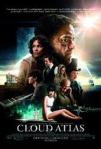
Firstly: I know people have said they found the narrative structure difficult to follow. Perhaps if you’re only used to a completely linear narrative, with no interweaving, then this would indeed be somewhat difficult to follow, because there are lots of cuts back and forth. But each timeline is designed very differently – you can tell just from looking at the scenery what time you are in – so I didn’t find that aspect disturbing or confusing in the slightest.
Something that was a little disturbing, and intriguing, and uncomfortable-making, was the cross-race acting. Now, I am as anglo as it gets, so my take on this is to be read from that perspective. But anyway: I found most of the Anglos-as-Koreans to be cringeworthy; James D’Arcy was the only one that seemed passable, ish, while Hugo Weaving was verging on grotesque. But what I really liked was the fact that some of the non-white also crossed race. Halle Berry as Jocasta really worked, for me, although Doona Bae as Tilda was somewhat less convincing. I think the fact that the actors all played multiple parts made this race-crossing more acceptable – it made sense, in this weird cinematic world, that a version of Berry would exist in the rarified whites-only world of 1930s English snobbery. If it had just been ‘let’s put Weaving into Neo Seoul!’ there would have been a serious problem. I haven’t read any reviews of the film yet, because I wanted to go in totally unspoiled, but I’d like to read reviews by people of colour to gain an understanding of how it looks from a non-privileged perspective.
The multiple-character thing was immensely amusing, as I eagerly tried to figure out who each actor was in each time – and nothing will ever compare with Hugo Weaving as Nurse Noakes. Some of the cosmetics and prosthetics were genuinely very clever; there was some excellent use of fake teeth, especially for Tom Hanks, and some very good use of hair, too. Hugh Grant as an incredibly painted and very nasty warrior-savage-type was a magnificent casting-against-type instance, Hanks did well in all of his varying roles, and I really, really liked Berry, too.
This film was not, in the end, actually what I thought it would be. I expected that, because of the multi-time and multi-character acting, I was going to get something a little like Kim Stanley Robinson’s Years of Rice and Salt, where people keep getting reincarnated and being with the same souls generation after generation. And while some of the same actors found themselves together in some form or another in multiple settings, it’s not like Berry and Hanks were always lovers or whatever. In fact, there is little similarity between any of the epochs, with the exception of what I see as the main theme playing out: fate vs freedom. And, yes, there’s love as a real and binding force, but I don’t really see that as a theme, more as a Human Condition kinda thing.
So, fate vs freedom is really what it comes down to. How do you act within your fate, how can you fight against your fate, what are the limits of freedom… and tied up in this is the notion of an ‘established order’ within society, the existence of which a number of characters insist on – and when that’s contrasted between the ‘order’ of whites over blacks, and the ‘order’ of pureblood over fabricant – it could have got preachy, but actually I think it skated the line well enough.
There are big moments, of trying to change the world, and small moments, of trying to change one single person. There are intensely sad moments, and some brutal ones (I see why it’s MA, but it wasn’t nearly so bad as I had expected); some poignant, and occasionally funny ones as well.
I saw this with my friend Mel. Last movie we saw together at the cinema was Inception. We’ll have to be very careful in picking the next film we see together… it will either have to be the filmic equivalent of War and Peace, or maybe Teenage Mutant Ninja Turtles.

 Randomly Yours, Alex