Die Hard
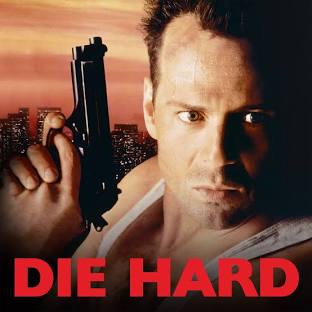
I don’t remember the first time I watched this film. I don’t know how many time I’ve watched it, either. A lot. (Although not as many as my BIL who firmly believes in “Die Hard is a Christmas movie.”
- Our introduction to John McClane is through his faults: not enjoying plane travel. Fear – but also carrying a gun.
- Middle of the airport and he lights a cigarette? What a time.
- The introduction of Holly is fantastic – dealing with Ellis the idiot coworker, clearly a boss, also a loving mother.
- I like Argyle a lot. He’s a stereotype of course – the young mouthy black guy, listening to his rap music – but I still believe that he rises above the stereotype. Could just be that I am accustomed to him.
- Touch screen! So fancy. Unlike McClane’s reaction to Holly using a different name…
- By golly I loathe Ellis. The epitome of 80s corporate douche.
- I really like the dynamic of John and Holly. They’re in a difficult position personally, maritally, emotionally. I like that we land in the middle of ongoing arguments, and what it shows about each of them. Also that John beats himself up over it a bit.
- Also? John is not ripped. He’s no slob, but he’s no Arnie either. I prefer this era.
- The misdirect of the villains entering the reception is magnificent.
- I adore Alan Rickman’s entrance.
- Gasp! Villains are not speaking English! (At least they’re not Arabic or Russian?)
- I will neither confirm nor deny that I have made fists with my toes after a plane trip.
- Hans is sublime. The little black book, the impeccable suit. And of course, the English accent when that was still a Hollywood trope for a villain.
- Was it a reasonable assumption, in 1988, that Hans et al were terrorists? Since that is what Mr Takagi assumes. I don’t feel like there’s been any real indications of that – but maybe that’s my having seen it very many times.
- John has an emotional reaction to the killing! and makes a noise! So, quite different from other action-man types. And his first instinct is to get help in the form of firefighters – rather that going it all alone – but that doesn’t work. AND his first fight is intended initially to disable, rather than kill.
- Karl has already been shown to be a brute and a bit out of control, what with the chainsaw and the electrical cables. But Hans? Hans can still control him.
- The introduction of Al is a nice play on stereotypes: the fat black cop buying snacks – “for my wife; she’s pregnant” – although of course we have no idea whether he really is just a plod or not.
- Shows like this always make me think about the guts of buildings and how much we don’t usually pay attention to that.
- I enjoy how John gets more and more dishevelled over the course of the film.
- “Come out to the coast, we’ll get together, have a few laughs… “
- Poor Al didn’t deserve to have a body land on his car.
- I am fascinated by the narrative choice to give us so much insight into Hans’ plans – that he expected, indeed needed, police intervention, and so on.
- The media interlude is… weird. Why do we suddenly have a rogue reporter arguing with his network? Seems like an unnecessary addition to the narrative.
- “Enough plastic explosives to orbit Arnold Schwarzenegger” – it’s only 1988 and Arnie is already being referenced.
- Holly’s early interaction with Hans is perfection.
- 1988 is such a different time in terms of dealing with suspected terrorism. The response of the police boss on-site is wild – the fact that he’s allowed to be making that decision! And Al and John both know it’s terrible, showing that they are the smart ones.
- Ellis’ cocaine-fuelled greed-is-good attempt at negotiation always makes me want to punch something.
- … I have just realised that Al is the Sam Gamgee of the film.
- The way Hans manipulates the police expectations of terrorists… so clever.
- Ah, Agents Johnson. More fabulous stereotypes.
- I love the melodrama of Hans pretending not to be Hans. And his accent is hilarious.
- It’s hard to express how much I loathe the reporter and his approach to the McClane household. The reporter is more loathsome than Hans.
- Even when I recognise a trope like “the hero is wounded and we’re not sure if he can continue,” I still enjoy and appreciate it, especially here: pulling glass out of your foot, being exhausted – Willis plays it so well.
- Al’s tragic background… I mean, I get its copaganda, but it’s still touching.
- The irony of “Ode to Joy” as the vault opens – for the villains – is magnificent.
- This film does not love the FBI.
- Jumping off the roof, attached to the fire hose? Iconic.
- It’s such a great use of Argyle and his limo.
- This is 5 years after Wrath of Khan. Do we think “HAAAANS” is modelled after “KHAAAAAN”?
- The watch!
- Hans’ face, as he falls, is truly THE scene.
- Naw, the bromance of John and Al. Adorable.
- … and the resurrection of Karl is so unexpected. Does Al need this sort of violent redemption? I personally don’t think so, but then I’m not an American living in the 1980s.
- Holly punching the reporter, though, is basically justified.
His only contribution: hey. the villains’ theme is “Ode to Joy”!
Die Hard, by Jon Lewis

I received this c/ the publisher, Bloomsbury.
Yes, this is a book. No, it’s not the book that Die Hard the movie is based on. (Yes, at least to some degree the movie is kinda based on a book. Ish.) Yes, this is an academic-ish take on the movie. Yes, I received this just in time for Christmas, and yes I am Gen X enough that this fact made me giggle-snort.
In under 100 pages, Jon Lewis situates the movie Die Hard within Reagan-era politics and economics. The way it sits within an America still coming to grips with its loss in Vietnam and the events of the American embassy in Tehran, among other things. And the way Americans view terrorism and terrorists, too, and how that connects to Hans and his crew – these things may not have been directly in McTiernan’s mind, but the zeitgeist is real.
The book also situates the film within the larger action movie oeuvre, and situates John Maclaine alongside and against other action-movie heroes. I did not know that the director also did Predator (and The Hunt for the Red October)! I had no idea that the white ribbed singlet – the wife-beater – so iconically (for me) worn by Maclaine was first made iconic by Brando in A Streetcar named Desire. But I can absolutely see how the libertarian hero – often but not always affected by experiences in Vietnam – were a significant feature of this moment in American cinema. The “hard-body” heroes of Stallone and Schwarzenegger are different from the slighter Willis – what that means for relatability is interesting – and I had no idea that Maclaine’s pithy quips almost certainly derive at least in part from Willis’ TV detective.
Lewis spends a surprising amount of time recounting the beats of the film – surprising because I assume no one is picking this book up who hasn’t already watched the film (possibly several times, maybe not necessarily at Christmas) – but does usually tie this narrative recounting in to his theorising. My one significant gripe is that in listing the “whammies” – the moments of violence that punctuate the story – Holly’s punching of the reporter isn’t mentioned. It’s not as excessively violent as other moments, and it doesn’t kill anyone, but it’s definitely a shock. And one of the threads that Lewis follows throughout is the question about whether Maclaine is a decent husband (no), and – I think by extension – a decent father. This moment shows Holly getting to defend the kids, rather than Maclaine.
Anyway: if you or someone you know has a habit of watching Die Hard for Christmas, or quoting any of the eminently quotable one-liners at dubiously appropriate moments, and they don’t mind a bit of broader cultural discussion this is likely to be a good book for them.
A Good Day… to watch Bruce Willis
Wellllll… let’s be honest here. Pretty much any day is a good day to watch Bruce Willis. But to be specific, I finally watched A Good Day to Die Hard.
 It seems to me that the Die Hard franchise is much like the early Star Trek movies; the odd-numbered ones are the good one (I do have a soft spot for #2, but it is not as good as 1 or 3). This outing for old-man-McLean is definitely a more enjoyable film than the fourth one was. And I think there’s a really significant reason for that: he’s with his son, rather than his daughter.
SPOILERS ahoy!
The story: Our McLean finds out his son is in a Russian prison. He goes to see what’s happening. He arrives as his son is breaking a Russian political prisoner out. It is revealed that the son is in fact working for the CIA… and then things continue to Not Be As They Seem. And Chernobyl is involved.
Firstly, the good bits: there are some awesome chase scenes. There are helicopters doing mad things. One of the villains regrets that he did not become a dancer, and does a shuffle to prove it while also kicking away McLeanx2’s guns. Some great banter ensues, especially between father and son, and there are two (that I counted) delightful references to early Die Hard which I think is probably perfect – they were very good and appropriate references, and it doesn’t overdo the call-back which is always a threat in such films.
And then… well, I did have a couple of issues. As mentioned above, I enjoyed this film more than the fourth because of the interaction between the father and child, in this case the son. The daughter is not wholly lacking in awesome in the fourth, but she is a captive and therefore lacking in real agency. And the dude/son-replacement that McLean goes along with just got annoying. Whereas here, father and son are totally equal; their skills complement each other, in every fight they’re equally awesome, etc. So that made me a little bit sad for the daughter. Interestingly, there is a daughter character in this film too (actually two, since the McLean daughter gets a look-in as well, but she is largely irrelevant), who is also interacting with her father – she first appears to be working against him, but then it turns out she is actually working with him. So that’s an interesting inversion of what’s going on with the McLeans. I was a bit worried that the two youngsters would end up getting it on, but that wasn’t a problem because she ended up being Evil, as did Pa, and there wasn’t even time for flutter-eyes between the two Hot Young Things (thus, bonus: no romance!). Good Family have issues but work together despite them; Bad Family are sneaky and always working together even when it doesn’t look like it.
Very watchable, but not re-watchable. I really hope this is the end of the franchise, because the only place to go from here is McLean and grandchildren – which he’s already done in Look Who’s Talking – or McLean in retirement village, which he’s already done in RED (and eeee so excited for RED 2).
Tears of the Sun
I watched this movie today because a good friend of mine suggested it as for a film study with my Human Rights class. I had intended that they do Cry Freedom – and we did watch it – but they didn’t like it, and many paid no attention, so I threw that out the window (it wasn’t my assignment anyway) and decided to find something else. And while this is fictional, I am so going with this; it’s a good movie, easy to watch – Cry Freedom was a bit too long and too old for most of the students to tolerate without a big incentive, and no an assignment is not a big enough incentive. Pretty brutal, too, which I think might be useful for the students to see… most hadn’t even heard of Sudan (“do you mean Saddam, miss?”) at the start of the semester, and that was when it was finally getting into the papers! Anyway… enough of that rant… it was a good movie.


