The Hunt for Red October
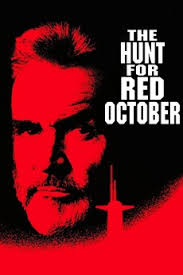
… it took me a long, long time to realise where the “The” goes in this title, and I still usually say “Hunt for THE Red October.”
Me:
- Sean’s eyes as the opening scene… tells you a lot about his status.
- And then the long pull out to show them in the sub conning tower – magnificent
- Also the MUSIC. So epic.
- Everything about this cast makes me happy.
- The credit scene with Jack’s desk etc: it’s surely the inspiration for the credits in Sahara, as an intro to the main character.
- Aw, Jack as the family man. And married to Dr Crusher – which will never not be weird.
- Starting on a plane! Just like Die Hard! And the man doesn’t like flying! Wait, is this a theme? (No: Arnie has no problem with the helicopter.)
- Slow pan up to the Central Intelligence sign – it’s a nice touch.
- There is no movie that is not improved by the presence of James Earl Jones.
- … and also the addition of Courtney B. Vance. “Sea-man Beau-mont.” I love me a human who’s better than the technology.
- Everything about the Paganini / Pavarotti story makes me laugh. Every time. (“including one WAAAAY out at Pearl”).
- Scott Glenn! Underrated, right? He does laconic beautifully.
- I like the close-ups inside the sub – makes it feel appropriately claustrophobic.
- For those of us who watched a lot of Spooks, seeing Peter Firth as the political officer and speaking Russian is super weird.
- … still, Firth didn’t quite deserve such a death.
- (Although: Putin! His characters’ name is Putin!)
- The switch from Russian to English is really nicely done.
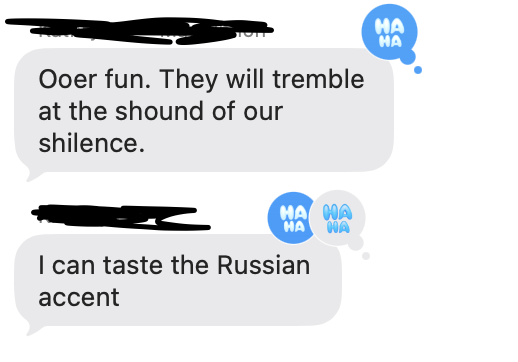
- The reaction of my siblings when I told them what I was watching:
- Chekhov’s mini-sub and its universal docking clamp!
- Again for those of us with rather different experiences of Tim Curry: seeing him as a very serious medical officer! Is very weird!
- They really do clever things with the cinematography in the tight confines of the sub: camera in the printer looking up, etc.
- I thought it was only Welsh working men who were likely to break out into song like that?
- Imagine having a boss like the Admiral. Just drops you into a briefing for the Joint Chiefs and the President’s security advisor. When five minutes before you were happily researching in the stacks!
- Look at that man think! In a room full of hawks, he thinks! I know, I know, he turns into an action man, but at heart Jack is a nerd.
- I’ve only just noticed Admiral Greer putting his hand on Jack’s wrist to calm him down. Hilarious.
- And THEN Stellan Skarsgård turns up! This cast!
- Smoking on a submarine. What a world.
- This film can’t really figure out what it thinks of how the elite in a USSR sub would act. The officers are eating well; the doctor is a snob, discussing good food and going to the ballet; the officers are eating nice food and there’s fancy drinkware etc on the table. So… the USSR is kidding itself about being egalitarian? or something? We don’t see Bart Mancuso eating…
- Jonesy is just all about competence. No wonder I like this film so much. Most of it is just people being clever!
- And a nice bit of background for Jack, having been a marine and his terrible accident that explains his fear of flying.
- Capt Ramius is a steely-eyed missile man.
- Alec Baldwin is a walking carpet.
- And another incongruous actor: Daniel Davis, for those of us who grew up on The Nanny, as an American naval officer? Very weird.
- Capt Borodin’s desire to live in Montana, to breed rabbits, is adorable. (So of course he has to die.)
- Just enough background for us to appreciate Ramius’ history; not too much, just enough to make him real.
- Getting off a chopper to a submarine: may be one of the stupidest stunts ever.
- The Crazy Ivan guess is truly ridiculous. It’s probably the weakest moment in the film.
- Oh no! Not a reactor leak!!
- There’s Chekhov’s DSRV (and don’t tell me there’s a 40-something Australian woman who doesn’t think of Seaquest DSV when you hear that, I won’t believe you).
- Why does Jonesy join the American boarding party? Who knows!
- And Skarsgård comes screaming in back in for a dramatic dummy spit.
- I adore the interplay between the two captains. They’re so cute. Both ordering Jack around.
- When Jack exclaims “A goddamn cook??” all I can think in response is: “I also cook.”
- The final conversation on the river is very sweet.
- And finally: Jack can sleep, on the plane.
Him:
- Let’s take a moment to admire how good the bluray transfer is from the film. Colours are great but not overdone, suitably gritty with obvious film grain without being over sharpened or treated with hideous AI smoothing like so many 4k re-releases.
- And let’s mansplain turbulence to the air hostess who may have just flown one or two more times than Jack…
- We arrive at the US submarine building yard, obviously a fake set. The Americans don’t know how to make submarines.
- The whole helicopter ride out to the sub is genuinely stressful, and I’ve seen this film many many times.
- Morse code aint that fast! Especially if being decoded visually…. (Repeat from the American ship on the surface)
- Be careful what you shoot at, most things in here don’t react well to bullets….
Die Hard
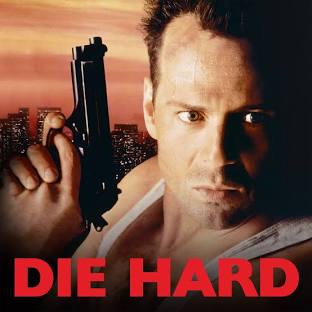
I don’t remember the first time I watched this film. I don’t know how many time I’ve watched it, either. A lot. (Although not as many as my BIL who firmly believes in “Die Hard is a Christmas movie.”
- Our introduction to John McClane is through his faults: not enjoying plane travel. Fear – but also carrying a gun.
- Middle of the airport and he lights a cigarette? What a time.
- The introduction of Holly is fantastic – dealing with Ellis the idiot coworker, clearly a boss, also a loving mother.
- I like Argyle a lot. He’s a stereotype of course – the young mouthy black guy, listening to his rap music – but I still believe that he rises above the stereotype. Could just be that I am accustomed to him.
- Touch screen! So fancy. Unlike McClane’s reaction to Holly using a different name…
- By golly I loathe Ellis. The epitome of 80s corporate douche.
- I really like the dynamic of John and Holly. They’re in a difficult position personally, maritally, emotionally. I like that we land in the middle of ongoing arguments, and what it shows about each of them. Also that John beats himself up over it a bit.
- Also? John is not ripped. He’s no slob, but he’s no Arnie either. I prefer this era.
- The misdirect of the villains entering the reception is magnificent.
- I adore Alan Rickman’s entrance.
- Gasp! Villains are not speaking English! (At least they’re not Arabic or Russian?)
- I will neither confirm nor deny that I have made fists with my toes after a plane trip.
- Hans is sublime. The little black book, the impeccable suit. And of course, the English accent when that was still a Hollywood trope for a villain.
- Was it a reasonable assumption, in 1988, that Hans et al were terrorists? Since that is what Mr Takagi assumes. I don’t feel like there’s been any real indications of that – but maybe that’s my having seen it very many times.
- John has an emotional reaction to the killing! and makes a noise! So, quite different from other action-man types. And his first instinct is to get help in the form of firefighters – rather that going it all alone – but that doesn’t work. AND his first fight is intended initially to disable, rather than kill.
- Karl has already been shown to be a brute and a bit out of control, what with the chainsaw and the electrical cables. But Hans? Hans can still control him.
- The introduction of Al is a nice play on stereotypes: the fat black cop buying snacks – “for my wife; she’s pregnant” – although of course we have no idea whether he really is just a plod or not.
- Shows like this always make me think about the guts of buildings and how much we don’t usually pay attention to that.
- I enjoy how John gets more and more dishevelled over the course of the film.
- “Come out to the coast, we’ll get together, have a few laughs… “
- Poor Al didn’t deserve to have a body land on his car.
- I am fascinated by the narrative choice to give us so much insight into Hans’ plans – that he expected, indeed needed, police intervention, and so on.
- The media interlude is… weird. Why do we suddenly have a rogue reporter arguing with his network? Seems like an unnecessary addition to the narrative.
- “Enough plastic explosives to orbit Arnold Schwarzenegger” – it’s only 1988 and Arnie is already being referenced.
- Holly’s early interaction with Hans is perfection.
- 1988 is such a different time in terms of dealing with suspected terrorism. The response of the police boss on-site is wild – the fact that he’s allowed to be making that decision! And Al and John both know it’s terrible, showing that they are the smart ones.
- Ellis’ cocaine-fuelled greed-is-good attempt at negotiation always makes me want to punch something.
- … I have just realised that Al is the Sam Gamgee of the film.
- The way Hans manipulates the police expectations of terrorists… so clever.
- Ah, Agents Johnson. More fabulous stereotypes.
- I love the melodrama of Hans pretending not to be Hans. And his accent is hilarious.
- It’s hard to express how much I loathe the reporter and his approach to the McClane household. The reporter is more loathsome than Hans.
- Even when I recognise a trope like “the hero is wounded and we’re not sure if he can continue,” I still enjoy and appreciate it, especially here: pulling glass out of your foot, being exhausted – Willis plays it so well.
- Al’s tragic background… I mean, I get its copaganda, but it’s still touching.
- The irony of “Ode to Joy” as the vault opens – for the villains – is magnificent.
- This film does not love the FBI.
- Jumping off the roof, attached to the fire hose? Iconic.
- It’s such a great use of Argyle and his limo.
- This is 5 years after Wrath of Khan. Do we think “HAAAANS” is modelled after “KHAAAAAN”?
- The watch!
- Hans’ face, as he falls, is truly THE scene.
- Naw, the bromance of John and Al. Adorable.
- … and the resurrection of Karl is so unexpected. Does Al need this sort of violent redemption? I personally don’t think so, but then I’m not an American living in the 1980s.
- Holly punching the reporter, though, is basically justified.
His only contribution: hey. the villains’ theme is “Ode to Joy”!
Predator
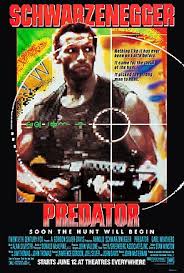
This is only the second time I’ve seen the film – and the first time was last year. I don’t even remember how it came up, then, that I had never seen it – and my darling was horrified and I think we were watching it 60 seconds later. Thus I am still having some early reactions to the film!
My near-stream of consciousness notes:
- America in Central America, 1987: what a time.
- I didn’t recognise Arnie for a moment; he’s so small!
- I’m way more interested in Carl Weathers.
- I really enjoy the way these 1980s action films set up the caricatures within the team. Dutch is the leader, refuses jobs that don’t fit his remit (we’re a rescue team); there’s a Latino, a geek (white, obvs), a scary black guy, a Native American (I assume; after all, they use him as a tracker, and it’s the 1980s – and he’s played by a actor descending from Cherokee and Seminole nations), a tough white guy – and those really are their characters.
- Also, the “jokes” very much … of their time.
- I like the way the cinematography emphasises the claustrophobic nature of the jungle, with plants right in the fore of early shots.
- The skinned bodies are probably more graphic than a run-of-the-mill action film would include today.
- The introduction of the Predator’s IR vision is magnificent. Using first-person is inspired.
- It’s a more clever narrative than I initially expected: the rescue mission – which itself isn’t at all straightforward – and then the Predator as a completely seperate issue.
- It’s very violent. Honestly, the extended fire fight against the guerrillas is quite boring.
- Random woman as a hostage… doesn’t really serve much purpose except to slow them down. She seems like a mostly pointless inclusion, except that she gets to witness Geek Boy’s death. (And probably providing an inspiration for Prey.)
- The (non)-appearance of the Predator is also fantastic; and then the first time we actually see the Predator, he’s fixing a wound.
- Scary Black Guy Mack’s sudden emotional reaction to the Tough White Guy’s death feels weirdly out of place – for the character, and for the film.
- “If it bleeds, we can kill it.”
- OK, Anna isn’t so pointless after all. She’s cool.
- Scary Black Guy becomes Loony Black Guy. Yay terrible caricatures.
- Why does Carl Weathers have his shirt off? It’s really not clear.
- Last Stand of the Brave but Loony Native American. Yeesh.
- I do like the Smart Action Hero Arnie gets to play here: using Anna rather than seeing her as useless; realising the Predator comes through the trees, and that the Clever hides him; setting traps.
- Although setting a fire in the evening does rather defeat the “it hunts using IR” realisation. Atmospheric, though.
- The film would have been better to be about 10 minutes shorter. The extended fight scenes are just too much.
- The removal of the Predator’s helmet? Amazing. It is truly an exceptionally designed creature.
- Ah, the final fight, hand to hand, like true warriors.
- There’s no reason for the Predator to understand, let alone use, evil laughter.
- “Arnie in the mist.”
- I really like that no explanation is given for the Predator.
His notes:
- Opening sequence, spaceship on a stick… worse than Star Wars … but 10 years later.
- The arm wrestle… the making of many a meme.
- Choppers into the jungle, what could go wrong…
- Those ‘jokes’!
- Nothing says 80s action like underslung grenade launchers and shooting from the hip, despite this being 100% unrealistic.
- We start with war paint, we end with war paint (mud)
My thoughts overall: I really like this film. It’s completely of its time, it’s clearly one of the inspirations for The Expendables, it’s mostly a vehicle for Arnie but basically rises above that. Worth watching!
John McTiernan
On a recent re-watch of The Hunt for Red October, I realised that the director was John McTiernan – who also directed Die Hard. I am not someone who pays much attention to directors, with a few very famous exceptions. So I was curious what else he had directed. And thus I came across the list:
- Nomads (not watching)
- Predator
- Die Hard
- Hunt for Red October
- Medicine Man
- Last Action Hero
- Die Hard: With a Vengeance
- Thomas Crown Affair
- the 13th Warrior
- Rollerball
- Basic
Nomads we decided looked a bit too horror for our tastes. Neither of the last two films are available on streaming and the Rotten Tomatoes statistics for each of them are beyond woeful. But that still leaves an intriguing eight films…
(Last Action Hero is also not on streaming! And nor is The Thomas Crown Affair! Those just seem weird but also I don’t mind spending $5 renting them.)
The Lord of the Rings: a(nother) re-read
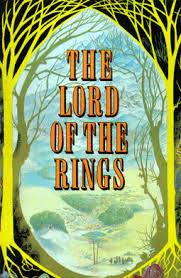
The year I turned 12, I had an extended reading competition with a friend. It was determined by both number of books (so I read lots of Babysitter Club books, which dates this competition to some degree), and also page numbers. This enormous, tape-mended book was on the shelf, so I thought: The Lord of the Rings. Why not?
For a while, in adolescence and early 20s, I was indeed one of those people who read LOTR every year. I think I’ve read it ten times? I haven’t read it since 2017, although I’ve watched the films almost every year for at least the last decade.
This year, though, there are several LOTR re-reads being blogged around the place, so… I felt like it was time to dive back in. I am not going to write about it as thoroughly as Abigail Nussbaum, and I don’t have the deep knowledge and analytical skills to come anywhere near what Nick Hubble is doing, although I’m following along closely and learning a lot.
So: I have just finished Book 1. And the truth is – the reality is – I still love it. I’m one of those people who enjoys the wandering in the wilderness, and finds the place descriptions evocative and delightful. Partly this is nostalgia for the first time I read it, when I was absolutely captivated… but I do just like it.
Some other thoughts:
- I had forgotten how organised Merry was, and what a lead he takes in getting things done. I like it.
- I enjoy Tom Bombadil, and I’m not going to apologise. He and Goldberry are a fascinating diversion into aspects of Middle-Earth we just don’t see much elsewhere in this novel, and I appreciate the depth and breadth they provide.
- I have always felt uncomfortable about the “master” language from Sam. Even as an adolescent. It’s still not something I particularly like. Having read a lot of Biggles novels etc, I eventually came around to reading their relationship as being like an officer / batman one, and I can place it in an historical context. But I don’t have to like it.
- Farmer and Mrs Maggot are wonderful.
- Barliman Butterbur is poorly treated by the film (I mean, I love those films but I am very aware of the ways in which they Not The Novels).
- Nick Hubble makes some interesting points about reading Fellowship in particular as a sequel to The Hobbit, and I was very aware of that as I read it this time. The structure, and the language – at this halfway point it’s easy to imagine the story being finished in another 200 pages or so.
My main struggle from here is going to be making sure I don’t just keep reading this. There are other books I have committed to reading!
Considering The Female Man by Joanna Russ (Farah Mendlesohn)
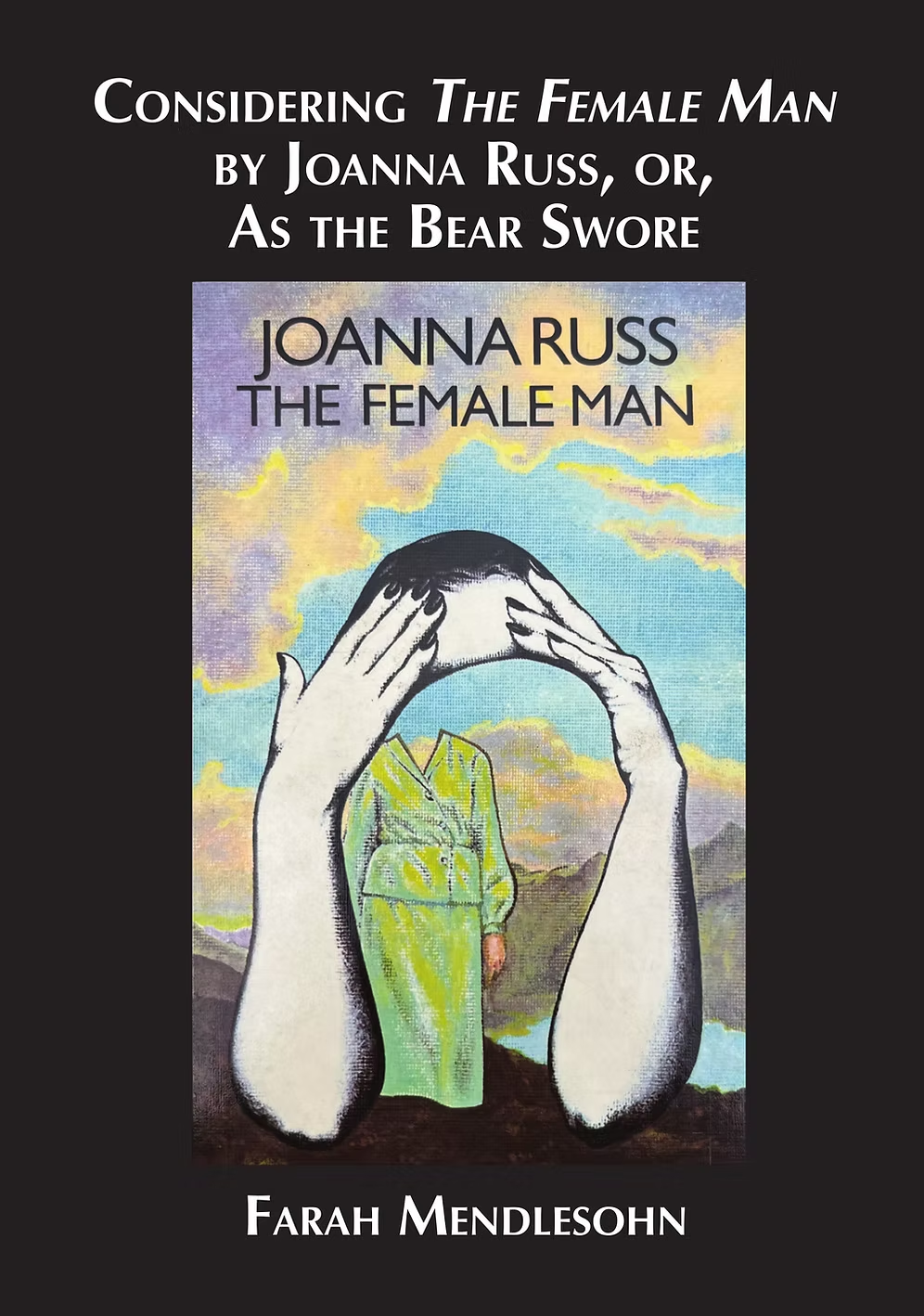
First, (re-)read The Female Man. I think that really is necessary. Then you’ll be fresh and able to really get into the points that Mendlesohn is making in this compact and insightful book.
While I’ve read a bit of Russ criticism – including some of Mendlesohn’s previous work – I’m not claiming to be an expert. So one of the things I appreciated about this book was Mendlesohn touching on some of the previous work done on Russ in general and The Female Man in particular, to give context to this particular book. I was interested to see some of the ways that attitudes have changed, and some of the aspects that haven’t previously been explored in much depth: in particular, here, how Russ’ Jewish identity impacted on the structure of the novel, as well as the story.
It really is a wee book: 169 pages, and a tiny package. But Mendlesohn packs a lot in! There’s an introduction to both Russ and the novel – historical context, cultural and literary context, feminist context – which doesn’t shy away from the fact that Russ in the 1970s was decidedly TERF (acknowledging that she did change her views, which is the only reason I can still come at reading the book – but YMMV!). Then, three chapters going deep in literary analysis: Character; Structure; Argument. How “the Js” work as individual characters as well as aspects of, perhaps, one whole; how what feels initially like a convoluted maybe-not-really-a-narrative-at-all actually works, and why Russ wrote it that way; and how the novel presents Jewishness, anger, and humour. And an epilogue about the epilogue, which is so meta I think Russ would have approved.
I’ve read The Female Man a few times, and I always get more out of it. There are definitely things I had never noticed before – because my cultural, historical, and literary context are very different from Russ’s, there are things that just did not click for me, but which Mendlesohn has pointed out. In particular, I think, there’s the discussion about how the characters function across the story, with and against one another – their attitudes have always been what I found most fascinating, and that’s just been deepened.
One thing I will note: there are a few typos in the copy I read (eg Jael is Jane once, and Joel another time).
Highly recommended to those looking to further appreciate Joanna Russ and her work. You can get it here.


