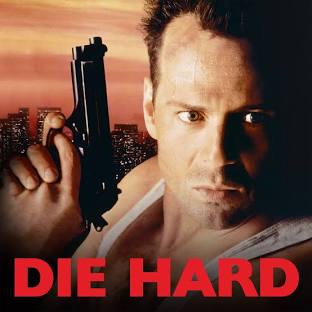
I don’t remember the first time I watched this film. I don’t know how many time I’ve watched it, either. A lot. (Although not as many as my BIL who firmly believes in “Die Hard is a Christmas movie.”
- Our introduction to John McClane is through his faults: not enjoying plane travel. Fear – but also carrying a gun.
- Middle of the airport and he lights a cigarette? What a time.
- The introduction of Holly is fantastic – dealing with Ellis the idiot coworker, clearly a boss, also a loving mother.
- I like Argyle a lot. He’s a stereotype of course – the young mouthy black guy, listening to his rap music – but I still believe that he rises above the stereotype. Could just be that I am accustomed to him.
- Touch screen! So fancy. Unlike McClane’s reaction to Holly using a different name…
- By golly I loathe Ellis. The epitome of 80s corporate douche.
- I really like the dynamic of John and Holly. They’re in a difficult position personally, maritally, emotionally. I like that we land in the middle of ongoing arguments, and what it shows about each of them. Also that John beats himself up over it a bit.
- Also? John is not ripped. He’s no slob, but he’s no Arnie either. I prefer this era.
- The misdirect of the villains entering the reception is magnificent.
- I adore Alan Rickman’s entrance.
- Gasp! Villains are not speaking English! (At least they’re not Arabic or Russian?)
- I will neither confirm nor deny that I have made fists with my toes after a plane trip.
- Hans is sublime. The little black book, the impeccable suit. And of course, the English accent when that was still a Hollywood trope for a villain.
- Was it a reasonable assumption, in 1988, that Hans et al were terrorists? Since that is what Mr Takagi assumes. I don’t feel like there’s been any real indications of that – but maybe that’s my having seen it very many times.
- John has an emotional reaction to the killing! and makes a noise! So, quite different from other action-man types. And his first instinct is to get help in the form of firefighters – rather that going it all alone – but that doesn’t work. AND his first fight is intended initially to disable, rather than kill.
- Karl has already been shown to be a brute and a bit out of control, what with the chainsaw and the electrical cables. But Hans? Hans can still control him.
- The introduction of Al is a nice play on stereotypes: the fat black cop buying snacks – “for my wife; she’s pregnant” – although of course we have no idea whether he really is just a plod or not.
- Shows like this always make me think about the guts of buildings and how much we don’t usually pay attention to that.
- I enjoy how John gets more and more dishevelled over the course of the film.
- “Come out to the coast, we’ll get together, have a few laughs… “
- Poor Al didn’t deserve to have a body land on his car.
- I am fascinated by the narrative choice to give us so much insight into Hans’ plans – that he expected, indeed needed, police intervention, and so on.
- The media interlude is… weird. Why do we suddenly have a rogue reporter arguing with his network? Seems like an unnecessary addition to the narrative.
- “Enough plastic explosives to orbit Arnold Schwarzenegger” – it’s only 1988 and Arnie is already being referenced.
- Holly’s early interaction with Hans is perfection.
- 1988 is such a different time in terms of dealing with suspected terrorism. The response of the police boss on-site is wild – the fact that he’s allowed to be making that decision! And Al and John both know it’s terrible, showing that they are the smart ones.
- Ellis’ cocaine-fuelled greed-is-good attempt at negotiation always makes me want to punch something.
- … I have just realised that Al is the Sam Gamgee of the film.
- The way Hans manipulates the police expectations of terrorists… so clever.
- Ah, Agents Johnson. More fabulous stereotypes.
- I love the melodrama of Hans pretending not to be Hans. And his accent is hilarious.
- It’s hard to express how much I loathe the reporter and his approach to the McClane household. The reporter is more loathsome than Hans.
- Even when I recognise a trope like “the hero is wounded and we’re not sure if he can continue,” I still enjoy and appreciate it, especially here: pulling glass out of your foot, being exhausted – Willis plays it so well.
- Al’s tragic background… I mean, I get its copaganda, but it’s still touching.
- The irony of “Ode to Joy” as the vault opens – for the villains – is magnificent.
- This film does not love the FBI.
- Jumping off the roof, attached to the fire hose? Iconic.
- It’s such a great use of Argyle and his limo.
- This is 5 years after Wrath of Khan. Do we think “HAAAANS” is modelled after “KHAAAAAN”?
- The watch!
- Hans’ face, as he falls, is truly THE scene.
- Naw, the bromance of John and Al. Adorable.
- … and the resurrection of Karl is so unexpected. Does Al need this sort of violent redemption? I personally don’t think so, but then I’m not an American living in the 1980s.
- Holly punching the reporter, though, is basically justified.
His only contribution: hey. the villains’ theme is “Ode to Joy”!


[…] Die Hard […]