A Stranger in Olondria

This is another cover by Kathleen Jennings, and isn’t it lovely? I especially love the background – the city is so jumbled, and so delightfully different from an Australian city, and I love the hint of the ship at the back too.
I’m not much of a one for poetry, lyrically or as prose. That is, I like it, and I appreciate it, but I’m a fairly pragmatic person and I generally prefer story over how the story is told. My absolute preference is for good prose with story if I can get it, but of course that doesn’t always happen. And sometimes the beauty of the prose makes a bit of a non-story into something wonderful. I think particularly of Kij Johnson’s “The Man Who Bridged the Mist”: there’s really not much story to be told, but the way it’s told is so beguiling that I really enjoyed it.
Ok, maybe I’m confused about what I like. Whatever. I know it when I read it.
So here’s the thing. This is a beautifully written novel. It’s lovely. And the story is an intriguing one; it’s all about being a foreigner and how to negotiate that; it’s all about the use and abuse of books, and of religion, and of power; it’s about love, and family, and history. All of these things are great big YES PLEASEs for me.
But it didn’t work. For me, this story needed more straightforward prose, so that I could really get at the ideas. I felt like Samatar was obscuring the ideas, drawing veils or mists around them with delightful words, so they remained frustratingly hard to comprehend and chew on. And there’s also a lack of story, which means that as a novel it didn’t work. I can imagine reading this as a novella – the same length as the Johnson would have been perfect.
All of that said, I did actually finish it, and I don’t feel sad about that. I did want to know what would end up happening to Jevick, and I’m really pleased that the story kept going after what could have been the obvious end-point. I was, and remain, genuinely intrigued by what it said about the power of literacy and how that can be abused, as well as the problems with prizing ignorance (and whether ignorance and illiteracy are necessarily the same thing).
I’m sad I didn’t love this more, given the love it’s been getting from a few quarters and the noises about it getting onto awards shortlists. I understand why it appeals, and that’s cool; I can see parallels between this and Jo Walton’s Among Others, which I adored but I know didn’t work for others. It too had lovely words and what might be called a ‘quiet’ narrative, but I think Walton’s story worked better. However, I am still going to keep looking out for Samatar’s work; after all, I adored “Selkie Stories are for Losers.”
And the driving continues
I know it’s an obvious thing to say, but there is a lot of penis waving in this, the fourth film.

In other words: Brian and Dom are back together! Whee! Brian’s with the Feds, Dom has been doing bad things in the Dominican Republic (i.e. somewhere exotic where there can be shots of girls in very little clothing). He’s suddenly got all concerned about Letty being involved in it all, and decides to rob her of her agency by running away in the middle of the night. Yeh, goodonya DOM. Doofus. Because she’s ends up dead and, admittedly through a convoluted route, that’s basically your fault. Oh look; fast-car-driving, bonnet-riding Letty got damsel’d. What a turn up for the plot department.
Anyway that brings Brian and Dom back together because they’re both trying to solve problems that point to the same person. And oh what a surprise, it’s going to involve them getting into his good books… by being his drivers. Never saw THAT one coming.
The driving in this one takes things up a notch by making some of the races through traffic, which always lends a certain frisson on ohmigod they’re all going to die.
The plot is incredibly simplistic, and very similar to the first and second, but it still manages to be an enjoyable movie. Mostly because Dom and Brian are so much fun: Dom is so serious and sad and epic; Brian is like a little puppy. Together they make sweet bromance.
And then… suddenly, the franchise discovered this thing called “A plot.” Because apparently they watched Ocean’s 11. Fast 5 is Ocean’s 11 with cars. I think that makes Diesel Clooney, and Walker Matt Damon… which doesn’t entirely work, but I’m sticking to it. Because the crew is called together to do “one last job” – which ends up being to rip off the crime boss who seems to run Rio, and take his $100 million.

They just keep upping the stakes with the villains, don’t they? Not that I’m complaining of course.
My very favourite line in this entire movie is: “I thought cock fights were illegal in Brazil.” Oh Han, ma bukee! That’s right folks, after a very brief appearance in the fourth movie, Han has a starring role here as part of the gathered crew, showing that Tokyo Drift is completely out of the franchise’s chronology. Which is so fine. Because Han’s presence makes any movie better.
Some interesting things: Mia got to drive at the start of the movie (and end of the 4th), when they break Dom out of the prison bus… and then it’s announced she’s pregnant. Which actually doesn’t have much place in the movie except to provide her, apparently, with an ongoing reason to scold her brother and her lover and tell them that they have to stick together, even though that increases their chances of being caught by The Rock.
Did I mention The Rock? This movie has The Rock in it. Physically, anyway, because dude is hard to miss. Mentally… meh.
The swticheroos conducted in this film, the convoluted who’s-bad turns, and the audacity of some of the stunts make this probably the best movie of the set.
We did the double of Fast 5 and Furious 6 back to back. My brains might have softened slightly in the process, but I enjoyed almost every minute of it.

The 6th film starts almost where the 5th left off. Mia is having a baby… which is basically an excuse to have her out of the film, leaving Dom and Brian to be awesome Car Bros together, and then make it oh so much more terrible when she’s kidnapped (because mothers are worth more, don’t ya know). But it’s ok, because there are still girls in the film! And one of them – which is totally spoiled in the credits, I do not know why they do that – is Letty. Yes, she whom they buried as the plot’s turning point in the fourth film, is back.
With amnesia.
 Dom is not happy. Not least because Letty shoots him.
There’s perhaps even more narrative, and slightly less driving, in this film than the fifth. Because this time, the crew (including Haaaan!) really are the good guys – they’re helping Mr My Tshirt Is Too Tight (aka The Rock) to find a rogue military dude who’s knocking off military stuff. Because, evil. My very favourite bit is that the military dude has a crew very similar to Our Crew… and Roman points this out. Fast&Furious went meta!!
The one thing that really made me worry for the second half of this film was realising that while Han and Gisele are a lovely couple in this film, they’re not together in Tokyo Drift and Han is all mopey in that film. So clearly they’re going to break up, or she’s going to die.
And then Gisele died.
Dammit.
This movie has a tank, and cars on a plane, and the threat of selling an Evil Device to Nefarious People. It comes in just under the 5th one because by now I was actually expecting something decent.
And then I discovered that they’re making a seventh movie.
Fast&Furious 1-3
Cars not my favourite thing. I like a chase scene, sure, and I have a ridiculous soft spot for Top Gear. But cars in general are not enough for me to watch a movie or enjoy it.

The Fast and the Furious therefore is not an obvious movie for me to watch or enjoy. And I did enjoy rewatching it. I haven’t seen it in years, and I had forgotten most of what happens. The plot itself… well. It’s not quite the equivalent of Top Gun, where as far as I am concerned there’s awesome plane stunts broken up by a really crappy story. It’s a mixture of Top Gun for the stunts and the story of Point Break, since it’s basically exactly the same story – cop undercover in an exciting seedy possibly-criminal world, gets too close, and then what happens? Here, Brian is the cop; he’s trying to get in with Dom, an ace quarter-mile illegal drag racer who might be part of a criminal gang knocking over trucks filled with electronics.
What’s good about it? I like the interplay between Dom and Brian. It’s absolutely alpha-male pissing contest, but it’s got… joy, maybe, and genuine respect, tied in. There are some entertaining secondary characters – the suspicious yob, the nerdy one, and two girls who largely exist just for the sexual tension, except Letty does indeed race with the boys and is mighty good at it.
And I love the car scenes.

2 Fast 2 Furious I had not seen before, or if I had it was wiped from my mind… because Diesel is not in it, and seriously bro what is the point then?
Anyway, we watched it. Brian has left the cops and moved to Miami where of course he’s drag racing and gets in trouble. He ends up working for the police to try and catch a big drugs-cartel dude who’s laundering money. Brian drags a former friend into the action, so that we get white boy-black boy interactions to prove that Brian is really hip, bro.
There are some improvements in this film over the last. Suki is a serious racer chick, complete with lady posse, tricked out car, and awesome graphic design skills. And she gets completely tied up in the shenanigans. There are some come-on remarks, but it mostly comes across as genuinely being part of the way they interact – it’s not meant to be taken seriously. And yes, this is problematic I know, but… it’s better than some of the alternatives? The position of the undercover cop Monica is slightly more problematic, being all caught up in URST on Brian’s (and possibly her) part, but it’s still more nuanced than in the first.
But the plot leaves a lot to be desired, given that it’s kind of a rehashing of the first one anyway just with a nastier villain calling the shots and thus raising the stakes. Brian and Roman’s relationship – while entertaining – isn’t much on Brian and Dom’s. And I think there might be less driving.
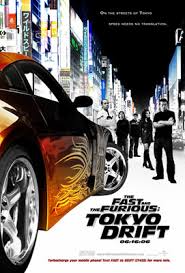
Worst plot, best driving. So my darling described this film, and I think he’s right. Drifting is simply glorious, I think because while I can feasibly imagine driving very fast in a straight line, drifting is an utterly alien skill set. Also, it’s through Tokyo, and that just looks magnificent.
Also, there’s Han: Sung Kang. Dude is so cool he’s basically ice. He’s my very favourite. Plus DK – the stereotypical jumped-up wannabe villain with too much arrogance and testosterone, playing on his uncle’s yakuza ties – is actually pretty awesome too. If only because he does menacing beautifully.
Foreigner in Japan, making all the mistakes… blah. It’s just not done interestingly enough to make the cliche worth it. Also the father-son reconciliation makes no sense. And given that it’s all about a white boy learning drifting from the Japanese kids and then beating the best, it’s could be seen as another example of white man being better than non-white man at something that’s native. In a sense, anyway.
And look, I’m sorry to the Americans, but Sean’s accent really doesn’t help matters. (Neela’s Australian accent is also totally out of place and unlikely.)
Galactic Suburbia 94!
 In which we get excited about awards, and sexism in SF. In other words, it’s Galactic Suburbia! You can get us at iTunes or over at Galactic Suburbia.
Tiptree Award Winner & Shortlist – first Australian Tiptree winner! Congrats to N.A. Sulway!
Culture Consumed:
Alex: All Harry Potter movies; Project Bond; Supurbia
Tansy: Regency romance novels, Minister of Chance
Alisa: Supurbia
Pet Subject: the not-SFWA “debate”, the pervasive dismissal of women in SF
Note: this episode was recorded several days before broadcast, before Sean Fodera made his apology to Mary Robinette Kowal, who accepted it gracefully. Please look at her post about why she accepted, and the role of apologies in general.
Some other relevant articles we discuss or allude to, or which Alisa found after recording and wanted us to include – keep following the Galactic Suburbia Facebook Page as she’s been updating it with interesting links daily:
GENERAL BACKGROUND
The Radish hosted early discussion on the Bulletin anti-censorship petition.
The Daily Dot coverage of the petition & responses in the community.
Steven Gould on why the petition was based on a false premise.
SL Huang writes Can We Please Not Rewrite History, Folks?, and worth checking in on SL’s original Timeline of 2013 SFWA Controversies, now updated. [my apologies for stumbling over pronouns on the podcast]
THE LATEST WAVE OF TURMOIL, DISSENT AND SEXISM
Silvia Moreno-Garcia outlines the invective against Mary Robinette Kowal on SFF.net and the politics of “plunging necklines,” “diaphanous white outfits” and ankles.
Mary Robinette Kowal’s post on Being a Representational Example
Scalzi presents the Insect Army t-shirt design courtesty of Ursula Vernon’s awesome artwork.
N.K. Jemisin makes her own comments on the current shenanigans. Some really important words here. Alex also mentions Nora’s important tweet from 5 days ago:
N. K. Jemisin @nkjemisin
The loss of privilege is not oppression. The loss of privilege is not oppression. THE LOSS OF PRIVILEGE IS. NOT. OPPRESSION.
The post we possibly discuss in most detail on the podcast today: Juliet McKenna’s Why The SFWA Shoutback Matters
A really important message from James Patrick Kelly on age, and generations, and making a difference.
and don’t forget the…
Galactic Suburbia Award!! for activism and/or communication that advances the feminist conversation in the field of speculative fiction. There’s still time to send us your suggestions – only work from 2013, please, but start saving the 2014 links to send us next year.
Please send feedback to us at galacticsuburbia@gmail.com, follow us on Twitter at @galacticsuburbs, check out Galactic Suburbia Podcast on Facebook and don’t forget to leave a review on iTunes if you love us!
Escape Plan
Every now and then I feel a bit embarrassed by the sort of movies I like. But then I remember, actually? a) no one gets to tell me to be embarrassed, and b) just because I like explosions and chase scenes doesn’t mean I have to hand in my feminist credentials.
So yes, I love action movies. And when we saw that iTunes had a movie called Escape Plan listed, starring Sylvester and Arnie – and that we had never heard of it – well, that sounded like a perfect Saturday afternoon. And amazingly, it was way better than either of us expected.

There were problems with it, yes. The enemy-turned-ally becomes the plucky self sacrificing brown man. Which is always worth wincing over, not least because it’s so damned cliched. I still have absolutely no idea why we were meant to care about Schwarznegger’s character – that is, why the revelation at the end was meant to be so momentous. And of course it doesn’t pass the Bechdel test, but actually in this context I have no problem with that. The fact that there actually are two women, with names, is impressive. And they’re not even love interests.
The premise: Sly has spent 14 years getting put into jail in order to figure out whether they can be broken out of. And of course, they all can be. So it’s Sneakers but with jailbreaks. Then he gets put into one that’s been designed to be used now that the US has ended extraordinary rendition. It’s a jail that will be privately run, privately organised, and house “the people no government wants responsibility for.”
Let’s just pause there for a moment and shudder. And then consider Australia’s policy on where it sends refugees that try to come here.
Inside, things are bleak, and Sly’s get-out plan is dead in the water. Then he makes friends with Arnie and they start planning how to break out. The prison is built vertically, and Sly thinks it might be built into cave fissures… but then he climbs up, and discovers that actually they’re on a massive ship. Which sounds crazytown, until today we read that Manus Island staff are living in a floating hotel. Which… hilarious. Sly can build a sextant from nothing and figures out where they are, and then it’s just a matter of calling in favours until they can escape.
What worked? Sly and Arnie together. They were awesome. The prison idea itself is pretty cool, and prison escapes lend themselves to entertaining convolutions of plot. It has zero re-watchability, but sometimes that’s ok.
When we finished, my darling suggested we watch the 6th Fast&Furious film, which neither of us has seen. But I refused.
I said that we had to start from the start, and watch the whole lot. So that’s what we’re doing at the moment.
Supurbia
Superheroes have lives outside of superheroing. Of course they do; you see it occasionally in the movies (my main source of superheroness): the occasional lover, usually getting into danger and needing rescuing; wise parents/parental figures; smartass friends…
Then you get movies like The Incredibles, where superheroes have to stop superheroing and try being normal. And how well does that go? (I love that movie.)
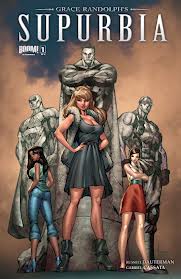 Supurbia takes the middle line. Superheroes be heroic, AND they have lives. How do you prevent their loved ones from being kidnapped by the arch-nemesis? Put them all on one normal suburban street and hope that no one cracks the code, of course. Here you have wives and husbands and kids and lovers… and while the superheroes are off saving the world, they’re at home. Watching the news. Worrying. Talking to each other. Maybe organising themselves to help you. Maybe being exasperated or afraid or angry. (Or high.)
I love this comic. I like the variety of families, I like the way the characters interact, I like the way the superheroes are problematised (they are far, far from perfect individuals in the way they interact with those nearest and dearest). I’m still not at the point where I can comment fully on the art, but what I noticed I liked – the women are differentiated! – and it by no means got in the way of enjoying the story, which for me as newbie comic readers is an important aspect.
This series comes highly recommended.
Fairy tales. New ones.
Sometimes I forget how much I love reworkings of fairy tales. How crazy is that?
Ever since my mother (I think?) gave me a lovely little collection of twisted fairy tales – I have no idea what it was called, whether they were all by the same person, or whatever – I have been passionate about people taking well worn stories and twisting them. Sometimes slightly, sometimes extremely. But, it turns out, I forget this. And then I read Troll’s Eye View, and I remember… because sometimes the villain is absolutely the most interesting character, and sometimes they’re not actually a villain if you look at them a certain way. And I read To Spin a Darker Stair, and the prose is wondrous and the stories gripping.
But then I forget. And I have something like Paula Guran’s anthology Once Upon a Time: New Fairy Tales sitting there waiting… waiting… waiting to be read, and when I finally get around to reading the first one I think, why have I been waiting so long?
Maybe having written this, I am less likely to forget in future. I can hope.

I enjoyed every story in this anthology; some more than most, but there wasn’t a one that I flicked through impatiently. There’s a great range of stories. Yoon Ha Lee, whom I’m just discovering, brings a Korean-inspired story in “The Coin of Heart’s Desire” that fits into the “be careful what you wish for” zone; Cinda Williams Chima brings native American folklore into a “gritty industrial landscape” a little bit like Charles de Lint. Angela Slatter turns a princess into a bird in a story of revenge, while Priya Sharma, in “Egg,” wonders about all those stories where all the woman wants is a child… There are retellings, too: Genevieve Valentine plays with “The Snow Queen,” Jane Yolen and Ekaterina Sedia take “Sleeping Beauty” in two completely different directions (Sedia does it better, I think); Tanith Lee uses the one about the dancing princesses. Richard Bowes brings a sardonic Puss in Boots into the world of social media and Caitlin R Kiernan takes Little Red Riding Hood into space. Cory Skerry smashes “Beauty and the Beast” and AC Wise makes “The Six Swans” a rather darker story about desire and selfishness. Perhaps most profound is Erzebet Yellowboy, whose story means I will never, ever view the (step)mother in Snow White in the same way again.
This is a glorious anthology – one that you could sit down and read cover to cover, or dip in and out of.
You can get Once Upon a Time from Fishpond.
Thunderball
This review is part of Project Bond, wherein over the course of 2014 we watch all of the James Bond movies in production order.
Summary: in which James Bond is back to fighting SPECTRE, often underwater. We’re back to being worried about atomic weapons, and the problematic nature of plastic surgery. Also, Nassau means bikinis, baby. Yeh.
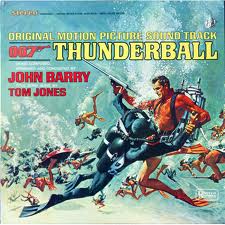 Alex: This Bond moves firmly back into the SF zone with James Bond escaping from some villains at the start of the movie with the help of a jetpack. Seriously, the thing is straight out of the Jetsons. But because he is with A Girl, the jetpack is only useful to get him over a wall to the waiting car; then it’s into the DB5 and up with the bullet-proof screen. The prologue is a classic whack-a-villain sequence; in this instance the only immediate indication we have that the villain is such is that he is cross-dressing in an awesome blonde wig.
I love Tom Jones. This theme song is up there with my very favourites.
This movie sees Bond back to battling SPECTRE – and just like before, if you missed the one and only explanation for what SPECTRE stood for, tough cookies. Once again, Number 1 has no face, but he does have a ruthless streak as wide as the electric chair he utilises on someone who appears to be skimming proceeds. We’ve got a new Number 2: Largo, who proves to be a key player in this film. He has an eye patch. He is therefore, by default, evil.
Most of this film is again set in foreign locations – it opens in France and moves to Nassau – but there is a fairly long stretch in a sanitarium, where Bond is recovering from his last adventure. This involves canoodling his physical therapist. At least, he wants it to; she protests in rather strong terms, which nearly made me cheer. Then he is nearly killed while on a torture-rack-cum-massage-contraption, and in return for him not reporting her… well. Pretty sure that qualifies as blackmail, sir. You are a cad. The sanitarium also sees Bond just happen to come across a man who has been killed, who turns out to be someone else’s doppelgänger… which ends up being the key to the entire mystery. But I get ahead of myself.
While Bond is having massages, a NATO team is out flying a training sortie that involves two real live atomic bombs. Our doppelgänger has killed the real pilot and taken his place, then gasses the rest of the crew while they’re flying around. So he helps SPECTRE steal the bombs. But SPECTRE don’t really want the bombs for themselves – although they’ll probably detonate them anyway; it’s all about blackmailing the British government. For ONE HUNDRED MILLION pounds. (I can’t help but be reminded of Austen Powers.) And the way the government will signal that they agree to the plan? By making Big Ben strike 7 times, at 6pm.
I love the British.

Anyway, off to Nassau; Bond meets the dead pilot’s sister, who is Largo’s mistress and called Domino because she’s always in black and white; he eventually solves it all and they all live happily ever after. But there are some interesting things to comment on along the way… like the fact that Largo keeps sharks, which means I get to reference another XKCD comic! Also that he does not utilise the sharks that well, because Largo falls into that classic Bond pattern of the Gentlemanly Villain. There were so many opportunities for Largo to kill Bond, but when he’s come for lunch it would be soooo rude to push him into the shark pool, don’t you know.

Also in the Bond pattern: a new Felix Leiter! This time a fella who looks like the poor man’s Clint Eastwood, in sunglasses. Q turns up, in a Hawaiian shirt that hurts my eyeballs, and he and Bond go way beyond sparring into evincing quite withering dislike of each other. This hurt my heart a little. Bond’s main assistant in Nassau in female, and black. Naturally, she dies.
Bond gets around quite a few laydees in this film. One of them is with SPECTRE – Fiona – and I quite liked her. I particularly liked her when, after having sex with Bond and then the goons turn up to capture him, she totally calls Bond on that trope that I’m not allowed to name. Bond is snide and says he did it for King and Country, and she is contemptuous of the idea that sleeping with him would make her switch allegiance. Of all the unexpected things, Bond got meta on itself! I nearly cracked up when that happened! And then she died. Because Bond moved her into a bullet (again. This is a habit).
The one thing that really spoiled this film for me was the underwater fight scene at the end just going on toooo long. I’m guessing it was all new and exciting technology, but… it got a bit wearing. I was hoping for some fun when the sharks turned up, but even they were a bit boring.
Hey James, that underwater grenade scene. Would that actually have been as bad as Bond makes out?
James: Yes, water is incompressible so explosive underwater = very unpleasant and direct impact. Also … The nuclear bomb labelled “Handle like Eggs”? love it. I have to say, as a young man I enjoyed the underwater fight very much (which I have seen very many times), but on the re-watch it did rather drag on – 2.5 Martinis.
Midnight and Moonshine
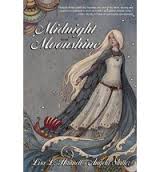
This book. Oh, this book.
It took me a few months to read this collection, this mosaic novel. This is no reflection on the quality of the book. Well, actually it is, but not the way you might think. See, I’d read a story, and then I’d be forced to close the book, sigh, and stare into space in order to wallow in the beauty of the prose. And then I’d have to go read something else, because (like with me and Gwyneth Jones’ Bold as Love series) sometimes too much beauty is painful and you need a break.
First off, look at that cover. Is she not glorious? are the colours not soothing and enticing? Created by the awesome Kathleen Jennings (who chronicles the saga of its production on her blog), I would absolutely have this on my wall. LOVE.
Angela Slatter and Lisa L Hannett created the contents. Writers who collaborate are even more of a mystery to me than authors who work alone, and to produce this sort of magic has to be just that – occult somehow. And they haven’t been content to just a straightforward story. Instead, as suggested above, this could be seen as a collection or a mosaic novel. A collection because it is made up of short stories that can basically stand by themselves. You could take one and put it in an anthology and it would still work ok. However – and here’s a metaphor I’m very pleased with – that’s like taking a candle out of a chandelier. Yes, it still sheds light. But when you put it with its fellow candles and they’re ringed with crystal, the whole effect is so much more just a few candles in one place. These thirteen stories, read together and in sequence (and wrapped in that art), are far more than the sum of their parts. Together, they create a history of an entire people: their origins, their interactions with humanity, their crises and triumphs, and the ongoing impact of a few families and their heirlooms. Thus, a mosaic novel – there is continuity, but it’s thematic and genetic; there’s only one character appears in or influences lots of the stories. I couldn’t help but be reminded of Edward Rutherford (London, Sarum) and James A Michener (The Source) following multiple generations in one place in order to fictively illustrate local history. Slatter and Hannett do just that… with magic. And Norse gods. Same amount of revenge though.
The premise, as set out in “Seeds,” is of Odin’s raven Munin (memory, here called Mymnir) surviving Ragnarok and setting out for Vinland (thought to be somewhere on the north-eastern corner of North America) with a few followers. Once she gets there, she creates an enclave and peoples it with servants, and sets out to rule it I guess like she learned from the Aesir she’s observed for however many centuries. Of course this does not go entirely well either for her or for her people. There’s love and betrayal, selflessness and vindictiveness; people get beaten up, rescued, married off, wooed… and some people even manage to make their own destinies. My estimate is that the stories take place over roughly a millennium, but that’s based entirely on the fact that that’s about how long ago it’s posited that Vikings did historically head off for Vinland and settle for a short span. The early stories take place in a sort of timeless, medieval-ish zone; from memory there are no dates in the first seven stories, and it feels like that sort of myth/fantasy where time itself is important but recording it is less so. Then, with “Midnight,” suddenly the external world exists and thrusts itself onto this dreamy place. From then on, time is relentless, and within 5 or 6 stories it’s the modern world. This development works mostly because although the stories do stand alone, there is continuity within families. Sometimes the names give them away, sometimes it’s an heirloom appearing, occasionally a reference to a past event. This often means that rather than having to struggle for a new emotional connection every time, the reader can build on the investment already made in the character’s family, from an earlier story. It’s the same reason Rutherford and Michener’s works can be successful.
And on top of all of this, the sheer beauty of the prose. I do not have the words to explain how delightful the words in this book are. It just all works.
Did I mention it’s an Australian production? Produced by Ticonderoga, in Perth.
You can get Midnight and Moonshine over at Fishpond. (Although it does ship from a US supplier.)
Galactic Suburbia 93!!
In which 2014 is officially a thing. Who saw that coming?
We’re back! How did you spend your summer? (yes, we know some of you spent it having winter, but honestly, is that our fault?)
Galactic Suburbia returns for a fresh new year of culture consumed, awards commentary, feminist snark and adorable baby gurgles.
Culture Consumed:
Alex: On the Steel Breeze, Alastair Reynolds; Riddick; The Deep: Here be Dragons; Once Upon a Time: New Fairy Tales (ed Paula Guran)
Alisa: Haven S1 and S2; Star Trek; Kaleidoscope submissions (PhD)
Tansy: Terry Pratchett: The Witches (board game), The Hour Season 1, A Natural History of Dragons by Marie Brennan; When we Wake; Courtney Milan romance novels.
Pet subject: Gearing Up for Hugo Nominations – what we’ve read, what we recommend, and what we still plan to get to before the deadline.
Alisa: Reading – Ancillary Justice by Ann Leckie, Stranger in Olondria by Sofia Samatar, Coldest Girl in Cold Town by Holly Black
Alex: Saga; Ancillary Justice; Iron Man 3; still to watch Game of Thrones s3
Tansy: Still to read: Hild by Nicola Griffith, The Red by Linda Nagata, some novellas. Liz Bourke’s Sleeping with Monsters (Best Related Work or fan writer? Why doesn’t the Hugo have an Atheling?) Kirstyn McDermott’s Caution: Contains Small Parts. Supurbia (Graphic Story); The World’s End.
Galactic Suburbia Award!!
for activism and/or communication that advances the feminist conversation in the field of speculative fiction
Send us your suggestions and thoughts on who we should be looking at for the year that was 2013: blog posts, podcasts, GOH speeches and other awesome people talking about feminist stuff in interesting ways.
Please send feedback to us at galacticsuburbia@gmail.com, follow us on Twitter at @galacticsuburbs, check out Galactic Suburbia Podcast on Facebook and don’t forget to leave a review on iTunes if you love us!

 Randomly Yours, Alex