Courtney Milan and romances
I was one of those girls – women – who was pretty down on romance as a genre. There are lots of complicated reasons for this. Partly it was a woman thing; I wanted to not be that sort of woman (what sort? I don’t know. I guess I associated liking romances with weakness or something?). Partly it was a genre thing: over here in the disregarded spec fic corner, it’s nice to disregard someone else.
But of course this was always both a) a completely stupid attitude for a multitude of reasons and b) hypocritical. Because I do like reading romances in the stories I’m reading.
 I think I’ve finally figured out what doesn’t usually appeal: romances that exist purely by themselves. I’m certainly not saying that they are bad or stupid, but that as a rule they don’t appeal to me (like I don’t love vampire stories as a rule, although I do enjoy the Blade films). What helped me finally articulate this is having read three of Courtney Milan’s Brothers Sinister series. (There is a fourth but I don’t plan to read it, partly because the main character doesn’t appeal and partly for Historical Snobbish reasons.) This is mostly because of Tansy.
 These are Victorian romances, which means Milan gets to take advantage of some of the interesting social and political and scientific changes happening in the mid-19th century in England (and across Europe). The main point is always about a girl and a boy and how of course they ought to be together but there are all of these problems that might prevent their happiness: scandals in the past, problems in the present, nasty people, social expectations, etc. Some of these relationship problems ring a bit more true than others: I didn’t find Minnie’s ‘scandal’, in the first book, all that convincing, while the problems of the third book were magnificent. Overall, though, the characters are treated sympathetically and the problems carefully – no one of consequence dismisses anyone’s fears without regard, which I found quite a relief. I especially liked that both female and male protagonists get to tell the narrative from their point of view, making the stories much more rounded and feel more genuine than might otherwise be the case.
 And around these relationship issues are the social and political themes that Milan uses to flesh out the world. In the first book it’s class relationships and working conditions and rape and marrying for money. In the second book it’s about race and political representation and social expectations and marrying for money and child guardianship and medical ethics and mental health. In the third it’s mostly about science (oh my, seduction by science I LOVED it) and gender expectations. Some of these issues play into the romance, and some of these issues are things that the characters are dealing with quite apart from their romance because of course life exists outside of does-she-love-me and Milan knows that very well. Milan is presenting complex and complicated individuals and worlds.
Of course, this is all within a fairly constrained society: the focus is on the wealthy, with a few not-nobles thrown in (not just as window-dressing but still, they have to meet the expectations of the Haves), almost everyone is white, and so on. There’s a lot of pretty dresses and balls and large houses. But… that’s the sort of book that Milan is writing. A romance set in the middle-class or working-class echelons would be very different and deal with different issues. And wouldn’t have the foofy dresses, which are – as you can see from the covers – important to the story.
I am not going to start reading nothing but romances (historical or otherwise), because I am still mostly interested in space ships and explosions and the odd dragon, and there are so MANY of those I haven’t read yet. But I am very glad I have grown up enough to acknowledge Old Me’s appalling attitude, and I’m very glad to have read and enjoyed these books.
Galactic Suburbia 151
In which we consume culture and take names! get us from iTunes or at Galactic Suburbia.
WHAT’S NEW ON THE INTERNET?
Tansy’s novel Musketeer Space is half price this week on Kindle (and in other ebook stores)! Price goes back to normal on Wednesday.
CULTURE CONSUMED
Alisa: Vaginal Fantasy; Crosstalk, Connie Willis
Alex: Revenger, Alastair Reynolds; Crossroads of Canopy, Thoraiya Dyer; Stealing Snow, Danielle Paige – abandoned!; The Silk Roads, a New History of the World, Peter Frankopan
Tansy: Superior, Jessica Lack; Fangirl Happy Hour on Ghostbusters: Eps 49, 50 & 52
Please send feedback to us at galacticsuburbia@gmail.com, follow us on Twitter at @galacticsuburbs, check out Galactic Suburbia Podcast on Facebook, support us at Patreon and don’t forget to leave a review on iTunes if you love us!
Agatha H and the Voice of the Castle
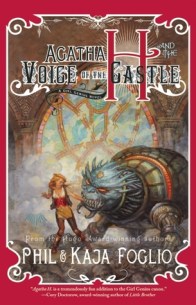 I was predisposed to liking this, of course, being a big Girl Genius fan from a number of years back. I don’t know whether I like the graphic novel or the written novel more; they’re obviously quite different media. I’m still not very good at reading graphic novels, despite a bit of practise – I’m not great at reading pictures.
Anyway, I already knew the story going in although there were a few twists that I had forgotten, which was nice. It’s still an amusing story with Agatha finding her feet as a Spark and as the Heterodyne; I like the relationships with Zeetha and Gil and Tarvek. Something this series has always done well is the secondary and supporting characters – frequently over the top but always enjoyable. I adore the Castle and its quirks – it’s a really nice way of illuminating the Heterodynes as a family, and of course adding some amusing danger along the way.
 One curious and disappointing thing is the cover of this book. It looks like a page from one of the graphic novels, with one big difference. In the graphic novels, Agatha is buxom and curvaceous. But not on that cover. She’s verging on slender, which is really not Agatha. Bit disappointing really.
Crossroads of Canopy
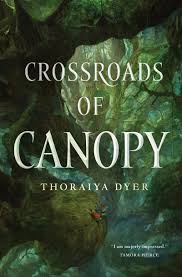 This book was sent to me by the author at no cost. She’s a friend: I have blown detergent bubbles with her Small One at Ditmar awards ceremonies and watched them burst on someone’s expensive suit. So it’s a very good thing that I really enjoyed this, because it would just have been awkward otherwise.
This is her debut novel, and it’s coming from Tor in January 2017 (the hardcover will be USD$25.99, which will be who knows how much in actual AUD by that stage).
So yes, I enjoyed it. I would absolutely have enjoyed it without any knowledge of the author, too, so I have no hesitation in recommending it. The characters are compelling, the world is fascinating, the narrative moves at a good clip while leaving breathing space for characterisation, important issues are touched on. I don’t know what else you might want… I mean, there’s no dragons or unicorns, but you can’t have everything… .
This is a forest world (… what we know of it…) where the trees must be many hundreds of metres high. Our protagonist, Unar, is born to Canopy – the most privileged section of the forest, being the closest to the sun. She is not born to the most privileged group there, but she gets herself into the service of a goddess and life improves. Plus, there’s slaves to reassure her that there are always people worse off than yourself. Of course, things do not go as swimmingly as Unar would hope, and she is forced to learn new things – do new things – and meet new people in order to survive. It’s a self-discovery narrative, in that the focus is the reader learning through Unar as she learns about herself and her society.
In Canopy, there are thirteen gods and goddesses, who are served in different niches and who die and then reincarnate and who enable magic in their acolytes. In Canopy, they fear those of the Understorey. In Canopy, there are very definitely still haves and have-nots.
There’s a lot of interesting things going on here, especially in the world-building. There are people living at different points on the trees, and basically location connects to class/privilege in a really physical way where you can see the in-world logic: closer to the sun makes you better than everyone else, naturally. Dyer, of course, sets this up to be questioned and undercut as Unar progresses through her story and learns more of life and her world. There’s little historical background about how this society became so (literally) stratified – just some teasers – so I’m looking forward to seeing that develop. But/And it’s not all as simple as it might appear…
Throughout, Dyer sets up delightfully complex relationships: parent and child, siblings, friends, acquaintances, enemies-who-work-together, lovers (straight and queer), slave and owner. Very few of them exist or progress in expected patterns, with betrayals likely, loyalty in unexpected places, and the odd bit of casual cruelty that makes the humanity ring just that bit more true. Sometimes people have a reason to be angry, and sometimes they Just Are – also adding to their humanity; sometimes people fall in love with completely unexpected people; sometimes bad things happen for no reason.
Something else that I loved and that really struck me in reading the description of the rainforest is the Australian nature of it. Non-Aussies will probably suspect that Dyer is just making up names of all the trees (some of them she has, I think). But blue quandongs are real, as are bloodwoods, as are ironbarks and tallowwood. Some of the nasty critters suggest that she’s taken a good long look at goannas and other monitors. I fully expect a demented cassowary to feature in some future book, and Dyer will barely have to change them at all to make them amongst the most terrifying creatures ever.
This is the start of a series, which is great because I look forward to seeing where Unar goes. But, happily, it also stands all by itself – so if publishing falls over in February (may that not be so) we won’t be stuck wondering about really serious issues. Of course, Dyer COULD pull a Carmody/Obernewtyn on us, but I’m pretty sure she wouldn’t do that to us. PRETTY sure.
I have two slight gripes: I don’t love the title – I don’t hate it, but I don’t feel it’s the most explanatory or gripping. There’s also a point towards the end that I felt was too rushed, where Unar very quickly grasped something that was not at all obvious to me, so it felt too hurried. But those are pretty minor quibbles.
Get this book when you can. You really want to.
Revenger
I received this book from the publisher, Hachette, at no cost. It’s out in September; RRP $32.99.
 It’s hard to really talk about this book without massive spoilers that completely take away from the gripping revelations that come as the story unfolds. So I’ll do that below the cut. But firstly: I really like this cover! The flat picture doesn’t do it justice. The stark black with pinprick stars and a black silhouette of a spaceship in the middle – it’s lovely. The title font is a bit Alien, although without a narrative connection, and the silver does cool things in the light. I’m interested that the title is larger than Reynolds’ name, since on his last (solo) novel, Poseidon’s Wake, it wasn’t (nor on the novella Slow Bullets). Must be a deliberate decision but I couldn’t speak to why.
Anyway. It gets a lot darker than I was expecting, it’s fair to say – not in a bad way but in an intriguing way. Adrana and Fura are sisters from a sheltered little world and a sheltered little family who decide to run away to sea – well, to space. The crew they join is welcoming if a bit dubious, as you would be, but things generally go well… until they don’t. And then things go quite bad.
Fura is the narrator, and when the action opens she’s not yet reached her majority. It’s unclear how old that is on her world, but one of the early tensions is the question of whether Fura is capable of making decisions for herself, or if she’s just being pulled along by Adrana. Of course, as the story progresses she develops and grows and – no spoilers – shows that she can indeed be responsible. Ish. There are some really interesting relationships that develop, but they really take back seat to the development of Fura herself.
A note on language: Reynolds hasn’t gone all Andrew Macrae Trucksong and re-invented language to represent the immense span of time; neither is he insisting that this is English – it’s just some universal language. But it’s not just transliterated (as it were). The spaceship crew, like sailors of the 18th or 19th centuries, have their own patois: people are coves, there’s lots of abbreviation and slang. More generally there are some words that are different – lungstuff, for instance, for oxygen; my favourite is quoins, for money. It doesn’t always work – it doesn’t always feel completely natural – but I especially like that the different social groups are clearly differentiated by their language, which is very real.
I love the narrative but I am really, really intrigued by the universe that Reynolds has created here. It is – I am almost certain – our solar system, but it’s an unimaginable time in the future. There’s an enormous number of worlds called the Congregation, most of which are not worlds as we know them, but small and many clearly artificial. There have been many collapses and resurgences of humanity, with concomitant loss of memory and history and mysterious rubbish left behind. The ship Fura and Adrana head out on are, brutally, junk connoisseurs – what can they find in places that might have been picked over several times in the last few centuries? But there’s a trick there, since the places with good junk are protected and dangerous. And there are alien races, too. I would really, REALLY like to see more stories set in this world.
A couple spoilery thoughts below… but the long shot is, this is a great fun novel and I’m super excited to see yet what else comes out of Reynolds’ brain.
Stealing Snow
 I received this book from the publisher, Bloomsbury, at no cost as an uncorrected proof. It comes out in October; RRP $16.99.
I abandoned this book, after reading just over half. It’s a hard thing to do, but it really wasn’t working for me and there are SO many books I want to read that I just don’t have time for books that don’t work.
Firstly, the press release says it’s for children 12+. I’m not sure I’d be happy with a 12 year old reading this: the protagonist has spent eleven years in a mental institute – since she was six – and there are some bits that I think may be a little scary for less mature readers. Anyway, that’s not a reason for me abandoning it.
The protagonist is part of the reason. I did not at any point feel any empathy towards Snow. There’s a bit too much repetition about her immediate woes (not being able to see the boy she really likes, who’s also in the institution), and a serious lack of development about either her history (she walked into a mirror and that was enough to get her committed?) or her personality more generally.
This is symptomatic of the book as a whole, actually: there is so little development of anything. Characters and places and events all occur in a vague world, sometimes with connections spelled out and sometimes not. Things happen far too fast – strange dreams! strange boy appearing! lover boy disappears!! a Tree!!! – and I was left completely bewildered, and not in a shivery-anticipation kinda way; in a ‘what the heck just happened?’ kinda way. It’s a portal fantasy, eventually, but whereas Foz Meadows deals nicely with the sort of confusion this would produce, Danielle Paige has Snow being confused for about ten seconds and then basically comfortable, with no explanation for how this is possible (i.e. treating it as a fantasy or whatever).
Also, the writing does not help the reading process. It’s not actively bad, but I was aware of reading – rather than being sucked into a world and ignoring the process, which really awesome writing enables.
I’m sad that this didn’t work out. I think the Snow Queen story has a lot of potential for reworking. In fact the day I received this my mother was visiting, and she had just started Michael Cunningham’s retelling of the story (very different from this), and I’d seen Frozen only about a week before. So there definitely is potential. And this version had potential… it just wasn’t achieved.
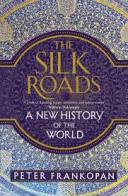
The Silk Roads
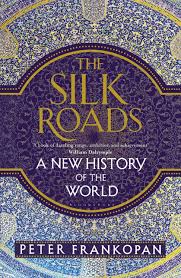 This book was sent to me by the publisher, Bloomsbury, at no cost. It’s out in September; RRP $29.99.
This is one of the finest history books I have read in recent times. It’s also probably the first book I’ve read that calls itself ‘a history of the world’ that does not mention the Norman invasion of England. And that’s because in 1066, from the perspective Frankopan presents here, a wee island on the west coast of Europe was of absolutely no relevance to the movers and shakers of the world. (Henry VIII is barely mentioned either!) The real business of global activity was in what Frankopan calls the real heart of the world – the lands of the Silk Roads, from the Himalayas to the Mediterranean, which for the two thousand or so years covered here drove human history.
Now, that’s a big claim, but what’s a history book without a big claim behind it? and of course important things were happening in places like Britain in the 11th century – but things of regional importance, not things with world-changing impact. Frankopan’s thesis is that the areas connected by what came to be called the Silk Road had an impact on actions, thought, and policy across most of Europe and Asia and, eventually, the Americas and Africa as well. Sometimes this area is actively driving history (the beginnings of Christianity and Islam, anyone? – and Judaism too although it doesn’t start in the period covered) and sometimes it’s – not quite passive – but almost: that this area happens to be incredibly oil-rich isn’t anyone’s fault or decision, but the reactions to it are.
Each chapter of the book is centred around the theme of roads: the road of faiths, to a Christian East, of gold and silver and black gold and genocide. It’s blunt about the horrors perpetrated – so much slavery – and waxes lyrical about the beauties produced by various cultures. Islam and Christianity and Judaism are shown cooperating, although rarely all three together, as well as antagonistic – for religious and political reasons (throw Zoroastrianism in there too, and indeed Buddhism). There are countless invasions – sometimes repelled, sometimes welcomed, sometimes hugely resented; there are alliances and back-stabbings and intermarriages. Most of all, though, there is trade. Trade along the Silk Road – from China and indeed further east, all the way to that insignificant island on the west coast of Europe, and of course within the regions along it too. The impact of Chinese pottery on the Dutch. The impact of silk and gold and – of course – oil, as well as innumerable other goods, back and forth, is mapped out by Frankopan. Not quite half the book is basically from 1900 onwards (the chapter is called ‘The Road to War’), which I know makes sense in terms of the availability of sources; the medievalist in me was a bit sad, I’ll admit.
I am guilty of having a Euro-centric view of history. Partly this is my education and upbringing which have in turn led me to be most interested in European history, especially British and the ‘classical’ worlds. I have a bitser knowledge of events involving Persia across the ages and the regions of Central Asia – usually as they intersect with those areas I have studied (Alexander the Great, the Huns, the Mongols). More recently I am absolutely guilty of falling into the complacent trap of thinking of Central Asia, in particular, as being a war-torn area that is to be pitied (HELLO privilege). To see this area’s history presented chronologically and with a focus squarely on it, the actions taken by people in the area as well as those acting on it; and to see the actions involving Iran and Iraq and Afghanistan and Pakistan and Egypt, and Britain and the US in particular, over the last five decades or so – this was an absolute revelation. For those who are more interested in modern politics perhaps this won’t be quite so eye-opening, but I imagine that for most it will still be a revelation to have all of the pieces fitted together and the connections between them pointed out clearly and cogently.
 Reading about the actions of the British Empire made me embarrassed to be Anglo, at times. The sheer arrogance on display was truly remarkable.
The aesthetics: if I could have a framed copy of the front cover, I probably would. It’s gorgeous. Inside there are two sets of eight pages of colour pictures – which isn’t as many as I might have expected from such an epic book, but they were a reasonable overview of the content. I have a copy of the trade paperback; it’s a hefty tome: I didn’t quite manage to not put creases in the spine, which is an indication of how hard it was to read without opening it fully! (Yes I am that person; crease my book’s spine and I will crease you.) It’s 520 pages long (with another 100 pages of footnotes) – so it’s not a fast read, but it’s definitely a worthwhile read.
This book is a must-read for anyone interested in world history, or in modern history. It should be read by any politician or policy-maker who thinks they can make decisions about any part of the world other than their own without consequences. It should also be read by anyone with a tendency to Eurocentrism. It’s a study in well-written history, too.
Strange Matings
 Published by Aqueduct Press, this remarkable book is a tribute to Octavia Butler. It includes personal reminiscences; photos; a poem; a transcript of a conversation with Butler; and the bulk is made up of academic essays – most of which are also somewhat personal.
I’ve read Butler’s Xeongenesis/Lilith’s Brood trilogy, but a long time ago… and that’s about it. Maybe some short stories as well? It’s one of those cases of ‘I’ve always meant to read more…’. So it was a bit of a weird experience for me to be reading academic analyses of stories that I haven’t read. However, and all kudos to the authors, I was neither hampered by that lack of knowledge – they all explained their points exceptionally well – and nor was I put off reading those stories. I have in fact bought the Parables books and am exceedingly excited to read them, armed with the theoretical discussions from these essays. I’m honestly not sure whether I will read Kindred, and I know this is a privileged position as a white Australian. I will definitely read Fledgling at some point, for all Butler was apparently a bit embarrassed by her vampire fiction. What I loved about the essays presented here is that each author so clearly loved the work they were examining – not glossing over faults, but showing how rich and subversive and powerful and present-speaking and future-prescient they are. How remarkable the women are, and how different the relationships, and how challenging the suggestions of how society could be. It made me realise just how powerful an author Octavia Butler must have been.
This is all beautifully resonant with the personal reflections included throughout. Butler’s shyness and insecurity and amazing generosity all come through, emphasising the sheer humanity of the woman – which I know sounds ridiculous, but it sounds like she made her life so full, and extended that to people around her, despite problems. The transcript of Nisi Shawl’s conversation with Butler, at the Black to the Future Conference in 2004, made me jealous of the people who got to see it live; Nnedi Okorafor’s reflections on sending emails to Butler – even after she died – and Steven Barnes’ very heartfelt reflections on his friend and mentor feel like precious gifts we should be thankful to have in print, so that we can glimpse those connections.
Strange Matings is a magnificent tribute to Octavia Butler that clearly works for someone with very little knowledge of her work, and must also work for those who’ve read far more. It’s provocative and powerful and human. Just like Octavia Butler.
An Accident of Stars
This book was sent to me by the publisher at no cost.
 This is the first book of the Manifold World series. It’s a portal fantasy and a coming-of-age story, with an Australian schoolgirl following a woman who had helped her – and following her through a rift into another world.
Saffron’s life is a fairly normal one; it opens with a distinctly unpleasant experience with a boy at school harassing her, and a stranger supporting her as (sadly) almost no one else ever had. In going to thank the woman, her adventures start – and almost immediately they go bad, showing very early on that this is not going to be an easy experience for Saffron (although the language barrier is dealt with through a particularly convenient piece of magic). She eventually discovers that she’s wandered into a state whose politics are currently rather grim, and has fallen in with people who aren’t exactly the Most Popular Citizens. And then an escapee from the castle ends up finding them, and things get even more fraught, and adventures ensue.
Perhaps the most remarkable thing about this book is the sheer diversity of the characters. Most of the leads are female, with a couple of men. There’s a wide variety of sexual orientation, from bi to someone I think is aromantic. There’s a wide variety of skin colours – you know, like in the real world; a trans character; those who are religious and those who aren’t; the magical and the not; old and young; parents and not; and all the other personality quirks that individuals humans can have, from characters with sunny dispositions to those who consistently make you want to leave the room when they enter.
In terms of narrative, there is a lot going on in this book. There’s the experiences of Saffron, who has to deal with the strange world she’s in and the physical changes forced on her – how will she explain these when/if she gets home? (I was forcefully reminded of Seanan McGuire’s Every Heart a Doorway.) There’s Gwen, the world-walker, trying to manage this new girl as well as her own allegiances and secrets. There are a lot of conflicting allegiances because there’s a huge amount of politicking going on: both of the states where most of the action takes place are in difficult positions regarding their leaders, with people trying either actively or passively to change the status quo. Sometimes, indeed, I felt like there was too much going on. I liked that Saffron is forced to deal with the politics of the world she’s entered, and that the places she’s in are not presented as the only states, and that politics can be confusing. But sometimes I felt like the political situation wasn’t explained clearly enough – or, actually, that the problems with the system or the way that people were using the system weren’t explained clearly enough for me to care to the level that I ought.
It’s a fast-paced story, problems rarely being dealt with before more crop up; there’s magic that is difficult to use and requires training; there’s a bit of romance but not too much (for my tastes!). There’s a bit of traveling-around-the-place and camping but mostly it’s urban, and there’s a variety of perspectives used to present the narrative too.
I did enjoy reading it, although I’m not left desperately waiting for the next one. The book largely stands by itself – there’s a bit of cliffhanger at the end but in terms of the main narrative, it’s largely complete, which I appreciated.
You can get it from Fishpond.
Leviathan’s Blood
This is the sequel to The Godless, and will therefore have some spoilers for that first book. Like that one, this was sent to me by the author at no cost. 
Aaaaarrrrrgggghhh. The third book isn’t out until 2017.
The Godless basically ends with the siege of Mireea ending badly for our friends there, with additional problems like having killed a couple of very powerful men, while Buerelan’s friends are dead and the child-god is being distinctly creepy. So you just know that this second book is going to be completely full of happy, cheery adventures. Or not.
Peek’s pre-prologue is from a historian writing fifty years after the siege of Mireea, which I quite like as a conceit since it allows him to remind the audience of some of the major events with a bit of chronological distance that provides for the introspection and reflection of good historical writing. The prologue itself is deeply unsettling, since we’re introduced to someone who, sadly, doesn’t survive (sorry, but it is kind of obvious). And that’s because he’s in the wrong place at the wrong time: on the coast, when Aela Ren – the Innocent, who was pretty much a myth and a rumour in the first book – comes to shore. Which bodes for the entire novel.
The Godless followed a few different perspectives; Leviathan’s Blood steps it up a notch by adding more perspectives as the web of the story becomes increasingly complex. A lot of the story occurs in Yeflam, whence the survivors of Mireea have decamped as refugees – and I can’t help but think that Peek’s presentation of their situation, being stuck on an island with little provision and viewed with deep suspicion by the people of Yeflam – reflects current experiences of refugees, especially in relation to Australia. Ayae is having to deal with being a refugee again but also being in a unique position as someone cursed, or blessed, with a god’s power – and therefore viewed very differently by the people of Yeflam, whose state is largely ruled by such people (the Keepers). She, however, largely feels loyalty to the Mireeans and their ruler – as well as to Zaifyr, who is also in a difficult position, since he’s arrived in Yeflam as a prisoner for the murder of two Keepers. Which he knew would land him in hot water, to say the least. Then you’ve got Captain Heast, who may be my very, very favourite character since he’s so much the put-upon, battle-scarred, trying-to-be-moral, old soldier (huh… so I have a type then: Sparrowhawk; Mal Reynolds; Han Solo). And then there’s Buerelan, who probably has the most difficult narrative throughout this book, since it begins in such a hard place – blood-brother dead and cursed by the child-god – and it just gets worse as he goes to Ooila, the home from which he has been exiled for a very long time and where he knows he won’t get a great reception.
This series is definitely one of those thats fits into the Rather Gloomy side of epic fantasy. That’s not a negative, but I probably wouldn’t be giving it to someone who hasn’t read any since they enjoyed David and Leigh Eddings as a teen! There’s a lot of difficulty for our heroes, and often our heroes aren’t actually very heroic. Instead, they’re fallible and frustrated and human; not always likeable but almost always compelling.
There were points at which I felt like the narrative dragged a little, when it feels like we’re getting a bit bogged down in the details of how the Mireeans will get out of their difficult situation with Yeflam or the internal politicking of Zaifyr and his completely dysfunctional family. Having said that, all of those details add up to a very rich world – one where life isn’t all adventures and near-misses, but where understanding realpolitik is genuinely life and death, and buying farms can be a risky manoeuvre, and who you spend time with might actually change your life.
And thus, dammit, begins the long wait for the final book.
You can get it from Fishpond.

 Randomly Yours, Alex