33 1/3 Africa: Graceland
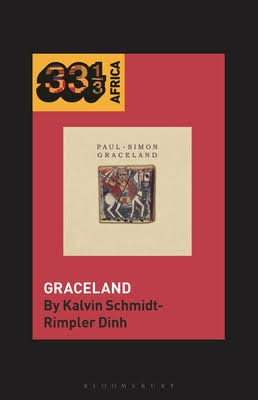
I read this courtesy of NetGalley and the publisher, Bloomsbury. It’s out today.
Graceland is a really important album to me. When I was in my teens, it was one of my favourite albums – it was different from other things I had been listening to, it had such a brilliant beat, I was already a fan of Paul Simon’s, and it just really clicked for me. Reading this consideration of the album – musically, historically, politically – has deepened and complicated (complimentary) my relationship to the album.
I had no real knowledge of the background to the album, aside from the fact that it’s Simon working with groups like Ladysmith Black Mambazo at a time when bands from Africa in general weren’t particularly well known outside of the continent (what am I saying, that’s still the case today). Dinh does a particularly good job of briefly setting the political scene – foreign attitudes towards the Apartheid regime, questions about the cultural embargo – and also refers back to related issues as they arise across the book.
I enjoyed the structure of the book a great deal. The introduction and first chapter set up the history – Simon’s experiences with African music, in particular, and his own musical history. Four of the next five chapters look at specific tracks from the album as a way of exploring how the album was put together in time and space, what can be understood about music and history and politics from both the lyrics and the music, and some of what is known about the personal experiences of the musicians. As someone who has read very little musical history, this approach was fascinating. It’s made slightly more difficult by the fact that Dinh wasn’t allowed to quote slabs of lyrics, due to copyright issues – which I frankly find amazing, that the copyright holders weren’t able to come to some reasonable agreement rather than charging standard rates, but what would I know. For someone like me, who basically knows the album off by heart, it wasn’t as annoying as it will be for folks who only know it in passing! The other chapter in this middle section looks specifically at South African popular music – about which I previously knew nothing, and now have some appreciation for the layers of influence going on there.
The penultimate chapter looks at “the politics of collaboration” and picks up on issues that have been touched on in other chapters too – about the power imbalance of Paul Simon, the white American pop star, working with lesser-known, brown- and black-skinned musicians, sometimes also American but many from various African countries. Dinh comes to no easy conclusions here: some folks have spoken up about being disgruntled for the way they were treated; others have remained steadfast in saying it was a good experience. Presumably both are telling the truth. I appreciated that across the whole book, Dinh is interested in neither maligning nor lionising Simon – or indeed any of the others. They’re just humans.
Finally, the last chapter looks at one of the weirdest aspects of the album – the cover art: St George. It’s always just been ubiquitous to me; I didn’t pay much attention to it as a kid, and as I got older it was just… the album. Now? Well, the image is based on a painting by a medieval East African artist, and George himself is an important figure across a sprawling set of cultures. So he does sort of make sense.
There was always the potential for a book like this to ruin a favourite album. It’s true that I can’t listen to it now without feeling a degree of discomfort, knowing that some musicians felt taken advantage of; that there were political questions around whether it meant Simon was crossing the embargo line; and some of the other political questions around the music. However, Dinh in no way wants to stop people from listening to the album – my sense is that he wants people to appreciate the issues, as well as many of the intriguing lyrics, more deeply. Which is good because I’ve had “Boy in the Bubble” stuck in my head for days.


