Terra Nullius
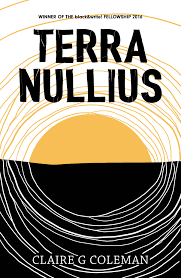 This book was sent to me by the publisher, Hachette, at no cost. It’s out now, RRP $29.99.
Terra nullius has a specific resonance for Australians who know anything about their history. It’s the legal fiction under which Britain decided they could colonise the land that’s now Australia, because it was ‘nobody’s land’ – that is, no one that the British recognised owned it. Because the British didn’t recognise the traditional owners as ‘owning’ the land, for a whole bunch of reasons. So for Claire G Coleman to use that as the name and premise of her book is brilliant, and pointed, and tells you a lot about what the book is on about before you even open it.
Coleman, who identifies with the South Coast Noongar people, won the black&write! writing fellowship in 2016 with this manuscript. The main reason why I think that’s awesome – aside from the obvious one that it’s a great book – is a bit spoiler-y, and that’s a bit of a problem with discussing this book at all…
The blurb talks about Natives, the Colony, and Settlers. It says “This is not Australia as we know it. This is not the Australia of our history. This TERRA NULLIUS is something new, but all too familiar.” Along with the fact that this is a didactic book (in no way a criticism) that does its message-work with clear prose, understandable characters, compassion and a lot of toughness… I can’t really say much more about the book without revealing what makes it something other than a book about Australian history. There’s runaways and enforced schooling and hiding from Settlers and Settlers complaining about the environment… and… other things.
I want to throw this book at all white Australians. And I would be fascinated to hear what non-Australians think, especially people living in other colonised lands. I don’t know enough about how that’s spoken of elsewhere to know whether the resonance would work in a non-Australian context… but I think there’s enough commonality for it not to be a completely foreign experience.
And now, for those of you who don’t mind spoilers:
Timekeepers
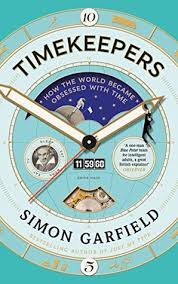 Even if you’re not that history books, but you are a keen observer of the world and how it works, this is a book I can highly recommend.
There were times (heh) when reading this that I wasn’t quite sure what book Simon Garfield was trying to write. Some of the things that he writes about didn’t immediately appear to connect to the idea of time. But when I considered the blurb, I decided that Garfield did indeed know exactly what he was doing. This is a book that considers the idea of time from a multitude of angles: “our attempts to measure it, control it, sell it, film it, perform it, immortalise it, re-invent it, and make it meaningful.”
I really, really enjoyed this book. Garfield writes in lovely, sometimes whimsical ways – not that his ideas are less than scientific when required, but that he has a lovely turn of phrase to make some difficult concepts approachable. And I really did enjoy the different ways that he approached time. I already knew about trains and train timetables essentially necessitating the development of time zones, but I didn’t have a problem with it being reiterated; I adore that he included discussion of the French Republican calendar and its attempt to decimalise, rationalise, time. Including questions of the metronome and how to play Beethoven’s Ninth and why a CD fits as much as it used to is just marvellous, and the question of just how many times someone can be shown, in film, hanging from a clock is one I had never considered. Also, the idea of a film that goes for 24 hours and is comprised of snippets from other films that together make 24 hours, each shown at the appropriate time of the day? Madness and genius have rarely been so close together. And that’s barely scratching the surface of the ideas that Garfield explores: how to make a watch, the four-minute mile, the modern drive for efficiency… yeh. This is a varied, delightfully jumbled, exploration of a topic that consumes a lot of modern Westerners.
Garfield is not suggesting he’s written the definitive book on time; far from it. There’s a wonderful Further Reading section that I’m afraid to look at because this is a rabbit hole I could very easily fall into. But it is a good introduction to pointing out that time is a lot more subjective, and invented, and dependent than we sometimes think.
Reading this is a good way to spend some time.
Galactic Suburbia 160
In which the world is on fire but we’re still reading… get us from itunes or over at Galactic Suburbia.
WHAT’S NEW ON THE INTERNET
Teen Vogue as tool of the revolution – why we shouldn’t be surprised.
Problem Daughters: check out this fantastic crowdfunding project for intersectional feminist stories.
GUFF race (until 1 April)
DUFF race (until 10 March)
Help support these fan funds! Alisa & Alex are hoping to go to Helsinki this year, while friend of the podcast Paul Weimer is hoping to come to Melbourne.
CULTURE CONSUMED
Alisa: Nora Roberts (Bride Quartet); Fangirl Happy Hour; Please Like Me; Travelers; Frequency; Designated Survivor; Younger
Alex: Parable of the Sower, Parable of the Talents, Fledgling, and Dawn, Octavia Butler; River of Teeth, Sarah Gailey; Istanbul: A Tale of Three Cities, Bettany Hughes
Tansy: Acts of Kitchen; Wicked (local performance); Heroine Complex, Sarah Kuhn; Ladycastle, Deliah S Dawson (writing) & Ashley A Woods (art); Unstoppable Wasp; Hawkeye; Moana (film & soundtrack), Buffy rewatch check in.
Tansy’s new literary gift shop business: Alice & Austen
Also, Tansy has a story in the latest issue of Uncanny Magazine: Some Cupids Kill With Arrows.
Please send feedback to us at galacticsuburbia@gmail.com, follow us on Twitter at @galacticsuburbs, check out Galactic Suburbia Podcast on Facebook, support us at Patreon and don’t forget to leave a review on iTunes if you love us!
Paper
 I have loved everything I’ve read by Mark Kurlansky. So when I was in a small bookshop in a small town and saw a new book from him, I was pretty stoked. I half considered buying it as an e-version, partly because OH THE IRONY, but then my darling fawned her how pretty it is (and it really is very pretty, with rough-edged paper and all), so I bought the bard-back. Supporting small book shops for the win.
Tragically, I am disappointed.
I was trying to pin down exactly why the book didn’t work, and halfway through I realised: each paragraph felt like an extended dot point. Like he had all of these great ideas and fascinating points, mostly connected to paper, but… couldn’t quite nail the flow and structure. There are weird disjointed bits that entirely lack in connection, there are some fascinating bits about language and so on that aren’t clearly tied to paper, and… well. Disappointed.
I appreciated his discussion of the technological fallacy: that tech happens and then society follows. Rather, he argues, society creates a demand and THEN technology follows, playing catch up: why else is so much money spent on market research? So I liked that bit. However, as someone has pointed out to me, Kurlansky is entirely too linear in his perspective on the relationship between change and society. Civilisation just isn’t like that.
More serious than the lack of sequencing, though, were a few points where he was just… kinda wrong. For instance: he suggests that some people credit Ada Lovelace with inventing computers, and then reveals that actually she was inspired by Charles Babbage. And, uh, no. She invented the first computer language, and it’s no secret she worked with Babbage! … so this makes me a little concerned when he’s discussing those bits of history that I don’t actually have knowledge of. Because… can I trust him?
I gave it a four over on Goodreads because the ideas and the history really are fascinating, but the book itself as a piece of text ought to get a three.
Sisters of Tomorrow
This book was sent to me by the publisher, Wesleyan University Press, at no cost. It’s available now.
 It’s no secret that I like science fiction and history and am feminist, so books like this are like a perfect conjunction for me. I’ve previously read Helen Merrick’s Secret Feminist Cabal, and Justine Larbalestier’s Battle of the Sexes in Science Fiction AND Daughter of Earth, which is a compilation of early female SF writers. So I’ve got a bit of background knowledge – not that you need it at all for this anthology, because Lisa Yaszek and Patrick B Sharp set the scene magnificently in their intro to the book and to the chapters.
Here’s the thing that makes this book really special: while the biggest section is on the authors, because they include some stories – including a fairly long novelette – the editors don’t stop there. They also have sections on the female poets, and artists, and journalists, and editors of the 30s and 40s. This blew my mind. I’d vaguely heard of Margaret Brundage, I think? But I certainly didn’t realise that there were women active and influential in all of those spheres. Yaszek and Sharp also cross into the amateur magazines, where women were also hugely important in the development of “understandings of science, society, and SF in different arenas of SF production” (xxiii). If you’re interested in early science fiction at all, if you’re interested in women in literature, if you’re interested in the history of SF – this is an excellent anthology.
The Silk Roads
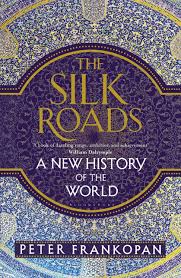 This book was sent to me by the publisher, Bloomsbury, at no cost. It’s out in September; RRP $29.99.
This is one of the finest history books I have read in recent times. It’s also probably the first book I’ve read that calls itself ‘a history of the world’ that does not mention the Norman invasion of England. And that’s because in 1066, from the perspective Frankopan presents here, a wee island on the west coast of Europe was of absolutely no relevance to the movers and shakers of the world. (Henry VIII is barely mentioned either!) The real business of global activity was in what Frankopan calls the real heart of the world – the lands of the Silk Roads, from the Himalayas to the Mediterranean, which for the two thousand or so years covered here drove human history.
Now, that’s a big claim, but what’s a history book without a big claim behind it? and of course important things were happening in places like Britain in the 11th century – but things of regional importance, not things with world-changing impact. Frankopan’s thesis is that the areas connected by what came to be called the Silk Road had an impact on actions, thought, and policy across most of Europe and Asia and, eventually, the Americas and Africa as well. Sometimes this area is actively driving history (the beginnings of Christianity and Islam, anyone? – and Judaism too although it doesn’t start in the period covered) and sometimes it’s – not quite passive – but almost: that this area happens to be incredibly oil-rich isn’t anyone’s fault or decision, but the reactions to it are.
Each chapter of the book is centred around the theme of roads: the road of faiths, to a Christian East, of gold and silver and black gold and genocide. It’s blunt about the horrors perpetrated – so much slavery – and waxes lyrical about the beauties produced by various cultures. Islam and Christianity and Judaism are shown cooperating, although rarely all three together, as well as antagonistic – for religious and political reasons (throw Zoroastrianism in there too, and indeed Buddhism). There are countless invasions – sometimes repelled, sometimes welcomed, sometimes hugely resented; there are alliances and back-stabbings and intermarriages. Most of all, though, there is trade. Trade along the Silk Road – from China and indeed further east, all the way to that insignificant island on the west coast of Europe, and of course within the regions along it too. The impact of Chinese pottery on the Dutch. The impact of silk and gold and – of course – oil, as well as innumerable other goods, back and forth, is mapped out by Frankopan. Not quite half the book is basically from 1900 onwards (the chapter is called ‘The Road to War’), which I know makes sense in terms of the availability of sources; the medievalist in me was a bit sad, I’ll admit.
I am guilty of having a Euro-centric view of history. Partly this is my education and upbringing which have in turn led me to be most interested in European history, especially British and the ‘classical’ worlds. I have a bitser knowledge of events involving Persia across the ages and the regions of Central Asia – usually as they intersect with those areas I have studied (Alexander the Great, the Huns, the Mongols). More recently I am absolutely guilty of falling into the complacent trap of thinking of Central Asia, in particular, as being a war-torn area that is to be pitied (HELLO privilege). To see this area’s history presented chronologically and with a focus squarely on it, the actions taken by people in the area as well as those acting on it; and to see the actions involving Iran and Iraq and Afghanistan and Pakistan and Egypt, and Britain and the US in particular, over the last five decades or so – this was an absolute revelation. For those who are more interested in modern politics perhaps this won’t be quite so eye-opening, but I imagine that for most it will still be a revelation to have all of the pieces fitted together and the connections between them pointed out clearly and cogently.
 Reading about the actions of the British Empire made me embarrassed to be Anglo, at times. The sheer arrogance on display was truly remarkable.
The aesthetics: if I could have a framed copy of the front cover, I probably would. It’s gorgeous. Inside there are two sets of eight pages of colour pictures – which isn’t as many as I might have expected from such an epic book, but they were a reasonable overview of the content. I have a copy of the trade paperback; it’s a hefty tome: I didn’t quite manage to not put creases in the spine, which is an indication of how hard it was to read without opening it fully! (Yes I am that person; crease my book’s spine and I will crease you.) It’s 520 pages long (with another 100 pages of footnotes) – so it’s not a fast read, but it’s definitely a worthwhile read.
This book is a must-read for anyone interested in world history, or in modern history. It should be read by any politician or policy-maker who thinks they can make decisions about any part of the world other than their own without consequences. It should also be read by anyone with a tendency to Eurocentrism. It’s a study in well-written history, too.
The Bad-Ass Librarians of Timbuktu
This book was sent to me by the publisher, Allen&Unwin, at no cost. It’s out on August 24; RRP $32.99

I recently listened to an episode of the BBC’s radio show In Our Time about the Malian empire, which was the first time I learnt anything about that area’s incredibly rich cultural history. So I was completely stoked to receive a copy of this book – it’s modern, rather than about the production of the manuscripts and the intellectual foment of Timbuktu in its hey-day, but it’s an area that gets little attention in the English-speaking world of written-for-the-armchair-reader so its publication is a great thing.
However, this book is not quite what it purports itself to be. It’s a gripping book and one I don’t regret reading, but there’s a stretch in the middle of about 100 pages that talks about the rise of Al Qaeda jihadists in Mali and surrounds, their tactics and their eventual (brief) seizure of northern Mali (including Timbuktu). It was necessary context, since it’s that seizure that required the manuscripts of the city to be rescued, but it felt like there was too much exploration of the jihadist threat that wasn’t immediately linked to the whole point of the book. If Hammer’s point was actually to look at the cultural threat of AQIM (Al Quaeda in Islamic Maghreb), with the manuscripts of Timbuktu as a touchstone, then it should have had a different title. So don’t read this if what you’re really after is a discussion of manuscript preservation, or an overwhelming focus on the manuscripts or libraries themselves. This is not the book you’re looking for.
Nonetheless, as I said: no regrets. There is an extensive discussion of how one man, Abdel Kader Haidara, was responsible for collecting around 377,000 manuscripts from individual people’s homes, where they’d been sitting in holes or caves or just in trunks, because of a history of them being stolen or destroyed by various different groups (including the French, making many people suspicious of anything with foreign backing). This included some incredibly old Korans, and unique examples of medieval Islamic texts, and exquisitely beautiful calligraphy, and… well. What a trove. It’s then under threat when Timbuktu is occupied by AQIM, so Haidara organises for almost all of them to be smuggled out. This is the most incredible part of the whole story, since the logistics – in a place with limited communications, with serious threats in front and behind – are truly astounding. And uplifting.
One weird point: one of the people who helped Haidara was a woman who lived some of the year in Mali. She requested that her real name not be used in the book… but then her translation of an 1839 French grimoire is noted, complete with its title. Um. Surely that’s going to give her away?
Anyway, the collection that Haidara put together certainly sticks it to Hugh Trevor-Roper, who proclaimed in 1963 that “at present there is [no African history]… There is only the history of Europeans in Africa. The rest is darkness” (33). The story of their salvation (this time), through charitable donations from a significant number of international charities and, awesomely, a Kickstarter campaign, made me joyful. I’m sure Haidara would be painful to be married to, with his manuscript obsession, but it seems to me that Mali and northern Africa more generally owe him and his team a debt for looking after their cultural heritage.
You can get this book from Fishpond.
The Deadly Sisterhood
Not a lady-assassins novel, but a history book about the role of eight significant women in 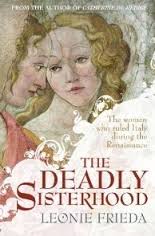 the Italian peninsula during the Renaissance.
I scored this at a school market for about $2, which was very cool.
Firstly, two problems:
- There were a number of egregious editing issues, which really annoyed me. A major publisher should not be putting out books with mistakes that *I* can pick up as I read it – it’s not like I read with the attention of a copy editor.
- More significantly, the book falls into the trap that many such history books do. They’re trying to write a book about the women, who have largely been ignored by contemporary and modern historians… but there’s so much else! being done by the lads! and honest, it’s needed for context! … that there are large slabs of text that really don’t seem to be connected to the women who are in theory at the heart of the book. Even if there are occasional mentions of “oh, and he was Duchess Blah’s son”. It was frustrating to have the women seem to be ignored in their own book.
Anyway. Frieda focusses on eight women, some of whom I’d heard of – Lucrezia Borgia, of course – and others I hadn’t heard of – of course. It covers the height of the Italian Renaissance, from 1471 to 1527. She discusses their births and marriages and deaths, their children and (often multiple) husbands, as well as the roles they played in politics – both consciously and as marital pawns – and in the artistic and cultural milieu. Actually that last was the bit that, surprisingly, got least attention; I would have thought that the women would have played greater roles as patrons. Perhaps Frieda was more interested in discussing the political aspect, which is definitely at the forefront of her interests here.
Despite the problems mentioned above – and that sometimes the language was a bit too snarky; I don’t need to be reminded that one of the Isabellas apparently got quite fat, unless that contributed to how people treated her – I did enjoy reading this, and I am very pleased to know more about these women of important families who themselves managed to do important and significant things.
Queen of the Desert: the film
As I mentioned in my post about the book Queen of the Desert, a biography of Gertrude Bell, I finally got around to reading the book after seeing the biopic directed by Werner Herzog and starring Nicole Kidman. I didn’t mind the film; my mother, having read the book, didn’t love it but didn’t hate it; having read the book I am increasingly annoyed by the film.
The good things: Continue reading →
Gertrude Bell
 Every now and then I come across a new historical figure and I think
HOW IS IT POSSIBLE THAT I HAVE NEVER HEARD OF THIS PERSON WHAT HAS THE WORLD BEEN DOING THIS JUST SHOWS HOW MUCH STUFF GETS LOST
Usually that person is a woman, although not always. Gertrude Bell is the most recent of these people. I don’t even remember how I heard about her – it might have been in passing in a podcast or something? – at any rate the moment I heard about her I went online to see if there was a biography about her. There are two, I think, modern biogs; this seemed to be the better rated, and so I immediately bought it. Since then my mother has read it, since I always have too many books to be read, and she loved it; then we spent some time together which just happened to coincide with Nicole Kidman’s movie about Bell being at the cinema, so we went to see it and I was pushed to move my reading of this bio to the front of the reading queue.
Gertrude Bell might be described as the ‘female Lawrence of Arabia’, but really it would be more accurate to say that he was the male Gertrude Bell, since I think she had more adventures and was more involved in the immediate post-WW1 decisions regarding Mesopotamia.


