Mrs Dalloway
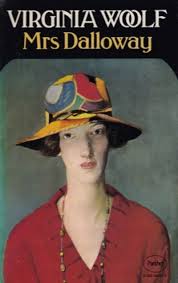 My mother has been a bit vaguely sad at me for not having read this in the past, so I decided it was finally time to bite the bullet. I read and adored Orlando waaaay back in first year; I couldn’t get through To The Lighthouse. I have seen The Hours (and brought home the book, from my mother). So that was my context. Plus a vague suspicion that this was going to be depressing.
At least it’s better than James Joyce’s Ulysses. Which isn’t saying much, except the truth.
So yes. Depressing. With occasional glints of wait – is this actually as depressing as I think it is? Or is this just… life? With occasional regrets and obviously things that are difficult but hey, for Clarissa at least, this isn’t SO bad. (I’ll get to Septimus.) I was so conflicted and in need of debriefing that as soon as I finished reading it I had to call my mother, who was very amused by my reaction. Yes, dear, I think it is meant to be a bit depressing and horrifying. Oh good. She also pointed out to me just how obsessed the book is with TIME. I had noticed that Big Ben is almost a secondary character in its own right, but I hadn’t really clued into time being referenced EVERYwhere. Which makes the story even more poignant. And depressing.
Imagine, an entire novel about an upper class woman’s ordinary day! How absolutely extraordinary that must have been.
And of course, it’s not JUST about Clarissa Dalloway. Her daughter, her friends, all get a little bit of time for their own thoughts… almost always coming back to Mrs Dalloway. The one exception is Septimus, who is completely unconnected to Mrs Dalloway except that they are physically close by one another very briefly, and that his absolutely appalling doctor is a guest at Mrs Dalloway’s party. This was one of the most heartbreaking fictional descriptions of shell shock I’ve come across.
I vaguely remember the discussions about modernist literature and what it was trying to do (that class was a very long time ago). I find Woolf’s style intriguing – and so very different from what I normally read – so many semi colons! And it occurred to me that while this isn’t Joyce’s stream of consciousness – ugh; it’s unreadable – it’s very close to replicating thought patterns, and indeed speech patterns. It approaches verisimilitude and while I am absolutely certain Woolf sweated blood to produce it exactly as it is, it comes across as effortless. As simple and … naive is wrong. So is innocent. Unsophisticated, perhaps, where sophistication means cunning and artifice and tricksiness.
I liked it. I will read The Hours soon. I will probably reread this, now that I know what I’m in for regarding the plot – and I’ll pay more attention to the descriptions than I did this time.
The Great Cat Massacre
 I heard about this book a long time ago, probably in the context of a university history subject that was attempting to give students an overview of different ways of approaching the writing of history; it was preparatory to undertaking Honours. It was probably mentioned by Peter McPhee, discussing the idea of cultural history. At any rate, I thought of it on and off but never got around to it, and then a friend gave me a copy when culling their library of extraneous books. So I read it today. And overall, it was very good.
Darnton’s approach is an anthropological one, in an attempt to understand the mentalite of sections of Old Regime French society. He doesn’t claim to be getting to the heart of 18th century French culture, nor completely understanding any one individual. Rather this is meant to be a beginning, showing a possible methodology (or road, using one of the metaphors in the book) that might allow Anglo-Saxon historians to do something the French have been doing for a while and, in his estimation, sometimes doing poorly.
There are six chapters. The first three essentially go through three different classes (DANGER WILL ROBINSON!) and look at a particular piece of culture as a way in to understanding, in some way, that person, group, and indeed the cultural milieu of France. I think I loved the first chapter the most – looking at peasants through the lens of folklore. It is the one that he describes as most ‘impressionistic’ and I get the feeling he feels almost guilty over it, and certainly worries that it appears least to rely on evidence. But it is wonderfully written, sets the context for peasant life beautifully (acknowledging the problematic nature of ‘generic peasant’), and does some really intriguing stuff in looking at variations in folkloric traditions within France and then between France and England, Italy, and Germany. He warns the reader off the idea of thinking you can completely ‘understand’ people, but suggests this as a way of better grasping how people approached their world.
The second chapter is the titular one, and is also deeply fascinating as it explores relationships between apprentices, journeymen, and masters; it also looks at the role of tormenting cats, which – whoa. The third looks at what must be a really bizarre text created by a man living in Montpellier, which seems to want to present the entire town as text and which Darnton uses to try and get at what it might have meant to be or think of oneself as bourgeois.
The second half is focussed on even more ambiguous groupings. The fourth chapter was kind of hilarious as it looks at the police reports written about ‘men of letters’ in the mid-18th century – written by a man whose job was basically to keep an eye on these producers of culture, and who makes all sorts of comments on their appearance, their literary worth, and who they’re connected to. I can’t help but imagine what a similar set of ASIO files would look like for Melbourne’s literary scene. The fifth chapter was, sadly, almost impenetrable for me: it looks at Diderot and d’Alembert and their constructing the Encyclopedie. There’s a lot of discussion of various philosophical ideas and modes of constructing knowledge and so on that I just didn’t get; Darnton presupposes a lot of understanding in his readership here that he doesn’t presuppose in knowledge of French society. Which surprised me, and disappointed me somewhat. Anyway, the last chapter is about reading Rousseau and changes in ways of reading. Darnton explicitly says not to but I can’t help but read the letters that readers of La Nouvelle Heloise as the most awesome fan letters ever; there’s a lot of weeping and sighing and offers of sex, basically. (I thought I would get to the end of the chapter feeling guilty about not wanting to read Heloise but Darnton reassures me that it’s almost unreadable to a modern audience. HOORAY.)
I had two issues with reading the book. The first, site-specific, was the opaque nature of the fifth chapter. It really bugged me. The second was the lack of women. Yes, there probably were fewer literate women at the time. Yes, digging up evidence of women’s contributions to culture can often be problematic. But the man is using folklore as real and useful evidence; I don’t think that difficulty ought to be used as an excuse here. Even in that chapter on peasants it felt like there was an emphasis on men – he uses the Perrault versions of the stories as his ‘literary’ comparisons, and of course the Grim brothers, and acknowledges that Jeanette Hassenpflug was the latter’s source, but Marie Catherine d’Aulnoy gets one mention only. And there’s no discussion, really, that women may have been involved in the transmission of stories, except in telling them to the men who wrote them down. And he does mention women as running salons when discussing the men of letters, and of being patrons, but again only in passing. I don’t know what else is out there; I would really like to have seen some discussion at least of the difficulty of finding women, perhaps as a challenge to later historians.
Overall this is a generally approachable book – not for the completely un-historical, but fun if you’re interested in the development of culture and different styles of Doing History.
The Devil You Know
This book was provided to me by the publisher at no cost.
 In this novella, KJ Parker has taken the idea of Faust and puts his own spin on it. In most versions of that story, Faust makes a deal with the devil – in the person of Mephistopheles – whereby Faust gets all of his desires seen to and the devil gets his soul after some specified period of time. Classically, Faust panics at the end of the deal; of course the irony is that all Faust has to do to get out of the deal is to ask God for forgiveness and he’d be fine.
But this isn’t a review of Faust.
Saloninus is the greatest philosopher-scientist of his age, and possibly of all time. This is a secondary world, but Parker amuses himself by attributing numerous real-world achievements to Saloninus, I guess as a way of stressing how awesome Saloninus is. He makes a deal with… well, the being is never clearly identified as a demon, but that’s clearly the idea. Saloninus gets youth and twenty years of the demon being at his beck and call; he gives up his soul in return. Right from the start the demon is suspicious – why would such a man want to sell his soul for a mere twenty years? – and that’s what drives his(?) narrative throughout. Saloninus’ deal isn’t entirely clear.
One thing that got a bit annoying was the frequent switch in perspective, between the demon and the philosopher-scientist. In the version I read, an ARC to be sure, there wasn’t an easy way to tell the difference between narrators until, sometimes, a paragraph or more into the new section. Of course I got there, but there was more work involved than was necessary.
Overall, it was a fairly fun take on the idea of selling your soul.
SPOILER
The one real reservation I have is that the ending really didn’t work for me. I just wasn’t convinced by Saloninus’ motivation at all.
Cibola Burn
 It’s weird. I did my mammoth James SA Corey re-read specifically in order to read this and then… it took me a while to really get into it. Partly, I think that’s because it was jarring to go from the familiar to the not but with some familiarity; it kind of threw me. And then there’s the fact that most of this book is set on, or orbiting above, a planet. I mean, there’s been bits set on Earth before, and quite a lot within the inhabited asteroids, but – a planet? as the main setting for an Expanse novel? That’s just weird.
But, eventually I got there. And of course I’m glad I did because this, really, is the conclusion to the arc that started with Leviathan Wakes (… although I’ve just bought the fifth novel and there’s a sixth due next year, so I don’t really know what’s going to happen there).
As always, there are multiple narrators. The prologue starts with Bobbie Draper, which is mean because it meant she wouldn’t feature and I really like Bobbie. Anyway. The first chapter is Basia, and it took me a little while to recognise the name (and a rather obvious hint, actually): but this is Miller’s acquaintance from Eros, the one whose little boy was kidnapped at the same time as Mai. He’s been part of the first wave of people to head out through one of the gates that’s now opened to the galaxy; basically, they’re squatters. Which is mostly fine, since their planet has a nice store of lithium for digging up and then selling – but because of that lithium, there’s a corporate ship coming with offical Earth papers that say the planet is theirs for the mining. Of course, why should an Earth piece of paper make a difference? And so Basia gets caught up with the wrong people (saboteurs) for the right reasons (family and freedom). He has many difficult decisions to make over the course of the novel.
The second narrator is Elvi, a scientist who is coming to the new planet (whose name depends on which side you’re on) with the corporate ship because heck, wouldn’t you? Chance to check out (what should be) a pristine new environment? Of course things go wrong (see previous comment on Basia’s friends), but she does at least get to do some science. I wasn’t always happy with Elvi’s narrative; I’m particularly conflicted about the romantic aspects, because while I think I understand it, it did feel a bit like “oh a lady must feel romance” and that makes me sad. She does get to be a kickass scientist though, which I guess is a consolation.
Third is Havelock, and I am so embarrassed by how long it took me to figure out who this was. It wasn’t until there were really obvious comments about being an Earther and being part of Belter security that I realised: this was Miller’s partner, back in the day. The one he warned off when things were getting difficult for Earthers. So we have a marvellous set of call-backs to the first novel, here. I mostly liked Havelock, although his tendency to just follow and mirror what his leaders are doing got pretty old. I enjoyed the perspective he allowed, though – it did add a nice rounding to the story.
And fourthly, of course, what would an Expanse novel be without James Holden? Oh Jim. Seriously. This time, he’s involved precisely because of who he is: one of the most notorious men in the solar system, renowned for a disturbing sense of decency and fierce love of truth. Who better to negotiate between Belter squatters and an Earther corporation? BAHAHA.
Also, of course, Miller is still around and being annoying in Holden’s head. In fact, the artefact gets its own occasional appearance in the narration of the story…
Not quite as enjoyable as the previous novels, but still a really solid SF story… and the epilogue makes me rather excited for the fifth.
You can get Cibola Burn from Fishpond.
Zeroes
This book was provided to me by the publisher at no cost.
 I wanted to adore this book. I really enjoyed it, but I didn’t adore it. I’m trying to work through why…
Some general comments and then spoilers will be flagged.
The premise is one of superheroes, where the heroes are adolescents and most of them don’t feel, or want to be, heroic. Their ‘powers’ aren’t obvious (no one is turning green) and sometimes they don’t seem particularly useful, either. At some point in the past they’ve discovered each other and tried to work together, to see whether and how they might become a team… but then it turned sour, and they haven’t really worked together for a year. But when one of them is caught up with the police (his own fault, really), he asks for help and things go from there. Up, and down, and twisty-windy. The plot revolves around accidentally stolen drug money, a bank robbery gone very wrong, people in the wrong place and a bunch of teenagers trying to fix things and occasionally messing up.
We get chapters from each of the Zeroes, although not always alternating; the story begins from the perspective of Ethan (Scam), then Kelsie gets the fourth chapter and then gradually the others are introduced. This structure is exactly as useful as it seems, with multiple perspectives on events and people and ideas. It was an aspect I really liked, but it also contributed to one of the reasons I didn’t adore the book (I didn’t fall in love with any of the characters; more on that below). The characters are nicely varied: girls and boys, different ethnic backgrounds, one blind, families of different structures (those that we see anyway). They definitely have different personalities, which are not entirely tied to their ‘powers’ – which is great. There is some connection (Kelsie can work a crowd and loves going out dancing, for instance), but the question of cause and consequence isn’t tied down.
I liked that the action takes place over just a week; there’s no interest here in dragging a story out. It’s fast-paced over all, as it needs to be when there’s scary underworld types involved and things need to get fixed pronto. There are a few adults around – more parents are mentioned and briefly involved than you might expect in a teens-save-the-world story – but they don’t get in the way of said teens getting into a lot of trouble. The story is set in Cambria, which it turns out is really a name for a town in the US; I don’t know whether it’s intended to be set in the real town or not, but at any rate it’s a dinky little town rather than NY or Chicago, say, which I think is an interesting choice. It lets the characters develop their powers before having to deal with The Big Smoke, I guess (bets on that happening in a later novel?). There’s little real world building – it’s the America of today, and the city itself plays little part in the story, so there’s no need to make it really come alive.
Now, SPOILERS.
Patchwerk
 I received this book from the publisher at no cost.
This is a really hard story to talk about without major spoilers. So initially, let me know: the premise is quite clever – man makes machine that may well interfere with the very fabric of reality – and there are some nice points of world building. There’s a point at which you may well wonder whether your version of the text has somehow been corrupted (I did), but it’s actually the story itself, as you discover when you keep going (… unless your copy actually is corrupted…). However, I had some issues, mostly in the characters which I’ll mention in the spoilers section; partly it was in the prose itself, which at times just felt clunky.
Ancillary Mercy
This book was provided to me by the publisher at no cost.
Spoilers ahead for Ancillary Justice (reviews here and here – yes I loved it enough to review it the second time around) and Ancillary Sword.
 Sooo… first thing to admit: it took me reading someone else’s review to realise that Justices, Swords and Mercies are all the sorts of ships that Breq is in charge of. How embarrassing that I did not realise that.
Secondly: yes, I love this series, I love Leckie’s work, I love Breq and the world she inhabits. My love is true and remains unshaken.
Further note: I’m just going with ‘she’ to refer to everyone, when I have to. I think there’s one person whose gender is actually confirmed (… maybe…insofar as that ever can be in these books) and it just does violence to my brain to go with he/she when Leckie herself (ahaha) goes with SHE. So nyer.
As with Justice to Sword, Mercy starts almost immediately Sword finishes off. I quite like this, since it means there doesn’t need to be any tedious filling in of blanks. It also means I’d like to see an omnibus edition where you can just read the whole lot, start to finish. It wouldn’t even be that much bigger than a complete edition of The Lord of the Rings. Breq continues to have issues with Anaander Mianaai, ruler of the Radch and therefore of civilisation as the Radch defines it… Continue reading →
Witches of Lychford
 This book was provided to me by the publisher at no cost.
In Witches of Lychford, Paul Cornell takes the idea of witches being people (and particularly women) who are tasked in some way to protect the humdrum population from things they don’t understand. Here, the place is a bog-standard (on the outside) English village, which is facing a very real and common threat: a giant supermarket chain wanting to move into the village and Change Things. On the face of it those things are alarming enough for those who are traditionalist, or who moved to the country to get away from big business and the corporate nature of the modern world. Underneath, though, is a far more alarming truth – that changing things in Lychford, such as boundary markers and the like, could have devastating results for the way the ‘real’ world interacts with the world of Faery and other, more malignant dimensions.
Cornell’s focus is on the three women who might have a chance to do something about this. By far my favourite is Judith Mawson: at 71, she has “a list of what she didn’t like, and almost everything – and everybody – in Lychford was on it.” There’s a point late in the story where she grudgingly tells someone they are not on that list. Cranky old women for the win, I say. Judith is competent but not a superhero; she gets things done and grumbles about it – and sometimes she fails. Also, her tragedy is absolutely and completely appalling.
The other two women were less convincing to me. Having read a few of these Tor novellas it’s striking to see some of the similarities – I don’t know whether it’s deliberate or if it’s just fallen out that way in my reading. But there are some similarities in theme between this and Angela Slatter’s Of Sorrow and Such, and in one of the young women there’s a link to Seanan McGuire’s Every Heart a Doorway because she spent time in the land of Faery and has been damaged by it. Her friend is the newly-arrived pastor, whose faith has been challenged by events in her past and who is really not feeling like she fits into the parish, where she herself grew up. Lizzie, the pastor, and Autumn both felt rather flat to me – especially coming off the back of McGuire and Slatter. Their issues were less emotionally gripping than I would have liked and they did not especially appeal to me as people, either (or perhaps concurrently). Nor did their role in solving the problems feel like it was fundamental.
Despite this problem of characterisation, I did still enjoy the book. It’s not a significant addition to the fiction on witches, or the real/faery divide, but it’s an interesting story and there are some lovely moments.
Attack of the Clones
Our idea initially was that we would watch one episode a week, which would get us about up to episode 7. But Phantom Menace left such a bad taste in our mouths that we decided we had to watch the second: it’s not a great film, but at least it’s not as bad as the first. Right?
So:
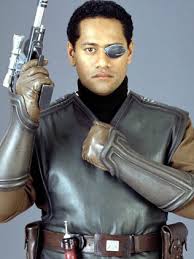 Attack of the Clones: things that weren’t too bad:
- Jay Laga’aia.
- Ewan McGregor’s hair is definitely better in this film.
- Obi-wan in general is better in this film. He’s better when he’s stern.
- Female assassin.
- Female Jedi!!
- Yoda in a city.
- Yoda taking part in politics.
- YODA FIGHTING.
- Jedi younglings are super cute.
- Jango Fett.
- Boba Fett.
- Christopher Lee!
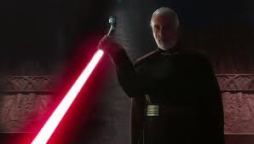
- Christopher Lee in a speed racer!
- Christopher Lee with a light sabre!
- Christopher Lee fighting Yoda!!
- James: at least they got John Williams back.
- And the use of CG isn’t quite as bad as Episode 1.
What were you thinking, George?
- Not enough Jay Laga’aia.
- You kept Jar Jar, George. You kept Jar Jar.
- Amidala + Anakin: everything about every scene they are in together.
- Amidala’s clothing choices. I’m not presuming to speak for every woman here, George, but I think it would have been more realistic for a woman who is being forced to be alone with a man whose romantic interest makes her uncomfortable not to wear provocative clothing. YES she has a choice in what she chooses to wear, NO I am not blaming her for Anakin’s infatuation, but nonetheless it’s a dubious choice for your costuming.
- Anakin in general.
- So petulant
- So creepy towards Amidala
- His rebelliousness towards Obi-wan is just embarrassing.
- You have NO RESPECT FOR PHYSICS, George. Super leaps between struts is one thing. But the level of timing required to jump from the speeder onto the assassin’s speeder, not to mention the leap itself, is truly ludicrous. NO RESPECT, George.
- Amidala always getting pushed around by the menfolks. Boring, George.
- You fridged Shmi Skywalker, George. Couldn’t you at least have given her a bit more of a story for herself? Shown her with Jack and the kids?
- You made Christopher Lee say some really bad dialogue, George. That’s nearly unforgivable.
- James: the CG is still pretty bad.
Rampant
By Diana Peterfreund
Sadly I did not love this book as much as I had hoped. Partly this is me, partly it is the book.
I had read the novella, Errant, so I thought I kinda knew what the story was going to be about. But Errant is set… I forget when, some time in the past. Rampant is not; it’s about a girl in modern America learning about unicorns. Which is fine, it was just a bit of a surprise. I had t read the blurb, deliberately; I didn’t want any spoilers since I figured it was going to be the sort of book I’d like anyway.
Killer unicorns? How can that not be awesome? That’s what it’s about, by the way. Unicorns are real and they hunt animals and people. Only certain people can hunt them in return. This is the learning-about-your-abilities book. If that’s your thing, feel free to ignore my whinging! Just go read it; it’s certainly enjoyable enough that I wouldn’t dissuade potential readers automatically.
Anyway, what I really had not expected was how much the book would be focussed in sex. Not having it, how people feel about you if you do or don’t, etc (do American teens really feel pressured to have sex before they leave high school??). It does make sense, given that Peterfreund has kept the virginity aspect for her unicorn hunters, but… it felt like it got in the way of what I was expecting, which was learning about unicorn hunting and dealing with that aspect of your nature. Which, yes, virginity is part of that. But there was a lot of going on dates and agonising which I guess just isn’t what I was interested in reading.
So I’m willing to agree that in that aspect, definitely a problem of my expectations. And I did like the discussion around rape, attitudes towards and reactions to, although the victim seemed to deal with it faster than I would expect. (Not that I want intense victiming either, necessarily.)
On the book’s side, I felt that the plot went a bit too fast sometimes; fast enough that things got a bit improbable (yes yes, around the killer unicorns bits) and too convenient. In the characters I especially found Astrid’s mother a bit much; a bit ridiculous.
For all its faults I will definitely read the sequel, Ascendant, at some point.

 Randomly Yours, Alex