Ancillary Mercy
This book was provided to me by the publisher at no cost.
Spoilers ahead for Ancillary Justice (reviews here and here – yes I loved it enough to review it the second time around) and Ancillary Sword.
 Sooo… first thing to admit: it took me reading someone else’s review to realise that Justices, Swords and Mercies are all the sorts of ships that Breq is in charge of. How embarrassing that I did not realise that.
Secondly: yes, I love this series, I love Leckie’s work, I love Breq and the world she inhabits. My love is true and remains unshaken.
Further note: I’m just going with ‘she’ to refer to everyone, when I have to. I think there’s one person whose gender is actually confirmed (… maybe…insofar as that ever can be in these books) and it just does violence to my brain to go with he/she when Leckie herself (ahaha) goes with SHE. So nyer.
As with Justice to Sword, Mercy starts almost immediately Sword finishes off. I quite like this, since it means there doesn’t need to be any tedious filling in of blanks. It also means I’d like to see an omnibus edition where you can just read the whole lot, start to finish. It wouldn’t even be that much bigger than a complete edition of The Lord of the Rings. Breq continues to have issues with Anaander Mianaai, ruler of the Radch and therefore of civilisation as the Radch defines it… Continue reading →
Attack of the Clones
Our idea initially was that we would watch one episode a week, which would get us about up to episode 7. But Phantom Menace left such a bad taste in our mouths that we decided we had to watch the second: it’s not a great film, but at least it’s not as bad as the first. Right?
So:
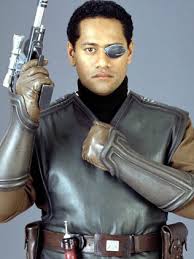 Attack of the Clones: things that weren’t too bad:
- Jay Laga’aia.
- Ewan McGregor’s hair is definitely better in this film.
- Obi-wan in general is better in this film. He’s better when he’s stern.
- Female assassin.
- Female Jedi!!
- Yoda in a city.
- Yoda taking part in politics.
- YODA FIGHTING.
- Jedi younglings are super cute.
- Jango Fett.
- Boba Fett.
- Christopher Lee!
- Christopher Lee in a speed racer!
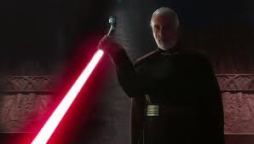
- Christopher Lee with a light sabre!
- Christopher Lee fighting Yoda!!
- James: at least they got John Williams back.
- And the use of CG isn’t quite as bad as Episode 1.
What were you thinking, George?
- Not enough Jay Laga’aia.
- You kept Jar Jar, George. You kept Jar Jar.
- Amidala + Anakin: everything about every scene they are in together.
- Amidala’s clothing choices. I’m not presuming to speak for every woman here, George, but I think it would have been more realistic for a woman who is being forced to be alone with a man whose romantic interest makes her uncomfortable not to wear provocative clothing. YES she has a choice in what she chooses to wear, NO I am not blaming her for Anakin’s infatuation, but nonetheless it’s a dubious choice for your costuming.
- Anakin in general.
- So petulant
- So creepy towards Amidala
- His rebelliousness towards Obi-wan is just embarrassing.
- You have NO RESPECT FOR PHYSICS, George. Super leaps between struts is one thing. But the level of timing required to jump from the speeder onto the assassin’s speeder, not to mention the leap itself, is truly ludicrous. NO RESPECT, George.
- Amidala always getting pushed around by the menfolks. Boring, George.
- You fridged Shmi Skywalker, George. Couldn’t you at least have given her a bit more of a story for herself? Shown her with Jack and the kids?
- You made Christopher Lee say some really bad dialogue, George. That’s nearly unforgivable.
- James: the CG is still pretty bad.
Up the Walls of the World
This book is absolutely bonkers. Mad. And completely wonderful.
This was Tiptree’s first novel, but naturally enough many of the concerns and interests of his short stories are present here as well. I am so sad that he did not write more novels; this made me so happy, as did Brightness Falls from the Air, that I do wonder what else could have come from that amazing brain.
Let’s start by talking about the authorial situation and get that out of the way. This was published in 1978. Tiptree had been revealed as Alice Sheldon at the end of 1976. I was surprised therefore to discover that the brief bio in the end flap (oh hard backs I really do love you) makes no mention of him being her, although it does acknowledge Tiptree as a pseudonym. But I guess that pre internet, how are people going to know about the identity? Via Locus maybe, and fanzines, and word of mouth. Tiptree was not such a big deal that the New York Times was going to run an expose. Presumably therefor with this publication your more casual, less crazy SF fans aren’t going to know who Tiptree ‘really’ is – and Tiptree is enough of a name (… and male…?) to make it worth keeping the pseudonym. But THEN I turned to the back and the back cover image is Sheldon! Now I’ve seen the pic before and it’s quite obvious to me who this is; but others have suggested that this could, actually, be an ambiguously gendered person. I’m not entirely convinced. But anyway, there’s that.
Now, to plot. I’m going to be entirely spoilery because I really want to think about what Tiptree is doing here.
Aurora: Beyond Equality
I felt like a traitor giving this book only three stars on Goodreads. But it has to be said that I don’t feel the anthology lived up to what it was setting out to do.Does that make me a heretic? Possibly.
In the introduction, Susan Janice Anderson discusses how hard a lot of people said they found the topic. That they had to invent an entirely new society in order to talk about men and women being actually equal (to which in my head I say, duh; you’re writing SF aren’t you? Maybe that’s a bit harsh). It was very interesting reading about what they wanted to avoid (female monsters), and how hard it was to find models of what they did want. The Dispossessed and “When it changed” were of course mentioned.
The stories:
Night Sky Mine
I feel conflicted about rating this on Goodreads. I’d like to make it 3.5 – I’m such a sucker for half marks; I guess I tend towards ambivalence? I dunno…
(see what I did there?)
 The set-up is great, as I’ve come to expect from a Scott novel. In fact after I read the first few pages I sighed with happiness and wondered why it took me so long to get around to reading this – it’s been on my shelf for ages – since the writing is lovely and captivating and immediately immersive. So that’s a wonderful thing and the prose itself stays very readable. The plot, though… it feels like a very long build up to a very abrupt and somewhat unsatisfying conclusion. I was surprised, as I read, that there were increasingly few pages left to go and no sign of clima – oh, there it went! Blink and you just about miss it. It felt like Scott either got bored by the story and/or characters (I’m going with the latter), and just wanted out, or she’d been given a timeframe that meant she had to rush the conclusion. Perhaps that’s a disservice and she always intended it to work that way, but it didn’t work for me.
Anyway: the story has two different plots that end up entangled. In one, Ista lives on a station owned and run by the Night Sky Mine Company, and she’s learning to be a hypothecary – someone who deals with what we would call the virtual world. There are safe nets, controlled by companies and governments, and then there are the wildnets – where anything might develop. Programs are flora – basically immobile – or fauna; Scott has developed an awesome nomenclature that give teasing hints as to characteristics of these programs (chogets and hug-me-tights and walaroo…). That was the aspect that felt really familiar from other Scott novels and that playfulness is something I really enjoyed.
The second plot involves Justin and Tarasov, men of very different backgrounds trying to make their relationship work dirt-side. Tarasov works in policing and they end up getting involved in an investigation that leads them to the Night Sky Mine system, and meeting up with Ista, and discovering that they all have some common interests that they want investigated.
The virtual world aspect is intriguing; there are hints at how it developed and got away from strict human control, but nothing too definite. The other world-building aspect that is intriguing is how Scott imagines human society working; this is no utopia, although it’s not quite a dystopia either (so quite realistic then). Humanity, at least within the Federation systems, are born into quite distinct castes – Union, Management, Transport, probably a few others – and there are definite resentments towards the different groups; Union always feels hard done by and that they are always the bottom of the pile. Friendships across castes are difficult, and love even more so. And then Scott adds another group, which I think is absolutely true to human nature: the Travellers. People who reject the idea of being tied to a caste and a certain job and a certain place. The most extreme Travellers (the Orthodox) take a spiritual view of their place in society, while Reformed Travellers are in it for the movement and lack of stricture. I could definitely read more stories set in this world, exploring how the different groups interact.
In the end I certainly don’t regret reading the book. I am glad that it wasn’t the first of Scott’s books I read, because I probably wouldn’t have gone on to read others – and then I would have missed out on Trouble and Her Friends which is definitely one of my very favourite cyberpunk stories.
Stranger in a Strange Land
 I don’t really remember when I started this. It might have been 2012, or 2013. You see, I’ve been reading it for about half an hour every fortnight of school time… and not quite every fortnight even then. So it’s taken me a while. And I feel somewhat bereft now that it’s finished. It was such a hefty, cosy friend every time I went into the library to set a good example by reading.
Yes, this was my first Heinlein. Yes it was deliberate; I’d heard it was his “liberal” book, and the concept intrigued me. Yes, I know there are people who are appalled by this. I did read the whole thing though, so it wasn’t that bad (… over a few years…).
Not having read other Heinlein I don’t really know how else he presents his politics. I’ve seen the move of Starship Troopers, but I think there’s some squabbling about whether he meant the novel to be quite as satirical as the movie ended up being? Anyway, from the perspective of a leftie in the 21st century, this doesn’t seem all that liberal in its politics. I mean, I guess it seems to be advocating a form of socialism, but I’m not sure how seriously anybody was meant to take that (although given how prevalent ‘grok’ is in certain circles… hmm). Of course if you take ‘liberal’ to mean ‘happy to talk about sex and have sex and I don’t believe in marriage to have sex’ then yes, it is liberal. Of course compared to modern books the sex scenes are positively chaste and I had to re-read some sections to understand what the fuss was about (ohhh he talked about them kissing but he meant they weren’t ONLY kissing…).
It’s a very long book to talk about the return of a human child to Earth, now a man, who has been raised by the inhabitants of Mars and has therefore quite a different way of understanding the world. He has no clue about human interactions and the ability to perform various mind-tricks like telekinesis and so on. There’s also a financial aspect since the way the law works he appears to be the owner of or ambassador from Mars, plus other technological side-benefits, which means that he is a multi-millionaire… all of these things naturally mean he has more enemies and would-be friends than he can deal with.
Interestingly the focus, I think, is not really on Mike, the Man from Mars. Nor is it on Jill, his nurse, at least not after the first bit. Instead the character who has really stuck with me is Jubal. Jubal almost seems to me how I imagine Heinlein to have been (and this is completely unfair since no one is born old): old, cranky, seen it all, cynical, bored by the world but still in love with it, impatient, garrulous, and desperate to do right by all those around him. Also the most amazing sense of entitlement. Jubal appears to have tried everything worthwhile and he runs a house that is at once a commune, a resort, and a demanding place of work. His obstinance and his love of his adoptive grandchildren, his bullying and arrogance matched with the fact that he uses his enormous brain for the good of those he loves – this, rather than Mike, seems to me to be the epitome of humanity.
Because in many ways I think Mike is meant to represent the best of humanity. But he’s a distant figure, for all he sleeps with every woman he gets close to as far as I can tell. He is unknowable. Interestingly he’s an inversion of the Great White Saviour trope, I think, because he’s doing humanity better than humanity but he IS human, just raised by a distant and unknowable people. I’m not sure that he’s being a better Martian than the Martians; we’re not given that info.
There are some appalling moments, especially about the women; this is not unexpected. The stuff about Fosterites was weird and a bit uncomfortable (but not nearly as weird as the bits about Foster himself!). The inclusion of a Muslim character surprised me, given the publication date… and the way he’s treated by those around him is simultaneously welcoming and also appalling.
I am glad I’ve read it. I’m not sure I would recommend it to anyone. Perhaps someone like me who is old enough to be cynical and hasn’t read any Heinlein before… as long as they’ve read enough other SF to know that it’s not all like this. Will I read any more Heinlein? I’m honestly not sure. There are so very many other books to read.
Call for submissions – scientists writing sf
Something that might be of interest…
Guidelines for Science Fiction by Scientists
Editor: Mike Brotherton, PhD
Type of publication: Print, e-book
Publisher: Springer (Science and Fiction: http://www.springer.com/series/11657 )
Pay: Likely 1 cent/word plus a royalty share
Genre: science fiction
Word Length: up to 10k, 3k-8k preferred, plus bio and afterword (see below)
Deadline: January 31, 2016
Reprints: No
Submissions and Queries: Email to mbrother@uwyo.edu (pdf, doc, docx, rtf)
Who can submit: This anthology is open to “scientists” of all types, as long as that characterization can be fairly supported, and includes working researchers, retired scientists, those with science and technology degrees working in closely related fields,
and scientists who have turned full-time writers. If you’re uncertain if you qualify, ask. We are looking to meet reader expectations given our title, and will provide bios describing each authors scientific background. We are open to previously unpublished fiction writers. Collaborations between scientists and non-scientist co-authors are welcome as well.
What kind of stories: We are looking for entertaining, well-written short stories in which the science plays a central role, from fundamental concepts to cutting edge-speculation. Scientist characters and scientific thinking are welcome, but not necessary. Our goal is a balanced volume, ideally covering multiple disciplines such as physics, astronomy, biology, chemistry, computer science, geology, planetary science, robotics, etc., without being focused too heavily in only one or two areas. Subjects within engineering, the social sciences, and mathematics are also welcome if approached from a scientific perspective. Show us what’s fascinating, exciting, or important about science. Bring us a sense of wonder. Share what it is to think like a scientist.
Inspire us to want to support science. Point out the dangers and responsibility ever increasing knowledge brings. Write a story that puts the science in science fiction.
Afterwords: Each submission should include an explanation and discussion of the relevant scientific concepts used in the story, up to about 1000 words. Afterwords can include the inspiration for the story, relevant mathematics, citations to the scientific
literature, or detailed explanations that can potentially educate as well as enlighten.
Galactic Suburbia: Tiptree Month!
It’s Tiptreemonth! Our second Tiptree Spoilerific looks at several of James Tiptree Jr and Raccoona Sheldon’s most iconic and important short stories from the collection Her Smoke Rose Up Forever. You can get us from iTunes or at Galactic Suburbia.
Houston, Houston, Do you Read?
Your Faces, O my Sisters! Your Faces filled of Light!
And I Awoke Me Here on the Cold Hillside
The Girl Who Was Plugged In
Love is the Plan the Plan is Death
The Screwfly Solution
The Women Men Don’t See
You can Skype us to leave a short feedback message about Tiptree or any of our other episodes, to be included in a future show.
03 90164171 (within Australia) +613 90164171 (from overseas)
Please send feedback to us at galacticsuburbia@gmail.com, follow us on Twitter at @galacticsuburbs, check out Galactic Suburbia Podcast on Facebook, support us at Patreon and don’t forget to leave a review on iTunes if you love us!
Letters to Tiptree
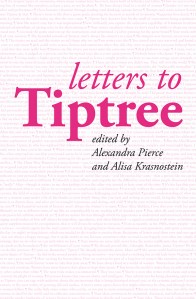 It is Tiptree month, because yesterday Alice Sheldon would have turned 100. I am completely ensnared in All Things Sheldon/Tiptree at the moment because of Letters to Tiptree, which was launched yesterday for Sheldon’s birthday and which has been consuming much of my time over the last few months. I’m immensely proud of this book and still incredibly honoured that Alisa asked me to co-edit it with her.
A few people have written articles about Sheldon and Tiptree, so here – have some links:
Leah Schnelbach on What James Tiptree can teach us about the power of the SF Community
Brit Mandelo on Where To Start with the Works of James Tiptree, Jr
Tansy Rayner Roberts on Raccoona Sheldon’s “The Screwfly Solution”
Galactic Suburbia on the amazing biography written by Julie Phillips a few years ago
Alisa talked about Tiptree and other things over on the Three Hoarsemen podcast
Not sure you’re interested in reading a whole bunch of letters to Sheldon/Tiptree? Here are some examples:
Gwyneth Jones (includes one of the greatest lines ever)
Slaughterhouse-Five
 I read this to help my school figure out whether they should teach it at Year 11. My thoughts? No.
Yes it’s an occasionally humorous reflection on the horrors of war and yes it’s a clever enough look at life and history and expectations and blah blah but… I did not enjoy this book in the slightest. I did not even really appreciate it much for what it was doing and saying.
If the main point, or one of, is to communicate the horror of war, I guess it does it well enough. But I don’t feel that it’s particularly well done and there are a few bits that justify Mary’s early concern about making war notseem as awful as it really was. I don’t think anyone would come away thinking that war is a lark, but still… it really didn’t work for me. I think there are other books that do it better and without being quite so annoying.
The main problem for me is Billy himself. As much as I am a pacifist I find Billy’s acceptance of everything that happens to him, his absolute passivity, incredibly frustrating and annoying and, frankly, boring. As a fictional character: yes, I know that there are things in my actual life that are just going to happen and I can’t do anything about that, so I like reading about people who have a go at shaking life to try and make a difference. As a reflection on exactly that issue of the human condition: even we, in real life, don’t generally just here, passive. At least we talk or we rage or we complain or we act as though maybe there’s a modicum of free will involved. Billy – the man who just lands in places and does nothing (that we see – clearly he got through optom school but that’s never discussed) but still manages to have good stuff and makes no decision ARGH. Not a character who was ever, ever going to work for me.
And then there’s the women. Yeh yeh it was written ages ago and I don’t care. The daughter, the wife, the girlfriend – nags and obese and existing for sex (only the last two thankfully) and I felt like the hobo who died on the train almost had more humanity than the daughter and the girlfriend, especially.
If I read the phrase “So it goes” one more time I may physically react. Passivity that makes no attempt at improvement or alteration and even movement? No thanks.

 Randomly Yours, Alex