Leviathan’s Blood
This is the sequel to The Godless, and will therefore have some spoilers for that first book. Like that one, this was sent to me by the author at no cost. 
Aaaaarrrrrgggghhh. The third book isn’t out until 2017.
The Godless basically ends with the siege of Mireea ending badly for our friends there, with additional problems like having killed a couple of very powerful men, while Buerelan’s friends are dead and the child-god is being distinctly creepy. So you just know that this second book is going to be completely full of happy, cheery adventures. Or not.
Peek’s pre-prologue is from a historian writing fifty years after the siege of Mireea, which I quite like as a conceit since it allows him to remind the audience of some of the major events with a bit of chronological distance that provides for the introspection and reflection of good historical writing. The prologue itself is deeply unsettling, since we’re introduced to someone who, sadly, doesn’t survive (sorry, but it is kind of obvious). And that’s because he’s in the wrong place at the wrong time: on the coast, when Aela Ren – the Innocent, who was pretty much a myth and a rumour in the first book – comes to shore. Which bodes for the entire novel.
The Godless followed a few different perspectives; Leviathan’s Blood steps it up a notch by adding more perspectives as the web of the story becomes increasingly complex. A lot of the story occurs in Yeflam, whence the survivors of Mireea have decamped as refugees – and I can’t help but think that Peek’s presentation of their situation, being stuck on an island with little provision and viewed with deep suspicion by the people of Yeflam – reflects current experiences of refugees, especially in relation to Australia. Ayae is having to deal with being a refugee again but also being in a unique position as someone cursed, or blessed, with a god’s power – and therefore viewed very differently by the people of Yeflam, whose state is largely ruled by such people (the Keepers). She, however, largely feels loyalty to the Mireeans and their ruler – as well as to Zaifyr, who is also in a difficult position, since he’s arrived in Yeflam as a prisoner for the murder of two Keepers. Which he knew would land him in hot water, to say the least. Then you’ve got Captain Heast, who may be my very, very favourite character since he’s so much the put-upon, battle-scarred, trying-to-be-moral, old soldier (huh… so I have a type then: Sparrowhawk; Mal Reynolds; Han Solo). And then there’s Buerelan, who probably has the most difficult narrative throughout this book, since it begins in such a hard place – blood-brother dead and cursed by the child-god – and it just gets worse as he goes to Ooila, the home from which he has been exiled for a very long time and where he knows he won’t get a great reception.
This series is definitely one of those thats fits into the Rather Gloomy side of epic fantasy. That’s not a negative, but I probably wouldn’t be giving it to someone who hasn’t read any since they enjoyed David and Leigh Eddings as a teen! There’s a lot of difficulty for our heroes, and often our heroes aren’t actually very heroic. Instead, they’re fallible and frustrated and human; not always likeable but almost always compelling.
There were points at which I felt like the narrative dragged a little, when it feels like we’re getting a bit bogged down in the details of how the Mireeans will get out of their difficult situation with Yeflam or the internal politicking of Zaifyr and his completely dysfunctional family. Having said that, all of those details add up to a very rich world – one where life isn’t all adventures and near-misses, but where understanding realpolitik is genuinely life and death, and buying farms can be a risky manoeuvre, and who you spend time with might actually change your life.
And thus, dammit, begins the long wait for the final book.
You can get it from Fishpond.
2016 Snapshot: Nike Sulway
Nike Sulway lives and works in regional Queensland. She is the writer of the books Dying in the First Person, Rupetta, The Bone Flute, The True Green of Hope, and What The Sky Knows. In 2014, Rupetta became the first work by an Australian author to win the James Tiptree, Jr Award. Nike can be found at her blog.
Your most recent novel is Dying in the First Person, which has been getting some rave reviews. There’s a lot going on in the book, but one aspect that you’ve written a little bit about on your blog is the idea of paracosms, or invented worlds. What drew you to the idea of including one in this novel? What do you think paracosms say about individuals or society?
I’m not sure I can put my finger on a single moment when I first encountered the idea of a paracosm, and wanted to write about it. Do other writers really have those singular moments when ideas flash into their thoughts as subjects? I’m not sure that’s every happened for me, instead it’s slow accretion, slow obsessions. Anyway, there are probably at least a few things. As a child, I had a really good friend, a ‘bosom buddy’ as Anne would have said, and we had a shared paracosm. It wasn’t quite like Nahum: it didn’t exist in some ‘other’, undiscovered place. It was the bushland that extended out from the back of her house. But in our relationship with it, that bushland was populated by storms of magical creatures. Fairies especially, but also a terrible, cruel Bunyip, and winged horses and trolls. When we left the house to go bushwalking, we entered that parallel world, as if through a magical portal. One of the interesting things about that process, to me now, is that when we entered the bushland, we also put on other versions of ourselves. We had different names and different bodies. And I remember, very distinctly, looking at my friend, Cavel, and seeing her as other self. Magical and strange. And wondering if she saw what I thought of as my true self, too.
When I came to writing this novel, I think there were several things that collided in my imagination. I’d been working at the LOTE centre (a now-defunct division of the Department of Education, dedicated to supporting the teaching of Languages Other Than English), so I’d spent some time immersed in a community of workers who all had a language other than English as their first language. And then I spent some time in the Netherlands, with my family. My Oma had dementia, and one of the effects of that, for her, was that she slipped in and out of the languages she spoke–particularly English and Dutch–weaving them together in a way that made sense to her, but was often difficult for those caring for her. There were times when her shifts made a kind of mnemonic sense: when she spoke about living in Australia, she would use English, and vice versa, but at other times there didn’t seem to be any rhyme or reason for the shifts. And she was very old, and very frail. I was conscious — we all were — that she was dying. So these ideas, of languages and how they relate to our sense of self and community and family, of alternative realities and shared, created worlds, and the loss of love. The way families can be physically separated, but deeply emotionally connected to each other, all came together in these two brothers, and Nahum, and the stories they wrote for each other.
I’m not sure I can say anything conclusive about what paracosms say about individuals or society for others. That’s much too big a question for me to answer. But I do see patterns in the research I’ve done around childhood paracosms, in particular. Oddly, they’re often connected to children who are conceived of as geniuses — as peculiarly talented or sensitive. They seem, most often, to be expressions of a utopian ideal, but one in which darkness nevertheless lurks. They might be kingdoms where children rule, or where children are not policed by parents and teachers, but there are monsters lurking at the edges of those worlds. War and death and loss.
I suspect that paracosms, like most created worlds in speculative fiction, are most often mirrors that their creators hold up to the real world. Distorted reflections that reveal things about ourselves and our worlds, and poke at them. Sometimes, they’re forms through which we can ask those ‘what if’ questions: what if the moon were made of cheese, what if women were equal citizens, what if gender was understood differently, what if race was understood differently. In Nahum, Samuel and Morgan create a world in which, unconsciously, they wonder what would happen if the only citizens of the world were men, and each of them lived alone.
You spend a good portion of your life talking about writing, and teaching others about it. Does this help or hinder your own writing? And I’m very curious – has the number of students taking such courses increased or decreased lately?
A little of both, actually. Sometimes it’s inspiring and challenging; sometimes it’s enervating and overwhelming. At times, just at a very banal and practical level, the teaching (and other aspects of my day job) mean I don’t have time to write, or the imaginative energy left after long days of meetings and administration, email and committee work. But the classroom, or workshop, and the conversations I have with my postgraduate students, those are most often rich, strange and challenging. I think they make me a better writer. Having to help others become better writers, helping them find the tools they need to express what they want to express, challenges me to do the same thing. To constantly question what I think good writing is, and how it can be achieved, and what it can do. It keeps me from becoming lazy or complacent.
I work in a regional university, and I’ve only been there a couple of years, after a long ‘absence’ from the university sector. At USQ we have a relatively new Creative Writing program, so it’s been growing steadily since I took up the role two years ago. That said, late last year I went to the annual AAWP (Australasian Association of Writing Programs) conference, in Melbourne. It’s a conference that I’d attended annually in my early years as an academic, from the second year it ran. And I was overwhelmed by the number of people there. It was HUGE. So I think, totally anecdotally, that there’s been an enormous increase in the number of students enrolling in undergraduate writing programs, but even more radical growth in postgraduate enrolments, particularly research Masters and PhDs.
Your novels to date are quite different from one another, and your short stories likewise. Do you have ideas or characters you’re hoping to explore in future stories?
I wonder if that’s confusing for readers. I have so many passions as a reader, and I think that that diversity in my reading passions is reflected in the styles and genres of stories that I end up writing. And perhaps my teaching influences me, too. Particularly in the undergraduate program, I’m concerned with offering students the opportunity to write across a range of styles and genres, and that means I’m constantly thinking about, reading, and discussing a wild array of works. This week, it’s been Nature Writing, Science Fiction, Ecological Criticism, Fairy Tales, Fantasy, Historical Fiction and the personal essay. You can probably expect works in ALL those genres from me at some point.
At the moment, I’m working on two novels (one of which might evolve into a kind of not-novel: we’ll see). One is the first of a trilogy of historical novels. It’s called The Orphan King, and is about Edward VI, the orphaned son of Henry VIII and Jane Seymour. The other two books in that series are about his two sisters, each of whom, like him, was the child of Henry VIII, both of whom became queens of England. The three orphaned monarchs are haunted by a trilogy of ghosts: their dead mothers: Jane Seymour, Katharine of Aragorn, and Anne Boleyn.
The other book, Tern, is a fairy tale. At least, what I think of as a fairy tale (to me, Rupetta was a fairy tale, too). It’s the story of a girl, Tern, whose several sisters are cast out of the family home after drought ruins their father and his new wife, pregnant with his first son, refuses to have them in her home. Tern sets out to find each of her sisters, but this is complicated by the fact that each of them has become something else. An animal, a piece of the landscape. So she’s walking around Australia—her and her dog—seeking women who aren’t women in an Australia that’s not quite, but is absolutely, the one you think you know.
What Australian work have you loved recently?
I have been reading a lot of essays lately: I read and absolutely adored Rebecca Giggs’s essay ‘Whale Fall‘. As far as books. My socks were blown off by Quinn Eades’s ‘All The Beginnings’, Josephine Rowe’s ‘A Faithful, Loving Animal’ and by Libby Connors amazing feat of historical work ‘Warrior: A Legendary Leader’s Dramatic Life and Violent Death on the Colonial Frontier’, which tells the story of the Indigenous warrior and lawman of the Dalla people, Dundalli. The book is more than just an account of one man’s life. It’s an account of his people, and of the culture that white ‘settlers’ tried so hard to wipe out.
Which author (living or dead) would you most like to sit next to on a long plane trip and why?
A dead one, so that I can use their seat and my own—really stretch out while they hover without a body in the aisle–and not arrive, at the other end of my international plan trip, feeling like Death.
More seriously? Recently, I listened to David Sedaris reading and discussing Miranda July’s short story ‘Roy Spivey’. This is a story that begins: “Twice I have sat next to a famous man on an airplane.” One of the men the narrator sits beside is “a Hollywood heartthrob who is married to a starlet”. It’s an astonishingly good, heartbreaking, funny, surprising story. July is never disappointing on any of those grounds. And really, I want to sit next to her so I’ll appear, with a name that is ‘almost an anagram’ of my real name, in a future story, poem, film, or artwork by Miranda July.
Miranda July would have had a better answer for this question.
2016 Snapshot: Kathryn Barker
 Kathryn Barker was born in Canberra, but growing up involved plenty of travel. She started primary school in Tokyo (the only kid with a sandwich in her lunchbox) and finished high school
in the woods outside Olympia, Washington State (aka that rainy place where Twilight was set).
In the years that followed she went to university, became a lawyer, changed her mind, re-trained as a film producer and worked in television. Kathryn currently lives in Sydney with her family, and In the Skin of a Monster is her first novel.
Kathryn Barker was born in Canberra, but growing up involved plenty of travel. She started primary school in Tokyo (the only kid with a sandwich in her lunchbox) and finished high school
in the woods outside Olympia, Washington State (aka that rainy place where Twilight was set).
In the years that followed she went to university, became a lawyer, changed her mind, re-trained as a film producer and worked in television. Kathryn currently lives in Sydney with her family, and In the Skin of a Monster is her first novel.
Your novel In the Skin of a Monster won the Aurealis Award for Best Young Adult Novel in 2016 – congratulations! What was it like to write such a novel? Had it been gestating long?
The story wasn’t exactly ‘gestating’ for long… it just took a really long time to write! We’re talking years. Several of them. Honestly, I did more re-writes on that book than I care to remember.
As for what it was ‘like’ to write In the Skin of a Monster? Well, at times it was tough. I mean, the story involves the fall-out from a school shooting and takes place in an alternate realm populated by nightmares and monsters. Getting into the headspace of the characters was a bit dark sometimes. Having said that, the story also has lightness and love and friendship and redemption. Writing those moments was an absolute joy. So, in short, the process of writing In the Skin of a Monster was both tough and joyous… and pretty much everything in between.
In the Skin of a Monster is your first published novel, but how much unpublished work is sitting on the metaphorical drawer right now?
The drawer’s empty I’m afraid – In the Skin of a Monster was the first thing I ever wrote. Truth be told, I didn’t even have a crack at short stories before jumping in head-first. It’s not like there were any magical short-cuts, though. All of the usual learning curve stuff still applied (finding your voice, finding the story etc)… I just did it all ‘on the job’. Like I said, the story took me several years to write.
These days my ‘metaphorical drawer’ is filled with ideas and outlines that I haven’t had a chance to write yet… but I’m (slowly) working on it!
What writing plans do you have for the future? Are there ideas or themes or genres that you’re hoping to explore?
I’ve just finished an early draft of my second novel, which I’m really excited about. Without giving too much away, it’s a YA mash-up involving classic works of English literature. Thematically, I wanted to explore the idea of ‘romantic ideals’ and how they measure up against what’s real. Also, there’s time-travel… because who doesn’t love time travel?
What Australian work have you loved recently?
This is such a hard question, because there’s been so many! Off the top of my head, I’m going to say ‘My Sister Rosa’ by Justine Larbalestier. I mean, who can resist an adorable little psychopath wreaking havoc?
Which author (living or dead) would you most like to sit next to on a long plane trip and why?
Tough call. Hemingway would be good for a drink and an upgrade… but I’m going to go with Philip K Dick. Anyone who can come up with that many crazy, genius ideas is someone I want to chat to. Though knowing my luck, he’d probably sleep the whole trip…
2016 Snapshot: Kirstyn McDermott


Author Photo Kirstyn McDermott
Kirstyn McDermott has been working in the darker alleyways of speculative fiction for much of her career. Her two novels, Madigan Mine and Perfections, each won an Aurealis Award and her most recent book is Caution: Contains Small Parts, a collection of short fiction published by Twelfth Planet Press. When not wearing her writing hat, she produces and co-hosts a literary discussion podcast, The Writer and the Critic, which generally keeps her out of trouble. After many years based in Melbourne, Kirstyn now lives in Ballarat where she is currently pursuing a creative PhD at Federation University with a research focus on re-visioned fairy tales. She can be found online (usually far too often) at www.kirstynmcdermott.com.
You recently hit 50 episodes of your podcast The Writer and the Critic – congratulations! You sounded quite surprised, in the episode, that you had got there. Was that because you didn’t think you’d put up with Mondy for that long? How are you feeling about the podcast at the moment?
Thanks! I’m feeling pretty good about the podcast right now. We made some minor adjustments to the format so that we can be a bit more curatorial about the books we choose to pair together, rather than each of us simply recommending a book we like. Also, no longer constraining ourselves to picking books we have already read has been kind of liberating … especially for my To Be Read pile! It’s a little daunting as well, in that neither really want to spend half an hour bitching about a book we ended up hating, but we do make our selections in good faith, choosing books we are genuinely interested in reading and think we will enjoy. Of course, as with our latest episode, it doesn’t always work out that way! I also love the interaction we have with listeners and being on Patreon this year has been great for that. Our next episode is “Patron’s Choice” where some of our supporters on Patreon have nominated and voted for the books they’d like us to read. I’m really looking forward to that one.
And I see I’ve somewhat dodged your original question – ha! The only reason I didn’t think we’d make it to 50 episodes was that it covered such a long time period. We started recording eleven times a year, then only every second month for a while, so Episode 50 seemed a lifetime away. I wasn’t sure how long I’d have the stamina, especially once I started a PhD, but I’m glad we’re still recording. Ian, to his credit, seems indefatigable! I love chatting with with every month and coming across books I might not otherwise have thought to pick up. Having intelligent, in-depth conversations about books (whether I loved or loathed them) really is one of my favourite things to do in the world, and getting to have those conversations with a dear friend on a regular basis is brilliant. It’s like my own personal book club. Plus it makes me read non-PhD stuff and that’s a good thing.
Your novels Madigan Mine and Perfections recently got re-released by Twelfth Planet Press. How does it feel to see your older works (well, they’re not THAT old!) released back into the world?
Yes, Madigan Mine was published in 2010 so not that old really! But it does feel a long time ago. I’m stoked that Twelfth Planet was able republish them both digitally as well as giving Perfections its first life as a physical book. I’m particularly grateful for the latter – Perfections had a troubled road to publication and was originally only available as an ebook with limited exposure, so it’s great to see it get a second chance, so to speak. That doesn’t come along too often in publishing.
You’re currently working on a PhD. You may be sick of answering this question, but what’s it on and have you been surprised yet by any of your research?
It’s a creative PhD, so the core of it is a collection of re-visioned fairy tales which, as it happens, are all turning into novelettes. Research wise, I’m focusing on collaborative female relationships within narratives and I guess the surprise – though that word connotes delight, so perhaps it’s not quite the one I would use – is realising how pervasive the absence of these types of relationships really is, not just in fairy tales but in broader cultural narratives about real and fictional women. We don’t tend to tell a lot of stories where women (who might not even necessarily be friends) help one another or band together for a common purpose without animosity or acrimony –especially in a relationship which is defined in some way other than by a connection to a male character. Or else, when we do tell those stories, they tend not to be valued very highly or taken seriously by the larger culture. Maybe that’s one of the reasons I love the remake of Ghostbusters. For all its flaws, the collaborative relationship between those four women is the beating heart of that movie and it’s found an permanent place in mine. And Holtzmann. Oh my god, Holtzmann.
What Australian work have you loved recently?
Two novels spring immediately to mind: Lament for the Afterlife by Lisa Hannett and A Single Stone by Meg McKinlay. I adored both of them on all levels – intellectual, emotional and visceral – and think they’re both incredibly important and engaging books that should be widely read. Honestly, I’m still stunned by how damn good Lament is from a craft point of view; it’s one of those books that make me … not wish that I had written it precisely … but wish that I had written something like it. And Single Stone, well, I still tear up thinking about certain aspects of it. Highly, highly recommend them both.
Which author (living or dead) would you most like to sit next to on a long plane trip and why?
Oh my goodness, what an opportunity that would be. I cannot choose a living author as that would feel way too much like stalking, so I’m going to nominate Shirley Jackson and Angela Carter. I’d tell Shirley that she has written the best opening paragraph to a novel EVER (The Haunting of Hill House). I’d tell Angela how her versions of fairy tales have edged me along the same fascinating path. All three of us would drink pre-mixed G&Ts and chat about ghosts and the gothic and fairy tales and feminism and the magic of words until we were completely sozzled and cackling like wise old crones while flagging down flight attendants to bring us more cheese and crackers. Can it be a flight all the way to Europe? Please?
FarScape: s1, e9
Each week on a Sunday afternoon, join Alex (of Randomly Yours, Alex) and Katharine (of the unpronounceable Ventureadlaxre), as they re-watch the Australian-American sci-fi show Farscape, notable for the Jim Henson animatronic puppets, the excellent mish-mash of accents, and the best OTP ship of all time.
Season One, Episode Nine: DNA Mad Scientist
A scientist promises a way home for the lost wayfarers, but of course all is not as it appears. Friction results within our merry band…
A: EW NEEDLES IN EYES gross.
2016 Snapshot: Tehani Wessely
 Tehani Wessely was a founding member of Andromeda Spaceways Inflight Magazine in 2001 and started FableCroft Publishing in 2010. Now firmly entrenched in Australian speculative fiction and independent press, she has edited for Twelfth Planet Press (among other duties), has judged for the Aurealis Awards, CBCA Book of the Year and the WA Premier’s Book Awards, reads far more in one genre than is healthy, and writes reviews, non-fiction and interviews. In her spare moments, she works as a secondary school Teacher Librarian.
A while ago you suggested that FableCroft might be slowing down, but you’ve recently put out both In Your Face and The Rebirth of Rapunzel. Is this a case of interesting projects just coming your way and being unavoidable?
I’m pretty sure both those projects were already on the books by the time we had that conversation, which probably explains them, though it’s not uncommon for me to think I’m ready to take a break then come across a bunch of great projects I HAVE TO DO. There’s been a few big changes in my life recently, though, so FableCroft is on a slow down right now and I’m not too sure what the final outcome will be. I won’t call it hiatus, because I’m actively working on one book and potentially have at least two others on the cards, but as you can see from the submissions guidelines on our website, I’m not reading for anything else and I certainly won’t be planning any anthologies or other types of submission calls in the immediate future. A lot will depend on what happens over the next six months, so it’s a bit of wait and see. I’m starting to work a bit more on reviews again (see my ActiveReviews tag on my blog) and am looking at other creative outlets as well, while I mark a bit of time…
 In Your Face might be described as a brave anthology, dealing as it does with controversial themes and ideas. What value do you see in exploring such topics in fiction? What was it like editing such an anthology?
I found this book both incredibly challenging and incredibly rewarding to work on. So many of the stories are very personal to the authors who wrote them, and I felt very grateful they were willing to entrust them to me. This also made the editing process more personal, but I was very lucky in that most of the stories were absolutely beautifully done, and needed very little work. I think the value of presenting such stories is immeasurable, and I hope that every reader will find something that resonates for them. It’s not an easy book to read (and I don’t recommend trying to do it in one big chunk) but it is worthwhile.
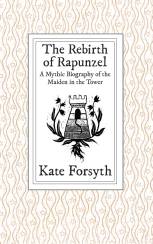 The Rebirth of Rapunzel was quite a different book for Fablecroft, being mostly non-fiction. What drew you to such a project? Is this an avenue that you’re interested in Fablecroft continuing to explore?
I blame Sean Williams for this – the thing is, writers are pretty good at what they do, even when the writing they are doing is compiling research. I read Sean’s PhD exegesis on matter transmission (which was awesome) and it made me think about all the fantastic authors I know who have done / are doing creative PhDs, and wonder if any might have similar works on their own topics that they might like to see published. Funnily enough, there are quite a few of them! I still hope to be able to do Sean’s exegesis, and I have a couple of others in my hands for consideration as well. I’m not sure it’s a terribly financially viable project, but it’s certainly one I’m enjoying.
What Australian work have you loved recently?
My favourite question! I have list… Vigil by Angela Slatter is fantastic and I’m excited to see where she takes the character next; I thoroughly enjoyed CS Pacat’s Captive Prince trilogy; I was delighted to see a new instalment in Tansy Rayner Robert’s superhero world with the story “Kid Dark Against The Machine”; revisiting Livia Day’s Café La Femme series last week was great fun; I FINALLY read Garth Nix’s Sabriel series this year (I know, I can’t believe it took me this long either!); Welcome to Orphancorp by Marlee Jane Ward was astonishingly good and I’m so glad I got a story from her for In Your Face; Magrit by Lee Battersby is perhaps the darkest and best children’s novel I’ve ever read; and this year I read for the WA Premier’s Book Awards, so powered through several dozen Aussie YA books too, which I can’t really discuss. But check out my Goodreads page and ActiveReviews to check out what I’m reading!
Which author (living or dead) would you most like to sit next to on a long plane trip and why?
This is actually a really hard question, because how do you pick just one?! Hmmm. Okay, I’ll go with Anne McCaffrey, because she’s been my best and favourite for such a long time, and I wish I’d had the chance to meet her.
2016Snapshot: Paul Weimer
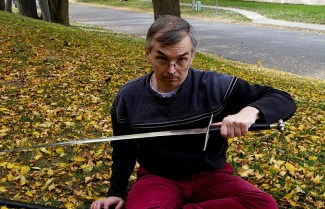 An ex-pat New Yorker living in Minnesota, Paul Weimer has been reading sci-fi and fantasy for over 30 years. An avid and enthusiastic amateur photographer, blogger and podcaster, Paul primarily contributes to the Skiffy and Fanty Show as blogger and podcaster, and the SFF Audio podcast, as well as other places. If you’ve spent any time reading about SFF online, you’ve probably read one of his blog comments or tweets (he’s @PrinceJvstin).
You’ve got a story coming out soon in Fox Spirit Books’ Eve of War – congrats! What’s it about and how does it feel to be in this anthology?
Actually the anthology is out now! The Eve of War anthology, a follow up to the TALES OF EVE anthology, looks at women in combat and war.
My story is called “The Crossing” and is a low fantasy sword and sorcery fantasy about a commander faced with the difficulty of defending a kingdom already on the ropes against an enemy that…well, that would be telling.
How does it feel to be in such an anthology? I don’t write enough fiction, and my fictional path is much slower than my non-fictional path. So it feels good, very good, to be in an anthology with the likes of Juliet McKenna and Adrian Tchiaovsky, among many other worthies.
A lot of people were sad to see SF Signal close, a venue that you had a lot to do with and which Australians often felt supported by. How are you feeling about this change, and has it actually changed the way you interact with or think about the SF scene yet?
I am still coming to terms with the loss of SF Signal. It was sudden and surprising, even to those of us relatively on the inside. I had been part of SF Signal for over 6 years at the time of its closing. Although The Functional Nerds had been the first venue to, in the words of Hamilton, to give me my shot, it is at SF Signal that my voice found audience, with Americans, Europeans, and as you say, Australians. And in turn, especially through Mind Melds, I became more connected with people across the world.
I do feel that the loss of that major venue has changed my voice, somewhat, and its a void in the community. SF Signal WAS a major clearinghouse for a lot of SF news and information, as well as having features of its own. Not having it there as a hub has made my personal mission of linking stuff on the internet a little harder, and its made me realize how fragile this community can be when a major venue goes silent.
As part of SF Signal you wrote essays and engaged in the genre really thoughtfully. Do you have plans to keep doing so?
As a matter of fact, YES. I’ve written one essay already for Tor.com, and I am also doing work for BN Sci Fi. And of course, I write reviews and columns for Skiffy and Fanty. SF Signal’s departure from the scene means that my work is more spread out, but looking at my to-be-written pile, it’s not reduced. If anything, I have more to write than ever!
What Australian work have you loved recently?
Although they came out a few years ago, I’ve been delving into the early Pellinor novels of Alison Croggon (recommended to me by author Courtney Schafer). I’m happy to broaden my horizons, as most of the fantasy I’ve read out of Australia has been by men (Ian Irvine in particular). So as part of my mission to read more women and support women writers, getting in an Australia connection keeps me up on the work at the antipodes.
Also in that vein, there is fantastist Ben Peek, whose The Godless and Leviathan’s Blood are extremely interesting epic fantasy. How can I, map lover and digital map maker, resist a book with a cartographer as a main character?
Does the anthology work of Jonathan Strahan count? If so, I have been lately extremely enjoying his anthology work like Reach for Infinity and his Best of the Year series, and I am looking forward to digging into his big fat anthology on Alastair Reynolds soon.
Which author (living or dead) would you most like to sit next to on a long plane trip and why?
Long plane trips are not something I enjoy, and only take when I have no other choice (like my November trip to Rome, and my 2014 trip to London, and when I go to Helsinki next year). Being stuck inside a flying box is not my idea of a good time. So if I had an author to sit next to me and talk to, and keep my mind off of the rigors of plane travel, that would be most excellent. I’d want someone intelligent, well spoken and personable. And someone whose work I love, so that at the very least I can talk to the author about that. So I’d go with Octavia Butler.
Crossposted, along with all the other 2016 Snapshots, to the Snapshot blog.
2016 Snapshot: Lucy Sussex


Lucy Sussex was born in New Zealand. She has published widely, having edited five anthologies, written five short story collections, and the award-winning neo-Victorian novel, The Scarlet Rider (reprinted 2015). Her Blockbuster!: Fergus Hume and the Mystery of a Hansom Cab (Text) won the 2015 Victorian Community History Award.
The pic shows Sussex and Prof Chris Browne in costume for a Fergus Hume walk, last July, for Rare.
One of your most recent works is Victorian Blockbuster: Fergus Hume and The Mystery of a Hansom Cab, which has been getting some good reviews around the place. What brought you to Hume’s story, and what kept your interest as you researched him and his work?
Actually Blockbuster!, because Victorian means different things in different contexts. Yes, good review in Washington Post, to my astonishment.
I knew about Hume when I was working as a researcher for Stephen Knight on his history of crime fiction in Australia. There was clearly a story behind the HANSOM CAB becoming the best-selling crime novel of the 1800s, but it wasn’t to be found. Then the digitisation of newspapers revealed the tale–and what a saga it was. Brilliant marketing, bank fraud, copycat murder, gay blackmail. It got more and more interesting as I joined the dots
Similarly, you’ve done a lot of work in investigating female crime writers of the nineteenth century. What value do you see in this ‘literary archaeology’?
We really ought to know about these women, how tough, productive and simply talented they were. They’d been elided from the HIStories. I put them back in.
Have you discovered things that surprised you?
Well, Mary Fortune, who wrote the longest early crime serial (1868-1908) in Australia, was a bigamist with a career criminal son. That completely upsets notions of Victorian values.
You’ve written in a variety of genres – including crime, fantasy, science fiction, and non-fiction varieties too. Is there one genre you’re hoping to write more of in the coming years?
If I can get my hybrid crime/fantasy/quantum physics/neo-Victorian novel into print, I’ll do more of the same
Are there genres that you feel you haven’t explored sufficiently yet?
See above.
What Australian work have you loved recently?
I like a lot of stuff I’ve seen recently. Liam Moriaty. Kaaron Warren. The late lamented Paul Haines.
Which author (living or dead) would you most like to sit next to on a long plane trip and why?
Probably Sensation novelist Mary Braddon, an ex-actress who had five illegitimate children with her publisher and managed to be a best-seller in the middle of the Victorian era. She was fun.
Crossposted to Australian Snapshot, along with the other interviews!
2016Snapshot: Cheryl Morgan

 Cheryl Morgan is a writer, editor, critic, publisher, radio presenter and expert on trans history. She has no idea how she managed to end up with so many interests, and often wishes that there were more hours in the day, but at least she is never bored. Cheryl is of Welsh ancestry and currently lives in the English portion of the Disunited Kingdom. She has formerly lived in Australia and California, and very much wishes she had been able to stay in either of those places.
At a recent con in Finland (so jealous) you presented a panel on Trans Representation. Do you think that panels along these lines have become easier to present, or more generally accepted, in the last few years? Does it seem like people are more interested in discussing genuine diversity of gender?
I’m not sure. I remember doing a trans panel at the Toronto Worldcon in 2003 and there were something like 8 people in the audience. LGBT panels at Finncon and Archipelacon have been packed out. I was a bit worried about a trans-only one, but we got a very good crowd (I have asked for numbers). So from that point of view things are looking good.
On the other hand, those panels happen because the Finns trust Suzanne van Rooyen and I to do a good job, and they have firm evidence of demand. I’m not sure that the same panels would work elsewhere. My local convention, BristolCon, doesn’t have them, but that’s because it is a one-day event with only two program rooms and an enormous amount of competition for program slots. I don’t know whether an Eastercon would run such a thing.
Something you’re currently involved with is presenting a show on the radio station Ujima. What does the radio show let you do? And what’s it like preparing for a regular show like that?
Being a presenter on Ujima is a great privilege. The station broadcasts mainly to the Afro-Caribbean community in Bristol, and I certainly don’t fit that demographic. However, the station management, and in particular my Producer, Paulette North, have a commitment to diversity. Having a trans woman fronting a women’s interest show appeals to them.
My main job on the show is to showcase feminist issues, which I am very happy to do. I’m also encouraged to do features about books. That enables me to run interviews with many famous authors, and a bunch of talented locals. I have to branch out of the SF&F field occasionally for the show, but that’s probably good for me. Finally I have to fill my diversity role by talking about LGB, and particularly Trans, issues.
A two hour radio show might not sound like much work, but it is. It can take me a couple of days to find all of the guests and research questions to ask them. I also have to decide what music to play. And although the show is only 2 hours long the studio is in Bristol, so doing the show takes up much of the day with far more travel than air time.
It is, of course, tremendous fun. Had you told teenage me that I would one day have my own radio show I would have laughed at you and said that dreams like that don’t come true.
Thanks to the hard work of Juliet McKenna and her colleagues, we are starting to get somewhere with the VAT issue. It is now legal to sell ebooks without charging VAT if you email the book to the customer rather than allow them to download it direct from a website. I know that sounds stupid, but that’s the way government bureaucracies work. In the longer term the EU does want to sort this out, but as 52% of my fellow Brits have just thrown a gigantic spanner in the works no one has any idea of over what timescales that will happen, or if the UK will be affected.
Meanwhile I am definitely planning to do more books. I can use Kickstarter and Patreon now. Watch this space.
What Australian work have you loved recently?
Well obviously I am very fond of Letters to Tiptree and Galactic Suburbia, but that’s kind of incestuous. I do have a copy of Angela Slatter’s Of Sorrow And Such waiting to be read, and I’m looking forward to that. What I have read is an early ARC of Foz Meadows’ debut novel, An Accident of Stars. I’m slightly reluctant to pass judgement as the book was clearly still in the process of being edited, but there’s some really good material in there and I very much like how Foz handled the trans character.
Which author (living or dead) would you most like to sit next to on a long plane trip and why?
I would appreciate a chance to catch up with Neil Gaiman, because although we have known each other for decades he’s so much in demand that when we are in the same place together we rarely get time for more than a few minutes chat. Then again, knowing Neil he probably looks forward to long plane trips as an opportunity to get some writing done.
So I think I will go for China Mieville. We have a lot of interests in common besides fiction. Also all of the other women on the plane would be incredibly jealous of me.
Crossposted, along with all the other Snapshot interviews, at the Snapshot blog.
2016 Snapshot: Jonathan Strahan


Jonathan Strahan is an award-winning editor, anthologist, and podcaster. Since 1997 he has has edited more than fifty anthologies including The Best Science Fiction and Fantasy of the Year, Infinity, New Space Opera, and Eclipse anthology series. He is the recipient of the World Fantasy Award, a three-time winner of the Locus Award, a four-time winner of the Aurealis Award, and an ten-time Hugo Award nominee. He is the reviews editor of Locus, and the co-host of The Coode Street Podcast. He lives in Perth, Western Australia with his wife and their two daughters. (Photo by Cat Sparks; used with permission.)
Your new anthology of originals is Drowned Worlds, with authors confronting the prospect of, as the title suggests, Earth drowning. What led you to imagine such a theme for an anthology, and has it turned out like you expected?
Every book changes as you work on it, shifts and changes in your hands before you finally deliver it to the publisher. A lot of that has to do with communicating with authors and how they bring their own worldview to the challenge you’ve placed before them. Drowned Worlds is a good example of this. It started out simply as a book of stories that featured inundated landscapes. I’d recently read Paul McAuley’s story “The Choice”, which features a drowned England, and then picked up a copy of Ballard’s The Drowned World, which is hypnotic, powerful and crazy. I thought a book of stories in that space could be fun. That was my inspiration. It quickly became clear that the authors saw Drowned Worlds as a climate change challenge, and one story after another took us there. One even managed to do it by leaving the ‘drowning’ off camera, and showing us a parched landscape in a world where rising sea levels had radically changed everything. So it didn’t turn out at all like I expected. It didn’t even strictly hit the original theme, but I’m very happy with it. Why? I think it touches on a nerve, is timely, and shows what writers are focussed on right now. That’s a good thing.
You edited your tenth volume of the Best Science Fiction and Fantasy of the Year for Solaris Books this year. What do you see as the main value of such an endeavour, and what sort of audience are you imagining when you put the table of contents together?
The first book I edited was a year’s best anthology. That was back in 1997, so I’ve been doing this for nearly twenty years. I think the essential value of ‘year’s best’ anthologies as a project remains unchanged. They serve as simple one-stop shops for readers, where readers can find some of the best stories of the year in a single book. Given the incredible variety of places where stories get published, I think that’s valuable. I think they serve as books of record. There always is a varying number of ‘year’s bests’ being published, but collectively they tend to provide a good record of what the field has been doing over time. You wouldn’t want to rely on a single series to give you that overview, but collectively they do a good job of recording the history of SF/F. I think they also stand as one reader’s record of the history of the field. Gardner Dozois’ nearly 40 year long library of SF, my own 20 year long one, and others give readers a picture of the field from one perspective, which is interesting. And finally they can be a tool for change over long periods of time. An editor, if lucky, can mount an argument over many years about what excellence is in SF/F and that can have an effect. And, perhaps less pretentiously, they are pretty good reading value. As to what sort of audience? Hmm. I suppose a blend of me (we can only read from our own perspective after all), and an idealised notion of a reader who is interested in the SF/F field who has a broad taste. I edit a best science fiction and fantasy. By it’s nature, it’s a book less interested in definitions, more willing to tolerate ambiguity and strangeness, and the reader I imagine wanting my books is a reader who considers that a good thing.
Bridging Infinity is planned for later this year (2016), and Infinity Wars for next year. You’ve edited original anthologies, best-ofs, and author collections, as well as short stories for various venues. Do you see yourself continuing to work across a variety of projects for the future? Are there authors you’d really like to collect, or themed anthologies you’re desperate to pitch?
I do. I can’t imagine just doing one thing, but editing original anthologies, year’s bests, single-author collections, reviews and so on helps to keep editing fresh and new for me. In terms of authors I’d like to collect, there are so many! From Keith Roberts and Howard Waldrop, to Margo Lanagan and Elizabeth Hand, there are many many short fiction writers I’d like to see properly collected and presented to readers. I’m hoping Geoff Ryman’s “100 African Writers” project will also see more new books coming from the many African nations that are producing great writers. As to anthologies, I don’t know. I’m actually thinking on that right now.
What Australian work have you loved recently?
I’ve read a few things I’ve really loved. Greg Egan’s “The Four Thousand, the Eight Hundred” is a really powerful piece of science fiction that came out last December and should in my opinion have won all sorts of awards. Sadly, it hasn’t so far. I really enjoyed Angela Slatter’s debut novel Vigil, and just finished Garth Nix’s latest Old Kingdom novel, Goldenhand, which was smart and funny and moving and absolutely wonderful. I also loved James Bradley’s terrific novel Clade. There has been other stuff, but those stand out.
Which author (living or dead) would you most like to sit next to on a long plane trip and why?
I don’t know. I’m tempted to say Garth Nix, because he’s already a good friend, or Sean Williams. Um. Robert Heinlein, I think. Why? Because he was so fundamental to me as a young reader and young person growing up. I’d love to have been able to sit down and talk to him about his worldview and his books. I think a good long flight – hopefully in First Class – would give me a chance to talk to him about those stories that I loved so much and to get a feeling for the person behind the stories.
Crossposted to the Snapshot blog, along with all the other interviews.

 Randomly Yours, Alex