Snapshot 2012: Penni Russon

It was occasionally difficult to track. I decided that when Claire entered Sedge that it would be third person, to highlight a further disconnect (the waking dream), but also to make it really clear to the reader that a significant shift had happened. There was one scene where Claire and Clara occupy the same space and I had a lot of trouble deciding what POV that should be from!
Your trilogy from a few years ago, Undine, Breathe and Drift focussed on a teenaged girl and her discovery of magic. What drew you to working with this particular mythology, and bringing it into the modern world?
I grew up in Tasmania which is where Undine is set. I was fascinated by what it meant to grow up on an island – I am still curious about this, as I come to realise actually just how socially disadvantaged Tasmania is compared to Melbourne where I live now. Anyway, to me it seemed natural that magic would be linked to the ocean. I once commented on Twitter about experiencing ambivalence with regards to the ocean. Another writer scoffed (I’m paraphrasing), ‘The ocean makes me feel many things, but nothing so wishy-washy as ambivalent.’ But I am happy to embrace my wishy-washiness! I am fascinated by ambivalence, ambiguity, halfway states, where you linger between, not quite one thing or another. Undine is all about being halfway between – human and magical creature, love and like, the thing and the reflection of the thing and so the Undine myth (which is not literally in the novel) is a metaphor for this.
I love Margaret Mahy’s YA fiction, so I wanted to write something with “magic in the real world”. Writing Undine was a very organic process, I really didn’t understand much about the practical aspects of writing fantasy when I began. The Undine books are actually incredibly autobiographical in parts, many incidents in the books actually happened to me.
You’ve written both speculative fiction and what might be called mainstream YA as part of the Girlfriend series; do you see yourself having to choose between genres, or continuing to cross them, in the future?
I think all my books belong together, despite the genre crossing. They are really all about those halfway states, about what’s real and what’s pretend. In The Indigo Girls the girls go night surfing – this is very similar to the way Undine experiences power and her body. In Little Bird Ruby-Lee falls in maternal love with the baby she is babysitting, and then transfers these feelings onto the baby’s single father in a romantic way and then has to try and figure out what is real and what is part of her fantasy life. I don’t think I will ever tire of this theme
What are some works by Australians that you’ve been enjoying recently?
I loved Queen of the Night, Leanne Hall’s excellent sequel to This is Shyness, with its comic book aesthetic. The FitzOsborne’s at War, the third book in Michelle Cooper’s Montmaray trilogy, made me cry and smile and laugh – these are historical fiction, though Montmaray is a made up island. I really admire Cooper’s world building, the way she stitches her fictional world and history together so seamlessly. Also this year I loved Foal’s Bread, which I read as magical realism.
Also I am reading Emily Rodda’s Fairy Realm books aloud to my six year old! Emily Rodda and I will be on a panel together at the Melbourne Writer’s Festival – my daughters are very excited!
It’s been two years since the World Science Fiction Convention was held in Australia. How do you think the speculative fiction scene in Australia has changed since then?
Well, the biggest change in Australia in the last two years is the loss of Borders and Angus & Robertson, the “middle” market, and at the same time many publishers are dropping their sales staff, instead having booksellers go to the website to select stock for their stores. I think as a result we are going to increasingly see a bigger divide – a lot more trashy trash, and some really interesting, experimental “literary” spec fic that works hard to catch a bookseller’s eye. Perhaps as a result of this, I think publishers are more focussed on “The Pitch” than on “The Talent” (though I don’t think a talented author will ever be overlooked). Still, it’s easier for publishers to sell books that can be summed up in a sentence, not just to customers, but to their own marketing departments, to booksellers, to reviewers, to overseas markets. It was really hard for me to sum up Only Ever Always in a sentence, and the exercise seemed artificial, nothing to do with marking art. It was actually the rights manager, Angela Namoi who crystallised it by describing it as ” a meditation on grief”. Of course the question I started out asking was where do stories come from? And Angela made me realise I had answered that question: “from lack, from absence, from loss. From the spaces between where the lost things dwell.”

This interview was conducted as part of the 2012 Snapshot of Australian Speculative Fiction. We’ll be blogging interviews from 1st June to 8th June and archiving them at ASif!: Australian SpecFic in Focus. You can read interviews at:
http://thebooknut.wordpress.com/tag/2012snapshot/
http://kathrynlinge.livejournal.com/tag/2012snapshot/
http://helenm.posterous.com/tag/2012snapshot
http://bookonaut.blogspot.com.au/search/label/2012Snapshot
http://www.davidmcdonaldspage.com/tag/2012snapshot/
tansyrr.com/tansywp/tag/2012snapshot/
www.champagneandsocks.com/tag/2012snapshot/
https://randomalex.net/tag/2012snapshot/
http://jasonnahrung.com/tag/2012snapshot/
Snapshot 2012: Tansy Rayner Roberts

So you’ve just had the final book in your Creature Court trilogy published by HarperCollins. How did that feel and what’s been the reaction to it?
It was a huge relief to get the book out there and have the trilogy be complete – and while I was expecting pangs of loss as well, they haven’t arrived yet, possibly because it’s so long since I completed the third book and left the characters behind. I’ve been delighted by the response to the books – a bunch of award nominations certainly help a nervous author feel like they’re doing the right thing! And very happy that many of my loyal readers seems to think that it ties up well with the third book. Would be terrible to stumble at the last post…
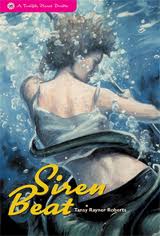
I understand you’re currently working on a novel-length treatment for Nancy Napoleon, the character first introduced in the novella “Siren Beat” as the supernatural protector of Hobart. Aufleur of the Creature Court books were set in a heavily fictionalised Rome, but you took a fairly faithful approach to Hobart in the novella. What is it like giving your home town the fictional treatment? Does it liberate or restrict you?
Faithful apart from the kraken in the Derwent, the Fates running a pub in Salamanca Place and the sexy sea pony, you mean? One of the things I love most about urban fantasy is the way that it conveys a strong sense of a realistic location – it’s one of the best aspects of the crime genre that it has taken on as its own – and I definitely wanted to Just Add Magic to Hobart for this particular series. I actually find it quite intimidating to write work set in Tasmania rather than in imaginary worlds, which is part of the reason I avoided it so long. There’s a freedom to it but it can be stressful too – at one point I destroyed a very specific area of the city, part of which is where friends of mine live, and I actually felt incredibly guilty about that, as if it might have some kind of sympathetic magic effect on the real population.
Another danger is that I know the area so well but don’t necessarily know what parts I’m taking for granted rather than describing properly, which is where good beta readers and editors come in!
The Creature Court is set in a secondary fantasy world, Nancy Napoleon in a recognisable Australia. Your short stories have bounced between near future ‘real world’ settings and fantastical ones. What sort of settings do you see yourself working in for the future? And is there one genre that is most likely to keep you, or do you anticipate genre-crossing and -blurring?
The lovely thing about science fiction and fantasy is that I don’t have to choose, not at all. If one piece of work is especially successful then I have no qualms about doing more of that sort of thing, but otherwise I prefer to keep my work as diverse as possible, to keep me entertained. Lots of genre crossing and -blurring, as much as possible! BRING IT.
Right now, for instance, in an only slightly chaotic tangle of novel and short story projects, I am writing steampunk Victoriana gothic with faeries and robots, contemporary ghostbusting comedy, genderbending science fiction, smutty superheroes, and a boarding school time travel romp (or tragedy; haven’t decided yet). The four shorts I’ve written so far this year (I am RICH in short stories) are post-apocalyptic surrealism about Wuthering Heights, magical realism with talking kangaroos, horror-fantasy with imps, and a war veteran romance set against the backdrop of a famous children’s fantasy novel. I really don’t like to be tied down…
Which Australians’ work have you been loving recently?
So much great short fiction! I have a soft spot for Narrelle M Harris’ Twelfth Planet collection Showtime, though not remotely unbiased because I helped edit some of the stories. I really enjoyed Ishtar, featuring stories about the goddess by Kaaron Warren, Deb Biancotti and Cat Sparks – some of the best work than any of them have ever done, plus the theme itself makes me so very happy. It’s a great book to read for big bad mean goddess action. In the comics world I am excited to see Nicola Scott back drawing for DC Comics, and the title in question Earth 2 is looking pretty fantastic so far. When it comes to art, I want to hug every single thing that Kathleen Jennings draws, and I was particularly impressed with her work on the Fablecroft book To Spin a Darker Stair.
It’s two years since Australia hosted the WorldCon. What do you think are the biggest changes to the Australian speculative fiction scene in that time?
Are we absolutely sure that it’s only been two years? I feel like I blinked and missed them. The rise of podcasts is something I have greatly enjoyed, but that was already well underway when the Worldcon happened. I think the interest in e-books from readers is probably one of the biggest changes, but we’re still yet to see how that pans out for Australian publishing. And of course, we’ve been losing bookshops hand over fist across the country. Sad, and a sign of a new paradigm heading our way. If only we knew exactly what it looked like…
 This interview was conducted as part of the 2012 Snapshot of Australian Speculative Fiction. We’ll be blogging interviews from 1st June to 8th June and archiving them at ASif!: Australian SpecFic in Focus. You can read interviews at:
http://thebooknut.wordpress.com/tag/2012snapshot/
http://kathrynlinge.livejournal.com/tag/2012snapshot/
http://helenm.posterous.com/tag/2012snapshot
http://bookonaut.blogspot.com.au/search/label/2012Snapshot
http://www.davidmcdonaldspage.com/tag/2012snapshot/
tansyrr.com/tansywp/tag/2012snapshot/
www.champagneandsocks.com/tag/2012snapshot/
https://randomalex.net/tag/2012snapshot/
Snapshot 2012 is HERE!
The Australian Speculative Fiction Snapshot has taken place three times over the past eight years. In 2005, Ben Peek spent a frantic week interviewing 43 people in the Australian spec fic scene, and since then it’s grown every time, now taking a team of interviewers working together to accomplish! In the lead up to Continuum 8 in Melbourne, we will be blogging interviews for Snapshot 2012 conducted by Alisa Krasnostein, Kathryn Linge, David McDonald, Helen Merrick, Ian Mond, Jason Nahrung, Alex Pierce, Tansy Rayner Roberts, Tehani Wessely and Sean Wright. To read the interviews hot off the press, check these blogs daily from June 1 to June 7, 2012.
As we celebrate the breadth and depth of the Australian spec fic scene, 2012 Snapshot is also a bittersweet time and we take the opportunity to remember two well-loved members of the community who sadly passed away in the past year: Paul Haines and Sara Douglass.
You can find the past three Snapshots at the following links: 2005, 2007 and 2010.
Let the stories begin…
Rapunzel’s Revenge: a graphic novel
 Fairy tales in the wild west. Yes indeed.
(I could say something here about the idea of the wild west being as much of a fairy tale as Rapunzel herself, but I’ll leave that for another day.)
This one is c/-Tansy, and I’m very pleased to have got hold of it. Hale expands on the role of Mother Gothel, and although she’s still a mean nasty magicy person, she’s much expanded: she has a political role in the surrounding lands, there’s a purpose of sorts to her magic, and there seems to be more of a purpose in her taking Rapunzel, too.
Rapunzel herself is way, way more interesting than most of the stories make her, which is unsurprising. She’s learning to lasso from a young age – not with her hair at that stage, that comes later – and she’s much more rounded in terms of motivation, naivety mixed with determination, and so on. She rescues herself from her tower (which is a most awesome tower), she rescues herself and others in a variety of situations, and she has interesting relationships with a bunch of other characters.
The other characters are a really nice part of this story. Rapunzel’s companion for much of it is Jack (who has a goose, and a bean…), who is NOT WHITE – as are a number of the other characters. Jack is quite nuanced, I think, moving from flighty schemer to serious and earnest – in a good way though. The pair run into a variety of law-types and rogues, and while I think all of the authority figures (except Mother Gothel herself) are male, a good proportion of the others, who help or hinder on the way, are female – just because they could be and it really doesn’t matter.
The pictures are fun. Lassoing with hair looks… painful, actually. Also, I loved Rapunzel’s costumes. She basically starts off in a dress that she wears for four years; then she’s in what looks like a nightie, with a belt and awesome green tights – she looks like Pippi Longstocking; she gets into pants eventually, but even when she’s in a ball gown (in which she is uncomfortable), she manages to fight effectively. Which is fun.
My wall

We went to the UK in 2009 to ride our bikes. On the wall, as of today, is a selection of our very favouritest pictures from that trip.
(The small pics closest to the side are from our first trip; the gilt-framed picture is a print of a Blaeu map.)
Comics: Wonder Woman and Birds of Prey
 So yes, I’m getting me some graphic novel lovin’.
I don’t have much background in Wonder Woman and her universe; I knew that her people are Amazons, and that was about it. I don’t know whether the origin story posited here was partly or totally a reboot, etc etc. It kinda doesn’t matter, actually, at least not for my enjoyment of the story. There were obviously bits that didn’t have the emotional impact that it might for long-term fans; I could see it was devastating when friends got hurt, or turned on Diana, but I didn’t feel it as much as I might have. And I certainly didn’t have the GASP reaction that I bet others did when the Big Nasties were revealed. t did feel it, though, when the truth about Genocide was revealed; and I certainly got cranky at Zeus and his great big awesome plans for replacing the Amazons.
So yeh, thoroughly enjoyed this. The story is dramatic and action-filled and angsty in good ways. It’s not heavy on character development, but that’s partly what the pictures are for I guess. And I liked the pictures. Yes Wonder Woman has no pants, but she’s rarely posed in such a way that that’s an emphasis, or a sexy sexy thing. And there is an emphasis on the violence of what she’s confronted with, and the fact that she gets a beating is not shied away from.
Going to get me more Gail Simone WW, I think.

Speaking of Gail Simone…
This is clearly part of an ongoing story about the team called Birds of Prey, but it also works as a stand-alone story about them and their missions. I’ve not read any stories before that feature teams of superheroes going up against super villains, and have really only seen this on the screen in X-Men. I really enjoyed the way that the pictures allowed the fights to be shown both in close-up and panoramically, encompassing the entire fight – something that movies manage and that books just can’t get across in words with much impact.
I liked the characters a lot, even though I struggled to keep track of a few of them (they kinda melded together). However, Oracle really was my absolute favourite: a former Batgirl, now in a wheelchair (… well, in a wheelchair here; I know that NOW they’ve rebooted it and she’s able-bodied again) and with awesome techno-fu. And defending her team from a usurper. She’s brilliant.
Again, I really enjoyed the art – some ridiculous costumes but some not, and usually dealt with as if they’re practical, if that makes sense. I enjoyed the story, and I enjoyed the interactions between the characters too.
Lady rock
This is my new, somewhat ironic name for rock at the harder end of the spectrum that has at least a female vocalist. It’s not perfect, it’s hardly classy, but you know; some days it’s what you come up with, and it sticks. Anyway, a few weeks ago I wrote about how I seemed to have very few lady rockers on my playlists, and that I was looking for recommendations. I got quite a few, which was awesome! … and I haven’t managed to audition all of them yet, because I’m both occasionally slack and frequently time poor. (Why am I writing this, then? because this is how I prioritise my time.) Anyway, I thought I would report back my finds so far.
My post was inspired at least in part by listening to the Superjesus, only one of whose songs I owned at the time, and that from an old JJJ compilation. So I bought Sumo II, and I am totally loving it. Their lead singer rocks madly! I’ve also bought the iTunes essentials album of Garbage, which includes some songs I’d not heard before, and rediscovering the glory that is “Cherry Lips” is worth quite a lot. Of other stuff that I already knew but didn’t own, I’ve also bought the Divinyls’ “Science Fiction,” because I heard it on the radio and remembered how much I liked it.
Then there’s the new stuff. Let me go alphabetically, which means starting with The Breeders, who were care of Tansy. I previewed a fair bit of their stuff and in the end bought four songs off the album Last Splash. While I like the idea of albums the reality is I don’t listen to them consecutively most of the time, so there seemed little point in buying the whole lot when most of them didn’t immediately grab me. “Cannonball,” though?
And “Saints”? BRILLIANT.
Next, Butterfly Boucher. I did not find her via anybody I know. Instead, I heard “5678!” as part of the playlist on a Qantas flight recently…
… previewed the rest of the (eponymous) album on iTunes, and bought the whole thing. And I love it. It doesn’t really scratch my rock itch (er… push my rock buttons? Float my rock boat?), with maybe the exception of the fine “I Wanted to be the Sun,” but… I just love it.
Courtesy of Helen I listened to George’s “Release” and absolutely went mad for it. This is the sort of song I’d listen to on repeat for my walk to work. I bought the rest of Polyserena, the album it’s on, and to be honest the rest of it’s not working for me quite as much. But I’m still willing to give it a go.
And… actually that’s all I’ve bought. I’ve trialled a few of the others that were suggested and they weren’t really my thing. And there are still some, as I said, that I haven’t got to. It’s an evolving thing.
Galactic Suburbia turns 60 and has cake
 In which we celebrate our 60th episode and Peter MacNamara Award for Excellence win with cake, yarn and superheroes. For best results, consume this podcast with fabulous cake and/or sock yarn. You can get us from iTunes or Galactic Suburbia.
News
Aurealis Awards:
Sturgeon shortlist
50% female speakers at a tech conference and how it was done
The Hugo Packet is released
Kirstyn examines her 23 year old self through the lens of her current feminist self.
Marvel Comics follows Archie’s lead with a gay marriage between Northstar and Kyle: the news was launched by Whoopi Goldberg on The View.
Chicks Unravel Time announced from Mad Norwegian Press and Tansy is in it
What Culture Have we Consumed?
Alex: The Monster, Garth Nix and Sean Williams (Troubletwisters #2); Agatha H and the Clockwork Princess, Phil and Kaia Foglio; Birds of Prey: Dead of Winter; Wonder Woman: Rise of the Olympian
Tansy: Discount Armageddon by Seanan McGuire, Made in Dagenham
Alisa: Black Heart by Holly Black; The Avengers movie
Please send feedback to us (especially about any cake you may have eaten or yarn you may have knitted with this podcast) at galacticsuburbia@gmail.com, follow us on Twitter at @galacticsuburbs, check out Galactic Suburbia Podcast on Facebook and don’t forget to leave a review on iTunes if you love us!
Reading comics
I don’t. I never have, really. Someone gave me a graphic novel of the first Batman movie many, many moons ago and I loved it, but I never sought out anything else like it. At that stage I regarded comics as all Biff! and Pow! and having none of the sophistication I saw in that novel. No idea whether I was right then; I do know I wouldn’t be right in thinking it today.
I read one serialised graphic novel/comic strip: Girl Genius. For those late to the party, I discovered Girl Genius with issue 9 in the Hugo Packet in 2010. I read most of issue 9… then went back to the very start, online, and read the entire saga. (One issue = one year of pages appearing Monday, Wednesday, and Friday.) I now own all of them in hard copy, and the novels as they appear… which is rather indicative of the idea that I do like comics. I have also enjoyed Delilah Dirk and the Turkish Lieutenant, which Tehani pointed me towards. I’d read more of that series, but the one hard copy available is going to cost me more in postage than the book itself, so… yeh. Not so much. (And I read Questionable Content, too, now that I think about it… hmmm, this is rather indicative, isn’t it?)
My last request post, for women who rock, was quite the success – and I’ll be posting an update on that soon, once I’ve auditioned a few more bands/singers. So I’ll do it again. I know Tansy is probably already in the comments section telling me which DC comics to hurry up and catch up on, but I’d love a wide variety of suggestions! I’m happy to read online, obviously; in fact I’d probably prefer it, or at least electronic copies, until I decide whether I love something or not. I’d prefer a lack of graphic/gratuitous violence and sex, and if you’re going to preface your suggestion with “You may get annoyed with the portrayal of women but…” then please rethink your comment 🙂
Robespierre: the democrat, the radical
It’s a running joke in my Revolutions class that I have a little history-crush on Peter McPhee – one that I do all I can to play up, in all honesty. Robespierre has not, however, been my particular revolutionary crush; that’s Danton. After reading this biography, I’m half tempted to switch my allegiances… but the larger than life Danton is still more alluring than the somewhat severe Robespierre.
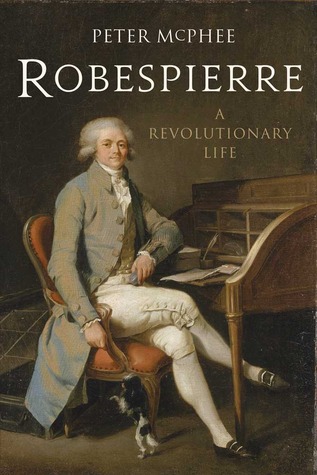
Anyway, this biography is exactly what I was hoping for. It’s clearly written and easy to read; I don’t know accessible it would be for someone with zero knowledge of the revolution, but I’m no expert and I had no trouble following it. It follows Robespierre’s life chronologically – indeed giving a bit of background on his family too – and provides what felt like an appropriate amount of background and contextual information on the realities of life throughout France, reasons for revolution, and attitudes among different groups for the duration of said revolution.
I’ve not read any of the other numerous biographies of “the Incorruptible,” and McPhee gives an interesting overview of them in his final chapter. I know that some have tended towards utter condemnation, but I didn’t realise that others turned into panegyrics. This one certainly comes down largely in favour of Robespierre as a man and a politician, demonstrating quite conclusively how consistent his ideals and desires were, even predating the revolution of 1789 that made at least some of those ideas acceptable. McPhee doesn’t shy away from the fact that lots of people died in the Terror, but does point out that in no way can the majority be laid at Robespierre’s feet – he was horrified by the actions of some deputies in rural France. He also doesn’t shy away from the likelihood that Robespierre was in fact going too far, by mid-1794, and may even have been tending towards paranoia.
If you’re at all interested in this period, or in how a leader can influence events, this is a really brilliant bio.

 Randomly Yours, Alex