Lustlocked
 This story was provided to me by the publisher at no cost.
An amusing, light and fluffy story.
It’s the second story to be set in the restaurant Sin du Jour, and I’ve not read the first; that didn’t seem to be too much of a hindrance. I think I missed a little bit of the tension between characters (and initially I thought the two main characters were lovers, not housemates), but the cast is reintroduced well enough that I had no trouble following the various interactions.
The basic premise is that there’s going to be a goblin wedding – well, the crown prince of goblin-dom is marrying a human – and this version of goblins is that they are the bright and beautiful… in fact most of them are Hollywood celebrities. You already know who the Goblin King is (yes, really, Wallace went There); I’m not entirely sure who the queen is meant to be: she’s described as the most famous supermodel, and my mind went to Elle Macpherson, but maybe that’s just because I’m Australian? Perhaps it could be Naomi Campbell? (ETA: Thoraiya tells me a certain Goblin King is married to supermodel Iman. Oops.) Anyway, such beautiful creatures naturally require an extravagant wedding aaaaaand then things go bad. Some of the story is around preparing for the wedding (goblins eat jewels, of course) and some of it is dealing with, um, rampaging lusty reptiles. So half almost cosy culinary fantasy, half magic/mayhem fantasy.
Don’t read this for deep philosophical reflections. Do read this for a bit of banter, a bit of snark about celebrity, and people getting themselves out of sticky situations in amusing ways. It comes out from Tor.com in January.
Ballad of Black Tom
This novella was provided to me by the publisher at no cost.
 I may not have the context with which to really comment on this story – I have a bit of knowledge of America in the 1920s but not all that much; my understanding of race relations in America is slightly better than superficial but not exactly deep. Also I have next to no knowledge of HP Lovecraft’s work
With all of that said, I really enjoyed this story, so as someone without masses of history about the period of the story that’s a pretty good recommendation.
The story is split in two, with two different narrators – which actually really surprised me, so that’s kind of a spoiler I guess. The first half is told by Tommy Tester, a young black man who makes a living by hustling, basically. He wears a musician disguise to be both seen and unseen; he gets jobs that need that sort of look. One day he encounters a wealthy white man, Robert Suydam, and things… get weird.
The second half of the story is from the perspective of a white policeman, Malone, whom Tommy encounters early on and then later. He’s not entirely a stranger to unnatural occurrences, and gets more involved in the weird stuff Tommy and Suydam conjure up than he would perhaps like.
The plot isn’t especially intricate but it’s certainly compelling enough to keep me turning the pages. On top of that is what (with all the caveats above about my knowledge of the period) I found to be a very interesting commentary on race relations. The (white) police treatment of black people in Harlem wasn’t a surprise, dealt with bluntly but with compassion I thought; Suydam’s manipulation of race resentment struck me as all too plausible (hello living in Australia in 2015). I don’t know whether the attempt to make Malone sympathetic to the plight of non-white immigrants was an attempt at not making all whites evil, or whether it reflects reality; possibly it’s a case of both being feasible? Makes the story that much more compelling, anyway.
Lastly: Ma Att? Brilliant.
Certainly recommended.Th
Manners and Mutiny
 This book was provided to me by the publisher at no cost.
Firstly? I do not love this cover. It’s far too old to be Sophronia, which I don’t remember being a problem with the other covers. The crossbow is appropriate, at least. I am also not wild about the yellow.
Fortunately I do not tend to judge books by covers; at least, not books in a series I have been enjoying and whose author I tend to trust.
Return of the Jedi
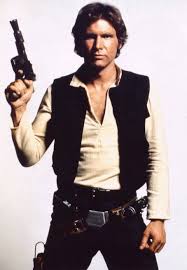 Return of the Jedi: things that were quite good:
- “The emperor is not as forgiving as I am.” Way to go making them both even MORE terrifying.
- I still like the costume progression for Luke.
- The CGI band at Jabba’s is… I’m conflicted. I like the music! BUT.
- Leia saves Han. WIN.
- OMG “I’m all right pal; I’m all right” Han and Chewbacca SO CUTE.
- Han.
- The PAIN of the beastkeeper. You made one of the supposed baddies grieve so poignantly!
- The whole rescue from Jabba is basically a heist plot. I love it.
- The imperial guard. Dead awesome.
- Yoda is the most compassionate and benevolent puppet ever in the history of puppets.
- GENERAL Solo. Heh.
- The speed bike chase is very awesome.
- Ewoks: conflicted. Cute! Resourceful!
- “It’s against my programming to impersonate a deity.”
- Han’s nobility: he apologises to Leia!
- The conflict within Vader is made genuinely more complex with deeper backstory.
- Another great gift to modern culture: “It’s a trap!”
What were you thinking, George?
- The CGI band at Jabba’s… the animation is horrid and so unnecessary.
- Also unnecessary: Jabba’s treatment of women. Ugh. Lazy writing, George. It’s not like we can be under the impression that he’s a good guy.
- Torturing droids, George? Really?
- What an ignominious end for Boba.
- “FROM A CERTAIN POINT OF VIEW,” George? You’re making Obi-Wan a relativist? a post-modernist?? Just no.
- Also: Luke’s feelings for Leia “do him credit”?!? How on earth do you figure that?! Ew.
- James: NO, not ew, Obi-Wan is talking about Luke having brotherly feelings towards his sister! Not anything bad!
- Alex: whoa. That’s thirty-odd years of grossed-out-ness being turned on its head.
- George. Look, George. Tax collectors, George? No one liked the Trade Federation in Phantom Menace, George, and the idea that they ought to appear on the bridge in this film? No. That’s the worst retconning yet.
- Apparently I imagined that this was retconning! They’ve always been there and I had either not noticed (possible) or I was assuming George was being evil because prequels! Sorry George. My mistake.
- Ewoks: conflicted. Little bit too much like you’re going with Noble Savages. Some of the markings etc are a bit too much
 like stereotypes of some earth cultures. Made me queasy.
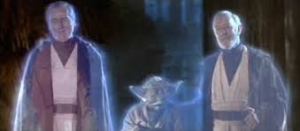
 - I cannot adequately express, George, how annoyed I am at the retconning of the funeral. The idea that it is young Anakin who appears with Obi-Wan and Yoda is just wrong. If he has genuinely been redeemed by Luke’s actions, then his old self ought to represent that. Otherwise, you are dismissing the genuineness of his return to the side of Light. And that’s not fair.
I AM SO READY for The Force Awakens.
The Empire Strikes Back
The Empire Strikes Back: Things that were quite good
- THANK YOU, George, for that great gift to modern culture: “I thought these things smelled bad… on the outside…”
- Han Solo
- The Han/Luke friendship. DAW.
- Han and Leia tension.
- James: I’m surprised by how early in the film this occurs.
- James: the music makes the film.
- Imperial walkers.
- Luke says, in the middle of a FOREST, “It’s like something out of a dream!” Wow, George. Subtle.
- “Wars not make one great.” Preach, George.
- The revelation that the emperor knows who Luke is is definitely more poignant thanks to the prequels.
- And Yoda’s hovel is more poignant too.
- This entire set of movies should be subtitled: “I’ve got a bad feeling about this.”
- Han.
- Lando!
- I’d forgotten just how echoes/foreshadowings there were in the prequels, with words and actions and scenes. It makes me forgive them a little bit more.
What were you thinking, George?
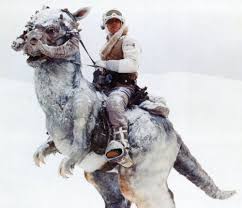
- Unconvinced by the new bits of the snow critter.
- THAT KISS GEORGE EW MY BRAIN.
- You’re continuing the assumption that cities <=> civilisation in Luke’s little comment about Dagobah, George. I know he’s still a whiny little kids, but nonetheless – unhelpful.
- You retconned Boba Fett’s VOICE, George.
- Vader goes through underlings at a rate of knots. Bad vision of leadership there.
Abaddon’s Gate: Redux
(Some spoilers below for Leviathan Wakes and Caliban’s War. READ THEM.)
The last line of Caliban’s War was an absolute killer, because I read it when it was first published which meant that the next book was about a year away and GOODNESS ME it was a cliffhanger. So I preordered this as soon as I could and happily, it arrived about a week before I went on holidays. I very carefully put it on a shelf where it wasn’t tempting me to read it… and then this week, on holidays, I cracked it open and devoured it in one day. And it was worth the wait. Oh yes. Thank you, James Corey.*
Naw. Cute. PastMe did not feel the need to reread the other two, clearly. Continue reading →
Galactic Suburbia: The Martian
In which Tansy and Alex talk tragic potatoes, Lord of the Rings jokes, deep space parkour and the retirement plans of Sean Bean, among other topics that become inevitable as we delve into the recent Ridley Scott directed, Matt Damon + Science = OTP movie, The Martian, based on the novel by Andy Weir.
Get us from iTunes or at Galactic Suburbia!
ETA: my source was wrong about the LOTR joke! SAD 😡
You can Skype us to leave a short message about any of our topics or episodes, to be included in a future show.
03 90164171 (within Australia) +613 90164171 (from overseas)
Otherwise, please send feedback to us at galacticsuburbia@gmail.com, follow us on Twitter at @galacticsuburbs, check out Galactic Suburbia Podcast on Facebook, support us at Patreon and don’t forget to leave a review on iTunes if you love us!
Caliban’s War: Redux
This review will contain spoilers for Leviathan’s Wake, the first in this series. As with that book, I’ve just reread this one, so this is the REDUX…
Zeroes
This book was provided to me by the publisher at no cost.
 I wanted to adore this book. I really enjoyed it, but I didn’t adore it. I’m trying to work through why…
Some general comments and then spoilers will be flagged.
The premise is one of superheroes, where the heroes are adolescents and most of them don’t feel, or want to be, heroic. Their ‘powers’ aren’t obvious (no one is turning green) and sometimes they don’t seem particularly useful, either. At some point in the past they’ve discovered each other and tried to work together, to see whether and how they might become a team… but then it turned sour, and they haven’t really worked together for a year. But when one of them is caught up with the police (his own fault, really), he asks for help and things go from there. Up, and down, and twisty-windy. The plot revolves around accidentally stolen drug money, a bank robbery gone very wrong, people in the wrong place and a bunch of teenagers trying to fix things and occasionally messing up.
We get chapters from each of the Zeroes, although not always alternating; the story begins from the perspective of Ethan (Scam), then Kelsie gets the fourth chapter and then gradually the others are introduced. This structure is exactly as useful as it seems, with multiple perspectives on events and people and ideas. It was an aspect I really liked, but it also contributed to one of the reasons I didn’t adore the book (I didn’t fall in love with any of the characters; more on that below). The characters are nicely varied: girls and boys, different ethnic backgrounds, one blind, families of different structures (those that we see anyway). They definitely have different personalities, which are not entirely tied to their ‘powers’ – which is great. There is some connection (Kelsie can work a crowd and loves going out dancing, for instance), but the question of cause and consequence isn’t tied down.
I liked that the action takes place over just a week; there’s no interest here in dragging a story out. It’s fast-paced over all, as it needs to be when there’s scary underworld types involved and things need to get fixed pronto. There are a few adults around – more parents are mentioned and briefly involved than you might expect in a teens-save-the-world story – but they don’t get in the way of said teens getting into a lot of trouble. The story is set in Cambria, which it turns out is really a name for a town in the US; I don’t know whether it’s intended to be set in the real town or not, but at any rate it’s a dinky little town rather than NY or Chicago, say, which I think is an interesting choice. It lets the characters develop their powers before having to deal with The Big Smoke, I guess (bets on that happening in a later novel?). There’s little real world building – it’s the America of today, and the city itself plays little part in the story, so there’s no need to make it really come alive.
Now, SPOILERS.
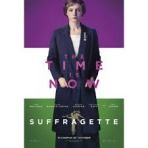
Suffragette
This post brought to you courtesy of Parissah and Aoife.
I’ve long had a fascination with the Pankhursts and the suffrage movement; I was reminded recently that I did a research assignment on the Pankhursts in year… 10? 11?; I’ve taught the British suffrage movement for a few years; I loved the biographies of Emmeline and of her daughter Sylvia, such different women; I’ve enjoyed other books on the movement too. I’ve wished that the 1970s tv show Shoulder to Shoulder existed on DVD, and I long to see Up the Women. So it should be no surprise that I was pretty excited to see Suffragette.
The only spoilers below are for which bits of the suffrage movement the film focuses on. If you don’t know the events, then I guess there are spoilers… and you need to go read some history. Here, this will help. If I tell you that the film starts in 1912… well, that’s a bit of a giveaway.
Just go see the film, right?
The basic premise of the film is that life is generally crap for women and maybe getting the vote will help. Which was basically the premise of the Pankhursts’ campaign, and that of Millicent Fawcett and all the campaigners for fifty or so years before the WSPU seriously made headlines. The film manages to show just about every way in which everyday life sucked for British women in 1912: unequal pay, sexual abuse in the workplace, men in control of the house – money, children – and the general notion that women are unfit for politics or anything other than menial work. (The focus is on white women, since the suffrage movement In Britain was generally; of course there was a whole other layer of problems for women of colour.) The response of most of the men to the women’s claims for equality is to be abusive or to laugh, at the very idea of it. Let’s not forget that rapper who thought Hilary Clinton shouldn’t be president because she might nuke someone because women get emotional. In 2015. Cue this:
 The focus is on Maud, a 24-year-old woman who’s been a laundress since she was seven. She’s married, she has a son, and she has no time for politics – literally no time, because she works all day at the laundry and then keeps working at home. She gets caught up almost accidentally in a suffrage protest, and things progress from there in an almost textbook case of how to radicalise someone, which is an interesting thought given Australia’s current overblown fears about just that issue.
Most of the cast is fictional, as Maud is. There are a couple of notable exceptions. There’s a scene when Maud is first in prison and she’s introduced to an Emily, who’s on hunger strike. I thought nothing of it, really, until there was a list of names in the police station and suddenly the name Emily Wilding Davison flashed up and if I had been alone watching the film I would have yelped. It had not occurred to me that the film would go there.

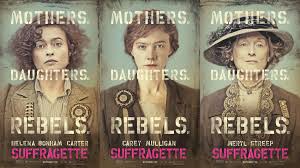
 Meryl Streep as Emmeline Pankhurst only has one significant scene, which surprised me somewhat, although as this review points out the focus on working class women is a fairly radical one and one that I really appreciated. She was appropriately grand, and again, when I saw her, I nearly yelped. They had the costuming down brilliantly, which is to be expected given how many wonderful pictures there are of Pankhurst; no idea whether they got her speech mannerisms or not, because I don’t know of any recordings of her voice.
Of the others – I liked the variety portrayed, within the limited purview of the film (that’s not a criticism; the film deliberately sets itself the task of looking at one group of women). Violet is a long-time campaigner struggling to keep the faith; Edith Ellyn, played by Helena Bonham Carter (who is wonderful AND! I discovered is the great-graddaughter of that bugger Asquith, who rejected women’s suffrage!) is a pharmacist with a loving and supportive husband. There’s a brief appearance from an upper middle-class woman who supports the campaign but whose husband is strongly against, and numerous women around the laundry and Maud’s neighbourhood who do not support it at all because of the difficulties it brings at home.
I have one significant quibble, and it’s one that I’m conflicted over. I liked that the police perspective was given; it highlighted just how anti-suffrage the establishment was, and the lengths that they were willing to go to stop the women. (The scene with the new portable camera – so light it doesn’t need a tripod! – that can be used covertly is hilarious; it’s still a shoebox.) However. However. Why is it that a film about the suffrage movement needed a male perspective? Because that’s exactly what Brendan Gleeson is providing, by being the copper who talks to Maud and is always present when something big is happening on the streets; he’s a male point of view on the proceedings. Could it be that a significant portion of the audience still couldn’t care less about the experiences of a person like Maud – poor, uneducated, female? I’m troubled by this, and it’s the one aspect that made me sad (about the film experience, I mean. There was a lot that made me sad). The film could have shown the police in general, as they prepare to battle the women on the streets; that would have got across the same point without it feeling like Gleeson’s character was an alternate viewpoint on the events.
I’ve also read comments about it being disappointing that there are no people of colour in the film at all, which I think is absolutely a fair call. From the perspective of suffrage history, yes there were women of colour involved but the records about individual members, regardless of race, are pretty sparse so as far as I know it’s not clear what the proportions are. I don’t know what the solution to this could have been (not an excuse, just a comment).
I’ve read a review that suggests Maud is basically a cipher, a stand-in, and not a really person – and to an extent I agree. I mean, basically everything bad that could happen to her, does, and she’s involved in just about everything interesting (well, public anyway) that happens in the suffrage movement in 1912 and 1913. But I don’t think this is a bad thing necessarily. The film is called Suffragette. The only way to really convey the experience of ordinary women in the struggle is exactly like this – to show one woman, experiencing it. I think Maud is intended to stand in for white working class women in 1912 who started thinking about politics, and she does it well.
At the end of the film, there’s a potted history of when different countries gave women the vote; the cinema erupted when Switzerland came up as 1971.
It’s also only I think the second time I’ve been in a cinema when there was applause when the film concluded.
Overall I think this a welcome addition to films about women’s history… since the list of films about women’s history, and feminist history, is a pretty short one. Next I would like to order films about Olympe de Gouges, and one about Mary Wollstonecraft kthxbai.

 Randomly Yours, Alex