The Dispossessed: An Ambiguous Utopia
 I have loved Ursula le Guin for a long time; I think we read A Wizard of Earthsea for school, and when I discovered there were sequels – many years later – I was very happy indeed. But it wasn’t until many years after that that I discovered she had written a lot of serious, awesome, adult work too. It took me ages to get to The Left Hand of Darkness, which now rates as one of the best SF books ever for me, and I have slowly been getting to her others. Happily, The Dispossessed is the February book for the Women of SF Book Club – a perfect opportunity.
A spoiler-filled, and whimsical, discussion
Narrative
The conceit of calling this post ‘spoilery’ makes me laugh, since the plot itself is so simple – and there’s really nothing to spoil. A man goes from one planet to another; learns some stuff; gets involved in some political stuff; goes home. Has flashbacks about meeting his partner and about his evil boss. That is, Shevek – a highly-regarded physicist – leaves his planet Anarres and goes to its sister-planet Urras to further his research. Anarres was colonised 170 years before by people fleeing Urras, determined to set a society with no property or ownership (a philosophy called Odonianism). In alternating chapters we get his experiences on Urras – learning what it is to be ‘propertarian’ and then getting involved in the beginnings of a revolution – and then his life to that point on Anarres, involving a stick-in-the-mud physicist, meeting his partner Takver, and Shevek coming to terms with his own attitude towards Odonianism. I was a bit sad that it ended with Shevek landing back on Anarres, though; I would have liked to see the reaction to his return. I guess leaving it ambiguous is part of the point.
I would not be surprised to find that a lot of people find this a very boring book, because the plot is indeed quite slow, and straightforward, and really almost nothing happens. But the point, of course, is that this is not a plot-driven book; while the plot itself is actually interesting and I enjoyed it, it’s there – I think – to enable the character-driven and politics-driven book.
I loved the past/future back and forth of the chapters. To see where Shevek ends up, while also seeing how he got there, is a fascinating narrative trick. It almost denies causality, in some way, which ties in very neatly with Shevek’s own thoughts and dealings with time and temporality: we know he got together with Takver before he meets her, we know he becomes an immensely important physicist before he becomes one. On p162 of my copy, he suggests that “The way to see how beautiful life is, is from the vantage point of death.” Although Shevek isn’t dead at the start of the book, I think we best appreciate his experiences on Uras by looking from the vantage point of Antarres… and vice versa.
Characters
Shevek is not entirely likeable, but almost always admirable – with one horrendous exception, where he possibly rapes Vea (I think it’s unclear whether he does or not). Interestingly, the fact that all we know of Vea’s behaviour is from Shevek’s point of view – coloured by his naivety – made me quite surprised when it appeared that Vea was not, actually, interested in ‘copulation’ there and then. Anyway, he has those outsider/loner characteristics that so often seem necessary for making an interesting character, even if ultimately he ends up appearing like the most ‘inside’ Odonian politics. Most of the other characters are mere sketches – even his partner Takver. This is not to say that they are caricatures or stereotypes; more, perhaps, that being entirely fleshed out is unnecessary for the story to take place.
Politics
Undoubtedly some readers will see this book as overly polemical. But tying it all in with the science, and some intense personal relationships, tempers the politics in my mind; and besides, when it’s as well-written as this, and as critical, passionate, and searing as this, polemical definitely has its place. I love that this was written in 1975 and it’s a critique – almost a damnation – of both capitalism (called propertarianism) and perhaps the ultimate expression of communism (Odonianism). USSR-type communism comes in for a brief condemnation, too, via a discussion Shevek has with the physicist from Thu, Chifoilisk. At times, both Anarres and Urras appear to be fine places to live: Urras is very familiar, while Anarres comes across as so worthy – or maybe that’s just me and my left-leaning sensibilities (it will be very interesting to see how the American readers in the book club respond…). Then on the other hand, Urras is so stifling, its attitudes towards women so 1950s-esque – and the government’s response to a mass, peaceful, demonstration is so extreme – that I shudder to think Australia could be like that. In turn, Anarres feels so poor, and has its own brand of stifling and unpleasant, that neither appears as a utopia; hence the subtitle given to the book, I guess. I think I would still opt for Anarres, given the opportunity to pick – despite le Guin warning that it too is imperfect, in its application of Odo’s philosophy.
Odonianism as a philosophy
I need to think more about what le Guin is suggesting here, I think. It has aspects of Marxism, especially of its Leninist interpretation; the ‘free love’ aspect (copulation brings no lasting attachment necessarily, has no moral component, sex is not dirty) was advocated to some extent by the Russian Alexandra Kollontai (a Bolshevik) and is also familiar from Brave New World…. Attempting to rid humans of all feelings of ownerships feels like a hopeless task to me, but it’s interesting to see how le Guin imagines it might be undertaken; her point that language itself would have to change is brilliant. On that note, the idea of making the word for work also the word for play is quite revolutionary and truly intriguing. It would have an enormous impact on people’s attitudes.
The science
I haven’t done physics in a very long time. I am sure that a physicist reading this could get frustrated by the vagueness of le Guin’s science if they wanted to, and no doubt pick holes in her ideas of simultaneity etc if they really wanted to. For me, it was techy enough that it gave Shevek and his friends the semblance of true science, without totally losing me. More interestingly, though, as a whole, is the fact that she ties the ideas of physics into ideas of morality and responsibility. How utterly awesome and mind-boggling. Too often ‘pure’ science is seen, and even sees itself, as devoid of political or moral connection. I don’t agree with that, and I’ve never seen it argued so well and passionately in fiction before.
What it made me think
Well, a lot of things, really. The sympathy I feel for Marxism is of course tempered by my knowledge of the USSR, China, etc. But Anarres shows a different way of how things could be. While things are not shown as perfect, by any means, and that the philosophy can be bent, there is still a feeling that it could work – with the will and intention of people who truly hold to Odonian philosophy, working in genuine solidarity. On a more personal level, the idea of working with time, rather than against it, was more provocative than almost anything else, given that I am already a sympathiser of the political ideas.
Overall
I got it from the library. I think I need to own it now. It ought to sit next to Naomi Klein’s No Logo.
Managing Death
 Some spoilers for Death Most Definite. (By Trent Jamieson)
When we left the somewhat hapless Steve at the end of Death Most Definite, he had just managed – through no intention of his own – to become Australia’s Regional Manager of Mortmax. Essentially, he became Australia’s Death. He had also discovered that the Stirrers – that ancient foe of the Psychopomps (employees of Mortmax, responsible for ensuring souls get to the Underworld) – are awaiting the imminent arrival of their god, meaning that they are ‘stirring’, or breaking through into our world via the recently deceased, with increasing frequency. To help him cope with this, he’s changed several people into Pomps, most of them Black Sheep – those with family connections to the Death business but who had themselves not chosen it. Oh, and he’d also brought back to life the woman with whom he’d fallen in love when she was already dead, and turned her (back) into a Pomp, too.
It’s not really a surprise that Managing Death opens with Steve having a nightmare.
The first few chapters deal largely with Steve being his normal whingy, drinking-too-much self, despite his greatly enlarged powers and the fact that he now actually gets to hold Lissa without fear of sending her to Hell. Through him we get to meet a few new characters – my personal favourite being Aunt Neti, an eight-armed and totally intimidating character who helps guard Hell, usually with a batch of scones served on some awfully nice bone china (heh). Also newly introduced, and getting a significant amount of page-time, is Suzanne, the Regional Manager for America. She’s a fairly standard cutthroat business/vixen type, but she gets some pretty good lines. I think her 2IC (or Ankou, in Jamieson’s terminology), Cerbo, is more interesting, although he gets less space to himself. There are also a number of characters from the first book who reappear, of course, including Lissa, who sadly doesn’t get quite as much of an increased role as I had hoped. While she is important, and is never just a damsel in distress or bed-warmer, I was disappointed by the short shrift I think she got particularly towards the end. Steve’s cousin Tim, now his Ankou, has a fairly significant role, and we also get more Wal. Ah, Wal: the fat cherub tattoo Steve got when drunk one night, who pops off his arm and bad-mouths Steve whenever he’s in Hell. Even more than the fact the story is set in Brisbane, Wal is a sign that this is a very Australian book. That, and a burnt-sausage Christmas lunch.
The plot of Managing Death, on the face of it, is simple. It revolves around Steve (well, Tim) having to organise the Death Moot – a get-together for all the Regional Managers – and Steve trying to convince them that the approaching Stirrer god is a problem they all need to deal with. Along the way there are also business issues that must be resolved: particularly how to recruit more Pomps so that they don’t get overworked (can you imagine trying to write that job advertisement? Or answering it?). Jamieson complicates matters with someone attempting to kill Steve. Although there are several lulls where little seems to actually happen – Steve is a bit too whiny and introspective in this novel for my tastes – it is nonetheless exceptionally page-turn-y. Something always seems to be going wrong.
Overall, I enjoyed the book. The characters are generally likeable or disagreeable, depending on their relationship with Our Hero; they have just enough depth so as to not be completely transparent. The plot largely kept my interest, although I do think Jamieson wrapped everything up a bit too quickly towards the end, and there was one particular solution to a problem that I thought came from far too far out of left-field to be entirely comfortable with. It’s definitely a “Book Two”: Jamieson does a fairly good previously-in-Death-Works wrap-up, but nonetheless I don’t think it would work well without having read Death Most Definite. Similarly, although some problems are tidied up, there are numerous issues left hanging to be resolved (I hope!) in the third book, The Business of Death, which I believe is due in 2011. Despite niggling issues with the book, I am definitely looking forward to the third book. Call me sadistic, but I am looking forward to just what Jamieson does to Steve next. And given the original way in which he has dealt with the idea of Death and the Underworld, I expect that the ultimate resolution will also be appropriately original.
Australia Day podcast
In what is starting to look suspiciously like a trend, Tansy and I joined Jonathan for an Australia Day podcast yesterday, in between various other engagements. We were sad not to have other eminent Australian podcasters join us, but when you’ve got three hours between east and west as well as things like sleeping in and bbqing… well. It just gets hard to organise. Anyway, we valiantly carried on, discussing what it’s like to be an Australian specfic author, whether there is an Australian ‘tone’, and what we’re looking forward to on the Aussie scene in the coming year. You can listen to it here or, I think, get it from iTunes by going to Jonathan’s regular podcast, Notes from Coode St.
(It should be noted that Jonathan calls his post “The Sounds of Now,” and he threatened to put a little Gangajang at the start of the podcast. I was trying to figure out some INXS or Wolfmother-appropriate title, but… nah.)
Danton: making it big in the revolutionary world
I read biographies far less often than someone of my historical bent would be supposed to. I often expect them to be dry – I’m not sure why – and I often prefer books on the minutiae of history, the stuff that often gets overlooked. That said, I have a soft spot for Alison Weir’s biographies – I’ve read most of her Tudor stuff, and I really liked her book on Isabella (“She-Wolf of France”).
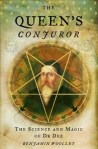
One of my all-time favourites is a biography of John Dee, best known as an astrologer, alchemist and magician, but actually responsible for some pretty awesome science too. Against that is the fact that I have biographies of Dirk Bogarde (I am a big fan of the Doctor movies), Gandhi, Elizabeth I… and the Pythons autobiography… all sitting on my unread/true shelf (it’s a long story). I’d like to read more bios, they just don’t move up in the ‘must read’ queue.
This problem is exacerbated, for me, when it comes to reading of modern, controversial characters. Dee was controversial, and Isabella certainly was (and when I can get my hands on a good revisionist bio of King John, I am going to be all over it), but even I concede that arguing about them is slightly academic, although always with modern repercussions. I would desperately like to read a good biography of Trotsky – and Lenin, I guess, too – but who the heck am I going to trust? A popularist like Alison Weir? I don’t think so, sunshine. A historian of whose politics I know nothing? Problematic. I would love to read one written by Peter McPhee – God bless his Marxist soul – but I don’t think that’s going to happen.
And so we come to the fact that I have finally finished The Giant of the French Revolution. Danton: A Life, by David Lawday.

When I first started reading about the French Revolution I quickly decided that Danton was the man for me; Marat is too much a rabble rouser – although dying in the bath is sooo Greek tragedy – while Robespierre, with his insistence on continuing to wear ancien regime costume, clearly had gumption but his whole Republic-of-Virtue-or-die made me a bit uncomfortable. There are things about Danton that make me uncomfortable too, but… he’s so much larger than life, he had such energy, and he instructed his executioner to make sure to show his head to the crowd once it was off, because it was worth looking at. Plus, Gerard Depardieu plays him in a movie, and he was perfect.
So, the book. Lawday admits at the start that this is a slightly romanticised history, because Danton committed almost nothing to paper. There are no footnotes, although there are references at the back giving some indication of where ideas and quotes came from. And it is a bit romantic: Lawday sometimes lets himself go on flights of descriptive fancy about the streets of Paris and the countryside around Arcis, Danton’s birthplace; and he gets a bit smoochy over Danton and his wife Gabrielle’s relationship. The other romantic aspect, and the thing that annoyed me the most, was that Lawday’s vision of Danton as a hero apparently demanded that there be a genuine fiction-like villain for him to play against. Robespierre, the man probably responsible for Danton’s death, is the obvious candidate here, and Lawday goes out of his way to malign and belittle him as unmanly and insipid, in contrast to the testosterone-fuelled Danton. But what really, really got my back up was that Lawday also featured Manon Roland, wife of Danton’s fellow elected official Jean-Marie Roland. It seems clear that Mme Roland and Danton did not get along. Lawday, though, plays this up in sexualised and demeaning ways that were occasionally outright offensive. Having recently read Liberty, about the contribution of women to the Revolution – including Roland – this got my goat even more than it might have.
Sigh. Anyway, aside from that demonisation, I did really enjoy Danton. Lawday gives a good running explanation of the Revolution such that I didn’t get lost trying to figure out what else was going on at the time, and he does well at portraying Danton as intimately involved in most of the important events. Some of this may be exaggeration, but not all of it. It’s largely well written, although I’m not sure that I agree with The Economist that it’s “beautifully told”. It’s eminently readable, anyway, and captures the energy and urgency of the Revolution. I think this would be exceptionally good way in to the Revolution for someone with little knowledge of the events, but with a curiosity about people who shape events.
In other news, I am still struggling through Citizens. That is, in theory I am still reading it, but it’s at the top of my bookcase at the moment, not being read.
Dervish House
 I have long been enamoured of Turkey. Actually, strictly speaking I have long been enamoured of the idea of Turkey: the decadence, the luxury, the it’s very different there. Over the last number of years I have come to the realisation that this idea, or dream, of the country is a very European one, and a very colonial one in many regards – it’s a view of “the East” that has existed in “the West” at least since the Romans had their snooty ideas about Egypt and Persia. Despite being well aware of its source, and feeling uncomfortable about that, there is still an allure in those incredibly not-politically-correct views. And that’s the point, of course: the allure comes from the (alleged) exotic nature of somewhere very ‘different’ (from Western Europe), and difference is always attractive. (The point, too, was that by identifying certain things like decadence as traits from over there, the viewer could take the prim moral stance and still enjoy it. But I digress….)
I got to thinking about these sorts of things in reading The Dervish House because it is set in near-future Istanbul: a city in many ways very similar to those of Western Europe, America, and Australia that I am familiar with, but with enough differences – real differences – that it retains an aura of the exotic. The story could, with some changes of course, be set in any city really. But setting it in Istanbul allows McDonald to do many things, not least of which is imbuing his setting with a deep sense of history that the relatively new cities of America and Australia just don’t have. Istanbul is very much a character in this novel; the complexity of the city itself – geographically, historically – is deeply important to the plot and the characters. There is even a character whose main interest in life is mapping the social history of the city, an idea I find very attractive.
The Dervish House is a simultaneously dense and frantic novel. In 472 pages McDonald covers five days in the life of the city, from the point of view of six main characters. An old Greek man, a young Turkish invalid, a successful businesswoman, an ambitious businesswoman, a no-hoper and a stockmarket player: with this cast, McDonald creates a vibrant city. Some of their stories interweave with one another, at one point or another, while others appear tangential; all combine to give a rich, rich view of the near future. Their plots are wonderfully varied: there’s romance, there’s adventure, there’s corporate espionage and shady deals and antiquarian detective work; religious fanaticism, world-weariness, wild success and disappointments. At times the writing is so dense that I had a little trouble following it, but the sheer beauty of it – along with the compelling sense that I needed to know what was going to happen – meant that wasn’t too much of a hassle.
One of the things that fascinated me about this book is that reading it as an SF reader, it’s clearly SF; there are enough references to nanotechnology and other futuristic things to ensure that. However, the date isn’t made clear until about two-thirds of the way through the book, and the technology isn’t really central, so it ought to have broader mainstream appeal, too.
The 24th episode of Galactic Suburbia
In which we flit over the first shortlist of the year and some charitable links, sweep though a fortnight of culture consumed, and then leap with both feet into the pet subject of Inside Indie Press. You can download or stream us from Galactic Suburbia, or get us from iTunes.
News
BSFA Awards Shortlists
QLD Flood fundraisers for writers & readers: After the Rain; Authors for Queensland auction; QWC appeal launches Saturday, on Twitter at @writersonrafts
What Culture Have we Consumed?
Tansy: no books for me, shockingly! More Big Finish audio plays.
Alex: Agatha H and the Airship City, Phil and Kaja Foglio; Transformation Space, Marianne de Pierres; Dust, Elizabeth Bear; two stories from James Tiptree’s Her Smoke Rose Up Forever (spoilery discussion); The Name of the Wind, Patrick Rothfuss. Also begun a rewatch of BSG…
Alisa: No Ordinary Family; Dexter season 5
(diversion on the subject of Whether Alisa Should Watch Doctor Who)
Pet Subject: Inside Indie Press
Big news in TPP space is the closure of Speakeasy.
Is there an obvious point at which a project becomes a non-viable project?
How do you know that you’re ditching a project just because the stories don’t fit your particular idea/viewpoint?
The older books are harder to use as examples because lots of things about them were learning.
Horn – first to break even BUT I got caught on the selling to bookstores so i ended up having to sell 80% of the print run after review and buzz copies (1/4 of the print run) to break even.
Pay scales, writing contracts, competing with the US indies…
Please send feedback to us at galacticsuburbia@gmail.com, follow us on Twitter at @galacticsuburbs, check out Galactic Suburbia Podcast on Facebook and don’t forget to leave a review on iTunes if you love us!
The Name of the Wind
I really thought I was a bit over epic fantasy trilogies. I mean, I haven’t consciously started one in a very long time. Partly that’s because they’re black holes sucking time and energy into them, partly it’s because I am wary of starting trilogies at all – especially when the rest haven’t been written yet and I haven’t got a sense of whether the quality holds up – and partly, I’ve realised, my tastes have been veering towards science fiction, and especially hard SF and space opera, much more consistently in the last few years. No idea why, just have.
Consequently, when a friend started raving about Patrick Rothfuss and The Name of the Wind at me, I had no idea what she was talking about. And none of the above occurred to me, either, because it wasn’t until a few weeks after she had put a copy in my hands and promised me late nights reading that I discovered the darn thing was a first book, and that the others are as-yet unpublished. I started feeling annoyed… and then realised that I had forced Holly Black’s White Cat into her hands, so we’re kinda even in that its sequels are also unpublished. But I figure I still have a bit of leeway since Name is about a quarter the size of White Cat.
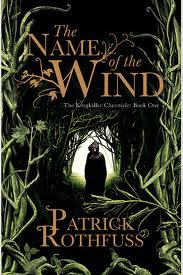 Anyway. I read it. And it’s the sort of book that if someone described it baldly, I would probably roll my eyes and say that I was largely over big fat magical quests in faux medieval settings with some mysterious baddy in the offing.
Yeh.
It is one of the longer books I’ve read in a while, at 662. While it was sometimes a bit of a slog, the fact that it has exceptionally short chapters – there are 92, plus a prologue and epilogue – meant that it was easier to keep ploughing through. And honestly, it was worth it. I liked the conceit that it was a man telling a story to a chronicler, and that there were occasional breaks from the main story back to the scene of the storytelling; it helped keep it grounded, and it also meant that you knew Kvothe was going to get through the obstacles put in his way. It’s an interesting way of doing it, letting the reader know that the protag is definitely going to go and be amazing, because that’s why he’s telling the story in the first place. There’s none of that “ooh, surprise! The farm boy with uncommon wit is really a magician!”
Kvothe? He’s a pretty good main character. He has lots of advantages – uncommon wit, fast reflexes, an exceptional memory – but disadvantages too – his upbringing, his temper, and a whole lot of bad luck. I had rather hoped, when the story opened with an adult man, that we would be skipping all of that apprenticeship stuff. It was not to be, and I’ll allow that I was – surprisingly – riveted by his childhood and his time at the University (that’s not a spoiler; it’s obvious pretty early on that that must happen). And, as I’m sure was the intention, I am now beside myself with wonder about what happens to Kvothe when he leaves the University, how he gets the name Kingkiller, and why he’s now an innkeeper.
The other characters pale in comparison with Kvothe; they don’t get as much time, of course, and they just can’t be as interesting. Even the woman in his life – who is one of the more interesting love-interests I’ve come across in a while, I’ll admit, and I’m wild with curiosity about her background, and if we don’t find out more about her I’ll do a Misery on Rothfuss – didn’t keep me as interested as Kvothe. They’re not boring, though, and many of them are nicely quirky; one of my favourites is Auri, a wild girl Kvothe befriends. And of course Abenthy, his first teacher, is awesome.
The worldbuilding is quite detailed; not that original, in some aspects, but nicely realised and crafted. I really liked the notion of going to University to study what others perceive as magic (and not in a Pratchett-style University, either); and I liked the sense of historical depth Rothfuss implies, too, without going into long, drawn-out, pompous epics told over the campfire or dug out as a revelation from a dusty tome.
And the plot? Again, on the face of it not overwhelmingly original. A young boy with a tragic past seeks to make his way in the world; a poor young man struggles in a world driven by money; a boy experiences a mystery as a child and strives to understand it as he grows up. Oh, and there’s a girl. But saying it like that does not, of course, do it justice. While the story might in places follow a well-worn path, there’s a reason for that: that path leads to fascinating places. And, to continue the metaphor, the scenery on this particular version of the path is marvellous and well worth making the journey. Even most of the bit-characters are interesting in their own rights, and the writing is delightful enough to lure the reader on.
I enjoyed this book way more than I had anticipated.
Dust, by Elizabeth Bear

I read this book as the January book for the 2011 Women in SF Book Club, being organised by TJ at Dreams and Speculation. I’d not read any novels by Elizabeth Bear before, although I’ve enjoyed a number of her short stories and she’s also one of the contributors to Shadow Unit, which I adore. I didn’t know what to expect from this story, but it wasn’t what I got.
In short: I really enjoyed it, and am totally cut that it’s the first of a trilogy! (I thought I was doing so well with avoiding those.) I enjoyed the characters, and I thought it was a really interesting take on a not-original (which doesn’t mean it’s not interesting) SF trope.
At length, with spoilers:
I didn’t read the blurb before reading the book. The cover gives some indication of angelic types mixed in with technology, which I thought was a fascinating idea, and then the angel comes in right at the start – sans wings. Perceval, the angel and a woman despite the name, is a really fascinating character. She’s conflicted, she’s loyal, she never gives up despite an enormous amount of wearing down and opposition.
There are numerous other characters, but most of them are really only bit parts with one, maaaybe two exceptions: definitely Rien, maybe Jacob Dust. It’s Rien’s point of view that we get most often; starting as a lowly servant, discovering that she’s Perceval’s half-sister and actually of some consequence, and going and having some adventures – she is, I think, more approachable as a character than Perceval, who despite having some flaws and being somewhat tormented is more symbolic, more… a talisman. Rien is earthier, more grounded, and I think more approachable. Dust, on the other hand, is not very likeable or approachable at all; he’s quite a quirky take on the slightly crazed AI which I really enjoyed (I enjoyed the whole idea behind and consequences of the fractured AI, actually).
It took me a while to realise that the setting was a generation ship; right at the start I wasn’t even sure it was set in space, and I was wondering whether this was going to be some planet where the people had reverted to a faux-medieval existence with just a few people still taking advantage of old tech. Which is kinda true, but everyone is aware of the fact that they live on a spaceship, even if they don’t necessarily do anything directed connected with that reality at the moment. It’s a really clever setting: being on such an enormous ship means there’s not the claustrophobia of space travel in a tin can, and there are more options for moving around – and for having two antagonistic parties at each others’ throats but far enough apart that they have to actually work at reaching other. But it also means that vacuum is a genuine threat, which is a problem you never get dirtside… and it means you have the option of moving the whole damn ship, too (hence the trilogy).
I still haven’t quite figured out whether there were more Arthurian links than just Perceval’s name (and she does talk about being a knight errant… oh and there’s also a Tristen), and I somehow missed them. The third book is apparently going to be called Grail, so maybe there are – or maybe they will be more developed over the next two books.
Finally, let me say that I really didn’t expect the conclusion, which is a pretty awesome outcome when I read a book.
Starting the Book Club: Tiptree
Over at Dreams and Speculations, the first of the year’s book club discussions is up and running. TJ has done a very clever thing by having not only one novel a month, but introducing a mid-month discussion on a couple of James Tiptree’s short stories from Her Smoke Rose Up Forever. This month, it’s “The Last Flight of Dr Ain” and “The Screwfly Solution.” I managed to be the second commenter, hurrah! … because she’s in America and has, I presume, automated the initial post to go up at midnight. Which means I’ll be waaaay behind on the conversation, but at least I got to say something early on 😀 . Essentially, while I liked “Ain” and it was certainly an interesting story for 1969, “Screwfly” was brilliant with all sorts of crunchy things to say about gender relations and sexuality and religious fanaticism.
The post is chock-full of spoilers, of course, but if you’ve read them or are interested in Tiptree’s work, it would be worth reading it and the comments.
Smellink verra nize indeed
 Hoo boy. I have been looking forward to this ever since I got to interview the Foglios for Galactic Suburbia way back at Aussiecon4, when they announced they’d been given a deal with Night Shade Books for the novels.
Actually, in some ways I have been looking forward to this for even longer: I first read about Agatha Clay in Girl Genius vol 9, the Hugo-nominated (and winning!) graphic novel. I had never heard of it before I got it in the Hugo packet, and… well… it was love. Pure, sweet, love. I read the entirety of vol 9; bought the ebook of vol 1; then discovered that you could just read the whole lot online, one page at a time. So I did that. One volume is one year’s worth of comics, and pages come out regular as clockwork every Monday, Wednesday, and Friday, so… yeh. You figure out how much reading that was.
Yes, I know. I lot. But I love it. It’s got Romance! Adventure! Mad Science!! And this is the sans-illustration novelisation of, I think, the first three volumes of the graphic version. So yes yes, I’ve read the story before. But this is a different version. It’s like… the novelisation of a movie. Only better.
Officially, the Foglios – wife&husband team Kaja and Phil – call this ‘Gaslamp Fantasy’. Which is different from steampunk, and I can sort of see how but I can’t always explain. I think, basically, that with steampunk things are meant to make sense, in the same way that good SF makes sense in a scientific way (sorta). Fantasy, though – fantasy gets to cheat outrageously, when it wants to, by wiggling its fingers and saying ta-DA! And as long as it does it in an entertaining enough way, it’s fine. I know, I know – I’m exaggerating ridiculously here, and the genre purists will pull me up for it. Whatever. This is gaslamp fantasy because it’s kinda the European nineteenth century, but at the same time it’s really not, and there are serious mad scientists running around, mostly with The Spark. A Spark is like someone with The Knack: whatever they want to make, whatever they fix, it Just. Works. Although most Sparks end up going nuts or being crushed by their creations.
There are numerous things I love about this series. Firstly, the characters. The main character is Agatha: a sometimes-bumbling, sometimes-competent wannabe mechanic. In the graphic novel, especially, she’s wonderful because she’s this voluptuous woman unaware of her own looks and perfectly capable of looking after herself, thanks very much. The rest of the cast, as appearing in the novel, are also great: both men and women, good and bad and somewhere in between, and – something that only occurred to me in reading it rather than looking at the pictures, which is a bit crazy – a wide ethnic mix, too. Black people, Jewish people, white people, Chinese people, the marvellous Bangladesh DuPree… not to mention all the slightly non-human types, too. And a talking cat. We love talking cats. Most of all, we love the Jagerkin. The Jagerkin inspired my title, because that’s how they talk: with the most outrageous faux-German accents you could possibly imagine (having heard Phil do his impersonation, I understand the inspiration now). They are crazy, they are mischievous, they love their hats, and they sometimes look like this:

They also have a propensity for lusting after entirely inappropriate women.
I love the plot, too. Sure you could roll your eyes at yet another story about a poor orphan girl who discovers something amazing about herself, but you know what? Who cares! It’s fun! Agatha makes it worthwhile! There’s a reason those stories get written so often. And here, along with the self-discovery stuff, there’s some serious mad science, a one-km-long dirigible, lots of explosions, and a touch of romance.
I bought the hardcover version, because the trade paperback isn’t out until August and that’s waaaay too long to wait (and it’s not very expensive anyway). It’s a lovely little production, with nice paper and cool cover art. My one gripe, and I’m a bit sad about it, is that there are some editing issues. There are a few spelling mistakes (‘access’ for ‘assess’), and someone really doesn’t like semi-colons – which would be fine if they used periods in their place, but mostly they used commas, and that just really, really, grated.
Is it original? Not if you’ve read the comic, no. I have no idea what it would be like to read this cold; I imagine there are some bits that might be a little confusing, but I can’t be sure. But did I enjoy it? Hell yes. And I will certainly be buying the second one (Agatha H and the Clockwork Princess) and third (title still TBA), because I am that much of a fangirl. Wheee!


