A Deepness in the Sky
Read via NetGalley and the publisher, Tor. This is a reprint so you might be able to get earlier printings, or this one is out in October 2023.

Where do I even begin?
I have never read a Vernor Vinge story before. According to Jo Walton’s introduction to this one, this and The Fire in the Deep are basically the culmination of his lifetime’s work.
Reading this (admittedly quite long) novel is like reading a trilogy that’s been refined down to just one volume. There is SO MUCH GOING ON – and it all works, and it draws you inexorably on. It’s not particular frenetic in pace – I didn’t feel like I was reeling from one explosion to another – but it’s relentless. It’s like an avalanche.
Partly this is because although the story takes place over decades, there are several well-placed time jumps. I think this is part of where the ‘trilogy refined to one book’ feeling comes from. There’s nothing extraneous. There are moments of people just being people – being in relationship, having families, relaxing – but they don’t feel like padding. It’s all adding together to make these characters intensely real.
There are three strands. Two are human: the Qeng Ho, a loosely connected and enormous group of people whose aim is trade; they travel between planets to sell whatever is needed, and call people on planets Customers – not in a taking-advantage kind of way, but in a ‘this is what we do’ way. Then there’s the people known as Emergents, and I wondered about this name for a long time… before I discovered it was because their society is the Emergency, named for a particularly dramatic time in their political history which has had cascading effects on their political and social structures (to become far more authoritarian than the Qeng Ho countenance) and honestly the name tells you a lot about them. These two groups of humans end up working together – much to the dismay and distrust of both sides – as they go to explore an astronomical anomaly. The third strand is the aliens who live on the planet around that astronomical anomaly, who are not bipeds and whose planetary and biological experience has led them to develop in some very different ways from humans… and yet, they are intelligent, and Vinge suggests convergent evolution in a lot of scientific and technological ways.
As I said, there is A LOT in this novel. Love and betrayal and family and war and technology… and then Jo Walton’s foreword tells me that if I read The Fire in the Deep it may completely change the way I understand this novel? I’m a bit sad that it took me until now to read this, AND YET reading it at this age was actually excellent.
I’m so glad Tor is reprinting this and I hope it gets a lot of love.
The Far Reaches: an anthology
Read courtesy of NetGalley. It’s out now.
Honestly you just look at this list of authors and you can’t help but be impressed, right? I don’t love the Behemoth but this is a pretty amazing anthology.
James SA Corey gives a non-Expanse short story where the goal is humanity populating the galaxy. Which isn’t necessarily a goal I can subscribe to, but the method proposed here is an ingenious one. Clearly the distances are too great to send actual humans; generation ships are deeply problematic. So instead, Corey invents “slow light” that (don’t ask questions) allows for duplication of… stuff. So you can scan people and things and beam it out into the void – and ta dah! Humans colonising worlds that may or may not actually support them. Unsurprisingly, there’s not a lot of focus on the science; instead, this is all about the people. Because it’s the same people going to each of the maybe-settlements, and they can communicate with each other – albeit only at the speed of light. I loved this a lot.
I’ve never read anything by Veronica Roth! But I was fairly impressed by “Void”, which takes a completely different spin from the Corey: while it’s not quite a generation ship, the Redundancy moves people between our solar system and that of Centauri – so the crew lives on ship time, speeding along, while history goes on around them. Again, this is not a story of war or empire or politics of any sort; it’s human relationships and failings and friendships. It’s nicely done, and is exactly the sort of story that works well in the short format.
Ann Leckie, though! A new Ann Leckie story is always to be celebrated! And this is a super weird one from her. Humanity is not at the centre; instead it’s an alien whose planet has been discovered and settled by humans. This particular alien has the uncommon ability to look to the future, and organise its people to make its plans reality – partly inspired by the humans, and partly through its own intuition. So it’s a story of bootstrapping, and of individual genius and shortcomings, as well as the functions of society. It’s enthralling.
Then Rebecca Roanhorse, whom I have also never read. And “Falling Bodies” is heartbreaking. Ira, newly arrived at the space station Long Reach (which is, I’m sure, unintentionally hilarious to the Australian reader), is hoping for a fresh start. He’s human but hasn’t grown up with a human family; he’s got a new name and identity to live on this station, rather than spending however many years in prison; and he’s not sure how to fit in, and whether it will all last. The fitting in bit won’t be unfamiliar to anyone who’s gone away to uni, or moved towns in general; Ira’s particular circumstances just make it that much harder. Set more against a political background than most of the other stories, this one is still intensely personal.
And THEN there’s Nnedi Okorafor’s “Just Out of Jupiter’s Reach”. Seven people in all the world are chosen not at random or for skills but because of their genetics – the fact they happen to match with a genetically bio-engineered creature/machine, in partnership with which they must go exploring the solar system. As with the other stories, the main character, Tornado, isn’t anyone special – she says so herself – and so it’s a story of solitude and companionship, resilience or not… it’s beautifully written, and it’s hopeful and heartbreaking, and I loved it.
Finally, John Scalzi’s “Slow Time between the Stars” is another non-human story. In this case, the narrator is an AI: a ship, for want of a better word, launched by humans, containing the “Alexandria Module” – a repository of all human knowledge – and the task of finding a human-habitable planet and then creating those humans and whatever they required to survive. But of course, sentient beings often end up with their own intentions and goals, and so here. It’s a story of becoming, more than anything – learning about self, and figuring out what to do with it.
The unifying theme here is that these are individual stories. For all the title is “Far Reaches”, these stories are intensely personal. They’re not even really ABOUT exploration or anything else on the grand side of things. They’re about people, and much more about internal discovery and knowledge than external. These stories are fantastic.
Small Fires: An Epic in the Kitchen, by Rebecca May Johnson
I read this via NetGalley, thanks to the publisher Pushkin Press.
This book is incredible and thought-provoking and I loved it enormously.
I sort of want to say this is a book that is “ostensibly” about cooking… except that it IS about cooking, there’s nothing ostensible about it. But it also uses cooking as a metaphor for many things, and looks at recipes and in-kitchen behaviour both for themselves and as metaphors, and reflects on the author’s life in general as well as her relationship with food and the preparation thereof.
I love reading about food and cooking and, although I feel a little guilty about it, I also love reading about how people feel about food. (The guilt comes because I feel like a voyeur.) This book does that for me, as well as touching on other things I hadn’t realised I would love in connection with a discussion of cooking. Such as…
Johnson has a PhD looking at a German translation of The Odyssey, and I had never before considered how you could make connections between that text and the myriad ways that cooking and food (not to mention gender – although I had thought about that a bit) are used in western society. The way that how we talk/feel about translation can also connect to the way we talk/feel about cooking was absorbing. And then there’s all the other theoretical stuff, like the psychoanalyst who thinks that cooking from a recipe is a sign that the cook lacks creativity… which made me, and Johnson, rage.
This book is at times prickly, at times confronting; Johnson reflects on large chunks of her life so sometimes she is bewildered and struggling while other times doing quite well. There were a LOT of times I responded on a very emotional level with what Johnson was saying: I cook for those I love; I struggle to think about making food for just myself; I have struggled with what my love of cooking says about me in terms of feminism (thank you, third wave feminism, for teaching me about the issues of second-wave feminism).
This is a powerful book. About cooking, yes, and the place of the recipe – and my goodness, Johnson’s exploration of what a single recipe can be, what it does, what it means: all of these things are glorious. It’s also an exploration of life, although I hesitate to call it a memoir and it’s certainly not autobiography. Many people come into Johnson’s life through the book, as she cooks for them and reflects on their relationships, but there’s not a lot of names – there’s a sustained reflection on the idea of ‘YOU’ as the one cooked for, and what body YOU represents changes over time, and exactly who they are and their relationship to Johnson is irrelevant for the purpose of the book. I liked this, too, even though the biography-reader in me kept expecting to understand the various relationships. But it’s not necessary for the book.
This is a book that I may need to own, in paper.
Re-reading the Culture: The Player of Games
Again, it’s been a super long time since I read this. I had a vague memory of one of the twists, but basically it was like reading it for the first time. And it’s astonishing.
Gurgeh is a games player. He lives in the Culture, so all of his basic needs are taken care of; he has no concern for shelter, food, medical treatment, or anything else at all. There Culture isn’t a monetary society, so he can be or do anything at all. And what Gurgeh does is play games. All and any games. And he is one of the greatest games players the Culture has ever known. Probably not the greatest at any one game – but that’s because he’s good at all of them.
So eventually, Special Circumstances comes knocking. Contact are the group responsible for dealing with interactions with new alien species that the Culture comes across, and SC are… well, they’re basically the secret services branch. Because what the Culture doesn’t really like to advertise, or even admit to themselves, is that they are inveterate meddlers. They believe they have the right way of doing things, and that places like the Empire of Azad who are still that – an empire, although multi-planet – are desperately backward. SC recruit who they need, and Gurgeh is needed because the Empire of Azad is functionally ruled through the playing of a game that’s so intrinsic to the society that it gives it its name. Gurgeh has two years – the travel time to reach Azad – to learn how to play…
I’m pretty sure when I first read the Culture novels that I basically accepted the Culture as what they would say about themselves; helping other societies to better themselves, which may sometimes require breaking eggs for omelettes, etc. I wasn’t quite so naive that I didn’t see it as problematic, but I think I assumed I was meant to be entirely on the Culture’s side. I have, happily, become a more nuanced reader since then. As a post-scarcity society where anything and everything is available, accessible, and largely permissible, living in the Culture is indeed a wonderful thing. The problem comes when it assumes that everyone else must want, and need, to be like them. When you’re inside that society, of course this makes sense! Why would you not want people to be able to express themselves as fully as possible? And when the realities of Azad society are shown, aren’t there indeed issues that should and could be dealt with? Of course! … and yet… colonialism, imperialism, external imposition of outsider norms…
The Player of Games is fantastic. Banks’ exploration of societies and politics and individual mentalities, the influence of context on behaviour, the extreme but logical consequence of actions: they’re all nuanced and precise. And devastating. It’s never particularly easy to read a Banks novel. Worth it, though.
Re-reading the Culture: Use of Weapons

I read read a lot of Iain M Banks’ novels, but apparently the only ones I’ve properly reviewed here is Player of Games and Surface Detail. So that’s a bit weird; maybe I always felt like I didn’t have the words for it. I must have mentioned them on Galactic Suburbia, so maybe that got it out of my system.
My review for Player tells me that I read my first Culture novel, Consider Phlebas, while visiting the UK for the first time over Christmas 2006. So that’s a mighty long time ago, now, but I still remember the bit from Phlebas that freaked me out quite considerably and made me reluctant to trust Banks at all. Clearly I got over that, but I’m honestly reluctant to go back and read it because of those couple of pages. I will, at some point… because I think I might do a complete re-read of the Culture. Not in any order, since that’s one of the great advantages of these novels – they’re all standalone, like Reed’s Great Ship series. It does amuse me that the books got fatter and fatter over time, so I might pick based on what other reading deadlines I might have.
So! Use of Weapons. I love it. I love the structure, although it also drives me completely wild trying to figure out WHEN the different chapters for together, not to mention which of the characters in the various timelines are actually the same people. I’m always fascinated by how people write non-linear stories: did Banks write two stories and then cut and paste the various chapters? Did they just come out in this order, and he always knew what Zakalwe was up to? Who knows! And in the first few chapters, the reader has basically no idea what’s going on and or how any of it will fit together. But there’s something about Banks’ writing – something in his style, in his easy-to-read and yet challenging prose, that just… makes you keep reading.
One of the things I keep realising about Banks is how easily he sucks you in – look! this society is great; look! these political ideas are straightforward; look! the drone will always make sensible decisions – and then whoosh the carpet is pulled out from under your feet and you’re left unbalanced, bewildered, not really sure what’s going on except realising that things have changed just enough that the world is unmoored. And still you keep reading.
We see very little of the Culture itself, in this relatively early novel. We learn that they have a penchant for interfering in other people’s business; that they take their ideas of morality very seriously, but also that they’re ruthless in ‘the needs of the many’ or ‘the greatest good’; and, of course, that their technology is stupendous: the machine intelligence that is Skaffen-Amtiskaw, the ships that traverse phenomenal distances, and so on.
For all of that, this is still a very human story. Revenge, justice, forgiveness, family, shame – these are the driving factors. It’s horrific, and brutal; it’s also compassionate, in a weird way. Is it hopeful because of its suggestion that tech and galaxy-spanning empires will not change humanity all that much? I’m really not sure.
Every Version of You, Grace Chan
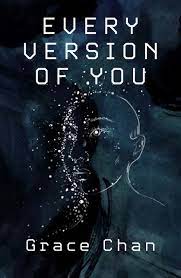
Am I slightly embarrassed that a new Australian SF novel has taken more than six months to cross my radar? Yes I am. However, I have now read it, and I love it, and I think everyone should read it.
I think it was Donna Haraway who noted that in the early days of cyberpunk, male writers were often unconcerned with the body, while female writers actually paid attention to what might happen to the meat sacks if we all got more interested in uploading our consciousness than caring for the physical. Sure that’s changed a bit over the intervening decades (although… not entirely), but it’s also a challenge that Chan confronts head on.
It’s the late 21st century. Climate change is slowly but surely wreaking havoc on the world. Tao-Yi lives in Melbourne – and it’s a wonderfully recognisable Melbourne, and made me have those feelings that The Courier’s New Bicycle and A Wrong turn at the Office of Unmade Lists also gave me: “oh yes! Places I know can feature in fiction!” Richmond and Berwick and the CBD… anyway. It’s Melbourne and I know it but of course it’s also different. People are spending increasing amounts of time in Gaia, a virtual reality world. To spend time there you get into pods that sound creepily like the ones humans are in in The Matrix, and they nourish your body while your consciousness is having near-real-world experiences in Gaia. It’s not a perfect simulacrum but it’s improving all the time; people have jobs there and do art there and go on dates. For people like Navin, Tao-Yi’s partner, it’s a welcome relief from a body that doesn’t work like it should. Tao-Yi spends a lot of time there – of course she does, so does everyone – but she’s also focused on the physical world, where her mother is ageing and ailing, and where there still seem to be things that are worth experiencing.
And then someone creates the ability to fully upload the consciousness, forever severed from the original physical body.
Chan is doing a lot in this novel, and she does it beautifully. It’s not “VR stops physical ailments being a problem!”, but it’s also sensitive and thoughtful to the real importance and consequences of those issues. It’s not “upload before the world is doomed” or “upload because the world is doomed”… but it takes those questions seriously. It’s not “there is only one right choice,” it’s not “this is a solution to all problems,” nor “if you love me, you’ll…”. Chan is instead taking the complicated road. Her characters say yes to a lot of things, and they say no to a lot of things as well. And yet for all that there aren’t easy answers, it’s also not a convoluted philosophical treatise on mind over matter. It’s thoughtful, and it’s emotional, and it’s earnest. It’s also totally readable – I could have read it in a day pretty easily – and the characters are intensely relatable.
I loved it. It’s so Australian, and it’s a brilliant example of what cyberpunk can be today. I am now waiting very expectantly for more from Grace Chan.
(Also, that cover. Glorious.)
Object Lessons: Wine, by Meg Bernhard
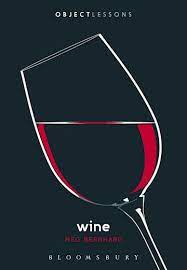
I read this courtesy of the publisher, Bloomsbury, and NetGalley. It’s out in June.
I know that I say almost every one of these is both personal and academic, but this one is the MOST personal of all the Object Lessons I’ve read so far. In fact, it’s mostly personal: there’s a bit about the current experience of owning and managing vineyards, and making wine, in both Spain and the USA… but this is predominantly the story of the author, and her intersection with wine. Of growing up with basically no alcohol in the house, starting to drink in college, binging alcohol and experiencing many negative consequences of doing so. Then, travelling to Spain to work on vineyards, and learning about the processes necessary to make wine: the intense work necessary to maintain the vines, the work of fermenting and bottling, and so on.
Bernhard’s reflections on her vineyard experiences are poignant – the stressful nature of such agriculture in the current climate crisis, the necessary connection to the environment that must be understood to get the most out of the vines, and what such physical labour can mean for someone completely unaccustomed to it. It’s a good reminder that so much of what people in highly industrialised countries take for granted does still rely on intense, human, manual labour.
WINE does not attempt to be a history of the beverage, nor an anthropological exploration of its place in modern America; it’s not a deep dive into the business, nor a paean to the joys of drinking. It’s one person’s meditation, on how she has experienced it in her life. It’s quite lovely.
He Who Drowned the World, by Shelley Parker-Chan

Read courtesy of NetGalley and the publisher, Tor Books. It’s out in August 2023.
Vicious, and savage; heart-wrenching, distressing, stunning, and shocking; twisty, and relentless, and deeply powerful.
Pretty much what you’d expect after She Who Became The Sun, although possibly More. Just… more.
Do not read this without She Who Became the Sun. You definitely want to read She Who Became; and this will make no sense without that first book.
Zhu appears to be on her way to becoming emperor. There are some seemingly insurmountable obstacles in her way, but she’s already overcome several of those in her life so why should these be any different? Of course, you should be expecting the unexpected when it comes to Parker-Chan’s treatment of her characters: so there are unexpected alliances and betrayals, unexpected deaths and survivals, and overall an utterly relentless and at time frightening drive from Zhu to claim her destiny. The question is frequently asked: is it worth it? And I’m not so sure of the answer.
Something I really appreciated about this as a sequel is the fact that all of the main characters were set up in the first book. They are greatly enhanced here – in particular, Madam Zhang and General Zhang are given much greater space and, fittingly, Madam Zhang becomes a point of view character. The other opponents who had more characterisation in the first, especially Ouyang and Baoxiang, continue to develop and have their motivations and experiences explored. Of Zhu’s allies, Xu and Ma get some more space, but honestly it’s really all about the enemies.
My one neg is that just occasionally, it did feel like there was too much time spent on the pain and existential crises of some of the characters. Of course part of the point of the story is questioning the lengths to which someone will go to for revenge / to get what they believe they’re owed / and so on, and sometimes that has required them to do truly dreadful things. But a couple of times it felt like there was too much focus on the pain felt by some characters, such that it became a bit repetitive and nearly undercut the rawness and enormity of the emotion – because it was overstated.
However, overall this is another truly amazing book from Parker-Chan. I hate to say it but I can’t wait to see what they do next… and I only hate to say it because it must feel really weird, and slightly distressing, to try and follow up this epic duology.
Viking Women: life and lore, by Lisa Hannett
This is not a standard “here’s what we know about Viking women” book. Those exist, and Hannett acknowledges them, and now I’m all keen to go buy them.

It’s also not a “here’s a reworked set of sagas”, which of course also exist. I’m less excited about those, to be honest, not least because most of the new variations just keep on focusing on the dudes (as far as I can tell).
Hannett is both an academic and a writer of fiction, so this book brings together both in an intriguing and fascinating way. Each chapter generally takes one woman from the sagas (there’s one chapter with two women, and another with three), whom Hannett both explores as a character in her own right, and also uses as a way of illuminating what we know about women in their positions more broadly. And in chapter, Hannett also tells the story of that woman, from her saga. So the history and the fiction are intertwined such that each reinforces the other. Also, Hannett wants you to be under no illusions about the lives of Viking women: while in some respects they did have advantages over the general perception of ancient and medieval European women, they were still absolutely second class citizens (or worse, as slaves).
Hannett describes the way she approached the fictional parts as “reasonably, carefully, colour[ing] them in” – which I think perfectly encapsulates what she’s done. There’s really so little about the women in the stories that a pencil outline just about covers it. Doing both the fiction AND the history means that the reader sees the research – archaeological, literary, intertextual and so on – that informs the fiction, and then how the saga also helps us understand the experiences and realities of life for Viking women. It brings together Hannett’s strengths in a truly glorious way.
I particularly liked that Hannett focuses on ‘ordinary’ women. There’s no royalty (well, not AS royalty), and there’s no goddesses or other, otherworldly women. They are all women who could, actually, have lived – and several of them are documented in less literary sources, so they probably actually DID exist. And so there are enslaved women; there are wives, to men of varying levels of honour, with a variety of experiences; there are mothers with varying experiences of child-bearing. Women who are witches and nuns, women who wield power in a variety of ways; those whose lives were (in context) fairly easy, and others who experienced trauma and exceptional difficulty. So, the whole gamut of life.
This is a fantastic look at the experiences of Viking women, and nicely situates the Icelandic sagas in history and literature. You do not need any background in Vikings to appreciate this.
Thornhedge, by T Kingfisher
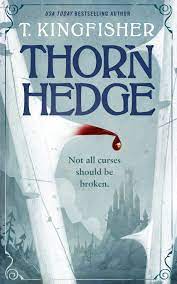
Read courtesy of the publisher, Tor, and NetGalley. It’s out in August 2023.
Sleeping Beauty, but make it WAY more complicated.
I pretty much love everything I’ve read by T Kingfisher, so it’s a no-brainer that I would want to read this novella; I don’t think I even read the blurb before requesting it. And I have no regrets, having just read it in a sitting (it’s under 100 pages, so not THAT extreme).
Toadling has been sitting behind, and sometimes within, a hedge of thorns and brambles for centuries. She’s despaired of knights and adventurous boys coming along with axes to try and cut down the hedge, because she really doesn’t want them to. One day, when it’s been a long time since anyone approached the hedge, Halim camps outside the wall… and she ends up speaking with him.
Toadling is not who you think she is, and this story is not what you might expect. It’s wondrous and twisty and a bit heart-wrenching, and all in all a really great story. I love Toadling and I will not look at Sleeping Beauty the same way again.

 Randomly Yours, Alex